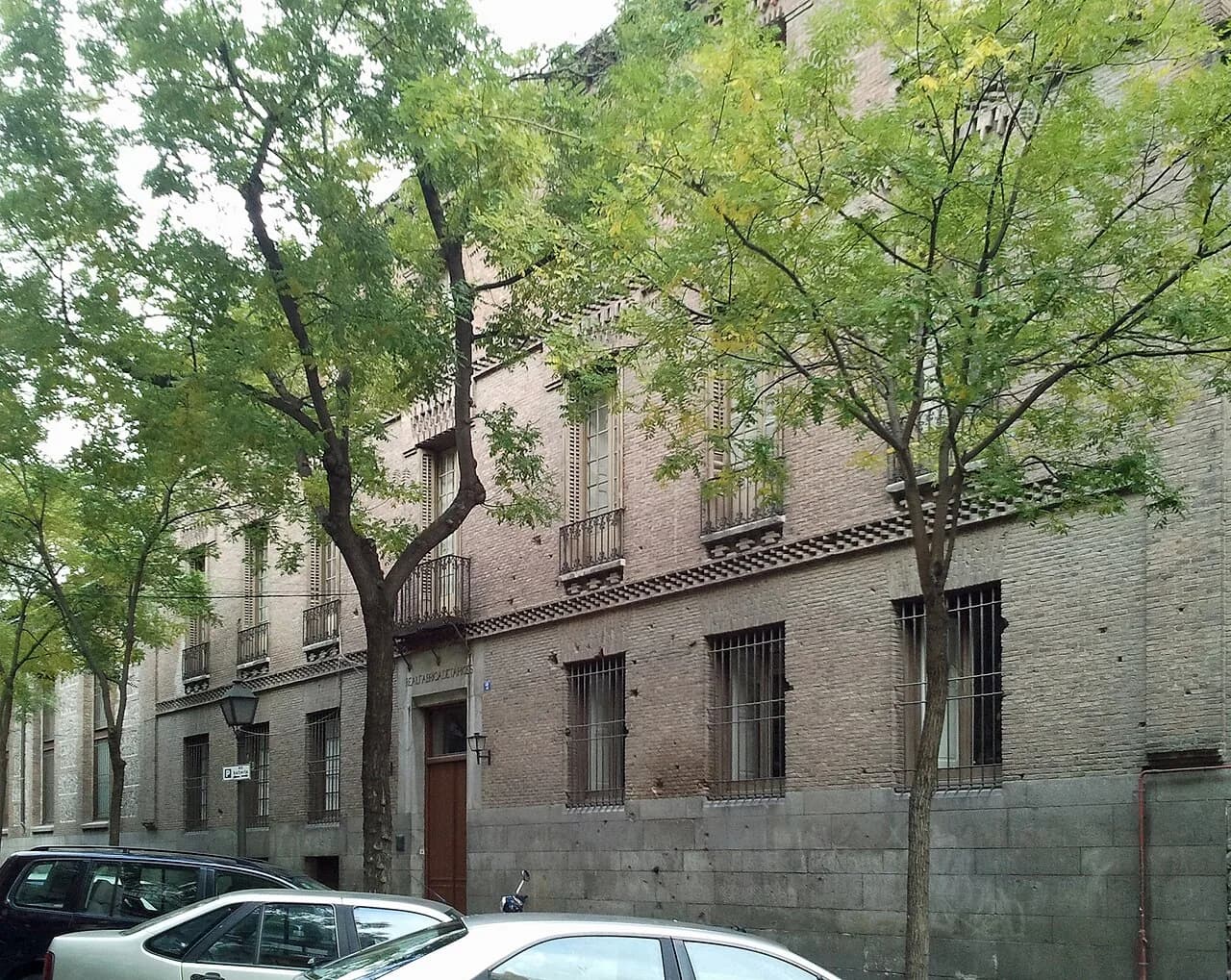
Museo Sorolla: Madrid Home Since 1923, Visitor Plan
The actual home and studio where Joaquín Sorolla lived and painted until 1923, with rooms barely changed since. See his sun-flooded beach scenes in 2026.
On this page
Museo Sorolla Visitor Guide: Explore Joaquín Sorolla's Madrid Home & Studio
Few museums in Madrid feel this personal. The Museo Sorolla is not a gallery assembled after an artist's death — it is the actual home and studio where Joaquín Sorolla lived, painted, and entertained guests until 1923. Walking through it in 2026 means moving through rooms that have barely changed in a century.
Sorolla's paintings are among the most immediately appealing in Western art: sun-flooded beach scenes, vibrant portraits, and Spanish landscapes rendered with a brilliant command of natural light. If you have never encountered his work before, this museum is the best possible introduction. If you already admire him, it is the closest you can get to his creative world.
This guide covers admission prices, exact opening hours, what to see in each room, the best time to visit, and what else to do in the Chamberí neighborhood after your visit.
Introduction to Museo Sorolla: Joaquín Sorolla's Home & Legacy
Joaquín Sorolla (1863–1923) was born in Valencia and became one of the most celebrated painters in Spain and internationally. A close contemporary of John Singer Sargent and Anders Zorn, Sorolla shared their obsession with rendering light on skin and water — but his touch was unmistakably Mediterranean: warm, sun-drenched, and technically dazzling. He is often called the "master of light" for the way his canvases seem to glow from within.
In 1910 he commissioned noted Madrid architect Enrique María Repullés to design a combined family home and working studio in the Chamberí district. Sorolla oversaw every detail of the project, ensuring the painting studios had optimal north-facing and overhead lighting while the family residence remained comfortably separated. He moved in with his wife Clotilde García del Castillo and their three children in 1911 and lived there until his death twelve years later.
His widow bequeathed the entire property — mansion, furnishings, and the world's largest collection of his works — to the Spanish government in 1925, on the specific condition that it become a museum in her husband's memory. The Museo Sorolla opened to the public in 1932 and has remained one of Spain's finest house museums ever since.
One context that sharpens everything you see here: from 1913 to 1919, Sorolla was consumed by his most ambitious commission — fourteen monumental murals depicting the regions of Spain, painted for the Hispanic Society of America in New York. Those panels, his grandest canvases by far, remain in New York today. The museum's collection is the world's richest in Sorolla works, but his most monumental paintings are across the Atlantic. Understanding this makes the studios, studies, and intimate works here feel like the intimate core of a much larger story.
Planning Your Visit: Tickets, Hours, & Best Times
General admission is €3 per person — one of the best-value entry prices of any significant museum in Madrid. Reduced admission (with accreditation) applies to visitors under 18, students, those over 65, people with disabilities, and members of large families. Entry is completely free on Saturdays from 14:00 to 20:00 and all day Sunday from 10:00 to 15:00. The museum is also free on 18 April (International Museum Day), 18 May, 12 October, and 6 December. Access the latest details at Museo Sorolla's official website before you go.
Opening hours in 2026: Tuesday to Friday 09:30–20:00, Saturday 09:30–20:00 (free from 14:00), Sunday 10:00–15:00. Last entry is at 19:30. The museum is closed on Mondays and on 1 and 6 January, 1 May, 9 November, and 24, 25, and 31 December.
The best time to visit for minimal crowds is a Tuesday or Wednesday morning, right at the 09:30 opening. The garden light is softer in the morning, which suits contemplating the patio and indoor works. If you want the garden at its most dramatic, come in the mid-to-late afternoon when the sun is lower and throws long shadows through the Moorish arches. Saturday free afternoons from 14:00 are popular but not overwhelming — worth trying if you are budget-conscious. Buying tickets online via the official website is straightforward and saves queuing time at the door, especially during peak summer months.
| Ticket | Price |
|---|---|
| General admission | €3 |
| Free entry | Sat 14:00–20:00 & all day Sunday |
| Hours | |
|---|---|
| Tue–Sat | 09:30–20:00 |
| Sunday | 10:00–15:00 |
| Monday | Closed |
| Status (2026) | Closed for renovation; reopening expected 2026 |
Entry is free every Saturday from 14:00 to 20:00 and all day Sunday — the quietest free window is Saturday at opening time (14:00), before the afternoon crowds arrive.
Exploring the Museum: Highlights of Sorolla's Collection & Studio
The museum is compact — you can see everything in about 1.5 hours at a comfortable pace — but the density of excellent work makes it feel far richer than its size suggests. The visit moves through three distinct zones: the painting studios, the family living spaces, and the gardens.
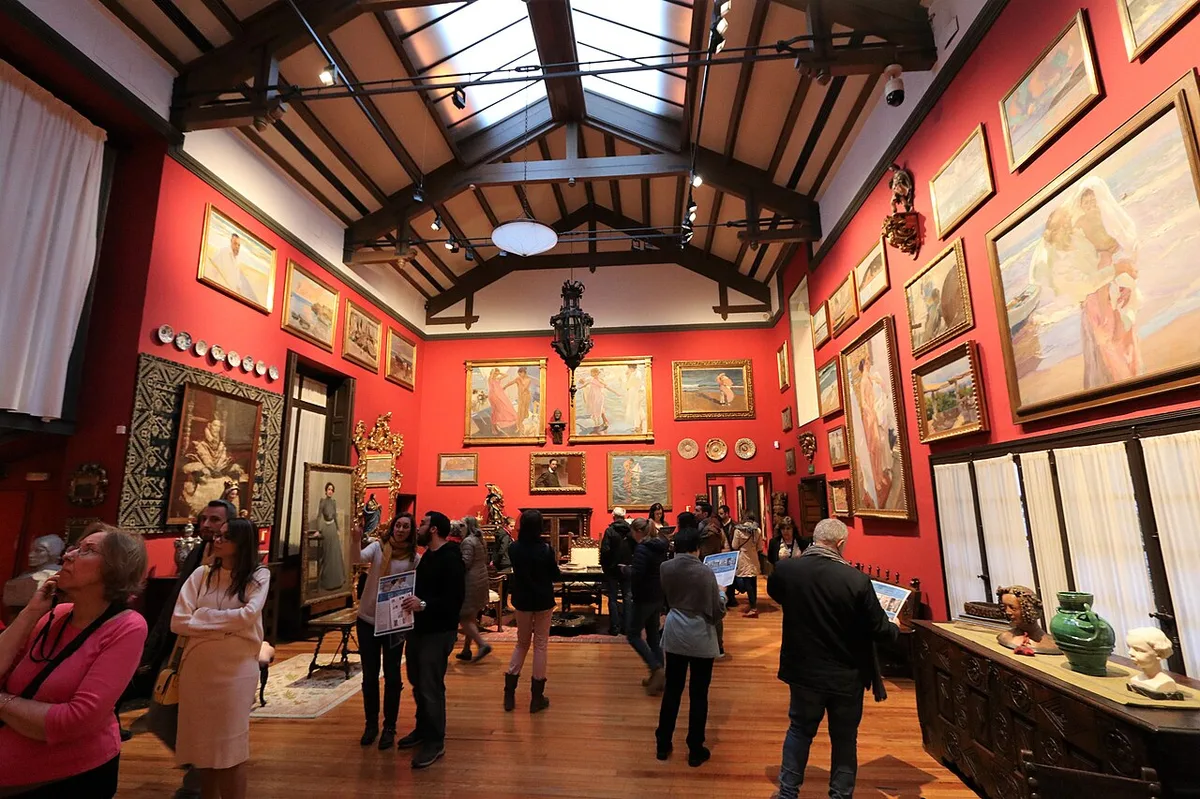
The main studio on the upper floor is the highlight for most visitors. Sorolla had it built with double-height ceilings and natural overhead skylights designed to flood the space with consistent north light — the same principle used in 19th-century académie studios across Europe. The walls were painted deep red, a convention of the era that makes the luminous canvases stand out dramatically. Major paintings hang exactly where they did in the painter's lifetime. His adjoining office, where Sorolla received clients and displayed works for sale, now focuses on family portraits and is a quieter, more intimate space.
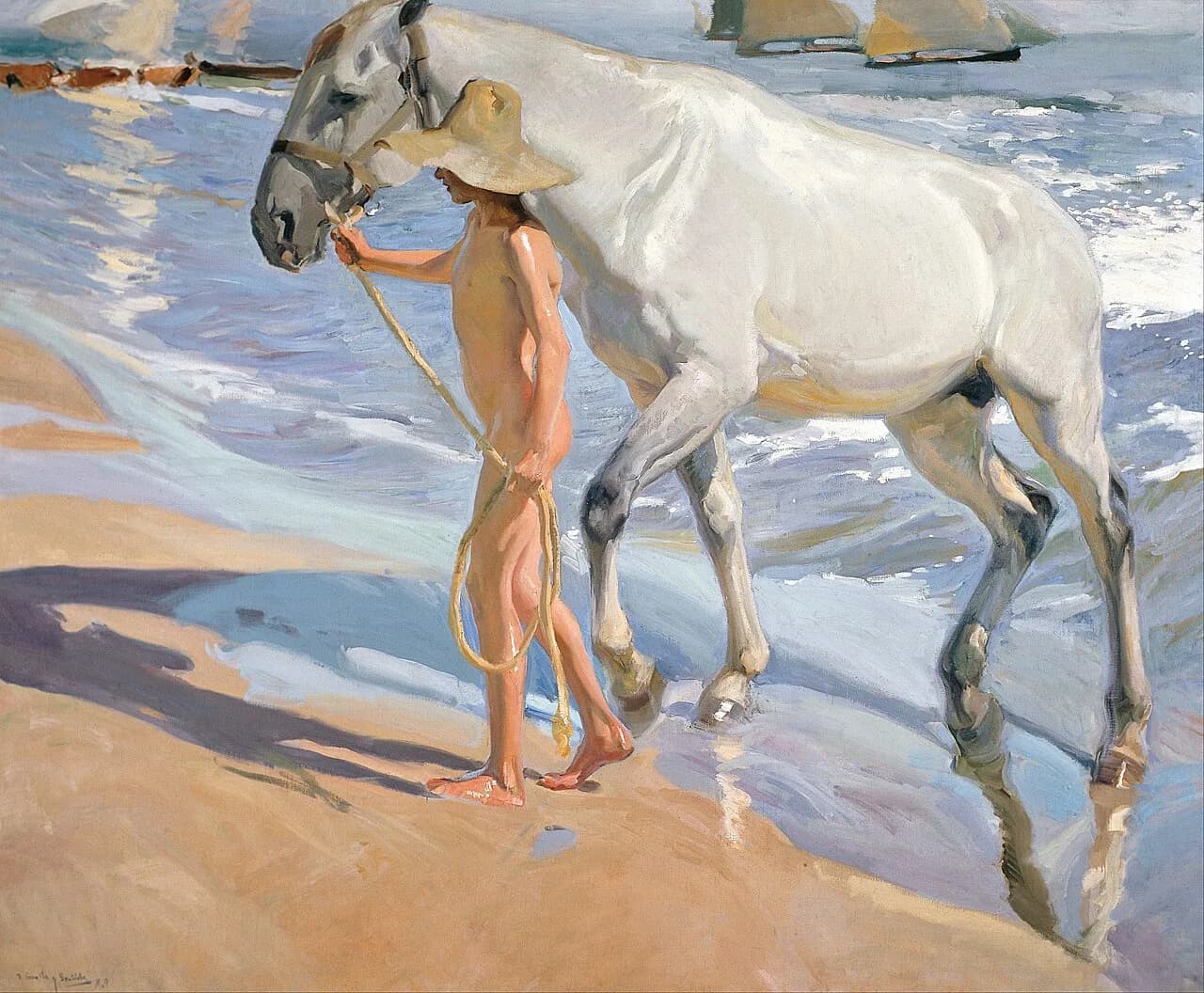
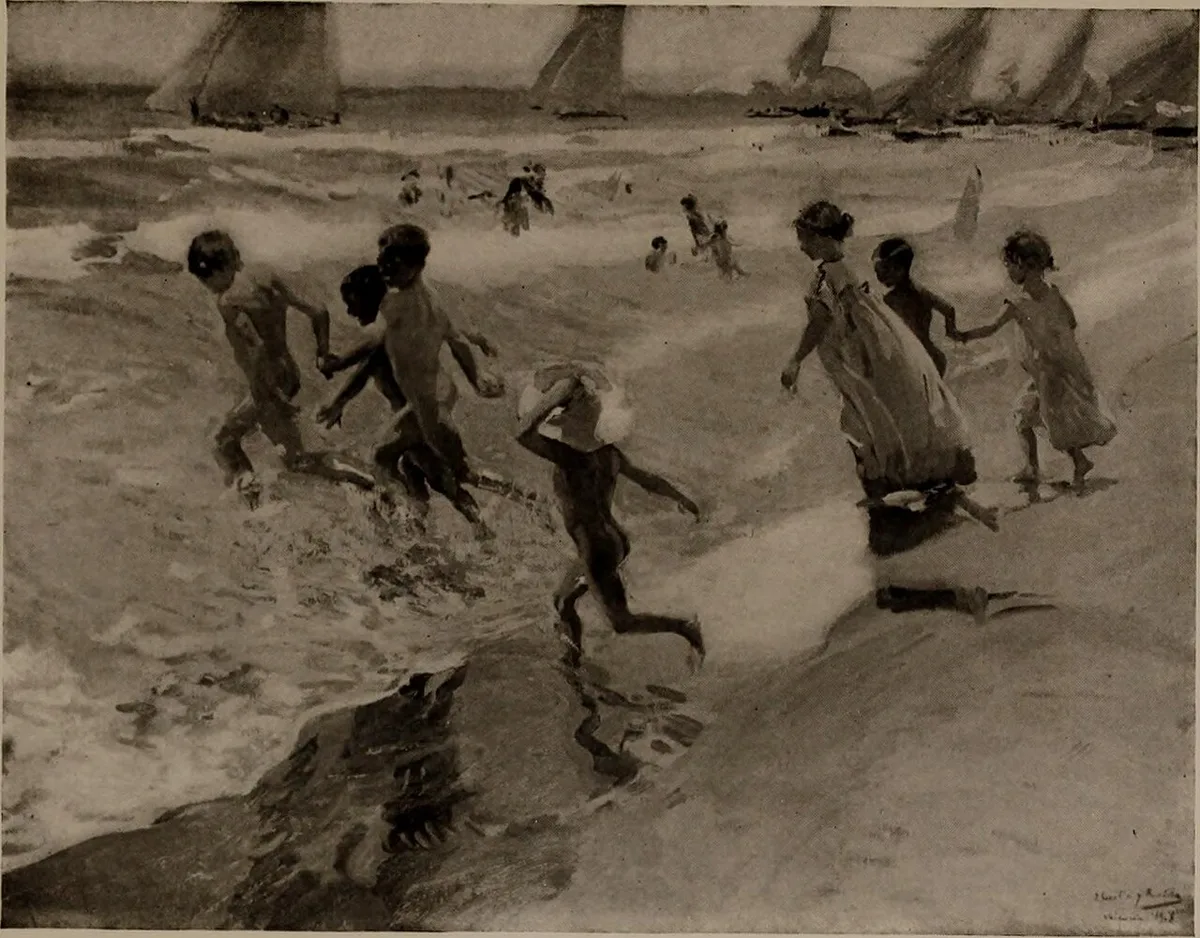
A second, smaller studio on the ground floor — with its own independent entrance directly from the garden — is where Sorolla painted portraits and put finishing touches on his outdoor seascapes. Three large beach paintings hang here exactly as they did during his lifetime: vivid, sun-struck scenes from Valencia and other Spanish coasts that rank among the most technically accomplished paintings in the building.
The galleries surrounding the Andalusian patio house the museum's ceramics collection, the largest in the museum after the paintings. Look for traditional azulejos and decorative pottery that Sorolla collected during his travels through Andalusia and Valencia — the same regions he captured on canvas.
The Artist's Private World: A Deep Dive into His Home & Garden
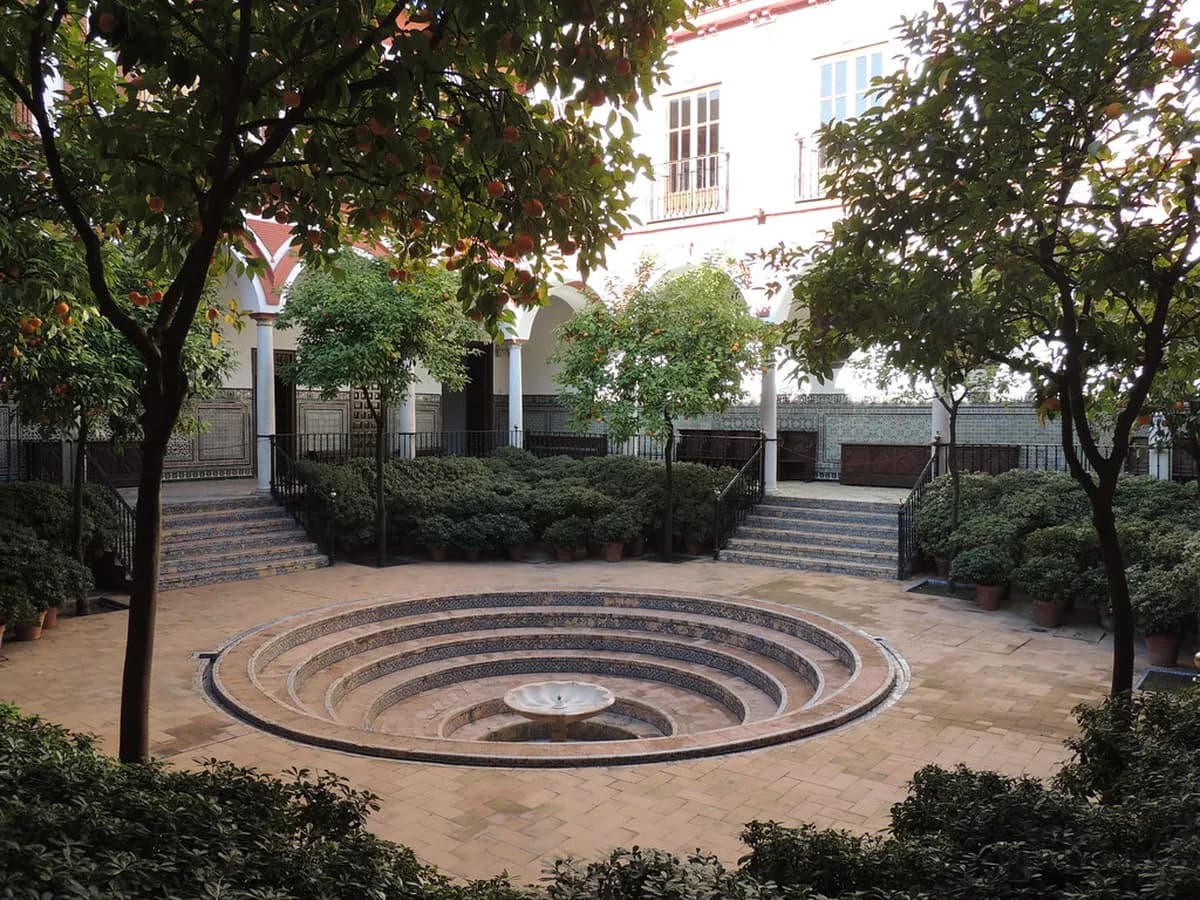
The Andalusian patio on the ground floor is one of the most photographed spaces in the museum. Three arcaded galleries, their arches supported by slender pillars, surround a central octagonal fountain covered in traditional blue and white azulejos. The design deliberately evokes the Alhambra in Granada and the Royal Alcázar in Seville — the same Moorish motifs Sorolla painted repeatedly during his travels through southern Spain. Morning light here is diffuse and cool; by noon it becomes direct and Mediterranean in intensity.
From the studio, a small landing leads into the vast living room, bathed in light from a glass rotunda overlooking the garden. Sorolla designed the room's decoration personally, down to the marble floor and a harmonious blend of antique and period-style furniture. Life-size portraits of his wife Clotilde and their children line the walls alongside busts by his friends, the sculptors Mariano Benlliure and José Capuz.
The dining room rewards close inspection. Sorolla painted a garland frieze directly onto the upper walls — a classical band of laurels, fruits, and portraits of his wife and daughters who appear to be actively decorating the room. It is a quietly charming piece of domestic art that many visitors nearly miss. Most first-timers walk through without realising the murals above them are by Sorolla himself.
The garden, which Sorolla designed and planted himself, fills the rear of the property in three sections: a Moorish-style marble fountain, a channel fountain in the style of Granada's Generalife, and a shaded seating area. Sorolla painted here often, and the space continues to welcome painters on scheduled days — check the official website for the current programme.
Practical Tips for a Seamless Visit
Getting there by public transport is straightforward. The nearest metro stations are Rubén Darío on Line 5 (a five-minute walk) and Gregorio Marañón on Lines 7 and 10 (about eight minutes on foot). Bus lines 7, 14, 27, 40, 45, 61, 150, and C1 all stop nearby. Find the museum at Paseo del General Martínez Campos, 37. Street parking in Chamberí is metered and limited — public transport is the practical choice for most visitors.
Large bags must go in the free lockers near the entrance. Keep your camera or phone accessible before checking your bag in. Photography without flash is permitted in most areas of the museum, including the studio and garden. Some temporary exhibition spaces may have restrictions — look for signage at each door. The garden and the Andalusian patio are exceptional spots for photography in the afternoon light.
Each room has laminated information sheets available in several languages including English, which are genuinely informative and more detailed than a typical museum label. Accessibility: the ground floor, patio, and garden are step-free. An elevator serves the upper studio floor. Confirm specific needs with staff at the entrance on arrival.
Allow 1 to 1.5 hours for a focused visit, 2 hours if you want to linger in the garden and revisit favourite works. If you have under an hour, prioritise the upper studio, the lower beach-painting studio, and the Andalusian patio — those three spaces give you the full measure of who Sorolla was.
What Travelers Say: Reviews & Insights
The Museo Sorolla holds a 4.7 out of 5 rating across more than 21,000 reviews — an unusually high score for a paid attraction in a city competing with world-class museums. Visitors consistently describe it as "the most beautiful museum in Madrid" and a peaceful escape from the busier tourist sites. Many say the €3 ticket feels almost embarrassingly good value; those who arrive on a free Sunday afternoon often call it one of the best spontaneous decisions of their Madrid trip.
Positive reviews highlight three things: the luminous quality of Sorolla's paintings seen in person (which photographs do not fully capture), the well-preserved domestic atmosphere of the rooms, and the garden as a tranquil counterpoint to the busy city outside. First-time visitors often note that the museum is smaller than they expected, but leave feeling they got more out of it than a larger institution would have offered.
Critical reviews are few but consistent: staff are strict about bag storage and not touching exhibits. Arrive prepared to use the lockers, and treat the visit as entering a preserved home rather than browsing a gallery — the rules exist to protect an irreplaceable domestic interior. A few visitors note that English signage could be more extensive, which is exactly why the laminated room sheets are worth picking up in every space.
Frequently Asked Questions (FAQs)
The most common visitor questions about admission, opening times, transport, and what to prioritise are answered below.
Beyond the Museum: Nearby Attractions in Madrid
The Chamberí neighborhood surrounding the museum is one of Madrid's most livable and architecturally elegant barrios. After your visit, a 15-minute walk through its wide avenues reveals late 19th-century apartment buildings, independent bookshops, and good local cafes. Look for a menú del día in any side street off Calle de Alonso Martínez for a well-priced set lunch.
For more house museum experiences, the Museo Cerralbo is within walking distance — an opulent 19th-century aristocratic residence filled with paintings, armour, and decorative arts, and free on Sundays. The Museo Lázaro Galdiano is about 10 minutes on foot; it holds an exceptional collection of European decorative arts across a similarly preserved townhouse setting.
If you enjoy 19th-century Spanish history and interior design, the Museo del Romanticismo presents period rooms from 1830s Spain with unusual completeness. For a broader picture of the city, our Madrid guide covers the full range of what the capital has to offer.
Frequently Asked Questions
What are the opening hours and ticket prices for Museo Sorolla?
The Museo Sorolla typically opens from Tuesday to Saturday, 9:30 AM to 8:00 PM, and Sundays from 10:00 AM to 3:00 PM. It is usually closed on Mondays. General admission is approximately 3 Euros, with reduced rates available for certain groups. Always check the official website for the most current information before your visit.
How much time should I allocate for a visit to Museo Sorolla?
Most visitors find 1.5 to 2 hours sufficient to explore the Museo Sorolla thoroughly. This allows time to appreciate the artworks, the artist's studio, and the beautiful garden. If you are an avid art enthusiast, you might want to allocate up to 2.5 hours for a more in-depth experience.
Is Museo Sorolla suitable for children or families?
Yes, Museo Sorolla can be suitable for children and families. Its manageable size and beautiful garden make it less daunting than larger museums. The vibrant colors in Sorolla's paintings and the engaging atmosphere of his preserved home can capture younger imaginations. Consider focusing on the garden and the more dynamic artworks.
What are the must-see artworks or areas within Museo Sorolla?
Must-see areas include Joaquín Sorolla's preserved studio, which feels as though he just left. The main galleries feature his iconic beach scenes and striking portraits. Do not miss the tranquil Andalusian Patio and the beautiful garden, both designed by Sorolla himself. These spaces offer unique insight into his artistic inspiration.
Can I buy tickets for Museo Sorolla online?
Yes, you can typically purchase tickets for Museo Sorolla online through its official website or ticketing platforms. Buying tickets in advance is recommended, especially during peak tourist seasons, to save time and ensure entry. This also helps you avoid potential queues at the museum entrance.
Other Painters' Houses Kept as They Were Left
Sorolla designed the house and its Andalusian garden himself, and his widow left both to the state largely untouched. Paris's Musée Gustave Moreau goes further: Moreau converted his own home into a museum of his work before he died, spiral staircase and all. Berlin's Georg Kolbe Museum keeps a sculptor's purpose-built studio and casting hall in use.
The Museo Sorolla offers one of the most intimate cultural experiences in Madrid. At €3 (free at weekends), it is exceptional value — but the real draw is the atmosphere: preserved rooms, luminous paintings, and a garden that still feels like a working artist's retreat. Plan 1.5 hours, use the metro, and bring a camera.
Whether you come as an art enthusiast or simply a curious visitor, Sorolla's world is immediately accessible. His sun-saturated canvases need no art-historical preamble — they make their case on sight. Do not miss this museum on your next visit to Madrid.
To verify current details, consult the Museo Sorolla on Wikipedia.
For more Madrid ideas, see our Hidden Gems in Madrid, Most Beautiful Places in Madrid, and Free Things to Do in Madrid guides.
Continue exploring
More guides you'll find useful