Musée Jean-Jacques Henner: Hours, Tickets & 2,200-Work Highlights
Explore 2,200 works inside Paris's 1878 private mansion museum near Parc Monceau, one of the city's only such hôtels open to visitors, with hours & tickets.
On this page
Musee Jean-jacques Henner Visitor Guide
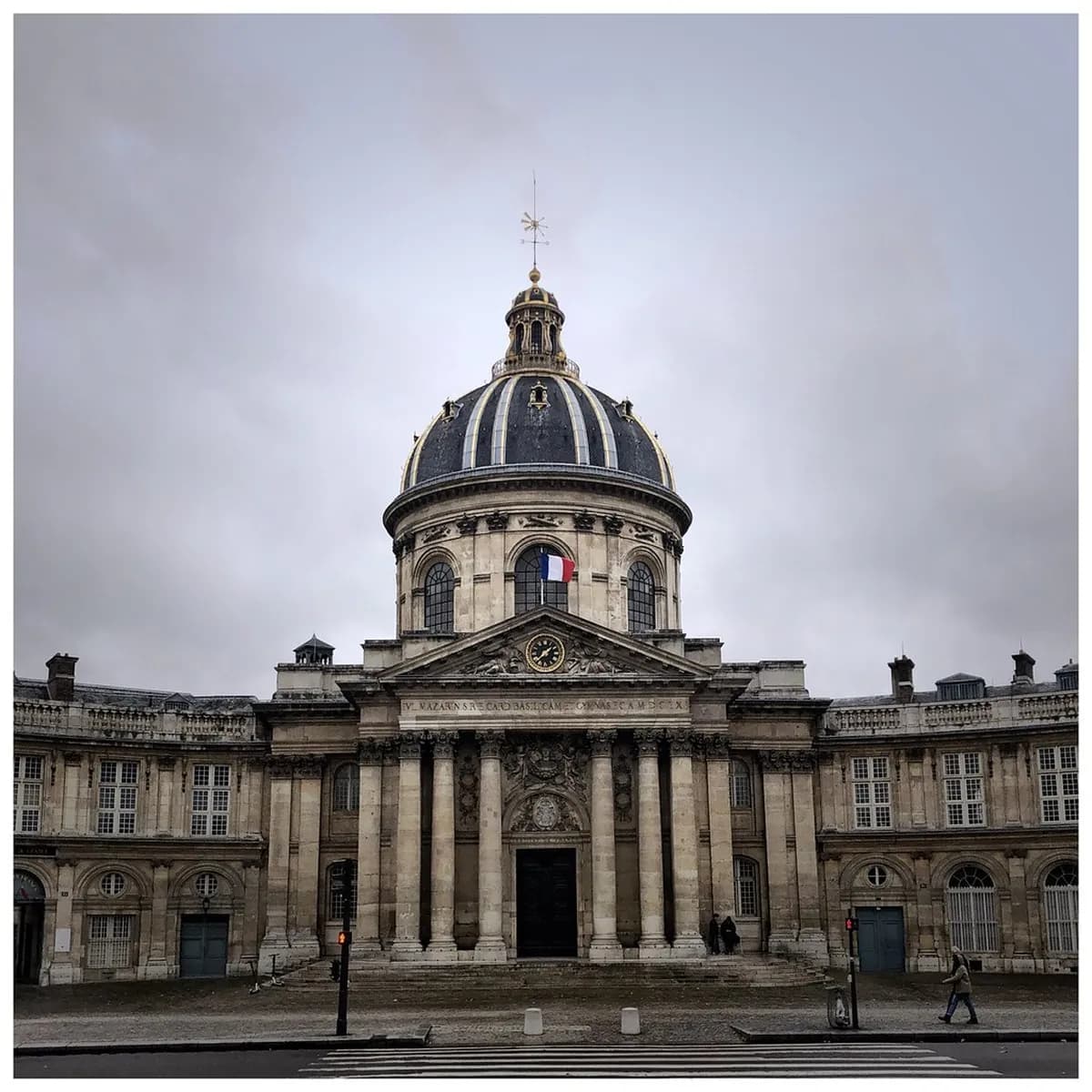
This musee jean-jacques henner visitor guide helps you explore one of the most beautiful hidden mansions in Paris. Located in the 17th arrondissement near Parc Monceau, the Musée national Jean-Jacques Henner holds more than 2,200 works by an Alsatian academic painter whose name most visitors don't recognize — yet whose canvases are genuinely arresting. The collection sits inside an 1878 hôtel particulier that is one of the only privately owned mansions of the Third Republic still open to the public.
Many travelers skip this spot for larger institutions like the Louvre or the Musée d'Orsay. That is their mistake. The intimate scale here means you will often stand alone in front of large, beautifully lit canvases — a luxury that no major Paris museum can offer. Plan an hour and a half, combine it with a walk through Parc Monceau, and you have one of the most rewarding afternoons in the city.
Who Was Jean-Jacques Henner?
Jean-Jacques Henner was born in 1829 in the Alsace region of France, the son of a farmer, and rose to become one of the most celebrated academic painters of the French Third Republic. He studied at the École des Beaux-Arts in Paris and won the Grand Prix de Rome in 1858 for his painting Adam and Eve Discovering the Body of Abel. That prize sent him to the Villa Medici in Rome for five years, where he absorbed Italian Renaissance masters — Titian, Raphael, and Correggio above all — and began developing the hazy, luminous technique that would define his mature work.
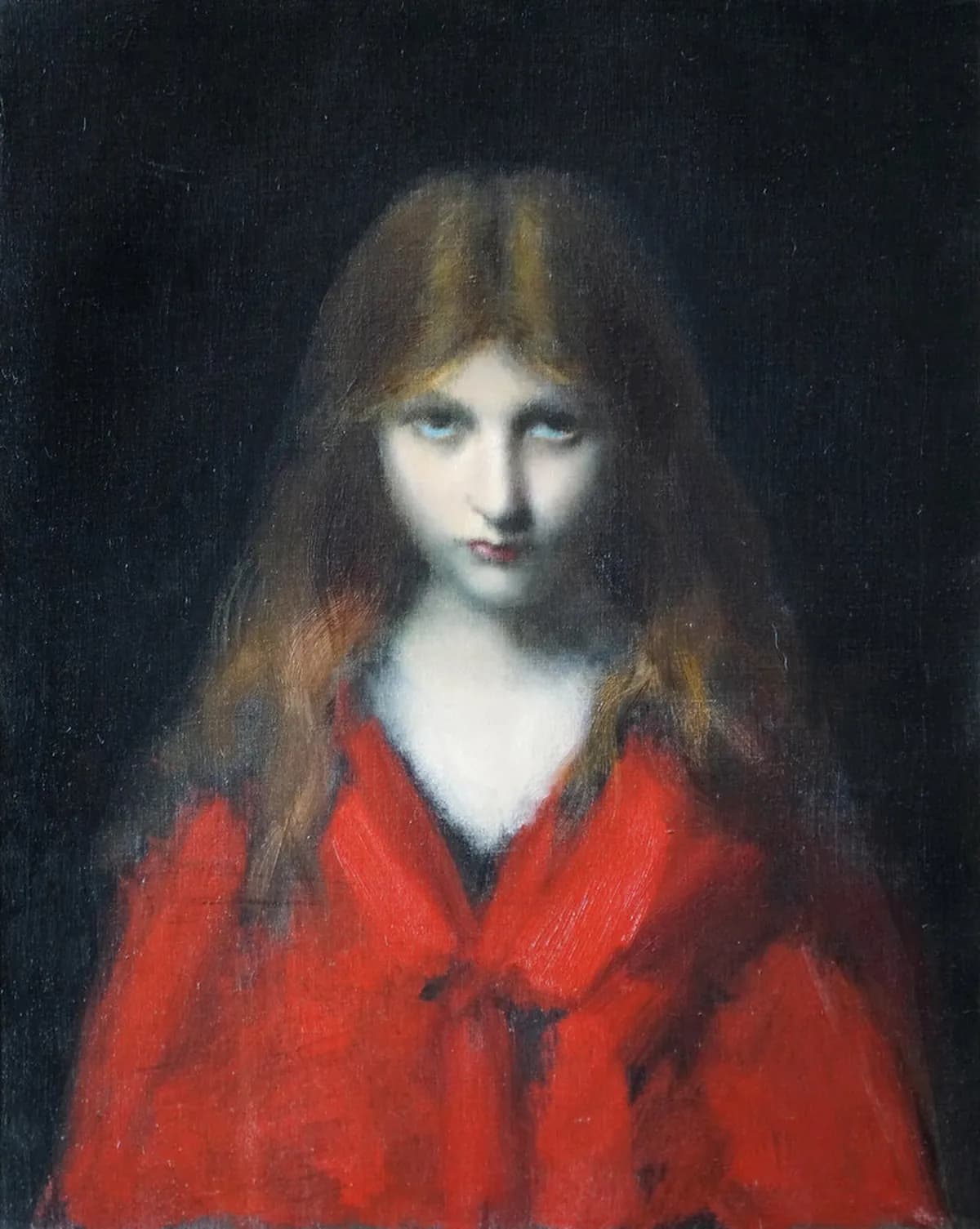
Henner cannot be slotted into a single movement. He was a classicist by training, a portraitist by profession, and a proto-Symbolist by instinct. His most recognizable paintings show red-haired women reclining in misty forest light, their forms softened through a technique related to sfumato that creates a dreamlike glow around the skin. He also painted religious scenes, historical subjects, Alsatian landscapes, and intimate portraits of the Parisian bourgeoisie. In 1903 he received the Legion of Honour. He died in 1905, having never lived in the mansion that now bears his name.
After France lost Alsace to Germany following the Franco-Prussian War of 1870–71, Henner remained emphatically French. His grief is visible in several canvases: landscapes of the forests and valleys he grew up in, painted with an emotional weight that goes beyond topography. These works give the collection a biographical dimension that transforms what could be a dry academic survey into something personal.
The Studio-Home: Guillaume Dubufe and the Making of the Museum
Henner never lived or worked at 43 avenue de Villiers. The mansion was purchased in 1878 by the painter Guillaume Dubufe (1853–1909), who was celebrated for large-scale decorative commissions including ceilings at the Gare de Lyon and the Sorbonne. Dubufe decorated the interior himself in an eclectic style drawing on Chinese, Renaissance, and North African influences. According to Henner's diaries, he was an occasional guest here — he knew the house and the winter garden, but he would not have imagined it would one day house his life's work.
After Dubufe's death the mansion was purchased by Marie Henner, the widow of Jean-Jacques Henner's nephew, who intended to establish a museum devoted to her husband's uncle. Upon her death she bequeathed the estate to France. An architect was commissioned for a major renovation that transformed the entrance into a museum hall, opened up the winter garden, and uncovered the original polychrome wall decoration. The museum opened in 1924, with its first curator — a painter named Many Benner, a former pupil of Henner — residing in an apartment and studio added to the building in 1935. A more recent renovation in 2015–16 removed the 1930s elevator, repainted the walls in the original colours, and added a glass roof to the winter garden. The Musée de la Vie Romantique offers a close parallel — another preserved artist's home in Paris where the period interiors matter as much as the art.
The Permanent Collection: What to Look For
The museum holds the world's largest collection of Henner's work: paintings, drawings, sketches, sculptures, and objects from his daily life spread across four floors of period interiors. The collection traces his entire career from early Alsatian student experiments through his Rome years at the Villa Medici to his final Parisian decades. Displayed alongside finished canvases are the preparatory studies, tracings, and sketches that reveal how the most polished works actually came together — a rare transparency that larger museums rarely attempt.
Among the highlights are the religious paintings: Christ With Donors (circa 1896–1902) is composed from three separate pieces of canvas stitched together, a detail you can see up close here in a way that would be impossible at the Musée d'Orsay. Saint Sebastian and Solitude — on long-term loan from the Louvre and the Musée d'Orsay — are also on display. Henner's portraits include the study for Herodias, the Lady With an Umbrella (Portrait of Madame X), and a replica of the self-portrait held at the Uffizi in Florence. The mythological works — particularly Andromeda (1880), whose golden palette reads almost like Klimt — are among the most visually striking rooms.
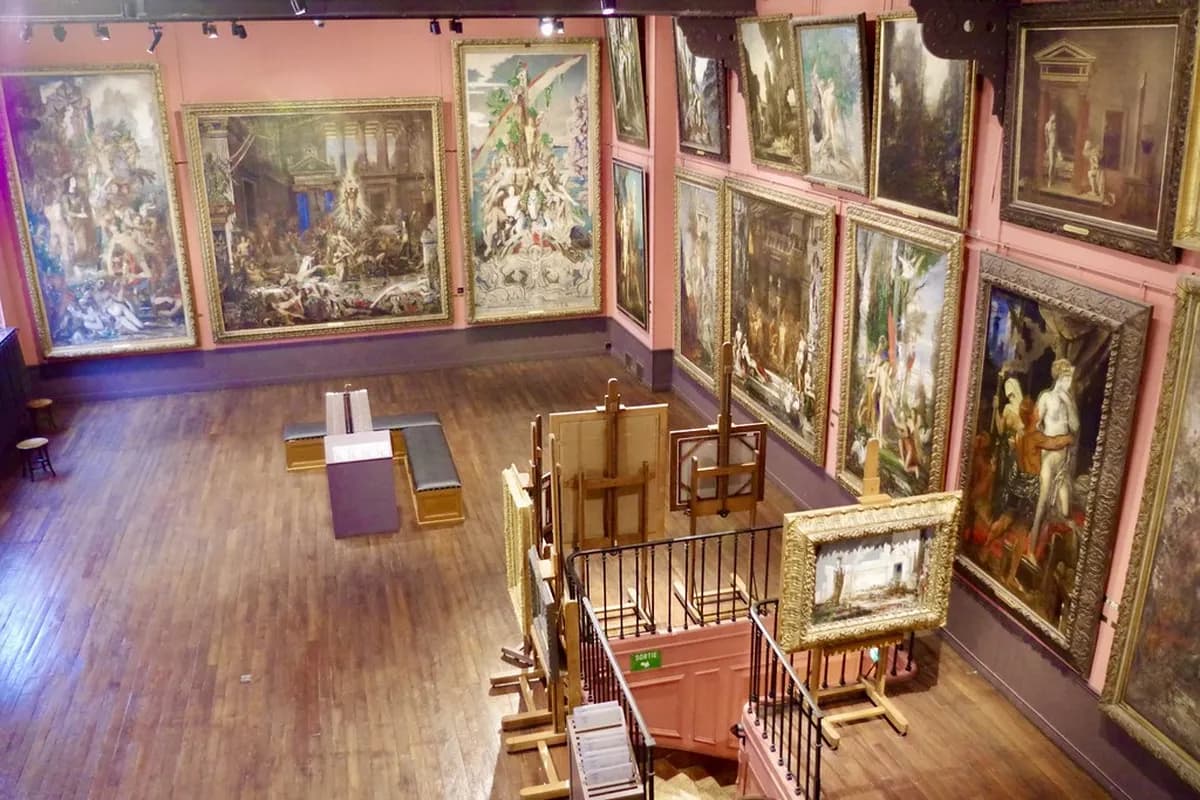
The top floor grand studio, flooded with natural light from massive skylights, is where the large-scale canvases hang and where the atmosphere of the building is most palpable. Personal objects — Henner's brushes, palettes, furniture, letters, photographs — are distributed throughout the rooms, keeping the experience biographical rather than clinical. The museum also holds works by other artists from Henner's circle, including Paul Dubois and Antoine Vollon.
Opening Hours, Tickets, and Free Entry
The Musée Jean-Jacques Henner is open Monday and Wednesday through Sunday from 11:00 to 18:00, with last admission at 17:30. It is closed every Tuesday, plus 1 January, 1 May, and 25 December. In 2026 those Tuesday closures catch visitors who plan a quick midweek detour — double-check your day before making the trip.
Adult admission is €8 and the reduced rate is €6. Entry to the permanent collection is free on the first Sunday of every month, and free year-round for EU and EEA residents under 26 (bring a valid ID). The European Heritage Days event in September also opens the museum without charge for all visitors. From September through June the museum stays open later on the second Thursday of each month — useful if you want an evening visit with slightly fewer daytime crowds.
| Day | Hours | Notes |
|---|---|---|
| Monday | 11:00–18:00 | Regular hours |
| Tuesday | Closed | Museum closed all day |
| Wednesday–Sunday | 11:00–18:00 | Last admission 17:30 |
| Second Thursday (Sept–June) | Open late | Extended evening hours |
| First Sunday of month | 11:00–18:00 | Free entry for all |
The €8 ticket covers entry to both the Musée Jean-Jacques Henner and the Musée Gustave Moreau on a single purchase, and is valid for seven days. That means you can visit one museum on a Monday and the other the following Sunday on the same ticket — an excellent deal if you are spending a full week in Paris. The official site at musee-henner.fr lists current prices and any temporary closure details.
Your €8 ticket is valid for seven days and gives you entry to both the Henner and Musée Gustave Moreau, making it one of Paris's best museum value propositions.
What Your Admission Ticket Gets You Beyond This Museum
Hold onto your Henner (or Gustave Moreau) admission ticket after your visit. The official museum page lists a cascade of reduced-rate benefits at partner institutions that no Paris guidebook covers well. Within eight days of your visit, the ticket earns you a discount at the Musée Guimet (Asian arts, 16th arrondissement), the Musée d'Orsay, and the Palais Garnier self-guided tour. Within fifteen days it gets you a reduced rate at the Musée de la Vie Romantique and the Musée d'Art et d'Histoire du Judaïsme. Within thirty days, it extends the discount to Citéco, the Cité de l'économie et de la monnaie.
The arrangement works in both directions: if you visit any of those partner institutions first and still have a valid ticket, you can use it to enter the Henner or the Gustave Moreau at the reduced rate. For a visitor planning a week of smaller Paris museums — rather than queuing for the blockbusters — this chain means the €8 ticket effectively lowers the cost of four to six additional venues. Keep the physical ticket or a photo of it; staff at partner museums will ask to see it at the desk.
Where Else to See Henner's Work in Paris
The Musée d'Orsay holds several of Henner's most iconic paintings on permanent display. These include The Chaste Susannah, The Reader, Feminine Nudes, and Jesus in His Tomb. Seeing these works at the Orsay after visiting the Henner museum adds context: you understand the technique and biography behind canvases that would otherwise appear as anonymous academic paintings in a crowded 19th-century gallery.
Henner's Reclining Nude (known as Lady on a Black Divan) and his Reader also have a presence in the Musée du Luxembourg's historical collection record, though the Orsay is the most accessible single destination for seeing his public work. For visitors who want to trace the arc of his career, the route Henner Museum → Orsay in a single day covers the breadth of what Paris holds.
How to Get There and Plan Your Visit
The museum sits at 43 avenue de Villiers, 75017 Paris, a ten-minute walk from three Metro stations: Malesherbes (Line 3), Wagram (Line 3), or Monceau (Line 2). Bus lines 31 and 94 also stop close to the entrance. The neighborhood — Plaine-Monceau — is quiet, residential, and straightforward to navigate on foot. There are no major queues at this museum; arriving at opening (11:00) or mid-afternoon both work well.
Most visitors need 60 to 90 minutes for all four floors. Start in the lower rooms to establish the biographical context, then work up to the grand top-floor studio where the large mythological canvases hang and the natural light is strongest. After the visit, Parc Monceau is a five-minute walk east along avenue de Villiers — a formal garden with classical columns, a Venetian rotunda, and wide lawns that make a natural break before lunch. Combine the Henner with the Musée Jacquemart-André, also within walking distance, for a full morning of 19th-century Parisian domestic interiors.
Practical notes for 2026: large bags and suitcases are not permitted inside (vigipirate security check at the entrance). Photography without flash is allowed throughout the galleries. An elevator serves all visitor floors and a wheelchair or cane seat is available on loan at the reception desk. The museum telephone is +33 (0)1 47 63 42 73. Visitors with hearing difficulties can contact the museum via the Acceo solution.
The museum is closed every Tuesday, so double-check your calendar before making the trip, especially if you're planning a midweek visit.
The 17th Arrondissement: Neighborhood Context
The Musée Henner sits in the heart of one of Paris's most architecturally intact 19th-century neighborhoods. The Plaine-Monceau district was developed during the Second Empire as a residential quarter for the upper bourgeoisie, and the grand hôtels particuliers that line avenue de Villiers and boulevard de Courcelles survive largely unchanged. Many now house embassies or private offices, but their Neo-Renaissance facades, decorative ironwork, and courtyard gardens remain visible from the street.
Parc Monceau, five minutes from the museum, was laid out in the English landscape style in the 18th century and later expanded by Baron Haussmann. It is known for its classical folly — a circular colonnade reflected in a small lake — and for the dense canopy of plane trees that shade its paths. The park is a favorite subject in Impressionist painting: Monet painted it several times in the 1870s. It functions as a natural postscript to a Henner visit, grounding his landscapes in the actual greenery he knew. The nearby Musée de la Chasse et de la Nature is another smaller Paris museum worth including in a half-day circuit of the Right Bank's lesser-known collections.
Practical Tips and Museum Resources
Group reservations are mandatory for parties of ten or more. Book in advance through the official site to guarantee your preferred time slot. Individual visitors do not need to book ahead — the museum rarely sells out. The gift shop near the entrance sells exhibition catalogues, art prints, and books on Henner and 19th-century French academic painting, and is worth browsing even if you don't buy.
The museum is part of the national museums network (Réunion des musées nationaux), which means it maintains high curatorial standards and rotates works from its archive storage regularly. The permanent collection is supplemented by temporary exhibitions, literary and musical events, and education programmes for schools — check the official calendar at musee-henner.fr for what is running during your trip. Staff speak English and can answer specific questions about individual works on request.
For visitors interested in similar intimate artist's-home experiences in Paris, the Musée Cognacq-Jay and the Maison de Balzac are both worth including on a longer itinerary of smaller city museums. All three share the quality of feeling like a private home rather than a public institution — the defining characteristic of this corner of the Paris museum map.
Frequently Asked Questions
Which musee jean-jacques henner visitor guide options fit first-time visitors?
First-time visitors should focus on the Red Salon and the top-floor studio. These areas showcase the most famous portraits and the best architecture. If you have extra time, consider visiting the nearby Musée de Montmartre for more local art history.
How much time should you plan for the museum?
You should plan to spend about 90 minutes inside the museum galleries. This allows enough time to see all three floors and read the descriptions. The mansion is small enough that you will not feel rushed or overwhelmed during your stay.
What should travelers avoid when planning a visit?
Avoid visiting on Tuesdays as the museum is closed to the public. You should also check for special events that might close certain galleries temporarily. It is best to arrive early in the morning to enjoy the natural light in the studios.
Is the museum worth including on a short itinerary?
Yes, it is worth it because it only takes about an hour to see. It offers a peaceful break from the more crowded parts of the city. The museum is a high-value stop for anyone interested in 19th-century art and architecture.
More Single-Artist House Museums in Europe
Henner's museum occupies a purpose-built painter's townhouse in the Plaine Monceau, a format that recurs across Europe. Madrid's Museo Sorolla is the closest in spirit — a working house and garden preserved around one painter's output. Amsterdam's Rembrandt House Museum takes the same idea back three centuries and rebuilds the studio from a bankruptcy inventory.
The Musée Jean-Jacques Henner is a true hidden gem that rewards curious travelers. It combines a stunning historic mansion with a world-class collection of academic art. Visiting this site gives you a deeper appreciation for the artistic heritage of Paris.
Whether you are an art student or a casual traveler, the museum offers something special. The quiet atmosphere and beautiful light make it one of the most relaxing spots in the city. Be sure to add this unique destination to your next Parisian travel itinerary.
For official details, visit the Musée Jean-Jacques Henner on Wikipedia.
Continue exploring
More guides you'll find useful