Off The Beaten Path Paris Travel Guide
Plan your off the beaten path paris trip with top local picks, neighborhood context, timing tips, and practical booking advice for a smoother vacation.
On this page
Off The Beaten Path Paris
Traveling to the French capital often means waiting in long lines at famous landmarks. Exploring Paris hidden gems guide allows you to experience the city like a true local. You will find quiet streets and charming cafes away from the usual tourist crowds.
Finding unique spots makes your trip much more memorable and relaxing. This guide covers the neighborhoods, viewpoints, markets, and cultural spaces that most visitors never reach. Let us dive into the best experiences for an unforgettable unique Paris experiences adventure.
Hidden Neighborhoods Worth Exploring
The most rewarding way to escape the crowds is to treat whole neighborhoods as your destination rather than chasing individual monuments. The 20th arrondissement's Ménilmontant and Charonne districts have been genuine Parisian working-class quarters for generations. Steep winding streets, small squares with boules courts, and independent wine bars make them feel far removed from the tourist orbit.
Belleville straddles the 19th and 20th arrondissements and is home to one of the city's most vibrant immigrant communities. A large Chinese and Vietnamese population runs excellent restaurants along rue de Belleville, where a bowl of pho costs under ten euros. The neighborhood is also the birthplace of Édith Piaf — a small museum on rue de la Belleville marks the spot where she was allegedly born.
Batignolles in the 17th arrondissement is a village-within-the-city that most visitors never reach. The Saturday organic market on boulevard des Batignolles runs from 09:00 to 14:00 and draws locals rather than tourists. Square des Batignolles at its centre offers a small lake, weeping willows, and the kind of slow Sunday atmosphere that feels genuinely Parisian.
For a deeper dive into local character, the Belleville neighborhood deserves at minimum a full half-day. Arrive late morning, walk toward Parc de Belleville for panoramic views over the rooftops, then work your way downhill through the street art and into the food stalls below.
Secret Viewpoints Over the City
Everyone knows about the Eiffel Tower observation deck and the Arc de Triomphe roof. Far fewer visitors climb to the free panoramic terrace at the Institut du Monde Arabe in the 5th arrondissement. The rooftop cafe opens from around 10:00 to 17:00 and offers unobstructed views from Notre-Dame all the way to the La Défense towers in the west.
Parc de Belleville sits at 108 metres above sea level, making it the highest public garden in the city. The upper esplanade is free to enter at any time and gives a sweeping east-west view of the entire Paris skyline. Come at dusk when the light turns gold over the rooftops and the neighbourhood below starts its evening routine.
The Paris's secret viewpoints article covers several more options, including the rooftop of the BHV department store and the gallery balcony at the Musée d'Orsay. Both require a ticket or a small purchase but avoid the massive queues of the main observation platforms. For something completely free, the southern parapet of the Sacré-Coeur gardens offers a wide view without setting foot inside the basilica.
The Covered Passages: 19th-Century Shopping Arcades
Paris once had more than 150 covered passages — glass-roofed shopping arcades built between 1800 and 1850. Only about twenty survive today, and they are among the most atmospheric free attractions in the city. The Paris covered passages are best explored as a half-day walk through the 2nd arrondissement.
Galerie Vivienne, near the Palais-Royal, is the most beautifully preserved. Its mosaic floor, painted skylights, and independent bookshop have changed very little since the 1820s. Entry is free and the passage is open from roughly 08:30 to 20:30 on weekdays.
Passage des Panoramas, opened in 1799, was the first Parisian passage to be lit by gas. Today it houses stamp and postcard dealers, a few wine bars, and an excellent crêperie. It connects directly to Passage Jouffroy, which contains a wax museum, an old-fashioned toy shop, and a hotel with a lobby straight from the Second Empire. Walking all three linked passages takes about ninety minutes and costs nothing.
Galerie Véro-Dodat is the darkest and most theatrical of the lot. Black-and-gold columns, painted ceilings, and antique shops give it a gothic-novel atmosphere. It opens on weekdays and is almost always quiet — you will rarely share it with more than a handful of other visitors.
Galerie Vivienne (open approx. 08:30–20:30 weekdays) and Passage des Panoramas connect directly to Passage Jouffroy — walking all three linked passages takes about 90 minutes and is entirely free. Start at Galerie Vivienne near the Palais-Royal.
Parks and Outdoor Spaces Locals Actually Use
Finding the when to visit Paris matters most in green spaces. The Jardin de l'Atlantique sits directly on top of Montparnasse train station and is invisible from street level. A set of escalators inside the station leads up to this modern roof garden with tennis courts, a weathervane garden, and lawns where office workers eat lunch.
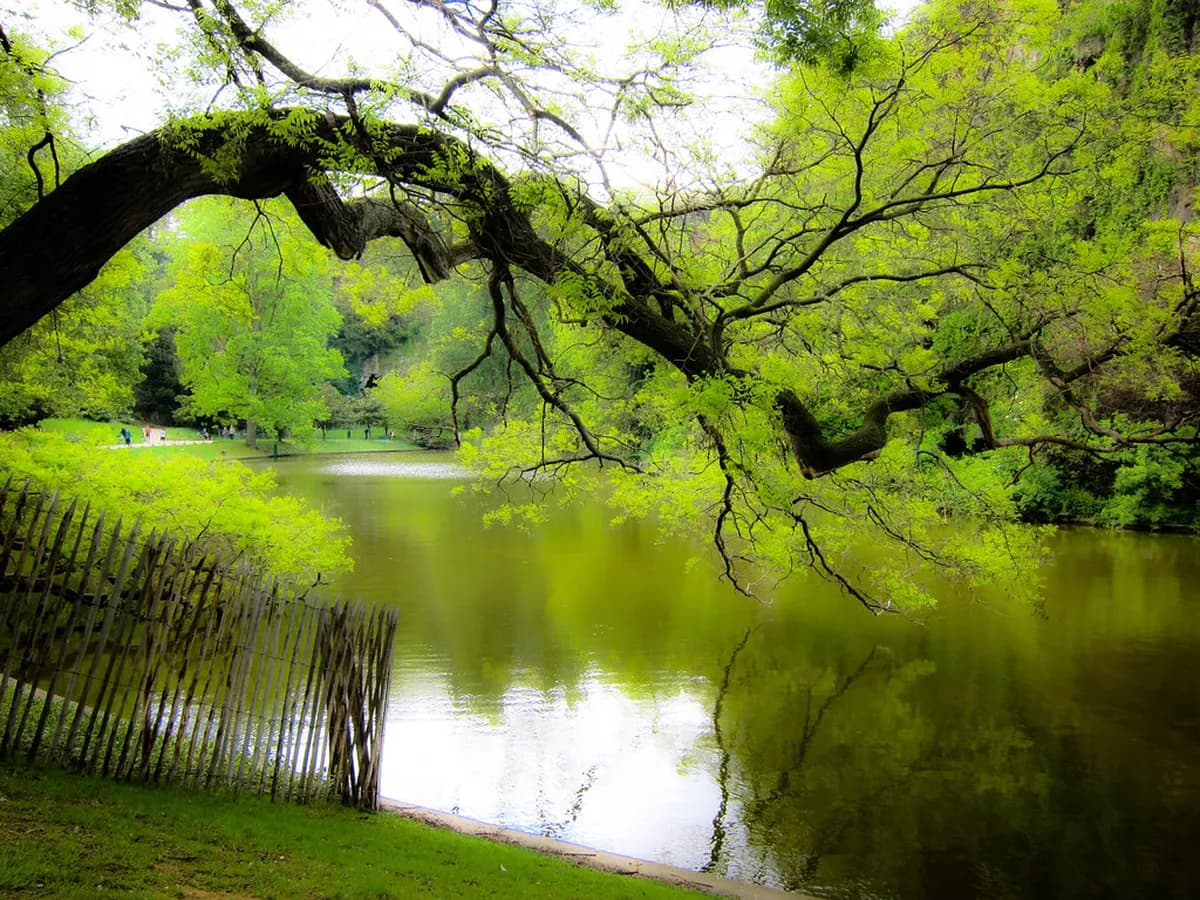
Parc des Buttes-Chaumont in the 19th arrondissement is the most dramatic landscape in the city. The park was built on old gypsum quarries and features a rocky island, a suspension bridge, and a hilltop temple with views over the north of Paris. You can experience the Promenade Plantée for free — a four-kilometre elevated railway line turned green walkway in the 12th arrondissement that predates New York's High Line by twenty years.
The Arènes de Lutèce in the 5th arrondissement are free Roman ruins where local men play pétanque on weekday afternoons. They were rediscovered in 1869 and can accommodate ten thousand spectators — yet most visitors to the Latin Quarter walk straight past. Entry is free and the site is open daily.
The Mouzaïa Quarter: Paris's Best-Kept Residential Secret
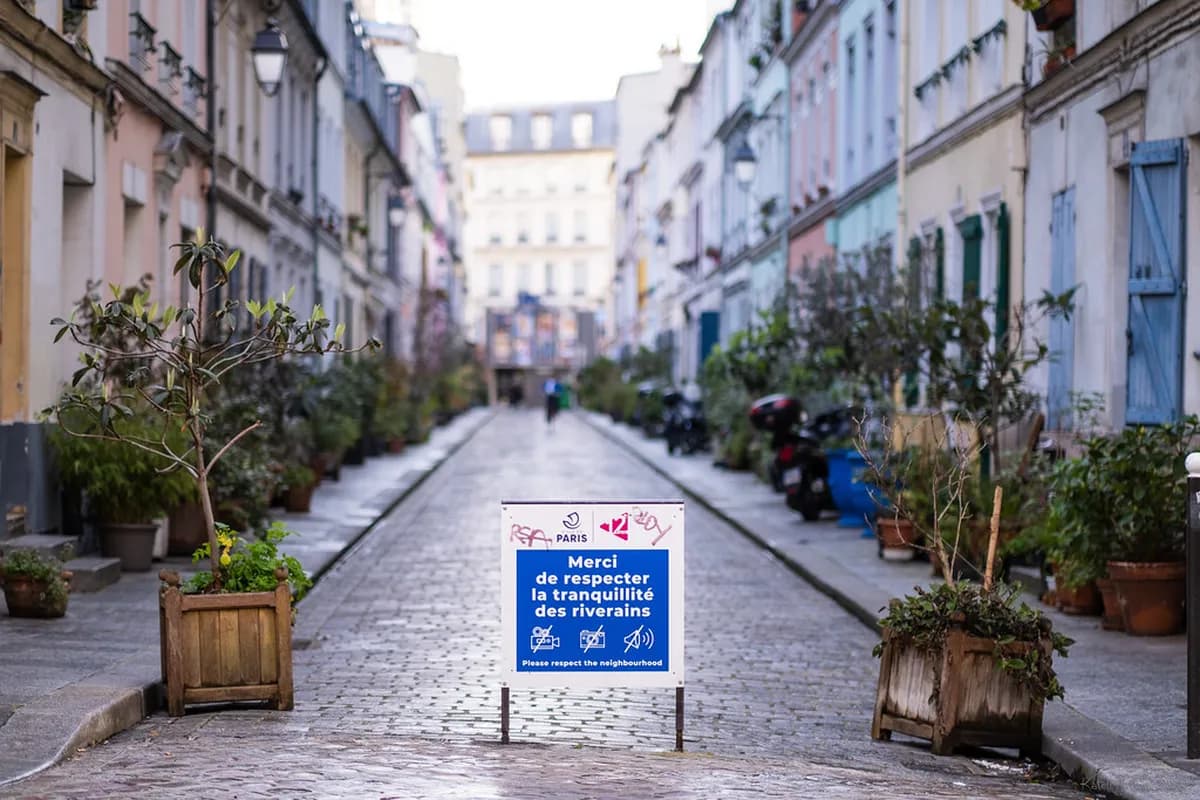
Directly behind Parc des Buttes-Chaumont, in the eastern 19th arrondissement, lies a grid of narrow cobbled lanes called villas — private garden streets closed to through traffic. The Mouzaïa quarter contains roughly fifteen of these hidden alleys, each lined with two-storey cottages, climbing roses, and small kitchen gardens. They were built in the late 19th century as affordable housing over gypsum-rich soil too unstable for heavy Haussmann construction.
Villa de l'Ermitage and Villa du Borrégo are the most scenic. Walking their full length takes under ten minutes each, but the contrast with the stone-and-zinc cityscape just a block away is startling. You will hear birds, smell bread from open windows, and pass the occasional painter working outside. No guidebook covers this — locals treat it as a well-kept secret within their own city.
Getting here is easy: take metro line 7bis to Botzaris or Pré-Saint-Gervais. From either station, the villa streets begin within a three-minute walk. Combine the Mouzaïa with a circuit through Buttes-Chaumont to make a full morning in the 19th arrondissement without seeing another tourist group.
Off-Tourist-Trail Food, Markets, and Eating
The Marché d'Aligre in the 12th arrondissement is the most vibrant outdoor market in Paris. It runs Tuesday to Sunday mornings until around 13:00 and combines a fruit and vegetable square with a covered hall selling cheese, charcuterie, and wine. Prices are lower than at the Marché Bastille and the crowd is almost entirely local.
Rue Mouffetard in the 5th arrondissement is one of the oldest market streets in Europe. The upper section near Contrescarpe is touristy, but the lower half near rue de l'Epée-de-Bois is still a genuine neighborhood shopping street. Arrive before 10:00 on a Saturday to see it before the tourist groups arrive, and pick up a fresh tartine from any of the small boulangeries for under three euros.
Belleville's rue de Belleville and avenue de Choisy in the 13th offer some of the best and cheapest Asian food in France. The where locals eat in Paris guide goes into more detail on specific addresses. In the 13th, the Tang Frères supermarket area is worth visiting simply to understand the scale of Paris's Vietnamese and Cambodian community, which has been rooted here since the 1970s.
The the city's flea markets covers the Puces de Saint-Ouen at Porte de Clignancourt — the world's largest antique market, open weekends from 09:00 to 18:00. Arrive before 10:00 to browse before the afternoon crowds fill the alleys.
Alternative Museums and Cultural Spaces
The Musée de la Chasse et de la Nature in the Marais offers a genuinely strange and beautiful collection. Hunting trophies, oil paintings, and taxidermy are mixed with contemporary art installations in ornate 17th-century rooms. Tickets cost around ten euros and the galleries stay quiet even on busy weekends.
Two painters' houses in the northern arrondissements stay quiet all year. The Musée Jean-Jacques Henner occupies a purpose-built artist's townhouse in the Plaine Monceau, and the Musée Gustave Moreau in the 9th was arranged by Moreau himself as a museum of his own work.
La Cinémathèque Française in the 12th arrondissement is housed in a Frank Gehry building and screens classic and rare films every evening. Tickets cost under twelve euros and the permanent film history museum is included. The building itself is worth visiting even if you do not see a film.
La Bellevilloise in the 20th is a cultural centre built inside a former workers' cooperative from 1877. It hosts live music (jazz, soul, electronic), art exhibitions, and a Sunday brunch market under a glass-roofed olive grove. Ticket prices for concerts vary but rarely exceed twenty euros. Check their weekly schedule at labellevilloise.com before visiting.
Street art fills the 13th arrondissement along rue Jeanne d'Arc and boulevard Vincent Auriol. The Tour Paris 13 project began here in 2013 and the murals have been refreshed since. Walking the full street-art circuit from Place d'Italie to Bibliothèque François Mitterrand takes about an hour and costs nothing.
Planning Your Off-Beaten-Path Days
Many smaller museums and covered passages are closed on Mondays. Local markets close by 13:00 on most days, so plan food visits for the morning. Downloading offline maps before you leave your accommodation is especially useful in the outer arrondissements where phone signal can drop.
Buying a carnet of ten metro tickets (currently around 17 euros for the t+ carnet) or a 2-day Navigo Liberté+ pass gives you unlimited travel across all zones within the city. The metro covers almost every neighborhood mentioned in this guide. Line 7bis is a small loop line serving the 19th arrondissement that most tourists never use — it is quiet, old, and useful for the Buttes-Chaumont and Mouzaïa areas.
Walking tours led by local guides are one of the most efficient ways to learn neighborhood history. Guides share stories about specific doorways, street names, and local personalities that no written guide captures. Free walking tour companies operate in Belleville, Montmartre's back streets, and the Marais most mornings — you tip what you think the tour was worth at the end.
The Catacombs allow only 200 visitors at a time — book timed-entry tickets at least a week in advance or you will not get in. Temperature underground stays at 14°C year-round, so bring a jacket even in summer.
Underground Paris: Catacombs and Canal Walks
The Catacombs hold the remains of over six million former residents, transferred here from overflowing cemeteries starting in 1786. The temperature underground stays at a constant fourteen degrees Celsius year-round, so bring a jacket even in summer. Only two hundred visitors are allowed inside at any one time — book timed-entry tickets at least a week in advance. Tickets cost around fifteen euros in 2026.
The Canal Saint-Martin in the 10th arrondissement runs for 4.5 kilometres through a neighbourhood that has shifted from working-class to a mix of artists, young families, and independent shops. The canal's iron footbridges and tree-lined towpath are best explored on a weekday morning before the cafes fill. Look out for the two long underground sections where the canal disappears beneath the boulevards — you can follow the water from outside through the ventilation grilles.
Canal de l'Ourcq to the north connects to the Bassin de la Villette, the largest artificial lake in Paris. In summer you can rent paddleboards and small electric boats here from around ten euros per thirty minutes. The surrounding Parc de la Villette is a vast science and music complex that runs free outdoor film screenings every August.
| Off-path Spot | Arrondissement | Cost | Why It's Worth It |
|---|---|---|---|
| Mouzaïa Quarter (villas) | 19th | Free | Hidden cobbled garden lanes, rose-covered cottages |
| Covered Passages (3 linked) | 2nd | Free | Gas-lit 19th-century arcades, 90-min walk |
| Arènes de Lutèce | 5th | Free | Free Roman ruins with local pétanque players |
| Marché d'Aligre | 12th | Free to browse | Most vibrant Paris market, mostly local crowd |
| Catacombs | 14th | ~€15 | 6M remains, 14°C year-round; book 1+ week ahead |
| Jardin de l'Atlantique | 15th | Free | Roof garden above Montparnasse station |
Frequently Asked Questions
More unusual places to visit in Paris?
You can visit the Musée de la Chasse et de la Nature or stroll through Butte-aux-Cailles to see street art. Another great spot is the Saint-Serge de Radonège Russian Orthodox Church. These sites offer a quiet look at local history away from the massive tourist crowds.
What is the non touristy area of Paris?
The 19th and 20th arrondissements are highly authentic, residential areas. Neighborhoods like Belleville and Butte-aux-Cailles feature quiet streets, local markets, and affordable bistros. Staying in these districts gives you a genuine taste of real local life.
How do I not look touristy in Paris?
Avoid wearing activewear, bright running shoes, or carrying large paper maps. Dress in neutral colors, speak a few basic French phrases, and lower your speaking volume in public. Walking with confidence and dining at local bistros also helps you blend in seamlessly.
Which off the beaten path paris options fit first-time visitors?
First-time visitors should explore the historic covered passages or walk along the high-line trail of the Promenade Plantée. These spots are centrally located and easy to navigate. They offer a peaceful escape without taking you too far from iconic central landmarks.
Venturing beyond the famous monuments rewards you with a deeper connection to the city. Quiet residential lanes, street art districts, food markets, and historic canals show the true local lifestyle. Your next Parisian adventure will feel much more personal and relaxing.
Keep this guide handy as you plan your custom daily sightseeing route. Embrace the slower pace of these charming neighborhoods on your journey. Safe travels as you discover the wonderful secrets of this beautiful historic city.
Continue exploring
More guides you'll find useful