Musée de la Chasse et de la Nature Visitor Guide: Tips & Highlights
Plan your visit to Paris's most unique museum with our guide to the Musée de la Chasse et de la Nature. Includes hours, prices, and must-see exhibits.
On this page
Musée de la Chasse et de la Nature Visitor Guide
The Musée de la Chasse et de la Nature stands as one of the most intriguing hidden gems in the heart of Paris. This unique institution blends traditional taxidermy with contemporary art inside two stunning 17th-century mansions in the Marais.
Exploring this space offers a different perspective on the relationship between humans and the natural world. Our musee de la chasse et de la nature visitor guide helps you navigate this quirky cultural landmark at 62 rue des Archives in the 3rd arrondissement.
Visitors often find themselves surprised by the whimsical and thought-provoking displays found in every room. Whether you love history, old-master paintings, or contemporary art, this museum provides an unforgettable experience that the Louvre simply cannot replicate.
Essential Visitor Information: Hours, Prices, and Location
The museum sits at 62 rue des Archives, 75003 Paris, in the heart of the Marais. You can purchase tickets at the entrance or check the latest information on the Musée de la Chasse et de la Nature official site before you arrive.
Adult admission is €13 when a temporary exhibition is running and €11 for the permanent collection alone. The reduced rate — for students, unemployed visitors, and seniors — is €11 with an exhibition and €9 without. Children and young people under 18 enter free at any time, and entry is free for everyone on the first Sunday of each month.
The museum is open Tuesday to Sunday from 11:00 to 18:00, with last entry at 17:00. On Wednesdays it stays open until 21:30, with last entry at 21:00 — but note that this late-night slot does not apply in July and August. The museum is closed on Mondays and public holidays.
The nearest Métro stations are Rambuteau (line 11) and Hôtel de Ville (lines 1 and 11), both a short walk away. The Centre Pompidou and the Musée Picasso are also within easy walking distance, making a combined visit straightforward.
- Opening hours (2026):
- Tuesday to Sunday: 11:00 – 18:00 (last entry 17:00)
- Wednesday: 11:00 – 21:30 (last entry 21:00; not in July or August)
- Monday: closed
- Ticket prices:
- Full price: €13 (with temp exhibition) / €11 (permanent only)
- Reduced: €11 / €9
- Under 18: free
- First Sunday of the month: free for all
| Visitor Type | With Temp Exhibition | Permanent Only |
|---|---|---|
| Adult | €13 | €11 |
| Student / Senior / Reduced | €11 | €9 |
| Under 18 | Free | Free |
| First Sunday of month | Free | Free |
Entry is free for all visitors on the first Sunday of each month, and children under 18 always enter free. Free Sundays do attract larger crowds, so arrive at 11:00 opening if you want quieter rooms.
The History of Hôtel de Guénégaud and the Sommer Foundation
The museum occupies two interconnected historic mansions: the Hôtel de Guénégaud and the adjacent Hôtel de Mongelas. The Hôtel de Guénégaud is the only surviving private residence designed by the architect François Mansart, making the building itself a significant piece of French architectural heritage.
Its elegant courtyard and grand staircase provide a perfect backdrop for the eclectic collections found inside. The Fondation François Sommer manages the museum and keeps the founders' vision of nature conservation alive.
François and Jacqueline Sommer established the foundation in 1964. Both were passionate hunters and committed conservationists who wanted to create a permanent space where hunting traditions, wildlife art, and natural history could be explored together. The museum opened to the public in 1967 and underwent a major renovation before reopening in 2007.
Recent work has carefully preserved the historical integrity of both mansions while integrating modern exhibition spaces. Walking between the two buildings, visitors move through centuries of French domestic architecture as well as the museum's expanding collection of contemporary commissions.
Exploring the Collections: A Modern Cabinet of Curiosities
Walking through the museum feels like stepping into a sophisticated cabinet of curiosities. Each room is organized around a specific animal or aspect of the natural world, mixing antique hunting weapons, classical oil paintings by Rubens, Cranach, and Oudry, and taxidermied specimens from Europe, Africa, Asia, and the Americas.
The named rooms are part of what makes this place genuinely strange and memorable. The Cabinet of the Wolf, the Salon of the Dogs, and the Room of the Boar each create a distinct atmosphere — wood-panelled walls fitted with bronze fixtures shaped like antlers and vines, designed by Brazilian sculptor Saint Clair Cemin, wrap the visitor in an immersive hunting-lodge aesthetic.
Travelers who enjoy the intimate atmosphere of the Musée Gustave Moreau will appreciate the same sense of entering a collector's private world here. The curators use creative lighting and soundscapes to make the exhibits feel alive rather than static.
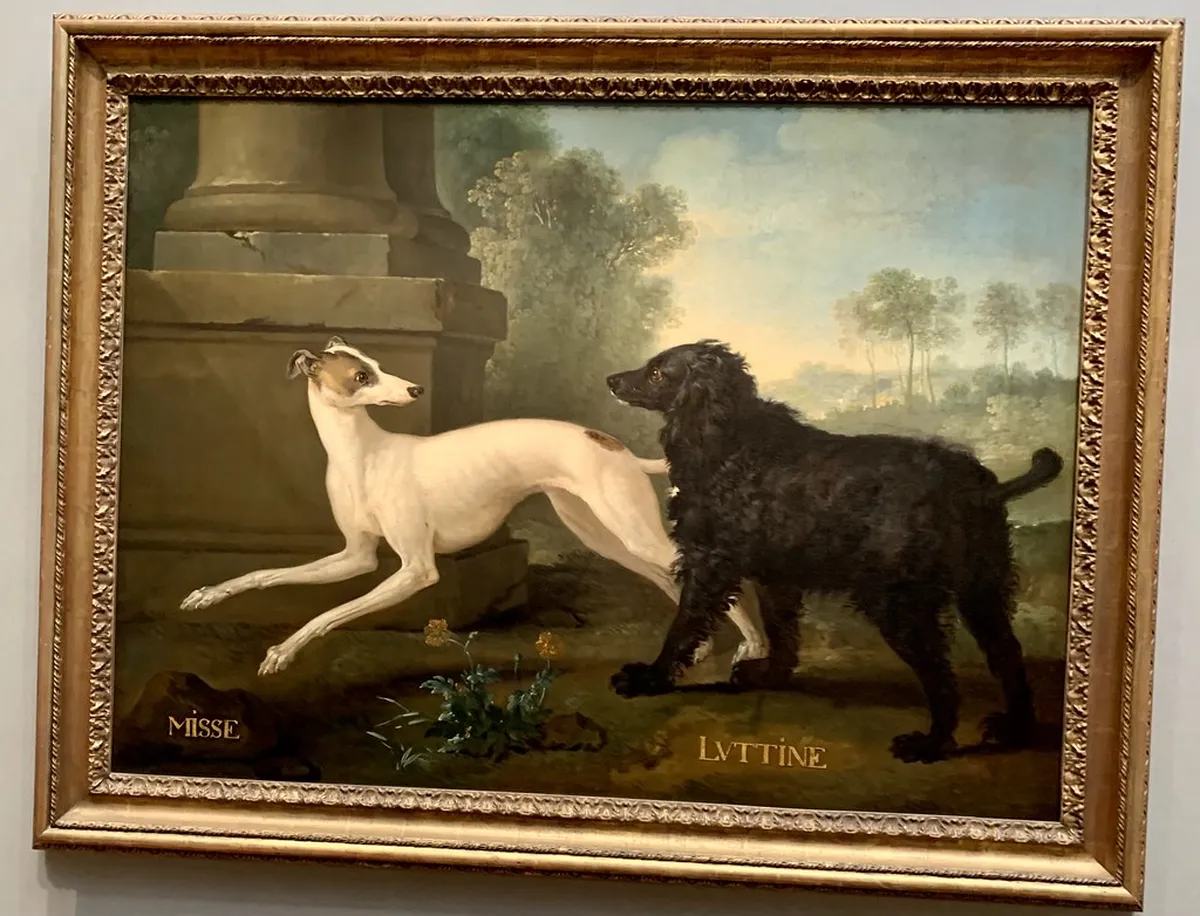
The collection also includes rare books and historical documents related to the art of the hunt. One unusual display features a collection of gold dog collars spanning several centuries, shown alongside 17th-century portraits of Louis XIV's pets — a quietly surreal pairing that captures the museum's playful editorial eye.
Must-See Highlights: From Taxidermy to Contemporary Art
One of the most famous rooms features Jan Fabre's ceiling installation "The Night of Diana" — a surface covered in iridescent owl feathers and jewel-beetle plumage that transforms the trophy room into something otherworldly. Stand in the centre of the room and let your eyes adjust to the soft light to see the full shimmer effect. Fabre, the Belgian artist who previously covered the ceiling of the Royal Palace in Brussels with over a million and a half beetle wing cases, created this piece specifically for the space.
Also woven into the permanent collection is a small white ceramic version of Jeff Koons's Scottie-dog sculpture Puppy and works by Eva Jospin, whose immersive forest installations in corrugated cardboard appear in several European institutions. These contemporary pieces are placed deliberately alongside 17th-century artifacts rather than separated into a dedicated modern wing — the collision is the point.
In the Room of Trophies, look for Le Souillot: a wall-mounted animatronic albino boar head by French artist Nicolas Darrot that speaks to visitors in French. The effect is subtle enough that many people walk past before realising it has moved. This museum pairs well with a visit to the Musée de la Vie Romantique for a day focused on Paris's more unexpected collections.
The Unicorn Room is another highlight — a small alcove dedicated to mythology and the symbolic role of the unicorn in hunting culture, with tapestries and sculptural pieces that give it the feel of a private study. The Room of Trophies also holds antique firearms once owned by Louis XIII and Napoleon, displayed alongside an international spread of taxidermied animals including a polar bear, lion, tiger, bison, and rhinoceros.
Special Experiences: Private Tours and Family Workshops
The museum offers a range of structured visits for families and groups. A storytelling tour for children aged 3 to 8 runs for around 90 minutes and leads young visitors through themes of folklore and wildlife using tales from around the world, presented by an actress. Visit-workshops for ages 5 to 10 combine a 45-minute gallery tour with a 45-minute creative session in the educational room — children leave with their own work.
Guided tours with a museum lecturer are available for adult groups; a talk in French costs €160 and a guided tour in a foreign language costs €250, covering around 90 minutes of the permanent and temporary collection. All group visits must be reserved by contacting the museum's visitor services at reservation@chassenature.org.
For those seeking more grand interiors, the Musée Jacquemart-André offers a different style of private collection. However, the hunting museum provides a more whimsical and interactive experience for families with younger children.
Visiting during the Wednesday late-night opening provides a particularly atmospheric experience. The dim gallery lighting amplifies the eeriness of the taxidermied animals and the owl-feather ceiling in ways that the bright afternoon visit cannot quite match. This time slot is especially well suited to couples or small groups who want to linger without feeling rushed.
Wednesday evenings until 21:30 offer a uniquely atmospheric experience, with dim gallery lighting that amplifies the otherworldly quality of the taxidermied animals and Jan Fabre's iridescent owl-feather ceiling.
Planning Your Visit: Best Times and Nearby Marais Attractions
The first Sunday of every month is genuinely free for all visitors, but it does attract noticeably larger crowds, particularly in the late morning. If you visit on a free Sunday, arriving at opening time (11:00) gives you the best chance of quiet rooms before tour groups arrive. If crowds bother you, a paid Tuesday or Thursday morning is the quietest option — the museum rarely feels packed on weekday afternoons either.
The nearby Musée Cognacq-Jay is another excellent stop within a few minutes of the hunting museum, and the Musée Picasso Paris is roughly a five-minute walk. After your visit, a ten-minute walk south brings you to the Place des Vosges — surrounded by covered arcades, galleries, and cafes — for a relaxing afternoon in the oldest planned square in Paris.
The Archives Nationales is a three-minute walk from the museum entrance, and the Rue des Rosiers, the historic heart of the Jewish quarter, is seven minutes on foot. Combining these sites creates a natural full-day Marais itinerary without doubling back.
- Walking distances from 62 rue des Archives:
- Archives Nationales: 3 minutes
- Musée Picasso: 5 minutes
- Rue des Rosiers: 7 minutes
- Place des Vosges: 10 minutes
Frequently Asked Questions
Is the Musée de la Chasse et de la Nature worth it?
Yes, this museum is highly recommended for travelers seeking a unique and offbeat Parisian experience. It offers a fascinating blend of historical architecture, quirky taxidermy, and high-quality contemporary art. Visiting the Maison de Balzac is another great way to explore the homes of famous Parisians.
How much are tickets for the Museum of Hunting and Nature?
Standard adult tickets cost 12 euros, while students and seniors can enter for 10 euros. Children under the age of 18 can visit for free at any time. Entry is also free for all visitors on the first Sunday of every month throughout the year.
When is the best time to visit the Musée de la Chasse et de la Nature?
The best time to visit is on a Wednesday evening when the museum stays open until 9:30 PM. This late-night slot offers a magical atmosphere with fewer crowds than the weekend. Weekday mornings right after opening are also ideal for a quiet experience.
Is the museum family-friendly for young children?
The museum is very family-friendly and offers many interactive elements that capture the imagination of children. The animatronic boar and the whimsical animal-themed rooms are particularly popular with younger guests. Special workshops are also available to help kids learn about nature in a fun way.
More Cabinets of Curiosity in Europe
Few museums mix natural-history specimens with contemporary art as deliberately as this one, but two elsewhere push the same nerve. Florence's La Specola holds Europe's oldest surviving public natural-history collection alongside a room of eighteenth-century anatomical wax models. London's Hunterian Museum displays the surgical and comparative anatomy collection of John Hunter, and is as unsettling and as beautifully arranged.
The Musée de la Chasse et de la Nature is a must-visit for anyone looking to escape the typical tourist crowds. Its blend of history and modern creativity makes it one of the most memorable spots in Paris.
We hope this guide helps you plan a successful and inspiring visit to this remarkable institution. Enjoy your journey through the wonders of nature and art in the heart of the Marais.
For the latest official information, see the Musée de la Chasse et de la Nature on Wikipedia.
Continue exploring
More guides you'll find useful