Prague Off The Beaten Path Travel Guide
Plan prague off the beaten path with top picks, neighborhood context, timing tips, and practical booking advice for a much smoother trip in 2026.
On this page
Prague Off The Beaten Path
Most visitors to Prague follow the same loop: Old Town Square, Charles Bridge, Prague Castle, and maybe a beer. That loop is fine, but it misses the city that locals actually inhabit. Exploring prague off the beaten path means trading crowds for craft beer gardens in Vinohrady, wartime crypts in the New Town, and art spaces inside repurposed industrial buildings in Holešovice. This guide covers exactly those spots — with prices, transport, and honest trade-offs so you can decide what fits your trip.
The good news is that Prague's alternative scene sits close to the center. Most of the places below are 10–20 minutes by tram or metro from Old Town Square. You don't need extra days to find them; you just need to know where to look. Start here, and discover 12 Best Hidden Gems In Prague Travel Guide that most guidebooks skip entirely.
Must-See Prague Attractions Beyond the Old Town Circuit
Charles Bridge and the Astronomical Clock are genuine wonders — but they attract massive queues by 10:00. If you visit them at all, go before 08:00 when the light is better and the crowds are thin. Then use the rest of the day to explore areas that locals actually prefer.
Vyšehrad Fortress is the single most underrated spot in the city. Located on the right bank of the Vltava River, roughly 2 km south of the Old Town, it offers sweeping views of Prague's bridges and skyline without a single souvenir stall in sight. The Basilica of St. Peter and St. Paul inside costs 50 CZK to enter — about the price of a bus ticket. The cemetery next to it contains the graves of Antonín Dvořák and Alphonse Mucha. Take metro line C to Vyšehrad station and walk up the hill; the whole visit takes 90 minutes.
The Dancing House (Frank Gehry, 1996) sits on Rašínovo nábřeží at the riverbank. It is genuinely famous, so it does appear on tourist maps — but most visitors just photograph it from the outside. The rooftop restaurant is open to non-diners for a drink and you get one of the best panoramic views in the city for the cost of a coffee. Combine it with the St. Cyril & Methodius Church a short walk away for an afternoon that covers both architecture and history.
Museums, Art, and Culture Off the Tourist Trail
The DOX Center for Contemporary Art in Holešovice is the best modern art space in Prague that most visitors miss entirely. The building itself is striking — a massive wooden airship structure sits on the rooftop. Inside, exhibitions focus on social and political themes with enough intellectual substance to hold your attention for two or three hours. Visit the official DOX Centre website for current exhibitions and hours. Tickets cost around 220 CZK. The museum is closed on Mondays and Tuesdays. Take metro line C to Nádraží Holešovice and walk 10 minutes east.
The House of Black Madonna on Celetná Street is the only surviving Czech Cubist building still functioning as a museum in the Old Town. The Grand Café Orient inside is the only Cubist-interior café still in existence anywhere in the world. You can stop for coffee without paying museum admission. If you want to go upstairs, the two floors of Cubist art run about 150 CZK. It sits right between Old Town Square and the Powder Gate, so there is no detour involved.
For something that combines history with shock value, the St. Cyril & Methodius Crypt and Church on Resslova Street is impossible to forget. In 1942, Czech paratroopers trained by the British RAF hid in this crypt after assassinating Nazi leader Reinhard Heydrich. The Gestapo flooded the crypt; the paratroopers died rather than be captured. Bullet holes are still visible on the exterior walls. Czech tourism guides list contemporary art museums including DOX Centre, a major cultural institution in Holešovice. Entry to the crypt memorial is free, with donations welcome. Combine it with Náplavka Riverbank a few streets away for a memorable afternoon.
Parks, Gardens, and Outdoor Spots Worth the Walk
Náplavka Riverbank stretches along the eastern bank of the Vltava just south of Palackého náměstí. In spring and summer it becomes Prague's closest approximation of a beach party — people drink on boats moored to the boardwalk and the Saturday morning farmer's market here is one of the best in the city. Arrive between 09:00 and 13:00 on Saturdays to catch the market at its peak. In winter, a floating sauna moored here operates year-round.
Letná Park sits above the city in Prague 7 and contains the most famous beer garden in the city, with benches pointing directly at a panoramic view of Prague's rooftops and river. It is free to enter. The park also connects to Stromovka, a much larger woodland park that leads directly to the Výstaviště Praha exhibition grounds. Tram 17 from the city center stops near both.
- Letná Park Beer Garden — hilltop views over the Vltava, Prague 7, free entry
- Vojan Gardens — walled medieval garden in Malá Strana, peacocks roam freely, free entry
- Riegrovy Sady — hilltop park in Vinohrady with its own beer garden and city skyline views, free entry
- Stromovka — sprawling woodland park in Prague 7, connects to Holešovice, free entry
| Spot | Neighborhood | Entry | Best for |
|---|---|---|---|
| Vyšehrad Fortress | Prague 2 | Free (Basilica 50 CZK) | Views, history, quiet |
| Letná Park Beer Garden | Prague 7 | Free (drinks ~CZK 55–70) | Panoramic views, beer |
| Náplavka Riverbank | Prague 2 | Free | Sat market (09:00–13:00) |
| Vojan Gardens | Malá Strana | Free | Quiet garden, peacocks |
| Riegrovy Sady | Vinohrady | Free (beer garden on-site) | Castle views, locals |
| Stromovka | Prague 7 | Free | Long walks, woodland |
Family-Friendly and Budget-Friendly Options
Prague is one of the most affordable capital cities in Central Europe for families. Many of the best off-the-beaten-path spots cost nothing at all. The parks at Letná, Vyšehrad, and Stromovka all have playgrounds and large open lawns. The Výstaviště Praha exhibition grounds in Holešovice contain an aquarium and a planetarium alongside the free-access park areas.
The Jiřího z Podebrad Farmer's Market (known locally as Jirák) runs Wednesday through Saturday near the metro stop of the same name in Vinohrady. This is not a tourist market. Stalls sell fresh produce, pastries, espresso, and hot food at local prices. Pick up a plum and poppy-seed koláč for around 30 CZK. The location is a genuine neighbourhood square where Žižkov and Vinohrady meet — relaxed, inexpensive, and entirely local in feel. Get there before 13:00 for the best selection.
There are also many Free Things To Do In Prague Travel Guide that work well for families on a budget. Kasárna Karlín — a former army barracks turned cultural courtyard in the Karlín district — has playgrounds, art installations, food stalls, and free evening events throughout summer. It captures everything appealing about Prague's alternative scene without charging admission. Take metro line B to Florenc and walk 15 minutes.
Drink Your Way Through Vinohrady's Cool Bars
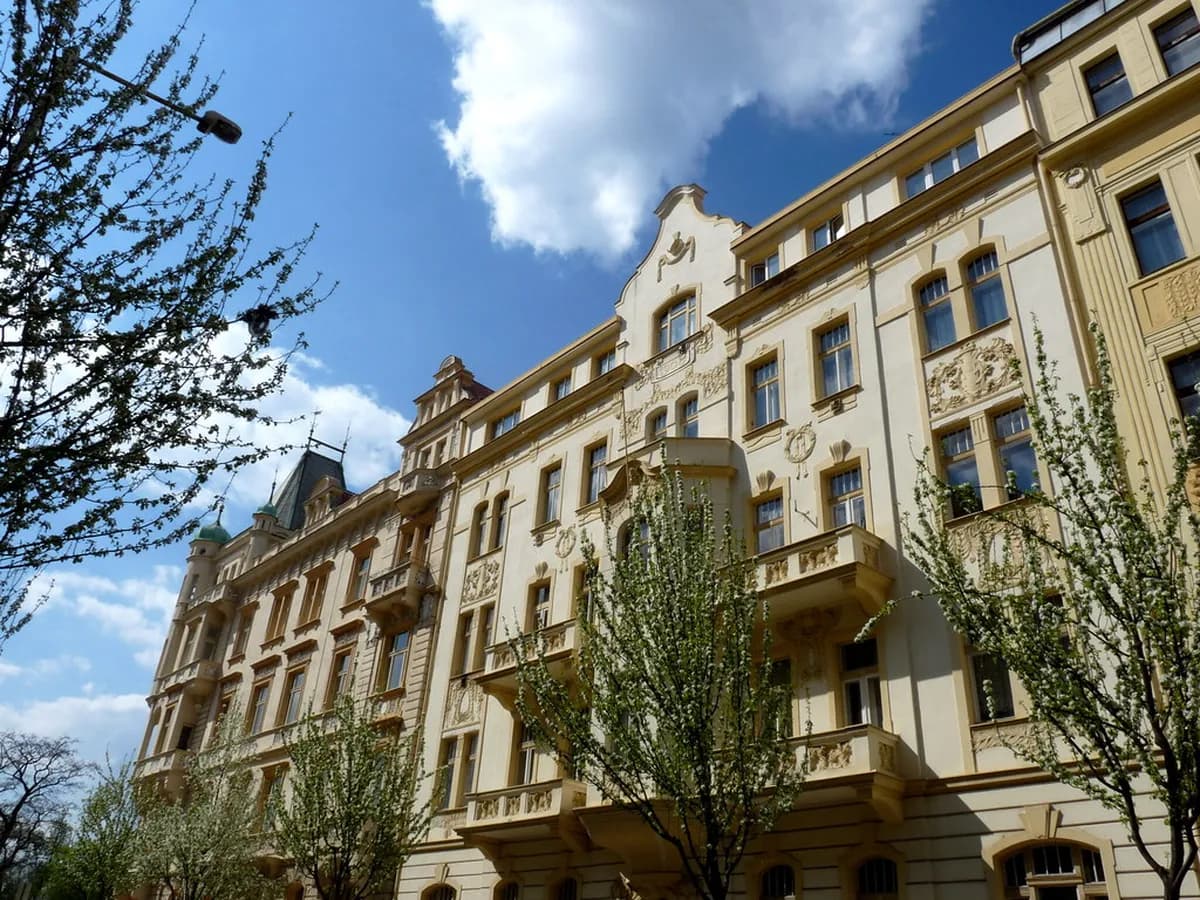
Vinohrady is the neighborhood where Prague residents with money and taste actually go out. It sits two metro stops from the city center on line A, but the price difference is significant — a beer in Vinohrady costs roughly half what it does in a tourist bar on Old Town Square. The streets are lined with Art Nouveau apartment buildings, and the atmosphere is relaxed without being bland.
Bar & Books on Mánesova 64 is one of the neighborhood's most beloved spots — lined with books and carrying a good whisky selection. Radost FX on Bělehradská 120 has history as Prague's first electronic music club from the post-communist era, and it still draws a good crowd on weekends. Aromi restaurant nearby is worth a splurge on a special evening; their business lunch runs about 1,150 CZK for three courses.
Most bars in Vinohrady fill up on Friday and Saturday nights from about 21:00. Many smaller venues prefer cash — carry Czech koruna (CZK). If you want a structured introduction to the neighborhood, you can explore our Vinohrady Prague Neighborhood Guide Travel Guide for bar and dining recommendations with opening hours.
Explore the Výstaviště Praha (Prague Exhibition Grounds)
Most visitors walking through Holešovice don't know this place exists. Holešovice has transformed into a revived neighborhood of former factories and docks, with Výstaviště Praha occupying a large site on the edge of Stromovka Park. The grounds contain some of the most photogenic architecture in the entire city — specifically the Art Nouveau Industrial Palace, which looks like an abandoned train station frozen in 1891. Entry to the park grounds themselves is free.
Inside the complex you'll also find the Lapidarium of the National Museum, which houses the original medieval statues from the Charles Bridge — the ones on the bridge today are replicas. The planetarium is popular with families. The Prague Ice Cream Festival takes place here in late June each year, and several summer food events use the outdoor lawns throughout the season.
Tram 17 from the city center stops at Výstaviště. Combine the visit with a walk through Stromovka Park to DOX and Cross Club for a full Holešovice afternoon. The area is essentially tourist-free and genuinely worth a few hours.
Cross Club and the Alternative Nightlife Scene
Cross Club sits a short walk from DOX in Holešovice and is one of those places that resists easy description. It functions simultaneously as a café, bar, restaurant, live music venue, and nightclub — all inside a labyrinthine space decorated with industrial sculpture, moving mechanical parts, and ambient lighting. It is the opposite of a tourist trap. Prague residents who care about nightlife know this place; most tourist guidebooks don't mention it at all.
During the day, it is calm enough to sit and have a coffee or a meal. In the evening it gets progressively more intense. Live music events start around 20:00 on most weekends. If you want to understand what Prague's local alternative scene actually looks like, this is the place to come rather than the enormous tourist nightclubs like Karlovy Lázně. Drinks are priced for locals, not tour groups.
Cross Club is open daily from approximately 13:00. Getting there from the city center takes about 20 minutes on tram 15 or by metro to Nádraží Holešovice and a 10-minute walk. Combine it with DOX and Výstaviště Praha into a single Holešovice afternoon and evening.
Žižkov: TV Tower Babies, Kafka's Grave, and the City's Best Bars
Žižkov is the neighborhood most locals consider the real heart of alternative Prague. It has been called "up and coming" for decades and has stubbornly refused to gentrify completely. The neighbourhood has more bars per capita than any other district in the city — and almost none of them cater to tourists.
The Žižkov Television Tower is unmissable from across the city — a brutalist structure rising 216 metres, covered in enormous crawling baby sculptures by David Černý. The babies have blank barcoded faces and genuinely unsettling scale. You can ride the elevator to the observation deck for about 250 CZK, or simply photograph the sculptures from street level for free. A few steps away, the New Jewish Cemetery contains Franz Kafka's grave, marked by a simple white stone. The cemetery is open Monday to Thursday 09:00–17:00 and Friday 09:00–14:00; closed on Jewish holidays. These two stops together make a half-day loop that no competitor guide currently packages as a single walk.
For nightlife, Palác Akropolis on Kubelíkova Street is the neighborhood's main venue — a large complex with a restaurant, multiple bars, a concert hall, and a nightclub under one roof. Pivo a Párek nearby is exactly what its name suggests: beer and sausages, at local prices. Tram 5 or 9 from Wenceslas Square reaches Žižkov in about 10 minutes.
Eat Authentic Vietnamese Food and Drink Beer Like a Czech
Prague has one of the largest Vietnamese communities in Central Europe, a legacy of communist-era guest worker agreements between Czechoslovakia and Vietnam. Vietnamese restaurants are scattered across almost every neighbourhood, and the quality is consistently better than most central European capitals. For pho, the widely recommended spot is Pho Vietnam Tuan & Lan on Slavíkova 1 in Vinohrady. For Vietnamese sandwiches, Mr. Banh Mi on Rumunská 30 in Prague 2 is excellent and inexpensive. The Sapa Market complex in Prague 4 — sometimes called "Little Hanoi" — is a more immersive experience, functioning as a full Vietnamese market town on the edge of the city.
For beer history, U Pinkasů near Wenceslas Square is where the first tank of Pilsner Urquell was ever tapped in Prague — in 1843. It is touristy by Žižkov or Vinohrady standards, but the history is real and the beer is correctly poured. More serious beer enthusiasts should visit Klášterní Pivovar Strahov, the monastery brewery on the hill next to Strahov Library. The monastery dates to 1140; the brewery is more recent but produces both permanent and rotating beers in a setting that no commercial pub can replicate. If you want guidance and context, a 3-hour beer and microbrewery guided tour with a local covers several of these spots with commentary.
For a single unforgettable pastry, track down a větrník — a Czech cream puff with caramel, vanilla, and hazelnut fillings. Gardens Restaurant off Wenceslas Square serves an elevated version; Café Savoy in Malá Strana and Eska in Karlín are equally praised. The větrník is not widely known outside the Czech Republic and it is genuinely worth seeking out.
How to Plan a Smooth Off-the-Beaten-Path Day in Prague
The city is compact enough that you can cover two very different neighborhoods in a single day without rushing. A practical structure: start in Holešovice (DOX, Cross Club, Výstaviště Praha) in the morning when the art spaces are quiet, then take tram 17 south to Náplavka Riverbank for lunch and a walk, then finish the evening in Vinohrady or Žižkov for bars. That itinerary costs almost nothing in transport — a 24-hour public transit pass costs 120 CZK and covers all trams, buses, and metro lines.
DOX Centre in Holešovice is closed on Mondays and Tuesdays — plan your Holešovice day for Wednesday through Sunday to ensure access to the gallery. Tram 17 from Náměstí Republiky stops directly at Výstaviště, making it easy to string DOX, Výstaviště Praha, and the Letná beer garden into a single afternoon loop.
Staying connected is essential for navigating tram schedules and translating menus in Vietnamese and Czech restaurants. To avoid high roaming charges, I recommend an Holafly eSIM for the Czech Republic — it activates before you land and works on arrival without a physical SIM swap. If you're also visiting other European countries, Holafly's Europe eSIM covers the whole region under one plan.
Most local bars and market stalls prefer cash. ATMs are common across the city but avoid the private exchange booths around Old Town Square — their rates are poor. Carry a few hundred CZK in small denominations at all times. Many smaller museums are closed on Mondays, including DOX, so plan accordingly. Food festivals and outdoor events happen throughout May to September; checking local Facebook Events a day ahead will surface anything worth adding to your route.
Avoid private currency exchange booths near Old Town Square — their rates are significantly worse than ATMs or bank branches. Carry a few hundred CZK in cash at all times, as many local bars, market stalls, and smaller museums in Prague still prefer cash over card.
Frequently Asked Questions
Which prague off the beaten path options fit first-time visitors?
First-time visitors should visit Vyšehrad Fortress and the Vinohrady neighborhood. These areas offer stunning views and local dining without being too far from the main city center. They are easy to navigate and provide a peaceful break from the crowded historical core.
How much time should you plan for prague off the beaten path?
You should allocate at least one full day of your trip to exploring lesser-known districts. Spending an afternoon in Holešovice or Karlín allows you to experience authentic local life, unique art spaces, and affordable cafes away from the central tourist crowds.
Is prague off the beaten path worth including on a short itinerary?
Yes, exploring alternative spots is definitely worth including even on a short weekend trip. Mixing famous landmarks with quiet neighborhood parks keeps your itinerary balanced and prevents tourist burnout. It also gives you a more authentic perspective of local life.
How do you plan a last-minute trip to Prague?
Book your accommodation outside the historic center to find better rates and quieter streets. Buy a digital transit pass for easy travel and secure a reliable data plan like Holafly's Europe eSIM to navigate the city easily without stress.
The Gardens Most Visitors Skip
Below the castle, Wallenstein Garden is free, formal and patrolled by resident peacocks, and almost nobody walks in. For the full list of collections and gardens off the main route, our Prague hidden gems guide covers eight of them with visitor detail.
Prague's alternative side is not hidden — it is just a tram stop or two beyond where most visitors stop walking. Vyšehrad, Holešovice, Vinohrady, and Žižkov each have their own character, and none of them require long detours or complicated planning. The cost of exploring them is low, the reward is high, and the experience is far closer to what people who actually live here do with their weekends.
Use this guide as a starting point and follow your own curiosity from there. The city rewards people who look slightly left or right of the obvious path — and in 2026, with the Old Town as crowded as ever, that reward is considerable. Safe travels through one of Europe's most underestimated capitals.
Continue exploring
More guides you'll find useful