12 Best Day Trips from Prague (2026)
Plan day trips from prague with top picks, neighborhood context, and timing tips. Discover the best castles and nature spots for a smoother trip.
On this page
12 Best Day Trips from Prague
After years of exploring the cobblestone alleys of the capital, I have learned that the real magic often lies beyond the city limits. Bohemia is a region of dense forests, medieval fortresses, and sleepy towns that feel worlds away from the bustling Old Town Square. This guide was last refreshed in May 2026 to reflect the most current pricing, transport options, and practical access details.
If you are following a Prague 3-day itinerary, adding a day trip is the best way to see the true Czech countryside. Most destinations on this list are reachable within two hours by train, allowing you to return in time for a late dinner. Czech trains are reliable, affordable, and require no advance booking on most regional routes — the fixed-price system means there is no penalty for turning up on the day. Czech tourism guides recommend exploring beyond Prague for authentic cultural immersion.
This guide focuses on variety: world-famous ossuaries, UNESCO spa towns, dramatic sandstone parks, and quiet riverside trails where you will rarely hear English spoken. Each entry covers what to expect, how long to allow, how to get there, and who it suits best. Prepare your walking shoes and let us venture beyond the golden spires.
Kutná Hora and the Sedlec Ossuary
Kutná Hora is the single best day trip from Prague if you only have time for one. It sits about 80 km east of the capital and the direct train from Praha Hlavní nádraží takes 50 minutes, dropping you a 15-minute walk from the Sedlec Ossuary. The ossuary — commonly called the Bone Church — is a Gothic chapel decorated with the remains of roughly 40,000 people, including a chandelier containing every bone in the human body. Entry costs around 160 CZK (about €6.50) and photography is now permitted inside.
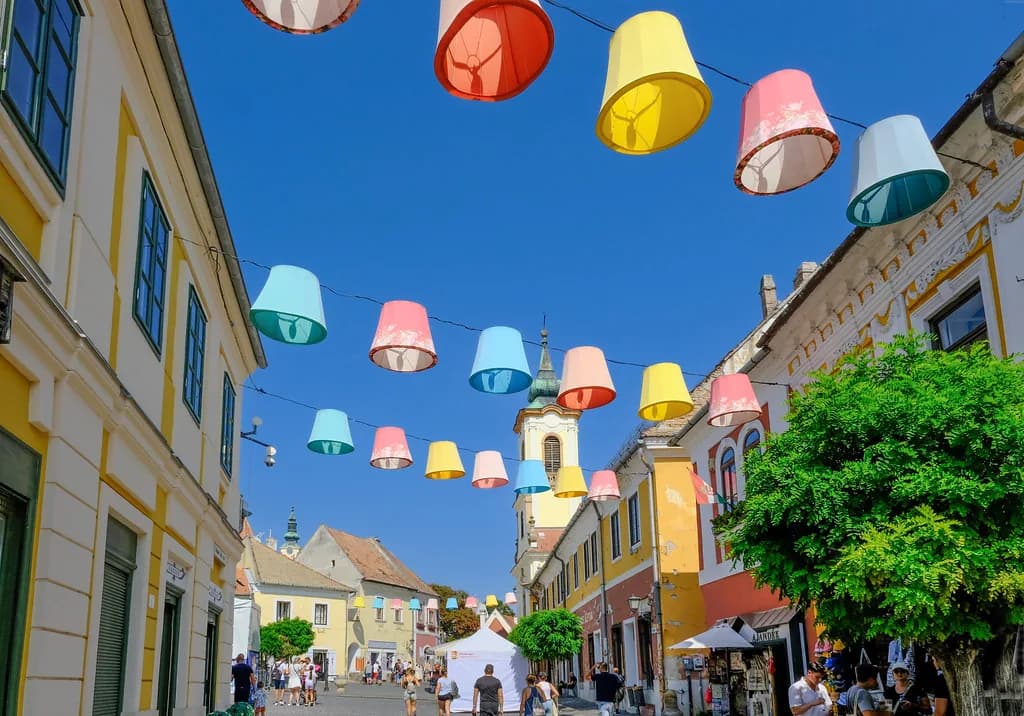
Beyond the ossuary, the town center is 30 minutes further on foot or a short bus ride. It is painted in warm Bohemian pastels, lined with Gothic churches, and far less crowded than Prague. The Cathedral of St. Barbara is a UNESCO World Heritage building and one of the finest Gothic churches in Central Europe. The Czech Museum of Silver offers tours into the medieval mine shafts beneath the town for an additional 220 CZK.
Allow a full day: arrive by 09:00 to beat tour groups at the ossuary, then walk or bus to the center for lunch and the cathedral. Direct trains back to Prague run into the late evening. This is also one of the most accessible day trips on the list — the ossuary and city center are flat and manageable for most visitors.
The direct train from Praha Hlavní nádraží to Kutná Hora takes 50 minutes. Entry to the Sedlec Ossuary costs around 160 CZK (about €6.50) and the Czech Museum of Silver adds 220 CZK for an underground mine tour.
Karlštejn Castle
Karlštejn is Prague's closest castle day trip and one of the easiest to reach independently. The S7 train from Praha Hlavní nádraží runs directly to the village of Karlštejn in around 41 minutes, with departures every hour. From the station, a scenic 20-minute walk leads uphill through a village lined with souvenir stalls and beer gardens to the castle gates.
Founded by Emperor Charles IV in 1348, the castle served as a vault for the Crown Jewels and Imperial Regalia of the Holy Roman Empire. Guided tours of the interior run continuously throughout the day and are available in English; prices range from 250 to 550 CZK depending on the circuit you choose. The exterior and surrounding vineyards are free to explore. Combine this trip with the nearby Koněprusy Caves, a dramatic limestone cavern about 8 km away by taxi, for a fuller day.
One practical note: the uphill walk to the castle is steep and uneven. It takes about 20 minutes at a moderate pace and is not suitable for pushchairs or wheelchairs. If mobility is a concern, Kutná Hora or Terezín are flatter alternatives with comparable historical depth.
Český Krumlov
Český Krumlov is the most famous day trip from Prague for international visitors, and the hype is justified. The UNESCO-listed town in South Bohemia sits inside a horseshoe bend of the Vltava River, with a vast castle complex perched on a cliff above it. The historic center looks like a stage set of Renaissance and Baroque architecture, and the surrounding countryside is stunning.
The journey takes around two hours and forty minutes. The most convenient option is the direct bus from Prague's Na Knížecí bus station, near the Anděl metro stop. Several buses depart from early morning; buy tickets in advance on the RegioJet website or the FlixBus app to guarantee a seat. Alternatively, trains run from Praha Hlavní nádraží with a change at České Budějovice, but the train station in Krumlov is a 20-minute walk from the center — the bus drops you much closer.
Inside the castle grounds, the round tower climb costs 100 CZK and offers the best panoramic photo of the town. Rafting on the Vltava through the town can be arranged on the day for around 300–500 CZK per person. Given the travel time involved, I recommend an early start: catch the first bus, spend the afternoon by the river, and return on an evening departure. Staying overnight at one of the riverside pensions gives you the town entirely to yourself once the day-trippers leave.
Karlovy Vary
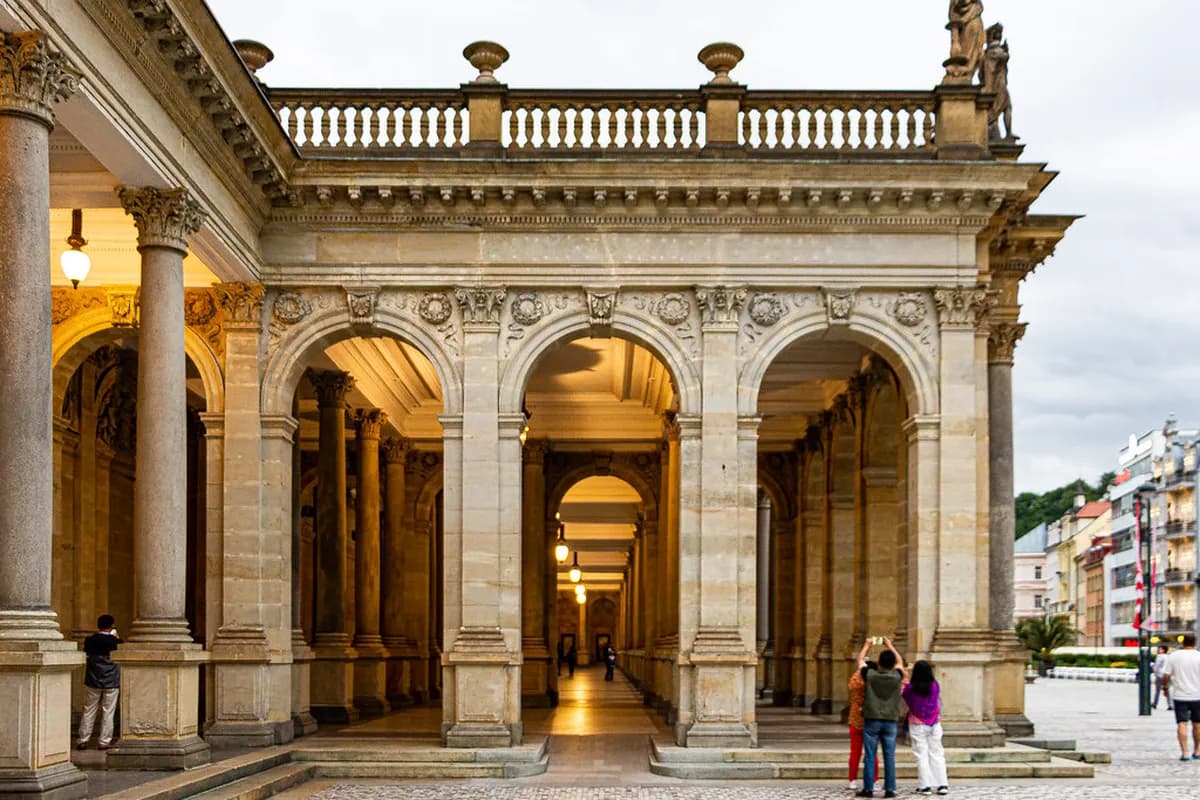
Karlovy Vary is the Czech Republic's most famous spa town and a UNESCO World Heritage Site — listed as one of the Great Spa Towns of Europe in 2021. The town runs along the narrow valley of the Teplá River, flanked by Neoclassical and Art Nouveau colonnades. Walking between the colonnades and sampling the mineral waters is free; you simply need to buy a small porcelain drinking cup (around 80–150 CZK) at any colonnade shop to use at the various spring spouts.
There are 15 publicly accessible springs in the town. The most dramatic is the Vřídlo — a geyser that shoots 72°C water up to 12 metres inside a modern glass pavilion. The Mill Colonnade (Mlýnská kolonáda) with its 124 Corinthian columns is the grandest architectural set piece. Beyond the springs, the Moser glass factory offers tours (200 CZK), the Jan Becher Museum covers the history of the local herbal liqueur Becherovka (150 CZK), and the Diana Observation Tower is reachable by a historic funicular.
Buses from Prague Florenc station run every 30 to 60 minutes and the journey takes about two hours. Direct buses (Student Agency, RegioJet) are faster and more comfortable than the slower train option. Avoid the first week of July when the Karlovy Vary International Film Festival fills every hotel and restaurant. Allow a full day — there is more here than most visitors expect.
Bohemian Switzerland National Park
Bohemian Switzerland is the most dramatic nature day trip from Prague. Located on the northern border near Germany, the park features the largest natural sandstone arch in Europe — Pravčická Gate — plus deep river gorges, dense pine forests, and misty rock formations that served as a filming location for The Chronicles of Narnia movies. It is genuinely unlike anything else within two hours of the capital. The official park authority maintains detailed maps and visitor information for planning your route.
Getting there independently requires a train from Praha Hlavní nádraží to Děčín, then a local bus to the village of Hřensko. From Hřensko it is a 5 km hike to Pravčická Gate — allow about two hours each way at a comfortable pace. The gorge boat tours along the Kamenice River (entry to both gorges costs around 300 CZK) are a highlight and can be combined with the arch hike in a single day. An alternative is to cross into Germany and walk to the Bastei Bridge, one of the most photographed viewpoints in Saxony.
This trip is best done on a guided tour if you are not an experienced hiker, as the logistics are complex and the trails are not always well signed for non-Czech speakers. Several Prague agencies run all-inclusive day trips from around 1,200 CZK per person including transport and boat entry. Wear sturdy shoes regardless.
Bohemian Switzerland's gorge boat tours and Pravčická Gate arch hike are best combined on a guided tour for non-Czech speakers — trails are not always clearly signed. Guided all-inclusive day trips run from around 1,200 CZK per person from Prague.
Terezín Memorial
Terezín is not a cheerful day trip, but it is one of the most important. The former military fortress 60 km north of Prague was converted by Nazi Germany into a Jewish ghetto and transit camp in 1940. Around 150,000 people passed through; about 35,000 died here from illness and starvation, and tens of thousands more were transported to Auschwitz and Treblinka. A visit takes about three to four hours and leaves a lasting impression.
The site is split into two areas. The Small Fortress (Malá pevnost) was a Gestapo political prison; it contains the original barracks, execution grounds, and mass graves, and requires a paid ticket (combined ticket for Small Fortress and Ghetto Museum costs around 300 CZK). The Main Fortress is the actual town of Terezín, which still functions as a normal village — the Ghetto Museum and Magdeburg Barracks are located here and can be visited on the same ticket.
Bus 413 from Prague's Letňany metro station (not the central Florenc station) runs directly to Terezín in about an hour. Alternatively, a direct train from Praha Hlavní nádraží stops at Bohušovice nad Ohří, from which it is a 3 km walk along the river. Booking a guided tour from Prague is strongly recommended: the sites are spread across the town and the historical context is far more powerful with a knowledgeable guide.
Srbsko to Svatý Jan pod Skalou
This hike through the Bohemian Karst is one of the best-kept secrets in the Prague day-trip circuit. The trail is free, reachable by direct train in under 45 minutes from Praha Hlavní nádraží, and almost entirely unknown to foreign visitors. You board a train to the village of Srbsko in the Beroun valley, then follow a well-marked trail through limestone gorges and beech forests to the monastery settlement of Svatý Jan pod Skalou.
The full hike takes three to four hours at an easy pace. The route passes through the Karlická Valley nature reserve, crosses several small limestone ridges, and ends at a dramatic cliff where a cross marks the viewpoint above the monastery. There is a small pub near the monastery that serves cold beer and simple food — the kind of stop that makes Czech hiking what it is. Trains back to Prague from the nearby Svatý Jan or Beroun stations run regularly until late evening.
This is a half-day to full-day trip and fits well alongside a morning visit to 12 Best Hidden Gems In Prague Travel Guide if you prefer a later start. The trail is moderately easy with some rocky sections; proper shoes are recommended but it is not a technically demanding route.
Bohemian Paradise (Český Ráj)
Český Ráj — literally "Czech Paradise" — is a UNESCO Geopark and the oldest protected landscape area in Bohemia. It covers a wide territory of sandstone rock towers, ruined hilltop castles, deep forests, and medieval towns about 90 km northeast of Prague. The main rock cities of Prachovské skály and Hruboskalské skalní město are spectacular and visually unlike anything you see in the capital.
The main entry points are the towns of Jičín (train from Praha Hlavní nádraží, about 90 minutes) and Turnov (similar journey time). From either town, local buses connect to the major rock areas. The challenge is that the best sites are 15–20 km apart from each other, so the park is significantly easier to explore with a car or a guided tour. If you are travelling by public transport, focus on a single area rather than trying to cover the entire geopark in one day.
Prachov Rocks entry costs around 120 CZK and the network of trails through the formations takes two to three hours. The ruined Trosky Castle, sitting on twin volcanic plugs, is the symbolic landmark of the park and worth the 80 CZK entry. Overnight camping is popular with Czech visitors in summer; Hotel Tammel and Hotel reStart near Hrubá Skála are decent options if you want to extend your stay.
Posázavská Stezka River Trail
Posázavská Stezka is a hiking trail that follows the Sázava River south of Prague, known among locals as one of the finest river walks near the capital. The trail runs through a deep wooded canyon with views of the winding river from rocky outcrops above. It is entirely free, easily reachable by train, and sees very few foreign visitors.
Take the so-called "Pacific" train line from Praha Hlavní nádraží toward Čerčany or Benešov and get off at Kamenný Přívoz. Walk the trail south along the river to Petrov u Prahy, where the old station pub is an essential stop for a cold Kozel beer before catching the train back. The one-way hike takes about two and a half hours; the total round trip including travel from Prague makes for a comfortable half-day excursion.
This is a good option for those who want a genuine Czech outdoor experience without committing to a full travel day. The trail is well marked and suitable for most fitness levels, with only gentle elevation changes.
Pilsen and Pilsner Urquell
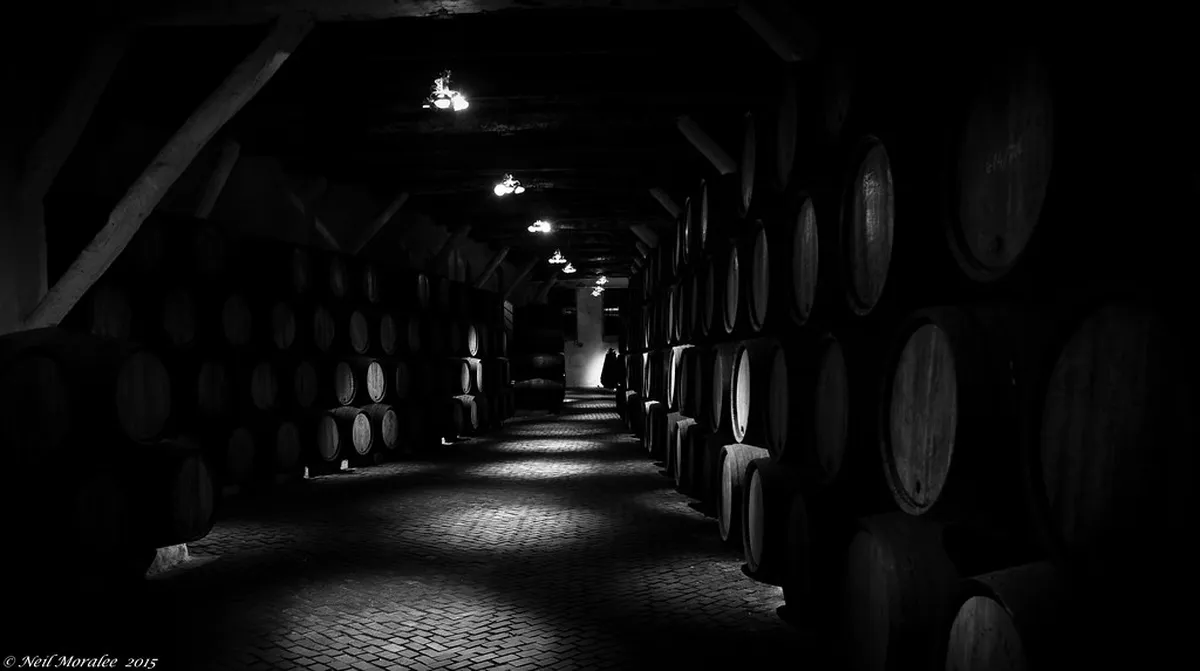
Pilsen (Plzeň) is the birthplace of lager. The Pilsner Urquell brewery, founded in 1842, still operates in the center of the city and runs guided tours through the historic cellars and brewing halls. The standard tour costs around 300 CZK and ends with unfiltered Pilsner Urquell directly from oak barrels in the underground lagering caves — a significantly different taste from the filtered version in cans. Book English-language tour slots at least a day ahead in summer.
Fast trains from Praha Hlavní nádraží reach Pilsen in 90 minutes; direct FlixBus services from Florenc station take as little as 55 minutes and cost less than 200 CZK. Beyond the brewery, the Cathedral of St. Bartholomew in the main square has the tallest steeple in Bohemia (115 m), and the medieval underground tunnel network beneath the city can be explored on a separate tour for 120 CZK. Pilsen is easy to do in half a day, leaving time to return for dinner in Prague.
Trips That Are Too Far for a Single Day
Some destinations come up repeatedly in searches and deserve an honest assessment. Brno, the second city of the Czech Republic, is a fascinating place with great nightlife and the Ossuary of St. James — but it sits 2.5 hours from Prague by train each way. You will spend five hours in transit for a few hours on the ground, which rarely feels worthwhile. Olomouc in Moravia faces the same problem at nearly three hours each way. Both cities are better suited to an overnight visit than a rushed day trip.
Vienna is not a realistic day trip from Prague. The journey by train takes over four hours each way — more than eight hours in transit for a single afternoon in the Austrian capital. Dresden, Germany, is a borderline case at two hours each way. The reconstructed Baroque center and the Zwinger museum are genuinely impressive, and the scenic train ride along the Elbe valley makes the journey part of the experience. If you go, plan to spend at least five hours in the city to justify the travel. Carry Euros — Czech Koruna is not accepted in Germany.
Adršpach-Teplice Rocks are often recommended but sit nearly three and a half hours from Prague by public transport. The rock formations are spectacular, but the round-trip travel time leaves too little time on the ground for a day trip. Save it for a dedicated overnight trip into eastern Bohemia.
Which Day Trip Suits Your Group and Fitness Level
Most guides treat day trips as a single list without accounting for who is actually making the journey. Kutná Hora is the most accessible option on this list: the ossuary is on flat ground, the city center requires minimal walking, and the train journey is the shortest at 50 minutes. It works well for older travelers, families with young children, and anyone with limited walking ability. Terezín is similarly flat and accessible, with the main memorial sites within easy walking distance of the bus stop.
Karlštejn Castle requires a steep 20-minute climb on cobbled paths and is not suitable for pushchairs or wheelchairs. The castle village at the bottom is charming and worth stopping at even if the climb is not possible. Bohemian Switzerland involves several kilometres of uneven forest trail; it is rewarding but demands proper footwear and a reasonable level of fitness. Posázavská Stezka and Srbsko to Svatý Jan are moderate hikes on well-marked trails — good for active families but not for those seeking a relaxed cultural outing.
Karlovy Vary and Český Krumlov both have historic centers that require some walking on uneven cobblestones. Karlovy Vary's colonnade walk is largely flat and covers the main highlights. Český Krumlov involves more hill-climbing to reach the castle viewpoints, but the town center is navigable at a gentle pace. If you are travelling with a mixed group, Karlovy Vary offers the best balance of ease and spectacle.
How to Plan a Smooth Day Trip from Prague
Planning a trip outside the capital is simple if you use the right tools. The PID Litacka app covers all public transport in Prague and the surrounding Central Bohemian region. You can buy tickets directly in the app and it will tell you which platform your train departs from. The Czech Railways website provides official schedules and booking for intercity trains. For buses to Karlovy Vary, Český Krumlov, or longer routes, use the RegioJet or FlixBus websites — these routes book up and prices are low when reserved a few days ahead.
For last-minute train travel, do not worry about booking most regional routes in advance. Czech regional trains have fixed prices that do not rise as the departure date nears. Simply arrive at the station fifteen minutes early and buy at the counter or a self-service machine. The main exceptions are fast bus routes to popular destinations on summer weekends, which fill up quickly.
| Destination | Travel Time | Key Entry Cost | Best For | Accessibility |
|---|---|---|---|---|
| Kutná Hora | 50 min (train) | ~160 CZK ossuary | History & architecture | Flat — most accessible |
| Karlštejn Castle | 41 min (train) | 250–550 CZK tour | Castle & vineyards | Steep cobbled climb |
| Český Krumlov | ~2h 40m (bus) | 100 CZK tower | UNESCO town & river | Moderate — some hills |
| Karlovy Vary | ~2h (bus) | 80–150 CZK cup; free springs | Spa culture & architecture | Largely flat |
| Terezín | ~1h (bus) | ~300 CZK combined | Holocaust history | Flat — very accessible |
| Pilsen | 90 min (train) | ~300 CZK brewery tour | Beer culture & city | Easy half-day |
Staying connected while hiking in the Bohemian countryside is much easier with reliable mobile data. I recommend an Holafly eSIM for seamless coverage across the Czech Republic without roaming fees. It is particularly useful when navigating forest trails in Bohemian Paradise or finding a remote village bus stop without WiFi. Understanding the 10 Essential Sections for Navigating Prague Neighborhoods near the transit hubs also saves time — those staying in Vinohrady or Žižkov may find the Vršovice or Libeň stations more convenient for some routes.
For the wider city context, see our complete hidden gems in Prague guide.
For related Prague deep-dives, see our Prague 3 Day Itinerary Travel Guide and Prague 2 Day Itinerary Travel Guide guides.
Frequently Asked Questions
What is the best way to travel on day trips from Prague?
Trains are the most efficient and scenic way to travel from Prague. Most regional destinations are accessible within 60 to 90 minutes from the Main Station. You can find more 12 Best Secret Prague Spots to Visit travel tips by using the local PID Litacka app for tickets.
Do I need to book day trip tickets in advance?
For most regional Czech destinations, advance booking is not necessary as prices remain fixed. However, for international trips to Dresden or popular brewery tours in Pilsen, booking 2-3 days ahead is recommended. This ensures you secure a seat and your preferred tour language.
Are day trips from Prague expensive?
Most day trips are very budget-friendly, with round-trip train tickets often costing under $15. Entry fees for castles and museums typically range from $8 to $18 per person. Dining in smaller towns is significantly cheaper than in Prague's tourist center.
Day Trips From Other Central European Cities
Bohemia is dense with castles, spa towns and one very famous ossuary, all within about two hours. Kraków's day trips cover a similar radius in Poland, and Munich's day trips reach the Alps on the same kind of regional ticket.
Venturing out on day trips from Prague opens up a world of history and natural beauty that most tourists never see. From the haunting atmosphere of the Sedlec Ossuary to the quiet river trails of Srbsko, these experiences define the Czech spirit. Whether you choose a famous castle, a UNESCO spa town, or a hidden forest path, you will return to the city with a much deeper appreciation for the region.
Remember to check the latest train schedules and pack a reliable power bank for your phone. For more inspiration on exploring the heart of Europe, check out our full guide to the Czech Republic. The golden city is only the beginning of what this incredible country has to offer.
Continue exploring
More guides you'll find useful