12 Best Secret Prague Spots to Visit (2026)
Discover 12 secret Prague spots with our 2026 guide. Find hidden gems, quiet gardens, and local favorites to escape the crowds in the Czech capital.
On this page
12 Secret Prague Attractions You Haven't Seen Yet
Most visitors to the Czech capital spend their time between Charles Bridge and Old Town Square — and miss the Prague that locals actually live in. The city rewards those who step away from the main tourist arteries. Hidden gardens, moving elevators, underground cocktail bars, and Baroque libraries sit waiting behind unassuming facades in residential neighborhoods. The official Czech tourism board has documented hidden gems across Prague that transform a standard visit into an authentic experience.
This guide focuses on the spots that don't appear on standard itinerary lists. You'll find a mix of history, nature, and modern culture, along with practical details: entry prices in CZK and EUR, operating hours, and the best time of day to go. Whether this is your first visit or your fourth, these twelve picks offer something genuinely different from the standard route.
Must-See Secret Attractions
Finding 12 Best Hidden Gems In Prague Travel Guide often means knowing which facades to walk through. The Paternoster Elevator inside New City Hall at Mariánské náměstí is the best example: a continuously moving lift you can experience on guided tours that never stops, and you step on and off as it glides past each floor. It looks intimidating but is perfectly safe. The official Prague tourism site provides details on booking these 45-minute tours, which cost 250 CZK for adults.
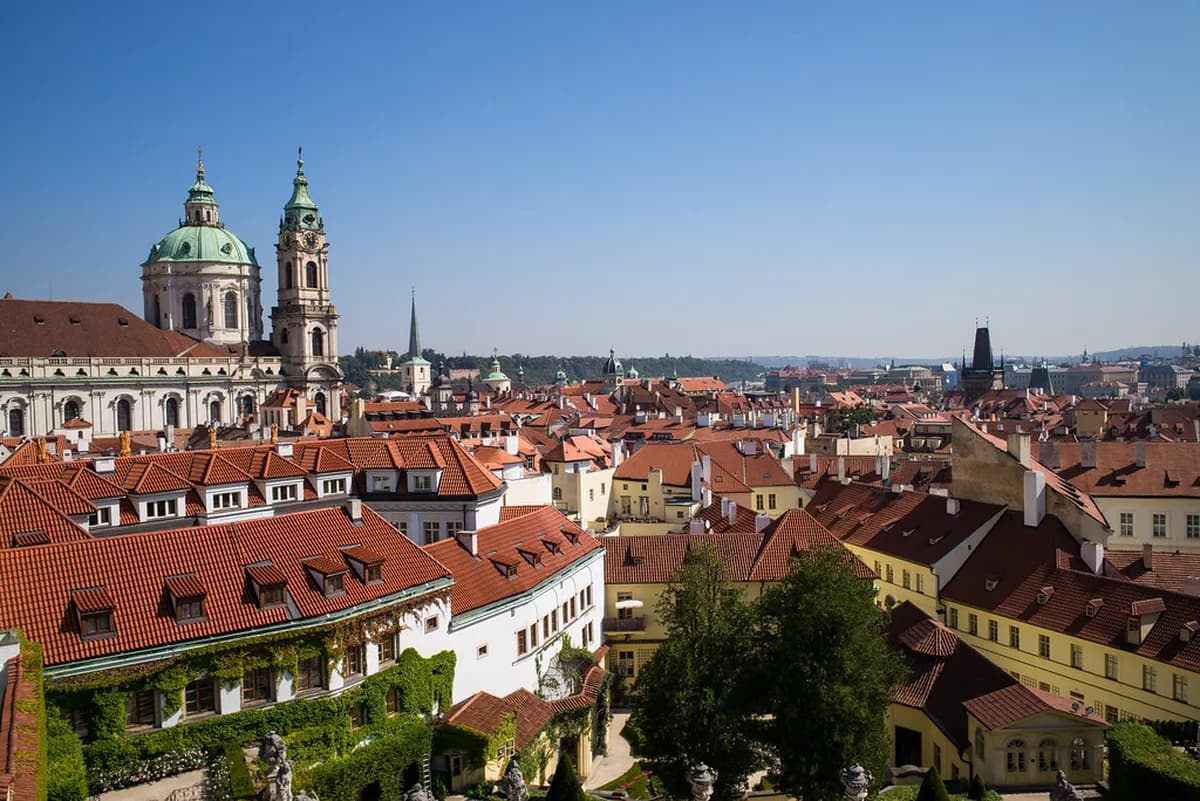
In Malá Strana, the Vrtba Garden delivers the best panoramic view of Prague's red rooftops that most tourists never find. Prague's official tourism portal lists the Vrtba Garden as one of Central Europe's finest Baroque gardens, with entry around 150–200 CZK (roughly €6–8) for adults; the garden opens daily 10:00–18:00 from April through October. The gate on Karmelitská street is easy to miss — look for the small stone arch. Visiting at 16:00–17:00 puts the afternoon light directly on the St. Nicholas Bell Tower for excellent photography.
Vyšehrad Fortress is another overlooked anchor. South of the New Town via the red metro line (Vyšehrad stop), the fortress contains underground casemates housing the original statues from Charles Bridge. Guided tours run hourly and cost around 100–180 CZK (€4–7). The cemetery next to the Basilica of St. Peter and St. Paul is the final resting place of Antonín Dvořák and Alfons Mucha — arrive early on weekday mornings to have it nearly to yourself.
David Černý's upside-down St. Wenceslas sculpture inside the Lucerna Passage near Wenceslas Square is free to see and open until midnight. The passage itself contains a historic cinema and the Lucerna Café, a good spot to sit and take in the absurdist spectacle. This is one of the most photographed yet least-visited-properly spots in the city — most people glance up and keep walking, rather than spending time in the passage itself.
| Secret Spot | Neighborhood | Entry (adult) | Hours | Book ahead? |
|---|---|---|---|---|
| Paternoster Elevator tour | Old Town | 250 CZK (€10) | Guided tours only | Yes |
| Vrtba Garden | Malá Strana | 150–200 CZK (€6–8) | 10:00–18:00 (Apr–Oct) | No |
| Vyšehrad casemates tour | Prague 2 | 100–180 CZK (€4–7) | Hourly tours | No |
| Klementinum Library | Old Town | 300 CZK (€12) | Guided tours only | Yes — 1 week out |
| Museum of Communism | New Town | 290 CZK (€11) | Daily 09:00–20:00 | Online recommended |
| Beer Spa Prague | Old Town | 2,000–3,300 CZK (€80–130) | By appointment | Yes — 48h ahead |
| Lucerna Passage sculpture | New Town | Free | Open until midnight | No |
Unusual Things to Do in Prague
Prague has an active underground scene that rarely appears in guidebooks. Anonymous Bar, tucked on a quiet street in the Old Town, has servers in Guy Fawkes masks and a secret menu that only appears under black light — you only receive it after ordering a second drink. The first cocktail might arrive with a fire show or in a blood bag. It sounds gimmicky, but the cocktails are genuinely excellent and the space has a strong local following.
The Beer Spa experience sounds strange but has historical roots: bathing in brewer's yeast is a documented Central European wellness practice. Modern versions at the Beer Spa Prague let you soak in warm hop-infused water while drinking Krušovice directly from a tap mounted beside the tub. One-hour sessions run 2,000–3,300 CZK (€80–130) for one or two people. Book at least 48 hours in advance in 2026 as summer slots fill quickly.
For something more cerebral, the Klementinum (Klementinum Library) on Mariánské náměstí in the Old Town is frequently called the most beautiful library in the world. It requires an advance reservation and a guided tour (around 300 CZK / €12) because visitor numbers are strictly limited. You'll see the Baroque Hall, the Astronomical Tower, and one of the earliest surviving copies of a Gutenberg Bible. Skip the Strahov Library if you have to choose — the Klementinum is the rarer experience.
The Museum of Communism, located above a McDonald's and next to a casino on Na Příkopě — a location so absurd it works as editorial commentary — houses one of the sharpest exhibits on Cold War propaganda in Central Europe. Entry is around 290 CZK (€11). The interactive displays covering surveillance, show trials, and collectivization are genuinely unsettling. Book tickets online to avoid the queues that build up after 11:00.
The Klementinum Library sells out well in advance during high season — book your guided tour (300 CZK / €12) at least a week out once your Prague dates are confirmed. Visitor numbers are strictly limited, making this the only experience on this list that genuinely cannot be done walk-in in July and August.
Prague's Dancing House and Modern Architecture
The Dancing House (Tančící dům) on Rašínovo nábřeží along the Vltava embankment is one of the few pieces of late 20th-century architecture in Prague that holds its own against the Baroque and Gothic skyline. Designed by Frank Gehry and Vlado Milunić and completed in 1996, its curving glass tower and solid concrete partner are meant to evoke Fred Astaire and Ginger Rogers mid-dance. It is a functioning office building — but the rooftop bar is open to the public and offers one of the better river-facing views in the city without the crowds of Letná Park.
The rooftop Glass Bar at the top of the Dancing House charges standard Prague prices for cocktails (200–320 CZK / €8–13). Sunset visits on weekday evenings in spring and early summer offer the most dramatic light over the river. The building is a short walk south from the National Theatre, making it easy to combine with an evening at the opera — another dramatically underused Prague experience where you can see world-class productions for 400–1,200 CZK (€15–47).
For more unusual architecture, walk the residential streets of Vinohrady and Žižkov east of Wenceslas Square. These neighborhoods are full of Art Nouveau apartment facades from the early 1900s that most tourists never reach. Žižkov also contains the Žižkov Television Tower — a brutalist landmark with ten giant crawling baby sculptures by David Černý and a one-room hotel suite accessible via the tower's public observation deck (entry 250 CZK / €10).
Museums, Art, and Culture in Secret
Prague's cultural scene extends far beyond the National Museum on Wenceslas Square. The DOX Centre for Contemporary Art in Holešovice is an essential stop for contemporary work — it features a massive wooden zeppelin on its roof that doubles as a reading room and periodically hosts artist talks. Entry is around 180 CZK (€7), and the gallery runs changing exhibitions that tend to be politically engaged and visually ambitious.
The Kafka Museum in Malá Strana offers a detailed look at Franz Kafka's Prague: his childhood apartment routes, legal career, and literary manuscripts displayed in a deliberately disorienting spatial sequence. Tickets run 200–260 CZK (€8–10). The courtyard fountain by David Černý outside the entrance — two figures urinating into a Czech Republic-shaped pool — is characteristic of his work and worth seeing before you enter.
Smaller institutions reward those willing to look for them. The Museum of Alchemists and Magicians in the 'House at the Donkey in the Cradle' on Janský vršek in Malá Strana covers Edward Kelley and Rudolf II's occult court in atmospheric attic rooms. Admission is 200–330 CZK (€8–13) and the spiral staircase is narrow — not ideal for those with limited mobility. Many niche Prague museums also offer discounted entry on the first Monday of the month, so check before you go.
Parks, Gardens, and Outdoor Spots in Secret
The city is surprisingly green, but most tourists stick to the Petřín funicular route. For a more Prague Off The Beaten Path Travel Guide experience, head to Stromovka Park in Holešovice. This former royal hunting ground is the largest park in the city and features beautiful ponds and meadows where local families spend their weekend mornings. It connects to the Výstaviště exhibition grounds, which hosts occasional flea markets and food festivals throughout the year.
Riegrovy Sady in Vinohrady is a local favorite for sunset views over Prague Castle. Residents arrive with blankets and drinks in the early evening to watch the city lights appear. The park beer garden shows international football and ice hockey on big screens — sitting here during a Czech national team match is a genuinely local experience. Vojanovy Sady in Malá Strana offers a quieter alternative: a small park beside former monastery grounds with apple trees and occasional swans, almost always calm even in high season.
Divoká Šárka Nature Reserve to the northwest is the most dramatic outdoor space within city limits. High limestone cliffs, walking trails through forest, and a natural outdoor swimming pool (open June–September, around 150 CZK / €6) make it feel far removed from the tourist center. Take tram 20 or 26 to the Divoká Šárka terminus. Bring proper shoes — the trails are rocky. The Prokopské Valley to the southwest is similarly wild: limestone gorges, hidden caves, and almost no signage directing tourists to it.
Local Food Scene: Beyond the Tourist Menus
Most visitors try goulash from a restaurant on the tourist circuit and consider Czech food sorted. The better version is to follow the polední menu — the Czech lunch special. Between 11:00 and 14:00, the vast majority of neighborhood pubs and restaurants offer a two-course lunch (soup plus main) for 150–220 CZK (€6–9). This is how local workers eat daily. Some of Prague's better restaurants also run dramatically cheaper business lunch menus: CottoCrudo at the Four Seasons offers a two-course set for 690 CZK (€27), which includes a river view of Prague Castle that would cost twice as much at dinner.
For traditional Czech fare outside the tourist zone, the neighborhoods of Žižkov, Karlín, and Vinohrady have local pubs (hospody) serving svíčková na smetaně — slow-braised beef with cream sauce, bread dumplings, and cranberry — and roasted pork knee (vepřové koleno) at prices that reflect local demand rather than tourist markup. U Kroka in Vyšehrad and Kantyna in the New Town are reliable stops. The Naplavka riverbank market on Saturday mornings (08:00–14:00) offers local produce, street food, and pastries — arrive before 10:00 for the best selection.
Prague also has one of the most unexpected foodie secrets in Central Europe: a large, established Vietnamese community dating to the Communist-era guest worker programs of the 1970s and 80s. Vietnamese restaurants appear on nearly every residential block in some neighborhoods. The epicenter is Sapa Market in Prague 4 — sometimes called "Little Hanoi" — a sprawling complex of Vietnamese shops, restaurants, and market stalls. It is not a tourist attraction, and the signage is mostly in Vietnamese and Czech, but the pho, bun bo hue, and Vietnamese egg coffee (cà phê trứng) here are the real thing. Take bus 113 from Roztyly metro to get there. Ask before photographing anyone.
Family-Friendly and Budget-Friendly Options in Secret
Traveling with children or on a tight budget doesn't mean missing out on the magic. There are many Free Things To Do In Prague Travel Guide that are both interactive and educational. David Černý's sculpture trail covers the city's neighborhoods and makes a good self-guided walk for families — the Babies on the Television Tower in Žižkov and the upside-down horse in the Lucerna Passage both get strong reactions from children. Entry to Kasárna Karlín (the former military barracks turned cultural courtyard in Karlín district) is free; the courtyard has playgrounds, art installations, a sand volleyball court, and regular film screenings for 100–220 CZK (€4–9).
The Prague Public Transport system is also one of the best budget tools available. A 24-hour pass costs 120 CZK (under €5) and covers trams, buses, and all metro lines. Tram 22 runs from Vinohradská through Malá Strana and up to Prague Castle — an unofficial sightseeing route that costs the price of a standard ticket. For outdoor swimming with children, Divoká Šárka's summer pool (June–September) is the local choice: around 150 CZK (€6) per person, uncrowded on weekday mornings.
Budget accommodation seekers should look past the Old Town hotels entirely. Vinohrady, Žižkov, and Karlín all have well-reviewed apartments and boutique stays at 30–50% less than equivalent Old Town options, connected to the center by direct tram lines in 10–15 minutes. These neighborhoods also have local bakeries and grocery stores at local prices, which adds up quickly over a multi-day stay.
How to Plan a Smooth Secret Attractions Day
Prague's lesser-known spots cluster geographically, which makes route planning straightforward. A Malá Strana morning covers the Vrtba Garden (open from 10:00), the Museum of Alchemists, the Kafka Museum, Vojanovy Sady, and the John Lennon Wall in one compact neighborhood without backtracking. From Malá Strana, it is a 15-minute walk across the Nusle Bridge or a short tram ride to Vyšehrad for the fortress and casemates in the afternoon. This combination covers roughly six hidden sites in a single day.
A separate Holešovice and Letná day works well for culture and outdoors: start at DOX, walk through Letná Park to the Metronome (the giant red pendulum sits where a Stalin monument stood until 1962), visit the Letná beer garden for lunch, then head to Kasárna Karlín in the afternoon. Check Kasárna Karlín's social media before going to see whether any evening events are scheduled — the combination of outdoor cinema, live music, and fire pits makes for an easy evening without planning further.
Some practical notes: The Klementinum requires advance booking and sells out in high season, so book that slot as soon as your dates are confirmed — ideally a week out. The Museum of Communism, Kafka Museum, and Strahov Monastery Library all get congested after 11:00 in July and August. For any of the outdoor nature reserves (Divoká Šárka, Prokopské Valley), check the weather the night before — trails become slippery quickly after rain. Carry a transport pass rather than paying per ride, and download the PID Lítačka app for real-time tram maps and line updates.
Best eSIM for the Czech Republic: Holafly
Navigating the winding alleys of a secret Prague is much easier with a reliable data connection. I recommend an Holafly eSIM for unlimited data during your stay. This allows you to use live maps and translation apps without worrying about expensive roaming charges from your home carrier.
If you are planning a longer trip through Central or Eastern Europe, Holafly's Europe eSIM is better value. It covers multiple countries, which is practical if you are combining Prague with Vienna, Budapest, or Krakow on the same trip. Setup takes a few minutes before you leave home, and you activate it when you land. Use code HOLAKATE for a 5% discount in 2026.
Having constant mobile data matters more in Prague than in some other European cities because the hidden sites do not have obvious signage. Real-time tram schedules, the PID Lítačka app for transport planning, and Google Maps offline downloads (save the Prague map before you go) are all much easier to use when you are not hunting for free Wi-Fi. Most modern smartphones support eSIM natively — check your device settings under Mobile Data before purchasing.
Planning your trip to Prague last minute?
Prague has become one of the most visited cities in Europe, and 2026 summer dates fill faster than they used to. Last-minute travelers need to be specific about which experiences require advance booking versus which remain walk-in friendly. The Klementinum Library tour sells out days ahead in high season — book that as a priority. The Strahov Monastery Library and Museum of Communism can usually be done same-day but see queues after 11:00. Most outdoor spots (Vyšehrad, Divoká Šárka, Letná Park, Naplavka market) require no booking at all.
For central hotels that are fully booked, Vinohrady and Karlín offer better value and a more authentic local atmosphere. Both neighborhoods are 10–15 minutes from the Old Town by tram and have excellent local restaurants and coffee shops. Check Booking.com for last-minute apartment availability; these neighborhoods tend to have more cancellations than the Old Town boutique hotels. The Prague 3-day itinerary on this site maps a practical sequence for visitors with limited time who want to cover both the main landmarks and several hidden spots without backtracking.
If you are arriving at Václav Havel Airport, the Airport Express bus (AE line, 100 CZK / €4) runs every 30 minutes to Prague Main Station. From the station, the metro connects to all major neighborhoods in under 20 minutes. Avoid the airport taxi ranks — use the Bolt or Uber apps for metered rides into the city at roughly half the price of unmetered taxis.
Avoid the taxi ranks at Václav Havel Airport — unmetered fares can be double the app rate. Use Bolt or Uber for metered rides into the city center. The Airport Express bus (AE line, 100 CZK / €4) runs every 30 minutes to Prague Main Station and is the cheapest option if you are heading toward the historic center.
Frequently Asked Questions
Is secret prague worth including on a short itinerary?
Yes, including a few secret spots makes your trip more memorable and relaxing. These attractions often have shorter queues and provide a much-needed break from the crowded main landmarks. You only need a few hours to see gems like the Vrtba Garden or the Paternoster elevator.
How much time should you plan for secret prague?
You should dedicate at least one full day to exploring hidden gems outside the city center. Most secret attractions take about 1-2 hours to visit, including travel time between neighborhoods. This allows for a leisurely pace and spontaneous discoveries along the way.
What should travelers avoid when planning secret prague?
Avoid visiting hidden gems during major public holidays when locals also flock to these quiet spots. You should also skip generic 'tourist trap' museums that claim to be secret but are actually heavily marketed. Always verify current operating hours on official websites before heading out.
The Strangest Rooms in the City
Two of Prague's oddest interiors are a few minutes apart and both easy to walk past. Speculum Alchemiae is a genuine alchemical laboratory found beneath a house on Haštalská during flood repairs. Vrtba Garden is reached through an unmarked passage off Karmelitská and is the finest Baroque terrace garden north of the Alps.
Prague is a city that rewards those willing to look beneath the surface. The mix of Baroque gardens, moving elevators, underground cocktail bars, Communist-era museums, and an entire Vietnamese district means that no two visits need to cover the same ground. By combining a few of the spots listed here with the standard landmarks, you will experience a version of the Czech capital that most visitors never see.
Pack comfortable shoes, download the PID Lítačka transport app, and book the Klementinum tour as soon as your dates are confirmed. The rest can be approached flexibly. Safe travels as you uncover the many layers of this beautiful and endlessly surprising city.
Continue exploring
More guides you'll find useful