
10 Essential Sections for Navigating Prague Neighborhoods (2026)
Plan your trip with our guide to Prague neighborhoods. From historic Staré Město to trendy Karlín, discover the best areas to stay, eat, and explore.
On this page
10 Essential Sections for Navigating Prague Neighborhoods
Prague rewards visitors who pick the right base. The city is compact enough that most districts connect by a single tram ride, yet each neighborhood has a distinctly different price level, atmosphere, and crowd density. Getting this choice right shapes every meal, every morning walk, and every late-night beer.
This guide covers the ten things you need to understand before booking a room — from how the numbered district system works to which streets give you local prices without sacrificing a central location. All details reflect 2026 conditions including updated ticket prices and transport fares.
Overview of Prague's Layout and District System
Prague is divided into 22 official districts numbered Prague 1 through Prague 22. The lower the number, the closer to the historic core. Prague 1 covers the medieval center — Staré Město on the east bank and Malá Strana on the west — separated by the Vltava River. Prague 2 wraps around the southern edge of Prague 1 and includes the commercial New Town (Nové Město) and the residential Vinohrady. For the authoritative city overview and district reference, Prague City Tourism provides official district details.
The numbering tells you about geography but not atmosphere. Prague 3 holds the bohemian pub district of Žižkov, while Prague 7 covers the post-industrial creative hub of Holešovice and the parkland of Letná. Prague 8 contains Karlín, the city's fastest-rising food neighborhood. Locals navigate by neighborhood names, not district numbers — but knowing both helps when reading hotel listings or booking transport.
One practical note: the city sprawls significantly beyond its tourist core. Districts 11 through 22 are largely residential suburbs of limited interest to most travelers. Everything worth visiting as a first-time or repeat visitor sits within districts 1 through 10, and the most interesting areas cluster tightly around districts 1, 2, 3, 7, and 8. You can reach any of these from any other in under 25 minutes by tram or metro. I have explored the city like a local on multiple visits and rarely needed to go beyond Prague 10.
Staré Město (Old Town): The Historic Heart
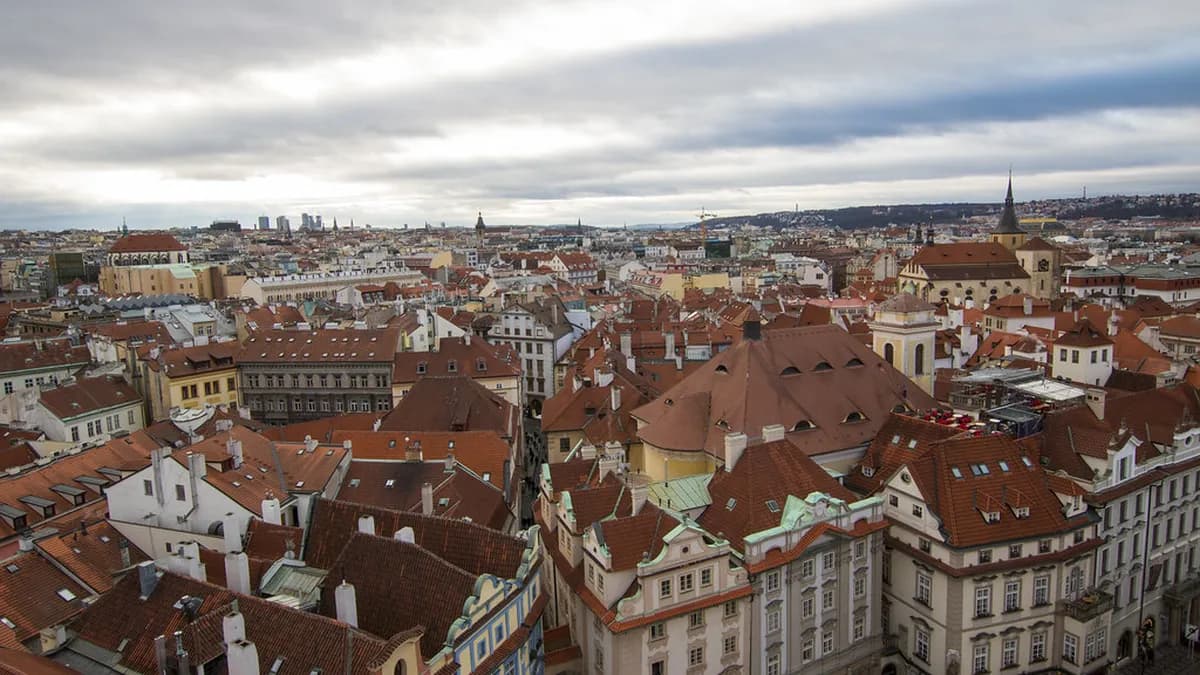
Staré Město is Prague 1's east-bank neighborhood and the city's architectural showpiece. Old Town Square (Staroměstské náměstí) draws the biggest crowds, anchored by the fifteenth-century Astronomical Clock. Every hour on the hour, a mechanical parade of apostles rotates past the clock face — the show lasts about 45 seconds. Many visitors watch once from the square and move on, but climbing the tower (adults approx. CZK 250 in 2026) gets you the view over the rooftops that most people miss.
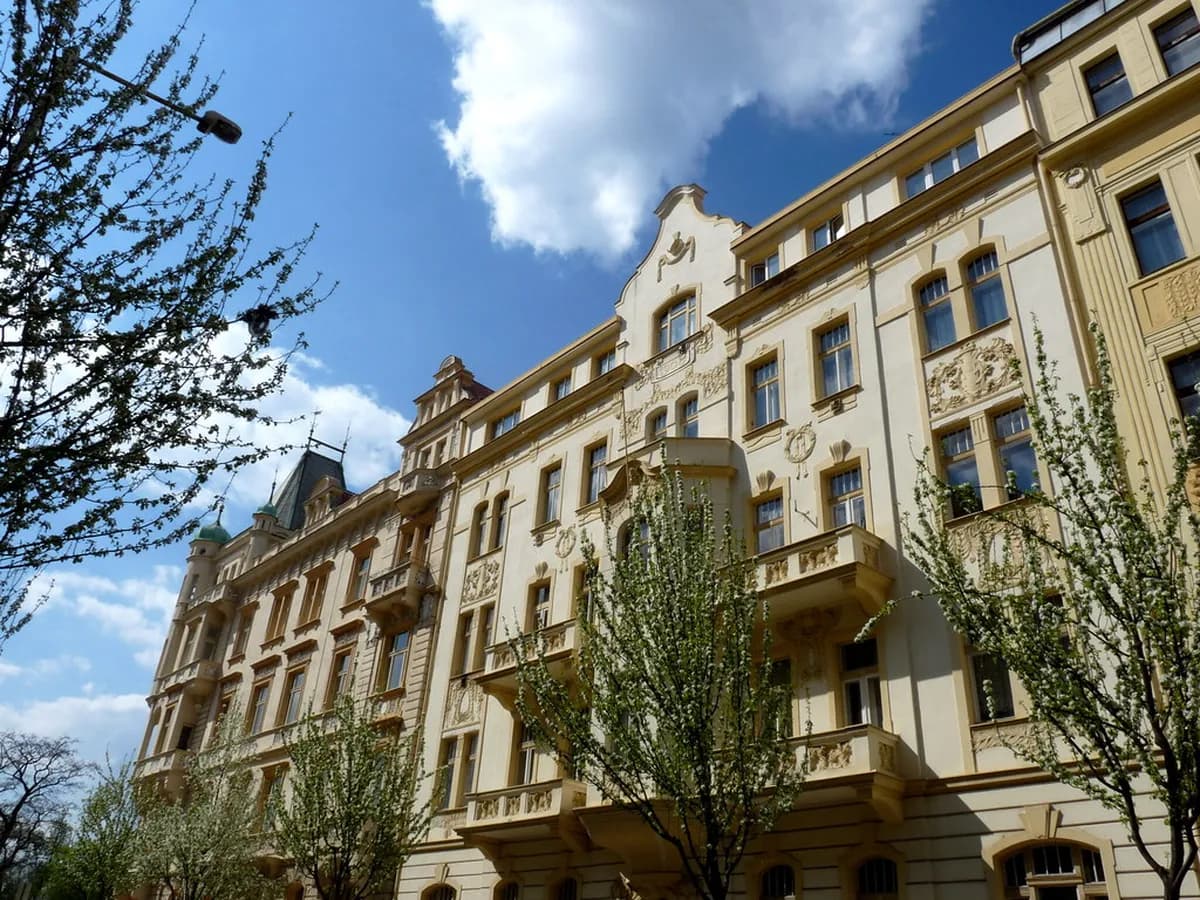
The Jewish Quarter (Josefov), a short walk northwest from the square, is the quieter part of Old Town. Art Nouveau boulevards replace the cobbled tourist lanes. Pařížská street is Prague's luxury shopping strip; a block away, the Jewish Museum complex (approx. CZK 550 adult combined ticket) covers six historic synagogues and the Old Jewish Cemetery, the oldest surviving Jewish graveyard in Europe. The area is genuinely worth half a day.
The honest trade-off with Staré Město: accommodation costs 30–50% more here than equivalent quality in Prague 2, the crowds on the main lanes are relentless from 10:00 to 20:00 in summer, and most restaurants on the square target tourists rather than locals. Come here to sightsee; consider sleeping one district over to save money and noise. Tram lines 2, 17, and 18 ring the neighborhood, and metro stops Staroměstská, Můstek, and Náměstí Republiky are all within a five-minute walk.
Malá Strana (Lesser Town): Baroque Beauty
Malá Strana occupies the west bank of the Vltava in Prague 1, connected to the Old Town by the iconic Charles Bridge. The neighborhood is a maze of Baroque palaces, walled gardens, and steep lanes climbing toward the castle. It feels less commercial than Staré Město, but "quieter" is relative — the approach to Prague Castle via Nerudova street is one of the busiest tourist routes in the city from 09:00 to 17:00.
Prague Castle (Pražský hrad) is technically in the Hradčany sub-district just above Malá Strana, but visitors access it through this neighborhood. A full circuit ticket costs approx. CZK 350 per adult in 2026 and covers St. Vitus Cathedral, the Old Royal Palace, and the Golden Lane. Allow three to four hours. The castle grounds themselves are free to enter and open from 06:00; only the interior attractions require tickets.
Petřín Hill rises at the western edge of Malá Strana and offers the best elevated views of the city without the castle crowds. The funicular (standard transport ticket valid) runs from Újezd tram stop. Kampa Park, a small island just south of Charles Bridge, is the neighborhood's most tranquil outdoor spot. For getting around, tram 22 is the scenic route that traces the river's west bank, connects all of Malá Strana, and continues out to Vinohrady and beyond — it is the single most useful tram line in the city for visitors who want to cover ground without the metro.
Nové Město (New Town): The Commercial Hub
Nové Město sits in Prague 2 directly south of Staré Město. Despite its name, it was founded in 1348 — fourteenth-century "new" by Prague standards. Wenceslas Square (Václavské náměstí) is the main axis: a long boulevard lined with shops, hotels, and historical plaques marking twentieth-century events. The National Museum anchors the top of the square and is open daily 10:00–18:00; tickets run approx. CZK 250 per adult.
The neighborhood's standout architectural set-piece is the Dancing House (Tančící dům) on the riverbank — a collaboration between Frank Gehry and Vlado Milunić completed in 1996. The rooftop restaurant is open to the public and worth visiting for the view even if you skip the meal. The National Theatre and the Museum of Communism (approx. CZK 290 adult, open daily 09:00–20:00) are also here.
For accommodation, Nové Město offers the best value among the central districts. Hotels here typically run 15–25% cheaper than equivalent properties in Prague 1, and multiple metro lines (lines A, B, and C all have stops in this district) put you within two stops of Old Town Square. The Náplavka river promenade hosts a Saturday farmers' market and is one of the best free spots in the city for an evening walk.
Prague 1 vs. Prague 2: The Price Cliff Worth Knowing
Every neighborhood guide mentions that Prague 2 is cheaper, but none quantifies how much cheaper. Based on consistent patterns across multiple stays and booking checks in 2026, a four-star hotel in Josefov (Prague 1) typically runs €150–250 per night. A hotel of comparable quality and build standard in Vinohrady (Prague 2) runs €70–120 per night. The difference is the address, not the room. The tram ride between them is twelve minutes on line 22 or line 11.
The same gap applies to restaurants. A sit-down dinner with beer in Old Town costs CZK 600–900 per person at the low end. The same meal — often better quality — in Vinohrady runs CZK 350–550. Street food around Old Town Square (trdelník, tourist sausages) is pure margin; skip it entirely. The savings from staying and eating in Prague 2 for a four-night trip can easily cover a day trip to Český Krumlov or Kutná Hora.
The practical question is walkability. Staying in Prague 1 means rolling out of bed and walking to Charles Bridge in eight minutes. Staying in Vinohrady means a twelve-minute tram ride. For most travelers the trade-off favors Prague 2 unless this is a one- or two-night trip where every minute counts. First-timers who have never seen Old Town should stay there once; return visitors almost universally choose Prague 2 or further.
A four-star hotel in Josefov (Prague 1) runs €150–250/night in 2026; the same quality in Vinohrady (Prague 2) is €70–120. The tram between them takes 12 minutes on line 22, making Prague 2 the better-value base for most stays longer than two nights.
Vinohrady and Žižkov: Local Life and Nightlife
Vinohrady is Prague's most popular expat and young-professional district. Wide boulevards lined with late-nineteenth-century tenements lead to two central squares: Náměstí Míru, home to the neo-Gothic Church of St. Ludmila, and Jiřího z Poděbrad, which hosts a farmers' market Wednesday through Saturday. Riegrovy Sady, the neighborhood's main park, has a beer garden with clear sight lines to Prague Castle — the best castle view you can get for the price of a CZK 60 draft beer. The district's history as a vineyard-covered area dates back centuries; Wikipedia's Vinohrady article details its architectural heritage. Read our Vinohrady Prague Neighborhood Guide Travel Guide for specific restaurant and bar recommendations.
Žižkov sits directly east of Vinohrady in Prague 3 and shares many residents but carries a rougher edge. The TV Tower observation deck (open daily 09:00–midnight, approx. CZK 300 adult) is the district's main landmark, topped by David Černý's ten crawling baby sculptures. Žižkov has long claimed the highest pub-per-capita count in Europe; whether that figure is accurate or local myth, the density of unpretentious neighborhood taverns is real. Beer prices here regularly run CZK 40–55 per half-litre — noticeably below Old Town rates. Our Žižkov Prague neighborhood guide covers the best local taverns.
Both districts sit ten to fourteen minutes from the center by tram. The most direct route from either neighborhood into the heart of Old Town uses metro line A from Náměstí Míru station (Vinohrady) or tram 9 toward the center (Žižkov). Neither district is as walkable to the main sights as Prague 1, but both reward visitors who stay more than two nights and want to eat and drink alongside actual residents rather than other tourists.
Holešovice and Karlín: Creative and Foodie Hubs
Holešovice (Prague 7) is a former meatpacking district that has spent the last decade converting warehouses into galleries, music venues, and multi-use creative spaces. The DOX Centre for Contemporary Art (Poupětova 1, open Wednesday–Sunday 11:00–19:00, approx. CZK 220 adult) is the neighborhood's anchor institution and consistently strong programming makes it worth the trip from anywhere in the city. Vnitroblock, a converted textile factory on Tusarova street, houses design studios, a café, and rotating pop-up events. Jatka78, in a former slaughterhouse, is Prague's leading contemporary circus and performing arts venue — book ahead as performances sell out. Holešovice's transformation from industrial hub is documented on Wikipedia, which details the National Gallery and cultural institutions now anchoring the neighborhood. For a centrally located base with an arts-district feel, Mama Shelter Prague is situated in Holešovice and suits the neighborhood's energy. Tram 1 and metro line C (Vltavská station) connect the district to the center in twelve minutes.
Karlín (Prague 8) sits on the east bank, across the river from Holešovice, and tells a different story: a quiet residential district flattened by the catastrophic 2002 Vltava floods, then rebuilt over the following decade into the city's most serious food neighborhood. Eska on Pernerova street (open Tuesday–Saturday from lunch) holds a Michelin Bib Gourmand, uses in-house fermentation and wood-fired cooking, and is the most consistent high-end dinner option outside the tourist zone. Můj Šálek Kávy on Křižíkova street is widely considered the founding coffee shop of the Czech specialty-coffee scene. Kasárna Karlín, a converted military barracks on Prvního pluku street, hosts film screenings, concerts, a beer garden, and a weekly market — it functions as the neighborhood's informal cultural center. Metro line B (Křižíkova station) puts Karlín eight minutes from Old Town.
Vršovice: The Low-Key Alternative to Vinohrady
Vršovice sits in Prague 10, directly south of Vinohrady, and attracts residents who want the same leafy residential feel at slightly lower rents and without the expat-polished surface of its more famous neighbor. The neighborhood's focal point is Krymská street — a single lane packed with independent cafés, bottle shops, gallery-bars, and vegetarian restaurants. The strip is compact enough to walk end-to-end in fifteen minutes, yet dense enough to occupy an entire afternoon.
The difference between Krymská and Vinohrady's Náměstí Míru scene is tone. Vinohrady feels curated and slightly competitive; Krymská feels genuinely accidental, the result of cheap rents attracting unconventional operators who stayed when the rents rose around them. Café Sladkovský serves local-sourced food in a deliberately low-key setting. Café Šlágr handles the vintage-Czech-décor-and-cake niche that every neighborhood deserves. Bad Flash Bar runs more than ten taps and is one of the better places in the city to try Czech craft beer from smaller producers, including sour ales that rarely appear in more central bars.
Tram 6 and tram 22 connect Vršovice to the center. Havlíčkovy Sady, the park on the border between Vršovice and Vinohrady, contains a small working vineyard where you can sit among the vines with a glass of housemade wine — one of the most unusual free-entry outdoor experiences in the city and almost entirely absent from mainstream tourist recommendations.
Must-See Prague Attractions by Neighborhood
Prague Castle (Malá Strana/Hradčany) is the largest ancient castle complex in the world by area. The full-circuit ticket covers St. Vitus Cathedral, the Old Royal Palace, St. George's Basilica, and the Golden Lane; allow a full morning. Charles Bridge connecting Malá Strana to Staré Město is busiest at midday — arrive before 08:00 or after 20:00 for a manageable experience. Old Town Square and the Astronomical Clock sit at the heart of Staré Město; climbing the tower costs approx. CZK 250 and is worth it for the rooftop view even in overcast weather.
The National Museum at the top of Wenceslas Square (Nové Město) reopened after a decade of renovation and now offers impressive natural history and Czech history collections; open daily 10:00–18:00, approx. CZK 250 adult. In Žižkov, the TV Tower is the most distinctive piece of modern architecture in the city. In Holešovice, the Trade Fair Palace (Veletržní palác) holds the National Gallery's twentieth-century collection including a notable Picasso and Mucha room; open Tuesday–Sunday 10:00–18:00, approx. CZK 300 adult. The DOX Centre, also in Holešovice, is the better bet for contemporary and international work.
One attraction that cuts across multiple neighborhoods is the free things to do in Prague. Our dedicated guide to Free Things To Do In Prague Travel Guide covers the parks, viewpoints, and historic sites that cost nothing to enter — a significant list in a city with many ticketed monuments.
Parks, Gardens, and Outdoor Spots in Prague
Letná Park (Prague 7, Holešovice) is the best elevated viewpoint in the city for a non-ticketed experience. The park sits on a plateau directly above the Vltava and looks across to Old Town and the castle. The beer garden near the giant metronome (the base of what was once the world's largest Stalin statue) opens from April through October and serves draft Pilsner from outdoor taps. Arrive by tram 1 to Letenské náměstí or walk up from the Vltavská metro station — the climb takes about ten minutes and is worth every step for the view.
Riegrovy Sady in Vinohrady offers a more relaxed afternoon option. The park's southern edge has unobstructed sightlines to Prague Castle across the valley — equal to Letná for the castle view and considerably less crowded on weekday afternoons. The beer garden here is smaller and more neighborhood-focused, running CZK 55–65 per half-litre. Stromovka, in Holešovice northwest of Letná, is a larger and quieter park better suited for a long walk than for view-seeking.
For gardens with historical substance, the terraced Baroque gardens on the south slope of the castle (Malá Strana, access via Valdštejnská street) are open May through October and rarely crowded despite being a ten-minute walk from Charles Bridge. Petřín Hill's summit offers 360-degree views comparable to the TV Tower without any ticket cost; the funicular from Újezd runs on a standard transit ticket.
Family-Friendly and Budget-Friendly Neighborhood Picks
Holešovice is the strongest all-round pick for families. Stromovka and Letná Parks both border the neighborhood, providing genuine green space rather than the ornamental squares of the center. Kasárna Karlín has a playground within the complex. The DOX Centre runs regular family and children's programming on weekends. Accommodation in Holešovice sits significantly below Prague 1 rates — budget roughly €60–100 per night for a solid mid-range hotel — and the Vltavská metro stop gives direct access to the center in under fifteen minutes.
For pure budget travelers, Žižkov and Vršovice offer the lowest prices on accommodation and food within striking distance of the center. Hostel beds in Žižkov start around €15–20 per night; private rooms in small guesthouses run €45–70. Beer and food on Krymská or in any Žižkov side-street tavern costs 30–40% less than in Prague 1. Neither neighborhood is rough by European capital standards, though Žižkov in particular has a lived-in grit that some travelers find off-putting and others find refreshing.
Vinohrady is the default recommendation for families who want calm streets, easy tram access, good restaurants, and a neighborhood that does not revolve around nightlife at 02:00. The area around Náměstí Míru metro station has the densest concentration of child-friendly cafés and bakeries. Hotel Anna (approx. €60–90 per night) is a consistently recommended mid-range property in the district. For a structured comparison of all main areas before you book, use the planning cheatsheet below alongside a Prague 3-day itinerary to map your first days by geography.
Prague Planning Cheatsheet and Transport Tips
Prague's public transport system (DPP) runs metro lines A, B, and C alongside a dense tram network and night trams. A single-ride ticket costs CZK 30 (valid 30 minutes, unlimited transfers within that window). A 24-hour pass costs CZK 120; a 3-day pass costs CZK 330. These are the best-value options for tourists. Validate your ticket at the yellow stamping machines before boarding — inspectors work in plain clothes and fines run CZK 1,500. Buy tickets at metro station vending machines or via the PID Lítačka app.
Quick neighborhood-to-center transit reference for 2026:
| Neighborhood | District | Approx. Hotel (4-star/night) | Transit to Center | Beer price (½L) |
|---|---|---|---|---|
| Staré Město | Prague 1 | €150–250 | On foot | CZK 90–140 |
| Malá Strana | Prague 1 | €130–220 | Tram 22, 10 min | CZK 80–130 |
| Nové Město | Prague 2 | €90–150 | Metro A/B/C, 2 stops | CZK 70–110 |
| Vinohrady | Prague 2 | €70–120 | Metro A, 8 min | CZK 55–75 |
| Žižkov | Prague 3 | €45–70 | Tram 9, 12 min | CZK 40–55 |
| Holešovice | Prague 7 | €60–100 | Metro C, 10 min | CZK 50–70 |
| Karlín | Prague 8 | €65–110 | Metro B, 8 min | CZK 50–70 |
| Vršovice | Prague 10 | €45–80 | Tram 22, 15 min | CZK 45–65 |
- Staré Město: already in the center — on foot everywhere.
- Malá Strana: tram 22 (scenic, west bank route) or walk across Charles Bridge in 12 minutes.
- Nové Město: metro lines A, B, or C — two stops to the heart of Prague 1.
- Vinohrady: metro A from Náměstí Míru to Staroměstská, 8 minutes.
- Žižkov: tram 9 to Wenceslas Square, 12 minutes; or tram 5/26 depending on your exact street.
- Holešovice: metro C from Vltavská to Muzeum, 10 minutes; or tram 1 to Náměstí Republiky.
- Karlín: metro B from Křižíkova to Můstek, 8 minutes.
- Vršovice: tram 22 to Náměstí Míru (2 stops) then metro A, total 15 minutes.
Taxis via Bolt or Liftago cost approximately CZK 150–250 for cross-city trips within the tourist zone. Avoid flagging taxis on the street outside tourist areas — metered rates without an app are routinely inflated. Ride-hailing is reliable, cheap, and consistently available even late at night. Most central streets are highly walkable if you wear shoes suited to cobblestones; the historic center has very few flat surfaces.
Validate your public transport ticket at the yellow stamping machines before boarding — plain-clothes inspectors issue on-the-spot fines of CZK 1,500. Buy tickets at metro vending machines or via the PID Lítačka app; single rides cost CZK 30, a 24-hour pass is CZK 120.
See our hidden gems in Prague guide for the broader overview of the city.
For related Prague deep-dives, see our Zizkov Prague Neighborhood Guide Travel Guide and Vinohrady Prague Neighborhood Guide Travel Guide guides.
Frequently Asked Questions
Which Prague neighborhoods fit first-time visitors?
Staré Město and Malá Strana are ideal for first-time visitors to Prague. These central areas put you within walking distance of historic landmarks like Charles Bridge. However, expect higher hotel prices and busier streets during peak hours.
Is staying outside the historic center worth it?
Yes, staying outside the center is highly recommended for budget travelers. Districts like Vinohrady and Karlín offer cheaper dining and quieter streets. You can still reach the Old Town in ten minutes by tram.
Neighbourhood Guides to Comparable Capitals
Prague rewards leaving the castle-to-bridge corridor almost immediately, and the districts beyond it are where people actually live. Munich's neighbourhoods, Kraków's districts and Brussels's communes all reward the same approach for different reasons.
Prague is a city of distinct and diverse neighborhoods. Each district offers a unique window into Czech culture and daily life. Choosing the right area will shape your entire travel experience — from what you pay for breakfast to how quickly you can reach the castle.
Whether you want historic charm in Malá Strana, local nightlife in Žižkov, creative energy in Holešovice, or the best coffee in Karlín, the city delivers. Pack your walking shoes, validate your tram ticket, and prepare to explore this compact, endlessly rewarding capital.
Continue exploring
More guides you'll find useful

,_Vltava_River,_Prague,_2015.jpg)