10 Unusual Things to Do in Prague (2026 Travel Guide)
Discover 10 unusual things to do in prague. Explore bizarre art, hidden bunkers, and quirky museums with our expert insider tips.
On this page
10 Quirky and Unusual Things to Do in Prague
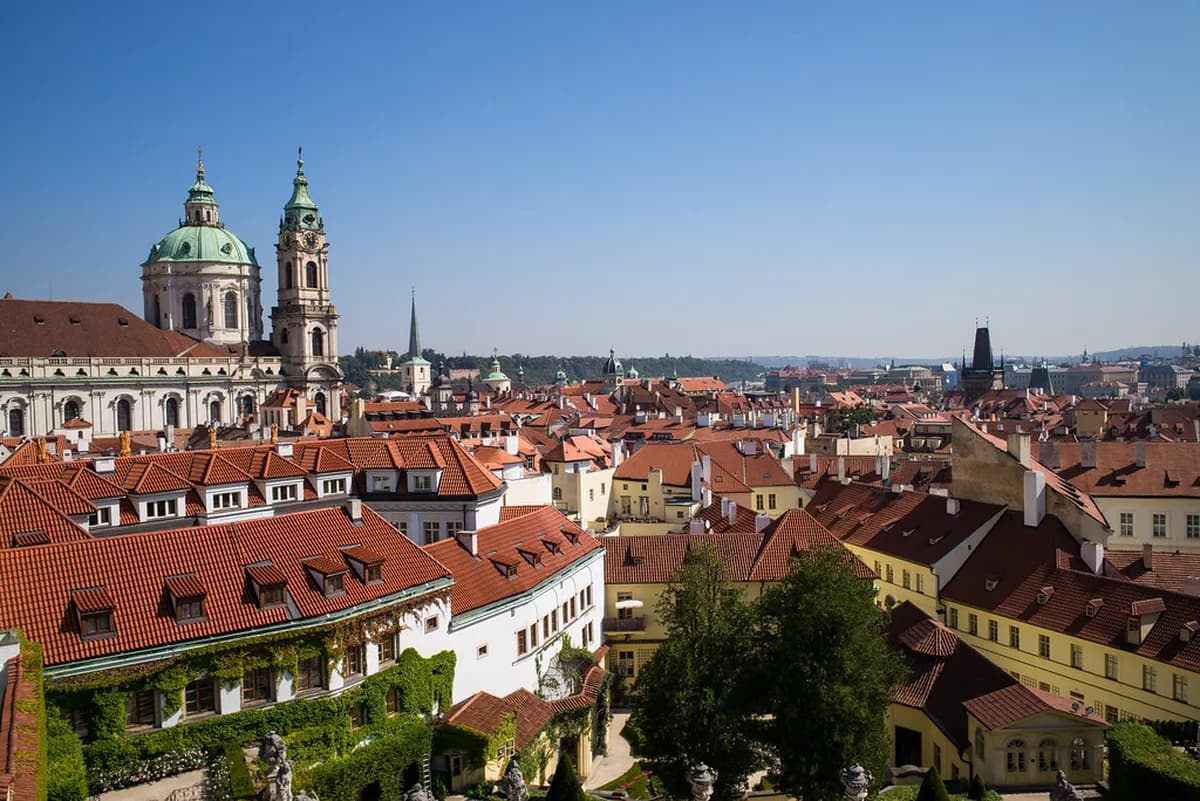
Prague has two personalities. The city center — Old Town, the Charles Bridge, the Astronomical Clock — is gorgeous but shoulder-to-shoulder with tourists. The real city starts the moment you step off the main drag. After several visits spanning the last decade, the experiences that stuck with me longest were never the famous ones. They were a bronze baby crawling up a television tower, a Cold War bunker hidden under a residential street, and a continuously moving elevator that the rest of Europe gave up on decades ago.
This guide was updated for 2026 and covers the genuinely unusual side of the Czech capital — the experiences that reward curiosity and a willingness to explore past the souvenir stalls. Finding non-touristy things to do in prague is the fastest way to feel like you actually know the city rather than just passing through it. To stay connected while navigating these hidden corners, I recommend an Holafly eSIM to avoid expensive roaming charges across the Czech Republic.
Must-See Unusual Attractions in Prague
A handful of Prague's quirky landmarks have earned genuine cult status, and they deliver. David Černý's upside-down statue of Saint Wenceslas on a dead horse hangs inside the Lucerna Passage just off Wenceslas Square — free to enter, open daily 06:00–22:00, and startling every time. The Idiom Book Tower inside the Prague Municipal Library creates an infinite optical illusion using thousands of stacked books and a mirror. It costs nothing to view and the library is open Monday through Saturday 09:00–20:00.
The Žižkov Television Tower is impossible to miss from almost anywhere in the city. Look closely at its concrete pillars and you will see ten giant bronze babies crawling upward, their faces replaced with blank barcodes. David Černý designed them in 2000 and the city made them permanent after a public vote. Viewing the tower from below is free. The observation deck at 93 metres costs approximately 250 CZK (around €10) and is open daily 09:00–23:00. Visit at dusk when the tower changes colour.
The Žižkov TV Tower observation deck is open daily 09:00–23:00 and costs around 250 CZK (€10). Buy tickets online in advance on weekends to skip the queue that builds after 10:00.
Vítkov Hill National Monument gets overlooked because it sits east of the tourist corridor in the Žižkov district. The functionalist building houses one of the largest equestrian bronze statues in the world and a mausoleum. Grounds access is free. Museum entry is approximately 100 CZK (€4). The hilltop also delivers a panoramic view of the city that almost no visitor discovers. Combine it with a walk through Žižkov, one of Prague's most architecturally diverse and least-touristy neighbourhoods.
Museums, Art, and Culture Worth Seeking Out
The Sex Machines Museum on Melantrichova Street in Old Town occupies three floors and traces the mechanical history of erotic devices from the 17th century to the present. It is genuinely unusual and well-curated rather than exploitative. Entry is 250–320 CZK (€10–13), it is open daily 10:00–23:00, and admission is restricted to visitors 18 and older.
The Museum of Alchemists and Magicians occupies the house on Jánský vršek where the historical alchemist Edward Kelley reportedly worked. The interactive displays include a functioning recreation of a medieval laboratory, spell books, and a spiralling attic staircase. Tickets run 170–220 CZK (€7–9) and it opens daily 10:00–20:00. Finish the visit at the Kellyxir pub downstairs, which serves cocktails in chemistry-lab glassware that genuinely smoke.
The Jerusalem Synagogue on Jeruzalémská Street is one of the most visually striking buildings in Prague and almost nobody stops inside. The facade combines Art Nouveau and Moorish Revival in an explosion of blue, gold, and red tilework. Admission is 120–160 CZK (€5–7) and it is open Sunday through Friday 10:00–17:00. Inside, look up at the painted ceiling vaults — they are extraordinary. This is not a tourist trap; it is a working synagogue that welcomes visitors.
The Idiom Book Tower and the Infant Jesus of Prague statue inside the Church of Our Lady Victorious are both free and central. The wax-coated wooden statue draws pilgrims from across the world who believe it has healing properties. The small museum upstairs displays the elaborate handmade robes donated by governments and faith communities worldwide — an oddly compelling collection.
Check Out Prague's Lesser-Known Viewpoints
Petřín Hill is the obvious escape from the city crowds but most visitors only go as far as the lookout tower. The hill contains several quiet gardens, orchards, and wooded paths that most tourists never reach. The funicular from Ujezd in Malá Strana runs every 10 minutes and costs 40 CZK (€1.60) on a standard transit ticket. Walk past the tower and the rose gardens and you quickly find yourself almost completely alone with a view of the entire city below you.
The Old Town Hall Tower beats the Astronomical Clock show every time. Climb it (there is a ramp, not a staircase, which makes it far easier) and you look down at the crowd below rather than standing in it. Entry is around 250 CZK (€10) and it opens daily from 09:00. For the best light, go mid-morning before the tour groups arrive.
The Letná Beer Garden above the Vltava River is a genuine local favourite that happens to offer one of the best city views in Prague. There is a small beer kiosk serving Czech draught at prices that have not been inflated for tourists. Sit at a picnic bench under the chestnut trees and look south across the river to the Old Town skyline. The garden is free to enter, open spring through autumn, and the walk up from the Čechův Bridge takes about ten minutes.
Sing on the Charles Bridge — and Do It Right
Every visitor walks the Charles Bridge. Very few people pause to sing on it. The bridge has its own acoustic quality — the combination of stone arches, water below, and open air above creates a natural reverb that buskers and locals have known about for centuries. The tradition of stopping, leaning over the parapet near the statue of Saint John of Nepomuk, and singing even a few bars has been a local superstition for generations: touch the bronze relief and make a wish.
The practical advice: cross the bridge at 07:00 or after 20:00. By midday it is genuinely difficult to move. The bridge is 515 metres long with 30 baroque statues. At quiet hours you can examine each statue properly, hear the river below, and understand why this is genuinely one of the great medieval structures in Europe — rather than feeling like you are queuing for a theme park.
The Old Town Bridge Tower at the eastern end of the bridge is worth climbing for 130 CZK (€5). The views back down the bridge toward the castle are the classic Prague postcard shot, but from a height rather than ground level. The climb is manageable and takes about five minutes.
Blow Bubbles in Old Town Square
Old Town Square has its own unofficial cast of performers, and the bubble-blowers are among the most memorable. On warmer evenings from spring through early autumn, performers with specialised equipment create enormous soap bubbles that drift across the square, catching the light from the Church of Our Lady Before Týn behind them. Children and adults chase them equally enthusiastically. It costs nothing to watch and the whole scene has an improvised, spontaneous quality that no other European capital square seems to replicate.
The square itself is worth an early morning visit before the performers and crowds arrive. At 07:00, the cobblestones are empty, the baroque facades catch the low light, and the twin Gothic spires of the Týn Church are genuinely dramatic. The Jan Hus Memorial at the centre of the square is a serious, politically loaded monument that gets lost in the midday chaos but reads completely differently in the morning quiet.
The square is also the location of Prague's Christmas market (late November through early January) and an Easter market (usually two weeks around Easter). Both are among the most atmospheric seasonal markets in Central Europe and draw a mix of locals and tourists rather than exclusively the latter. The trdelník pastry sold at stalls throughout the year is photogenic but not particularly authentic — the větrník cream puff at nearby patisseries is a much better Czech pastry and most visitors never discover it.
Enjoy a Calm Activity Along the River
Skip the overpriced commercial dinner cruise and instead rent a pedal boat at Slovanský Island (Střelecký ostrov), the narrow island just south of the National Theatre on the western bank of the Vltava. The rental booth is open from May through September and costs around 150–200 CZK (€6–8) per hour. You paddle at your own pace, with clear views of both banks and the Charles Bridge downstream. The island itself has a café and a peaceful park that almost no tourist map highlights.
The Náplavka riverbank on the eastern shore south of Palackého náměstí transforms every Saturday morning from 08:00–14:00 into one of Prague's best farmers' markets. Local producers sell bread, cheese, vegetables, and prepared food at prices far below the Old Town tourist zone. There are also occasional evening boat-bar events moored at the quay. The whole stretch has a neighbourhood feeling — young Praguers, families with dogs, no pressure to buy anything.
If you want more activity, Biko Adventures runs river surfing sessions on a standing wave on the Vltava — the only one of its kind in Central Europe. You do not need surfing experience, only the ability to swim. Sessions run on weekend afternoons and cost around 800–1000 CZK (€33–42). It is the kind of thing you would never expect to find in a landlocked Central European capital.
Must-See Things in Prague You Might Be Skipping
Prague Castle (Hradčany) is the largest ancient castle complex in the world by area — 70,000 square metres. Most visitors walk across it without realising they are inside a complex that contains a cathedral, palaces, galleries, gardens, fortifications, and a Golden Lane of tiny former craftsmen's houses. Circuit A (the most comprehensive ticket) costs around 350 CZK (€14) for adults. The castle grounds open daily at 05:00 and the internal buildings from 09:00. Go early in the morning before the tour groups arrive or in the evening when the crowds thin.
Strahov Monastery, ten minutes' walk from Prague Castle, combines two of the most beautiful library halls in Europe with an operational brewery and restaurant. The Theological and Philosophical Halls are genuine 17th and 18th century libraries with original wooden cabinets and painted ceilings — entry costs around 150 CZK (€6). After the libraries, stop at the monastery brewery for lunch. The patio looks out over the city and serves very good unfiltered beer brewed on-site.
The Dancing House (Tančící dům) in New Town is a 1996 building by Frank Gehry and Vlado Milunič that looks like two figures mid-dance. Most visitors photograph it from the street and move on. The rooftop Glass Bar serves cocktails with a panoramic view of the Vltava and costs nothing to access for a drink. It is open daily from 11:00 and is significantly less crowded than any Old Town viewpoint.
| Attraction | District | Entry Cost | Hours |
|---|---|---|---|
| Žižkov TV Tower (deck) | Žižkov | ~250 CZK (€10) | Daily 09:00–23:00 |
| Vítkov Hill Monument | Žižkov | ~100 CZK (€4) | Grounds free; museum varies |
| Sex Machines Museum | Old Town | 250–320 CZK (€10–13) | Daily 10:00–23:00 |
| Museum of Alchemists | Malá Strana | 170–220 CZK (€7–9) | Daily 10:00–20:00 |
| Jerusalem Synagogue | New Town | 120–160 CZK (€5–7) | Sun–Fri 10:00–17:00 |
| Old Town Hall Tower | Old Town | ~250 CZK (€10) | Daily from 09:00 |
| Prague Castle Circuit A | Hradčany | ~350 CZK (€14) | Grounds daily from 05:00 |
Ride a Paternoster Elevator — Prague's Moving Loop Lifts
Prague has something almost nowhere else in Europe still operates at scale: the paternoster. These are open-cabin elevators that run in a continuous loop without stopping, which means you step in and out while the cabin is moving. They look alarming. They are actually safe, slow, and deeply unusual to experience. Most of Europe decommissioned them in the 1970s on safety grounds; Prague kept theirs running.
The most accessible one for visitors is at Prague City Hall on Mariánské náměstí. The building offers an official paternoster tour (check the city hall website for current tour schedules, typically weekdays). You do not need to take the tour to appreciate the machine — watching it operate is compelling on its own. The cabin speed is roughly 0.3 metres per second, about the pace of a slow walk, and the cabins are padded. Do not linger at the top or bottom transition points; step in and out decisively and it is entirely straightforward.
The paternoster at Lucerna Palace has been closed for renovation — do not make a special trip for it. The City Hall one is the reliable option in 2026. This is the kind of functional urban oddity that zero competitors in any Prague travel guide currently feature as a dedicated experience, which is exactly why it is worth your fifteen minutes.
Enjoy Prague's Beer Scene Beyond the Pilsner
Czech beer culture is more layered than "it is cheap and good." The three standard pour styles in Prague tell you something about the culture. A hladinka is the standard — mostly beer with a small dense head. A šnyt (pronounced "schnit") is two parts beer, three parts foam, served in a smaller glass. A mlíko is an entire glass of foam with barely any beer at the bottom, which sounds wrong but is considered the most refreshing way to drink at the end of a heavy meal. Ask for any of these at a genuine Czech pub and you will get an immediate, favourable reaction from the staff.
U Fleku on Křemencova Street has been brewing the same dark lager since 1499. The interior is enormous and deliberately medieval. The service is legendarily brusque — servers will place beers on your table without asking and charge you for them, and will bring honey schnapps that are emphatically not complimentary. Know this going in and you will find the whole experience entertaining rather than aggravating. It costs around 80–90 CZK (€3.50) per 0.4L dark beer.
At U Fleku, servers place beers on your table without asking and the honey schnapps they bring are not complimentary — you will be charged for both. Accept this as part of the experience or decline politely when they approach.
For a beer experience that feels more local, Lokal on Dlouhá Street has a Czech-only food menu and a serious tank beer programme. Reservations are recommended in the evenings. The Letná Beer Garden (open seasonally) offers standard Czech draught at park prices with the best hilltop view in the city. And if you want to understand Czech beer as a craft rather than a beverage, Lokal offers a beer-pouring class at 3,800 CZK (€155) where you learn the technical differences between the pour styles with trained instructors.
How to Plan a Smooth Unusual Attractions Day
Route geographically and you will save hours. The Žižkov cluster — TV Tower, Vítkov Monument, and Kasárna Karlín courtyard bar complex — can be done in a single afternoon using trams 5, 9, or 26. The Malá Strana and Petřín cluster — funicular, Petřín Tower, Strahov Monastery, Church of Our Lady Victorious — works well as a morning that ends at Prague Castle. New Town (Lucerna Passage, Dancing House, Absintherie on Wenceslas Square) pairs naturally with an evening in the Vinohrady neighbourhood for dinner.
A 24-hour public transit pass costs 120 CZK (€5) and covers all trams, metro, and buses within Prague zones P and 0. Buy it at any metro station or via the PID Lítačka app. The metro closes around midnight; trams run all night on reduced frequency. Keep some Czech koruna cash for smaller galleries and beer gardens — card payments are widely accepted but a few neighbourhood spots are still cash-only.
Before you set out, make sure your phone has a reliable data connection for navigating the winding streets and passages. Using Holafly's Europe eSIM ensures you can access digital maps and translation tools anywhere in the Czech Republic. Check opening hours directly on official venue websites before visiting — many smaller museums close on Mondays and some have seasonal hours that change from April onwards.
Is Prague Worth It for Quirky Travellers?
Prague rewards the curious traveller more than almost any other Central European capital. The combination of Gothic, Baroque, Art Nouveau, Functionalist, and Communist-era architecture means every neighbourhood looks different. The local culture genuinely embraces the absurd — from sculptures of politicians crawling into each other to underground cave bars that survive on reputation alone. This is not a city that takes its own mythology too seriously.
If you want to extend your exploration, our guide to 12 Best Secret Prague Spots to Visit covers passages, courtyards, and hidden districts that most visitors never find. You can easily spend three or four days in Prague without repeating an experience — and the most memorable ones will almost certainly be the ones that were not in the top ten lists. Adding even two or three of the spots in this guide to a standard Prague 3 Day Itinerary Travel Guide changes the whole character of the trip.
Budget-wise, Prague remains excellent value in 2026. Many of the most unusual experiences are free or under 200 CZK (€8). The nuclear bunker tour and the beer-pouring class sit at the expensive end, but most quirky sights — the Lucerna sculpture, the Idiom Tower, the Letná Beer Garden, the bubble performers in Old Town Square, a paternoster ride — cost nothing at all. Check out our list of Free Things To Do In Prague Travel Guide for a full budget-friendly breakdown.
See our hidden gems in Prague guide for the broader overview of the city.
For related Prague deep-dives, see our Prague Off The Beaten Path Travel Guide and 10 Non Touristy Things to Do in Prague guides.
Frequently Asked Questions
Which unusual things to do in prague options fit first-time visitors?
First-time visitors should start with David Černý's upside-down horse in Lucerna Passage and the Idiom Book Tower. These sights are centrally located near major landmarks, making them easy to add to any standard walking route. They are also highly visual and completely free to enjoy.
How much time should you plan for unusual things to do in prague?
You should allocate at least half a day to explore Prague's quirky attractions. Most individual stops take less than an hour to experience, but travel time between neighbourhoods can add up. Grouping them by district helps maximise your sightseeing time.
What should travelers avoid when planning unusual things to do in prague?
Avoid visiting popular photo spots like the Idiom Book Tower during peak midday hours when queues are longest. You should also avoid tourist-trap museums that offer generic exhibits with no connection to local Czech history. Always check reviews and ticket prices online before you go.
The Two Great Baroque Library Halls
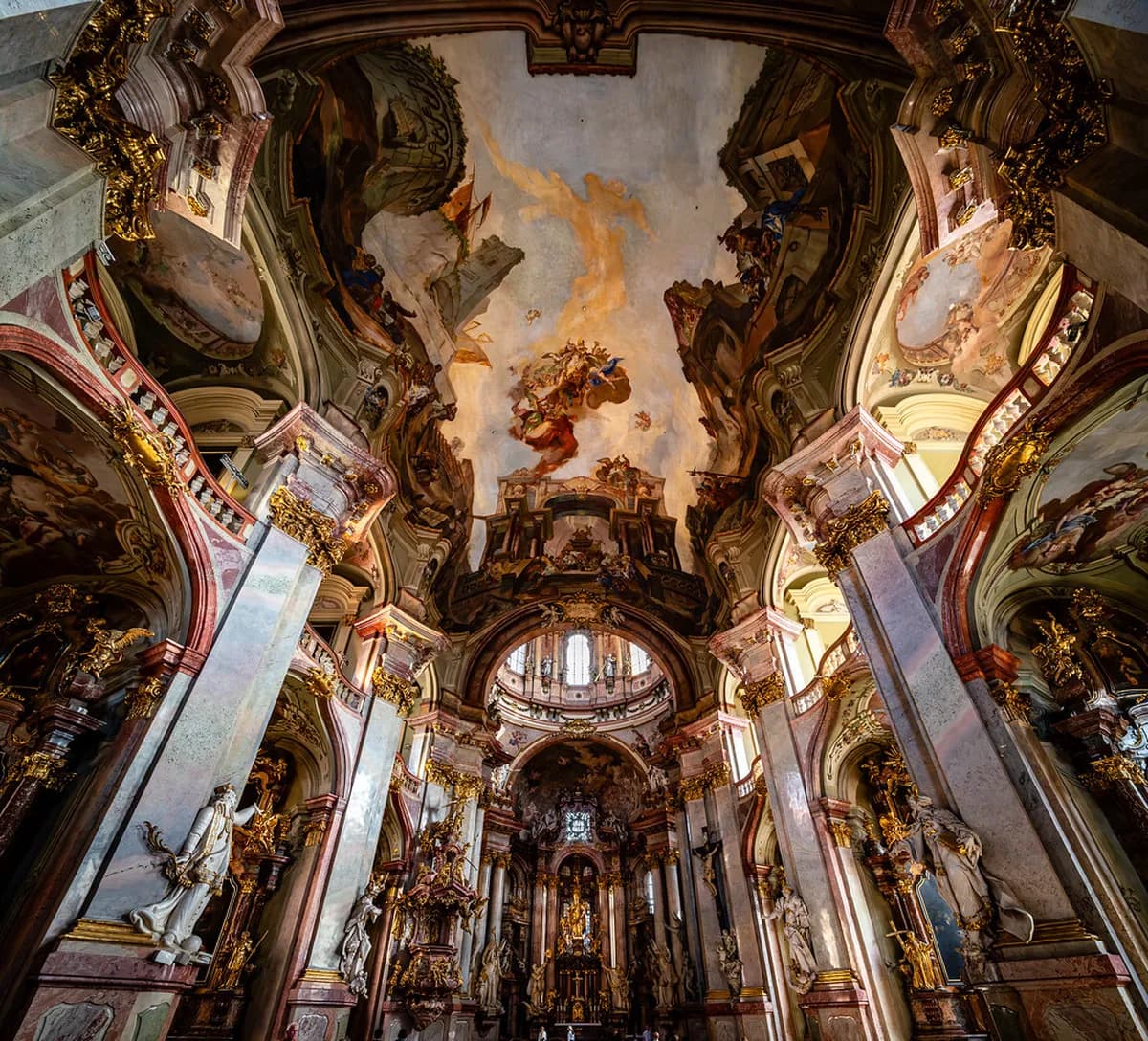
Prague holds two of the most photographed library interiors in Europe, and both restrict access in ways worth knowing before you arrive. The Klementinum pairs its Baroque hall with an astronomical tower you can climb. Strahov Monastery Library keeps its Theological and Philosophical Halls shelved as the Premonstratensians left them.
Exploring the unusual side of Prague reveals a city that is both deeply historic and playfully rebellious. From crawling bronze babies to hidden wartime shelters, a continuously looping elevator to a standing river wave, these quirky attractions offer a memorable alternative to the standard tourist trail. They allow you to connect with the authentic, creative spirit of the city rather than its postcard version.
Whether you are a first-time visitor or returning to the Czech capital, stepping off the beaten path is always rewarding. Be sure to check out our list of Free Things To Do In Prague Travel Guide for more budget-friendly inspiration. Embrace the weird, pack your curiosity, and enjoy your adventure in this remarkable city.
Continue exploring
More guides you'll find useful