10 Non-Touristy Things To Do In Budapest (2026) Travel Guide
Plan non touristy things to do in budapest with top picks, neighborhood context, timing tips, and practical booking advice for a smoother trip.
On this page
10 Non-Touristy Things To Do In Budapest
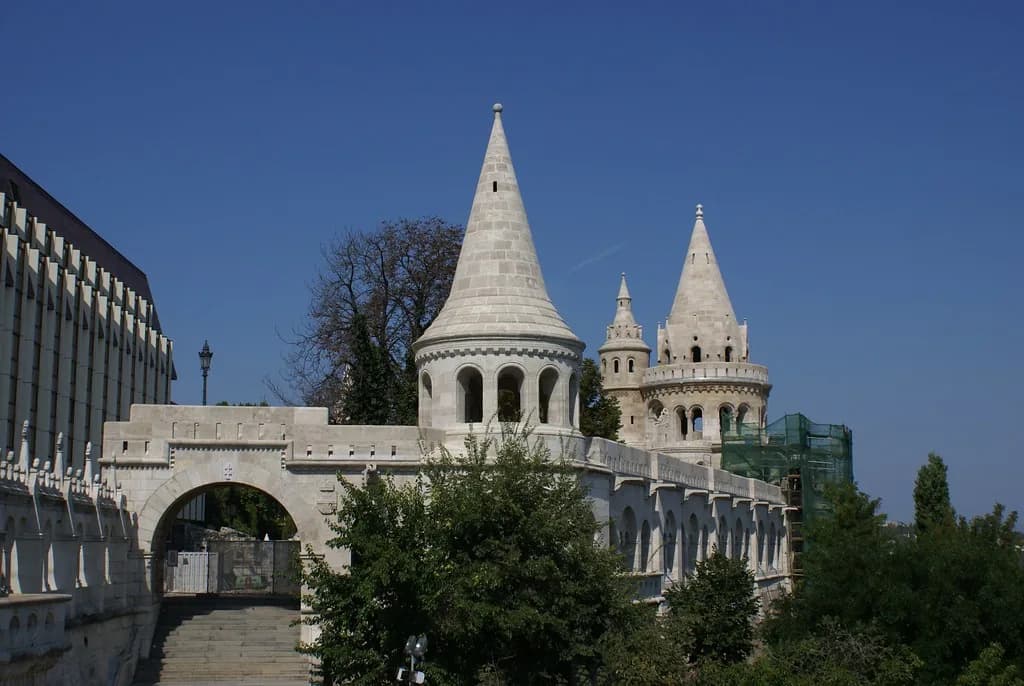
After several visits to Budapest, I've discovered that the city truly shines beyond its famous landmarks. While iconic sights like Fisherman's Bastion are stunning, the real magic often lies in its quieter corners. This guide, updated for 2026, focuses on genuinely non-touristy things to do in Budapest — the kind locals actually recommend. It aims to help you uncover the city's authentic pulse and get past the postcards.
Moving past the usual tourist circuit allows for a deeper connection with Hungarian culture and daily life. You will find experiences that locals cherish, from hidden libraries to bustling local markets. These suggestions offer a fresh perspective on this vibrant Central European capital. Whether it's your first trip or your fifth, there is always something new to find in Budapest.
What to Expect in Budapest
Budapest is a city shaped by dramatically different eras — the ornate Austro-Hungarian empire, decades of Soviet occupation, and a fast-moving post-1990 reinvention. Walking through the city, you will see Baroque facades riddled with bullet holes from the 1956 uprising sitting next to sleek mid-century apartment blocks and new coffee shops. That layering of history is one of the things that makes Budapest genuinely unusual compared to other European capitals.
Practically speaking, it is one of the most affordable major cities in Europe. A sit-down lunch at a local spot will cost you 2,000–3,500 HUF (roughly €5–€9). The transit network — trams, buses, and three metro lines — covers the city well, and most things in the center are walkable. Hungarians in tourist areas speak reasonable English, but even a few words in Hungarian (köszönöm = thank you) go a long way.
| Experience | Tourist Area Cost | Local Spot Cost | Quality & Crowd Difference |
|---|---|---|---|
| Lunch (sit-down meal) | €12–€18 | €5–€9 | Local spots have better atmosphere, no touts |
| Thermal bath (day pass) | €40–€50 (main baths) | €25–€35 | Smaller, quieter baths offer better experience |
| Paprika or salami (to take home) | €8–€15 per item | €2–€4 per item | Great Market Hall ground floor beats souvenir shops by 70% |
| Metro single ticket | €1.15 (same everywhere) | €1.15 (same everywhere) | M1 yellow line is UNESCO heritage; modern lines are utilitarian |
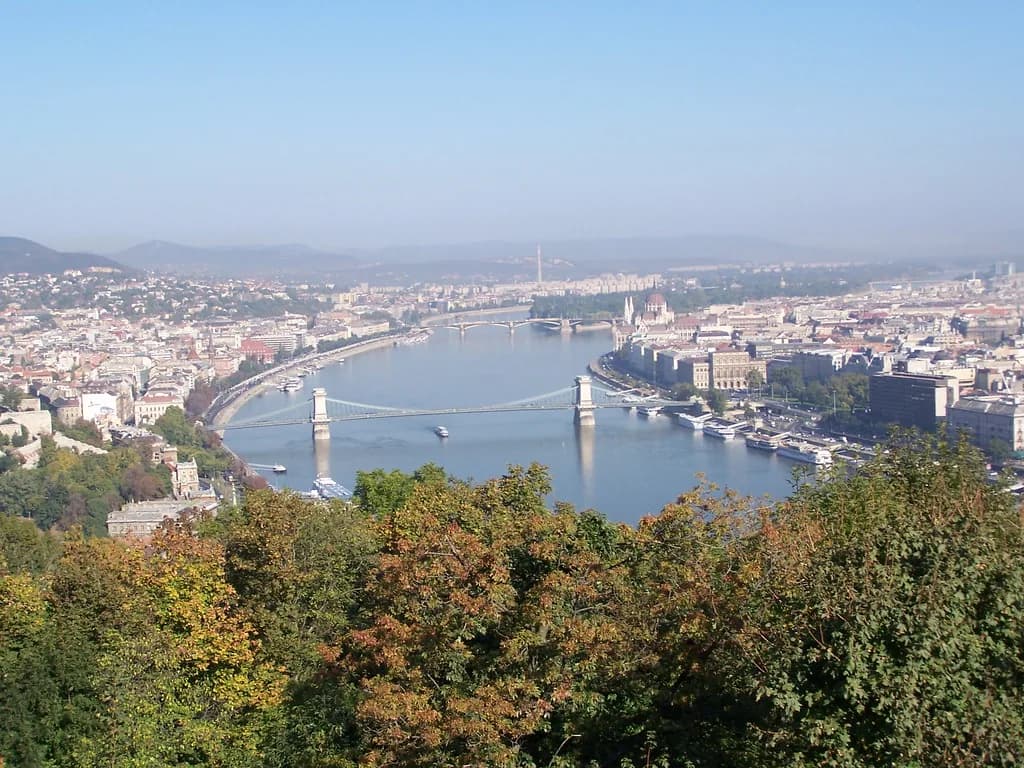
The city rewards people who stay longer and stray further. The Buda hills, the outer Pest districts, the undervisited stretches of the Danube embankment — most of this is invisible to visitors who stick to the inner core for two or three nights. Plan at least four days if you want to see more than the highlights. Five days gives you real breathing room.
How Many Days Do You Need in Budapest?
Three days is the absolute minimum, and you will feel rushed. Four to five days is the right call if you want to mix iconic sights with genuinely local discoveries. A five-day trip gives you time to soak in a thermal bath without rushing, take a day trip to Szentendre or Eger, and still wander a neighborhood like Újlipótváros or Óbuda at a relaxed pace.
If you are pairing Budapest with Vienna — a popular combination given the 2.5-hour train ride between them — resist the temptation to do Budapest as a day trip from Vienna. The city does not reveal itself in a single day, and hotel prices in Budapest are a fraction of what you pay across the border, so it makes financial sense to base yourself here.
Do You Need a Car in Budapest?
No. Budapest is one of the easiest European cities to navigate without a car. The metro, trams, and bus network cover the entire city, and fares are genuinely cheap — a single ticket costs around 450 HUF (about €1.15) in 2026. A 72-hour unlimited travel card costs roughly 5,500 HUF (€14) and is almost always worth it if you plan to move around regularly. The BudapestGO app lets you buy tickets on your phone without hunting for a machine.
For city sightseeing, a car is actively counterproductive. Parking in central Pest is expensive and scarce, and rush-hour traffic on the bridges over the Danube is a reliable frustration. Trams 2 and 4/6 cover the key arteries along the river and the Grand Boulevard respectively. The metro M2 and M3 lines connect the main neighborhoods in under 10 minutes.
Where a rental car starts making sense is for day trips to places not well served by trains — the Pilis hills, Lake Velence, or rural wine regions. But for anything in or around Budapest city itself, stick to public transport. You will cover more ground and spend less money.
How to Budget for Budapest (5 Days)
Budapest is genuinely budget-friendly by Central European standards. A rough 5-day budget per person runs like this: accommodation at a decent hostel or basic hotel costs €25–€50 per night; food at local restaurants and markets runs €20–€40 per day; a solid activity — a thermal bath, a museum, a boat cruise — adds another €15–€30 per day; and a transit pass costs roughly €14 flat. That puts an honest budget traveler at around €400–€500 for five days including flights at off-peak times.
Mid-range travellers can expect to spend €800–€1,100 for a five-day trip at a decent apartment or three-star hotel with daily sit-down meals and a couple of paid activities. The biggest price leaps come from thermal baths (Széchenyi charges €30–€40 for a full day including locker), upscale restaurants, and Danube river cruises (€20–€60 depending on the package). The House of Terror museum costs around €12 for entry; the Budapest Card covers 17+ museums and unlimited transit starting from €36 for 24 hours.
One place to save money is food. The Great Market Hall's upper floor has hot food stalls serving lángos for 1,000–1,500 HUF (€2.50–€4) and goulash soup for around the same. Buying paprika, salami, and wine at the market hall's ground floor is also significantly cheaper than the tourist shops on Váci Street. Eating one meal per day at a local étterem (restaurant) rather than a tourist-facing place will cut your food costs in half.
Unique Things to Do in Budapest
Budapest's most distinctive activities tend to be the ones that combine history with a certain oddness you do not find in other European capitals. The House of Terror on Andrássy út — the former headquarters of both the Nazi Arrow Cross and the Communist secret police — is one of the most powerful and disturbing museums in Europe. It costs around 4,000 HUF (€10) to enter and around 2,000 HUF more for the audio guide. Plan two hours minimum; most people feel they need a coffee afterward to process what they have seen.
The Budapest Labyrinth beneath Buda Castle deserves a visit if you are interested in both history and atmosphere. The cave tunnel system beneath the castle district runs for several kilometers, and a section is associated with Vlad the Impaler (Dracula), who was historically held in Buda. It is atmospheric and odd in equal measure — one corridor is completely unlit by design. Entry is around 3,500 HUF (€9).
For something more quietly unusual, the Kazinczy Street Orthodox Synagogue in District VII offers a more intimate experience than the famous Dohány Street Synagogue a few blocks away. Entry costs 1,000–2,000 HUF (€3–€5), and the Art Nouveau building is part of a still-functioning community complex. It is a calmer, more contemplative visit than the larger institution nearby, and far fewer people know it exists. For more of these kinds of finds, see our guide to hidden gems in Budapest.
Metropolitan Ervin Szabó Library
The main branch of Budapest's city library, housed in the former Wenckheim Palace in District VIII, is one of the most beautiful rooms in Central Europe that almost no tourist visits. The Neo-Baroque reading room — with its gilded balustrades, chandeliers, and painted ceilings — looks more like a Viennese opera house than a public library. Entry to browse the spaces is free; you only need a library card to borrow books.
The building was built in 1895 as a private aristocratic palace and donated to the city in the 1920s. The reading rooms on the upper floors retain the original decor almost entirely intact. It is a working library, which means the atmosphere is quiet and genuinely local — students, researchers, and retired regulars rather than tour groups. Visit on a weekday mid-morning for the best combination of atmosphere and access.
Getting there is straightforward: tram 4 or 6 to Corvin-negyed, then a 5-minute walk. Opening hours in 2026 are Monday to Friday 09:00–20:00, Saturday 09:00–17:00. Allow at least an hour to wander through the main halls and staircase galleries properly.
Great Market Hall
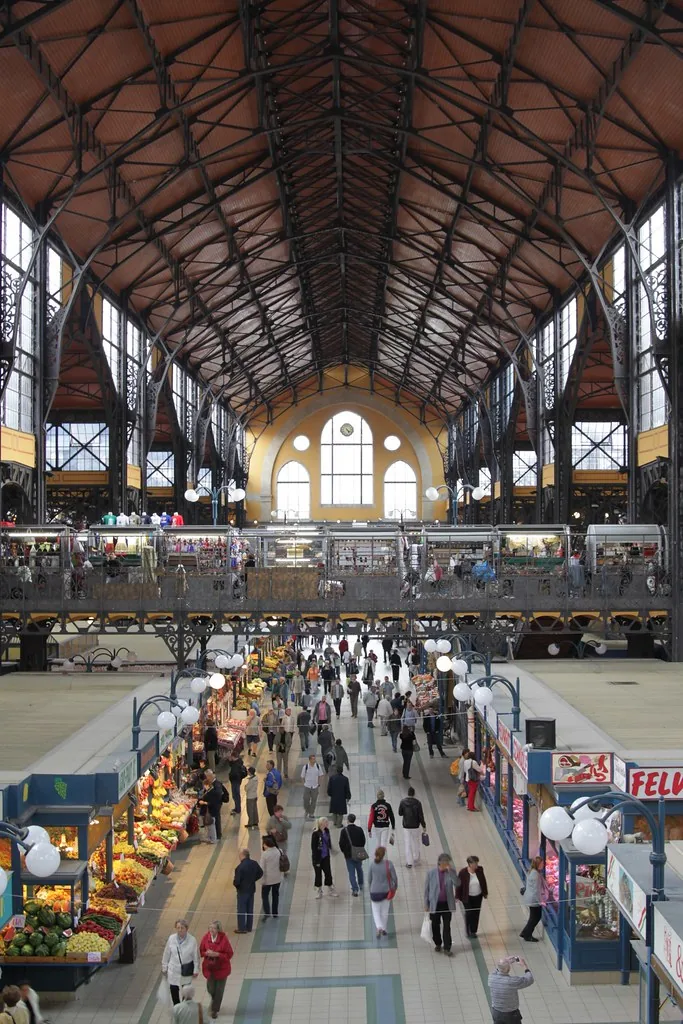
The Central Market Hall (Központi Vásárcsarnok) on Fővám tér is often listed as a tourist attraction, but it functions primarily as a working market and local institution, remaining genuinely useful if you approach it like one. The ground floor is where locals shop — fresh vegetables, cured meats, cheeses, and the paprika that Hungary is famous for. Prices here beat Váci Street shops by 50–70%, so if you want to bring spices or salami home, buy them here, not from souvenir stalls.
The upper floor is more tourist-facing, with craft stalls and embroidered tablecloths. But tucked in the back corner are several small food counters where you can get lángos (deep-fried dough with sour cream and cheese), stuffed cabbage, and goulash soup at prices locals actually pay. A full lángos with toppings costs 1,200–1,800 HUF (€3–€4.50). It is messy and filling and completely worth it.
Skip the tourist restaurants on the market's upper level and head straight to the back food stalls. Buy paprika, salami, and wine on the ground floor — prices are 50–70% cheaper than Váci Street shops. Bring cash for the produce vendors; most stalls don't accept cards.
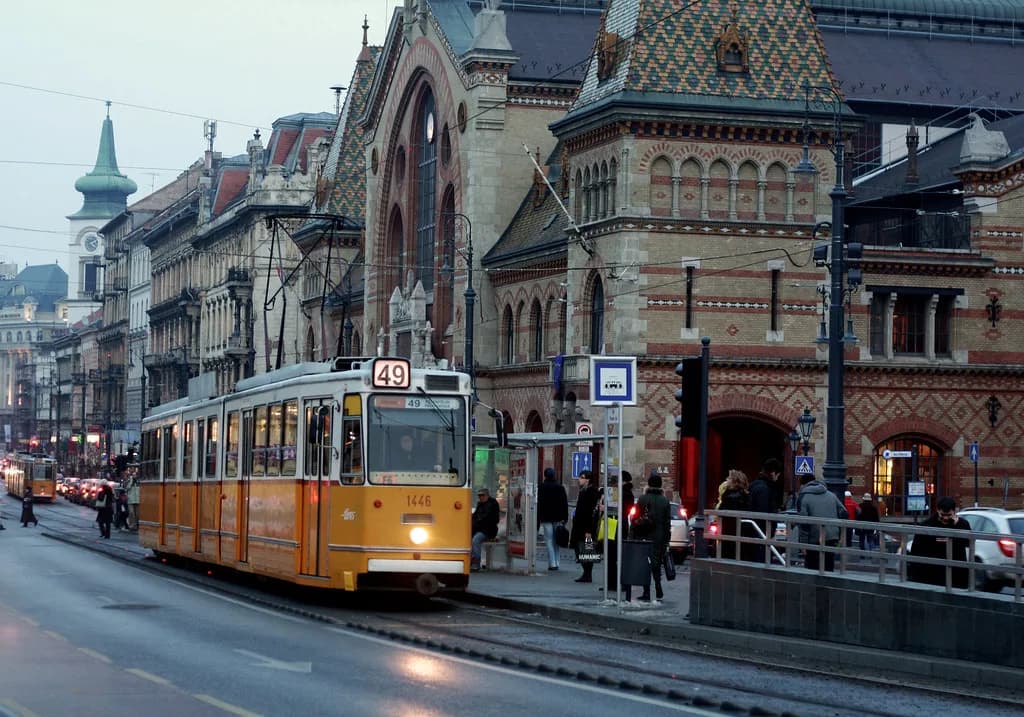
The market is open Monday 06:00–17:00, Tuesday to Friday 06:00–18:00, Saturday 06:00–15:00, and closed Sunday. Entry is free. Tram 47 or 49 stops right outside at Fővám tér. Go before 10:00 for the fewest crowds and the best produce selection.
Szimpla Kert and Budapest's Ruin Bar Scene
Szimpla Kert on Kazinczy utca is the original and most famous ruin bar — a former factory courtyard turned into a multi-room bar filled with salvaged furniture, hanging bicycles, and walls covered in graffiti and art. By evening it draws a mix of locals and international visitors in roughly equal parts. By the weekend, it is genuinely packed. The drinks are affordable by Western European standards: a beer costs 800–1,200 HUF (€2–€3).
The trick most visitors miss: Szimpla Kert holds a Sunday farmers' market from 09:00–14:00. Local producers sell vegetables, jams, cheeses, and bread in the same courtyard that turns into a nightclub by Friday evening. It is one of the best ways to experience the space without the party atmosphere, and the produce quality is excellent. Bring cash; most stalls do not take cards.
If Szimpla feels too well-known, the surrounding streets of District VII have several smaller ruin bars that retain more of the original improvised energy. Ellátó Kert on Kazinczy utca and Fogasház on Akácfa utca both attract a more local crowd. For more options in the neighborhood, see our guide to Budapest ruin bars.
Buildings with Bullet Holes from 1956
One of the most striking and underappreciated things to do in Budapest costs nothing and requires no tickets: look at the buildings. Across central Pest — particularly in Districts VII and VIII — dozens of apartment blocks still carry the pockmarks and bullet holes from the 1956 Hungarian Revolution, when residents and students fought Soviet tanks in the streets. The scars have been preserved deliberately on several facades as a form of collective memory.
The Corvin-negyed cinema complex in District VIII was one of the main strongholds of the 1956 fighters. The building at Corvin köz still has a plaque and visible damage. Walking east from Astoria along Rákóczi út, you will pass several blocks where the bullet damage is visible if you look up at the upper floors rather than straight ahead. No tour group points this out. Most people walk right past it.
Pairing this self-guided walk with a visit to the House of Terror gives the damage real context. The House of Terror covers the same political period in detail, and seeing both — the street-level physical evidence and the museum's documentation — creates a more complete picture of what Budapest lived through in the mid-20th century.
Chimney Cakes: Where to Get a Good One
Kürtőskalács — the spiral pastry baked on a rotating spit over charcoal — is everywhere in Budapest, but quality varies sharply. The stalls on Vörösmarty tér and near major tourist sites often use pre-made dough and gas rather than wood-fired grills, which affects both texture and flavor. The better option is to find a spot that makes them to order with a visible flame and uses fresh dough.
Kiraly Kalacs on Király utca in District VI is one of the consistently recommended local options. They do traditional cinnamon sugar as well as sesame, walnut, and chocolate variants, and the dough is made in-house daily. A standard kürtőskalács costs 1,500–2,500 HUF (€4–€6) depending on size and topping. Get there earlier in the day when they are freshest and the queue is shorter.
If you want to go further, several operators in the city run chimney cake cooking classes where you roll and bake your own. These take 45–60 minutes and cost around €20–€25 per person. It is a good option on a rainy day or if you are travelling with children. The experience of making one means you will never buy a mediocre tourist-area version again.
The M1 Metro Line: Europe's Second-Oldest Underground Railway
The M1 — Budapest's yellow metro line — runs from Vörösmarty tér east along Andrássy út to Városliget (City Park) and is one of the most overlooked things in the city. Opened in 1896, it is the second-oldest electric underground railway in the world after London's Metropolitan line, and it is a UNESCO World Heritage Site. The stations are tiny, ornate, and lined with period yellow-and-white tiles that have barely changed in 130 years.
M1 single tickets cost 450 HUF (€1.15) as of 2026, or buy a 72-hour unlimited travel card for 5,500 HUF (€14). The yellow line's most photogenic station is Bajza utca, with its original tilework intact. Ride it at least once end-to-end to experience the historic stations at your own pace.
Riding the M1 end to end takes about 10 minutes and costs one standard transit ticket (450 HUF). It is arguably the best €1.15 you will spend in Budapest. The line connects several genuinely useful stops: Deák Ferenc tér at one end, the Opera House at Operaház station, the Szépművészeti Museum (Museum of Fine Arts) and Heroes' Square at Hősök tere, and the entrance to Széchenyi Baths at Széchenyi fürdő. For practical visitor information and M1 line details, the official Hungarian tourism board provides comprehensive guides.
The difference between this and the modern M2/M3/M4 lines is remarkable. Where the modern metro is functional and industrial, M1 stations feel like small exhibition rooms from the Habsburg era. No other competitor guide covers this as a standalone reason to ride a single metro line. It is free to experience if you already have a transit pass — and it is one of the genuinely rare moments where the city's history is right under your feet.
Where to Stay for an Authentic Local Vibe
To experience non-touristy Budapest properly, your accommodation choice matters. The Jewish Quarter (District VII) is the classic recommendation — central, vibrant, and well-connected — but the areas immediately around Szimpla Kert and Király utca can be loud on Friday and Saturday nights until 04:00. If you want the neighborhood without the noise, look for side streets in the western part of the district, away from the main bar axis.
Újlipótváros (District XIII) along the Danube offers a quieter, more residential feel. Bauhaus architecture, Saturday farmers' markets at Pozsonyi út, and a genuinely local café scene make it a strong choice for repeat visitors who already know the main sights. It is a 10-minute tram ride from central Pest on tram 2. Ferencváros (District IX), particularly around Ráday Street, has a younger, arts-oriented energy with independent restaurants and a growing brunch scene.
For Buda-side stays, the Krisztinaváros neighborhood just south of the castle district is calm, tree-lined, and walking distance from several key attractions without the tourist density of Castle Hill itself. Apartments here are well-priced and the surrounding streets have good local bakeries and coffee shops. For a deeper breakdown of which area suits different travel styles, see our guide to Budapest neighborhoods.
Frequently Asked Questions
How many days do you need for non-touristy things in Budapest?
To fully enjoy a selection of non-touristy things to do in Budapest, plan for at least 4-5 days. This allows ample time to explore different neighborhoods and immerse yourself in local culture without rushing. A longer stay provides flexibility to revisit favorite spots or discover new hidden gems.
Which non-touristy things to do in Budapest options fit first-time visitors?
First-time visitors can easily incorporate non-touristy options like Lehel Market for a taste of local life, or the Metropolitan Ervin Szabó Library for architectural beauty. Exploring Óbuda Old Town also provides a unique historical perspective. These activities offer a balanced introduction to the city's authentic side.
What should travelers avoid when planning non-touristy things to do in Budapest?
Travelers should avoid focusing solely on the most advertised attractions, which often draw the largest crowds. Steer clear of restaurants directly on Váci Street or those with aggressive touts, as they often cater exclusively to tourists. Instead, seek out establishments a few blocks off the main thoroughfares for more authentic experiences.
Budapest offers a rich tapestry of experiences beyond its well-trodden paths, waiting for curious travelers to discover. Embracing these non-touristy things to do in Budapest allows for a deeper, more personal connection with the city's soul. From quiet libraries to bustling local markets and the century-old M1 metro rattling beneath Andrássy út, each discovery adds a unique layer to your travel story.
By venturing slightly off the beaten track, you will gain a greater appreciation for Hungarian culture and hospitality. Remember to explore with an open mind and a sense of adventure, and Budapest will reveal its true magic. For more local tips, consider checking out our guide on Budapest like a local or our full list of unusual things to do in Budapest.
Continue exploring
More guides you'll find useful