10 Best Budapest Ruin Bars: A Local Guide (2026)
Discover the 10 best Budapest ruin bars in the Jewish Quarter. From Szimpla Kert to hidden gems, plan your night out with our expert 2026 guide.
On this page
10 Best Budapest Ruin Bars
After my fourth summer exploring the winding streets of Erzsébetváros, I've realized that Budapest's ruin bars are more than just pubs. They are living museums of the city's post-communist resilience and creative spirit. Our editors have reviewed every neighborhood to bring you this curated selection of authentic nightlife spots.
This guide was last refreshed in 2026 to reflect current prices and the latest venue shifts. Whether you want a quiet afternoon beer or a sunrise dance session, these venues offer something truly unique. I still remember finding my first hidden courtyard by following the sound of muffled jazz through an unmarked door.
What Are Budapest's Ruin Pubs? (The Story Behind the Decay)
The history of the romkocsma — literally "ruin pub" in Hungarian — begins in the early 2000s in District VII, the historic Jewish Quarter. After the devastation of World War II and decades of Soviet-era neglect, many of the quarter's beautiful old courtyards and factory buildings were left to crumble. When the Iron Curtain fell, rents in these derelict spaces were dirt cheap, and a generation of young entrepreneurs saw an opportunity. The district's UNESCO heritage transformation began formally in the mid-2000s, combining heritage protection with grassroots cultural revival.
The Jewish Quarter Budapest guide highlights how this area transformed from a neglected district into a global nightlife hub. They moved in, filled the spaces with second-hand furniture scavenged from flea markets, set up makeshift bars, and opened their doors. Szimpla Kert opened in 2002 and moved to its current factory-building location on Kazinczy Street in 2004, sparking a cultural renaissance that transformed the entire neighborhood.
The defining aesthetic is "designed to be undesigned." Walls are covered in layers of graffiti and patron scrawls accumulated over years. No two chairs match. Spaces are sprawling, multi-room labyrinths with hidden nooks, open courtyards, and indoor installations that blur the line between bar and gallery. This embrace of imperfection — the peeling paint, the exposed brickwork, the converted Trabant cars used as tables — is exactly what makes these venues irreplaceable.
It is worth being honest: the big-name ruin bars are no longer underground secrets. They attract stag parties, pub crawls, and international tourists in enormous numbers. For official visitor resources and travel planning, consult Hungary's tourism board. This guide exists to help you navigate both the iconic venues and the quieter local haunts, so you can experience the real soul of the scene no matter your travel style.
Szimpla Kert: The Legendary Original
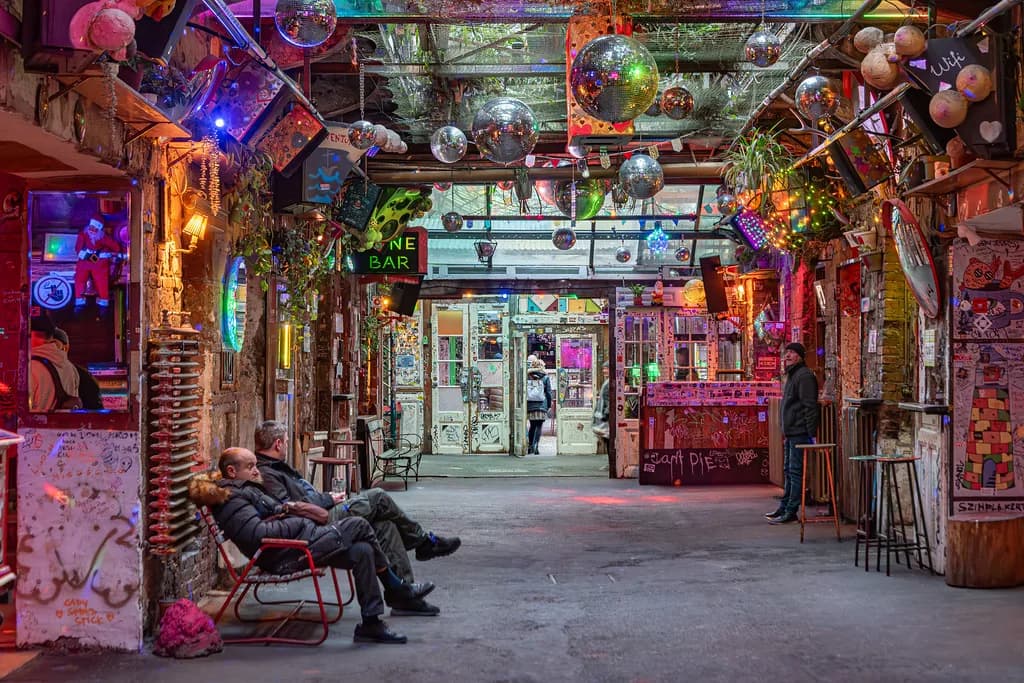
You cannot talk about Budapest ruin bars without starting at Szimpla Kert. Located at Kazinczy u. 14 in District VII, it is the pioneer of the entire movement and remains the most visited bar in the city. The space is a sensory explosion: dim fairy lights compete with flickering TV screens, a Trabant car sits in the middle of the main courtyard repurposed as a table, and wooden chairs and vintage bicycles hang from the ceiling as if gravity is merely a suggestion.
When you order your first drink at Szimpla Kert, you'll be asked to pay a deposit of 300–500 HUF (€0.75–€1.25) for a reusable cup. Return both the cup and your token to the designated counter to reclaim the deposit — it's easy to forget. Cash is still useful here; the larger venues accept cards, but having a few thousand HUF on hand avoids delays at the bar.
The best strategy is to treat Szimpla like a museum first and a bar second. Arrive between 14:00 and 16:00 on a weekday to wander through its maze of rooms without the crush of the nighttime crowd. You can actually see the incredible detail — the wall of old computer monitors, the upside-down room with furniture glued to the ceiling, the thousands of messages scrawled on every available surface — while paying around 1,200–1,800 HUF (€3–€4.50) for a craft beer.
The atmosphere transforms completely after sunset. Energy levels skyrocket, the music gets louder, and queues form on Kazinczy Street on weekends. If you want to experience Szimpla in its purest, most community-focused form, visit on a Sunday morning when the main courtyard hosts a farmers' market selling local honey, fresh Hungarian cheeses, and homemade spreads. It is a wonderful, wholesome antidote to a heavy night out and a glimpse into the community spirit the bar was originally founded on.
Vibe: Chill/Artistic by day, Party by night. Address: Kazinczy u. 14, District VII. Hours: Daily 12:00–04:00.
Instant-Fogas: The Massive Party Complex
If Szimpla Kert is a quirky museum, the Instant-Fogas Complex is a full-blown theme park for partygoers. Located at Akácfa u. 51, this colossal "ruin-megaclub" was formed when two legendary venues — Instant and Fogas Ház — merged into one sprawling complex housed in a former apartment building. The scale is staggering: over 15 bars and at least 7 distinct dance floors spread across multiple levels, each with its own musical theme, from techno and rock to hip-hop and pop. The venue runs every night from 18:00 until 06:00 the next morning.
Walking in, the vibe is surreal. Giant fantastical sculptures and trippy light installations create a wonderland of chaos. You can wander from a high-energy techno room to a chilled garden bar to a classic rock floor, all within the same building. Entry is typically free before midnight, and a 0.5L beer costs 1,300–2,000 HUF (€3.30–€5) depending on which floor you are on.
Be honest with yourself about expectations before you go. This is ground zero for Budapest's tourist party scene and many locals actively avoid it. But if you want to experience the pinnacle of high-energy Budapest nightlife and dance until sunrise in one of the most unique club settings in Europe, a night at Instant-Fogas is genuinely unmissable. Keep your phone tucked away in the crowded stairwells and darker corners of the complex.
Instant-Fogas attracts large crowds and occasional pickpockets in the dense staircases and darker dance floors. Keep your phone and wallet in a front pocket or zipped interior bag. Arrive before 22:00 on weekends to avoid entry queues, or visit on a weekday for a less intense vibe with the same incredible venues.
Vibe: Party. Address: Akácfa u. 51, District VII. Hours: Daily 18:00–06:00.
Mazel Tov: The Upscale Jewish Quarter Gem
At the far end of the ruin bar spectrum sits Mazel Tov, located at Akácfa u. 47. To call it just a ruin pub is a misnomer — it is a beautiful, sophisticated Middle Eastern restaurant and cultural space set within the shell of a ruined building. Gone is the mismatched flea-market furniture. In its place are clean lines, comfortable seating, and a stunning airy courtyard filled with lush hanging plants and climbing vines under a soaring glass ceiling strung with fairy lights.
The focus here is squarely on gastronomy. The menu features excellent Israeli and Mediterranean fusion cuisine: creamy hummus, fresh falafel, and perfectly grilled shawarma plates. Main courses run 4,500–8,000 HUF (€11–€20), making it a solid mid-range dinner option. For drinks, the cocktail list is extensive and well-crafted, and the venue often hosts live jazz in the evenings.
Reservations are not just recommended at Mazel Tov — they are essential, often needing to be booked a week or more in advance on weekends. It has become one of the city's most popular spots for a reason, attracting a chic crowd of locals and tourists alike. If you show up without a booking on a Friday or Saturday night, plan to wait at least 45 minutes for a table or head directly to the bar area.
Vibe: Dining/Upscale. Address: Akácfa u. 47, District VII. Hours: Daily 12:00–00:00.
| Venue | Vibe | Best For | Location |
|---|---|---|---|
| Szimpla Kert | Chill by day, party by night | Iconic ruin bar decor, farmers' market on Sunday mornings | Kazinczy u. 14, District VII |
| Instant-Fogas | High-energy party | Multi-floor dance complex, sunrise dancing | Akácfa u. 51, District VII |
| Mazel Tov | Upscale dining | Israeli/Mediterranean cuisine, live jazz, date nights | Akácfa u. 47, District VII |
| Koleves Kert | Relaxed courtyard | Leafy outdoor setting, Jewish and Hungarian food | Kazinczy u. 41, District VII |
Getting Off the Beaten Path: Local Ruin Pub Favorites
The soul of the romkocsma lives as much in the smaller, more specialized spots as in the famous titans. These venues fly under the tourist radar and have carved out their own identities by focusing on a specific niche — quiet conversation, craft beer, live music, or a garden vibe — rather than trying to be everything to everyone.
- Csendes Létterem (near Kálvin tér) — The name translates to "Quiet Restaurant" and it delivers. The walls are a chaotic collage of vintage toys, mannequins, and random objects. By day it is a laid-back student cafe; by evening it becomes an intimate bar perfect for conversation over a glass of local wine (700–1,500 HUF / €1.75–€3.75). Best for travelers who love the ruin aesthetic but cannot stand shouting over loud music.
- Élesztőház (former glass factory, outside the main party district) — The name means "Yeast House." This is the premier craft beer bar in Budapest, with over 20 taps pouring the best of the Hungarian craft beer revolution alongside carefully selected international brews. Pints cost 900–2,200 HUF (€2.25–€5.50) depending on ABV. Ask the bartenders for a tasting flight to work through the range. Opens daily at 15:00.
- Koleves Kert (Kazinczy u. 41) — "Stone Soup Garden" is one of the most pleasant places in the city to spend a sunny afternoon. A relaxed, leafy courtyard with brightly colored tables, a few coveted hammocks, and a mix of Jewish and Hungarian cuisine. It closes around midnight, far earlier than the party clubs, which suits travelers who want the atmosphere without the all-night commitment.
- Lámpás — Finding this place feels like discovering a secret. Located underground in a cozy brick-vaulted cellar, it hosts live jazz, folk, and blues nearly every night. Prices are local-level — beer around 700 HUF (€1.75) — and the crowd is almost entirely Hungarian. This is the kind of place you stumble into and end up staying far longer than planned.
- Grandio Jungle Bar — This courtyard bar is famous for its thick canopy of trees and its attached backpacker hostel. Drinks run 900–1,800 HUF (€2.25–€4.50), catering to the younger budget crowd. Visit during the afternoon to enjoy the shade and the laid-back communal garden atmosphere.
Drink Like a Local: Unicum, Pálinka, and Hungarian Craft Beer
Hungarian beer like Dreher and Borsodi is plentiful and cheap, but the ruin bar experience is much richer if you order what locals actually drink. Three drinks define the Budapest bar scene and you will find all three at virtually every ruin pub in the city.
Unicum is Hungary's national liqueur — a dark, herbaceous, and intensely bitter spirit with a history stretching back over 200 years. It is an acquired taste often compared to Jägermeister but considerably more complex. Drinking it is a rite of passage. A shot costs 600–900 HUF (€1.50–€2.25). Locals sip it slowly rather than shooting it straight, which is the better approach for appreciating its flavor.
Pálinka is a potent fruit brandy, often homemade, with flavors ranging from apricot (barack) to plum (szilva). Quality varies enormously — a mass-produced bottle from a supermarket tastes nothing like a small-batch version from a rural distillery. In the better ruin bars, ask for a premium pálinka and sip it before committing to a full round. A measure runs 700–1,500 HUF (€1.75–€3.75).
Fröccs is the quintessential Hungarian summer drink — a wine spritzer made from white or rosé wine and soda water. It is a cultural institution with its own vocabulary for ratios. A nagyfröccs (large spritzer) is the standard order: two parts wine, one part soda. It costs around 600–900 HUF (€1.50–€2.25) and goes down dangerously easily on a warm evening in an open courtyard.
The Ruin Bar Experience Without the Stag Party Crowds
A common concern among travelers over 30 — and especially those traveling as couples, families, or solo — is whether Budapest ruin bars are simply overrun with rowdy bachelor groups. The honest answer is: the most famous venues on weekend nights absolutely are. But the scene is far larger than those few flashpoints.
The simplest fix is timing. Visiting Szimpla Kert on a Tuesday or Wednesday afternoon feels nothing like a Friday at midnight. Daytime visits to nearly any ruin bar in the Jewish Quarter are genuinely calm and atmospheric — good coffee, local wine, and the chance to actually appreciate the bizarre decor without shouting over bass drops. Many locals use Csendes, Koleves Kert, or Élesztőház precisely because these venues never really attract the pub-crawl circuit.
For couples who want a ruin bar dinner rather than a ruin bar party, Mazel Tov is the right call — book well in advance. For families with older children, the daytime hours at Koleves Kert are family-friendly and genuinely pleasant. The key rule: avoid Kazinczy Street on Friday and Saturday nights after 22:00 if your tolerance for large, loud groups is low. The same area at 17:00 on a weekday is one of the most enjoyable urban spaces in Central Europe.
The Re-pohár System: One Practical Detail Most Visitors Miss
Most travelers arrive at Instant-Fogas or Szimpla Kert and are surprised by an extra charge at the bar. This is the re-pohár (reusable cup) system, and it confuses first-timers regularly. Nearly all the larger ruin pubs have eliminated single-use plastic cups. When you order your first drink, you pay a deposit of 300–500 HUF (€0.75–€1.25) for a reusable plastic cup, and the bartender will often hand you a token along with the cup.
To get your deposit back at the end of the night, you must return both the cup and the token to a designated return counter — typically marked with a sign near the main bar or the exit. If you leave your cup on a table or pocket the token, you forfeit the deposit. It is a small amount but it catches nearly every first-time visitor off guard, especially when juggling cash and trying to find their way around a multi-level labyrinth at midnight.
Cash is still useful at smaller bars and street food stalls in the area. The larger venues accept credit cards, but having a few thousand HUF on you avoids delays at the bar. If a venue offers to accept euros and give change in HUF, the exchange rate will almost always be unfavorable — use a card or withdraw forints from an ATM instead.
The Perfect Ruin Pub Crawl: A Walkable Itinerary
To experience Budapest like a local, start your evening around 17:00 at Csendes Létterem for a quiet wine and to ease into the neighborhood's energy. From there, it is a ten-minute walk into the heart of the Jewish Quarter, passing street art murals and the Great Synagogue on Dohány Street along the way. The route is mostly flat and well-lit after dark.
After Csendes, head to Szimpla Kert (Kazinczy u. 14) to see the iconic decor before the midnight rush. If you still have energy by 22:00, walk five minutes down Akácfa Street to the Instant-Fogas complex for the full party experience. The 4-6 tram runs 24 hours along the Grand Boulevard (Nagykörút) and stops at Wesselényi utca — it is the most reliable way home in the early hours and far safer than hailing a street car.
Late-night hunger is easily solved at one of the street food stalls near the Gozsdu Udvar passage. Note that Gozsdu itself — the neon-lit commercial arcade connecting Király and Dob Streets — tends toward overpriced tourist menus. The better street food is on the surrounding side streets. Most bars have no dress code, and comfortable walking shoes are essential on the uneven cobblestone courtyards.
The Field Guide: Timing, Safety, and What to Know
Timing your visit is crucial to enjoying the atmosphere without being overwhelmed. Weekdays between 15:00 and 20:00 offer the best combination of atmosphere and manageable crowds. Weekends after 22:00 at the major venues are genuinely very crowded — queues at Szimpla Kert can run 20–30 minutes on a Saturday night.
Safety in the Budapest neighborhoods guide is generally high, but basic precautions apply in crowded nightlife spaces. Keep your phone and wallet in a front pocket or zipped bag inside Szimpla and the Instant-Fogas complex, where pickpockets occasionally operate in dense crowds. Use the Bolt app for taxis rather than hailing street cars at night — prices are transparent and drivers are licensed.
One specific warning: a small number of unlicensed pop-up venues or street touts operate near Kazinczy Street, especially in summer. They may approach tourists with offers of "free entry" or special deals. These are almost always overpriced and occasionally unsafe. Stick to the established venues listed in this guide and you will have no issues.
On dress code: the ruin bar aesthetic is overwhelmingly casual. Jeans, t-shirts, and flat-soled shoes cover you at every venue in this list. Floors are often uneven, courtyards are cobbled, and you will cover significant ground on a crawl night — high heels are genuinely a bad idea. Many pubs are built around open-air courtyards, so even in summer, bring a light jacket for the later hours.
Why These Beautifully Broken Bars Still Capture the Soul of Budapest
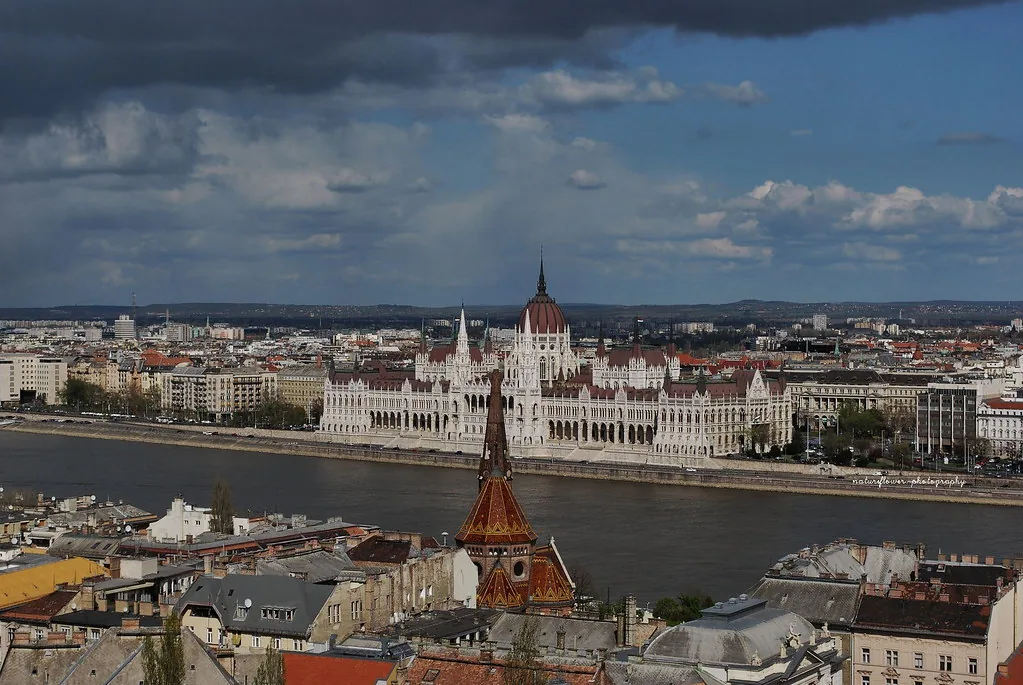
The enduring popularity of ruin bars lies in their refusal to be perfect or polished. They represent a specific moment in Hungarian history where creativity triumphed over economic hardship. Visitors today can still feel that rebellious, DIY energy in both the veteran venues and the newer pop-up spots that continue to open across the neighborhood.
While some worry about the commercialization of the district, the core bars remain fiercely independent. Supporting these businesses helps maintain the unique architectural heritage of the old Jewish Quarter. It is a rare chance to see how a city can turn its scars into something genuinely beautiful and sustainable.
Whether you stay for one drink or five, the memories of these courtyards will stay with you long after you leave Budapest. The unusual things to do in Budapest are many, but these venues are impossible to replicate anywhere else in the world. Step through at least one unmarked door during your stay — what you find on the other side is the point.
Frequently Asked Questions
What is the best time of day to visit Szimpla Kert?
Visit between 2:00 PM and 4:00 PM for a relaxed experience with plenty of seating. The evening crowds become very dense after 8:00 PM, often resulting in long entry queues. Sunday mornings are also excellent for the local farmers' market.
Are Budapest ruin bars safe for solo travelers?
Yes, these venues are generally very safe and welcoming for solo visitors. Stick to well-lit main streets in District VII and keep your phone secure in crowded areas. Using the 24-hour 4-6 tram is a reliable way to navigate back to your accommodation.
Do you need to book a table at ruin bars?
Most traditional ruin bars like Szimpla Kert do not accept reservations and operate on a first-come basis. However, dining-focused venues like Mazel Tov or Koleves require booking several days in advance. Always check the official website for specific venue policies.
Budapest's ruin bars offer a nightlife experience that you simply cannot find anywhere else in the world. From the historical depths of Szimpla Kert to the massive energy of Instant-Fogas, there is a spot for every traveler. The mix of history, art, and social connection makes these venues the true heart of the city.
Remember to respect the local residents by keeping noise levels down when walking between bars. With a bit of planning and an adventurous spirit, your night in the Jewish Quarter will be a highlight of your trip. Enjoy the beautifully chaotic soul of Hungary's capital.
Continue exploring
More guides you'll find useful