Budapest Street Art Travel Guide
Plan budapest street art with top picks, neighborhood context, timing tips, and practical booking advice for a smoother trip.
On this page
Budapest Street Art
Budapest has one of the most layered street art scenes in Central Europe. The Jewish Quarter alone packs dozens of large-scale murals, guerrilla mini-statues, sticker art, and ruin bar interiors into a few walkable blocks. Whether you join a guided tour or map your own route, the city rewards slow, attentive exploration. This guide covers where to go, what to look for, and how to get the most out of a street art walk in 2026.
Mornings before 10:00 AM offer the best light for photography, especially on east-facing murals along Dob Utca and Kertész utca. The cobblestone side streets are uneven, so wear flat, comfortable shoes for a full-day exploration.
Book guided tours in advance during summer months, as group sizes fill quickly. Wombat's City Hostel offers a free Saturday morning street art tour (summer every week, off-season biweekly) led by local guide Reka, while Budapestflow's dedicated 2-hour Jewish Quarter tour covers the Façade Rehab murals and selected Kolodko pieces.
Street Art in Budapest's Jewish Quarter
District 7 is the starting point for any serious street art walk. The neighborhood sits on the Pest side of the Danube and combines a dense grid of 19th-century apartment blocks with an active artistic community. Murals here span an enormous range: Holocaust memorials, footballer tributes, environmental allegories, and abstract color fields can all appear on the same short stretch.
The Rubik's Cube mural at Kertész street 27 is one of the most photographed pieces in the city. It celebrates Ernő Rubik, the Budapest-born inventor whose puzzle sold over 450 million units worldwide. The accompanying text reminds viewers that every problem has more than one solution — a quote attributed to Rubik himself. Learn more about street art on Wikipedia for historical context on public murals worldwide.
A few blocks away, the Portrait of Angel Sanz Briz on Dob street honors the Spanish diplomat who issued thousands of fake passports to Hungarian Jews during WWII. It is a sobering piece set against the backdrop of buildings that still bear visible wartime damage. The contrast between unrestored facades and vivid new murals is one of the defining visual experiences of the quarter.
Also on Dob street, the mural at Dob street 10 blends architectural detail with contemporary graphic style, while the piece at Dob street 40 captures a community gathering scene. Plan at least 90 minutes to walk this area properly. Mornings before 10:00 are quieter and better for photography.
The Façade Rehab Project: Budapest's Officially Sanctioned Murals
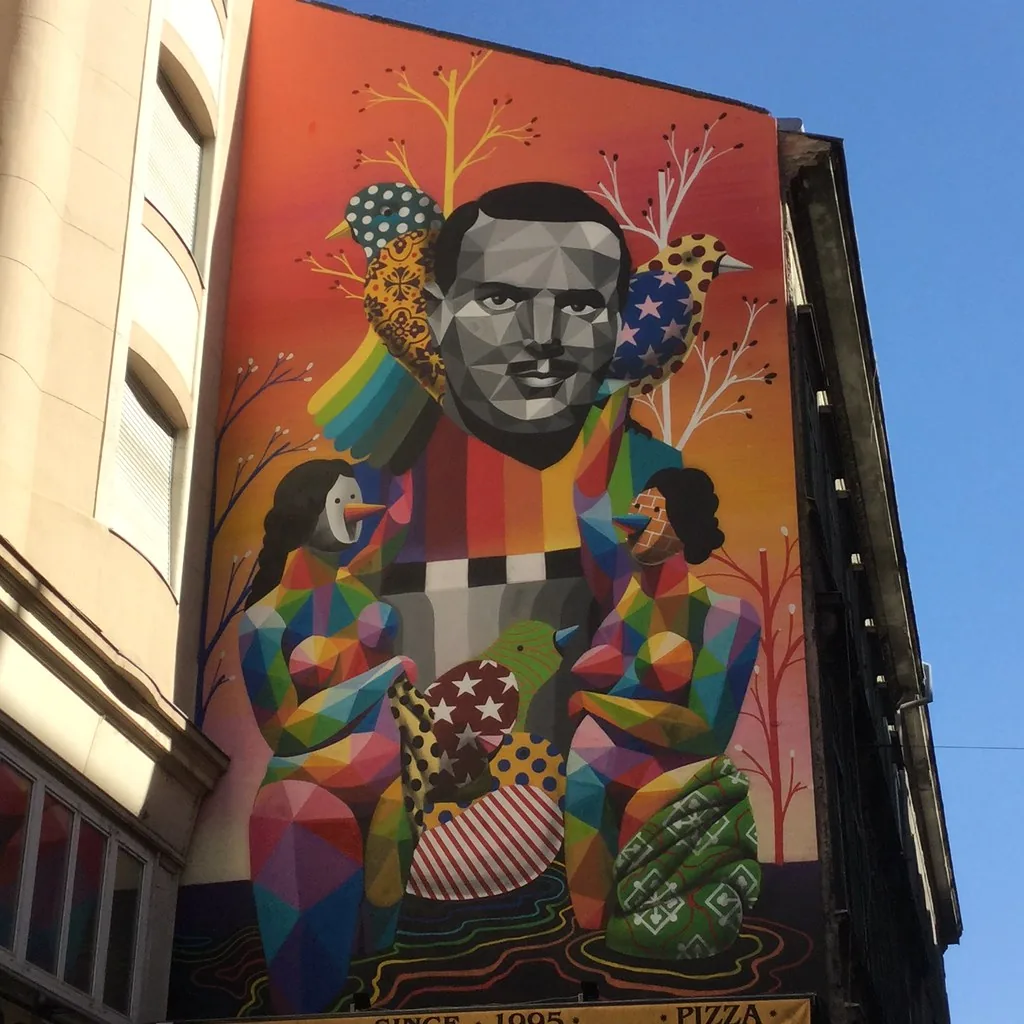
One thing most visitors do not realize is that many of the large murals in District 7 are not guerrilla pieces. They were commissioned through the Façade Rehab Project, a city-backed initiative that granted permission for eight specific buildings to be painted. This matters practically: these murals are maintained and are unlikely to disappear overnight, unlike paste-ups or stickers.
The community approval process is unusually democratic. When the first proposal for a wall on Rumbach Sebestyén Utca was submitted, local residents initially refused. The project only got the green light when organizers revealed it would depict Ferenc Puskás, Hungary's most celebrated footballer and the man who led Hungary to a legendary 6–3 win over England at Wembley in 1953. Residents approved it immediately. For more details, consult Budapest street art guides for visitor planning and tour availability.
The "Budapest Ain't That Small" mural on Kazinczy Utca, by Richárd Orosz and Színes Város, makes the same argument visually: a map of the city surrounded by clouds naming outer neighborhoods that most tourists skip. The "Everyone Has a City" mural on Dob Utca, by Dorottya Jakócs and Tripo, depicts two folk-influenced figures suggesting that belonging is universal. Both are part of the same sanctioned program and have been in place long enough to be considered permanent landmarks.
Knowing which murals are official versus temporary changes how you plan. Official pieces are reliable on any visit; guerrilla work changes seasonally. A good rule: anything on a flat building facade in the Király Utca–Kazinczy Utca corridor is likely a Façade Rehab piece and worth seeking out deliberately.
| Mural / Title | Location | Artist(s) | Subject / Theme |
|---|---|---|---|
| Rubik's Cube | Kertész street 27 | Unknown | Celebrates Ernő Rubik; 450+ million units sold worldwide |
| Portrait of Angel Sanz Briz | Dob street | Unknown | Spanish diplomat who issued fake passports during WWII |
| Budapest Ain't That Small | Kazinczy Utca | Richárd Orosz, Színes Város | City map with outer neighborhoods; celebrates urban depth |
| Everyone Has a City | Dob Utca | Dorottya Jakócs, Tripo | Folk-influenced figures; universal belonging theme |
| Ferenc Puskás | Rumbach Sebestyén Utca | Unknown | Hungary's greatest footballer; 6–3 Wembley victory, 1953 |
Ruin Bars and Street Art in Budapest
The ruin bars of District 7 extend the street art experience indoors. These bars occupy abandoned pre-war buildings and use salvaged furniture, graffiti, and found objects to create environments that are themselves a form of installation art. Szimpla Kert, on Kazinczy Utca, is the original and remains the most visually overwhelming.
Walking through Szimpla Kert's different rooms feels like moving through a three-dimensional collage. Spray-painted walls sit alongside embroidered cushions, dismantled machinery, and hand-painted signs. The bar operates nightly but also hosts a Sunday farmers' market that draws a more local crowd — a good time to visit without peak-hour noise.
Other ruin bars in the vicinity, including Fogasház and Instant, carry similar visual approaches. Each has its own aesthetic character. Fogasház leans toward large-format murals; Instant layers smaller sticker art and neon. Visiting two or three on the same evening gives you a clear sense of how the scene evolves from venue to venue. You can read more about the scene in the Budapest ruin bars guide.
Guerrilla Mini-Statues by Kolodko Mihály
Kolodko Mihály's bronze mini-statues are among Budapest's most distinctive public art contributions. Each piece is a few inches to a foot tall, placed in unexpected locations: on a ledge, in a doorway threshold, on a bridge railing. They reward careful walkers and are easily missed at normal pace.
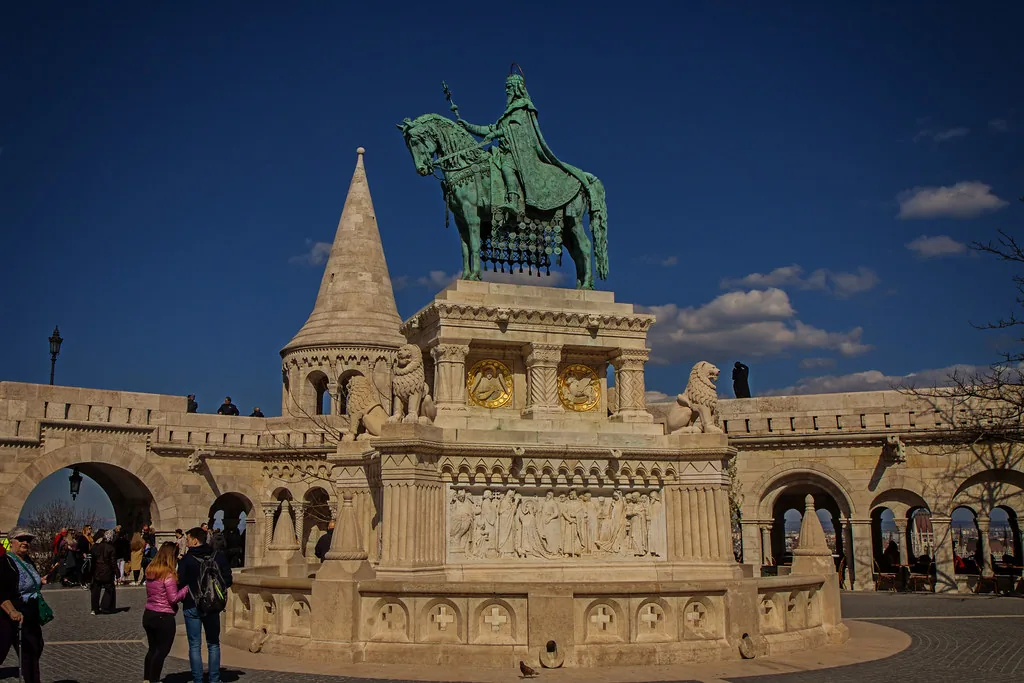
Known pieces include a tiny diving figure near the Danube riverbank, a miniature Rubik's Cube on the embankment, and a small tank positioned on a ledge in the Castle District. The "Man of the Year" statue — a small figure holding a book — is one of the most sought-after. These are not officially commissioned pieces; Kolodko places them without prior approval and they occasionally disappear, which adds to the scavenger-hunt appeal.
Finding them requires local knowledge or a dedicated map. Several street art tour guides in District 7 include a handful of Kolodko stops. For a self-guided search, the most reliably present pieces are along the Danube embankment between Chain Bridge and Liberty Bridge. They qualify as some of the best hidden gems in Budapest for anyone who enjoys detail-level exploration.
The Alternative Art of Stickers, Stencils, and Paste-Ups
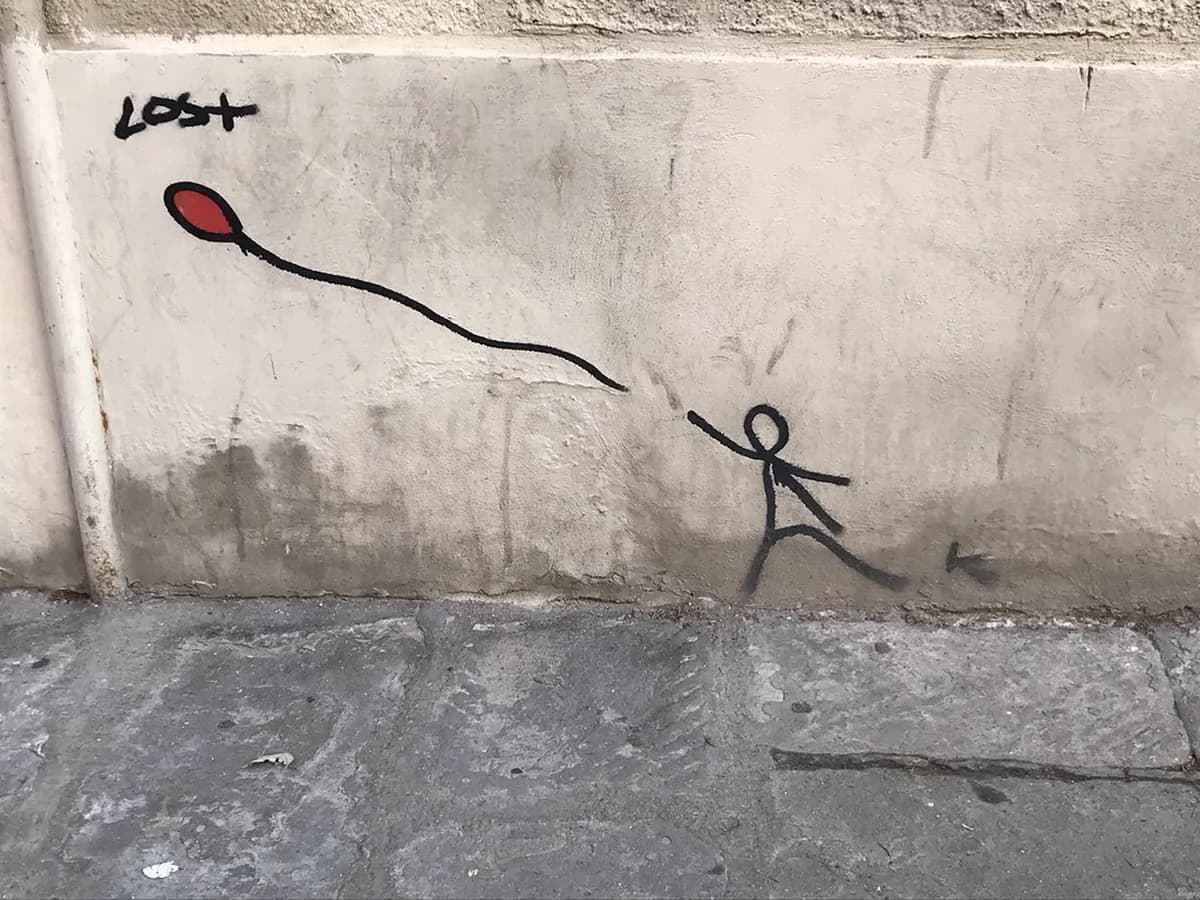
Beyond the official murals and sanctioned bronze work, Budapest's street art ecosystem runs on smaller, faster formats. Stickers appear on lampposts, utility boxes, and postal kiosks throughout District 7. The Sheepist, a European sticker artist, has left pieces across the quarter — the same character appears in Prague, Vienna, and Berlin, but the Budapest versions are particularly dense around Király Utca.
Stencil work tends to cluster around the ruin bar entrances, where it blends with venue branding and event posters. These pieces are often political or satirical, referencing local governance or broader European tensions. They change frequently; a stencil visible in spring 2026 may be gone or painted over by summer. The impermanence is intentional.
Paste-ups — large paper artworks wheat-pasted onto walls — are the most labor-intensive of the three formats and tend to last longer. They appear most often on abandoned storefronts along Akácfa Utca and the side streets connecting Király Utca to Erzsébet körút. A Space Invader mosaic, placed by the Paris-based anonymous artist Invader, is set into the cobblestones of a District 7 street. It no longer lights up when stepped on, but it remains one of the rarest finds on a self-guided walk.
Murals Beyond the Downtown Area
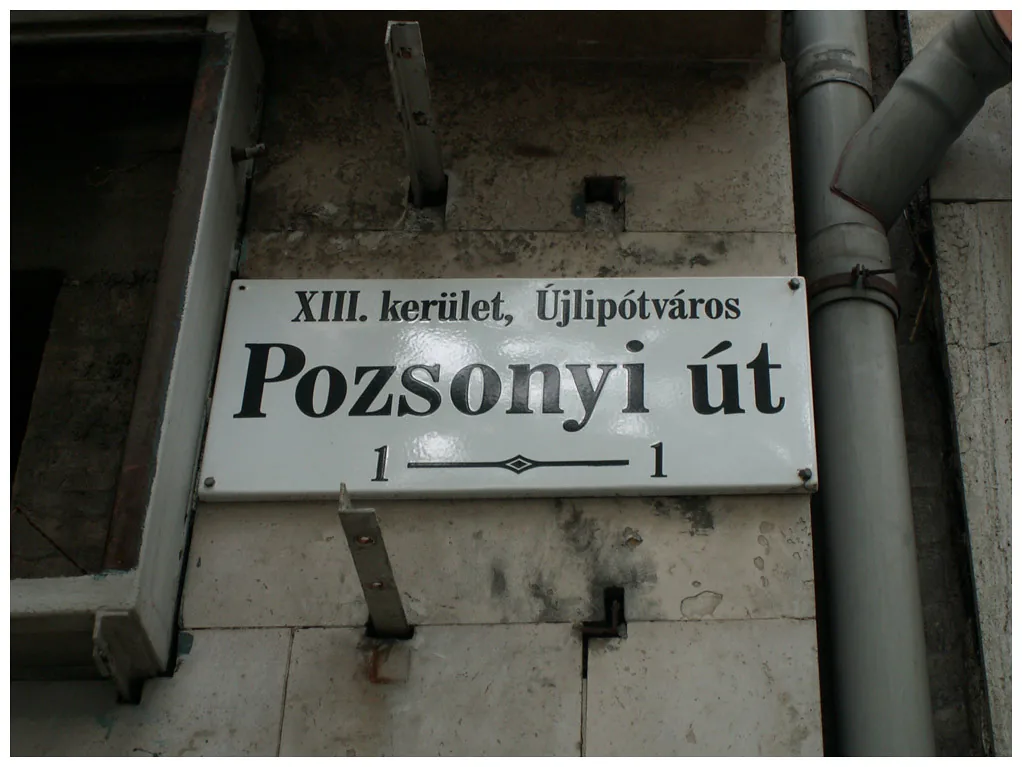
District 7 gets most of the attention, but Budapest's street art extends well beyond it. Ferencváros (District 9) has developed a strong mural culture around its regenerated riverside stretch, with large-format works addressing urban renewal themes. Újlipótváros (District 13) is quieter but has community-commissioned pieces on residential blocks that feel more local and less curated than the Jewish Quarter.
Óbuda (District 3) on the Buda side is worth a dedicated trip for anyone who wants to see murals in a completely different architectural context. The Roman-era street grid and 18th-century housing stock create an unusual backdrop. Kőbánya (District 10) carries a strong industrial heritage and hosts some of the city's largest flat-wall pieces, partly because building scale there allows for it.
Getting to these areas is straightforward. The M3 metro line covers Ferencváros and Kőbánya directly. Tram 2 along the Danube links the inner Pest districts to Óbuda via a northern transfer. Allow a full day if you want to combine outer-district murals with the Jewish Quarter. For context on how these neighborhoods fit together, a Budapest neighborhoods guide is useful before you go.
How to Join a Budapest Street Art Tour
A guided tour is the most efficient way to understand what you are looking at. The best guides explain not just the artworks but the community negotiations, historical references, and artist biographies behind them. Without that context, even the most striking mural can seem decorative rather than meaningful.
Budapestflow runs a dedicated street art walking tour that covers the Jewish Quarter in approximately two hours and includes the Façade Rehab murals, selected Kolodko pieces, and ruin bar exteriors. Tours run on set days; check their current schedule and book ahead in summer, when group sizes fill quickly. The Discover Budapest alternative walking tour (€24 per person) takes a broader approach, combining street art with hipster cafés and community art spaces across District 7.
Wombat's City Hostel Budapest also runs a free street art tour on Saturday mornings in summer (every other week off-season), led by a paid local guide named Reka. This tour is available to hostel guests only but is widely recommended as one of the most personal introductions to the scene. A Budapest 3-day itinerary can be built around a Saturday morning tour date if your schedule allows.
For a self-guided option, the most practical approach is to walk Király Utca from Erzsébet körút to Kertész utca, then loop back via Kazinczy Utca and Dob Utca. This circuit covers the majority of Façade Rehab murals and several Kolodko pieces in under two hours. Wear flat shoes; the cobblestone side streets are uneven.
Practical Tips for Exploring Budapest Street Art
Most street art in Budapest is free to see. The only costs involved are guided tour fees (€24 for the Discover Budapest tour; Wombat's tour is free for guests) and transport to outer districts. A 24-hour Budapest public transport pass costs 1,650 HUF (approximately €4) and covers all trams, metro, and buses you would need for a full day of art-hunting across the city.
Morning light is best for photography. The murals on east-facing walls along Dob Utca and Kertész utca are well-lit between 08:00 and 11:00. The ruin bar interiors are only accessible during opening hours, typically from 17:00 onwards on weekdays and from 10:00 on Sundays when Szimpla Kert hosts its market.
Street art can be photographed freely from public spaces. Do not climb on or touch the murals. The Kolodko mini-statues are bronze and robust but should not be moved or repositioned. Several have disappeared over the years, presumably taken — treat them as fixed points rather than souvenirs. Combine your walk with visits to places to visit in Budapest for free and the day costs very little overall.
Frequently Asked Questions
Which Budapest street art options fit first-time visitors?
First-time visitors should focus on the Jewish Quarter. This area has a high concentration of murals and small art pieces. It is easily walkable and combines art with other attractions like ruin bars. Consider a guided tour to make the most of your first experience.
How much time should you plan for Budapest street art?
Plan at least 2-3 hours for a concentrated street art walk in the Jewish Quarter. If you wish to explore murals beyond downtown or hunt for Kolodko mini-statues, allocate a full half-day. This allows for leisurely discovery and photo opportunities.
Is Budapest street art worth including on a short itinerary?
Absolutely. Budapest street art is highly worth it, even on a short itinerary. It offers a free, engaging, and culturally rich experience that provides a unique perspective on the city. You can easily integrate a street art walk into a Budapest 3-day itinerary without feeling rushed.
What should travelers avoid when planning Budapest street art?
Avoid rushing through the Jewish Quarter; take your time to discover smaller details. Do not forget comfortable shoes, as you will be walking extensively. Also, avoid visiting only the most famous spots; some of the best art is found off the main routes. Remember to be respectful of private property and local residents.
Budapest street art offers a dynamic and accessible way to experience the city's culture.
From grand murals to hidden mini-statues, artistic expressions abound.
Exploring these urban galleries provides unique insights into Hungarian history and modern life.
Make sure to dedicate time to discover this vibrant, ever-changing facet of Budapest.
Continue exploring
More guides you'll find useful