Aquincum Museum and Archaeological Park Visitor Guide: 10 Tips
Plan your visit to Budapest's Roman ruins with our Aquincum Museum guide. Discover the 2-hour walking route, hidden Mithraeum, and practical transport tips.
On this page
Aquincum Museum and Archaeological Park Visitor Guide: 10 Essential Tips
Stepping into the Aquincum Museum and Archaeological Park feels like traveling back to the height of the Roman Empire. Located in the modern district of Óbuda, this site preserves the remains of a once-thriving provincial capital along the Danube. Visitors can walk through ancient streets, explore grand public baths, and see unique artifacts that define the history of Budapest. This guide provides everything you need to navigate the ruins and discover the secrets of Roman Pannonia.
A Short History of Aquincum
The story of Aquincum began long before the Romans arrived with the Eravisci, a local Celtic tribe. Roman forces recognized the strategic value of the Danube River and established a military camp here in the first century. By the year 106 AD, the settlement became the capital of the Roman province known as Pannonia Inferior. The city eventually grew into two distinct parts, consisting of a massive military fortress and a sprawling civilian town.
During its peak, Aquincum hosted approximately 30,000 to 40,000 residents, including soldiers, traders, and high-ranking officials. Emperor Marcus Aurelius even spent time in this region while managing the difficult Marcomannic Wars on the frontier. The city featured advanced amenities like underfloor heating, sophisticated sewer systems, and multiple large-scale entertainment venues. Decline began in the 4th century as nomadic tribes pushed against the borders of the fading Roman Empire.
The Archaeological Park: Key Ruins to Explore
The outdoor archaeological park showcases the layout of the Civil Town, allowing you to walk on original Roman stones. Keep in mind that what you see today represents only about one-third of the full civil town — excavation is ongoing and large sections remain beneath roads and buildings. Most visitors start at the marketplace (Macellum), where merchants once sold goods from across the Mediterranean world. The ruins of the Great Public Baths (Thermae Maiores) remain some of the most impressive structures in the complex, with distinct chambers for cold, warm, and hot water still identifiable.
Exploring the residential blocks reveals the foundations of private homes and shops lining the main avenues. Archaeologists have carefully preserved several intricate floor mosaics that hint at the wealth of former inhabitants. One practical detail that helps first-timers make sense of the ruins: look for the horizontal red line running along many of the walls. This marks the boundary between original Roman stonework below the line and modern restoration infill above it — a deliberate preservation choice made in earlier decades to bring walls to a consistent height and protect the ancient stones from weather erosion. Once you know what to look for, navigating the site becomes far more readable.
The Civilian Amphitheatre sits just outside the main ticketed area but remains a vital part of the park's story. This smaller arena once hosted gladiatorial contests and public gatherings for the local citizens. Cutout figures of Romans placed around the park help bring scenes to life in the absence of dense interpretive signage — the same characters appear in the basement reconstruction inside the main museum building.
The Aquincum Museum: Indoor Exhibits and Artifacts
The indoor museum building houses a remarkable collection of artifacts recovered from the surrounding soil over many decades. The centerpiece of the entire collection is the reconstructed hydraulic organ (aqua organum), a rare Roman musical instrument found in the ruins. This unique find dates to 228 AD — original bronze fragments are displayed alongside the working reconstruction, and a recording lets you hear what the instrument sounded like. Downstairs, a circular room recreates the entrance to the Roman military base with model barracks and bathhouse rooms, making it one of the more immersive spaces on site.
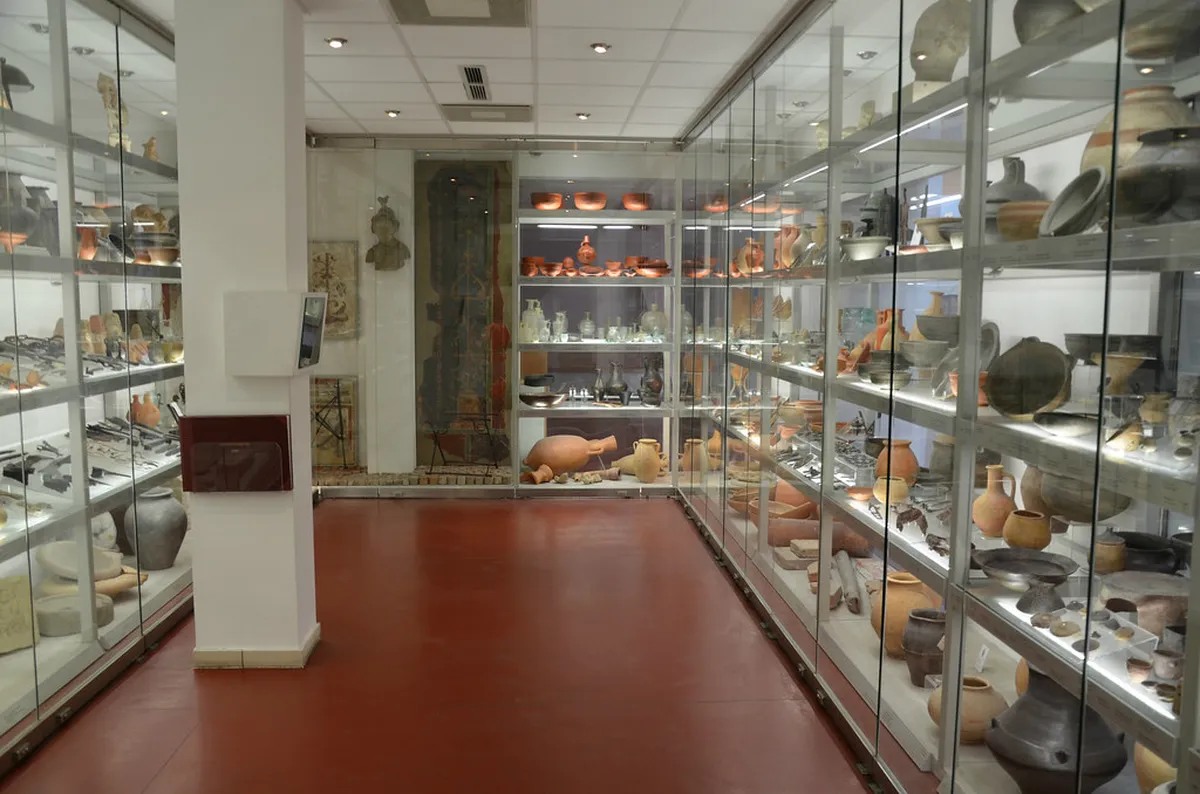
Beyond the organ, the museum features thematic galleries covering religion, trade, and daily life in the province of Pannonia. You will find delicate glass vessels, bronze tools, and an impressive array of gold and silver jewelry. One display worth seeking out covers Roman curse tablets — kept behind a curtain in the religion section, a detail that feels amusingly appropriate. The lapidarium contains hundreds of stone carvings, including altars dedicated to various gods and detailed funerary monuments that record the names and titles of people who actually lived in Aquincum.
Hidden Gems: Mithraeum and the Artist’s House
Many visitors overlook the Mithraeum (also called the Symphorus Mithraeum) and the Artist’s House because they are kept behind locked protective structures — you will not stumble into them on a standard park walk. The Mithraeum was a sanctuary for the mystery cult of Mithras, a popular deity among Roman soldiers and officials throughout the empire. Inside, a clear display reconstructs the scale and layout of the original underground temple where secret rituals and bull sacrifices were performed. Similar temples survive in London and along Hadrian’s Wall, which gives some useful context for what you are seeing here.
To see these sites, ask a staff member at the main ticket desk for access before you head into the park. A guide or attendant will walk with you to unlock the protective structures. This extra step is worth it: the Artist’s House (House of the Painter) contains some of the best-preserved decorated plaster walls found anywhere in Pannonia — vivid painted surfaces that make a striking contrast with the bare stonework elsewhere. In winter, access to both is limited to brief scheduled time slots, so ask about timing when you purchase your ticket.
Request access to the Mithraeum and Artist's House at the main ticket desk before exploring the park — staff will unlock these rarely-visited protected structures for you.
Bonus Museum: The Food History Exhibition
The classical-style building standing in the middle of the archaeological park is actually the original Aquincum museum, dating to 1894 — not the larger modern building near the entrance. This older structure now hosts temporary exhibitions, and it is worth checking the museum's website before your 2026 visit to see what is currently running. Past exhibitions have explored food and nourishment across the Roman period, the prehistoric era, and the Migration Period, with interactive elements including hands-on wheat grinding, bone identification games, and Roman recipes to take home.
A permanent interactive corner inside this building demonstrates the principles of the hydraulic organ using working pulleys and basic hydraulics experiments. Even when no major temporary exhibition is on, the room is worth a five-minute stop — attendants are often happy to demonstrate the mechanics. This older museum also provides a quieter and more personal atmosphere than the main building, and families with children tend to get a lot out of it. Do not treat it as optional; it is one of the more distinctive stops on the whole site.
Practical Visitor Information: Tickets and Hours
The seasonal schedule makes a real difference to your visit in 2026. From April 1 to October 31, the exhibitions are open Tuesday to Sunday 10:00–18:00, while the archaeological park opens an hour earlier at 09:00–18:00. From November 1 to March 31, both the museum and the park operate on reduced hours: Tuesday to Sunday 10:00–16:00, weather permitting. The museum is closed on Mondays year-round and on public holidays including November 1, December 24–26, December 28, December 31, and January 1. Consult the Aquincum Museum Official site before you travel to confirm any changes.
Adult tickets cost 3,000 HUF. Students aged 6–26 and pensioners from EEA countries aged 62–70 pay 1,500 HUF. Children under 6 enter free. A BHM+ combined pass for 5,500 HUF grants one-month access to four Budapest History Museum institutions including Aquincum — good value if you plan to visit other city museums. Photography is generally allowed for personal use. The site has a small gift shop, but food options are limited to a vending machine in summer, so bring water and a snack for longer stays.
| Visitor Type | Price (HUF) |
|---|---|
| Adult | 3,000 |
| Student (ages 6–26) | 1,500 |
| Senior (ages 62–70, EEA) | 1,500 |
| Child (under 6) | Free |
| BHM+ Combined Pass | 5,500 |
How to Get to Aquincum from Central Budapest
The easiest route from the city center is the HÉV suburban railway (line H5). Board at Batthyány tér — where the M2 metro line connects — or at Margit híd, and travel north toward Szentendre. Get off at the Aquincum stop, which sits directly in front of the museum entrance. The journey takes approximately 15–20 minutes and runs along the Danube, giving good river views. A standard Budapest transit ticket covers the journey within the city boundary, so no extra fare is needed if you already have a day pass.
Once you exit the platform, the park gates are a five-minute walk with clear signage. Bus lines 34 and 134 also stop near the museum entrance for those coming from parts of Óbuda not on the HÉV. The site address is Szentendrei út 135, III district, Budapest 1031. Cycling to the site is straightforward via the dedicated riverbank bike path from central Pest or Buda. Parking is available for those driving, though the HÉV is faster and avoids the narrow streets of Óbuda.
A 2-Hour Self-Guided Walking Tour Route
Maximize your time by following a structured route that hits the most important highlights in under two hours. Start at the main museum building to see the water-organ and get a sense of the city's history. Exit the building and head toward the Great Public Baths to admire the scale of Roman engineering. Continue your walk through the residential district to see the foundations of ancient shops and private courtyards.
Make your way to the Mithraeum if you have arranged for staff access to see the cult sanctuary. Finish your tour at the Civilian Amphitheatre, located just across the road from the main park exit. This route ensures you see the most impressive structures without backtracking through the large archaeological site. Keep a map handy, as the park can feel like a maze of stone walls and ancient streets.
Nearby Roman Sights in Óbuda
The Roman history of Óbuda extends far beyond the borders of the main Aquincum Archaeological Park. The Military Amphitheatre (Óbudai Amfiteátrum) sits about 2 km south on Nagyszombat utca and once held up to 13,000 spectators — significantly larger than the civilian version inside the park. It is one of the largest Roman amphitheatres on the empire's northern frontier and is free to enter at any time. The contrast in scale between the two arenas makes visiting both worthwhile on the same day.
Another essential stop is the Hercules Villa, which features stunning floor mosaics depicting the legendary hero in scenes from mythology. This was once a luxurious suburban villa and illustrates the high standard of living enjoyed by the Roman elite in Aquincum. The Roman military baths (under the nearby motorway junction) are currently closed to visitors, though they remain part of the wider Roman Budapest World Heritage Danube Limes nomination. For a complete shift in Budapest's layered history, you might also combine the day with a visit to the Memento Park for a very different chapter of the city's past.
Making the Most of Your Visit: Practical Tips
Arrive in the morning during summer months so you have the full open-air park at 09:00 before coach groups arrive later in the day. The site gets very warm with little shade in July and August, so bring water and wear a hat. Comfortable shoes are essential — the park covers a large area of uneven stone paths and grass. A printed or downloaded site map helps considerably, as the labyrinth of low stone walls can disorient first-timers without signage to anchor each section.
Ask at the ticket desk about the museum's education programs if you are visiting with school-age children. School group sessions (from 2,000 HUF per person) include hands-on crafts activities alongside the ruins visit. Guided tours for visitors with disabilities are available free of charge, with one companion admitted at no cost. The gift shop near the main museum exit stocks quality reproductions of Roman artifacts and postcards — better selection than most Budapest museums of this type. In winter, check the weather forecast before you go: the park's reduced hours and "weather permitting" caveat are genuine — heavy rain or snow can limit access to outdoor sections.
Arrive early in summer to beat coach groups at the 09:00 park opening, and bring water and a hat — the site has minimal shade in July and August.
Frequently Asked Questions
How much time do you need at Aquincum Museum?
Most visitors find that two to three hours is sufficient to explore both the indoor museum and the outdoor ruins. If you plan to visit the nearby Military Amphitheatre and Hercules Villa, allow for an extra hour. The site is quite large, so comfortable walking shoes are highly recommended.
Is Aquincum Museum worth visiting?
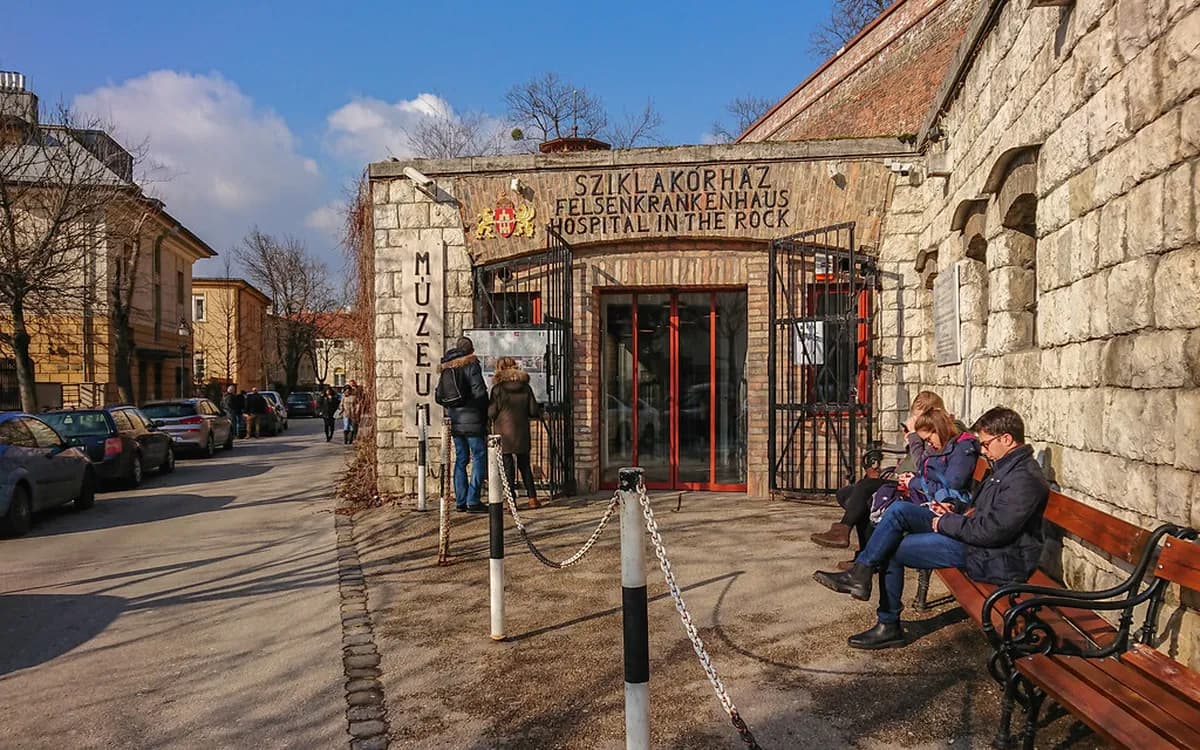
Yes, it is the most significant Roman site in Hungary and offers a unique look at the empire's frontier history. It is a great alternative to more crowded spots like the Hospital in the Rock for history enthusiasts. The water-organ alone makes it a must-see.
How do I get to Aquincum from Budapest city center?
Take the H5 suburban railway (HÉV) from Batthyány tér or Margit híd toward Szentendre and get off at the Aquincum station. The ride takes about 20 minutes. From the station, follow the signs for a five-minute walk to the main entrance of the archaeological park.
Other Roman Towns Inside a Modern City
Aquincum leaves a whole provincial capital in the open — street grid, baths, and a water organ reconstructed from its own parts. Seville's Antiquarium keeps its Roman quarter in a basement beneath a timber canopy instead. Athens's Kerameikos is the cemetery version, with the ancient road and grave markers still in position.
The Aquincum Museum and Archaeological Park is Budapest's most substantial Roman site and earns a half-day of serious attention. From the hydraulic organ reconstruction and the 1894 exhibition building to the locked Mithraeum and the red restoration lines that decode the ruins, every layer rewards a closer look. Take the HÉV from Batthyány tér, ask at the desk for Mithraeum access, and allow time for both the main museum and the bonus building in the middle of the park. Pair it with the free Military Amphitheatre nearby for a genuinely complete picture of Roman Budapest in 2026.
For authoritative information, refer to the Aquincum Museum and Archaeological Park on Wikipedia.
For more Budapest planning, see our Budapest Hidden Gems and non-touristy things to do in Budapest guides.
Continue exploring
More guides you'll find useful