Stibbert Museum Visitor Guide: 11 Essential Tips & Highlights
Plan your visit to the Stibbert Museum with our expert guide. Includes tips on the armor collection, booking guided tours, visiting with kids, and garden picnics.
On this page
Stibbert Museum Visitor Guide: 11 Essential Tips & Highlights
The Stibbert Museum in Florence is one of the hidden gems in Florence that many travelers overlook during their first trip to Italy.
This 2026 Stibbert Museum visitor guide helps you plan around the villa's accompanied-visit system, hilltop location, and unusually dense arms and armor displays.
You will discover thousands of artifacts ranging from Japanese samurai suits to elaborate European knightly gear.
The museum is best for travelers who want a quieter Florence attraction with strong storytelling, practical planning needs, and a very different mood from the central Renaissance galleries, making it one of the best non-touristy things to do in Florence.
The Stibbert Collection: Arms, Armor, and Art
The Stibbert Collection stands as one of the most significant private holdings of historical weaponry in the world today.
Frederick Stibbert amassed over 36,000 items during his life, filling his home with artifacts from various global cultures.
The main draw is the armor, but the villa also holds costumes, paintings, porcelain, furniture, and domestic rooms that show how the collector actually lived with his collection.
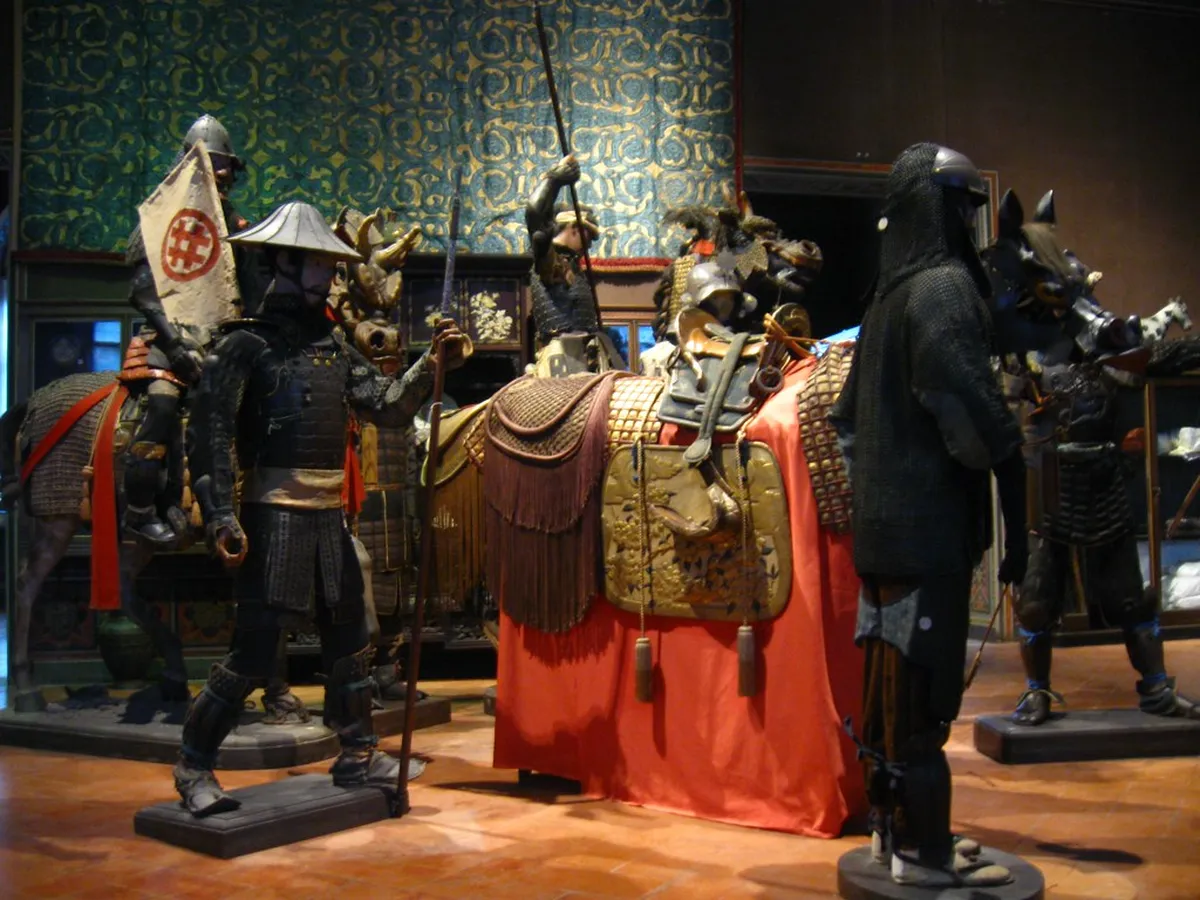
You can explore the massive Cavalcade Room where life-sized horses and knights stand in full battle regalia.
This room provides a striking visual history of European warfare through the centuries.
- The Japanese Armory
- Size: Largest outside Japan
- Items: Samurai armor, swords
- Period: Edo and Momoyama
- Highlight: Intricate helmet designs
- The Moresque Hall
- Style: Islamic and Oriental
- Atmosphere: Ornate tile work
- Collection: Middle Eastern blades
- Feature: Stunning vaulted ceilings
- European Armor
- Range: 15th to 17th century
- Origin: Italy and Germany
- Focus: Heavy cavalry suits
- Detail: Elaborate gold engravings
If you are short on attention, focus on three rooms first: the Cavalcade Room for theatrical European armor, the Moresque Hall for Islamic and Oriental design, and the Japanese Armory for samurai helmets, masks, and sword fittings.
History of Villa Montughi and Frederick Stibbert
Frederick Stibbert inherited a vast fortune from his grandfather and dedicated his life to art and history.
He transformed his family home, Villa Montughi, into a sprawling museum to house his growing collection of curiosities.
The architecture of the villa reflects the eclectic tastes of the nineteenth century with various historical styles.
Visitors can see how the domestic spaces merged with the exhibition halls to create a unique living museum.
Essential Visitor Information: Opening Hours and Tickets
Visiting this museum is different from the central Florence galleries because you must follow a specific accompanied schedule.
Visits are not fully independent: museum staff lead groups through the villa, with entries generally starting about once an hour.
You should check the Museo Stibbert - Wikimedia images to understand the scale before arriving.
Booking in advance is highly recommended on weekends and during peak summer months to protect your preferred time slot.
Do not plan this as a quick drop-in between two timed reservations. The ticket office closes one hour before the museum, and arriving a few minutes late can mean missing the last available visit of the day.
The ticket office closes one hour before the museum closes. Arriving even a few minutes late can mean missing the last hourly visit of the day.
- Ticket Pricing and Access
- Full Ticket: 10 Euros
- Reduced Ticket: 7 Euros
- FirenzeCard: Fully accepted
- Accompanied Visit: Included in price
- Weekly Opening Schedule
- Mon to Wed: 10:00 - 14:00
- Fri to Sun: 10:00 - 18:00
- Thursday: Weekly closure
- Last Entry: One hour before
| Ticket Type | Price |
|---|---|
| Full | €10 |
| Reduced | €7 |
How to Get to the Stibbert Museum
The museum is located on a hill north of the historic center in a residential neighborhood.
The most convenient public-transport option for many visitors is Bus Number 4 from the Santa Maria Novella area, followed by a short uphill walk.
You can also take the T1 tram toward Careggi and walk from the Statuto or Muratori area, but that final stretch is longer than many first-time visitors expect.
If you prefer to walk, the journey from the Duomo takes about thirty to forty minutes through local streets, with a steady climb near the end.
A taxi is the simplest choice if you are traveling with young children, limited time, or summer heat, though taxis in Florence normally do not provide child car seats.
Visiting with Kids: Scavenger Hunts and Knight Prep
Children often find the rows of armored knights fascinating and much more exciting than traditional art galleries.
You can prepare them by reading the National Geographic Kids – Knights & Castles Sticker Activity Book before the trip.
Creating a simple scavenger hunt for specific animal motifs on shields, helmets, masks, horses, and flags can keep them focused.
Kids cannot try on the historic armor, but they can get close enough to notice stitching, engravings, animal symbols, and dramatic helmet shapes.
Ask the museum staff if they have any educational materials available for younger visitors during your visit.
Why You Should Think Twice About Visiting with Toddlers
While older children love the knights, the museum environment can be challenging for toddlers and infants.
The rooms are often narrow and filled with open displays that are very tempting for small hands to touch.
A lightweight stroller may help contain a toddler, but it is awkward in this historic villa because of stairs, tight corners, and areas where you may need to leave it aside.
A baby carrier is usually easier than a stroller, and families with two adults may want one adult to take a restless child to the garden or playground while the other finishes the visit.
Parents may find the constant supervision required in the dark rooms quite stressful during the hour-long accompanied visit.
The villa rooms are narrow with open displays and stairs, making close supervision essential; strollers are awkward and a baby carrier works better for toddlers.
Relaxing in the Gardens: Picnics and Hidden Corners
The English-style gardens surrounding the villa offer a peaceful escape from the busy city streets below.
Stibbert designed the grounds with romantic temples, small caves, and a charming Egyptian-style water feature.
You may enjoy a quiet snack or picnic on the benches, but bring supplies before you arrive and carry all trash away.
The garden is also a useful cooling-off stop after the accompanied visit, especially in warm months when the villa rooms can feel stuffy.
The garden is a good comparison point if you also plan to see the Bardini Garden style of landscaping elsewhere.
Spend Time at the Giardini Baden Powell Playground
Right next to the museum entrance lies the Giardini Baden Powell, which is a favorite spot for local families.
This park features a small playground where kids can run freely after the structured museum visit ends.
It provides shade, benches, green space, and room for children to reset after being asked not to touch the museum displays.
Use the museum toilets before heading into the garden area, because facilities are easier to manage before you leave the villa.
Visiting this park helps balance the educational part of your day with some active outdoor playtime.
Nearby Sights and Walking Tours in Florence
You can combine your trip to the Stibbert with a visit to the nearby Museo di San Marco for more history.
The walk back toward the center passes through the San Gallo neighborhood, which has excellent local bakeries and a much quieter street rhythm than the Duomo area.
If you enjoy scientific artifacts, consider adding the Museo Galileo to your itinerary for another day.
Comparing the Stibbert to the larger central museums helps set expectations before you go.
| Museum | Crowds | Best For | Family Note |
|---|---|---|---|
| Stibbert Museum | Usually quieter | Armor, samurai displays, eccentric villa rooms | Great for older kids, harder with toddlers |
| Uffizi Gallery | Very busy | Renaissance painting | Better with a focused route |
| Accademia Gallery | Busy around David | Michelangelo and sculpture | Shorter visit, but timed tickets matter |
Stibbert Museum Reviews and Visitor Feedback
Most visitors praise the museum for its incredible density of artifacts, the theatrical room settings, and the knowledge of the staff who accompany each group.
Some travelers mention that the lack of air conditioning makes summer visits quite warm inside the villa.
Reviews often highlight the Japanese section as the most surprising and impressive part of the entire experience.
Common complaints are practical rather than about the collection: the location is outside the main tourist core, the route through the villa is not free-form, and English explanations may vary depending on staff availability.
Planning for about two hours total allows you to see the collection and enjoy the gardens comfortably.
Frequently Asked Questions
Do I need to book a guided tour for the Stibbert Museum?
Yes, all visitors must join an accompanied visit that departs roughly every hour. You cannot wander through the rooms independently because many displays are open and the route is managed by museum staff. Booking your spot in advance is recommended during the busy season to avoid long waits.
Is the Stibbert Museum included in the FirenzeCard?
The Stibbert Museum is a participating site in the FirenzeCard program. You can use your card to gain entry without paying the standard ten-euro fee. Simply present your digital or physical card at the ticket office to join the next available hourly tour group.
How long should I spend at the Stibbert Museum?
Most visitors find that ninety minutes to two hours is the perfect amount of time. The accompanied visit takes about one hour to complete the main rooms. You should leave extra time to explore the English gardens and the nearby playground if you have children.
Is the Stibbert Museum good for kids?
Yes, especially for school-age children who like knights, samurai armor, horses, flags, and scavenger hunts. Toddlers are harder because many displays are open and the villa requires close supervision.
Can you visit the Stibbert Museum in English?
Visits are accompanied by museum staff, and English help may be available, but you should not expect the same format as a private English-language tour. If English explanation is essential, contact the museum before booking your time slot.
What is the biggest mistake to avoid at the Stibbert Museum?
The biggest mistake is treating it like a walk-in museum. Check the visit times, arrive before the ticket office closes, and leave enough room in your schedule for the accompanied route and the uphill approach.
Other Eclectic Collectors and Their Villas
Frederick Stibbert arranged his armour into a cavalcade of mounted figures marching through the hall, which tells you most of what you need to know about him. Madrid's Museo Lázaro Galdiano is the same appetite in a different city. Milan's Museo Bagatti Valsecchi went further and lived inside the reconstruction.
The Stibbert Museum offers a unique look into the world of historical armor and private collecting.
It provides a refreshing change of pace from the crowded Renaissance art galleries in the city center and ranks among the more unusual things to do in Florence.
Use this 2026 Stibbert Museum visitor guide to choose the right time slot, plan the climb or transit route, and decide whether the villa layout suits your group.
Your visit will be strongest if you slow down for the must-see rooms, then leave time for the gardens before heading back toward central Florence.
For official details, visit the Stibbert Museum on Wikipedia.
Browse all Florence attractions in our Florence attractions hub.
Continue exploring
More guides you'll find useful