Museo Lázaro Galdiano Visitor Guide: Plan Your Madrid Trip
Plan your Museo Lázaro Galdiano visit with top picks, neighborhood context, timing tips, and practical booking advice for a smoother trip to this Madrid gem.
On this page
Museo Lázaro Galdiano Visitor Guide
Tucked into Madrid's elegant Salamanca district, the Museo Lázaro Galdiano rewards visitors who venture beyond the city's obvious museum circuit.
The four-floor mansion holds over 13,000 pieces spanning the 6th century BC to the 20th century, assembled over a lifetime by one of Spain's most driven private collectors.
This 2026 visitor guide covers practical logistics, collection highlights, accessibility features, and neighborhood context — everything you need to plan a well-prepared visit.
Introduction to Museo Lázaro Galdiano: A Madrid Gem
José Lázaro Galdiano was a businessman, publisher, and passionate bibliophile who spent decades building an exceptional private collection. He founded the literary magazine La España Moderna in the late 19th century and regularly hosted Emilia Pardo Bazán, Miguel de Unamuno, and Rubén Darío at his Salamanca mansion. On his death in 1947 he left everything — collection, residence, and library — to the Spanish state.
The result is a museum unlike anything else in Madrid. Around 4,820 pieces are on permanent display across four floors of the Parque Florido mansion, with the full 13,000-piece collection (including manuscripts and library holdings) preserved by the Lázaro Galdiano Foundation. The building was officially declared a cultural heritage site in 1962.
Its scale and intimacy stand in deliberate contrast to the Prado or Reina Sofía. Visitor numbers stay low, queues are rare, and the collection density is high. If you have already covered the Golden Triangle, Lázaro Galdiano is the most rewarding step off that well-worn path.
Planning Your Visit: Essential Information & Tips
The museum opens Tuesday to Friday from 9:30 to 15:00 and again from 16:30 to 19:30, and Saturday and Sunday from 9:30 to 15:00. It is closed on Mondays and on a number of public holidays, including 1 and 6 January, Maundy Thursday, Good Friday, 1, 2 and 15 May, 25 July, 15 August, and 24, 25 and 31 December. Always verify on the official website before making firm plans, especially around public holidays.
General admission is €8. Reduced admission of €5 applies to visitors aged 65 and over, students with valid ID, large families, people with disabilities, and children aged 7 to 10. Children under 7 enter free at all times. A guided visit led by an in-house guide costs €12 for adults and €8 for children. Sessions run on Wednesdays at 12:30, Fridays at 12:30 and 18:00, and Saturdays at 11:00 and 12:30, with groups of 7 to 15 people; book by emailing educacion@museolazarogaldiano.es. External guided groups (maximum 25 including the guide) visit on Tuesdays and Thursdays at 11:00.
The sharpest budget move is to arrive at 14:00 on any Tuesday through Friday. Admission is free from 14:00 to 15:00, and the midday lull means the rooms are quiet. Plan a focused one-hour pass through the top-floor highlights rather than trying to see everything in that window. Pair this free slot with the Juan March Foundation afterward for a zero-cost cultural afternoon in Salamanca.
Allow at least two hours for a general visit and up to three if you want to read the floor texts and linger over the decorative arts. Museum access closes 15 minutes before the stated closing time on all open days.
| Category | Detail |
|---|---|
| General admission | €8 |
| Reduced | €5 |
| Free entry | Tue–Fri 14:00–15:00 |
| Tue–Fri | 09:30–15:00 & 16:30–19:30 |
| Sat–Sun | 09:30–15:00 |
| Monday | Closed |
Museum access closes 15 minutes before the stated closing time on all open days — plan your visit to finish before this cutoff to avoid being turned back at the galleries.
Getting to Museo Lázaro Galdiano: Transport & Location
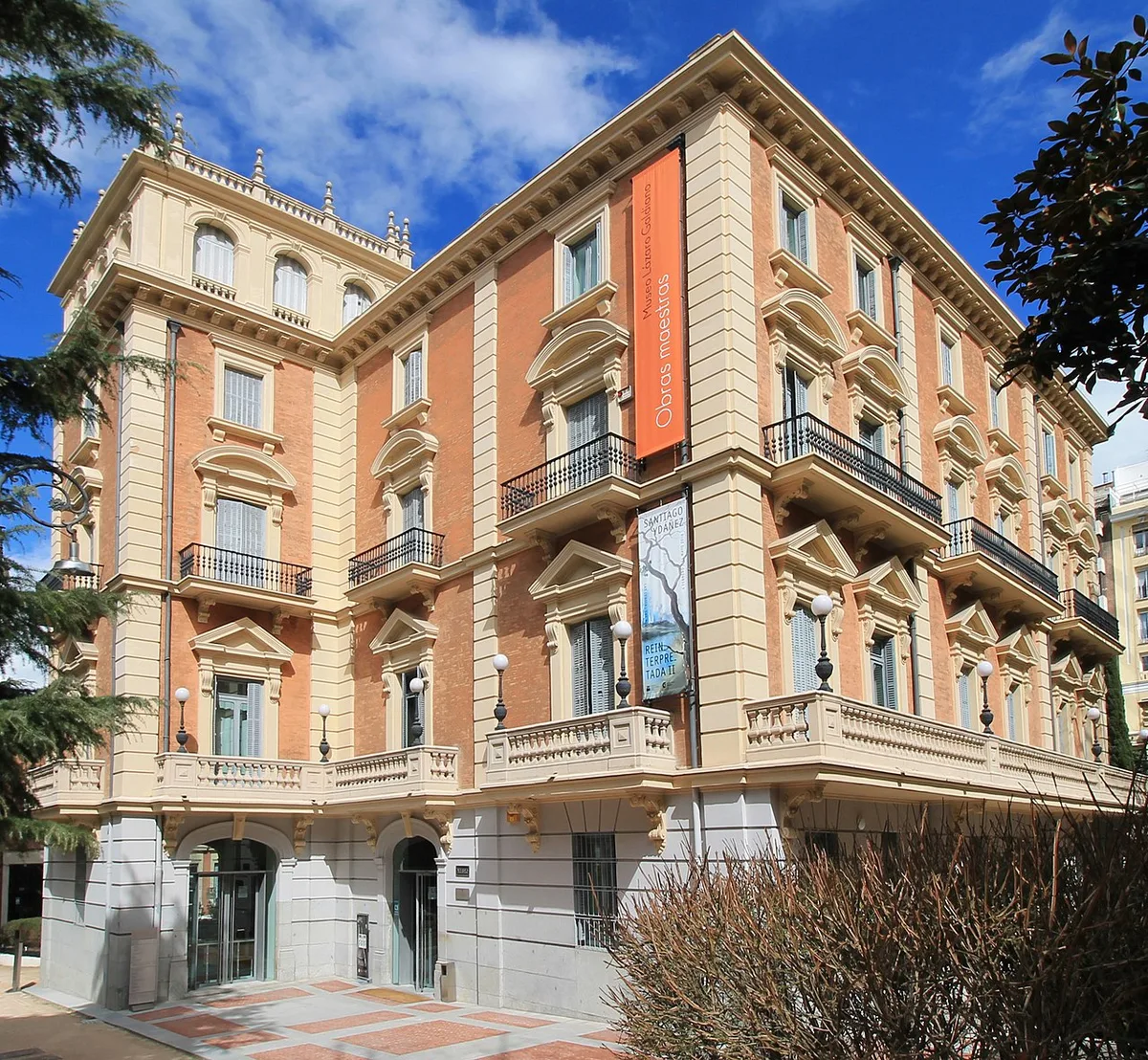
The museum is at Calle Serrano 122, 28006 Madrid, in the upper stretch of Salamanca's main boulevard. The nearest metro station is Rubén Darío on Line 5 (green), about a five-minute walk south along Paseo de la Castellana. Núñez de Balboa on Lines 5 and 9 is a similar distance to the east. Avenida de América, served by Lines 4, 6, 7, and 9, is also within walking range if you are combining the museum with time in the Recoletos area.
Bus lines 7, 9, 12, 14, 16, 19, 27, 40, 45, 51, 61, 147, 150, N1, N4, N22, and N24 all stop within a short walk. Two BiciMAD bike-share docking stations are nearby: one at Paseo de la Castellana 43 and one at Calle Velázquez 134, making a cycling approach from the Castellana straightforward.
From Retiro Park the museum is a 25-minute walk northwest through quiet Salamanca residential streets — a pleasant route worth planning as part of your broader Madrid itinerary. Parking in Salamanca is scarce and expensive on weekday mornings, so public transport is the practical choice for most visitors.
Highlights of the Collection: Must-See Art & Artifacts
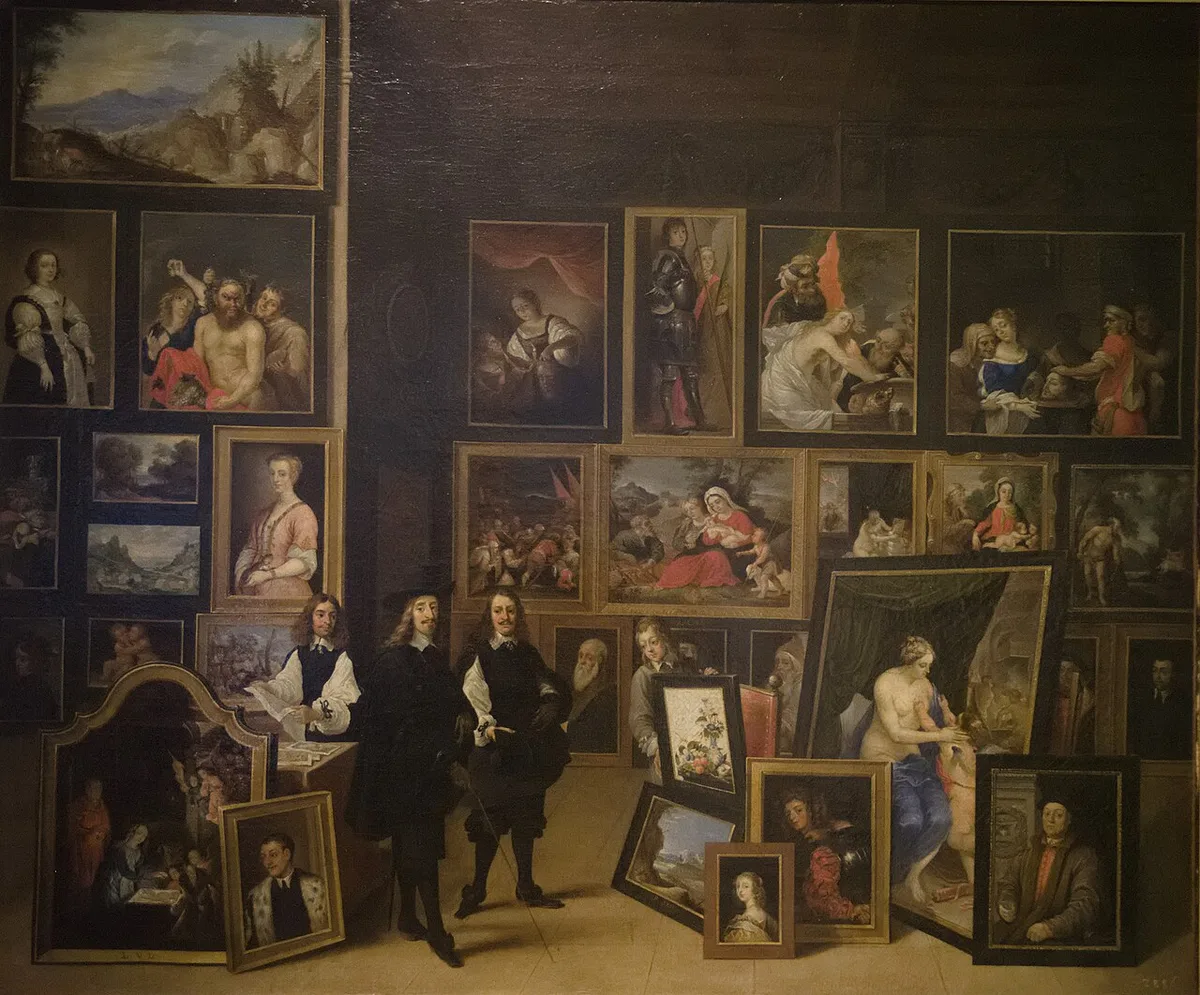
Three paintings anchor almost every visit. Hieronymus Bosch's St. John the Baptist in Meditation is the collection's rarest work — an introspective piece far removed from the Flemish master's typically chaotic visions. Goya's Witches' Sabbath, commissioned by the Duke and Duchess of Osuna for their El Capricho Park palace, reads as a darker prequel to the Black Paintings at the Prado. The Saviour, a mysterious portrait of a young Christ attributed to a pupil of Leonardo da Vinci, completes the trio of must-sees.
El Greco, Zurbarán, Ribera, and Murillo give the collection a strong Spanish Golden Age spine. Less expected are the British Romantic painters: Constable, Gainsborough, Reynolds, and Turner all feature, making Lázaro Galdiano one of the few Madrid venues where you can compare Spanish and English 18th-century painting side by side. There are also lesser-known Goya portraits that rarely appear in the books dedicated to his more famous works.
The decorative arts are what truly set this museum apart. The 13th-century Limoges enamels are extraordinarily rare in Spain, and the watch and clock collection — which includes a timepiece worn by Carlos I — is one of Europe's most complete. Medieval ivory, ancient bronzes, and historical textiles fill cases on every floor.
The library holds Lope de Vega letters and medieval manuscripts, accessible to researchers by appointment only. Selections sometimes appear in temporary exhibitions. In summer 2026 the museum is hosting Bunny, a PHotoESPAÑA 2026 photography exhibition by Talia Chetrit, running until 30 August 2026 — check the programme if your visit falls in that window.
Exploring the Parque Florido Mansion: History & Architecture
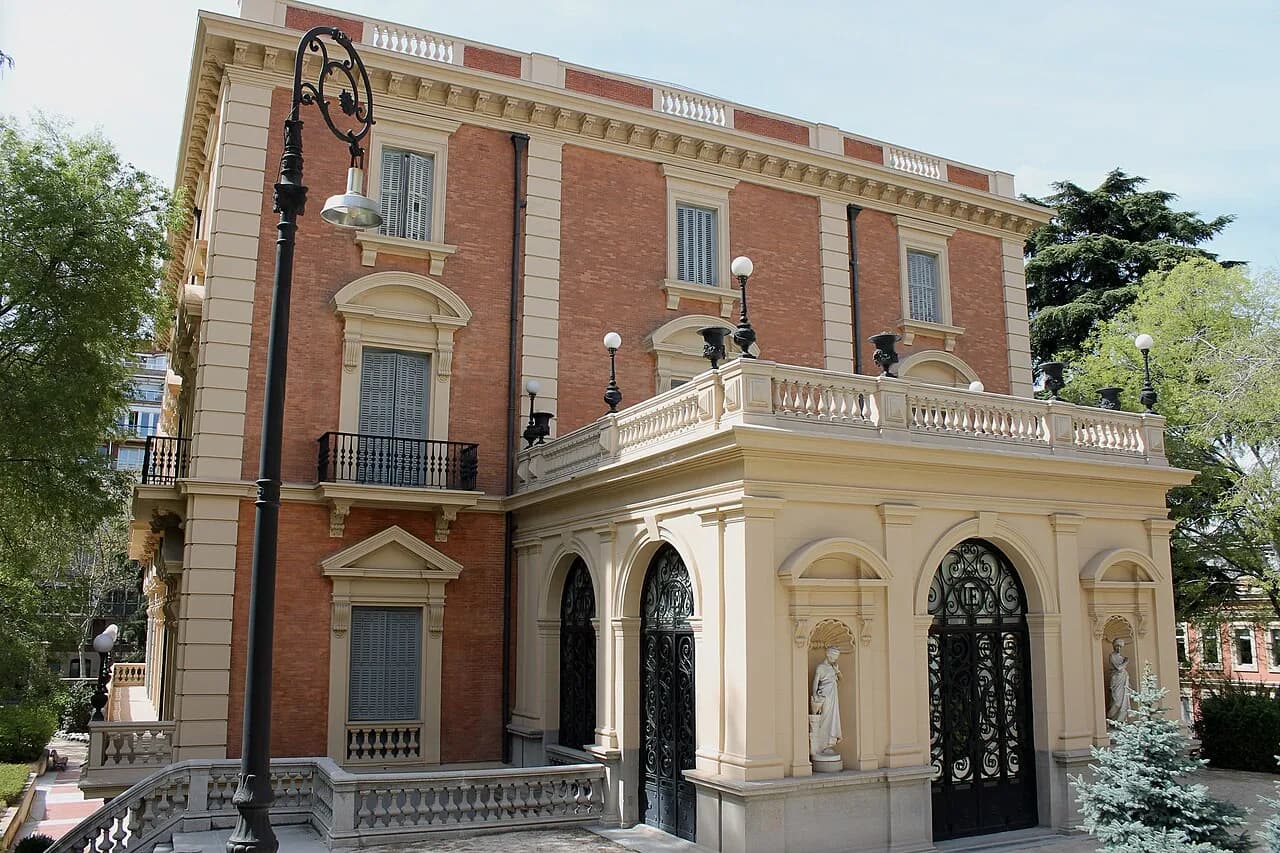
The Parque Florido mansion was built between 1903 and 1908 to Galdiano's own specifications. Architect José Urioste y Velada blended Neo-Renaissance and Eclectic influences, but the interiors are the real story. Galdiano commissioned Baroque-style painted ceilings for every room, with each ceiling's programme themed to the specific activity once carried out in that space — the dining room, library, ballroom, and private studies each have their own iconographic scheme. Walking through them in sequence is itself a minor art history lesson.
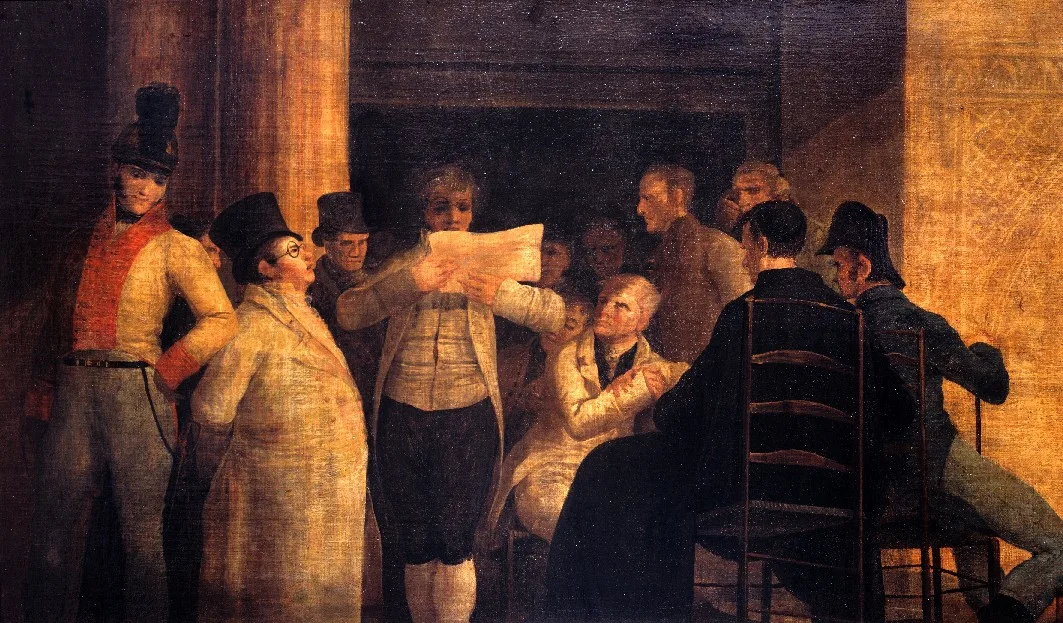
Historical photographs displayed throughout the mansion show the rooms as they looked when Galdiano lived there, letting you read the space simultaneously as a working home and a collector's showcase. The grand salons that hosted Unamuno and Pardo Bazán now display the very art those literary figures would have seen on their visits.
The mansion's four floors follow a logical thematic sequence: medieval and Renaissance work occupies the lower floors, 17th and 18th-century painting fills the upper levels, and decorative arts are woven throughout. The arrangement is among the clearest of any house museum in Spain — no map needed once you understand the logic.
The gardens behind the mansion deserve at least fifteen minutes. They are small but carefully maintained, and offer a quiet bench and a complete change of atmosphere after the density of the interiors. Garden access is included with museum admission.
Beyond the Museum: What's Nearby & Itinerary Ideas
The Museo Sorolla — another intimate house museum ten minutes' walk southwest — is the natural pairing with Lázaro Galdiano. Note that Sorolla is temporarily closed in 2026; confirm its reopening status on the official site before building your day around it.
The Juan March Foundation on Calle Castelló is open year-round with free art exhibitions and a programme of chamber concerts. It is about eight minutes' walk from Lázaro Galdiano and makes a strong free afternoon add-on. The National Museum of Natural Sciences is walkable to the northwest and suits visitors traveling with school-age children. The ABC Serrano shopping gallery (the former ABC newspaper headquarters) is a covered option for a coffee break on a rainy day.
For food, Platea Madrid — a converted 1950s cinema on Calle Goya repurposed as an upscale food hall — is a 15-minute walk south and considerably more interesting than the café near the museum entrance. It covers everything from pintxos counters to full sit-down restaurants.
Half-day plan: Arrive at 14:00 Tuesday through Friday (free entry). Spend one focused hour on the Bosch, Goya, and decorative arts highlights. Walk to the Juan March Foundation for contemporary work. Allow 30 minutes along Calle Serrano on the return.
Full-day plan: Morning opening at 9:30 for a full 2.5-hour visit. Lunch at Platea food hall. Afternoon at the Juan March Foundation or the National Museum of Natural Sciences. Walk south down Serrano toward Retiro Park to end the day.
Accessibility and the Laboratory of Senses
The museum has developed a purpose-built space on the third floor called the Laboratory of Senses. It offers 3D-printed replicas of key sculptures you can handle, textile panels that translate visual works into tactile experience, and STQRY interactive software with audio descriptions, Easy Reading texts aimed at intellectual disabilities, and Spanish sign-language video content. The space was designed using a Design for All methodology, meaning it functions well for visitors with visual or intellectual disabilities, families with neurodiverse children, and any visitor who benefits from a hands-on mode of engagement — not just those with declared disabilities.
NaviLens technology is installed throughout the building. A standard smartphone camera picks up the codes without a data plan, which is useful if you are not on a local SIM. Interactive guides incorporate Spanish sign language, subtitles, audio description, and accessible maps of each floor.
Mobility visitors should note one practical detail before arriving. The historic public lift is a protected cultural heritage object with 79 cm door width and a narrow interior. Wheelchair users and visitors with larger strollers are advised to use the service elevator, which requires a staff escort — inform the front desk on arrival. The accessible bathroom is on the ground floor, clearly signed. Free accessible visits for visitors with visual disabilities run on specific days; times are posted on the official website and should be confirmed in advance.
Other Charming Museums in Madrid: Cultural Context
Madrid's house-museum circuit — Lázaro Galdiano, Cerralbo, and the Museum of Romanticism — offers a window into elite private life across three different eras and temperaments. They are often grouped together precisely because none can be properly experienced in under an hour, yet none demands a full day. Taken together they paint a picture of Spanish collecting culture that the big state institutions cannot.
The Museo del Romanticismo covers early 19th-century Spanish bourgeois life through room settings, furniture, costumes, and paintings. It is the most theatrical of the three and works especially well for visitors who find static art cases difficult to engage with.
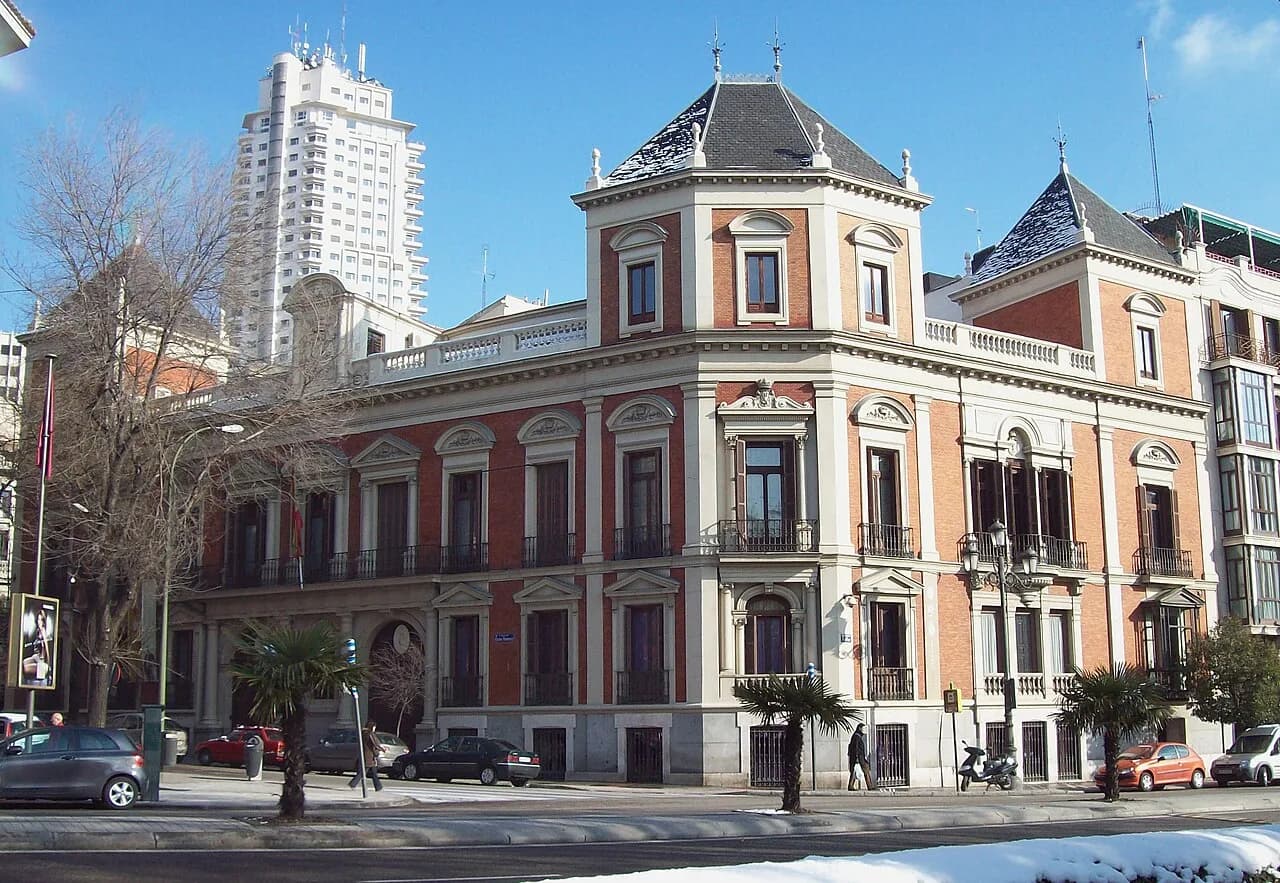
The Museo Cerralbo is the closest in character to Lázaro Galdiano — another aristocratic private collection turned public museum, covering European painting, archaeological finds, and decorative arts in a grand palatial setting. The two can be combined in a single day: Cerralbo in the morning (near Plaza de España) and Lázaro Galdiano in the afternoon.
The Descalzas Reales royal convent adds a fourth option with a very different character: religious art, royal relics, and strict timed-entry rules. Built together into a multi-day Madrid art itinerary, these four institutions take you well beyond anything a single large museum can show.
Making the Most of Your Madrid Trip
Lázaro Galdiano sits at the top of Calle Serrano, the spine of the Salamanca district and one of Madrid's finest commercial streets. A morning museum visit followed by a slow walk south down Serrano toward Retiro gives you a natural full-morning itinerary covering culture, architecture, and neighborhood character without any specific planning.
If you are visiting on a budget, the free Tuesday-through-Friday 14:00-15:00 window stacks well with the Juan March Foundation (always free) and Retiro Park (always free). A substantive cultural afternoon in the Salamanca area is possible at zero cost. The Madrid exploration options in this neighborhood alone can fill a day for those who prefer depth over breadth.
The museum shop on the ground floor carries exhibition catalogs, academic art books focused on the permanent collection, and items tied to the enamelware, Goya, and Spanish Golden Age holdings. The catalogs are better value than most souvenir-level purchases — academically credible and not widely available elsewhere. A book on Lázaro Galdiano himself deepens every subsequent museum visit you make in Madrid by showing how one private collecting vision shaped what survives today.
Frequently Asked Questions
How much time should you plan for a Museo Lázaro Galdiano visitor guide?
Plan for at least 2 to 3 hours to fully appreciate the Museo Lázaro Galdiano. This allows enough time to explore all four floors of art and decorative objects. You can also enjoy the mansion's architecture and tranquil gardens without feeling rushed.
Is Museo Lázaro Galdiano worth including on a short Madrid itinerary?
Yes, the Museo Lázaro Galdiano is definitely worth including, even on a short Madrid itinerary. It offers a unique and intimate art experience away from larger crowds. Its manageable size means you can enjoy a significant cultural highlight without dedicating an entire day.
What should travelers avoid when planning a Museo Lázaro Galdiano visit?
Avoid visiting without checking the official website for current opening hours and potential closures. Do not expect extensive dining options within the museum, so plan your meals accordingly. Also, try to avoid peak weekend afternoons if you prefer fewer crowds.
Which Must-See Museo Lázaro Galdiano attractions fit first-time visitors?
First-time visitors should prioritize seeing El Greco's 'The Vision of Saint John' and the Goya paintings. Also, explore the stunning collection of decorative arts, including jewelry and ceramics. Don't forget to admire the Parque Florido mansion's architecture itself.
Are there any official products worth purchasing at Museo Lázaro Galdiano?
The museum shop offers a curated selection of official products, including exhibition catalogs, art books, and unique souvenirs. These items often provide deeper insights into the collection or make for memorable gifts. Consider a book about José Lázaro Galdiano for a deeper dive.
Other Omnivorous Private Collections in Europe
Lázaro Galdiano bought across every category and left thirteen thousand objects in his own mansion, from Bosch panels to Limoges enamels. London's Wallace Collection is the same instinct with more money and better French furniture. Milan's Museo Bagatti Valsecchi narrowed the field to the Renaissance and then lived inside the result.
The Museo Lázaro Galdiano truly stands out as a unique cultural treasure in Madrid.
It offers a personal glimpse into the passions of a remarkable collector, from Bosch and Goya to 13th-century Limoges enamels and British Romantic painters rarely seen in Spain.
With free entry on weekday afternoons, a purpose-built accessibility space, and a quiet neighborhood worth exploring on foot, it rewards the effort of planning properly.
Use this guide to arrive prepared and make the most of one of Madrid's finest hidden institutions in 2026.
For authoritative information, refer to the Museo Lázaro Galdiano on Wikipedia.
For more Madrid ideas, see our Most Beautiful Places in Madrid guide.
Continue exploring
More guides you'll find useful