Catacombs of San Gennaro: Visitor Guide to Naples's Largest Crypt
Naples's largest early-Christian burial complex, hidden beneath Rione Sanità. This 2026 guide covers booking, the Via Capodimonte 13 entrance, and hours.
On this page
Catacombs Of San Gennaro Visitor Guide
The Catacombs of San Gennaro are Naples's largest early-Christian underground cemetery, set beneath the Rione Sanita on the slope below Capodimonte. This catacombs of san gennaro visitor guide focuses on the practical choices that matter in 2026: how to book, how to reach Via Capodimonte 13, what you will see underground, and how to avoid the common planning mistakes around hours, access, and nearby sights. For an overview of catacombs of Naples, see our dedicated guide.
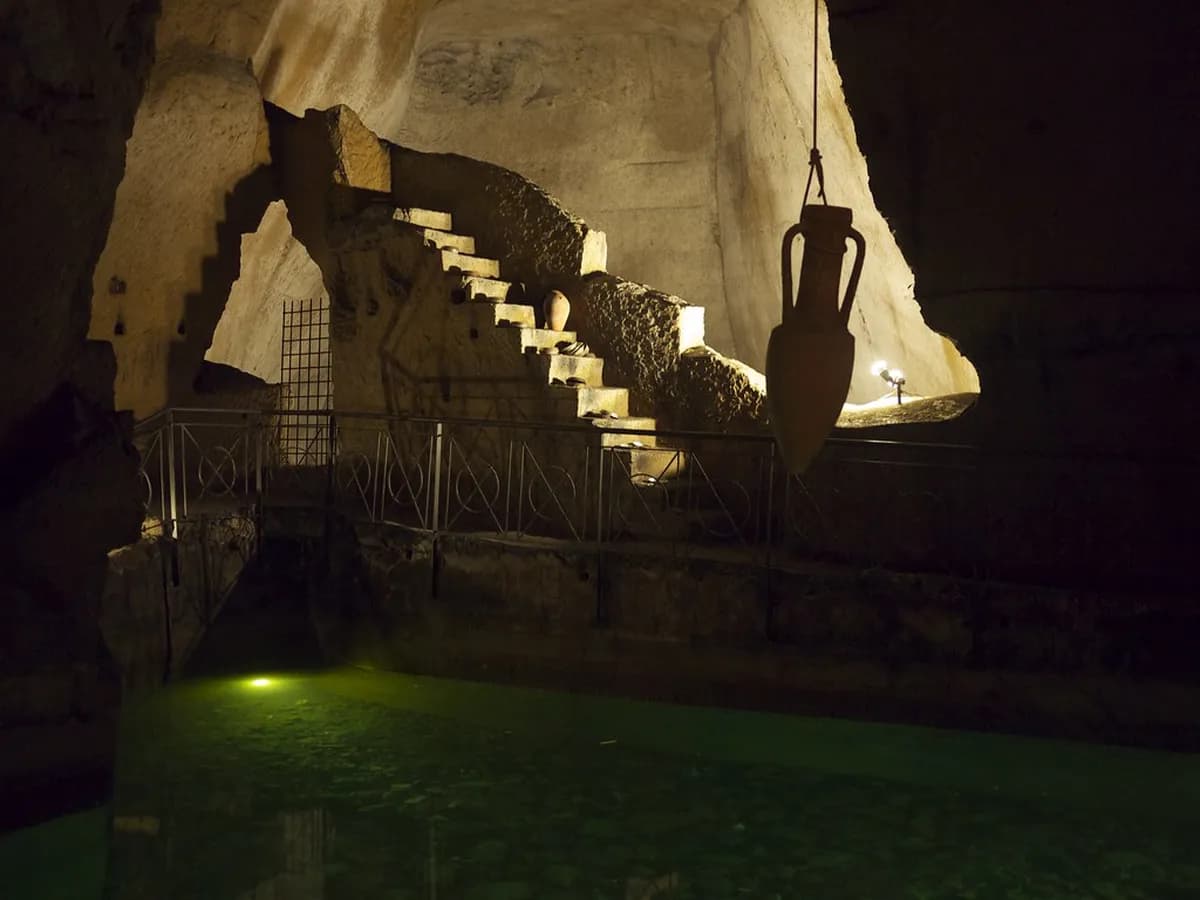
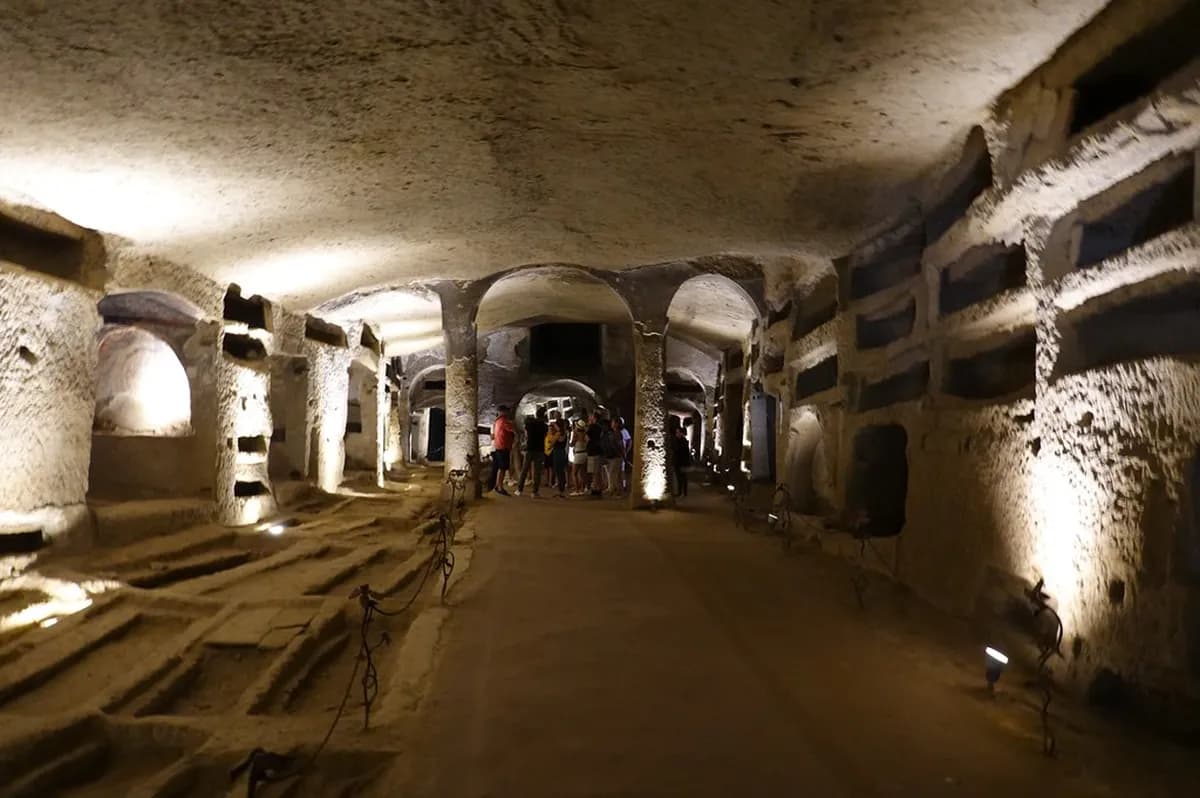
The visit is guided rather than self-led, which is part of the appeal. Local guides connect the tombs, frescoes, bishops' burial area, and the cult of San Gennaro into one clear route through the Neapolitan Yellow Tuff. The setting feels more spacious than many Roman catacombs, with broad galleries and an underground basilica rather than narrow corridors.
Plan this as an attraction visit, not a quick photo stop. Allow about 90 minutes total for arrival, check-in, the 60-minute tour, and a short look around the Basilica Madre del Buon Consiglio area before or after you descend.
Must-See Catacombs Attractions
The site has two non-overlapping levels that show how Neapolitan burial traditions changed from the second century onward. The lower catacomb grew around the tomb of Saint Agrippinus and includes a basilica carved directly into yellow tuff. It feels closer to an underground church than a cramped cemetery.
The upper catacomb is the area most visitors remember. It became a major devotional place after the remains of San Gennaro were brought here in the fifth century. Archaeologists have counted more than 3,000 burials across the complex, and the upper level includes the burial place of bishops, where the decoration and tomb placement show how prestigious it was to rest near a revered martyr.
Geology is not background detail here. Neapolitan Yellow Tuff first appeared around 14,000 years ago, and its strength allowed builders to carve broad rooms, not just thin tunnels. You can compare that local stone story with another underground Naples site, the Galleria Borbonica, where the same volcanic material shapes the visitor experience in a very different historical setting.
- The Lower Catacomb
- Type: Basilica structure
- Age: 2nd Century
- Highlight: Agrippinus tomb
- Atmosphere: Spacious halls
- The Upper Catacomb
- Type: Bishop burial site
- Age: 4th Century
- Highlight: San Gennaro tomb
- Atmosphere: Intricate frescoes
Museums, Art, and Culture in Catacombs
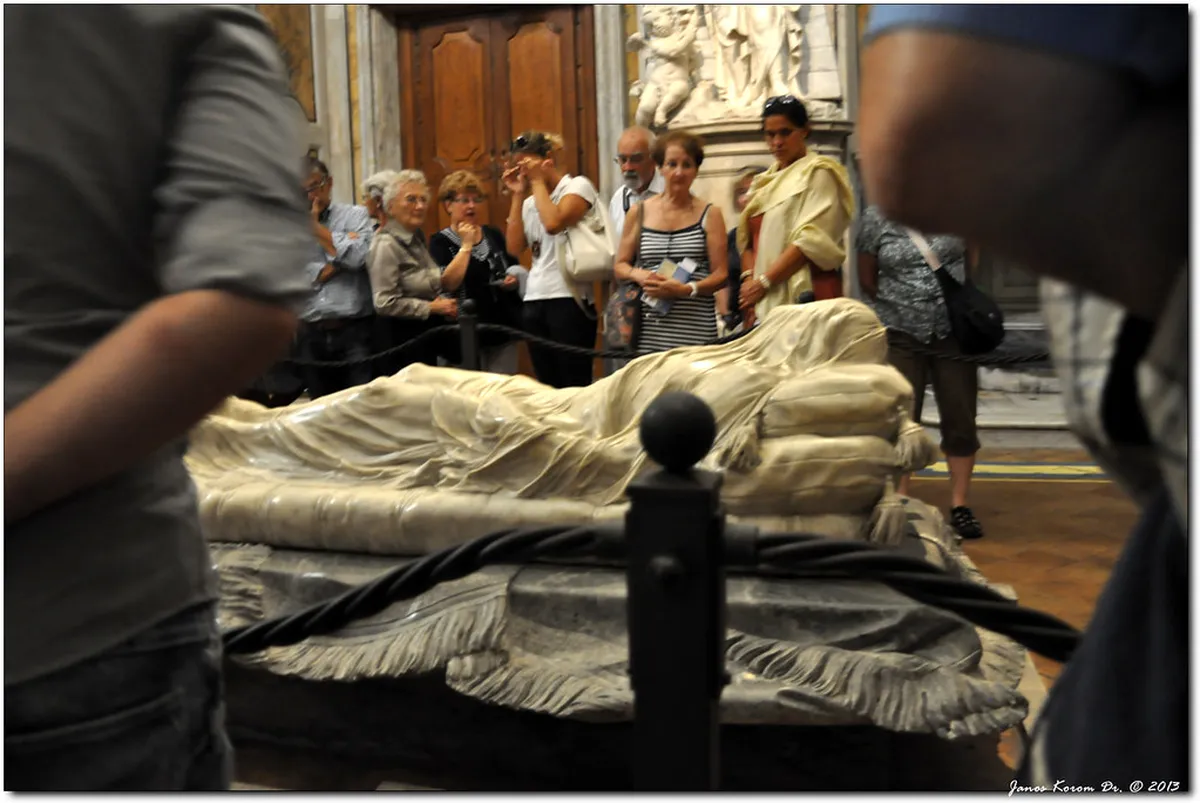
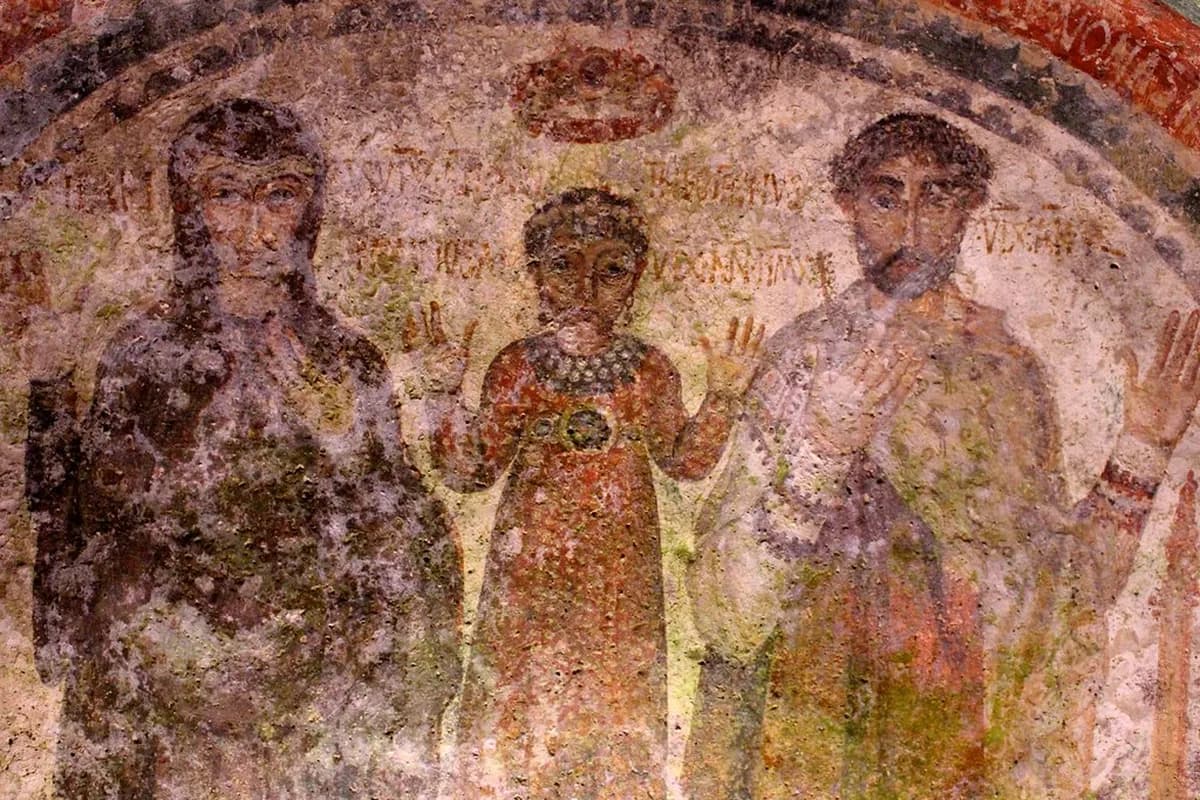
The catacombs work as a subterranean museum of early Christian and Byzantine art. Frescoes show biblical scenes, portraits of the deceased, and symbols that helped early Christian communities express faith before churches became public civic landmarks. The Cappella Sansevero offers a later, highly polished artistic experience; San Gennaro is more raw, older, and tied to the burial landscape itself.
A major highlight is the "Lux in tenebris" lighting project. The soft LED system helps protect the pigments while making the tuff texture, fresco outlines, and architectural volumes easier to read. This matters because too much light can damage delicate underground environments, while too little turns the visit into a vague walk through shadow.
Look closely at the upper level for the shift from simple burial niches to more elaborate spaces associated with clergy and elite families. The best way to experience the art is to stay near the guide, let faster groups pass in the broader rooms, and avoid using flash, which is poor archaeological etiquette and unnecessary in the current lighting.
Parks, Gardens, and Outdoor Spots in Catacombs
The entrance sits by the Basilica Madre del Buon Consiglio, with a quieter setting than the streets lower down in Rione Sanita. Arrive early enough to orient yourself, use the facilities, and find the ticket office without rushing. The courtyard and hilltop position also give you a natural pause before the underground section.
For a fuller day, pair the catacombs with Capodimonte rather than trying to cross the entire city afterward. The nearby park and museum area gives you daylight, green space, and a different view of Naples after the cool underground rooms. The Naples attraction hub at Naples can help you place this stop among other city sights. For more things to do in Naples beyond the catacombs, browse our comprehensive guide.
Rione Sanita is part of the experience, not just the route in. Casa del Monacone, Palazzo dello Spagnolo, local bakeries, and neighborhood-led regeneration projects make the area worth time before or after the tour. For dining near the Catacombe, choose a simple neighborhood lunch rather than scheduling a tight restaurant reservation immediately after your entry slot; guided tours can start or finish a little off your personal timetable.
Plan a simple neighborhood lunch rather than scheduling a tight restaurant reservation immediately after your tour slot, as guided tours can start or finish a bit off your personal timetable.
Family-Friendly and Budget-Friendly Options in Catacombs
Families often find the Catacombs of San Gennaro easier than more claustrophobic underground sites because the main spaces are wide and the route is guided. Children who enjoy history, mystery, or archaeology usually respond well to the scale of the rooms. The constant cool temperature also helps in summer, but bring a light layer because 15°C can feel cold after a hot walk through Naples.
Budget planning is straightforward: a full-price adult ticket is 13 euros. Students and visitors over 65 pay 9 euros, children aged 6 to 18 pay 6 euros, and children under 6 plus disabled visitors enter free. The ticket includes a guided tour. It also gives access to both the Catacombs of San Gennaro and the nearby Catacombs of San Gaudioso, so do not buy twice unless you are choosing a separate route such as the Holy Mile. You can Explore and buy tickets online to secure your preferred time slot.
Accessibility needs deserve extra care. The site is largely barrier-free, but access for visitors with motor disabilities is currently restricted in places due to hydrogeological instability. If stairs, uneven tuff floors, or step-free access are decisive for your group, contact the operator before booking rather than relying on older reviews.
If stairs, uneven tuff floors, or step-free access are decisive for your group, contact the operator before booking, as access is currently restricted in some areas due to hydrogeological instability.
How to Plan a Smooth Catacombs Attractions Day
Use Via Capodimonte 13 or Basilica Madre del Buon Consiglio as your navigation target. From the historic center, the bus journey from around Piazza Dante is often quoted at about 10 to 15 minutes, but Naples traffic can stretch that. Check live transit on the day; the SERP material references local bus links including the 3250 route from Basilica dell'Incoronata and changing fare rules by operator, so do not assume one universal ticket covers every bus.
The protected opening-hours fact for this page is: Monday, Tuesday, Thursday, Friday, Saturday, Sunday: 10:00-17:00 (last admission 17:00); Wednesday: Closed. Arrive 15 minutes before your tour starts for check-in. Morning is best if you want fewer people in the fresco areas; late afternoon can work well if you are combining the visit with Capodimonte first.
The temperature underground stays around 15°C throughout the year. Bring a light jacket, wear shoes with grip, and leave bulky luggage behind. Compared with Napoli Sotterranea, this route feels more open, but the floor is still archaeological stone, not a museum corridor.
- Common mistake: turning up on Wednesday because a third-party page says "open daily."
- Common mistake: assuming the San Gennaro ticket and the Holy Mile are the same product.
- Common mistake: booking lunch too close to the tour end time.
- Common mistake: skipping San Gaudioso even though the same ticket can cover both managed sites.
Who is San Gennaro?
San Gennaro, also known as Saint Januarius, is the patron saint of Naples and one of the strongest identity markers in the city. Tradition remembers him as a bishop and martyr from the age of Diocletian's persecutions. His remains were moved to these catacombs in the fifth century, which made the site a major place of devotion.
Neapolitans have historically invoked San Gennaro in moments of danger, including plagues and eruptions. That protective role explains why his story appears far beyond the catacombs, from Naples Cathedral to street shrines and civic rituals. For another Naples site connected with charity, devotion, and local institutions, see Pio Monte della Misericordia.
The famous liquefaction of his blood is associated with Naples Cathedral today, but the catacombs remain the place where visitors can understand how the saint's cult developed underground. The tomb area is not just a historic point on the route; it is the reason the cemetery became one of the city's sacred landmarks.
Catacombs of Rome, Italy – Via Appia Antica, San Callisto, San Sebastiano, and Famous Roman Catacombs
Many travelers compare Naples with the famous Roman catacombs along the Via Appia Antica, especially San Callisto and San Sebastiano. Rome offers scale, long corridors, and the classic Appian Way setting. Naples offers roomier tuff architecture, strong links to one patron saint, and a neighborhood-based visitor model.
If you dislike tight spaces, San Gennaro is often the better first catacomb experience because the galleries feel broader and more open. If your priority is Rome's early Christian network as a whole, San Callisto or San Sebastiano may matter more. The decision is less about which is "best" and more about whether you want Roman breadth or Neapolitan depth.
Time is the other trade-off. A Rome catacombs visit usually sits outside the most central tourist circuit, while San Gennaro can combine naturally with Capodimonte, San Gaudioso, or a focused Rione Sanita walk.
Catacombs in Italy Guide for High-End Travellers – Exploring Sacred Catacombs, Crypts, and Famous Burial Places
High-end travelers should treat San Gennaro as a content-rich stop rather than a VIP shortcut. The standard guided tour is already the core way to visit, and the local guide model is central to the site's identity. Private transport can still be useful because it removes uncertainty around bus tickets, hills, and traffic from the historic center.
You can Experience unique tours and special access to Naples’ most popular sights if you want a broader expert-led itinerary across the city. The best premium version of this day connects San Gennaro with Capodimonte, San Gaudioso, or another underground Naples site, then leaves enough unstructured time for Rione Sanita.
For sacred catacombs and crypts across Italy, match the site to your interest. Choose San Gennaro for frescoes, local devotion, and a readable underground basilica. Choose Rome for the Appian Way network. Choose a private specialist only if you want deeper archaeological interpretation, not because the basic visit is hard to understand.
Catacombs of Priscilla, Rome – Via Salaria, Frescoes, Crypts, and Quiet Christian Faith
The Catacombs of Priscilla in Rome are often discussed for their frescoes and quieter atmosphere. They are a useful comparison point because they show how different Italian catacombs can feel even when they share early Christian themes. Priscilla is valuable for iconography; San Gennaro is valuable for the way art, saintly devotion, geology, and neighborhood regeneration meet in one visit.
If your trip includes both Rome and Naples, do not treat one catacomb as a duplicate of the other. Priscilla rewards visitors who care about early Christian images and a calmer Roman setting. San Gennaro rewards visitors who want a spacious route, a strong patron-saint story, and direct context for Naples's religious culture.
The practical difference is transit. Via Salaria requires Rome-specific planning, while San Gennaro is easier to build into a Naples day with Capodimonte or San Gaudioso. For most Naples-only travelers, San Gennaro should stay ahead of any remote Rome comparison.
Private Tour to the Catacombs of Rome – Book Tickets for a Luxury Catacomb and Crypt Experience
A private Rome catacomb or crypt tour makes sense when you want multiple sites, transport, and a specialist guide in one itinerary. It is less necessary for San Gennaro itself because the Naples visit is already guided and the route is structured. In 2026, the smarter upgrade in Naples is often logistical: direct transport, a carefully timed entry, and a guide who can connect San Gennaro with the rest of Rione Sanita.
For luxury travelers, the main risk is overpacking the day. Underground sites are slower than they look on a map because you need check-in time, a fixed tour slot, and recovery time afterward. A better plan is one major catacomb visit, one nearby cultural site, and a meal or walk in the same district.
If you are deciding between Naples and Rome private options, use this rule: book Rome privately for multi-stop efficiency; book Naples thoughtfully for context. San Gennaro does not need to be expensive to feel meaningful, but it does reward visitors who arrive prepared and give the neighborhood time.
Frequently Asked Questions
How long do the Catacombs of San Gennaro take?
A standard guided tour usually lasts about 60 minutes. Allow about 90 minutes total for arrival, check-in, the tour route, and a short pause near the entrance or shop afterward.
Can you just turn up to the catacombs?
Do not rely on turning up, especially on weekends, holidays, or rainy days when underground attractions become more appealing. Book a timed guided visit online after you have checked your travel plans and ITALY FLIGHTS ✈️.
Are the catacombs in Naples worth visiting?
Yes. They are especially worth visiting if you want an underground site that feels spacious, has visible frescoes, and explains Naples through San Gennaro, Rione Sanita, and local early-Christian history rather than only through Roman comparisons.
Which is the best catacomb to visit in Rome?
San Callisto is often the choice for scale and Appian Way context, while Priscilla is strong for frescoes and a quieter visit. If you are staying in Naples, San Gennaro is not a substitute for Rome; it is the best local catacomb for understanding Naples itself.
Other Early Christian Burial Sites in Europe
The San Gennaro catacombs are wide enough to walk through upright, which sets them apart from most Roman examples. Rome's own Capuchin Crypt is the later, stranger development of the same theology of remains. In Lisbon, the Carmo Convent keeps tombs and mummies in a nave left open to the sky since the 1755 earthquake.
The Catacombs of San Gennaro offer one of Naples's clearest links between geology, early Christianity, neighborhood history, and devotion to the city's patron saint. The broad tuff spaces, frescoes, bishops' burial area, and guided format make the visit easier to understand than many underground sites.
For a smooth 2026 visit, book ahead, avoid Wednesday, arrive 15 minutes early, bring a light layer for the 15°C underground temperature, and leave time for San Gaudioso or Rione Sanita afterward. That simple plan turns the catacombs from a single attraction into a strong Naples half-day. To build out your time in the city, see our 3-day itinerary for a complete Naples experience.
For the latest official information, see the Catacombs of San Gennaro on Wikipedia and Catacombs of San Gennaro official site.
Continue exploring
More guides you'll find useful