8-Part Guide to a Hidden Naples 3 Day Itinerary
Discover the ultimate hidden naples 3 day itinerary. Explore secret cloisters, underground tunnels, and authentic pizzerias with our expert day-by-day guide.
On this page
8-Part Guide to a Hidden Naples 3 Day Itinerary
Naples rewards the traveler who slows down. This hidden Naples 3 day itinerary skips the obvious tourist trail and focuses on layers of history, street food, and neighborhoods most visitors never reach. It is designed for first-timers who want more than the postcard version.
The city's grit is inseparable from its charm. Explore Italy starting here, in its most raw and electrifying city. You will leave with pizza sauce on your shirt and a genuine understanding of southern Italian culture.
How Many Days in Naples?
Two to three days is the sweet spot for Naples. One day is genuinely not enough — the historic center alone fills a full morning, and the underground tours require their own half-day. Rushing through on a single day produces a shallow impression of a city that deserves more time.
Three days lets you cover the UNESCO-listed centro storico, descend into the Greek-era tunnels beneath the streets, and make one day trip to ancient ruins without ever feeling frantic. It also gives you time for the thing most itineraries underestimate: sitting at a bar, drinking a proper espresso, and watching the city move around you.
Is Naples worth visiting at all? The answer is yes, especially if you value authenticity over polished tourism. Naples is Italy without the varnish. Its UNESCO-listed historic center dates back over 2,700 years, it holds more Greek and Roman ruins than almost any other European city, and it is the birthplace of both pizza and sfogliatelle. The gritty streetscape and chaotic traffic are features, not bugs — they are what keep the crowds smaller than Rome or Florence. Check things you need to know before you go for a frank pre-trip briefing.
Day 1: The Historic Center and Hidden Cloisters
Start at 08:30 with an espresso at a standing bar on Spaccanapoli. This is not optional — this is the first cultural lesson. Naples invented the espresso bar culture, and the ritual matters. While you are there, ask the barista about Caffè Sospeso: the tradition of paying for a suspended coffee that a stranger can claim later. It dates back to the 19th century in Naples and survives today at old-school bars like Caffè Gambrinus near Piazza del Plebiscito. No competitor guide mentions it, but locals still practice it. Leaving a sospeso is one of the most invisible and genuine things you can do as a visitor.
By 09:00, join the short queue at the Cappella Sansevero Veiled Christ Travel Guide. Tickets cost €12 and must be purchased in advance on the official website — the chapel is tiny, entry is timed, and it sells out by late morning. The marble veil that appears to drape across Christ's body is carved from a single block of stone; seeing it in person is startling in a way photographs cannot prepare you for. The chapel closes on Tuesdays.
Spend late morning in the Santa Chiara Cloister. This is the true hidden gem of central Naples: a 14th-century complex whose inner cloister is lined floor-to-ceiling with hand-painted majolica tiles depicting Neapolitan countryside scenes. It costs €8 to enter and is almost entirely missed by visitors who stay on the main drag. The contrast between the noise of Spaccanapoli outside and the quiet of this tiled garden is extraordinary. Discover more Hidden Gems In Naples Travel Guide tucked behind the cloister in the side streets of the centro storico.
Cappella Sansevero tickets cost €12 and must be purchased in advance on the official website — the chapel is tiny, entry is timed, and it sells out by late morning. The chapel closes on Tuesdays, so plan your Day 1 schedule accordingly.
For lunch, skip any restaurant and find a friggitoria — a fried food shop — instead. The best are unmarked back-alley operations near Porta Nolana and the Via dei Tribunali. Look for a paper cone called a cuoppo, filled with fried zucchini, small fish, croquettes, and dough balls. It costs €3–5 and tastes better than anything on a restaurant menu. These shops are where Neapolitan workers actually eat. Spend your afternoon at the San Lorenzo Maggiore ruins: the medieval church sits directly over a Roman market and Greek street grid you can walk through for €9.
Day 2: Subterranean Secrets and Hilltop Castles
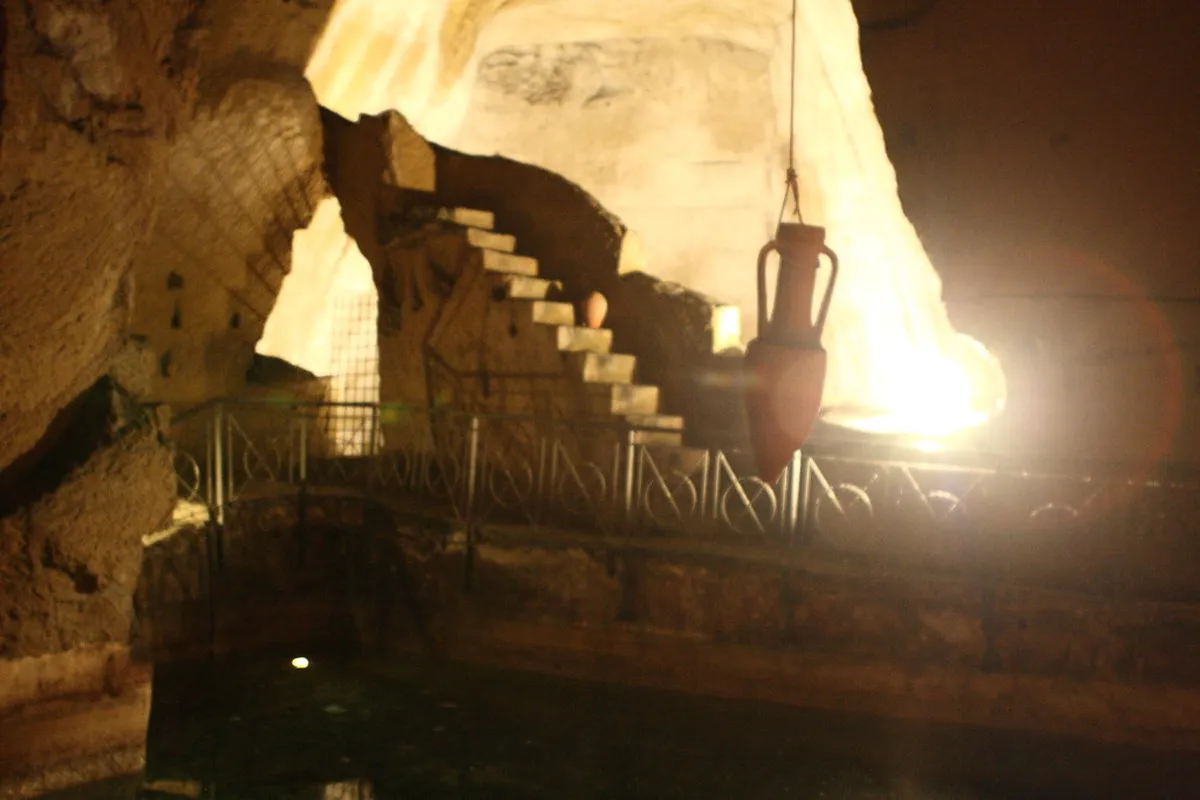
The choice between Napoli Sotterranea and the Bourbon Tunnel depends entirely on what kind of underground experience you want. Napoli Sotterranea (on Piazza San Gaetano, €15, tours run hourly from 10:00) descends into Greek-era aqueducts that span the entire city — carved in the 5th century BC. The guided tour takes 90 minutes and includes a section where you squeeze through a tunnel roughly 60 cm wide carrying a candle. It is theatrically dramatic and appropriate for all ages. The Bourbon Tunnel, by contrast, is a 19th-century escape route built for King Ferdinand II. It later became a WWII bunker and is crammed with abandoned vehicles, motorbikes, and wartime debris. It suits travelers who want something stranger and more melancholy. Both are excellent; pick based on mood, not reviews. Visit the Napoli Sotterranea Underground Naples Travel Guide section for a full comparison of both tour operators.
After surfacing, take Line 1 metro (€1.30 per ticket) or the Montesanto funicular to the Vomero hill. The funicular runs every 10 minutes and feels like a relic from a slower era. At the top, Castel Sant'Elmo (€5) offers the best 360-degree view of Naples: the bay, Vesuvius, the islands, and the chaotic sprawl of the city below. Arrive around 16:00 for the afternoon light. The Certosa di San Martino monastery next door costs €6 and holds an extraordinary collection of Neapolitan baroque art — most visitors skip it entirely to reach the castle, which is a mistake.
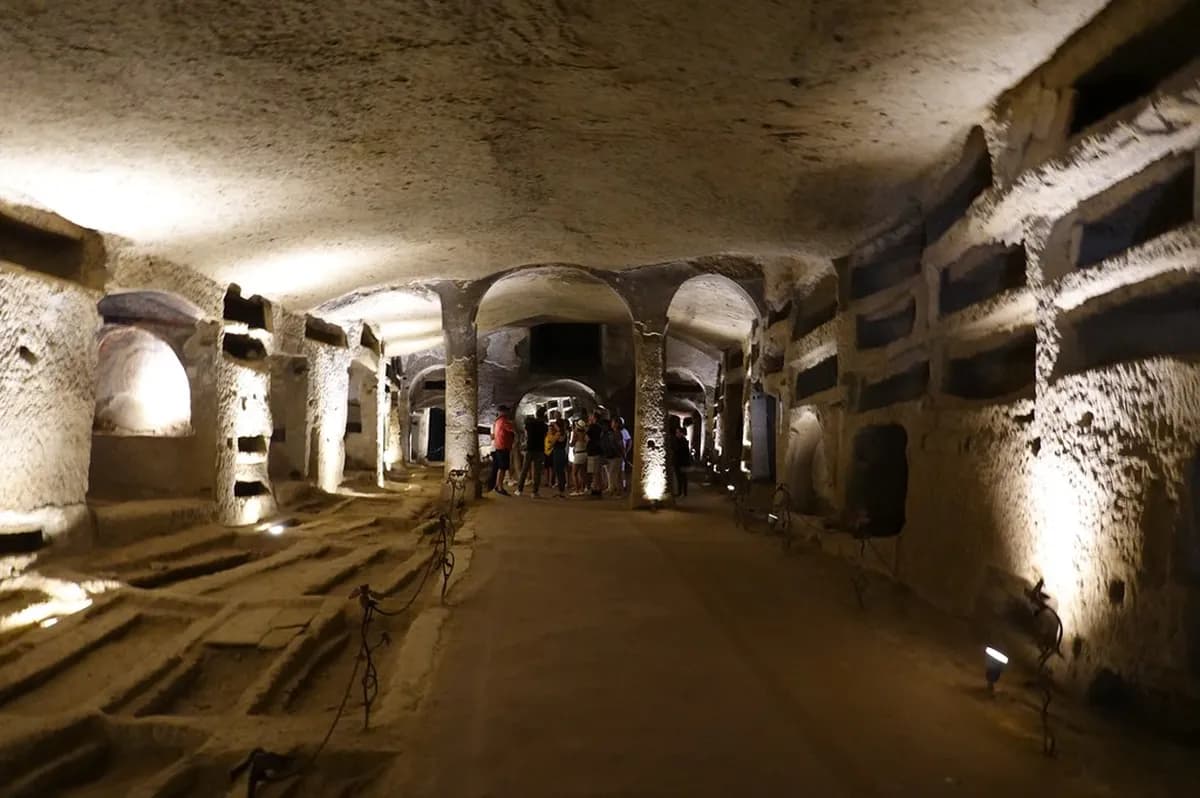
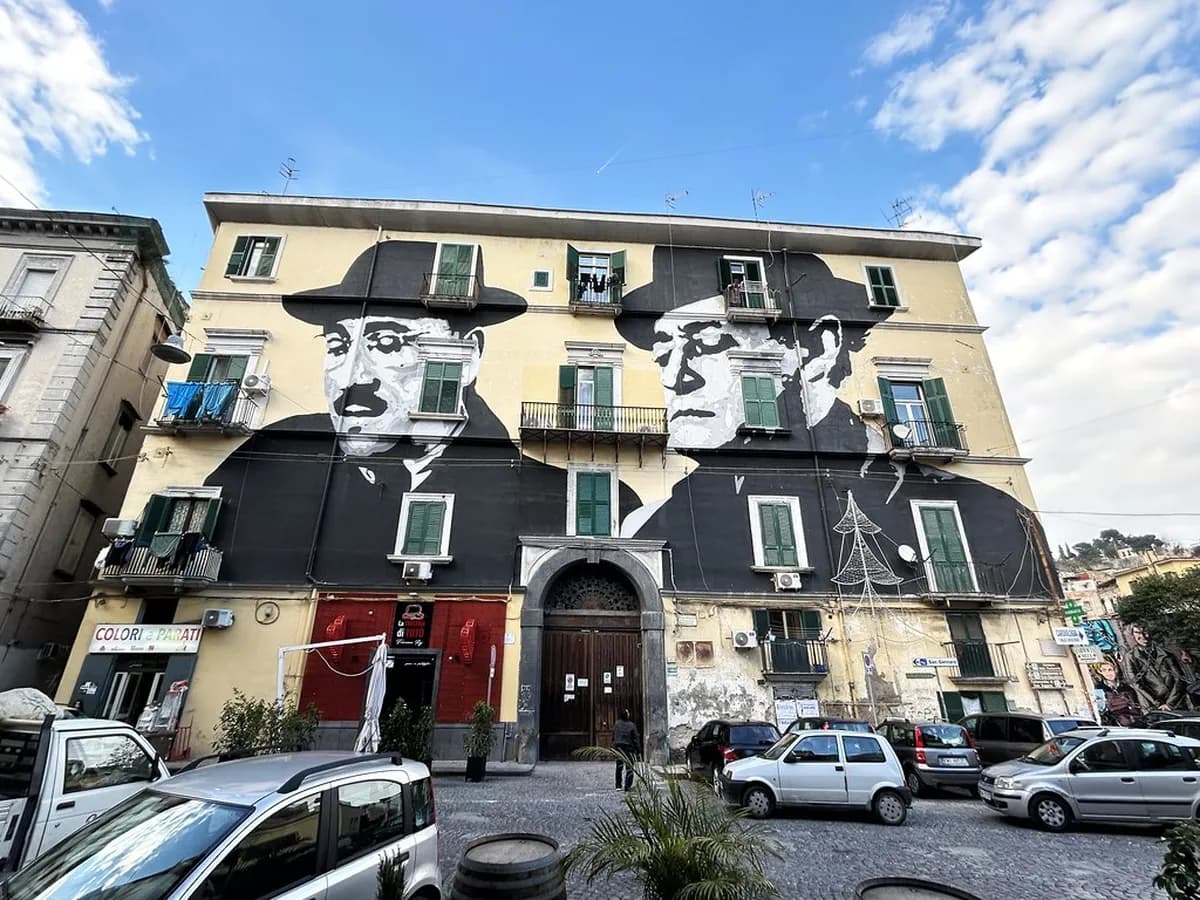
In the afternoon, make time for the Rione Sanita Naples Travel Guide neighborhood. This working-class district north of the centro storico is home to the Catacombs Of Naples San Gennaro Travel Guide, which contain early Christian frescoes dating from the 2nd century. Guided tours run at 10:00, 11:00, 12:00, and 14:00–17:00 (hourly), €9 per adult. The neighborhood itself rewards an hour of wandering. The street art is recent and political, the local markets sell produce directly from Campanian farms, and the grandmothers hanging laundry from balconies will happily advise you on where to eat.
Day 3: Hidden Herculaneum or the Amalfi Coast
The standard advice is to spend Day 3 at Pompeii. The better advice is to go to Herculaneum instead — or at least to understand the trade-off before you decide. Both are reached via the Circumvesuviana train from Napoli Centrale station. Trains run roughly every 30 minutes; the journey to Ercolano Scavi (Herculaneum) takes 20 minutes, and to Pompei Scavi (Pompeii) takes 37 minutes. Train tickets cost €2.80 each way. Buy them at the platform vending machines.
Here is the practical comparison:
- Herculaneum: 20 minutes by train, €15 admission, 3–4 hours to cover comfortably. Buried by a pyroclastic surge in 79 AD rather than ash, so organic materials — wood, cloth, food — were preserved at temperatures that carbonized them rather than destroyed them. You can see original wooden doors, intact mosaics, and a shop counter with ceramic jars still in place. Fewer than 10% of visitors to the region choose Herculaneum over Pompeii. There is significant shade from restored rooflines. Maximum site capacity is far lower than Pompeii, so crowding is rarely an issue even in peak season.
- Pompeii: 37 minutes by train, €17 admission, 4–6 hours to cover meaningfully. The scale is overwhelming — this was an entire Roman city, and walking it end-to-end without a guide produces diminishing returns quickly. Crowds peak from 10:00–14:00 in summer. The plaster casts of eruption victims are uniquely haunting and unlike anything at Herculaneum. If you have a particular interest in urban Roman planning at scale, Pompeii is the right choice.
For a hidden three-day itinerary, Herculaneum is the right call. Return to Naples by 15:00. Walk the seafront promenade past Castel dell'Ovo toward the Chiaia neighborhood, and end your trip at one of the 10 Best Pizzerias in Naples: The Ultimate Dining Guide — the ones locals actually use, away from the tourist cluster near the train station. Read about authentic Campania food traditions to understand what you are ordering and why it matters here.
| Day Trip | Train Journey | Train Cost (one way) | Admission | Time Needed |
|---|---|---|---|---|
| Herculaneum | 20 min (Circumvesuviana) | €2.80 | €15 | 2–3 hours |
| Pompeii | 37 min (Circumvesuviana) | €2.80 | €17 | 4–6 hours |
| Caserta Palace | 40 min (Italo/Frecciarossa) | ~€5–10 | €16 | 3–4 hours |
Getting to Naples and Navigating the City
Naples-Capodichino International Airport (NAP) sits only 7 km northeast of the city center. The Alibus airport shuttle (€5, buy online or at the terminal machine) runs every 10–15 minutes to Napoli Centrale station and the port. Journey time is 15–20 minutes in light traffic, up to 35 minutes at rush hour. Taxis from the airport to the center use a fixed tariff: €23 by day, €26 at night and on weekends — confirm this before you get in.
By train from Rome, the choice is between Frecciarossa high-speed trains and slower regional services. Frecciarossa runs Roma Termini to Napoli Centrale in 1h15 and fares start at €25 if booked weeks ahead (rising to €60–80 last-minute). Italo trains run the same route at comparable prices and are worth checking for better availability. Regional trains take 2h15–3h but cost under €15; they stop at more stations and are more crowded. For most visitors arriving from Rome, the high-speed train is worth paying for — it transforms the journey from a slog into a short hop.
Do not rent a car in Naples — Neapolitan traffic follows unwritten rules and parking is both expensive and genuinely stressful. Walking covers the centro storico entirely; the metro day pass costs €4.50 and covers all three funicular lines up to Vomero as well.
Once in Naples, do not rent a car. Neapolitan traffic is organized around an entirely different set of unwritten rules, and parking is both expensive and genuinely stressful. Walking covers the centro storico entirely. The metro (Line 1 and Line 2, €1.30 per trip or €4.50 day pass) handles longer hops. Three funicular lines climb to Vomero — Montesanto, Centrale, and Chiaia — and use the same metro ticket. For safety at night, stick to the centro storico and Chiaia neighborhoods. Read the Is Naples safe guide for a realistic overview rather than relying on secondhand reputation.
Must-Eat Foods: Beyond the Standard Margherita
The two modes of eating in Naples are Pizza a Portafoglio (street food) and a proper sit-down pizza. Pizza a Portafoglio — wallet pizza — is a full-size pizza folded into quarters and eaten from a paper cone while standing. It costs €1.50–2.50 and is the single best street food in Italy. The pizzerias around Via dei Tribunali and the Porta Alba area produce it all day. This is how Neapolitans eat pizza for breakfast and lunch. The sit-down version at a serious pizzeria — wood-fired, Neapolitan-style, with a puffy charred cornicione — is a different meal entirely and worth one dinner reservation.
Sfogliatella is the morning pastry you need. It comes in two forms: Riccia (the crunchy, layered shell filled with semolina, ricotta, and citrus peel) and Frolla (a shortcrust version, softer and slightly sweeter). Riccia is the traditional form. Buy from a bakery that makes them to order — they should be served warm. The version from a cold pastry case is acceptable; the warm version from the oven is transcendent.
Pasta alla Genovese deserves its own mention. Despite the name suggesting a Genoa origin, this is an aggressively Neapolitan dish: beef slowly braised for four to six hours with an improbable quantity of white onions until the onions dissolve into a sweet, bronze-colored sauce. It is served over ziti or rigatoni and costs €8–12 in traditional trattorias. Most restaurants serve it only on Saturdays and Sundays when they have time to prepare it. If you see it on a daily menu, order it. The Naples Archaeological Museum area near Piazza Cavour has several family-run trattorias that still make it the traditional way.
Where to Stay: Authentic Neapolitan Neighborhoods
The historic center (centro storico) is the best base for this itinerary. You walk to almost every Day 1 and Day 2 site, the street food is on your doorstep, and you are surrounded by the actual city rather than its tourist-facing edge. The tradeoff is noise: Neapolitan streets are not quiet, and windows that face the main pedestrian routes provide a continuous soundtrack until 23:00 or later. Ask for a courtyard-facing room if noise is a concern.
Chiaia offers a calmer, more upscale alternative on the seafront side of the city. The wide boulevards, aperitivo bars, and proximity to Castel dell'Ovo make it pleasant for evenings. It is a 20–30 minute walk from the core centro storico sights, which adds up over three days. Suitable for travelers who prioritize sleep quality and a quieter street scene.
Vomero, on the hill above the city, is the quietest option. Three funiculars connect it to the center in under 10 minutes. The neighborhood feels residential and genuinely Neapolitan — local families, good coffee bars, and morning markets. The slight inconvenience of descending and ascending each day is offset by significantly lower accommodation prices than the centro storico and a genuinely restful home base. Budget travelers who do not mind the extra transit should strongly consider it.
Frequently Asked Questions
Is 3 days in Naples enough to see everything?
Three days is perfect for seeing the main historic sites and one day trip. You can cover the center, the underground, and Herculaneum comfortably. It leaves you wanting more without feeling completely overwhelmed.
What is the best way to get around Naples?
Walking is best for the historic center because the streets are narrow. Use the funiculars to reach hilltop areas like Vomero. The metro is clean and efficient for longer city distances.
Should I visit Pompeii or Herculaneum?
Herculaneum is better for a three-day trip because it is smaller. The site is better preserved and much less crowded than Pompeii. It offers a more intimate look at ancient Roman life.
Naples is a city that stays with you long after leaving. This hidden Naples 3 day itinerary balances history, subterranean exploration, and street-level local life. You will find beauty in the most unexpected places. Enjoy every bite of pizza and every ancient stone.
The city is waiting to show you its many layers. Travel with an open mind, comfortable shoes, and a genuine appetite. Your Neapolitan adventure in 2026 will be truly unforgettable.
Continue exploring
More guides you'll find useful