10 Best Pizzerias in Naples: The Ultimate Dining Guide (2026)
Discover the 10 best pizzerias in Naples, from Da Michele to hidden gems. Includes tips on wait times, etiquette, and authentic toppings for your 2026 trip.
On this page
10 Best Pizzerias in Naples for an Authentic Experience (2026)
Naples is the city that invented pizza, and eating one here — a soft, wood-fired Margherita for under €8 in a room that has not changed since 1950 — is one of the great low-cost pleasures in all of travel. After multiple research trips to the Campania capital, our editors have refined this list to the spots that consistently deliver authentic dough, quality ingredients, and the atmosphere that makes the whole experience memorable.
This guide is last refreshed for 2026, accounting for recent changes in opening hours, booking systems, and price adjustments. We have structured it with dedicated coverage of each major pizzeria, practical queue advice, a neighborhood breakdown to help you plan your route, and an honest look at pizza eating etiquette. We have also linked to the Best Restaurants In Naples Travel Guide for evenings when you want something beyond pizza.
A few ground rules before you start: carry cash, accept that queuing is part of the ritual, and order one full pizza per person. You will not regret it.
The History and Standards of Neapolitan Pizza
Pizza was born in Naples in the 18th century as a cheap, fast meal for the city's working poor. It was a street food long before it was a restaurant dish, sold by wandering vendors and eaten folded in the hand while walking. When Italian immigrants carried it to the Americas and beyond in the late 19th and early 20th centuries, the local original stayed rooted in simplicity while the rest of the world loaded up the toppings.
In 2017, UNESCO recognized the art of the Neapolitan pizzaiuolo as intangible cultural heritage, a designation that protects the traditional hand-stretching and wood-firing techniques from industrial erosion. The Associazione Verace Pizza Napoletana (AVPN), founded in Naples in 1984, enforces stricter culinary standards: the dough must use type 00 or type 0 wheat flour, the tomatoes must be San Marzano DOP grown on the volcanic slopes of Vesuvius, and the cheese must be either Mozzarella di Bufala Campana DOP or Fior di Latte from the Agerola region. Any pizzeria displaying the AVPN seal near its door has had its process independently verified.
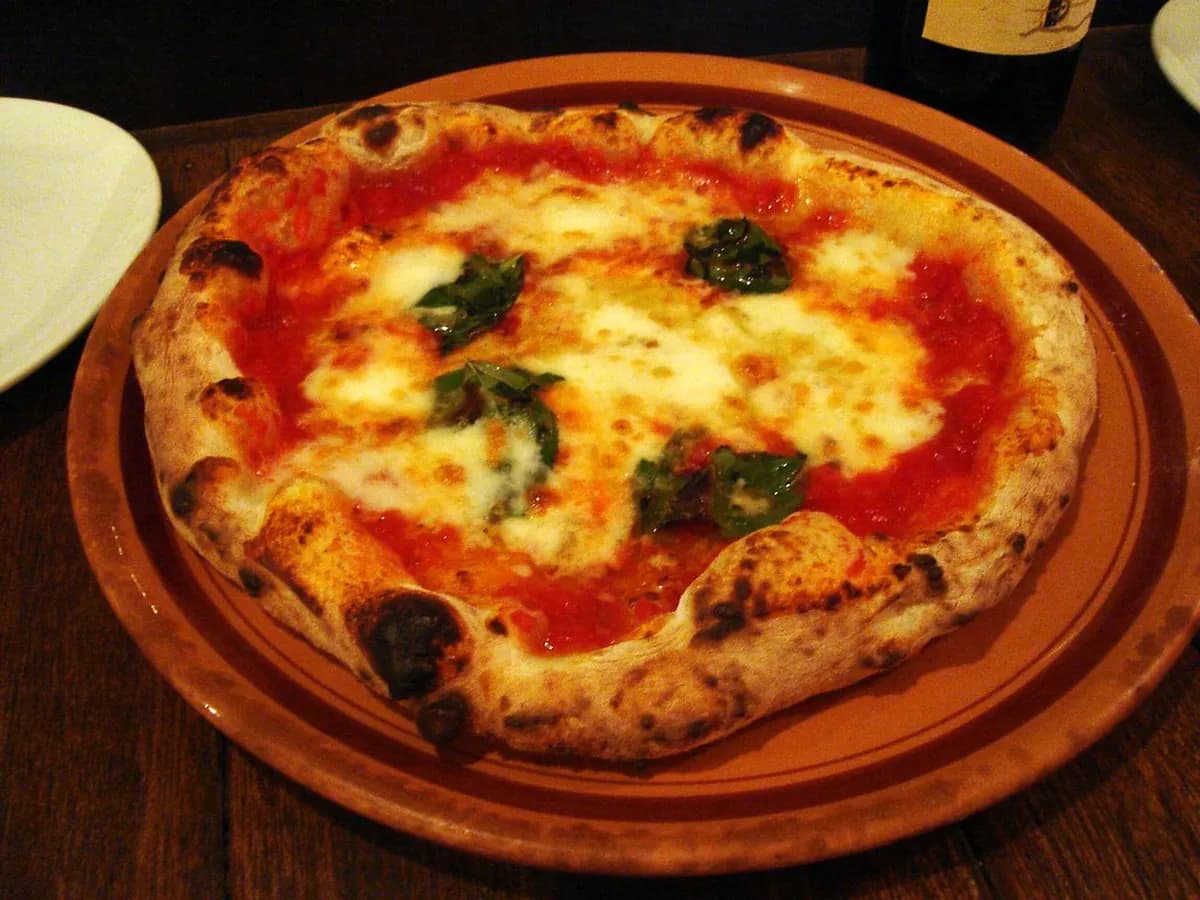
Wood-fired ovens must reach 430 to 480 degrees Celsius so the pizza cooks in under 90 seconds. That intense heat produces the characteristic leopard-spot charring on the cornicione (the raised crust rim) while keeping the center soft and slightly wet. The result is a pizza that is nothing like any baked version you have had outside Italy: thin, foldable, fragrant with woodsmoke, and almost impossibly light.
The two classic varieties are the Margherita (San Marzano tomato, Fior di Latte, fresh basil, olive oil) and the Marinara (tomato, garlic, oregano, olive oil — no cheese). Both are older than most of the restaurants on this list, and both remain the best test of any pizzeria's skill. The Margherita legend traces to an 1889 visit by Queen Margherita of Savoy, when Pizzeria Brandi near the Royal Palace reportedly created the tomato-mozzarella-basil combination in honor of the Italian flag.
How to Judge a Pizza Before You Take a Bite
Seasoned pizza eaters in Naples will often lift the pizza off the plate and check its underside before cutting in. This is not affectation. Leopard spotting on the bottom — irregular dark patches against a golden base — indicates that the dough fermented properly and was cooked at the right temperature. A uniformly pale or uniformly black bottom is a warning sign: pale means the oven was too cool or the pizza was rushed out; black from burnt flour (rather than cooked dough) means the pizzaiolo used too much flour during shaping.
You can also judge by weight and drape. A correctly hydrated Neapolitan dough is light and will drape over the edge of a spatula. Pick up a slice and it should flex without snapping. If it goes rigid or cracker-crisp, the hydration is too low and you are looking at something closer to Roman-style pizza. If it disintegrates the moment you lift it, the dough is under-fermented or the toppings are too wet.
One specific thing to watch at the top-tier pizzerias: whether the mozzarella has been drained before it goes on. Wet mozzarella straight from the packaging creates a pool of whey on the surface of the pizza that dilutes the tomato sauce and makes the base soggy. The best pizzaioli dry their cheese on a rack for at least an hour before assembly. If you see a puddle of white liquid in the middle of your pizza, the kitchen skipped a step.
Naples Pizza by Neighborhood
Understanding which neighborhood each pizzeria sits in helps you plan a logical route rather than criss-crossing the city. The historic center, Centro Storico, is the most densely packed area and home to the most famous names. Via dei Tribunali and Via Spaccanapoli are the two main corridors; you can walk between Da Michele, Sorbillo, and di Matteo in under ten minutes. This is also the most tourist-heavy zone, and queues peak between 12:30 and 14:00 and again from 19:30 to 21:00.
The Pignasecca market area (technically part of Quartieri Spagnoli on its western edge) is where you will find Pizzeria Da Attilio. The market itself is one of the best open-air food markets in the city and worth a morning visit in its own right. Combine a market walk with a Da Attilio lunch and you have one of the most satisfying few hours available in Naples.
Rione Sanità, north of the historic center, is the city's most compelling off-tourist-trail neighborhood and home to Concettina ai Tre Santi. It is also where you will find La Taverna di Toto and Antica Borgo ai Vergini, both genuinely local spots. Combine a Sanità pizza lunch with a visit to the Catacombs of San Gennaro, which are a short walk away. Materdei, just west of Sanità, is where Starita sits — open on Sundays when many others close, which makes it the default choice for a Sunday itinerary. The Mergellina waterfront in the Chiaia district is where 50 Kalò di Ciro Salvo operates, attracting a wealthier local crowd and far fewer tourists than the center. If you are staying in Chiaia or Vomero, this is your closest top-tier option.
L'Antica Pizzeria da Michele
Da Michele is over 150 years old and serves exactly two pizzas: Margherita and Marinara. That is the entire menu, and it has been since the place opened. The philosophy is that the best Neapolitan pizza does not need variety — it needs perfect execution of a simple brief. Most days, the kitchen achieves exactly that. The dough is correctly fermented, the San Marzano sauce is restrained, and the crust has the right balance of char and chew.
The international fame from the film Eat Pray Love means Da Michele now attracts as many tourists as it does locals, and the queue management system can feel chaotic. Collect a color-coded paper ticket from the host at the door, note the approximate wait time posted at the entrance (typically 45 minutes to two hours at peak times), and stay close enough to hear your number called. There is a takeaway counter on the side street if the wait is too long — the pizza from that window is the same dough from the same oven.
Address: Via Cesare Sersale 1, Centro Storico. Hours: daily 11:00–23:00. Price: €5.50–7.50 per pizza. Cash only at the main counter; card accepted at the newer branch on Via Speranzella.
Da Michele serves only two pizzas — Margherita and Marinara — so there is no menu to deliberate over. Arrive before 11:30 or after 14:00 to cut wait times from two hours down to 20–40 minutes.
Gino e Toto Sorbillo
Sorbillo sits at 32 Via dei Tribunali, the most photographed address in Neapolitan pizza. The pizzas here are famously large — the cornicione often overhangs the rim of the plate — and the base at the flagship location achieves a crepe-thin texture with a genuinely satisfying chew. The toppings range is wider than Da Michele, covering seasonal options and house specials beyond the classic Margherita and Marinara.
Queue logistics at Sorbillo work differently from Da Michele. There is no ticket system: give your name to the door staff and wait to be called. The staff use a crackling external speaker, so stay within earshot. Waiting times of 60 to 90 minutes are common on weekday evenings; Sunday lunchtimes tend to be slightly shorter. A second Sorbillo branch has opened near the waterfront in the Chiaia area, which locals report has consistently shorter waits and the same quality dough.
One important caution: Via dei Tribunali has several pizzerias with names that play on "Sorbillo" — some are legitimate family offshoots, others are opportunistic. The original is at number 32, has the family name "Gino e Toto" above the door, and is the only one with the original family's AVPN certification.
Address: Via dei Tribunali 32, Centro Storico. Hours: Monday–Saturday 12:00–23:30, Sunday 12:00–16:00. Price: €8–13. Cash and card accepted.
Several nearby pizzerias use the Sorbillo name to attract visitors — the authentic original is exclusively at Via dei Tribunali 32 with "Gino e Toto" above the door. Confirm the address before joining any queue on this street.
Pizzeria Da Attilio
Da Attilio, on Via Pignasecca next to the open-air market of the same name, is the spot that most serious pizza travelers rate above Da Michele and Sorbillo once they have eaten their way around the city. The standard Margherita here is a masterclass in ingredient balance: the sauce has the natural sweetness of perfectly ripe San Marzano tomatoes, the mozzarella is always properly drained, and the crust achieves that rare combination of exterior crispness and interior softness that only comes from a well-proofed dough and a very hot oven dome.
The house signature is the Carnevale pizza, a star-shaped creation with points stuffed full of fresh ricotta and a charred center that still carries the classic Margherita flavors. It is theatrical and genuinely delicious. The walls are covered in photographs of famous Italian visitors and drawings done on napkins by regulars over the decades. The room feels like Naples at its most itself: loud, warm, slightly chaotic, and completely unpretentious.
Da Attilio is family-run and has the feel of a restaurant where the owners still care deeply about every pizza that leaves the oven. It is the most logical combination stop on a Pignasecca morning: walk the market from 08:00 to 11:00, then eat at Da Attilio for lunch when it opens at noon. The wait for a table at peak lunchtime is typically 20 to 40 minutes — shorter than the big names in the historic center.
Address: Via Pignasecca 17, Quartieri Spagnoli edge. Hours: Tuesday–Saturday 12:00–15:30 and 19:00–23:30, Monday dinner only. Closed Sundays. Price: €9–14. Cash preferred.
Concettina ai Tre Santi
Concettina ai Tre Santi in Rione Sanità is the most ambitious pizzeria on this list. The father and son team of Antonio and Ciro Oliva runs a dual operation: a traditional neighborhood pizzeria serving classic Neapolitan pies at accessible prices, and a gourmet tasting menu experience (€25–40) that applies fine-dining technique to Neapolitan dough. The gourmet menu requires advance booking — online reservations typically fill two to three weeks ahead in high season.
What distinguishes Concettina from every other pizzeria in Naples is the Pizza Sospesa tradition. The concept is borrowed from the old Neapolitan caffè sospeso custom, where a customer paying for a coffee would leave an extra prepaid coffee for someone who could not afford one. At Concettina, any customer can pay for an extra pizza to be held in reserve for a local resident in need. The tradition is practiced genuinely, not as a marketing exercise, and it is one of the most direct expressions of the neighborhood ethic that defines Rione Sanità.
For a first visit, order from the standard menu rather than the tasting experience. The Margherita here holds up against any on this list, and the neighborhood setting — a short walk from the Catacombs of San Gennaro — makes it the most satisfying full afternoon in the city. Be aware that a 2026 update from recent visitors notes waits have lengthened considerably as the restaurant's profile has grown; arriving when it opens at 10:30 avoids the worst of it.
Address: Via Arena della Sanità 7, Rione Sanità. Hours: daily 10:30–23:30. Price: €10–25. Card accepted.
Antica Pizzeria di Matteo
Di Matteo has been on Via dei Tribunali since 1936, making it one of the oldest continuously operating pizzerias in the Centro Storico. It gained an unlikely international mention when President Bill Clinton stopped in for a slice during the 1994 G7 summit in Naples — the photographs still hang inside. Locals rate it consistently as one of the most reliable everyday pizzas in the city, and many consider it superior to the more tourist-heavy Da Michele and Sorbillo on a quiet day.
The front of the building has a street window selling pizza fritta and fried snacks for standing consumption on Via dei Tribunali — the only restaurant on this shortlist with this setup. The frittatina di pasta (a fried cylinder of pasta, béchamel, and ragù) is the essential appetizer and costs around €2.50. For a seated pizza, head upstairs; service is brisk and the room turns over quickly, which means waits are rarely more than 20 minutes even at peak hours.
Note that Di Matteo adds a 5% service charge to all orders and the sauce leans slightly acidic compared to Da Attilio and Concettina. The pizza a portafoglio — folded twice and served in paper for eating on the street — is available from the front window if the upstairs room is full.
Address: Via dei Tribunali 94, Centro Storico. Hours: Monday–Friday 09:00–23:00. Closed Sundays. Price: €4–9. Cash preferred.
Starita a Materdei
Starita has been family-run since 1901 and is the only major pizzeria on this list consistently open on Sundays, which makes it the default answer when visitors ask where to eat pizza at the weekend. It is also the pizzeria chosen by the Vatican to serve pizza to Pope John Paul II on his Naples visit, a detail that the current owners treat with appropriate local pride rather than commercial exploitation.
The house specialty is the Montanara Starita, created by Don Antonio Starita in the 1980s. The base is first lightly fried in oil — which gives it a slightly crisp outer shell — and then finished in the wood-fired oven topped with Neapolitan tomato sauce, smoked provola cheese, Pecorino Romano, and fresh basil. It is a hybrid of traditional baked pizza and pizza fritta, and it is one of the most texturally interesting things you will eat in Naples. Standard Margherita and Marinara options are also consistently excellent.
Starita's location near the Catacombe di San Gennaro and the Museo di Capodimonte makes it a natural pairing for a cultural afternoon in the northern neighborhoods. The kitchen operates in split shifts (lunch and dinner), and waits on Sunday lunchtime can reach 45 minutes. The smell of woodsmoke reaches you well before the entrance comes into view.
Address: Via Materdei 27-28, Materdei. Hours: Tuesday–Sunday, lunch 12:00–15:30 and dinner 19:00–23:30. Closed Mondays. Price: €7–14. Card and cash accepted.
50 Kalò di Ciro Salvo
50 Kalò is the outlier on this list: quieter, wealthier clientele, very few tourists, and a service style that feels closer to a proper restaurant than a traditional neighborhood pizzeria. Owner Ciro Salvo is a third-generation pizzaiolo and a genuine dough technician — the extremely high-hydration dough he uses produces a pizza that is demonstrably lighter and easier to digest than the standard Neapolitan version. 50 Kalò is one of only six pizzerias in all of Italy to hold a Michelin Guide recommendation.
The location on Piazza Sannazaro near the Mergellina seafront is a 25-minute walk from the Centro Storico or a quick metro ride. It fits naturally into a morning walk along the Lungomare with views of Vesuvius: walk from Castel dell'Ovo toward Mergellina, stop for lunch at 50 Kalò, then take the metro back toward the center. The restaurant also maintains one of the better wine lists of any pizzeria in Naples for those who want to drink something beyond beer and Coke with their meal.
Address: Piazza Sannazaro 201, Mergellina. Hours: daily 12:30–15:30 and 19:30–23:30. Price: €10–18. Card accepted.
| Pizzeria | Neighborhood | Price range | Open Sundays | Accepts card |
|---|---|---|---|---|
| Da Michele | Centro Storico | €5.50–7.50 | Yes | New branch only |
| Sorbillo | Centro Storico | €8–13 | Lunch only | Yes |
| Da Attilio | Quartieri Spagnoli edge | €9–14 | No | Cash preferred |
| Concettina ai Tre Santi | Rione Sanità | €10–25 | Yes | Yes |
| Di Matteo | Centro Storico | €4–9 | No | Cash preferred |
| Starita a Materdei | Materdei | €7–14 | Yes | Yes |
| 50 Kalò di Ciro Salvo | Mergellina | €10–18 | Yes | Yes |
Pizza Fritta: The Fried Pizza Tradition
Pizza fritta — fried pizza — predates the baked version in the historic record and was the dominant form of street pizza in Naples until the post-war period when wood-fired ovens became more common in domestic neighborhoods. During the Allied occupation after World War II, basic ingredients were rationed and many Neapolitan families could not afford oven fuel; frying dough in lard was cheaper and faster, which is why pizza fritta is sometimes called the "pizza of the poor."
The traditional preparation folds the dough over a filling of ricotta, salami, and cicoli (rendered pork fat), seals the edges, and drops it into boiling oil for two to three minutes. The result is a dense, golden, almost dumpling-like pocket with a crisp shell and a molten interior. It is heavier than baked pizza and intended as a single street snack rather than a full meal. At Antica Pizzeria di Matteo, the takeaway window version costs under €3 and is eaten standing on Via dei Tribunali.
Pizza & Babà on Via Montecalvario (near the Spanish Quarter) takes a different approach: their fried pizza is followed by a traditional rum-soaked babà as dessert, creating one of the most satisfying two-course street food sequences in the city. Neither dish requires a table or a reservation, and the combined bill rarely exceeds €8. For deeper context on the full range of street food in the city, see our guide to Naples' secret foodie spots which covers several other local food traditions that rarely appear in mainstream guides.
How to Navigate the Naples Pizza Queues
Queuing for pizza in Naples is not optional at the most famous spots; it is part of the experience. At L'Antica Pizzeria da Michele, a host distributes color-coded paper tickets near the entrance. The colors correspond to rough arrival windows and help the kitchen manage the continuous flow. Keep your ticket visible and stay within 20 meters of the door — staff call names and numbers via an outdoor speaker and will skip to the next ticket after two calls.
At Sorbillo, the system is name-based rather than ticket-based. Give your name to the person at the door, note the estimated wait time, and then you are free to stand on Via dei Tribunali with a drink from the takeaway bar directly opposite (which is, as multiple visitors have noted, a genuinely clever business placement). Do not wander into adjacent streets; the speaker carries but not far.
The most reliable strategies to reduce wait time at all venues: arrive 10–15 minutes before the official opening for the first seating (11:00 at Da Michele, 12:00 at Sorbillo), eat at 15:00–17:00 during the gap between services, or eat after 21:30 when the main dinner wave has passed. August and the week around Easter are the worst periods; October and early November are excellent months to visit with significantly shorter queues. If you are using our complete Naples itinerary, we have scheduled pizza stops at off-peak times for exactly this reason.
The Etiquette of Eating Pizza in Naples
The most important and least discussed rule in Naples pizza eating is this: one pizza per person. You will see tourists sharing a single pizza at a table in a busy pizzeria, taking up a full seat for half an order. This is considered bad form locally, particularly at small restaurants where table turnover is the only way to keep prices low for the neighborhood. Neapolitan pizzas are sized to be consumed by one person in one sitting, and at €6–10, there is no economic justification for splitting.
On the street, the correct method is the portafoglio (wallet fold), also called the libretto. The pizza is folded in half and then folded again into a rough triangle, with the crust forming a handle that keeps the hot sauce and oil away from your fingers. This is how Neapolitans have eaten pizza on the move since before restaurants had indoor seating. It is acceptable to eat this way at the takeaway windows of di Matteo or Da Michele's side counter without receiving any disapproving looks.
Inside a seated restaurant, knife and fork are standard — not because Neapolitans consider eating by hand impolite, but because the center of a properly made Neapolitan pizza is genuinely too soft and wet to lift without collapse. Cut from the edge toward the center, work through the toppings with the fork, and finish the cornicione (crust rim) by hand. Do not leave the crust: it is the most technically demanding part of the pizza to produce correctly and most locals consider it the best bite.
A few quick rules that apply across all venues: order beer, sparkling water, or a local Gragnano red — the traditional sparkling red wine of the Campania region — with your pizza. Do not order wine by the bottle at a traditional pizzeria; it signals you have missed the point. Do not ask for additional toppings beyond the menu options. Do not photograph the pizza for so long that it gets cold before you eat it.
Pizza Making Classes and Food Tours
If eating pizza is not enough and you want to understand the craft behind it, Naples has several serious options. A hands-on pizza making class with a local pizzaiolo gives you direct access to dough technique — the stretch, the shaping, the peel work — that would otherwise take years of observation to absorb. Most classes run for two to three hours, include the meal you have made, and cost between €45 and €75 per person. Book at least a week ahead during the main tourist season (April through October).
Guided food tours that include pizza as one of several stops are a more efficient choice if you are in Naples for only one or two days and want to cover the full street food landscape in a single session. A good three-hour walking tour will take you through the Pignasecca market, along Via dei Tribunali past several pizzerias with tastings, and into the Spanish Quarter for fried snacks. These tours typically cost €60–90 and include tastings of sfogliatelle, babà, taralli, fresh mozzarella, and gelato alongside the pizza components.
The Secrets of Pizza tour run by Devour Naples is the most frequently cited by travelers who have done multiple Naples food tours; it includes a behind-the-scenes look at dough fermentation and an explanation of AVPN certification requirements that significantly deepens the experience of eating at the places on this list afterward.
Frequently Asked Questions
Which pizzerias in Naples are best for first-time visitors?
L'Antica Pizzeria da Michele and Gino Sorbillo are the top choices for first-timers due to their historic fame. These spots offer the most traditional experience, though you should prepare for significant wait times. Consider visiting Naples Underground nearby while you wait for your table.
How long are the wait times at Da Michele and Sorbillo?
Wait times usually range from 45 minutes to over two hours during peak lunch and dinner hours. To minimize the wait, arrive at 11:30 am or between 4:00 pm and 6:00 pm. Taking a ticket and staying close to the door is essential for keeping your spot.
Is it better to eat pizza in Naples with a fork or hands?
In a seated restaurant, most locals use a knife and fork because the center of the pizza is very soft. For street food, the pizza is folded into a 'portafoglio' style and eaten with hands. Both methods are socially acceptable depending on the setting and the pizza's structural integrity.
Finding the best pizzerias in Naples rewards planning, patience with queues, and a willingness to explore beyond the historic center. Whether you prefer the stripped-back simplicity of Da Michele, the market-adjacent charm of Da Attilio, the neighborhood soul of Concettina ai Tre Santi in Rione Sanità, or the technical precision of 50 Kalò near the waterfront, the quality ceiling here is higher than anywhere else in the world.
Naples is a city of layers, and its pizza is the thread that connects its ancient past to its vibrant present. Embrace the queues, order one full pizza per person, eat the crust, and try the pizza fritta at least once. Buon appetito.
Continue exploring
More guides you'll find useful