7 Best Foods in Milan You Must Try (2026 Local's Guide)
Discover the best food in Milan with our guide to 7 iconic dishes, from Saffron Risotto to Panettone, including the best local spots to eat them.
On this page
7 Best Foods in Milan You Must Try
Milan rewards curious eaters. While many visitors arrive expecting pizza and pasta, the city's kitchen speaks a different language — one built on saffron, butter, and slow-braised veal. After visiting Northern Italy annually for over a decade, I have come to regard Milanese cuisine as one of Europe's most underappreciated regional traditions.
This guide covers the seven dishes that define the city, the neighborhoods where you find them at their best, and the practical details — prices in EUR, opening times — that make a real difference when you are navigating a food city on a tight itinerary. Pair these meals with the the city-centre highlights for a full day on the ground.
Milanese food is distinct because it reflects the city's history as a wealthy, industrious hub of the north. Prepare for a dining experience that feels more European and continental than the sun-drenched flavors of Sicily or Naples.
The History of Milanese Cuisine: Cucina Povera vs. Noble Flavors
Milan's food culture sits at the intersection of two very different traditions. The city was historically one of Italy's wealthiest — a ducal seat, a trading hub, a financial capital — and its aristocratic kitchens developed elaborate preparations using premium ingredients like saffron from the eastern spice routes, aged butter, and prized veal. Risotto alla Milanese and Cotoletta are direct descendants of that noble table.

Alongside these rich dishes, a parallel cucina povera tradition thrived in working-class neighborhoods and farm households. Cassoeula, the winter pork-and-cabbage stew, was built from slaughter scraps that butchers sold cheaply after the autumn pig season. Michetta bread rolls were designed to make the most of a small amount of dough while delivering maximum crunch. Both streams — noble and poor — survive in the city's trattorias today.
This dual heritage is why Milanese food can feel surprising. The same city that gave the world Gucci and Versace also invented a stew made from pork trotters and cabbage. Understanding this tension helps you appreciate why locals take both dishes equally seriously.
Risotto alla Milanese: The Golden Saffron Classic
This creamy, saffron-infused rice is the city's undisputed signature dish. The vibrant golden color comes from Zafferano (saffron), a spice that arrived in Milan via medieval spice traders and became embedded in the local cooking tradition. The risotto should be loose — almost fluid — and never stiff or dry.
A traditional version uses beef marrow in the base, which gives the dish a depth that vegetarian stock cannot replicate. Ask specifically for "con il midollo" if you want the full classic preparation. Trattoria Masuelli (Via Majno 20) serves one of the most-cited versions in the city for around €18–€24 per plate. They are open Tuesday to Saturday from 12:30 to 14:30 and 19:30 to 22:30.
Risotto alla Milanese is also the traditional accompaniment to Ossobuco — ordering them together as a single meal is both culinarily correct and deeply satisfying on a cold evening.
Cotoletta alla Milanese: The Authentic Veal Cutlet
The Cotoletta is a thick, bone-in veal cutlet coated in breadcrumbs and fried in clarified butter until deeply golden. The bone stays attached — this is not a schnitzel. The Viennese Wiener Schnitzel is thinner, boneless, and flatter; the Milanese version is at least two centimeters thick, resembling a chop rather than a flattened cutlet.
The "elephant ear" version — pounded thin and bone-in — is a historical variation found in some old cookbooks, but the thick-cut style is what locals prefer and what you should seek. Trattoria del Nuovo Macello (Via Cesare Lombroso 20) is a respected address for this dish, priced at €26–€34. The kitchen serves lunch from 12:30 and dinner from 20:00 Tuesday through Saturday.
Order it without condiments on the first bite. The crust should shatter cleanly and the meat inside should remain pale and tender, not overcooked. A squeeze of lemon is the only acceptable addition.
Ossobuco: Tender Braised Veal Shank with Gremolata
Ossobuco translates literally to "bone with a hole" — a cross-cut veal shank revealing the marrow cavity at its center. The meat is braised low and slow with white wine, broth, onion, and tomato until it falls from the bone. The finishing touch is gremolata, a sharp condiment of lemon zest, garlic, and parsley that cuts through the richness of the braise.
The marrow inside the bone is the hidden prize. A small, narrow spoon comes with the dish — use it to extract and spread the marrow on bread. Antica Trattoria della Pesa (Viale Pasubio 10) has been serving a classic version since 1880, priced at €30–€42. Hours are daily 12:30–14:30 and 19:30–23:00.
Ossobuco is always served on Risotto alla Milanese in a traditional pairing called "ossobuco in gremolata." This combination is considered one of the great classic pairings in Italian regional cooking. Budget around €55–€65 total for the full meal at a historic trattoria.
Panettone: Milan's Legendary Sweet Leavened Bread
Panettone is an enriched, dome-shaped bread studded with candied citrus peel and raisins. The dough requires a multi-day natural leavening process — serious artisan bakers spend 72 hours or more nurturing the madre (sourdough mother) that gives the loaf its characteristic lightness and complex flavor.
Most supermarket panettone is industrial and does not represent the real thing. The difference becomes obvious the moment you try an artisan version: the crumb is softer, more aromatic, and the candied fruit is plump rather than rubbery. Pasticceria Marchesi 1824 (Via Santa Maria alla Porta 11) sells artisanal loaves for €35–€50 per kilogram and is open daily from 07:30 to 20:00.
Locals eat panettone year-round, not only at Christmas. In summer, it is common to find it served with mascarpone or gelato. Do not leave the city without at least buying a slice from a proper pasticceria, even outside the holiday season.
Cassoeula: A Hearty Traditional Pork and Cabbage Stew
Cassoeula is cucina povera made glorious. The dish combines multiple pork cuts — ribs, sausage, trotters, skin, and sometimes the ear — with savoy cabbage in a long slow braise. It is resolutely a winter dish, traditionally cooked after the first frost of the season when the cabbage sweetens. The result is a dense, sticky stew that tastes like Lombardy itself.
It is rarely found outside November to February on menus. Al Matarel (Via Alessandro Volta 24) offers an excellent version for approximately €22–€30. They open for dinner from 19:30 to 22:30 most evenings during the colder months.
This is the dish to order on a foggy Milan evening when the temperature drops below zero and you need something genuinely warming. It pairs well with a glass of Barbera d'Asti or a local Nebbiolo. If you are only visiting in warmer months, add it to your list for a return trip.
Michetta: The Iconic Star-Shaped Milanese Roll
Michetta is Milan's answer to the bread roll — a hollow, star-shaped bun with an ultra-crisp crust and virtually no interior crumb. This design is intentional: the emptiness makes it perfect for filling with cured meats, cheese, or mortadella without the filling getting lost inside dense dough. The crunch when you bite through the crust is distinctive.
The shape was allegedly developed in the Austro-Hungarian period as a local adaptation of the Vienna Kaiser roll. Bakeries in Milan still produce it according to a traditional method, and it carries a De.Co (Denominazione Comunale) designation — a local certification that functions like a protected geographical mark at the city level. Look for the De.Co stamp when buying from a bakery.
Panino Giusto (multiple locations across Milan) fills them with quality cured meats for €8–€14 and is generally open from 11:30 to 23:00. For the freshest version, visit any neighborhood forno (bakery) before 09:00 when the morning batch comes out of the oven.
Gorgonzola: The Creamy Soul of Lombardy Cheese
Gorgonzola originated in the town of the same name, roughly 15 kilometers northeast of Milan. It is a DOP-protected cheese, meaning production must follow strict rules governing milk source, aging conditions, and geographic origin within Lombardy and Piedmont. There are two main styles: dolce (young, mild, and spreadably creamy) and piccante (aged, firmer, and more pungent with sharper blue veins).
For most visitors, dolce is the more approachable entry point — it pairs brilliantly with pears, honey, and walnuts, or simply spread on a michetta roll. Piccante is what cheese lovers come for: intensely flavored and complex, it is best served at room temperature with a glass of Sforzato di Valtellina. Peck (Via Spadari 9) is the city's finest delicatessen and sells premium wedges for €12–€20 depending on age. The store is open Monday to Saturday from 09:30 to 19:30.
Peck's counters also stock other outstanding Lombard cheeses — Taleggio, Bitto, and Quartirolo Lombardo — if you want to build a regional cheese plate. Allow at least 30 minutes to browse the ground-floor counter.
The Art of the Milanese Aperitivo: More Than Just a Drink
The aperitivo is one of the most misunderstood rituals in Italian culture. It is not happy hour. Between 18:30 and 21:00, bars across Milan include a spread of snacks with any drink order — no extra charge. The food ranges from olives and focaccia at simpler bars to substantial buffets at more upscale lounges. The social function is more important than the food: this is the city's decompression ritual after a long workday.
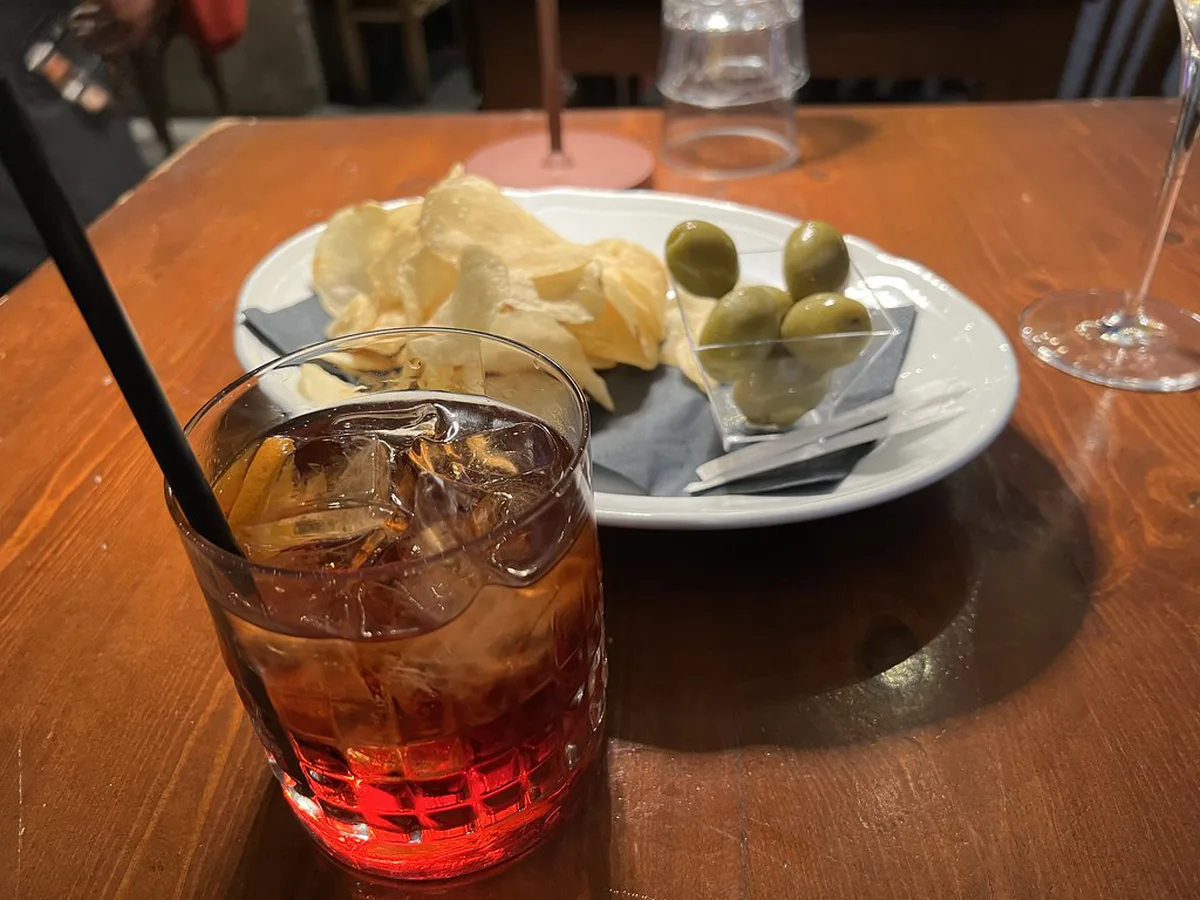
Traditional aperitivo drinks are Campari Spritz (Campari was founded in Milan in 1860), Negroni, or a simple Aperol Spritz. Expect to pay €10–€18 for a cocktail that includes food. The Navigli canal district is the most atmospheric spot for this ritual, with bars lining both sides of the canal. You can explore the full nightlife scene along the Navigli canals at night.
One etiquette note: do not pile a plate with food and linger without ordering a second drink. The social contract of aperitivo assumes you are drinking. Also, a genuine Milanese bar will not charge extra for the food beyond your first drink — if you see a separate "supplemento" line on the bill for the snacks, you are likely in a tourist-facing operation.
Aperitivo runs from 18:30 to 21:00 across Milan's bars. A cocktail with included snacks costs EUR 10–18, and you can linger through multiple drinks. The Navigli canal district is the most atmospheric location for this daily ritual, where both sides of the water come alive with locals decompressing after work.
Winter menus (October to March) showcase Milan's most distinctive dishes. Cassoeula appears only after the first frost, Risotto alla Milanese and Ossobuco are richest in cold weather, and November-December is the city's most culinarily rich period when fresh panettone fills pasticceria windows and truffle season adds luxury to risotto.
Best Neighborhoods for Foodies: From Brera to Navigli
Brera is Milan's most picturesque quarter and anchors the upscale end of the food scene. Cobblestone streets lead past refined bistros serving modern interpretations of Lombard classics — expect €30–€50 per head for a full meal. It is an excellent area to combine dining with a visit to the Pinacoteca di Brera and the surrounding galleries.
Navigli, built around the historic canal system, is the city's most affordable and vibrant dining corridor. This is where younger locals eat, and where aperitivo culture is at its liveliest. The density of trattorias, pizzerias, and international restaurants here is exceptional within a short walk. Porta Romana, adjacent to Navigli, offers an even more local vibe with family-run trattorias and prices noticeably lower than the city center.
Isola, north of Garibaldi station, has become the city's creative food district. Young chefs test contemporary ideas here — fermented products, natural wines, reworked Lombard classics. If you are interested in where Milanese food is heading rather than where it has been, Isola is worth an afternoon. You can find more on the best hidden gems in Milan throughout these neighborhoods.
| Signature Dish | Where to Try | Approx. Price (EUR) |
|---|---|---|
| Risotto alla Milanese | Trattoria Masuelli (Via Majno 20) | 18–24 |
| Cotoletta alla Milanese | Trattoria del Nuovo Macello (Via Cesare Lombroso 20) | 26–34 |
| Ossobuco | Antica Trattoria della Pesa (Viale Pasubio 10) | 30–42 |
| Cassoeula | Al Matarel (Via Alessandro Volta 24) | 22–30 |
| Gorgonzola dolce (wedge) | Peck Delicatessen (Via Spadari 9) | 12–20 |
| Michetta with cured meats | Panino Giusto (multiple locations) | 8–14 |
| Aperitivo (cocktail + snacks) | Navigli District bars | 10–18 |
Seasonal Eating: What to Order in Winter vs. Summer
Milanese food follows the calendar more strictly than most Italian cities. Winter menus (October through March) are where the city's most distinctive dishes appear. Cassoeula only makes sense after the first frost. Risotto alla Milanese and Ossobuco are at their richest in cold weather. Polenta — coarse-ground cornmeal served creamy or grilled — appears on nearly every trattoria menu from November onward as a side or base for braised meats.
Summer brings a different register entirely. Vitello tonnato — cold sliced veal in a tuna-caper sauce — is a staple of summer lunches in Milan and across Piedmont. Insalata di riso (rice salad with cold cuts and pickles) appears in every deli. Many trattorias simplify their summer menus significantly, and some close for two to four weeks in August when Milanese residents leave the city en masse for the coast or mountains.
If you are visiting in late November or December, you will find the city in its most culinarily rich period — Cassoeula on every menu, fresh panettone in every pasticceria window, and truffle season adding a luxurious dimension to risotto and pasta dishes. This is arguably the best time of year to eat in Milan.
How to Spot an Authentic Trattoria vs. a Tourist Trap
The clearest sign of a tourist trap is a menu displayed outside with large photographs of the dishes. Authentic trattorias print short, handwritten or plainly typeset menus — often changing them weekly based on what the market delivered that morning. A menu offering 40 dishes is a reliable warning sign. A menu offering 12 is not.
Avoid any restaurant within two blocks of the Duomo that displays a "tourist menu" bundling a starter, pasta, main, and wine for €15. The economics make it impossible to source quality ingredients at that price. Cafes near the major monuments frequently serve frozen or pre-made lasagna and reheated ragù. The best rule: walk ten minutes in any direction from the main square and prices drop while quality rises sharply.
The coperto is a standard table charge for bread and service, typically €2–€5 per person in Milan. It is legal and expected — do not dispute it. What you should question is a coperto above €5 paired with bread of mediocre quality. The charge should feel proportionate to the service and setting you are receiving.
Eating in Milan Without Meat: Options Most Guides Skip
Traditional Milanese cuisine is substantially meat-driven, and most food guides stop there. But vegetarians navigating Milan in 2026 have more options than the classic dishes suggest. Risotto alla Milanese can be made with a vegetable-based saffron broth — most mid-range restaurants will accommodate this if asked in advance, though it changes the depth of flavor. Gorgonzola dolce with seasonal fruit and honey at a bar or cheese shop is a fully satisfying lunch that requires no special request.
The city's mercati (covered markets) are the underused resource. Mercato Comunale di Via Lomellina and the Porta Romana market sell excellent seasonal produce — late-autumn porcini mushrooms, winter radicchio from Treviso, summer courgette flowers. Buying and assembling from the market is one way vegetarians can engage with Lombard seasonal eating on their own terms.
Fritto misto di verdure — a light batter-fried mix of seasonal vegetables — appears as a starter on many Lombard menus and is worth ordering regardless of your dietary preferences. It is one of the few dishes where the Italian north's deep-frying tradition produces something genuinely delicate. Ask which vegetables are in season when you order.
Frequently Asked Questions
What is the most famous dish in Milan?
Risotto alla Milanese is the city's most iconic dish, famous for its vibrant golden color from saffron. It is often served alongside Ossobuco for a complete traditional meal. You can find it in almost every historic trattoria across the city.
How much does a typical meal cost in Milan?
A mid-range meal in Milan typically costs between $30 and $60 per person including wine. Casual spots like pizzerias or panino shops are cheaper, ranging from $12 to $20. Always check the 'coperto' charge on your bill.
Is Milanese food vegetarian friendly?
Traditional Milanese cuisine is meat-heavy, but many modern restaurants offer excellent vegetarian options. Risotto alla Milanese can be made without meat stock if requested in advance. Most menus feature seasonal vegetable sides and local cheeses.
Eating in Milan is an exploration of history, wealth, and regional pride. By focusing on these seven iconic dishes and understanding the seasonal and neighborhood context around them, you will experience the authentic heart of the city. I suggest planning your meals around your 3 day Milan itinerary for the best results.
Remember to book ahead and step away from the main tourist squares for better quality. The best flavors are often tucked away in quiet side streets and local neighborhoods. Buon appetito as you discover the golden flavors of Milan!
Continue exploring
More guides you'll find useful