10 Best Museums in Milan: The Ultimate Art Lover's Guide (2026)
Discover the 10 best museums in Milan, from Leonardo's Last Supper to Fondazione Prada. Includes expert booking tips, ticket advice, and must-see masterpieces.
On this page
10 Best Museums in Milan
Milan rarely tops the art-lover's shortlist. Florence claims the Renaissance, Rome owns antiquity, and Venice has its own mythology. Yet the city that housed Leonardo da Vinci for nearly two decades, that bankrolled Bramante and Michelangelo, and that launched Italian Futurism holds more masterpieces than most visitors realise. Understanding what Milan is famous for requires looking past the runways to the Renaissance canvases and futurist sculptures that fill its palaces and former factories.
This guide is focused on practical decisions: which museums reward a single afternoon, which demand advance booking months out, and which hidden institutions reward the curious traveller who has already done the obvious. All ticket prices and hours reflect 2026 schedules. Where relevant, we flag free-entry windows and the city passes that offer genuine savings.
Must-See Masterpieces: Leonardo, Michelangelo, and the Futurists
Three artists anchor Milan's claim as a serious art destination. Leonardo da Vinci spent the most productive years of his life here, leaving behind the Last Supper at Santa Maria delle Grazie and a body of engineering drawings at the Biblioteca Ambrosiana. The Codex Atlanticus — 1,119 pages of sketches covering machines, anatomy, and urban planning — is the largest single collection of his drawings in the world. Pages from the Codex rotate on display at the Pinacoteca Ambrosiana; same-day tickets at the door are usually available, making this the easiest way to encounter Leonardo in the city.
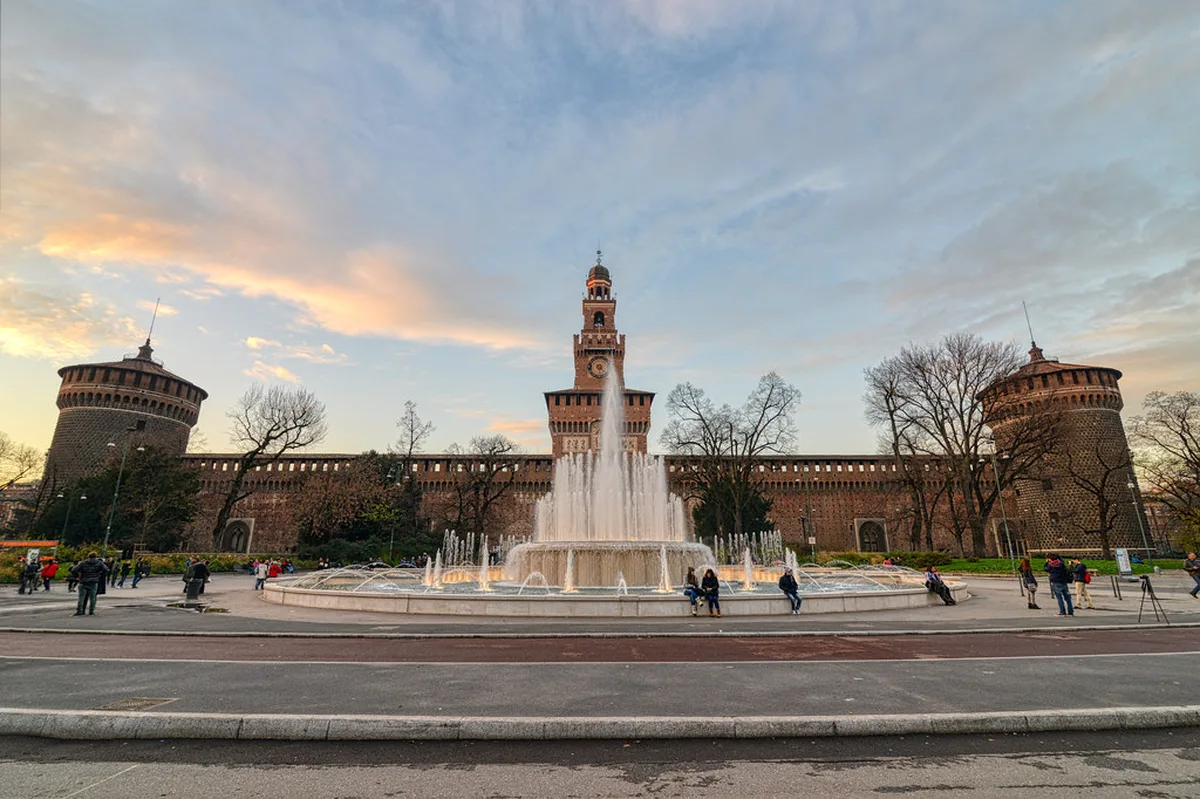
Michelangelo's presence in Milan is concentrated in a single room inside Castello Sforzesco. The Pietà Rondanini — carved on and off from 1552 until six days before his death in 1564 — is raw, unpolished, and emotionally unlike anything else he made. The Spanish Hospital wing that now houses it was purpose-rebuilt to focus all attention on the sculpture. Arriving early on a weekday gives you something rare: a moment alone with a dying master's final thought.
Milan's third great artistic contribution is Futurism. The movement was launched here in 1909 when Filippo Tommaso Marinetti published his Manifesto in a Milan newspaper. Umberto Boccioni, its most gifted painter and sculptor, spent his career in the city. The Museo del Novecento holds the world's largest collection of his work, including the iconic States of Mind triptych. Taken together, these three artists give the Milan museum circuit a narrative arc that no other Italian city can replicate in quite the same way.
Pinacoteca di Brera: Milan's Premier Renaissance Gallery
The Brera is the largest and most important art museum in the city. Its collection was assembled under Napoleon, who stripped altarpieces and devotional paintings from dissolved Lombard monasteries and deposited the finest pieces here. The logic was to create an Italian Louvre, and the ambition partially worked: Mantegna's Dead Christ, Raphael's Marriage of the Virgin, and Piero della Francesca's Montefeltro Altarpiece now occupy the same long, barrel-vaulted galleries. Tickets cost €15 for adults; the museum opens Tuesday through Sunday from 08:30 to 19:15.
One detail competitors consistently overlook: a glass-walled restoration laboratory on the upper floor where visitors can watch conservators clean, consolidate, and re-line centuries-old canvases in real time. It is open during regular gallery hours and requires no extra ticket. Standing there watching a restorer work under magnification on a 16th-century panel painting is a more instructive ten minutes than any audioguide.
The museum sits in the heart of the Brera district, where antique dealers, independent bookshops, and aperitivo bars share narrow streets with the art academy that still occupies part of the same Palazzo di Brera building. Bar Brera on Via Brera is the natural endpoint after a morning in the galleries — a single-room neighbourhood bar that has served the local art crowd for decades. Take the M2 (green line) to Lanza, a four-minute walk from the entrance.
Museo del Novecento: Futurism and Views of the Duomo
Opened in 2010 inside the Arengario building on Piazza del Duomo, the Novecento dedicates its upper floors to the Italian art movements of the 20th century. The collection begins with the Futurists and moves through Pittura Metafisica (Giorgio de Chirico), Arte Povera, and on to Lucio Fontana's cut canvases and ceramic sculptures. Tickets cost €11; opening hours run Tuesday through Sunday from 10:00 to 19:30, with late closing until 22:30 on Thursdays.
The building's top floor holds a permanent Lucio Fontana neon installation that frames a direct view of the Duomo facade. The juxtaposition — medieval Gothic spires seen through a loop of modern neon — is one of the most photographed interiors in Milan and justifies a visit even for travellers with limited museum time. Arrive in the early evening on a Thursday for the best light and the thinnest crowds.
The Novecento is the right museum for visitors who feel under-informed about Italian Modernism. Wall texts are thorough, and the chronological hang means you can follow the development of Futurism from Boccioni's early Divisionist canvases through to the movement's absorption into Fascist propaganda — a story most survey galleries outside Italy compress or skip entirely.
Castello Sforzesco: A Fortress of Michelangelo and Sforza History
The castle complex houses nine separate museums under one ticket. A single adult admission costs €8 and covers the Museum of Ancient Art, the Furniture and Wooden Sculptures collection, the Musical Instruments Museum, and the Egyptian collection, as well as the Pietà Rondanini. For budget-conscious travellers, this is the best value in the city — eight euros for a full afternoon of serious art. The grounds themselves are free to enter at any time.
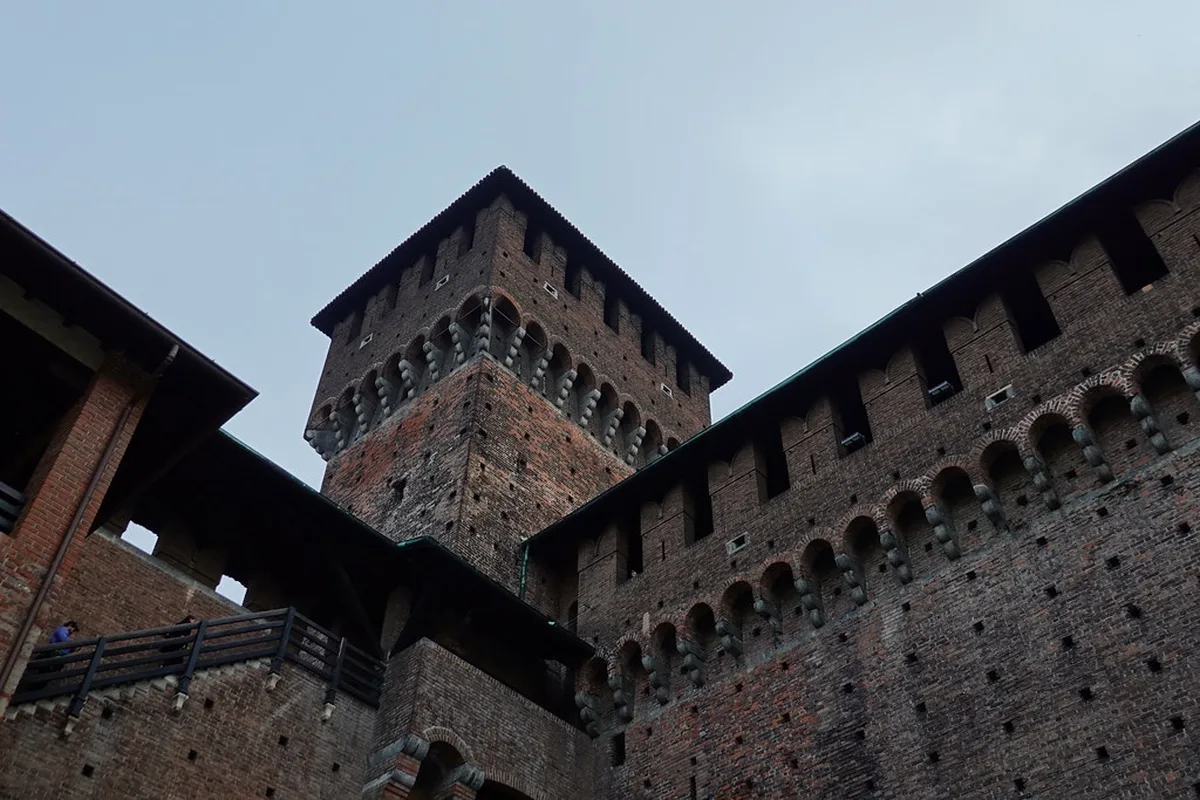
The Pietà Rondanini occupies a quiet room in the former Spanish Hospital on the northwest side of the castle's Cortile delle Armi courtyard. Unlike the crowded halls of the main Ancient Art galleries, this room typically holds only a handful of visitors. The sculpture is displayed at eye level with minimal barrier, which means you can examine its rough surface and the ghost of an earlier arm abandoned mid-carving — physical evidence of Michelangelo's repeated changes of mind over twelve years.
After the castle, the path through Parco Sempione leads to the Arch of Peace (Arco della Pace) in about 20 minutes on foot. The park is one of the better places in Milan to decompress between museums, particularly in spring and early autumn when the chestnut trees are in leaf. The M1 (red line) Cadorna stop is a ten-minute walk from the main castle entrance.
Pinacoteca Ambrosiana: Home to Leonardo's Atlantic Codex
Founded in 1618 by Cardinal Federico Borromeo, the Ambrosiana was one of the first public libraries in Europe and remains one of the most undervisited major museums in Milan. The gallery contains Caravaggio's Basket of Fruit — widely regarded as the first autonomous still life in Italian painting — alongside Raphael's cartoon for The School of Athens and Bramantino's Adoration of the Magi. General admission is €15, and the museum is open daily from 10:00 to 18:00.
The rotating display of Codex Atlanticus pages is the main draw for Leonardo enthusiasts who cannot secure Last Supper tickets. The library holds all 1,119 sheets; a changing selection is displayed in a dedicated room. The pages on view shift periodically, so there is no guarantee of seeing any specific drawing, but the experience of standing in front of Leonardo's handwriting and engineering sketches in an intimate 17th-century reading room is more memorable than the brief and tightly managed Last Supper viewing.
The Ambrosiana sits two blocks southwest of the Duomo, making it a natural first stop if you are arriving into the historic center. Book online to avoid queues, though same-day walk-in is usually possible outside summer weekends. The adjacent Church of San Sepolcro (1030) has its own crypt, accessible with a separate €8 ticket, which is worth the addition if you have an extra half-hour.
The House-Museum Circuit: Poldi-Pezzoli, Bagatti Valsecchi, and the Case Museo Card
Milan's four main house-museums — Poldi-Pezzoli, Bagatti Valsecchi, Villa Necchi Campiglio, and Casa Boschi Di Stefano — collectively form the Case Museo di Milano network. They are small, uncrowded, and allow visitors to understand how the Milanese aristocracy lived alongside the art they collected. Each home is different in character, and visiting all four in sequence tells a coherent story about private wealth and taste across three centuries.
The Museo Poldi-Pezzoli (Via Manzoni 12, adults €15, open Tuesday to Sunday 10:00–18:00) is the most celebrated. Count Giacomo Poldi Pezzoli donated his personal collection to the city in 1881. The Golden Room displays Botticelli's Lamentation over the Dead Christ alongside Dutch and Flemish masters in a domestic setting of crimson velvet and dark walnut. The armor gallery is one of the finest in northern Italy. The atmosphere is genuinely intimate — the Count's apartment has barely changed since the 19th century.
The Museo Bagatti Valsecchi (Via Gesù 5, adults €13, open Tuesday to Sunday 13:00–17:45) is stranger and more compelling than its neighbour. Brothers Fausto and Giuseppe Bagatti Valsecchi spent decades in the late 1800s assembling what they called a "lordly mansion of the mid-16th century" inside their family palazzo. The result is not a museum of Renaissance art but a working household furnished entirely with period pieces — actual 16th-century fireplaces, canopied beds, and wooden ceilings. It sits inside the fashion district, one block from Via della Spiga, which creates an incongruous contrast that is part of the appeal.
The Case Museo Card costs approximately €25 and provides one-year access to all four network museums. Individual tickets to Poldi-Pezzoli and Bagatti Valsecchi alone come to €28, so the card pays for itself if you visit both on a single trip and intend to return for Necchi or Boschi Di Stefano later. Buy it at the ticket desk of whichever house-museum you enter first. For a two-day stay this is the most efficient investment in the city's cultural calendar — far better value than the YesMilano City Pass for visitors whose primary interest is art rather than transport.
Contemporary Art in Industrial Spaces: Fondazione Prada and Mudec
Milan's post-industrial south has become the most architecturally ambitious part of the city's cultural landscape. Two institutions define this transformation. Fondazione Prada (Largo Isarco 2, adults €16, open Thursday to Monday 10:00–19:00, closed Tuesday) occupies a former distillery redesigned by Rem Koolhaas and OMA. The complex mixes original 1910s industrial buildings with new structures, including a four-story tower coated in 24-carat gold leaf. The tension between raw factory spaces and precision contemporary architecture is the exhibition itself, before you encounter any art inside.
Bar Luce, the cafe inside Fondazione Prada designed by Wes Anderson, is a functioning 1950s Milanese bar with pinball machines, a pasticceria counter, and a hand-painted ceiling. It charges normal Milan cafe prices and is open to visitors without a museum ticket. The bar is worth a standalone visit on its own terms. To reach Fondazione Prada, take the M3 (yellow line) to Lodi T.I.B.B.; the complex is a seven-minute walk.
Mudec (Via Tortona 56, permanent collection often free, temporary exhibitions €13–17, open Sunday to Wednesday 09:30–19:30, Thursday to Saturday 09:30–22:30) sits in the Tortona design district. The building by David Chipperfield features a luminous, organically shaped central hall that functions as a public atrium. The permanent ethnographic collection explores global cultures through objects acquired by the city of Milan over the 19th and 20th centuries. Mudec's temporary exhibition programme tends toward large-format retrospectives — recent shows have covered Frida Kahlo, Keith Haring, and Banksy — which pull large crowds on weekends. Arriving on a Thursday evening for the late closing is the best strategy.
Cenacolo Vinciano: Booking Leonardo's Last Supper
The Last Supper is a mural, not a painting on canvas, which means it cannot be moved or displayed anywhere other than the refectory of Santa Maria delle Grazie where Leonardo painted it between 1495 and 1498. This is Milan's only UNESCO World Heritage Site. Tickets cost €15 plus a €2 booking fee, and each visit is exactly 15 minutes in a climate-controlled room with a group of no more than 25 people. The experience is more like a closely managed conservation visit than a museum tour.
Tickets go on sale in three-month blocks via the Official Cenacolo Vinciano Booking site. In peak season (April through October) they sell out within hours of release. The practical approach in 2026: set a calendar reminder for 90 days before your intended visit date and check the site at 09:00 Milan time on the release day. If you miss the window, cancellations appear sporadically in the days immediately before a slot; check the site daily from three days out. Guided tour operators often hold a small allocation of tickets that they bundle with a broader city tour — worth considering if the official site shows nothing available.
Book Last Supper tickets at least 90 days in advance during peak season (April–October) — they sell out within hours of release. Mark your calendar for three-month release dates and check the official Cenacolo Vinciano site at 09:00 Milan time. If tickets appear sold out, check daily for cancellations in the three days before your intended visit date.
One logistical detail that most guides skip: children under 18 enter free but still require a reservation. Free first-Sunday-of-the-month tickets exist for this site too, but they must be booked online from the preceding Wednesday at noon and are gone within minutes. The church itself (Santa Maria delle Grazie) can be visited independently of the Last Supper booking and is free to enter — the exterior is among the finest examples of Lombard Renaissance architecture in the city.
Museum Neighborhoods: Planning Your Route by District
Milan's museums cluster into three distinct zones, which makes it possible to combine multiple visits without crossing the city repeatedly. The Historic Center (Duomo to Castello Sforzesco) holds the Pinacoteca Ambrosiana, Museo del Novecento, and Castello Sforzesco within a 20-minute walking circuit. This is the logical base for a single-day art itinerary. The M1 and M3 lines both serve this zone, and both the Ambrosiana and the Novecento open at 10:00.
The Brera District sits ten minutes north of the Duomo by foot or two stops on the M2 from Cadorna to Lanza. The Pinacoteca di Brera anchors this neighbourhood, but the surrounding streets — Via Brera, Via Fiori Chiari, Corso Garibaldi — are lined with galleries, antique shops, and bars that extend the cultural experience past gallery hours. The two house-museums (Poldi-Pezzoli on Via Manzoni and Bagatti Valsecchi on Via Gesù) are both five minutes on foot from the Brera, making it straightforward to combine all three in a half-day. This is also one of the best areas for an the city-centre highlights afternoon route.
The South and Southwest covers the more industrial cultural institutions. Fondazione Prada (M3 Lodi T.I.B.B.), Mudec in the Tortona design district (tram 14 from Porta Genova), and the Last Supper in the Magenta neighbourhood (M2 Cadorna or tram 16) each require a deliberate journey. Grouping Fondazione Prada with Mudec on the same day is efficient — they are 20 minutes apart by tram and offer a coherent narrative about Milan's transformation from industrial city to contemporary art capital. The Leonardo Science Museum sits in Magenta adjacent to the Last Supper refectory, making the pairing natural for visitors interested in Leonardo's engineering work.
Practical Planning: Tickets, Passes, and Free-Entry Days
State-run museums including the Pinacoteca di Brera and the galleries inside Castello Sforzesco offer free entry on the first Sunday of every month. The Cenacolo Vinciano does too, with the caveat that free tickets require a Wednesday-noon online booking the week before and disappear immediately. If your trip dates allow flexibility, planning around first Sundays can save €30–40 per person across a multi-museum day. Expect substantially larger crowds; arriving 30 minutes before the 08:30 opening at the Brera on these days is essential.
Plan your museum visits for the first Sunday of the month to visit Pinacoteca di Brera, Castello Sforzesco, and other state-run museums free of charge. Save €30–40 per person but expect larger crowds—arrive 30 minutes before 08:30 opening. Free Last Supper tickets require Wednesday-noon online booking the week before and vanish within minutes.
The YesMilano City Pass covers public transport and entry to dozens of attractions, including the Duomo terraces, Museo del Novecento, and Castello Sforzesco. The base version does not include the Last Supper — that requires the premium version of the pass or a separate booking. The pass makes clear financial sense for visitors who plan to use public transport daily and visit five or more covered sites in 48 hours. For visitors focused primarily on the four house-museums, the Case Museo Card (€25, described above) is the better value. You can use visiting Milan on a budget strategies to combine both passes across a longer stay.
Most major Milan museums are closed on Mondays. The exceptions are the Pinacoteca Ambrosiana (open daily) and Mudec (open daily, with late hours Thursday to Saturday). Building your Monday around these two avoids the frustration of arriving at a locked entrance. Booking links: use the official Cenacolo site for the Last Supper, and the respective museum websites for Brera and Ambrosiana — third-party booking platforms add fees without adding access.
| Museum | Entry Fee | Free Entry | Highlight |
|---|---|---|---|
| Pinacoteca di Brera | €15 | 1st Sunday monthly | Renaissance masterpieces: Mantegna, Raphael, Piero della Francesca |
| Museo del Novecento | €11 | No | Futurism collection + Duomo view through Lucio Fontana neon installation |
| Castello Sforzesco (all 9 museums) | €8 | 1st Sunday monthly | Michelangelo's Pietà Rondanini + Ancient Art, Furniture, Musical Instruments |
| Pinacoteca Ambrosiana | €15 | 1st Sunday monthly | Leonardo's Codex Atlanticus (rotating display) + Caravaggio's Basket of Fruit |
| Cenacolo Vinciano (Last Supper) | €15 + €2 booking | 1st Sunday monthly (online booking required) | Leonardo da Vinci's The Last Supper mural (1495–1498) |
| Museo Poldi-Pezzoli | €15 | No | Botticelli, Dutch/Flemish masters, armor gallery |
| Museo Bagatti Valsecchi | €13 | No | 16th-century palazzo furnished with period Renaissance pieces |
| Fondazione Prada | €16 | No | Contemporary art in Rem Koolhaas-designed former distillery + Wes Anderson-designed Bar Luce |
| Mudec | Permanent free; temporary €13–17 | Permanent collection always free | Ethnographic collection + rotating exhibitions (Frida Kahlo, Banksy) |
Frequently Asked Questions
Which Milan museums are free on the first Sunday of the month?
State-run museums like the Pinacoteca di Brera and the various galleries inside Castello Sforzesco are free on the first Sunday of every month. Expect much larger crowds and longer wait times during these days. I recommend arriving at least 30 minutes before opening to secure your spot.
Is the Milan City Pass worth it for museum lovers?
The pass is worth the cost if you plan to visit at least three major museums and use public transport frequently. It simplifies the booking process for sites like the Museo del Novecento and the Science Museum. However, for a single-day trip, individual tickets might be cheaper.
Can you see Leonardo da Vinci's work in Milan without a reservation?
Yes, you can see his work at the Pinacoteca Ambrosiana or the Science Museum without the strict months-ahead booking required for the Last Supper. The Ambrosiana houses the Atlantic Codex, which is a must-see for fans of his engineering. Same-day tickets are often available at these locations.
Milan's museum circuit rewards visitors who plan one layer deeper than the obvious. The Last Supper and the Brera are genuinely unmissable — but so is standing in a quiet room with Michelangelo's last unfinished thought, or watching a conservator repair a Baroque canvas through a glass wall. The city's industrial south has redefined what an art institution can look like, while the house-museum circuit preserves a version of aristocratic Milan that has barely changed in 150 years.
Book the Last Supper first, use the district groupings to minimise transit time, and consider the Case Museo Card if you have two days and an appetite for intimate collections. Milan will reward the preparation.
Continue exploring
More guides you'll find useful