12 Best Churches and Planning Tips for Milan (2026)
Discover the best churches in Milan, from the iconic Duomo to the hidden frescoes of San Maurizio. Includes a walking tour map and Last Supper booking advice.
On this page
12 Best Churches and Planning Tips for Milan
Milan's spiritual legacy runs far deeper than the skyline of spires above Piazza del Duomo. The city's churches hold Leonardo da Vinci's most famous mural, floors of human bones, optical illusions carved in plaster, and frescoes that rival the Sistine Chapel in scale and beauty. Knowing what Milan is famous for helps you appreciate how much of it is concentrated behind these heavy wooden doors.
This guide covers the twelve churches that matter most for a 2026 visit, with specific opening hours, admission prices, and booking windows. Most are free. Two require advance tickets that sell out weeks or months ahead. I have also included a walking-route logic so you can cluster nearby sites into a single morning or afternoon without doubling back across the city.
All sites listed here are active places of worship. Shoulders and knees must be covered at the entrance; a light scarf in your bag solves the problem instantly. Photography is generally permitted without flash. Guided tours are worth the cost only at Santa Maria delle Grazie — everywhere else you can visit independently with this guide. See an image of the Duomo square to get a sense of the scale before you arrive.
Duomo di Milano (Milan Cathedral)
The Duomo is the second-largest church in Europe and the definitive symbol of Milan. Construction began in 1386 and continued for nearly six centuries, which is why the facade blends Gothic spires with later Neoclassical elements. The interior holds 3,400 statues, 135 gargoyles, and stained-glass windows stretching 24 metres high. The forest of internal pillars is best experienced in the early morning before tour groups arrive.
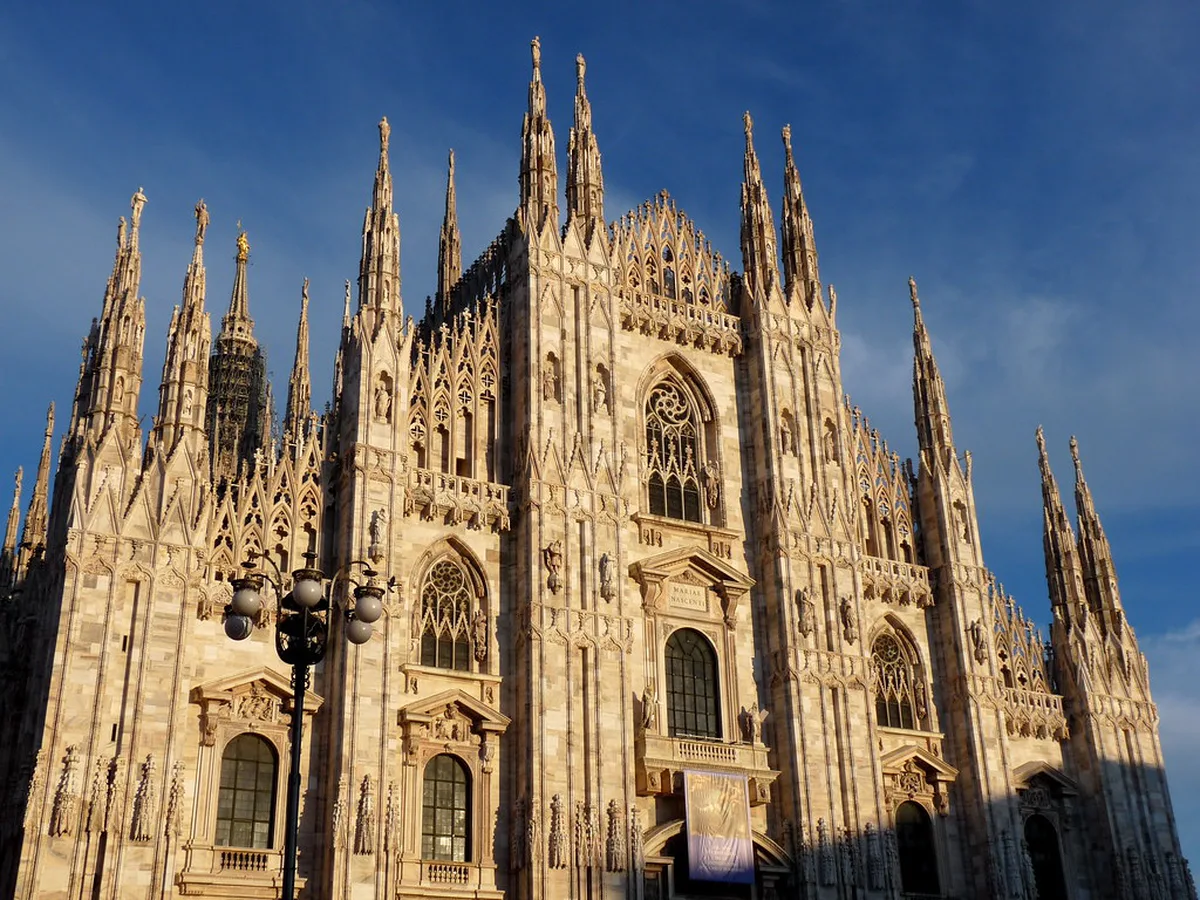
The rooftop terraces are the highlight for most visitors. You walk among the marble pinnacles at close range and, on clear days, see the Alps to the north. Stairs cost around €7; the elevator costs €13. The interior alone costs €5 and is covered by the same combined ticket as the archaeological area and museum. Book Milan Duomo tickets online to avoid queues that regularly stretch to 45 minutes at the physical booth.
The booking window for rooftop tickets opens 24–48 hours before your visit. Peak times (July–August mornings) sell out quickly. Book at 08:00 local time for the best selection of time slots.
Physical ticket booths at the Duomo regularly form queues of 45+ minutes even in shoulder season. Online booking is non-negotiable; without it you will lose a full hour of sightseeing time.
Local tip: arrive before 09:00 for the rooftop. The light on the white Candoglia marble is softer, the crowds are thinner, and the Alps are more likely to be visible before afternoon haze sets in.
Santa Maria delle Grazie and The Last Supper
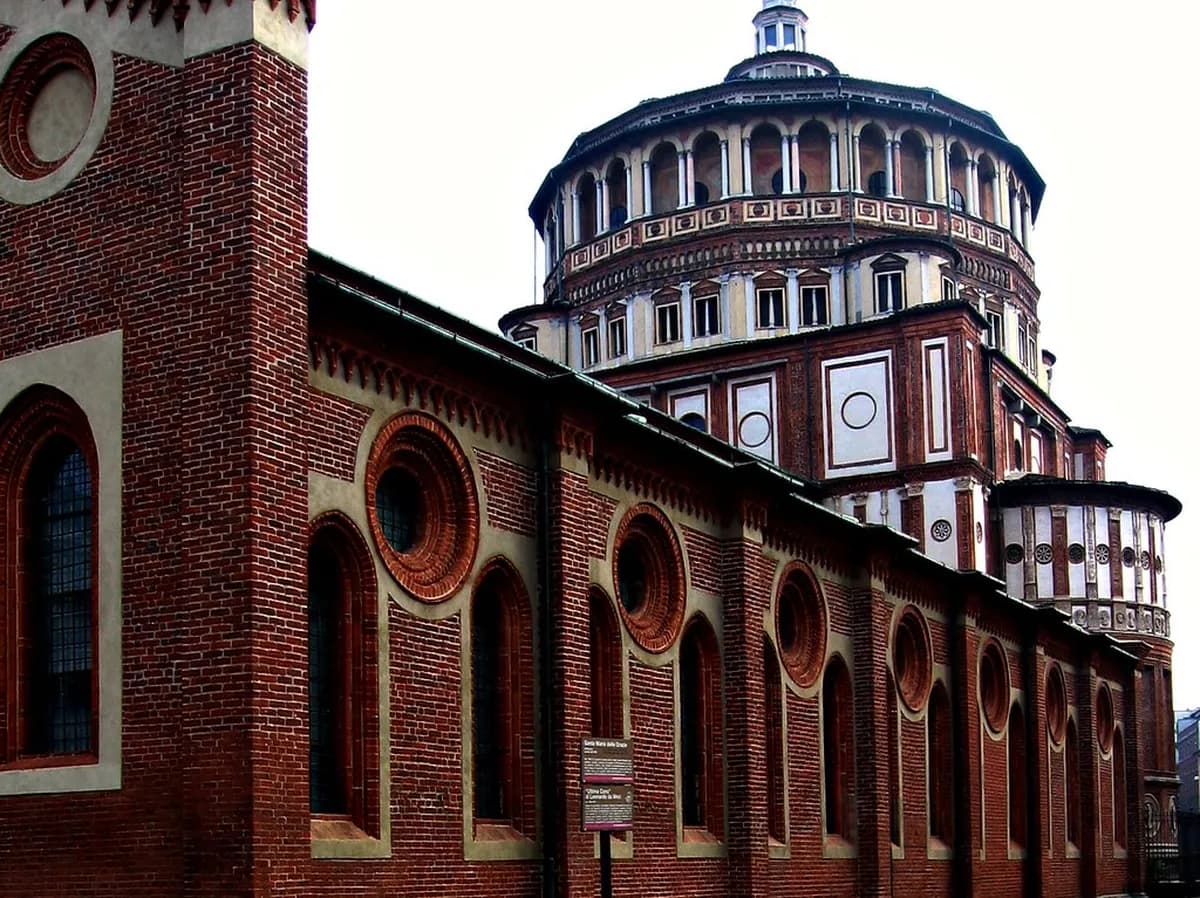
This Dominican church in the Magenta neighbourhood is a UNESCO World Heritage Site. The church itself is free and worth visiting for its Renaissance architecture, but the main reason people come is the refectory next door, where Leonardo da Vinci painted The Last Supper on a wall between 1495 and 1498. The mural covers an entire end wall of the monks' dining room and measures roughly 9 by 4 metres.
The ticket process is the most demanding logistics challenge in Milan. Only 25 people enter every 15 minutes, visits are capped at exactly 15 minutes, and the daily capacity is around 1,250 people. The booking window for official tickets opens exactly 90 days before the visit date on the official Opera del Duomo booking platform (vivaticket). Tickets cost €15 plus a €2 booking fee. If you check at the 90-day mark and the slot you want is already sold out, it means tour operators grabbed their allocation first.
The practical workaround is a guided tour. Licensed guided tours buy a separate allocation from individual-visitor tickets, so spaces through a tour operator are often available when the public calendar shows nothing. These tours cost €30–50 but include the booking fee and a guide who explains the restoration history and composition in detail. The church itself is a few minutes from Cadorna station on the red metro line M1.
Local tip: if you are visiting independently, set a calendar reminder for exactly 90 days before your target date and check the booking site at 08:00 local Italian time when the daily allocation goes live.
San Maurizio al Monastero Maggiore
This is the most underrated church in Milan and the one that consistently surprises visitors who wander in expecting a modest chapel. The interior is entirely covered with sixteenth-century frescoes painted in deep gold, blue, and terracotta — the comparison to the Sistine Chapel is not hyperbole. The church was part of a Benedictine convent, and a partition wall separated the public nave from the nuns' enclosure. Both sides are open today, and the nuns' hall is the more spectacular half.
The frescoes were painted primarily by Bernardino Luini, a student of Leonardo, between 1522 and 1529. Look for the scenes depicting the life of Saint Catherine on the partition wall and the Noah's Ark cycle in the left aisle of the nuns' section. Entry is completely free. The church is open Tuesday through Sunday from 10:00 to 17:30. It sits on Corso Magenta at number 13, roughly a ten-minute walk from the Duomo or Santa Maria delle Grazie.
Local tip: San Maurizio is rarely crowded even in peak summer, which makes it one of the best places to linger without feeling rushed. Arrive around 10:15 when it opens and you may have the frescoes almost to yourself.
Basilica di Sant'Ambrogio
Sant'Ambrogio is the spiritual foundation of Milan. Saint Ambrose himself commissioned the original church in 379 AD and is buried in the crypt alongside two early Christian martyrs. The current Romanesque structure dates primarily from the eleventh and twelfth centuries and established a template that influenced church architecture across northern Italy. The wide atrium preceding the facade is one of the finest examples of a Lombard church forecourt in existence.
Inside, the ninth-century Golden Altar (Paliotto d'oro) is the centrepiece — a solid gold and silver panel inlaid with enamel depicting scenes from the lives of Christ and Saint Ambrose. The octagonal ciborium above the altar and the serpentine bronze column in the courtyard (the so-called Devil's Column, with two mysterious holes attributed in legend to the devil's horns) are equally worth finding. Entry to the basilica is free; the attached museum costs €2 and is worth the price for the additional Roman artefacts.
The basilica is open Monday through Saturday from 10:00 to 12:30 and 14:30 to 18:00, and Sunday from 15:00 to 17:00. It is on Piazza Sant'Ambrogio, roughly 15 minutes on foot from the Duomo or two stops on tram line 16.
San Bernardino alle Ossa
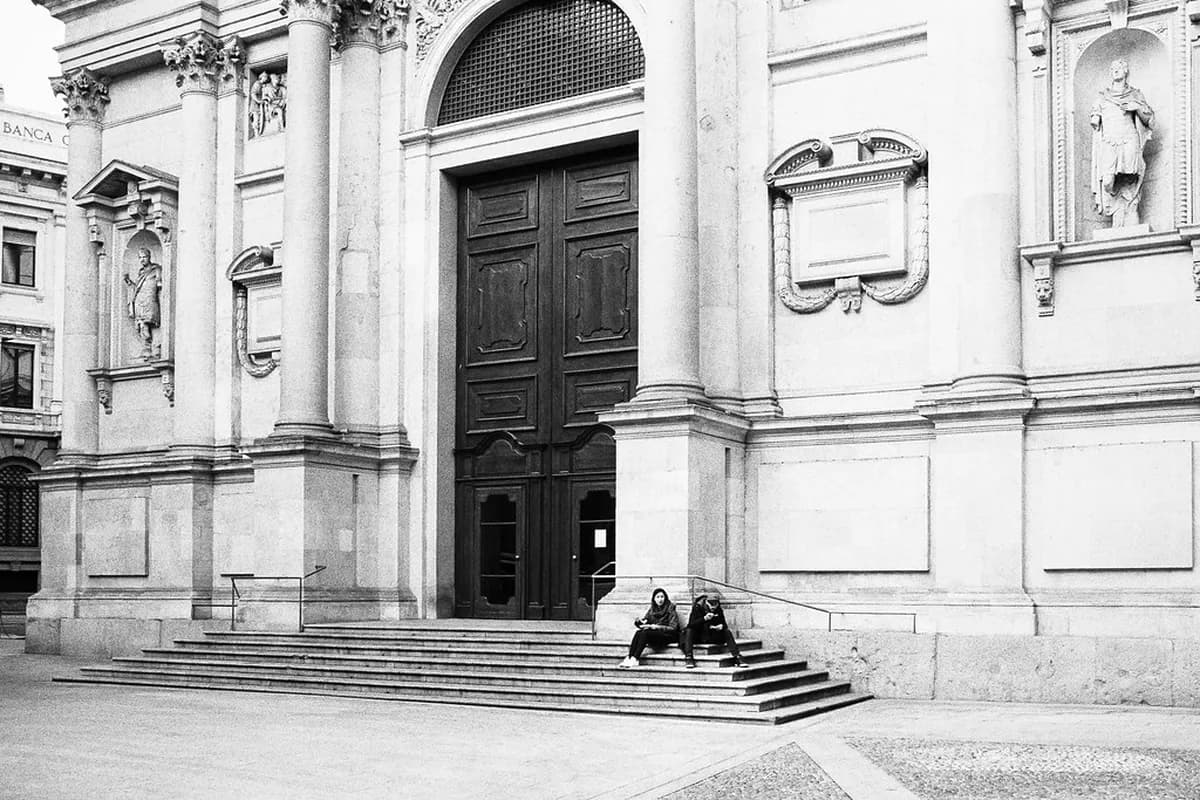
Just three minutes' walk from the Duomo, San Bernardino alle Ossa houses one of the most visceral sights in Italy: an ossuary chapel whose four walls and barrel-vaulted ceiling are decorated with thousands of human skulls and bones arranged into geometric patterns. The ossuary was established in 1210 to collect bones from an overflowing hospital cemetery nearby. A fire destroyed the original structure in 1712 and the rebuilt version is pure Baroque, including a ceiling fresco by Sebastiano Ricci showing souls ascending to heaven while surrounded by bones below.
The ossuary entrance is through a small, low doorway to the right of the main altar, easy to miss if you walk in without knowing where to look. The main church exterior is straightforward Baroque; the shock is entirely inside the side chapel. There is no entry charge. The church is open Monday through Friday from 09:00 to 12:00 and 14:00 to 18:00, and Saturday mornings from 09:30 to 12:00.
The bones were collected from multiple nearby cemeteries and are estimated to number in the tens of thousands. Contrary to what some visitors assume, this is still an active church and the ossuary remains a site of genuine devotion for Milanese locals, not just a tourist attraction.
Basilica di San Lorenzo Maggiore
San Lorenzo is the oldest surviving church in Milan, built in the late fourth century using materials quarried from a nearby Roman amphitheatre. Sixteen ancient Roman columns stand in front of the entrance — the Colonne di San Lorenzo — and they predate the church itself by two centuries. The open piazza around them is one of the most atmospheric spots in the city, particularly at dusk when the columns are lit and locals gather in the square.
The main basilica is free to enter and open daily from 08:00 to 18:30. The Cappella di Sant'Aquilino, a detached Roman mausoleum attached to the church, costs €2 and contains fourth-century Christian mosaics that are among the oldest in northern Italy. The combined museum ticket for San Lorenzo, Museo Diocesano, and Basilica di Sant'Eustorgio costs €12 and is worth it if you plan to visit all three on the same day.
The church sits along Corso di Porta Ticinese and is easily combined with the Navigli canal district immediately to the south. A visit here pairs naturally with the Basilica of Sant'Eustorgio, which is a ten-minute walk further along the same road.
Santa Maria presso San Satiro
This small Renaissance church on Via Torino is famous for an architectural trick that has fooled visitors for five centuries. The choir behind the altar appears to be a deep, vaulted apse extending several metres back. It is actually a flat wall, only 97 centimetres deep, painted and moulded by Donato Bramante using forced perspective — a trompe-l'oeil that was one of the earliest examples of this technique applied to church architecture in Italy. The illusion works because Bramante could not expand the building further due to a road behind it.
To see the illusion at its most convincing, stand on the small brass marker set into the floor in the centre of the nave, roughly halfway between the entrance and the altar. From that exact point the false choir looks identical to a real deep apse. Take a few steps left or right and the geometry collapses immediately. The church is free to enter and open daily from 07:30 to 11:30 and 15:30 to 18:30. It is located on a busy pedestrian shopping street about five minutes' walk from the Duomo.
Basilica of Sant'Eustorgio
Sant'Eustorgio was founded in the fourth century to house what were believed to be the relics of the Three Magi, brought from Constantinople. The relics were taken to Cologne in 1164 — which is why Cologne Cathedral's great shrine contains them — but fragments were later returned and rest today in the Three Kings altar near the apse. A star crowns the bell tower in their memory instead of the usual cross, a detail worth looking up for when you approach.
The main basilica is free. The attached Portinari Chapel (Cappella Portinari) costs €6 and is the more compelling reason to visit: it is a perfectly preserved Renaissance masterpiece built in 1468, commissioned by a Medici banking agent, with frescoes by Vincenzo Foppa and a terracotta shrine to Saint Peter Martyr at its centre. This chapel is one of the finest examples of early Renaissance decoration in Lombardy and is consistently overshadowed by the Duomo and The Last Supper despite deserving the same attention.
Sant'Eustorgio is open daily from 10:00 to 18:00 and is located at the southern end of Corso di Porta Ticinese near the Navigli neighbourhood. The combined €12 ticket with San Lorenzo and Museo Diocesano applies here as well.
San Simpliciano
San Simpliciano is one of the four basilicas that Saint Ambrose founded in Milan in the late fourth century, positioned to mark the cardinal points of the city. The current Romanesque brick structure largely dates from the twelfth century and retains a serene, unrestored quality that contrasts sharply with the polished interiors of the more famous sites. The apse fresco depicting the Coronation of the Virgin is attributed to Bergognone and dates from around 1515.
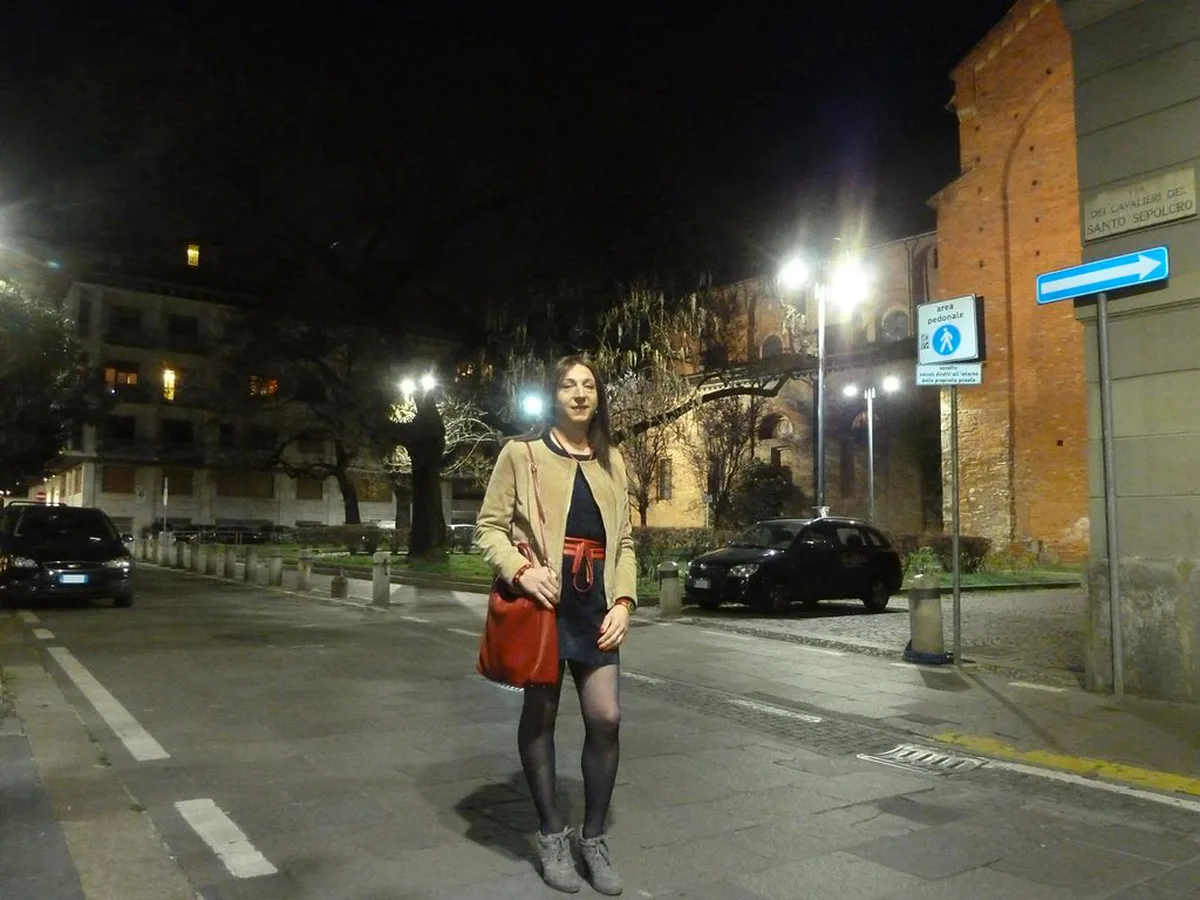
Admission is free. The church is generally open daily from 07:00 to 19:00, though hours can vary on holy days. It sits in the Brera neighbourhood near Piazza San Simpliciano, making it a natural add-on after visiting the Pinacoteca di Brera art gallery. The surrounding streets have some of the best independent cafes in the city if you want a break between sites.
Santa Maria della Passione
Santa Maria della Passione is the second-largest church in Milan and is significantly less visited than its size warrants. The interior is lined with sixteen seventeenth-century paintings depicting the Passion of Christ, and the church is renowned as one of Milan's major centres for sacred music. The organ, installed in 1558, is one of the oldest playable organs in Italy and still used for regular concerts.
Entry is free. The church is open daily from 08:00 to 12:00 and 15:30 to 18:30. It sits on Via Conservatorio near the Conservatorio di Milano music school, about a 20-minute walk east of the Duomo. If you are visiting Milan in autumn or winter, check the concert schedule — hearing the historic organ in this space is a worthwhile evening out that most visitors never discover.
Milan's Ambrosian Rite: What Makes It Different
Milan follows a distinct liturgical tradition called the Ambrosian Rite, named after Saint Ambrose and practised here since the fourth century. It differs from the Roman Rite used throughout the rest of the Catholic world in several notable ways. The most visible difference for visitors is the Lenten calendar: Milanese Lent begins on the first Sunday after Ash Wednesday, not on Ash Wednesday itself. This means Milan's Carnival continues for several days after the rest of Italy and the Catholic world has already entered the penitential season — a quirk that locals celebrate with particular pride.
The Ambrosian choral tradition is also distinct. The choir sings responsorial chants that predate Gregorian reform, and the specific antiphons, the ordering of Mass, and even the layout of the liturgical year differ from the universal Roman calendar. Older Milanese basilicas reflect this tradition in their architecture: the emphasis on a strong atrium forecourt where the congregation gathered before entering, and the separate spaces for different liturgical roles, are features you notice at Sant'Ambrogio and San Lorenzo but not in Roman-rite churches elsewhere.
If you attend a Sunday Mass at Sant'Ambrogio or the Duomo during your visit, you will hear the Ambrosian chant live. The tradition is recognised by UNESCO as an element of intangible cultural heritage. It adds a layer of meaning to every church on this list that goes beyond the visual art on the walls.
How to Plan a Smooth Milan Church Tour
The twelve churches on this list divide into three geographic clusters that make logical half-day routes. The first cluster is the Duomo neighbourhood: the Duomo itself, San Bernardino alle Ossa (three minutes' walk east), and Santa Maria presso San Satiro (five minutes' walk south along Via Torino). Cover these three in a morning and you will have seen the headline Gothic masterpiece and two of the most distinctive interiors in the city. The GPSmyCity self-guided walking tour covers a similar 3.1 km route in roughly two hours.
The second cluster is Corso Magenta, roughly 15 minutes' walk west of the Duomo: Santa Maria delle Grazie and San Maurizio al Monastero Maggiore sit 400 metres apart on the same street. If you have booked The Last Supper for the morning, San Maurizio is a natural second stop before lunch. Sant'Ambrogio is ten minutes south of here, making a three-site afternoon feasible.
The third cluster is Corso di Porta Ticinese heading south toward the Navigli: San Lorenzo Maggiore and Sant'Eustorgio are connected by a ten-minute walk and share a combined ticket. Add the Navigli evening aperitivo afterwards and you have a full afternoon and evening in one neighbourhood. The complete Milan city centre is easier to navigate when you plan by cluster rather than trying to cross the city between each stop.
The dress code is non-negotiable at all sites. Shoulders and knees must be covered. A lightweight sarong or pashmina resolves this in seconds and weighs nothing in a bag. At the Duomo specifically, security guards stationed at the entrance turn away visitors who do not comply — there is no warning or grace period. Most smaller free churches are more lenient in practice but the same rule applies officially.
Most small churches close between noon and 14:30 or 15:00. Plan your route to hit these sites in the morning or late afternoon and reserve the Duomo and Santa Maria delle Grazie (which have consistent hours and ticket-based entry) for midday. Book Last Supper tickets at the 90-day mark; book Duomo rooftop tickets 24–48 hours ahead online to skip the queue. Everything else on this list is walk-in and free. A summary of entry fees is below.
- Duomo interior: €5; rooftop stairs: €7; rooftop elevator: €13; combined: from €15
- The Last Supper (refectory): €15 plus €2 booking fee; church itself is free
- San Maurizio al Monastero Maggiore: free
- Basilica di Sant'Ambrogio: free (museum €2)
- San Bernardino alle Ossa: free
- San Lorenzo Maggiore: free; Cappella di Sant'Aquilino: €2; combined ticket with Sant'Eustorgio + Museo Diocesano: €12
- Santa Maria presso San Satiro: free
- Sant'Eustorgio: free; Portinari Chapel: €6
- San Simpliciano: free
- Santa Maria della Passione: free
| Church | Entry Fee | Special Notes |
|---|---|---|
| Duomo di Milano | €5–€13 combined | Rooftop stairs €7, elevator €13. Book online 24–48 hrs ahead. |
| Santa Maria delle Grazie (Last Supper) | €15 + €2 booking | Must book 90 days ahead; 25 people every 15 mins. |
| San Maurizio al Monastero Maggiore | Free | Open Tue–Sun 10:00–17:30. Frescoes cover entire interior. |
| Basilica di Sant'Ambrogio | Free (museum €2) | Open Mon–Sat 10:00–12:30 & 14:30–18:00; Sun 15:00–17:00. |
| San Bernardino alle Ossa | Free | Ossuary chapel with thousands of decorated human bones. |
| San Lorenzo Maggiore | Free (cappella €2, combined €12) | Oldest church in Milan. Columns predate the structure. |
| Santa Maria presso San Satiro | Free | Optical illusion apse painted by Bramante. |
| Sant'Eustorgio | Free (Portinari Chapel €6) | Renaissance masterpiece chapel costs extra; worth it. |
For a broader view of how to fit these sites into a full trip, see this Milan 3-day itinerary which allocates specific time blocks for the major churches alongside other landmarks. If you want to focus exclusively on free activities, most of the churches above qualify — see the free things to do in the city guide for the complete picture.
Frequently Asked Questions
What is the dress code for churches in Milan?
Visitors must cover their shoulders and knees to enter any church in Milan. This rule applies to everyone regardless of gender or age. I recommend carrying a light scarf to use as a quick cover-up during hot summer days.
How much time do I need for a Milan church tour?
A comprehensive tour of the top sites usually takes about two full days. You can see the Duomo and nearby chapels in a single afternoon. Check a Milan 3-day itinerary to see how to fit these stops into your trip.
Is it free to visit the churches in Milan?
Most basilicas are free to enter, though some charge for access to specific crypts or museums. The Duomo and the Last Supper always require paid tickets. Always carry a few small coins for donation boxes or automated light switches for frescoes.
Milan's churches offer a quiet escape from the bustling fashion districts and modern skyscrapers. From the optical illusions of Bramante to the ancient bones of San Bernardino, there is something for everyone. I hope this list helps you find the most inspiring and beautiful corners of this Italian metropolis. You can find more travel inspiration at Yondli Italy for your upcoming European adventures.
Remember to book your major tickets well in advance to avoid disappointment upon arrival. Respecting the local traditions like the Ambrosian Rite will make your visit even more meaningful. Enjoy the incredible art and architecture that makes Milan a world-class destination for spiritual history. Safe travels as you explore the magnificent sanctuaries of this historic city.
Looking for the secret side of the city? Pair this with our guide to Milan's hidden gems — the offbeat spots most visitors walk straight past.
Continue exploring
More guides you'll find useful