10 Best Ways to Experience Free Things to do in Milan (2026)
Discover the best free things to do in Milan, from hidden botanical gardens and historic basilicas to free museum days and panoramic city views.

On this page
10 Best Ways to Experience Free Things to do in Milan
Milan carries a reputation as Italy's most expensive city, and it's not entirely undeserved. Hotels and restaurants in the fashion district can drain a wallet fast. But the same city that houses Prada and Versace also offers world-class art, ancient basilicas, Renaissance frescoes, and sweeping rooftop views — all without spending a euro on entry.
This guide focuses on what genuinely costs nothing: landmarks you can walk straight into, parks with no gates, and specific museum days when paid institutions open for free. Last verified in 2026, these details reflect current opening hours and free-access conditions. Knowing what Milan is famous for helps you prioritize the landmarks worth your limited time on foot.
Is Milan Worth Visiting on a Budget?
Milan is genuinely split in two. One side is the global luxury capital — the Quadrilatero della Moda, Michelin-starred restaurants, and €25 cocktails at Galleria bars. The other side is a deeply historic city of Roman ruins, free Renaissance frescoes, and sprawling public parks where locals jog past centuries-old aqueducts.
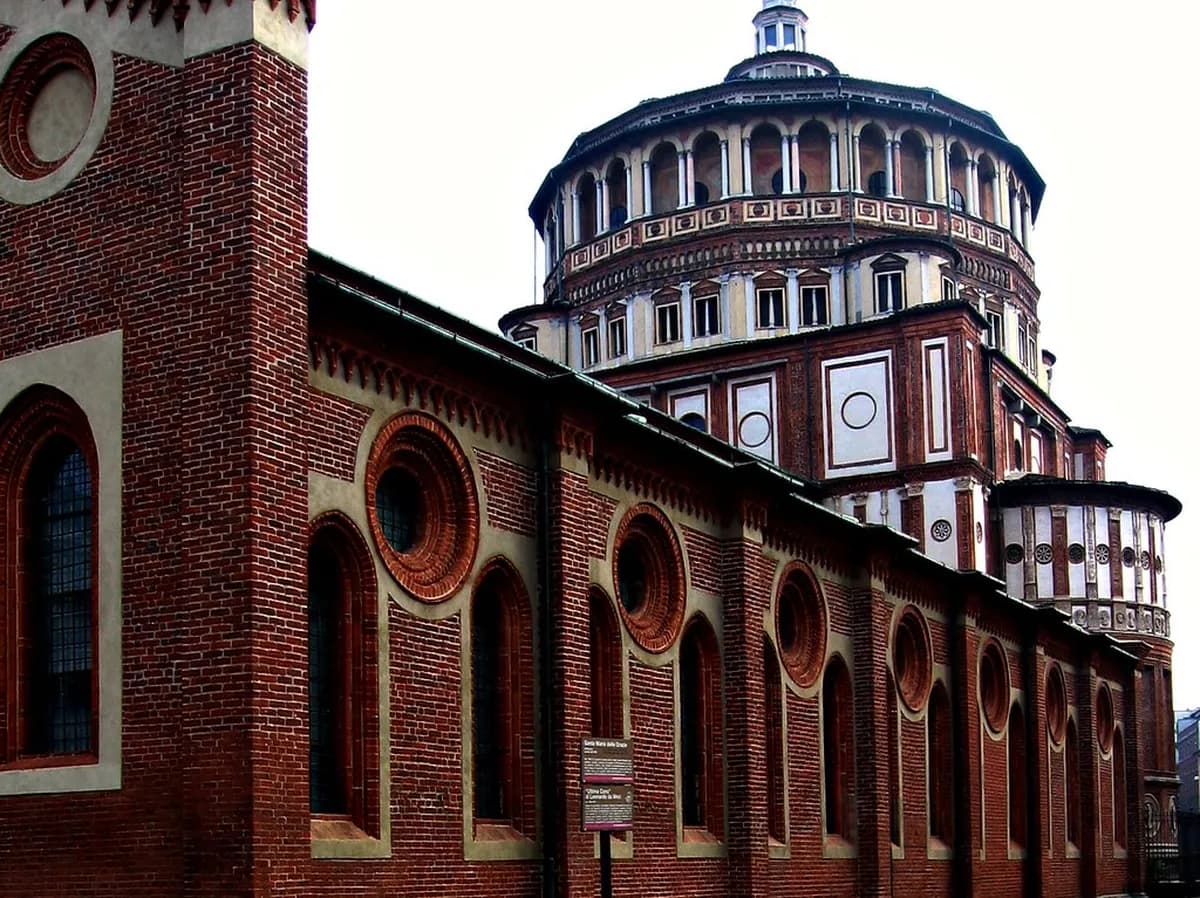
You can build a full two-day itinerary without a single admission ticket. The key is understanding which paid attractions have free workarounds — the Rinascente balcony instead of the Duomo rooftop, the Sforza Castle courtyards instead of the internal museums, the Santa Maria delle Grazie church instead of the ticketed Last Supper. Planning for visiting Milan on a budget comes down to knowing those substitutions in advance.
Is Milan city expensive compared to Florence or Rome? For accommodation and restaurants, yes. But for sightseeing, it ranks among Italy's best-value cities. Over a dozen genuinely excellent experiences are completely free, including some that would be headline attractions in smaller cities.
Must-See Milan Attractions That Cost Nothing
The Piazza del Duomo is the obvious starting point. The square itself is public space — no ticket, no time limit — and the Gothic cathedral facade alone justifies the visit. Entering the main nave for prayer is free, though a small area. The paid roof climb is worth skipping if you have a tight budget: instead, take the escalator inside the Rinascente department store on the east side of the square to the top-floor balcony. You'll stand at eye level with the Duomo spires for nothing more than the price of a lift ride.
The Galleria Vittorio Emanuele II sits directly beside the Duomo and requires no ticket at all. This 19th-century glass-vaulted arcade is one of the world's oldest shopping malls, and walking through it is entirely free. Locals traditionally spin their heel on the bull mosaic at the central octagon for luck — the worn patch in the marble shows how long this tradition has run.
Castello Sforzesco, the vast red-brick fortress at the edge of Parco Sempione, opens its three main courtyards — Ducal Courtyard, Rocchetta Courtyard, and the Courtyard of Arms — free of charge daily from 07:00 to 19:30. The internal museums carry a fee, but the courtyards themselves show off the full scale of the 15th-century Sforza stronghold without costing anything.
The Sforza Castle courtyard closes at 19:30, so plan your visit earlier in the day if you want to explore it free. The Rinascente department store escalator is an insider trick — ride to the top floor for eye-level views of the Duomo spires at no cost beyond the elevator ride.
Museums, Art, and Culture in Milan
Pirelli HangarBicocca in the northern Bicocca district is the best fully free museum in Milan. The former Breda industrial plant now hosts Anselm Kiefer's permanent installation The Seven Heavenly Palaces — seven concrete towers up to 14 metres tall arranged across an enormous warehouse floor. Entry is free Thursday to Sunday, 10:30 to 20:30. The scale is unlike anything in the city-centre galleries, and it draws an informed local crowd rather than tourist groups.
Finding free museums in Milan is easier on the first Sunday of each month, when state-run institutions open without charge. The Pinacoteca di Brera (book your slot online in advance — queues are long), the Gallerie d'Italia on Piazza Scala, the Museo del Novecento, and the Castello Sforzesco museums all participate. Arrive at 09:00 to beat the crowds at Brera, which fills fastest.
San Maurizio al Monastero Maggiore is the single most underrated free sight in Milan. The exterior is grey and nondescript, which is why most visitors walk straight past it. Inside, the walls, ceiling, and arches are entirely covered in 16th-century Renaissance frescoes by Bernardino Luini. Locals call it the Sistine Chapel of Milan, and that comparison is not an exaggeration. Open free Tuesday through Sunday, 10:00 to 17:30. Walk through the small door at the altar to reach the nuns' hall, where a midnight-blue ceiling is painted with saints and a golden sky.
Cimitero Monumentale, in the northwest of the city near Chinatown, is free Tuesday through Sunday, 08:00 to 18:00. The grandiose pink-and-white Famedio building contains the tombs of Alessandro Manzoni, Arturo Toscanini, and Salvatore Quasimodo. The cemetery functions as an open-air sculpture museum, with elaborate Art Nouveau and Futurist tombs covering several acres. Allow 90 minutes.
Parks, Gardens, and Outdoor Spots in Milan
Parco Sempione covers nearly 400,000 square metres behind Castello Sforzesco. The park is free and open daily from 06:30 until at least 21:00 in summer. Locals come here for morning runs, weekend picnics, and free concerts in the Gianni Brera area during warmer months. Look for the dragon-headed bronze fountains called vedovelle along the main paths — they dispense free drinking water and are a practical local detail most travel guides skip entirely. The Arco della Pace (Arch of Peace) at the northwest corner is an impressive 19th-century triumphal arch modelled loosely on the Arc de Triomphe.
The Orto Botanico di Brera is one of Milan's best-kept secrets. This 18th-century botanical garden sits tucked behind the Palazzo di Brera and feels like a private forest in the middle of the city. Entrance is free Monday to Saturday, 09:30 to 16:30. It was founded in 1774, taken over by the University of Milan in 1935, and still functions partly as a teaching garden. Most visitors to the Brera art district walk straight past the entrance without noticing it. Finding hidden gems in Milan rarely gets more literal than this.
Free museum Sundays happen on the first Sunday of every month when state-run institutions open without charge — the Pinacoteca di Brera, Gallerie d'Italia, Museo del Novecento, and Castello Sforzesco museums all participate. Arrive at 09:00 to beat the crowds at Brera.
The Navigli district — the canal neighbourhood south of the city centre — is a public area with no entry cost. Vicolo dei Lavandai, just off Alzaia Naviglio Grande, is a preserved covered alleyway where women once washed clothes over the canal. The iron bridge nearby frames the best canal photographs in the city, especially in the hour before sunset. The area is busy at night, but a morning walk around 09:00 is quieter and better for photography.
Free Views and Hidden Spaces Worth Seeking Out
The Terrazze Triennale deserves more attention than it gets. The Triennale Design Museum in Parco Sempione has a rooftop terrace on its second floor that is free to access — you do not need a museum ticket to reach it. From here you see the Sforza Castle, the Duomo, and on clear days the Alps beyond the city's northern skyline. The bar on the terrace charges full prices, but standing at the balcony rail costs nothing and the view is genuinely one of Milan's best. Morning light hits the castle facade well; late afternoon gives the best Alpine backdrop.
The Palazzo Brera Courtyard of Honour is freely accessible through the main gate of the Palazzo di Brera on Via Brera. Inside sits a bronze cast of Napoleon as Mars the Peacemaker, surrounded by marble statues honouring Italian scientists and artists. The paid Pinacoteca is inside the same building, but the courtyard visit is separate and free. It takes ten minutes and gives a sense of the building's 16th-century Jesuit college origins.
The Basilica di Santa Maria delle Grazie is a UNESCO World Heritage Site primarily because its refectory contains Leonardo da Vinci's Last Supper — which requires a paid, timed ticket booked months in advance. The church interior itself, however, is free to enter. The painted domes in burnt orange, red, and umber are striking, and the building's scale rewards the short detour even if you can't book the painting visit.
The Ossuary Chapel Most Visitors Walk Past
The Santuario di San Bernardino alle Ossa, a small side chapel attached to the Church of Santo Stefano in Borgogna near the Duomo, is one of the strangest and most memorable free visits in all of Milan. The ossuary was first built in 1210 to hold bones from an adjacent cemetery that had run out of space. Today the chapel walls from floor to ceiling are entirely covered in arranged human skulls and bones — femurs, tibias, and vertebrae fitted together in decorative patterns around the cornices and pillars. Above it all, Sebastiano Ricci's 1695 fresco Triumph of Souls in a Flight of Angels fills the ceiling in deep blues and golds. Entry is free. The chapel is open Monday to Friday 07:30 to 19:00, Saturday 09:30 to 19:00, Sunday 09:30 to 19:00. It is a three-minute walk from the Duomo and takes fifteen minutes to visit, but the impression lasts considerably longer.
On the third Sunday of each month, the surrounding Brera streets host the Mercato dell'Antiquariato di Brera, a free antique and art market. Browsing costs nothing and the combination — botanical garden, Palazzo courtyard, ossuary chapel, and market — makes a coherent half-day loop from the Duomo that most visitors never piece together.
Family-Friendly and Budget-Friendly Options
The Basilica di Sant'Ambrogio is one of Milan's oldest churches, first consecrated in 379 AD and rebuilt in Lombard Romanesque style in the 11th century. General entry is free Monday to Saturday 10:00 to 12:00 and 14:30 to 18:00, Sunday 15:00 to 17:00. Before entering, look for the Colonna del Diavolo — a tall Roman marble pillar in the church courtyard with two holes near the top, which local legend attributes to the devil's horns. The golden altar inside (the Paliotto d'Oro) is visible from the nave without a ticket. This is one of the few major sites in Milan that works equally well for adults with a history interest and children who respond to the mythology around the pillar.
Indro Montanelli Public Gardens near the Porta Venezia metro station are free, open daily, and child-friendly with open lawns and a small natural history museum on site (the museum itself charges a small fee, but the gardens are free). Founded in 1784, these were among the first public gardens in the city designed explicitly for recreational use. The adjacent Gallery of Modern Art is free on the first Sunday of the month alongside the other state institutions.
The Needle, Thread and Knot sculpture at Largo Cairoli near Cadorna station is a popular family photo stop — a giant stainless-steel needle with a red-green-yellow thread, commissioned for the station renovation in 2000. It takes five minutes, costs nothing, and children generally enjoy the scale of it. The three thread colours represent Milan's original metro lines.
Where to Eat in Milan on a Budget
The best budget eating strategy in Milan is the aperitivo ritual. From around 18:00 to 21:00, bars across the city offer a spread of buffet food — bruschetta, pasta salads, cured meats, cheese — for the price of a single drink, typically €8 to €12. One drink effectively covers dinner. The Navigli district and the Isola neighbourhood have the densest concentration of aperitivo bars doing the full buffet version rather than just a few olives.
For daytime eating, Luini's panzerotti near the Duomo is a Milanese institution — fried dough pockets filled with tomato and mozzarella for around €3 each. In the city's Chinatown on Via Paolo Sarpi, Ravioleria Sarpi sells fresh Chinese ravioli in portions of four for €2.50. Both are quick, cheap, and eaten standing up. For a sit-down option, PolentOne in the Piola neighbourhood serves polenta with seasonal toppings as street food from a few euros, which is about as local as budget eating gets in Lombardy.
How to Plan a Smooth Milan Sightseeing Day
Group your free activities by neighbourhood to minimise transport time. The Duomo, Galleria, and Rinascente terrace are one cluster. Ten minutes west on foot reaches Castello Sforzesco and Parco Sempione, which connect to the Triennale terraces. The Brera district — botanical garden, Palazzo courtyard, San Maurizio, and ossuary chapel — forms a second loop that you can complete in a morning. The Navigli canals are a 20-minute walk south and work best in the late afternoon.
Most travelers arrive at Milano Centrale and reach the centre in ten minutes on the M2 or M3 metro. Affordable ItaloTreno Milan tickets booked several weeks ahead make the city easy to reach from Rome, Florence, or Venice. The flat terrain means walking between all the central free sites is possible without any public transport. Visit YesMilano.it for current events to align your visit with free museum Sundays and outdoor festivals. Consider one of the day trips from Milan if you finish the free circuit early — Como and Bergamo are both under an hour away.
Arrive at the Duomo before 09:00 to get the square largely to yourself. Churches lock their doors during midday hours for lunch, typically 12:00 to 14:30, so plan around those gaps. The first Sunday of every month is the only day to stack the Brera, Gallerie d'Italia, and Castello museums all free in one visit — it is worth engineering your trip dates around it if free museum access is a priority.
Frequently Asked Questions
Is Milan expensive for tourists on a budget?
Milan is often considered the most expensive city in Italy for travelers. However, you can enjoy many world-class attractions for free by planning ahead. Budget around $50 per day for food and local transport.
What museums are free in Milan on the first Sunday?
Several state-run museums offer free entry on the first Sunday of every month. This includes the Pinacoteca di Brera and the Sforza Castle museums. Arrive early to avoid the very long queues at these popular sites.
Can you enter the Milan Duomo for free?
Entering the main cathedral area requires a paid ticket for most tourists. However, a small section is reserved for prayer and is free to enter. You must dress modestly to access this specific religious area.
Milan proves that you don't need a large budget to experience the best of Italian culture and history. By focusing on free landmarks, hidden gardens, and public art, you can see the city's true character. The mix of ancient basilicas and cutting-edge galleries ensures that every traveler finds something to love.
I hope this list helps you plan a rewarding and affordable visit to this dynamic metropolis. Remember to stay curious and look behind the grand facades for the city's most charming secrets. Enjoy your time exploring the beautiful streets of Milan in 2026.
Continue exploring
More guides you'll find useful