10 Best Day Trips and Travel Tips from Milan (2026)
Discover the 10 best day trips from Milan, from Lake Como to Switzerland. Includes expert train tips, travel times, and local food recommendations for 2026.
On this page
10 Best Day Trips and Travel Tips from Milan
Milan sits at the center of one of Europe's densest rail networks, which makes it one of the best bases on the continent for day trips. Within two hours you can stand on the shores of an alpine lake, eat lunch in a medieval hilltop city, or cross an international border into Switzerland. Every destination on this list is reachable by public transport from Milano Centrale, so you never need to rent a car.
This guide covers the 10 strongest destinations, with specific train fares, journey times, and practical local details for 2026. If you are building a 3-day Milan itinerary, any one of these trips slotted onto a fourth or fifth day will transform a city break into a full Northern Italy experience.
Why Milan is the Ultimate Base for Northern Italy
Milan's position in the Po Valley places it equidistant from the Alps to the north and the Apennines to the south. The city is served by two high-speed corridors — one running east toward Venice and Verona, one running south toward Bologna and Florence — plus a dense web of regional lines reaching the lakes and the Swiss border. No other city in Northern Italy gives you this range of options in a single day.
Milano Centrale is large enough to confuse first-time visitors. The main ticketed platforms sit on the upper level, reached by escalators from the main hall. Regional trains to Bergamo, Varenna, and Lugano typically depart from platforms 1–9, while high-speed services to Bologna and Florence leave from platforms 10–24 on the far side of the building. Build in at least 20 minutes to navigate the station before your first departure.
Understanding what Milan is famous for as a commercial hub explains why the rail infrastructure here is so good: the network was built to move business travelers, not just tourists, which means trains run early, late, and frequently even on Sundays.
Lake Como: Varenna, Bellagio, and the Golden Triangle Ferry Route
Lake Como is the most popular day trip from Milan for good reason. The combination of Baroque lakeside villas, steep wooded hillsides, and boat-filled harbors is genuinely unlike anywhere else in Italy. Most visitors head straight to Bellagio, but the smarter approach is to use the ferry system to visit Varenna, Bellagio, and Menaggio in a single day — a circuit locals call the "Golden Triangle." The official Lake Como tourism site has updated ferry schedules and seasonal closures.
Trains run every hour from Milano Centrale to Varenna-Esino, taking 65 minutes and costing around €14 round-trip. Aim to board the 08:20 train to reach Varenna by 09:30. From the station, walk three minutes to the ferry dock and take the 09:45 car-ferry to Bellagio (15 minutes, €4.60 single). Spend two to three hours in Bellagio, then board the short ferry to Menaggio (10 minutes, €4.60). By 15:00 you are back on the Varenna ferry (20 minutes) in time to walk the Passeggiata degli Innamorati waterfront path before catching the 17:50 or 19:00 train back to Milan. The full circuit, including ferry hops, costs around €24 in transport beyond your train ticket.
If you only have time for one stop, make it Varenna rather than Bellagio. The crowds in Bellagio peak between 11:00 and 14:00 when tour coaches arrive; Varenna is quieter throughout the day and the botanical gardens at Villa Monastero (open 09:30–19:30, €8) are less photographed but equally beautiful. The mid-lake car ferry pass sold on the dock for €15 covers unlimited crossings and is worth buying if you plan to hop more than twice.
Trains run every hour from Milano Centrale to Varenna-Esino (65 minutes, €14 round-trip). Ferry crossings between Varenna, Bellagio, and Menaggio cost €4.60–€15, and a mid-lake pass covers unlimited crossings for €15. Plan to arrive by 09:30 to avoid afternoon crowds.
Bergamo: A Medieval Escape to Città Alta
Bergamo is divided into two cities stacked on top of each other. The lower town is a modern Lombard city of trams and apartment blocks; the upper town, the Città Alta, sits behind 16th-century Venetian walls and feels entirely disconnected from the 21st century. The UNESCO-listed walls are the main reason to visit, but the Romanesque Basilica di Santa Maria Maggiore and the frescoed Cappella Colleoni in Piazza Vecchia are genuinely among the finest medieval interiors in Lombardy.
Trains run every 30 minutes from Milano Centrale to Bergamo, taking 50 minutes and costing around €11 round-trip. From Bergamo station take the 10-minute walk or tram to the lower funicular station; a single ride costs €1.50 and deposits you at the eastern gate of the upper city. The funicular runs daily from 07:00 to 00:30, so there is no pressure to rush back before dark.
For lunch in Città Alta, casoncelli is the dish you came for. These large pasta parcels are filled with beef, sausage, bread, and dried fruit, then dressed with butter, sage, and crispy pancetta. The preparation is distinctly Bergamasco and tastes nothing like pasta dishes from the rest of Lombardy. Trattoria del Borgo on Via Bartolomeo Colleoni and Osteria Colonna in the same street both serve the dish for around €14–16 without the tourist-street markup. Avoid the restaurants directly fronting Piazza Vecchia; they charge double for the same dish.
Bergamo is one of the best-value day trips from Milan at €11 round-trip by train plus €1.50 for the funicular. Lunch at a local trattoria runs €14–16 and the walled Città Alta and basilica are free to explore. Total cost under €30 for a full day.
Verona: Romance and Roman History by Train
Verona earns its place on this list because the historic center is compact enough to cover in a single day and rich enough to justify the trip. The Arena di Verona in Piazza Bra is one of the best-preserved Roman amphitheaters anywhere in the world — better preserved in many respects than the Rome Colosseum, which lost its outer ring to later builders. The 1st-century structure still holds up to 15,000 spectators and remains in active use for the summer opera season. Check Verona's official tourism site for current opera festival dates and advance ticket availability.
High-speed trains from Milano Centrale reach Verona Porta Nuova in 70 minutes; fares range from €15 to €35 depending on how far in advance you book. Regional trains take two hours and cost around €13 but do not require seat reservations, making them reliable for spontaneous travel. The station is a 20-minute walk or a short bus ride from the Arena. In 2026, the Arena's 103rd Opera Festival runs from 12 June to 12 September, opening with Verdi's La Traviata and including Aida, Turandot, and Nabucco; tickets sell out months ahead so book early if an evening performance appeals.
Beyond the Arena, the view from Castel San Pietro is the detail most visitors miss. Take the funicular from Ponte Pietra (or climb the 100-step path beside it) to reach the hilltop terrace above the Adige river. The panorama over the terracotta rooftops and Roman bridges below is the best photograph in Verona. The last train back to Milan departs around 22:30, giving you time to watch the sunset from the hill before leaving.
Lugano: A Scenic Swiss Alpine Day Trip
Lugano sits just across the Swiss border in the Italian-speaking canton of Ticino, which means you get Swiss infrastructure and cleanliness alongside Italian food and architecture. The lake is ringed by steep forested mountains, and the town center on Via Nassa has the unhurried atmosphere of a wealthy lakeside resort rather than a tourist trap. Direct EuroCity trains from Milano Centrale reach Lugano in 75 minutes; fares run €25–45 depending on the booking window.
The border crossing requires preparation that many day-trippers overlook. Switzerland is not in the European Union, so EU citizens need a valid passport or national identity card — a driving licence is not accepted. Switzerland also uses the Swiss Franc (CHF), not the Euro; as of 2026 one Swiss Franc buys roughly €1.05, meaning prices are visibly higher than in Italy. A coffee that costs €1.50 in Milan will cost CHF 4.50 in Lugano. Your EU mobile data roaming does not cover Switzerland, so either buy a local SIM, use a travel eSIM, or turn off data and use hotel wifi. Finally, note that duty-free alcohol and tobacco allowances are stricter on the return crossing: you are allowed 1 litre of spirits over 18% ABV per person.
For the lake itself, boat tours run hourly from 10:00 to 18:00 from the central Lugano jetty. The 75-minute round trip to Gandria, a tiny fishing village accessible only by boat or foot path, costs CHF 15 and is the most scenic way to spend the afternoon. Monte San Salvatore, reachable by funicular from Paradiso (a short bus ride from the centre), gives you a panoramic view over both Lugano and the Italian lakes on clear days.
Cinque Terre: The Italian Riviera Coastline
Cinque Terre is the most ambitious day trip on this list and requires an early start to work. The five villages — Monterosso, Vernazza, Corniglia, Manarola, and Riomaggiore — are strung along the Ligurian coast south of La Spezia. Getting there from Milan involves a train to La Spezia Centrale (roughly 2.5–3 hours, around €25–30 round-trip on regional services) and then short regional hops between the villages. Leave Milan by 07:00 to have six to seven usable hours on the coast.
In 2026 the Cinque Terre Card comes in two versions. The Trekking Card (€7.50) covers the hiking trails and is sufficient if you plan to walk between two or three villages. The Treno MS Card (€18.20) adds unlimited train travel between all five villages and is the better choice for day-trippers who want to cover more ground without hiking in summer heat. Buy it at the La Spezia ticket office or at any village station before boarding. Vehicles are banned in all five villages, so there is no point hiring a car.
If you can only visit two villages, choose Vernazza and Manarola. Vernazza has the best harbor setting, with a tiny beach and a medieval tower you can climb for €1.50. Manarola has the most photographed view in Cinque Terre — the shot of stacked pastel houses above the rocky inlet. The walk between them via the Blue Trail takes about 40 minutes on a clear path, and the views back over the coast make it the highlight of the day.
Bologna: Italy's Culinary Heart and Porticos
Bologna is the fastest high-speed destination on this list. Frecciarossa trains from Milano Centrale reach Bologna Centrale in 60 minutes; tickets start at €18 if booked several weeks in advance and rise to €40 at the gate. Italo trains run the same route on similar timings at comparable fares. The city is renowned as the food capital of Italy, which is not marketing: mortadella, ragù, and tortellini in brodo were all codified here, and the traditional recipes are protected by the Bologna Chamber of Commerce.
For food, go directly to the Quadrilatero market district northeast of Piazza Maggiore. The covered market stalls here sell aged Parmigiano-Reggiano, cured Mortadella di Bologna, and fresh egg pasta at prices aimed at locals rather than tourists. For a sit-down lunch, the porticoed streets around Via Pescherie Vecchie are lined with osterias serving tagliatelle al ragù for €12–14 — the authentic preparation uses no tomato, just beef and pork braised in wine and broth.
The Torre degli Asinelli is the taller of Bologna's two medieval towers, at 97 metres, and the climb up 498 wooden steps costs €5 (book online to guarantee a slot). The view over the terracotta city extends south to the Apennine foothills on clear days. Note that as of 2026 the tower has reopened after a maintenance closure; verify hours before departing Milan as availability is limited to timed entry slots.
Turin: Royal Palaces and Egyptian History
Turin is a 60-minute high-speed ride from Milan on the Frecciarossa or Italo services; round-trip fares average €25–35. The city served as Italy's first capital after unification in 1861, and its wide Baroque boulevards, covered arcades, and royal residences reflect that brief moment of national power. It is quieter and less crowded than Milan, which makes it a genuinely pleasant place to wander without a fixed itinerary.
The Museo Egizio is the largest collection of Egyptian artifacts outside Cairo, with over 30,000 objects including intact tombs transported from Nubia. It is open daily from 09:00 to 18:30, and adult tickets cost €18; booking online saves the queue. The Mole Antonelliana — the needle-topped tower that has become Turin's skyline symbol — houses the Museo del Cinema and a panoramic lift that reaches 85 metres above street level for €8. Both are worth two hours combined.
Turin is also where the Bicerin was invented: a layered drink of espresso, drinking chocolate, and whipped cream served in a round glass. The original café, Al Bicerin on Piazza della Consolata, has served it since 1763 and charges around €5. The city's old Porta Palazzo market, the largest open-air market in Europe, is worth a walk through on mornings when it is in full operation (Tuesday through Saturday until 13:30).
Lake Garda: Sirmione and the Scaligero Castle
Lake Garda is Italy's largest lake and feels more expansive and windswept than Como. The southern shore is the easiest to reach from Milan by train: services to Desenzano del Garda or Peschiera del Garda take about 55 minutes and cost €10–12 round-trip. From Desenzano, a local bus reaches the peninsula of Sirmione in 20 minutes. From Peschiera, the same bus takes 30 minutes. Sirmione is worth the effort for two specific reasons that neither Como nor Lugano can match.
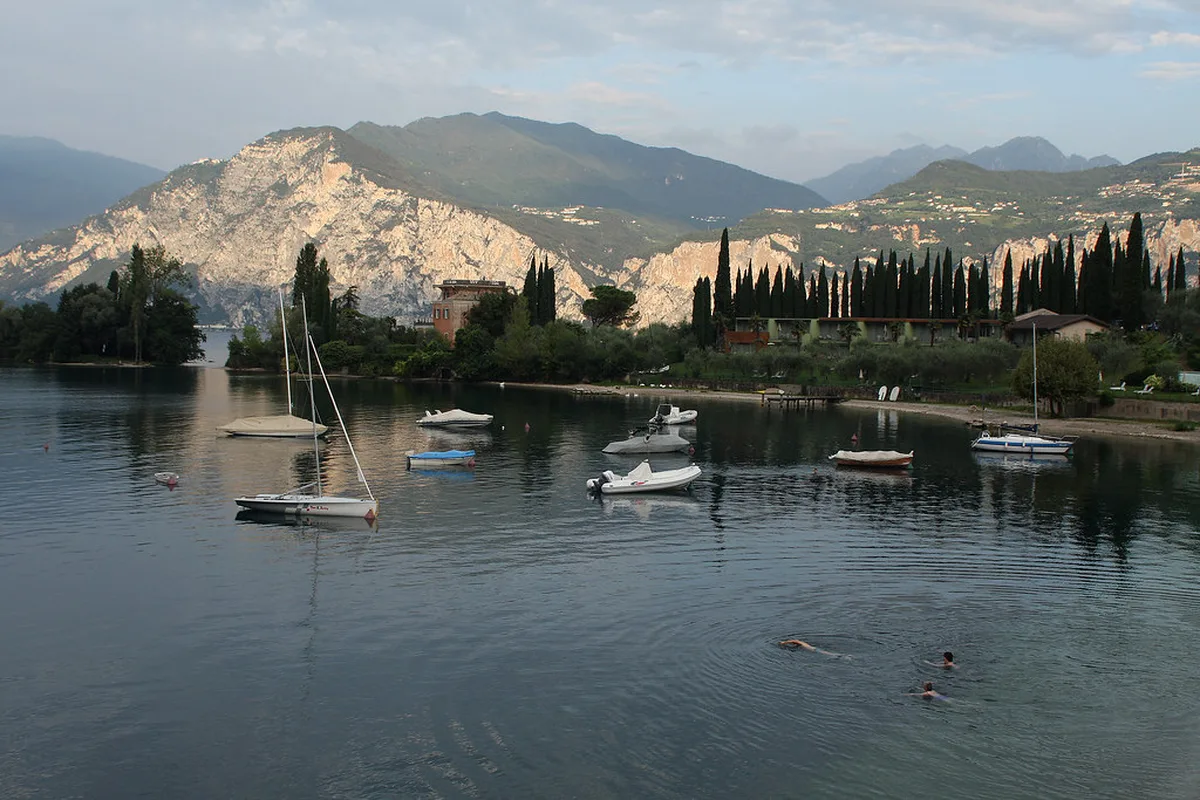
The Castello Scaligero is a fully intact 13th-century fortress that juts into the lake on three sides, surrounded by water in place of a conventional moat. Climbing the battlements (Tuesday–Sunday, 09:00–19:00, €6) gives you an unobstructed view across the southern lake to the Dolomites on clear days. The Grotte di Catullo at the far tip of the peninsula are the ruins of a Roman villa dating to the 1st century BC — the largest Roman private residence ever excavated in northern Italy. Entry costs €8 and the site is open until sunset.
Arrive before 10:00. Sirmione is a narrow peninsula with a single road in and out, and after mid-morning the streets become gridlocked with day-trippers arriving by coach. The town is entirely walkable once you are inside the medieval gate, but the bottleneck at the bridge entrance creates long waits if you arrive with the main crowds.
Florence: Renaissance Art in a Single Day
Florence is the longest practical day trip on this list. High-speed trains from Milano Centrale reach Firenze Santa Maria Novella in 1 hour 40 minutes; tickets run €35–70 depending on operator and booking window. Italo often undercuts Trenitalia on this route by €10–15 for the same journey time. The station exits directly onto the edge of the historic center, so you can reach the Duomo on foot in 10 minutes.
One day is enough to walk the compact centro storico between Santa Maria Novella station and the Arno, but it demands focus. Pick two of the following, not all three: Uffizi Gallery (€20, must book online), Accademia Gallery and Michelangelo's David (€16, must book online, closed Mondays), Duomo complex and Brunelleschi's dome climb (€18, books out days in advance). The Ponte Vecchio and Piazzale Michelangelo are free and worth 30 minutes each. Lunch is faster and cheaper in the Oltrarno neighborhood south of the river than in the tourist corridor around the Duomo.
Whether Florence is worth the time depends on your priorities. If you have already seen Lake Como and Bergamo, Florence adds a completely different register — Renaissance art and architecture instead of alpine scenery. If this is your only Italian trip, choosing Bellagio over Florence almost always produces a more memorable day because the logistics are simpler and the payoff-per-hour ratio is higher. For most travelers, Florence rewards an overnight stay more than a day trip.
Pavia: The Certosa and Covered Bridge
Pavia is the closest destination on this list: regional trains from Milano Centrale or Milano Rogoredo take 30 minutes and cost just €4 each way, making it the best option for travelers on a Milan budget. The city is a quiet university town — the University of Pavia was founded in 1361 and its arcaded courtyard is free to walk through — with none of the summer crowds that descend on Como or Verona.
The Certosa di Pavia is a 15th-century monastery located 8 km north of the city center, reachable by bus 170 from Pavia station (25 minutes, €1.50). The marble facade is considered one of the finest examples of Lombard Renaissance decoration anywhere: a dense grid of reliefs, medallions, and candelabra carved over 150 years. The monastery is open Tuesday through Sunday; morning hours typically run 09:00–11:30 and afternoon hours 14:30–17:00 in summer, but the monks observe a strict siesta and the gates close promptly. Plan to arrive at opening time.
Back in Pavia, the Ponte Coperto — a covered brick bridge over the Ticino river — is the town's most photographed landmark and a 10-minute walk from the station. The medieval towers that cluster around Piazza Leonardo da Vinci are largely intact and free to view from the square. Combine Certosa in the morning with the city center in the afternoon for a full day without spending more than €15 on transport and entry fees.
| Destination | Travel time from Milan | Approx train cost |
|---|---|---|
| Lake Como (Varenna) | 65 minutes | €14 round-trip |
| Bergamo | 50 minutes | €11 round-trip |
| Verona | 70 minutes (high-speed) / 2 hours (regional) | €15–€35 (high-speed) / €13 (regional) |
| Lugano, Switzerland | 75 minutes | €25–€45 |
| Cinque Terre (La Spezia) | 2.5–3 hours | €25–€30 round-trip |
| Bologna | 60 minutes (high-speed) | €18–€40 |
| Turin | 60 minutes (high-speed) | €25–€35 |
| Lake Garda (Sirmione) | 55 minutes to Desenzano | €10–€12 round-trip |
| Florence | 1 hour 40 minutes | €35–€70 |
| Pavia | 30 minutes | €4 each way |
Crucial Tips for Navigating Italian Train Travel
Two private operators run trains in Italy: the state-owned Trenitalia and the private competitor Italo. Italo only serves high-speed routes between major cities (Milan–Bologna–Florence, Milan–Verona–Venice) and does not reach smaller destinations like Varenna, Bergamo, or Pavia. Trenitalia runs everything. For regional trains, Trenitalia's fixed-price tickets never sell out and do not require seat reservations, making them the default choice for flexible day-trippers. For high-speed routes, compare both operators: Italo's fare-sale prices often undercut Trenitalia by 20–30% on the same departure time if you book two to three weeks ahead.
Regional tickets bought from a machine or ticket window must be validated before boarding in the yellow or green stamping machines on the platform. Forgetting to validate is the most common fine issued to tourists on Italian trains — the inspector has no discretion and the penalty is €50 on the spot. Digital tickets purchased through the Trenitalia app are self-validating and do not need to be stamped; the QR code alone is sufficient. Download the app before your trip and save your tickets offline in case you lose mobile signal in tunnels.
Platform assignment at Milano Centrale is posted on the departure boards roughly 10 minutes before departure. Regional trains to Bergamo or Varenna often use platforms 1–3, which are at the far western end of the upper hall — a 5-minute walk from the central staircase. High-speed platforms 10–24 are on the eastern side. Check the board as soon as you arrive at the station and position yourself near the right end of the concourse before the platform opens.
Expert Planning Advice and Local Booking Insights
Timing your day trips to avoid peak crowds matters as much as choosing the right destination. Saturday is the worst day for any lake trip: Milanese families fill the regional trains to Como and Garda from 09:00, and popular ferry routes have standing queues by noon. Tuesday through Thursday give you the same destinations with a fraction of the foot traffic. Sunday afternoons are similarly crowded on the return leg into Milan, so plan to be back by 17:00 or accept standing on a packed regional train.
ZTL zones (Zona Traffico Limitato) are active in almost every historic center on this list, including Bergamo's Città Alta, Verona's centro storico, and Sirmione's peninsula. These camera-enforced restricted areas automatically ticket foreign-registered vehicles, and the fines arrive at your home address weeks after you return. The train drops you inside or adjacent to these historic zones without any of the risk. If you do rent a car for a lake day, research the ZTL boundaries and parking lots (parcheggi) at the edge of each restricted zone before you leave Milan.
For booking guided day trips, Viator Milan Day Trips aggregates the most popular options with verified reviews. Guided tours make most sense for Cinque Terre (where the train connections between villages can be confusing) and for Florence (where booking entry to museums is time-sensitive). For all other destinations on this list, independent travel by train is faster, cheaper, and more flexible than a coach tour.
Frequently Asked Questions
Do I need a passport for a day trip to Lugano?
Yes, you must carry a valid passport because Lugano is located in Switzerland, which is outside the European Union. While border checks are infrequent on trains, they do occur, and you will also need to manage Swiss Francs for local purchases.
Is Lake Como or Lake Garda better for a day trip?
Lake Como is generally easier for a day trip because the train station in Varenna is steps away from the ferry docks. Lake Garda is beautiful but requires an extra bus or ferry ride from the train stations in Desenzano or Peschiera.
Can I do Cinque Terre in one day from Milan?
It is possible but requires a very long day with roughly six hours of total travel time. To make it work, you should take the earliest possible train and focus on visiting just two or three of the five villages.
Milan is far more than just a fashion capital; it is the gateway to some of the most beautiful landscapes in Europe. Whether you choose the alpine air of Lugano or the historic streets of Verona, these day trips will be the highlight of your journey. I hope this guide helps you navigate the Italian rail system with confidence and discover the magic beyond the city limits.
Continue exploring
More guides you'll find useful