10 Best Day Trips from Brussels (2026)
Plan the best day trips from Brussels with 2026 train times, ticket prices, and opening hours for Ghent, Bruges, Antwerp, and more — pick yours today.
On this page
10 Best Day Trips from Brussels by Train
Local tourism boards and travel editors agree on one thing: Brussels rewards day-trippers more than almost any capital in Europe. This guide to the best day trips from Brussels ranks routes by train time, ticket cost, and how much each town delivers. Belgium's compact rail network puts nearly every worthwhile town within two and a half hours of Bruxelles-Central. Brussels itself stays famous for Art Nouveau architecture, so save an afternoon there before or after a trip out.
This guide was last updated in July 2026, with prices and hours checked against official transport and attraction sites. Fares shift with the season, so treat every euro figure below as a starting point rather than a fixed number. The list below mixes canal cities, quiet university towns, a cliffside river town, and one stop across the French border.
Some of these picks show up on every Brussels blog, while a few rarely make the shortlist. Each entry below covers the real trade-offs: journey time, entry costs, opening hours, and who the trip actually suits. A later section also flags the day trips that sound better in headlines than they feel in person.
Planning Your Brussels Day Trip: What to Know First
Most Belgian day trips start at Bruxelles-Central, Bruxelles-Midi, or Brussels-Nord, and all three connect to the national NMBS/SNCB network. Standard single tickets rarely need advance booking, since Belgian trains run frequently and rarely sell out. Weekend return fares often undercut a weekday round trip, which matters if a Saturday or Sunday works for the schedule.
Arrive before 10am to clear most tour bus crowds. Weekend return fares often undercut two weekday one-way tickets. Pack a printed or downloaded ticket, as regional stations may have limited phone signal for QR codes.
Crowd timing shapes the experience more than most guides admit, especially in Bruges and Ghent. Arriving on the first or second train, before 10am, clears out most tour buses and cruise-ship day groups. Brussels itself gets quieter at specific times too, covered in the city's own Best Time to Visit Brussels Without Crowds Guide guide.
Pack a printed or downloaded ticket, since some regional stations have limited phone signal for QR codes. A light jacket earns its keep year-round, since river towns like Dinant run several degrees cooler than the capital. Most day trips pair well with an early dinner back in Brussels, so keep the return train flexible rather than fixed.
10 Best Day Trips from Brussels You Can Take
The ranking below favors direct train access first, since a long transfer eats into the actual day. Every entry names a real cost range and a realistic time budget, not just a highlight reel. A few, like Durbuy, need a car or a combined train-and-bus trip, and that trade-off gets flagged upfront.
Ghent and Bruges anchor most competing lists, and both earn their place here too. Leuven, Mechelen, and Antwerp sit closer, making them realistic even on a half-day schedule. Meise Botanic Garden, Dinant, Durbuy, and Ypres reward travelers chasing something quieter than a postcard center. Lille closes the list as the one cross-border option that still fits inside a single day.
| Destination | Travel Time | Key Attraction Cost | Best For |
|---|---|---|---|
| Ghent | 35–40 min | Canal boat €10–12 | Canal scenery, local feel |
| Bruges | ~1 hour | Belfry €14 | Classic Flemish postcard |
| Leuven | 20–25 min | Free to explore | University town, half-day |
| Mechelen | ~20 min | Tower €10–12 | Shortest journey |
| Antwerp | 40–50 min | Rubenshuis €16 | Fashion, art, architecture |
| Meise Botanic Garden | 30–40 min | €11 | Glasshouses, castle grounds |
| Dinant | 1.5–2 hours | Citadel €9–12 | River cliffs, quieter pace |
| Durbuy | ~2 hours | Free to wander | Forest lanes, Ardennes |
| Ypres | 1.5–2 hours | Museum €10–12 | WWI history |
| Lille | 45 min | Free to explore | Cross-border French charm |
Ticket prices below reflect 2026 adult admission where a single attraction anchors the trip. Family and group rates usually run lower, and most sites list current fares on their own websites. Treat opening hours as a pattern rather than a guarantee, since museums and towers shift schedules seasonally.
- Ghent's Canal-Lined Historic Center
- Ghent pairs Bruges-level canal scenery with a livelier, more local everyday feel.
- A short canal boat ride costs around 10 to 12 euros and runs roughly 40 minutes, weather permitting.
- Direct trains from Brussels-Central or Brussels-Midi take 35 to 40 minutes and depart roughly every half hour.
- The Patershol quarter behind the cathedral empties out fast once the tour groups head back to the main square.
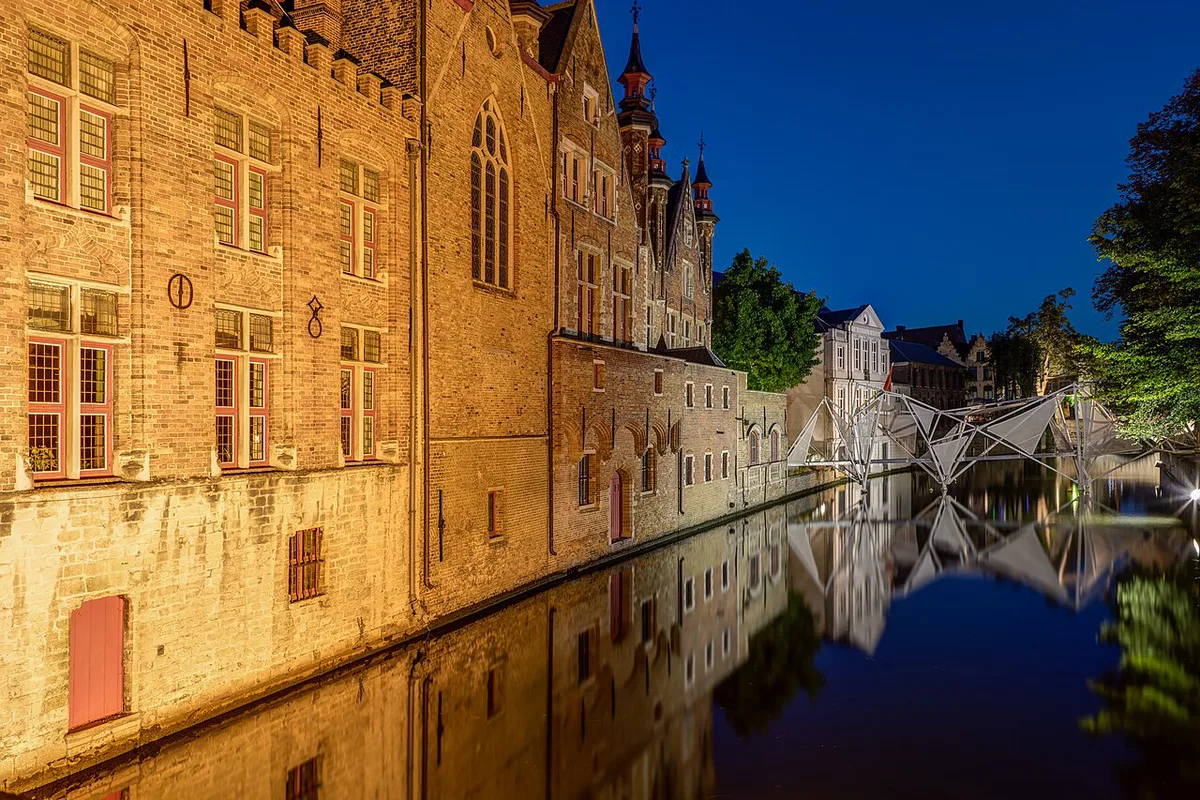
- Bruges' Fairytale Old Town and Belfry
- Bruges delivers the classic Flemish postcard: stepped gables, swan-filled canals, and a towering medieval belfry.
- Climbing the Belfry costs around 14 euros and the tower opens daily from roughly 9:30am to 6pm.
- Direct trains from Brussels leave hourly or more and take about an hour each way.
- Weekday mornings before 10am cut through most of the coach-tour crush around the Markt square.
- Leuven's Student-Era Town Hall and Beer Culture
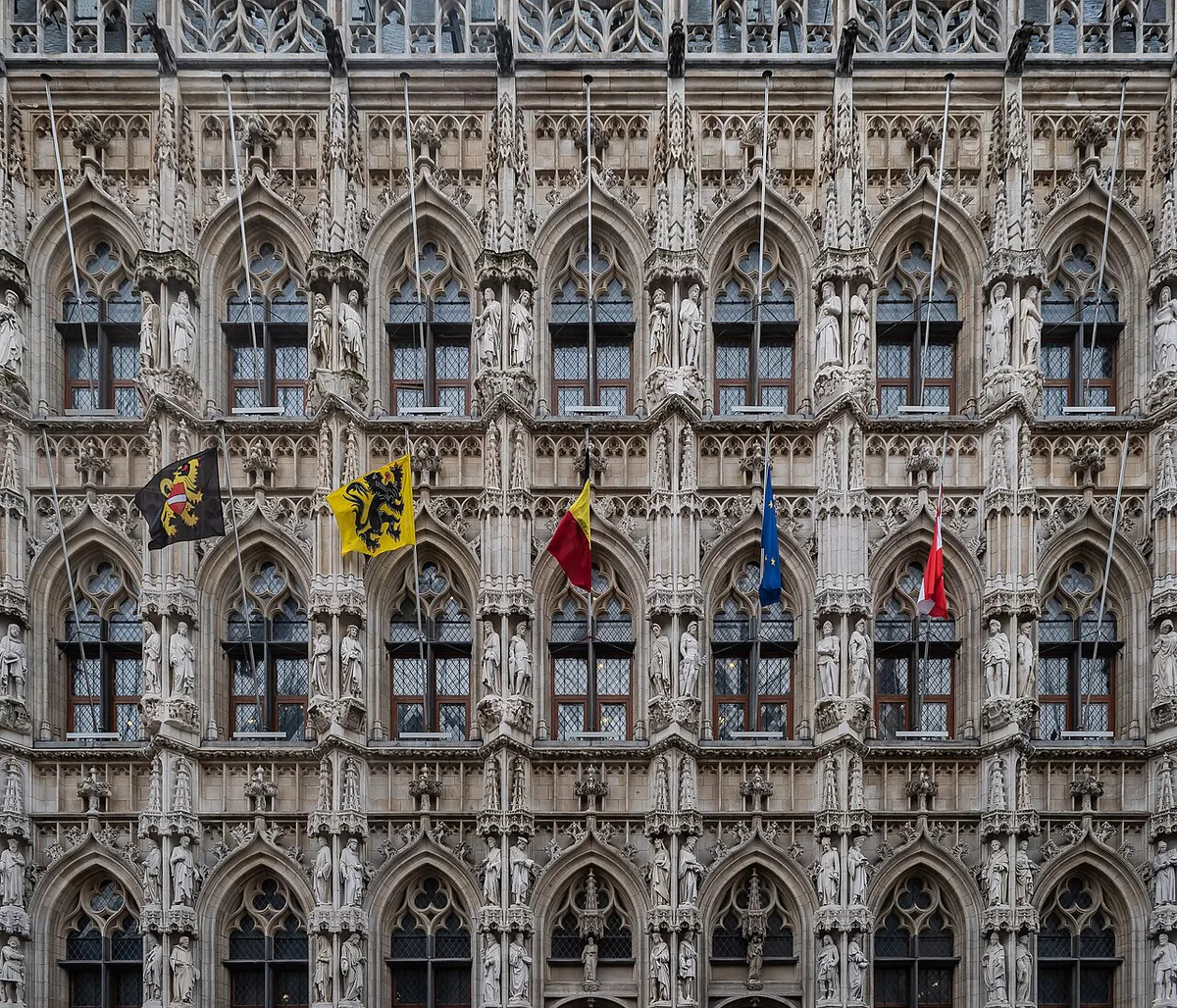
- Leuven blends a working university town with one of Belgium's most ornate Gothic town halls.
- The Oude Markt, often billed as Europe's longest bar, fills up fast on weekday evenings once classes end.
- Direct trains from Brussels-Central take just 20 to 25 minutes, with several departures every hour.
- Most sights sit within a 10-minute walk of the station, so a half-day visit still feels complete.
- Mechelen's Riverside Tower Climb
- Mechelen once served as capital of the Low Countries, and its Renaissance core still shows it.
- Climbing St Rumbold's Tower runs about 10 to 12 euros for roughly 538 steps to the skyline.
- Direct trains from Brussels-Central or Brussels-Nord take about 20 minutes, among the shortest on this list.
- The Dijlepad floating walkway along the river draws far fewer visitors than Bruges' or Ghent's main canals.
- Antwerp's Fashion, Rubens, and Grand Station
- Antwerp trades fairytale charm for edgier fashion boutiques, diamond dealers, and Rubens-era grandeur.
- Rubenshuis, the painter's restored home and studio, charges around 16 euros and typically closes on Mondays.
- Direct trains from Brussels-Central take 40 to 50 minutes and run frequently throughout the day.
- Antwerp-Centraal station itself, with its domed ceiling and marble stairs, is worth ten free minutes alone.
- Meise Botanic Garden's Glasshouses and Castle Grounds
- Meise Botanic Garden spreads across roughly 92 hectares around the 12th-century Bouchout Castle.
- Entry costs around 11 euros and the Victorian-style glasshouse holds thousands of plant species under one roof.
- Bus 250 or 251 from Brussels-North reaches the garden in about 30 to 40 minutes.
- Booking online matters most on weekends and school holidays, when timed-entry slots sell out.
- Dinant's Cliffside Citadel Above the Meuse
- Dinant sits wedged between limestone cliffs and the River Meuse, with a citadel perched above the rooftops.
- Citadel entry runs roughly 9 to 12 euros, and the site closes for parts of the winter.
- Trains from Brussels connect via Namur and take about 1.5 to 2 hours each way.
- The town also claims Adolphe Sax, inventor of the saxophone, as a native son worth a museum stop.
- Durbuy's Tiny Historic Core and Ardennes Trails
- Durbuy bills itself as the world's smallest town, a cluster of stone lanes ringed by Ardennes forest.
- Wandering the center costs nothing, though adventure-park activities like kayaking add extra fees.
- No direct train exists, so a combined train-and-bus trip from Brussels takes roughly 2 hours.
- Midweek visits feel almost empty, while weekends bring day-tripping families from across Wallonia.
- Ypres and the Nightly Menin Gate Ceremony
- Ypres carries the weight of World War One history, rebuilt almost entirely after 1918.
- The In Flanders Fields Museum charges around 10 to 12 euros and closes some Mondays in low season.
- Reaching Ypres from Brussels takes about 1.5 to 2 hours, usually changing trains at Kortrijk.
- The Last Post ceremony at the Menin Gate happens every evening at 8pm and costs nothing to attend.
- Lille's Cross-Border Markets and Old Town
- Lille sits just across the French border, close enough in food and architecture to feel Flemish.
- Fast trains from Brussels-Midi reach Lille in about 45 minutes, or roughly 90 minutes by car.
- Vieux Lille's market streets and Sunday flea markets reward slow wandering more than a checklist.
- Carrying a passport or ID card matters, since Lille sits in France despite the short, easy ride.
Getting Around: Trains, Passes, and Cross-Border Tips
Belgium's national rail operator, NMBS/SNCB, connects every stop on this list except Durbuy without needing a transfer in most cases. Standard second-class tickets cover all the in-Belgium trips above, and prices scale with distance rather than a flat fare. A weekend return ticket often costs less than two separate one-way fares, so check that option before buying.
Crossing into France for Lille works differently, since that route requires an international ticket rather than a domestic one. The fastest option is the high-speed line from Brussels-Midi, and you can book your Eurostar tickets here to lock in early fares. Booking a few weeks ahead usually beats a walk-up fare, especially around weekends and French school holidays.
Stations outside the capital rarely have English-language staff at every counter, so a translation app helps at ticket machines. Most machines do accept international cards, and NMBS/SNCB's own app sells tickets in English regardless of station. Building in a 15-minute buffer before any connecting train avoids a missed transfer at a smaller station.
How Many Days Do You Need for Brussels and Its Day Trips?
Two full days cover the core of Brussels itself: the Grand Place, museums, and the main neighborhoods. A third or fourth day works best spent outside the city, on one or two of the trips above. Travelers with only a weekend should pick one day trip, not two, to avoid a rushed, train-heavy day.
Weekend travelers should pick one day trip, not two, to avoid a rushed schedule. Ghent, Leuven, and Mechelen fit a half day each; Bruges, Antwerp, Dinant, and Ypres reward a full day.
Ghent, Leuven, and Mechelen all fit inside a half day if the schedule is already tight. Bruges, Antwerp, Dinant, and Ypres reward a full day, given the train time on each end. Durbuy and Lille work best as a dedicated full day, since transit alone takes an hour or more.
A single day in Brussels can still work for a short layover or a connecting flight. Focus that day on the historic center and one museum, and save day trips for a longer visit. Anyone building a longer stay can use the city's own Brussels Neighborhoods Guide: Best Areas to Stay to pick a base.
What to Skip and Local Tips for a Smoother Day
Waterloo's battlefield site turns up on almost every Brussels day-trip list, yet it suits history buffs more than casual visitors. The site spreads across a wide, car-friendly battlefield with limited public transit, making a car nearly essential. Han-sur-Lesse's show caves make similar lists too, but the round trip eats most of a day for one attraction. Both work well as a dedicated outing, just not as an easy add-on to a Brussels weekend.
Choosing between these day trips comes down to three things: train time, crowd tolerance, and what a traveler actually enjoys. Someone chasing photogenic canals should pick Ghent over Bruges for a calmer, less scripted version of the same charm. Someone short on time should default to Leuven or Mechelen, both under 25 minutes from Brussels-Central.
Travelers who would rather stay in Brussels can still find plenty beyond the Grand Place. The city's own 10 Hidden Gems in Brussels You Need to Visit (2026) guide covers spots most day-trip lists skip entirely. A free afternoon there pairs naturally with an early dinner reservation.
Street art fans have another free option instead of a train ticket. Following the comic strip mural route makes for a self-paced walk between bigger sights. It costs nothing beyond comfortable shoes and works in almost any weather.
Food remains one of Belgium's strongest arguments for spending a full day in the capital. The city's own local food guide pairs well with an evening back from any of these trips. Waffles, fries, and chocolate all taste better after a day spent walking someone else's town.
Frequently Asked Questions
What cities are easy to get to from Brussels?
Ghent, Leuven, and Mechelen all sit within 20 to 40 minutes of Brussels-Central by direct train. Bruges and Antwerp take closer to an hour, still comfortable for a single day. Lille, across the French border, adds about 45 minutes on the fast line.
What is the prettiest town near Brussels?
Bruges usually tops that list for its canals and stepped-gable architecture, though it draws heavy crowds. Ghent offers a similar look with fewer crowds and a more local, everyday feel. Durbuy and Dinant win votes too, for forest lanes and a dramatic river cliff.
How many days do you need in Brussels?
Two full days cover the highlights of Brussels itself, including the Grand Place and its main museums. A third day works well for one day trip, like Ghent or Leuven. Longer stays of four or five days allow two day trips plus a slower pace in the capital.
Can Brussels be done in one day?
A single day is enough to see the Grand Place, Manneken Pis, and one museum at a walking pace. It suits a layover or a short connection more than a full visit. Anyone with more time should add at least one day trip from this list.
Is Bruges or Ghent the better day trip from Brussels?
Bruges wins on sheer postcard beauty, with a compact, heritage-listed center. Ghent wins on everyday local feel, since it draws fewer coach tours and costs less at restaurants. Compare actual prices back in the capital using the 10 Best Local Restaurants in Brussels (2026) guide.
Day Trips From Other Well-Connected Cities
Belgium is small enough that most of it is a day trip from Brussels, which is the main argument for basing yourself here. Bruges makes the same case from the coast side — see its day trips — and Kraków's day trips show the pattern in Poland.
Brussels earns its reputation as a hub, not just a destination, once these day trips enter the plan. Ghent and Bruges anchor the postcard version, while Mechelen, Leuven, and Dinant reward a slower, quieter pace. Lille adds a French detour without derailing a single day, and Durbuy suits anyone chasing forest quiet.
Pick one or two trips rather than rushing through four, since train time adds up fast. A well-timed morning train and a flexible return leave room for Brussels' own neighborhoods and food scene too.
Continue exploring
More guides you'll find useful