Plaka Athens Travel Guide: 7 Essential Things to Do & See
Discover the magic of Plaka, Athens' oldest neighborhood. Our guide covers the 7 best things to do, from Anafiotika's hidden streets to the best rooftop bars.
On this page
Plaka Athens Travel Guide: 7 Essential Things to Do & See
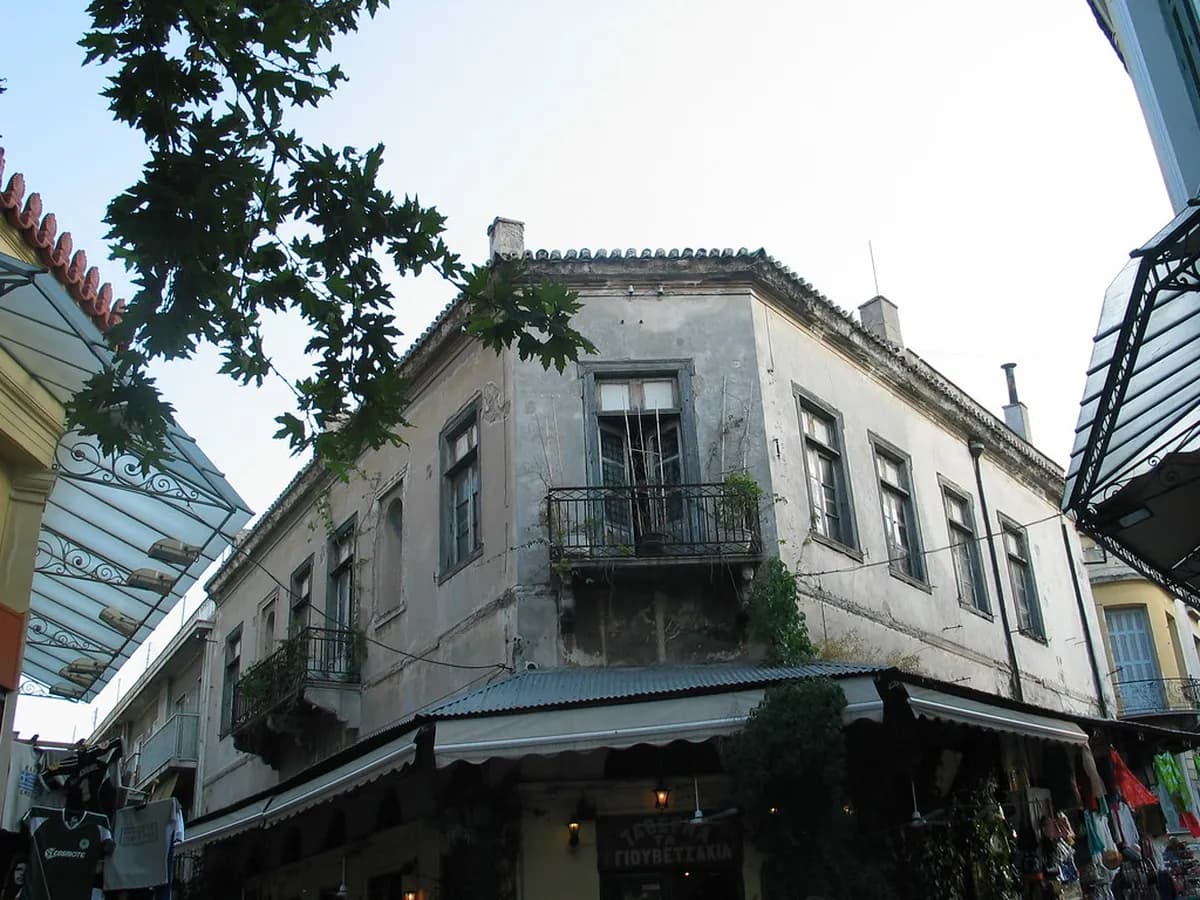
Plaka sits at the foot of the Acropolis and is Athens' oldest continuously inhabited neighborhood. Its narrow cobblestone alleys, jasmine-draped balconies, and layers of Byzantine, Ottoman, and neoclassical architecture make it unlike anywhere else in the city. Walking through here at any hour of the day feels like the city has slowed to a human pace.
This district is one of the most visited 10 Essential Athens Neighborhoods and Travel Tips, but it rewards visitors who venture beyond the main pedestrian strips. The touristy core along Adrianou Street gives way quickly to quieter residential lanes where cats sleep in doorways and locals hang their laundry between shuttered windows.
Whether you have a single afternoon or a full day, this guide gives you the practical details to get the most from Plaka in 2026 — including two spots that most visitors walk straight past.
Top Historical Attractions in the Plaka District
The Roman Agora is the district's most significant ancient site outside the Acropolis itself. Built between 19 and 11 BC during the reigns of Julius Caesar and Augustus, it served as the commercial heart of Roman-era Athens. Its most famous feature is the Tower of the Winds, an octagonal marble structure that functioned simultaneously as a sundial, water clock, and wind vane — the ancient world's first meteorological station.
Just north of the Roman Agora stand the remains of Hadrian's Library, commissioned by Emperor Hadrian in AD 132. The complex once held over a thousand scrolls and featured a central courtyard with a reflecting pool. Today the ruins are accessible and make for a worthwhile 20-minute stop, especially when combined with a combined-ticket visit to the Roman Agora.
One stop that almost every visitor overlooks is the Monument of Lysikrates on Shelley Street, just east of the main shopping drag. Built in 334 BC by a wealthy patron to commemorate a theatrical victory, it is one of the best-preserved ancient monuments in the district and entry is free. The ornate Corinthian capital and carved frieze are remarkable up close, and the surrounding square is quiet enough that you can study it without a crowd.
The Metropolitan Cathedral of Athens anchors the neighborhood's religious heritage. Construction began on Christmas Day 1842, when King Otto and Queen Amalia laid the cornerstone themselves. Several smaller Byzantine churches are hidden in the surrounding lanes — the Church of Saint Nicholas Rangavas is considered the oldest in Athens and is worth seeking out. Exploring these sites is one of the most rewarding 15 Best Things to Do in Athens Besides the Acropolis for anyone interested in the city beyond the main highlights.
Anafiotika: Exploring the "Island" Neighbourhood
Tucked against the northeast slope of the Acropolis rock is a tiny residential enclave called Anafiotika. In the mid-19th century, skilled builders from the Aegean island of Anafi came to Athens to help construct King Otto's royal palace. Knowing they would be away from home for years, they built their housing quarter in the whitewashed Cycladic style of their native island — blue doors, low rooflines, bougainvillea cascading over stone walls.
The result is the closest thing to a Greek island you will find without leaving the city. Finding this spot is one of the great rewards of looking for 10 Hidden Gems in Athens: A Local's Travel Guide, given that it sits only a few hundred meters above the busiest part of Plaka. You reach it by climbing a series of steep, unmarked stairways that branch off Theorias Street.
People still live here full time, so treat it as a residential area rather than a tourist attraction. Stay on the paths, keep your voice down, and resist the urge to peer into windows. The small church of Agios Georgios tou Vrachou near the top gives you the best vantage over the city. If you follow Stratanos Street upward you reach a viewpoint that looks directly down over the red-tiled rooftops of Plaka — bring your camera and comfortable shoes, as the stone path is steep and uneven.
Reach Anafiotika by climbing steep, unmarked stairways that branch off Theorias Street. The whitewashed Cycladic-style buildings with blue doors and bougainvillea were built by 19th-century builders from the Aegean island of Anafi.
Authentic Shopping: Beyond the Typical Souvenirs
Adrianou Street is the main shopping artery and runs roughly east to west through the heart of Plaka. Most of what lines the first hundred meters is mass-produced souvenirs — ceramic plates, evil eye keyrings, and T-shirts in every shade of blue. The quality improves significantly when you turn off into the side lanes or push through to Kydatheneon Street.
Mouki Mou is a standout boutique for high-end Greek fashion and design objects. The stock changes seasonally and skews toward contemporary Greek designers rather than traditional craft, making it a good option for a gift that does not look like it came from a market stall. Nearby, The Loom specialises in authentic flokati rugs and traditionally woven textiles made from natural wool. The staff can explain the regional origins of different patterns and weave structures, which adds context to what would otherwise be a generic purchase.
For something genuinely one of a kind, look for Roka on Adrianou Street, next to Erato Restaurant. The shop is barely larger than a cupboard and belongs to an older woman who sells her own handmade tapestries and paintings. There is no website and no photography is allowed inside, but the work has earned a loyal following over four decades. Klio Creations on Kydatheneon stocks scarves and jewellery designed and produced in Greece — a meaningful distinction in a district where most items are imported.
Dining and Nightlife: Best Tavernas and Rooftop Cinema
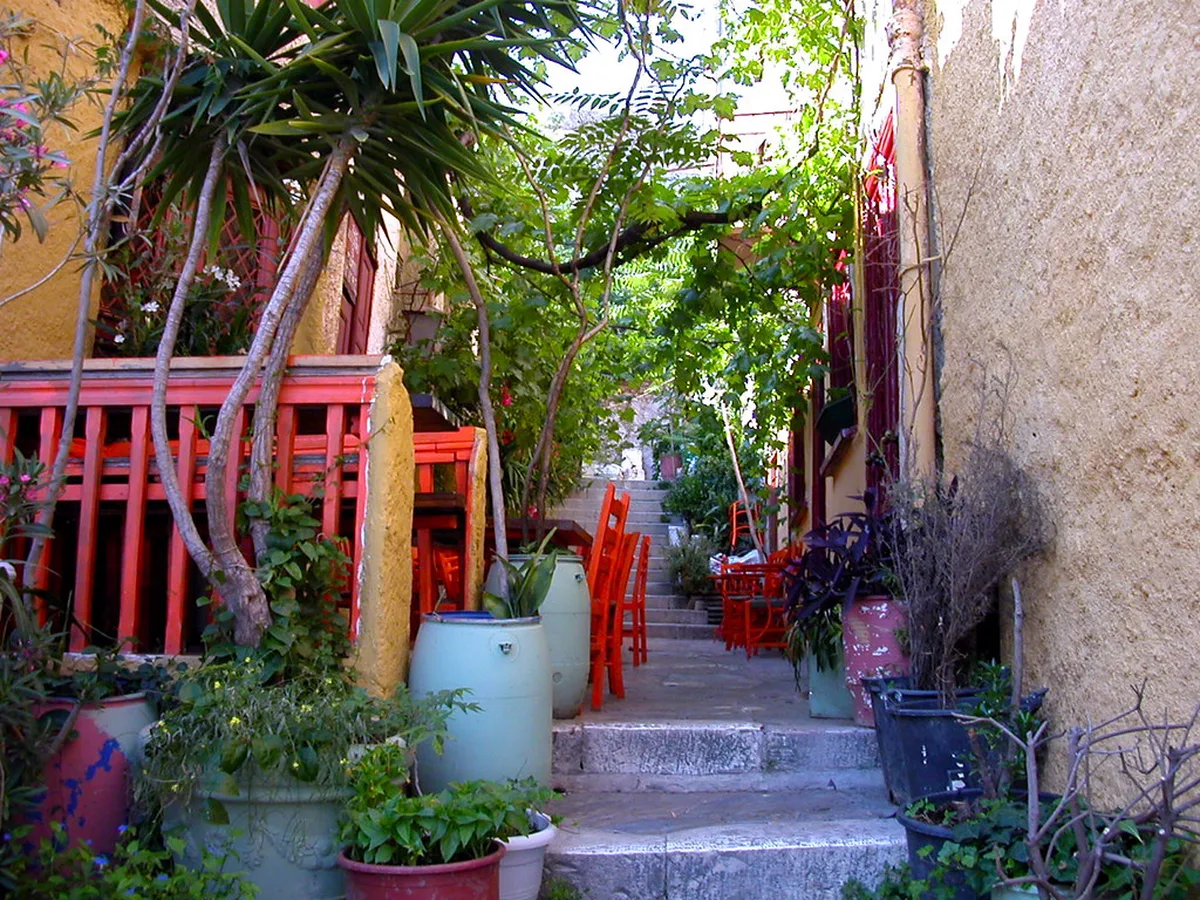
Yiasemi on the Mnisikleous stairs sets the standard for the Plaka dining experience. Guests sit on cushioned steps with small tables wedged between the stone landings, surrounded by hanging lanterns and potted herbs. Arrive at least an hour before you plan to eat — on any warm afternoon the outdoor spots fill quickly and the wait for a staircase table can stretch past 45 minutes. The interior is worth it if you cannot get outside: mismatched furniture, abundant greenery, and excellent homemade pies. Hours run daily 08:00 to 03:00.

Brettos bar on Kydatheneon Street has been operating since 1909 and is the oldest distillery in Athens. The walls are lined floor to ceiling with hundreds of illuminated coloured bottles of ouzo, brandy, and mastiha spirit, creating a warm amber glow that is best appreciated after dark. You can buy small transportable bottles of their house spirits to take home. Hours are daily 10:00 to 03:00.
The Old Tavern of Psaras on Erechtheos Street is billed as the oldest restaurant in Athens and has hosted everyone from local politicians to Brigitte Bardot. The food is standard Greek — grilled octopus, fresh salads, lamb chops — but the setting, with round tables on a terrace overlooking the neighbourhood and church bells audible from across the lane, is the real draw. Reservations are recommended for groups. It opens daily at 12:00.
Cine Paris is a rooftop open-air cinema that operates from May through October in a garden above a building on Kydatheneon Street. Films screen in their original language with Greek subtitles. Most visitors default to the later screening (around 23:00), but the earlier show — typically starting at 21:00 — is the one to book for 2026: the Acropolis is still catching the last of the daylight as the film begins, and the view behind the screen is genuinely spectacular. The later screening is in full darkness and you lose that entirely. Check the programme at the door or online before your visit and book seats in advance in July and August. Consider pairing the evening with a Athens by Night: City Tour & Plaka if you want a guided introduction to the neighbourhood first.
Book Cine Paris seats in advance during July and August. The earlier screening at 21:00 offers Acropolis views catching the last daylight, while the later 23:00 show screens in full darkness above the rooftops of Plaka.
Where to Stay: Top-Rated Hotels in Plaka
Staying inside Plaka puts you within ten minutes' walk of the Acropolis, the Roman Agora, and both metro stations. The trade-off is noise: the main pedestrian streets stay busy until midnight in summer, so look specifically for rooms on upper floors or properties that advertise soundproofing. A rooftop breakfast with Parthenon views is a reasonable premium to pay if you are only in Athens for two or three days.
The Athens Gate Hotel sits just outside the eastern edge of Plaka near the Temple of Olympian Zeus. It offers modern amenities and a rooftop terrace with direct views over the ruins. The location means you are five minutes from both Syntagma metro and the Acropolis Museum.
Smaller guesthouses in the upper lanes — especially around Anafiotika — offer a more intimate experience in restored neoclassical buildings. These properties typically have fewer rooms, traditional tile floors, and local hosts who can give practical neighbourhood advice. Book at least two months ahead for July and August. Staying centrally makes a 3 Days in Athens Itinerary: The Ultimate Travel Guide significantly more efficient, since you can return to the hotel mid-afternoon and head back out after the heat drops.
Essential Logistics: Location, Transport, and Timing
Plaka occupies the northeast slopes of the Acropolis hill, roughly between Monastiraki and Syntagma. Both Metro Line 1 (Monastiraki) and Metro Line 2/3 (Syntagma) put you within a five-minute walk of the district boundary. The intersection of Adrianou and Kydatheneon streets marks the practical centre of the neighbourhood maze — once you can find that junction, you can orient yourself to everything else.
The best months to visit in 2026 are April, May, September, and October. July and August are the most crowded: cruise ship tour groups arrive in force by 10:00, temperatures regularly exceed 35°C, and queues at every major site stretch well past midday. If you are visiting in summer, plan to be on the streets by 08:30 and take a long midday break at a cafe before heading back out after 17:00.
Winter (December through February) brings the opposite experience: temperatures in the low teens with occasional rain, minimal crowds, and a relaxed atmosphere in the cafes and tavernas. Most restaurants and shops stay open year-round, though hours may shorten. It is a genuinely underrated time to visit if you want the neighbourhood to yourself. You might find it helpful to also look for 10 Best Places to Eat in Athens Off the Tourist Path to find better-value meals away from the main tourist drag.
Wear flat-soled shoes with grip — the marble cobblestones become slippery when wet or polished by foot traffic. Public toilets are scarce, so plan to use facilities at museums or cafes. Most businesses accept cards, but keep some cash for street vendors and the few older shops that are card-only for purchases above a certain amount.
Self-Guided Plaka Walking Tour Route
This loop covers approximately 2.3 km and takes two to three hours at a relaxed pace, including short stops. Start at Monastiraki metro station and walk south along Areos Street toward the Roman Agora. Spend 20 to 30 minutes here — the Tower of the Winds rewards close inspection of its carved wind gods and ancient drainage channels. Continue east along Adrianou Street to reach the Monument of Lysikrates at Shelley Street, a free stop that most guidebooks skip entirely.
From Lysikrates, turn north onto Erotokritou Street toward the Old Tavern of Psaras and take the lane uphill into Anafiotika. Allow 20 minutes to wander the whitewashed paths and reach the upper viewpoint on Stratanos Street. Descend via Theorias Street and turn left toward Kydatheneon for shopping and the Metropolitan Cathedral.
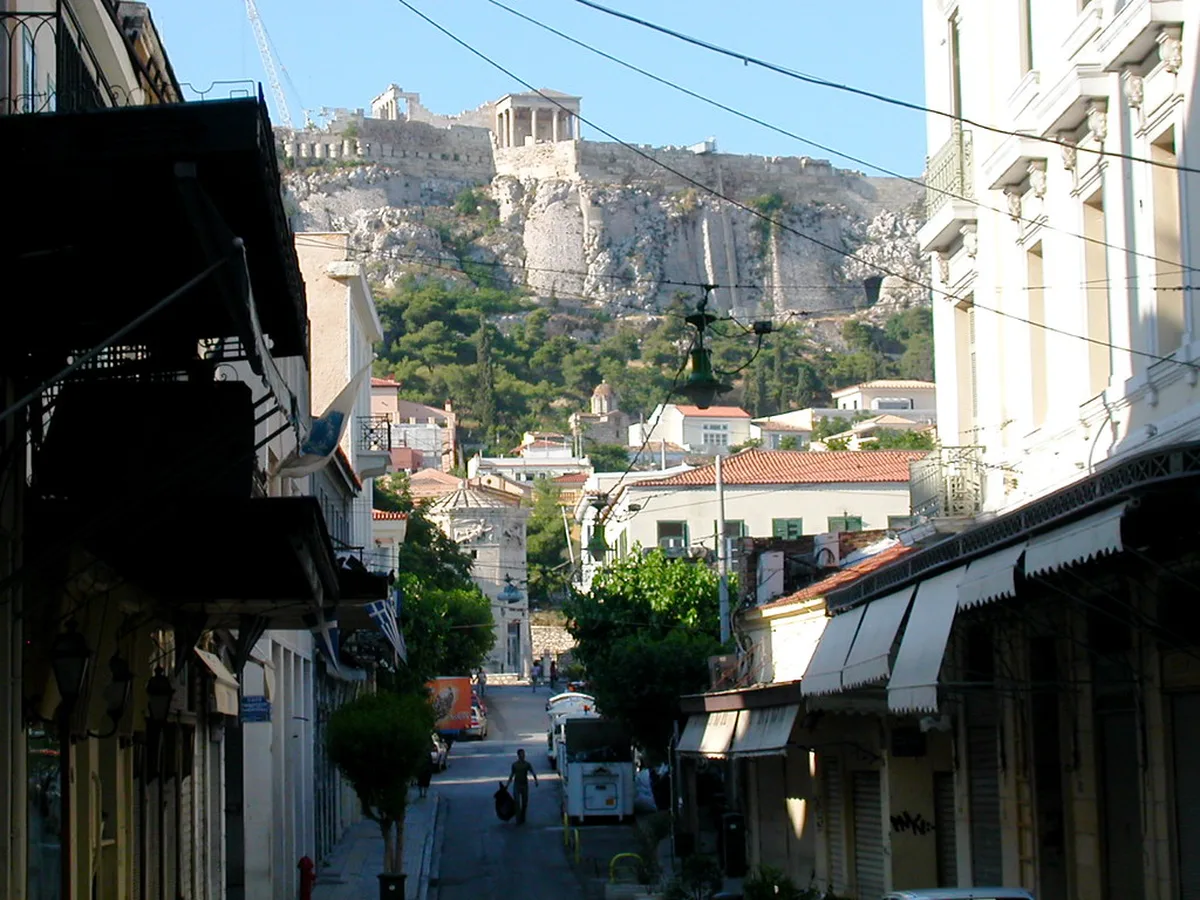
End the route at Areopagus Hill, just west of the Acropolis entrance. The climb takes about ten minutes from the base and the path is rocky — bring water, as there are no vendors at the top. The views from the summit take in the Agora below, the Plaka rooftops, and the Parthenon directly above. Sunset from Areopagus is one of the best free experiences in Athens and the ideal way to close a full day in the district. This route connects many of the most 15 Most Beautiful Places in Athens: A Visual Travel Guide without needing a map or a guide.
Frequently Asked Questions
Is Plaka Athens safe at night?
Yes, Plaka is considered one of the safest neighborhoods in Athens for tourists at night. The streets are well-lit and remain busy with diners and shoppers until late. However, you should still stay aware of your surroundings and keep your belongings secure in crowded areas.
How much time do you need in Plaka?
You should plan to spend at least three to four hours to see the main highlights. This allows enough time for a casual walk, some shopping, and a relaxed lunch. If you wish to visit museums or archaeological sites, consider dedicating a full day to the area.
Can you walk from Plaka to the Acropolis?
Yes, the main entrance to the Acropolis is within easy walking distance from most parts of Plaka. The walk takes about ten to fifteen minutes depending on your starting point in the neighborhood. You can also book Best Private Tours In Athens: The Ultimate Guide that include both areas.
What is the best street in Plaka for shopping?
Adrianou Street is the most famous shopping street for a wide variety of Greek souvenirs and clothing. For more unique boutiques and local art, explore the smaller lanes around Kydatheneon Street. You will find higher-quality goods by venturing away from the main tourist paths.
Plaka Athens rewards the visitor who slows down. The neighbourhood's best moments — stumbling onto the Monument of Lysikrates at dusk, finding a staircase table at Yiasemi, watching the Acropolis glow from a rooftop cinema seat — are not on any tour bus itinerary. They come from giving yourself time to wander.
In 2026, the area remains the most approachable entry point to Athens for first-time visitors and the most pleasant place to spend an evening for anyone who has been before. Start early, take the long way up to Anafiotika, and save Areopagus Hill for the final hour of daylight.
Pair this with our roundup of lesser-known corners of Athens to balance the must-sees with the city’s quieter discoveries.
For more of the city beyond Plaka, browse our guide to the best areas of Athens and discover where locals eat off the tourist path.
Continue exploring
More guides you'll find useful