12 Best Things to Do in Athens at Night (2026)
Discover the best things to do in Athens at night, from rooftop bars with Acropolis views to hidden Rebetiko joints and late-night street food.
On this page
12 Best Things to Do in Athens at Night
Athens transforms after dark in a way few European capitals can match. The heat fades, the ancient marble catches the floodlights, and the city shifts into a rhythm that runs well past 4:00 AM. Whether you want a quiet Assyrtiko on a rooftop overlooking the Parthenon or a packed dance floor in Gazi, the Greek capital delivers on every front. This guide is fully updated for 2026 with current prices, transport details, and neighborhood breakdowns.
Greeks eat dinner late — typically after 21:00 — so bars only hit their stride around midnight and clubs peak near 02:00. That timeline can feel disorienting to first-time visitors, but it is also liberating: there is no rush, no last-orders pressure, just a long night unfolding at a genuinely Mediterranean pace. If you are planning a multi-day stay, our 3-days in Athens itinerary pairs this evening guide with the best daytime routes.
Marvel at the Illuminated Acropolis from Areopagus Hill
The archaeological site closes to visitors at dusk, but the Parthenon is floodlit after sunset and visible from several free vantage points across the city. Areopagus Hill — the flat rock just below the main Acropolis entrance — is the classic choice. You can stand within 200 metres of the Propylaea and watch the marble columns shift from warm amber to brilliant white as the city lights come on around you.
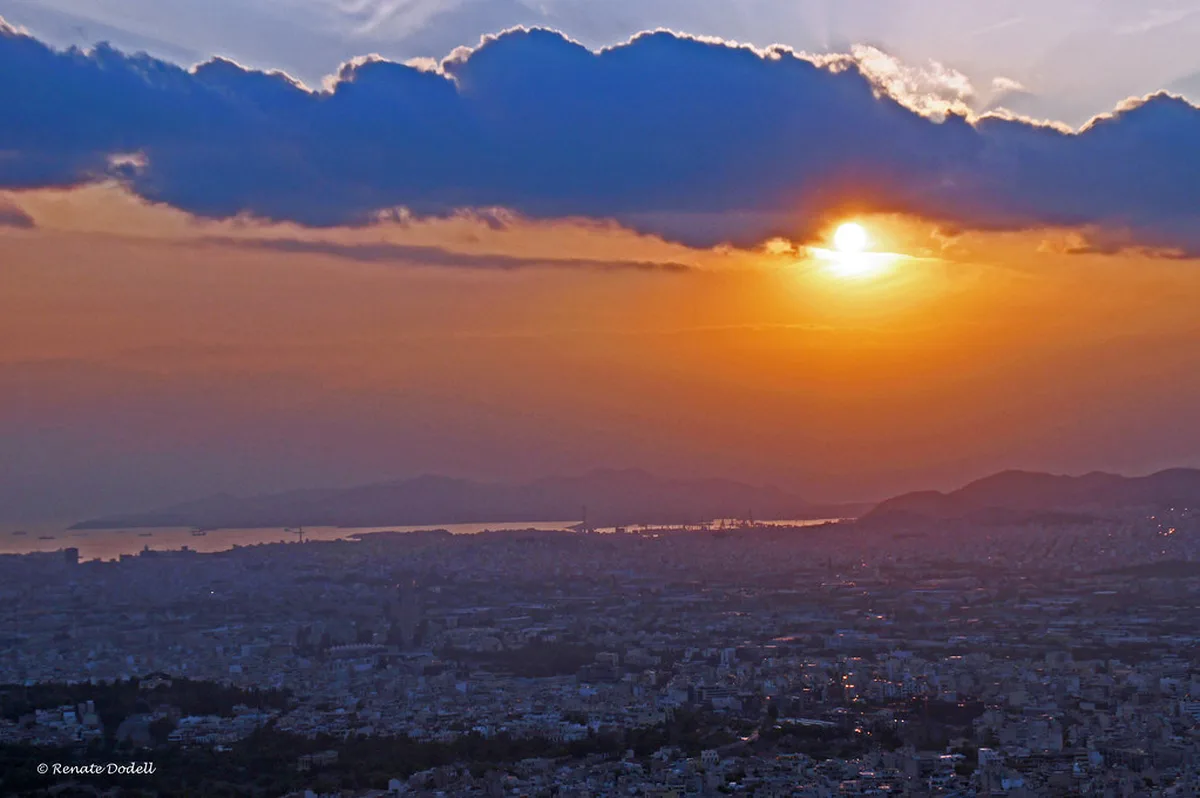
Philopappos Hill on the opposite side of the Acropolis is a quieter alternative with a broader panorama toward the Saronic Gulf. Both hills are open 24 hours and cost nothing to visit. The ground is polished marble, so wear grip-soled shoes, especially if you arrive after rain. On a full moon night, skip the floodlit view entirely — the natural light is more dramatic than any artificial rig.
Sip Cocktails at a Monastiraki Rooftop Bar
Athens is unusually flat for a Mediterranean capital, which means that gaining even four or five storeys puts the Acropolis almost at eye level. Monastiraki Square sits at the base of the hill, making it the natural home for the city's rooftop bar scene. The A for Athens Rooftop is the best-known option, with direct Parthenon sightlines and well-mixed cocktails priced at €14–20. Book a front-row table in advance — they fill by 20:00 in summer.
Most Monastiraki rooftops operate daily from 10:00 until 02:00 or 03:00 during the peak season (May–October). Outside that window, some terraces close or reduce their hours significantly, so confirm before visiting in November or March. If you prefer a more local crowd, walk one block north to Psiri and look for the smaller rooftops above the cocktail bars on Miaouli Street, where prices drop and the view is only marginally less dramatic.
Experience the Alternative Energy of Exarcheia
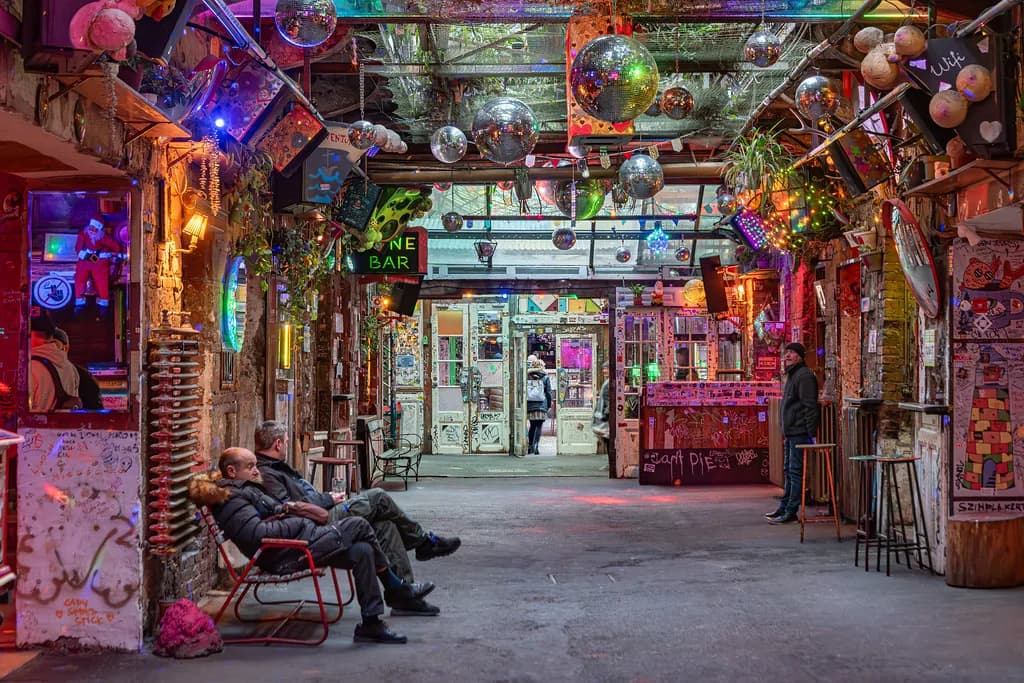
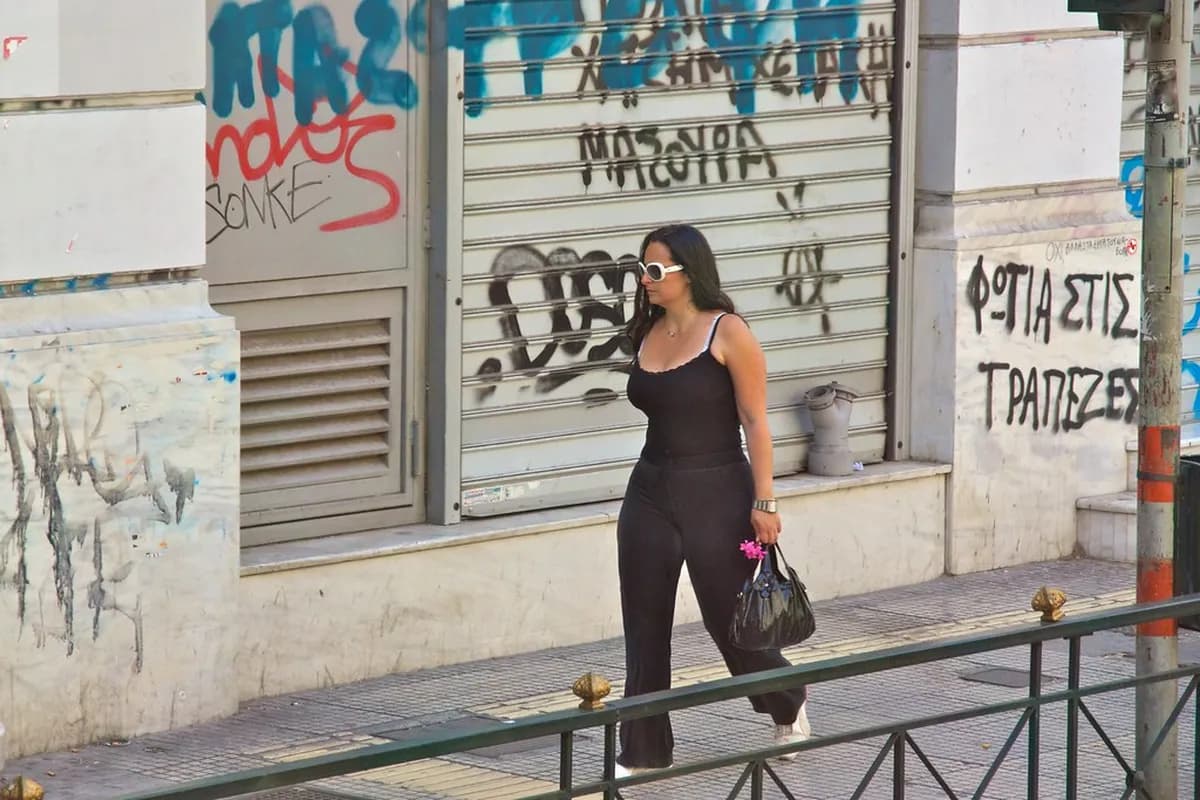
Exarcheia is Athens at its most unfiltered. The neighborhood grew into the city's political and artistic counterculture during the 1970s and 1980s, and it still carries that identity. The streets are thick with radical murals, stencilled slogans, and hand-painted signs for benefit concerts. The bars are small, cash-only, and reliably cheap — beers around €4, spirits around €7 — and the music tends toward punk, experimental jazz, and anything that would sound out of place in a hotel lobby.
The central square at Exarcheia is the social hub, busy on warm evenings with students, artists, and long-term residents. It is not a polished tourist zone, and that is the entire point. Walking the side streets reveals record shops, radical bookstores, and basement venues that rarely appear in guidebooks. Keep your valuables secure and your awareness up after midnight, but the neighborhood is far less dangerous than its reputation suggests to first-timers. Many Athenians genuinely love it.
Watch a Classic Film at an Open-Air Cinema
Outdoor cinema is not a novelty in Athens — it is a summer ritual. The city has over 60 open-air screens, many of them running since the 1920s, and the season runs from May through October. Screenings typically start after 21:00 when the sky is fully dark, and the combination of a star-filled sky, warm air, and an Acropolis silhouette in the background makes even a mediocre film feel special. Tickets cost €8–12 and usually include a drink at the onsite bar.
Cine Paris in Plaka is the most photographed option, with a rooftop terrace that frames the Acropolis directly behind the screen. The Athens Open Air Film Festival runs across multiple venues from June to September, showing international art-house releases and restored classics. Note that these cinemas are entirely seasonal — they close completely in October regardless of weather. If you are visiting outside the May–October window, this activity simply is not available.
Dance Until Sunrise in the Gazi District
Gazi takes its name from the old gasworks at its centre, now converted into the Technopolis cultural complex that hosts outdoor concerts and festivals throughout the year. The surrounding streets are Athens' main clubbing district, with venues ranging from mainstream pop rooms to underground techno basements. Entrance fees run €10–25 and typically include one drink. The blue line metro drops you at Kerameikos station, a 90-second walk from the action.
Gazi is also the city's established hub for LGBTQ+ nightlife, with several inclusive bars and clubs clustered on and around Leoforos Konstantinoupoleos. The atmosphere shifts noticeably around 02:00: the mainstream crowd thins, the music gets more underground, and the remaining venues lean harder into house and techno. If you want the most local version of the Gazi experience, arriving after 01:30 and staying until 05:00 is more rewarding than the earlier, tourist-heavy window.
Have Dinner at a Traditional Greek Taverna
A proper sit-down taverna dinner is not just a meal in Athens — it is the foundation of the night. Greeks treat it as a social event that lasts two to three hours, with multiple small plates, plenty of wine or raki, and no expectation that anyone will rush. The standard spread includes grilled octopus, tzatziki, taramosalata, horiatiki salad, grilled meats, and crusty bread. Budget €20–35 per person with drinks at a mid-range local spot.
Koukaki — the residential district just south of the Acropolis — is one of the most rewarding areas for honest taverna dining in 2026. It is close enough to the tourist center to be convenient, but local enough that menus are still written primarily in Greek. Neighbours dine here with families rather than tour groups, and the lack of foot traffic keeps prices fair. The streets around Veikou and Drakou are good places to start, with several tables spilling onto the pavement on warm evenings. Koukaki also has a cluster of wine bars where the taverna experience gradually shades into a late-evening drinks session — making it an ideal single-neighborhood dinner-into-drinks circuit that most visitors miss entirely.
Areas like Pangrati, on the east side of Lycabettus, offer a similar local-dining density. Both neighborhoods are 15–20 minutes on foot from Monastiraki Square and worth the walk if you want to escape the Plaka restaurant strip.
Catch Golden Hour at Lycabettus Hill
Lycabettus is the highest point in central Athens at 277 metres, and its 360-degree panorama takes in the Acropolis, the port of Piraeus, and on clear days the islands of Aegina and Salamis. Arriving at sunset — roughly 20:30 in midsummer — gives you the golden light over the city followed by the full floodlit view after dark. The funicular railway runs until 01:30, with a return ticket priced at €13 per person. Alternatively, the hiking path from Kolonaki takes about 20 minutes and is well-maintained.
A small chapel dedicated to Saint George sits at the summit, and there is a café-bar where you can order a drink while the city transitions from day to night below you. Bring a light jacket: the summit breeze is noticeably cooler than the streets even in August. The funicular station at the bottom is at Aristippou Street in Kolonaki, easily reached by taxi or on foot from Syntagma Square.
Take an Evening Stroll Through Plaka
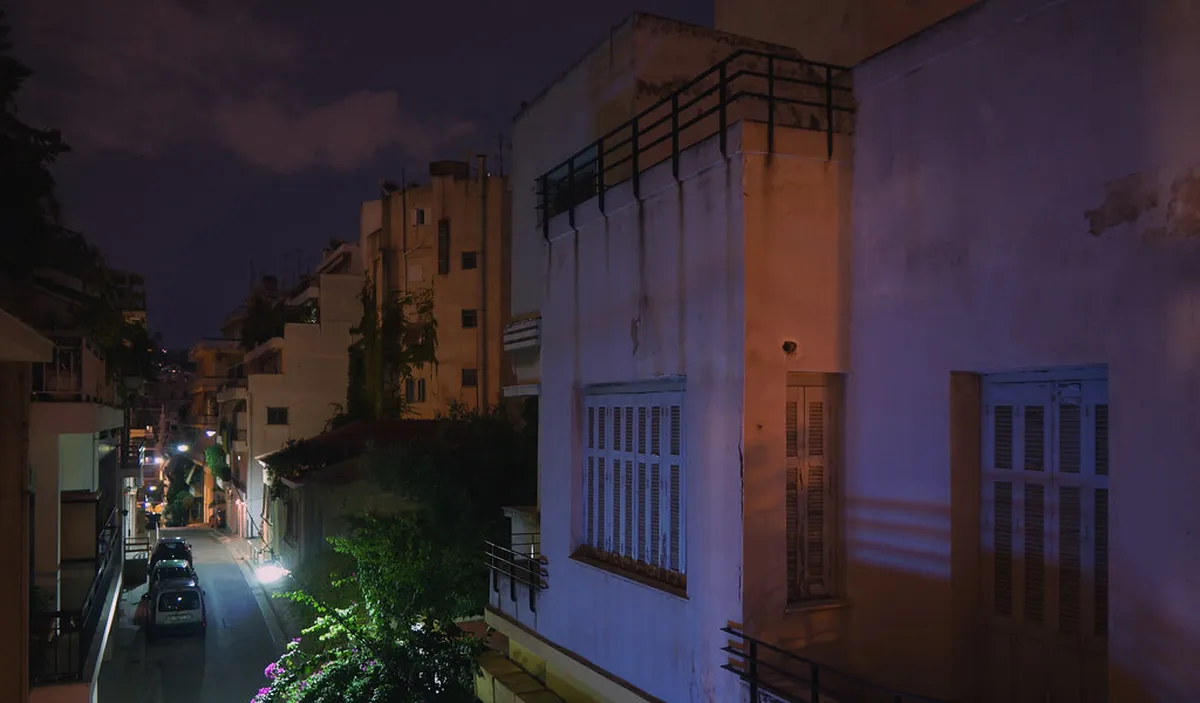
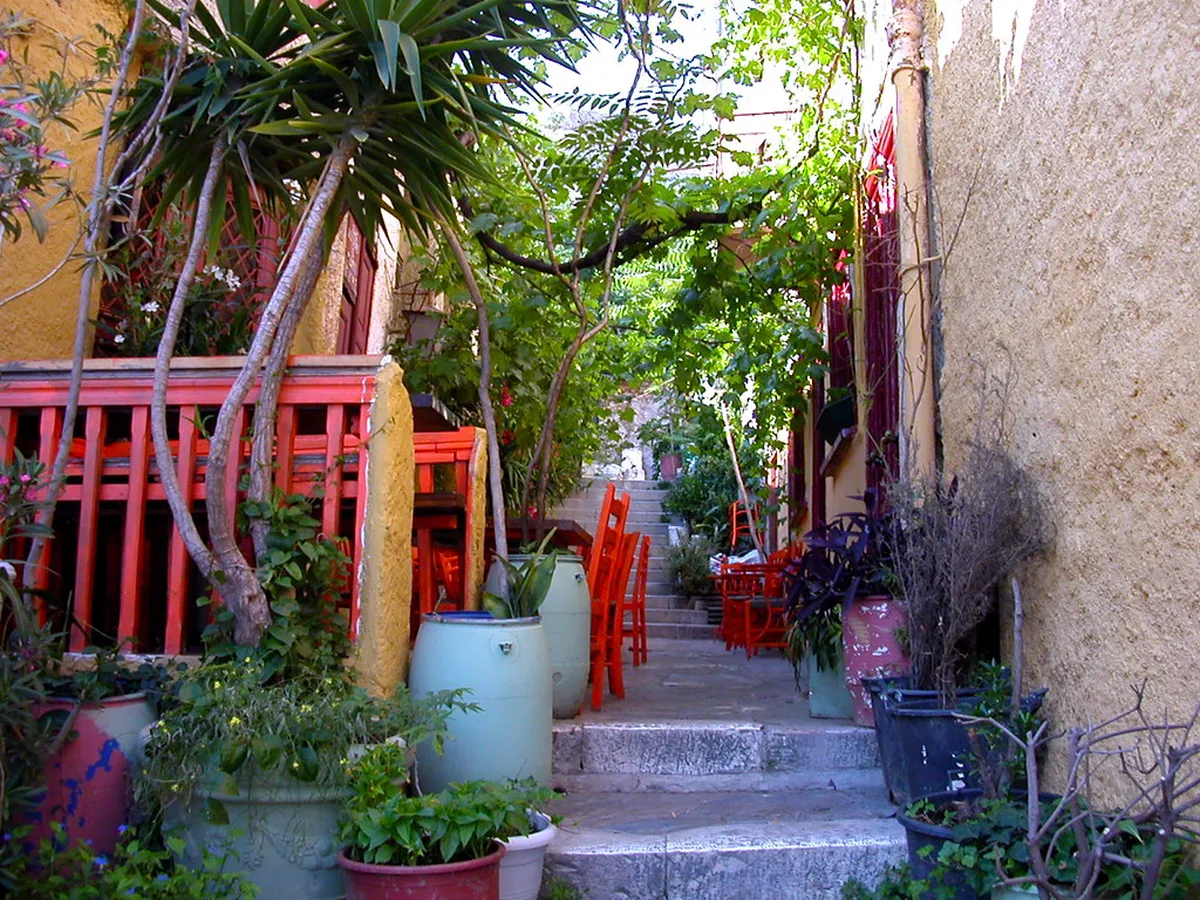
Plaka is the oldest continuously inhabited quarter of Athens, a maze of neoclassical houses, bougainvillea-covered walls, and Byzantine-era churches compressed between the north slope of the Acropolis and Monastiraki Square. At night the daytime heat retreats, the jasmine is more noticeable, and the thinning tourist traffic makes the alleys feel more intimate. It costs nothing to walk through and is one of the safest areas in the city at any hour.
The Anafiotika pocket within Plaka — a cluster of whitewashed island-style houses built by workers from Anafi in the 19th century — is easy to miss and almost entirely missed by most visitors after dark. The streets narrow to footpath-width and the silence is striking given that Monastiraki Square is five minutes away. Cafes and tavernas throughout Plaka stay open past midnight, and the area is well-lit throughout. For more on the Athens neighborhood geography, our district guide maps out the boundaries clearly.
Go Bar Hopping in the Creative Hub of Psiri
Psiri spent decades as a working-class artisan district before a gradual wave of bars and restaurants moved in during the 1990s. It has never fully gentrified — the workshops and hardware stores are still there during the day — which gives it a texture that more polished neighborhoods lack. At night it is one of the most eclectic areas in the city, with craft cocktail bars, cheap ouzeris, jazz venues, and dive bars all within a five-minute walk of each other.
Pittaki Street is the most photographed corner of Psiri, strung with multicoloured lights that have become an Instagram staple, but the real character of the neighborhood is in the side streets. Little Kook transforms its decor by season and is worth a stop for sheer visual excess. For something more restrained, the craft beer scene around Karaiskaki Square has expanded considerably in 2026. Cocktails in Psiri run €9–14 at most spots, cheaper than equivalent quality in Kolonaki or Kifissia. Psiri is also a strong base for finding the city's hidden gems that most tourists overlook entirely.
Savor a Late-Night Vromiko Street Food Sandwich
Vromiko translates literally as "dirty," and the name is the entire pitch. These are overstuffed street-food sandwiches — built with grilled meat, chips, mustard, ketchup, and whatever sauces the vendor sees fit — sold from trucks (kantinas) in the hours after the clubs close. They are a genuine Athenian institution rather than a tourist gimmick, and locals eat them without embarrassment at 04:00 in the morning.
The main concentration of kantinas is around Mavili Square, roughly a 15-minute walk east of Gazi. Some trucks also appear near Monastiraki Square later in the night. A full sandwich costs €5–8 and is filling enough to absorb a night's worth of cocktails. Ask for the "special" — the vendor's maximal build — for the full experience. The etiquette is to eat standing, quickly, and without overthinking it. This is not refined dining; it is Athens being unapologetically itself at its latest and most honest hour.
Explore the Acropolis Museum During Evening Hours
The Acropolis Museum extends its hours to 22:00 on Friday evenings from June through August. A standard ticket costs €15 in summer, and the crowd drops dramatically compared to daytime. The top floor — the Parthenon Gallery — is surrounded entirely by floor-to-ceiling glass, which means you can stand among the original frieze carvings and look directly at the floodlit Parthenon 300 metres away. It is one of the better juxtapositions available in any museum anywhere.
The museum restaurant on the upper level serves Greek food and wine with the same Acropolis view. Booking in advance is strongly recommended for both the museum and the restaurant during peak summer. The site is on Dionysiou Areopagitou Street, a 10-minute walk from Monastiraki or a short walk from the Acropolis metro station on the red line.
Listen to Traditional Rebetiko at a Local Tavern
Rebetiko is often called the Greek Blues — a genre that emerged from the urban working-class communities of Piraeus and Thessaloniki in the early 20th century and carries themes of displacement, hardship, and resilience. The instrumentation centres on the bouzouki, baglamas, and guitar, and a good live performance pulls the whole room into it. This is not the choreographed "Zorba" show marketed to tour groups in Plaka restaurants. Authentic Rebetiko is smaller, louder, and considerably more emotionally intense.
The best venues in 2026 are concentrated in Psiri and the Petralona neighborhood, which sits on the south slope of Philopappos Hill. They are typically small tavernas with no stage — the musicians sit among the tables — and the music starts late, usually after 22:00 or even 23:00, running until 02:00 or beyond. Budget €15–30 per person for food and wine consumed during the performance. Look for venues where the crowd is predominantly Greek: that is the reliable signal that the music is genuine rather than performed for export.
Which Athens Neighborhood Fits Your Night Out?
Each district has a distinct personality, and choosing correctly saves time and money. Plaka is the most romantic and the safest for solo walkers at any hour — cobblestoned, well-lit, dotted with cafes that stay open past midnight, and generally calm despite the tourist density. Prices here are the highest in the center: expect to pay a premium for the atmosphere. Psiri is the most eclectic choice, mixing craft cocktail bars with cheap dive spots, and it offers the easiest access to Monastiraki Square and the rooftop scene.
Gazi is where you go specifically to club. The venues are large, the music is loud, and the scene runs until sunrise. It suits younger travelers or anyone who wants a full European club experience rather than a bar-hopping evening. Exarcheia is the anti-Gazi: low prices, political energy, zero pretension, and a crowd that takes its music and politics seriously. It is the best option for travelers who find the mainstream nightlife scene tedious.
Here is a quick comparison to guide the decision:
- Plaka — Vibe: romantic and historic. Price level: €€€. Best for: couples, first-timers, evening walks.
- Psiri — Vibe: eclectic, artsy, mixed crowd. Price level: €€. Best for: bar-hoppers, craft cocktail drinkers, anyone wanting variety.
- Gazi — Vibe: high-energy clubbing. Price level: €€–€€€. Best for: dancing until sunrise, LGBTQ+ nightlife, electronic music.
- Exarcheia — Vibe: alternative, political, underground. Price level: €. Best for: independent travelers, punk and jazz fans, very cheap drinks.
- Koukaki — Vibe: local residential, taverna-anchored. Price level: €€. Best for: honest Greek dining, wine bars, avoiding tourist density entirely.
| Neighborhood | Vibe | Price Level | Best For | Getting Home |
|---|---|---|---|---|
| Plaka | Romantic, historic, cobblestoned | €€€ | Couples, first-timers, evening walks | 15–20 min walk to Monastiraki metro |
| Psiri | Eclectic, artsy, mixed crowd | €€ | Bar-hoppers, craft cocktails, variety | Within walking distance of Monastiraki metro |
| Gazi | High-energy clubbing, underground | €€–€€€ | Dancing until sunrise, LGBTQ+ nightlife, electronic music | Kerameikos metro station 90 seconds away |
| Exarcheia | Alternative, political, underground | € | Independent travelers, punk and jazz fans | Exarcheia metro on Line 1; hit street after 02:00 |
| Koukaki | Local residential, taverna-anchored | €€ | Honest Greek dining, wine bars, low tourist density | 15–20 min walk to Syntagma or Acropolis metro |
Getting Home: Transport After Dark
Athens is generally safe at night in the central districts, but getting home efficiently requires some planning. The metro is the most reliable option until it runs: Line 3 (blue) and Line 2 (red) serve the nightlife areas, with the last trains departing central stations at around 00:30 on weekdays. On Friday and Saturday nights the service extends to approximately 02:00, which covers the early part of a night out but not the post-club hours.
After the metro closes, the city runs several 24-hour bus lines. Night buses connect the center to Piraeus, the southern suburbs, and the northern districts, though frequency drops at night and routes can be slow. For direct travel, the FreeNow app operates a large fleet of metered taxis across Athens and is the safest booking method — you get a tracked ride, a confirmed driver, and a meter-based price rather than a negotiated fare. Beat is a competing local ride app with similar reliability. Expect to pay €8–15 for most central-to-central journeys at night.
Walking is excellent between Plaka, Monastiraki, Psiri, and the base of Lycabettus — all are within 20 minutes of each other on foot through busy, well-lit streets. Omonia Square and the blocks immediately north of the National Archaeological Museum are the areas where late-night solo walking is least comfortable; stick to Ermou Street and the main avenues if you are crossing that part of the city after midnight.
Greeks eat dinner late — typically after 21:00 — so bars only hit their stride around midnight and clubs peak near 02:00. Plan your evening accordingly: arrive for dinner around 21:30, move to bars by 23:30, and clubs after 01:30 for the most lively scene.
Metro runs until around 00:30 on weekdays and 02:00 on Friday and Saturday. After the metro closes, use 24-hour bus lines or book FreeNow and Beat ride-share apps (€8–15 for central journeys). Walking is safe in well-lit areas, but avoid Omonia Square and the blocks north of the National Archaeological Museum after midnight.
Frequently Asked Questions
Is Athens safe to walk around at night?
Yes, the central historic districts like Plaka and Monastiraki are very safe and remain busy until late. Use standard precautions in less-touristy areas and stick to well-lit streets when walking alone after midnight.
What time do bars and clubs close in Athens?
Most central bars stay open until at least 2:00 AM on weekdays and 4:00 AM on weekends. Major clubs in the Gazi district often keep the music going until 6:00 AM or later.
Can you visit the Acropolis at night?
The archaeological site itself closes in the evening, but you can view it from many surrounding hills and rooftops. The Acropolis Museum offers extended hours until 10:00 PM on Friday nights for evening visits.
Athens at night is a sensory experience that combines ancient history with a modern, rebellious spirit. From the quiet alleys of Plaka to the high-energy clubs of Gazi, the city offers something for every type of traveler. The key is leaning into the local rhythm: eat late, start drinking late, and stay later than feels reasonable. The magic of the city truly reveals itself once the sun sets and the monuments begin to shine.
Whether you are here for a quick stop or a longer stay, use the neighborhood comparison above to match your night to your energy. For inspiration on where to base yourself, our guide on budget-friendly Athens covers budget-friendly options that pair well with a big night out. Enjoy the late-night souvlaki, the soulful Rebetiko, and the warm Mediterranean air as you explore this genuinely timeless city.
Continue exploring
More guides you'll find useful