15 Most Beautiful Places in Athens: A Visual Travel Guide (2026)
Discover the 15 most beautiful places in Athens, from the iconic Acropolis to hidden Cycladic alleys in Anafiotika. Includes local tips on tickets and timing.
On this page
15 Most Beautiful Places in Athens
Athens rewards visitors who look past the obvious skyline. Over four visits to the Greek capital, it becomes clear that the city's beauty exists in layers: 5th-century marble on one block, whitewashed Cycladic alleys on the next, and a Renzo Piano cultural center by the sea. This guide was refreshed in May 2026 with current ticket prices, timed-entry requirements, and photography tips for each location.
Whether you are following a a three-day Athens plan or planning a longer stay, these 15 places cover the full spectrum from ancient archaeology to modern architecture. The combined ticket section and Sunday guard ceremony timing are particularly worth reading before you book anything — both trips up even experienced travelers.
The Acropolis and the Parthenon
The Acropolis is non-negotiable for any first visit to Athens. The limestone hill rises 156 metres above the city, and the Parthenon at its summit is larger in person than almost every photograph suggests. Arrive at the south gate by 07:30 to beat cruise-ship groups; the site opens at 08:00 and the difference between a 08:00 and 10:00 arrival is roughly 40 minutes of queuing. Book timed-entry tickets in advance at the official Acropolis website — walk-up availability in peak season is unreliable.
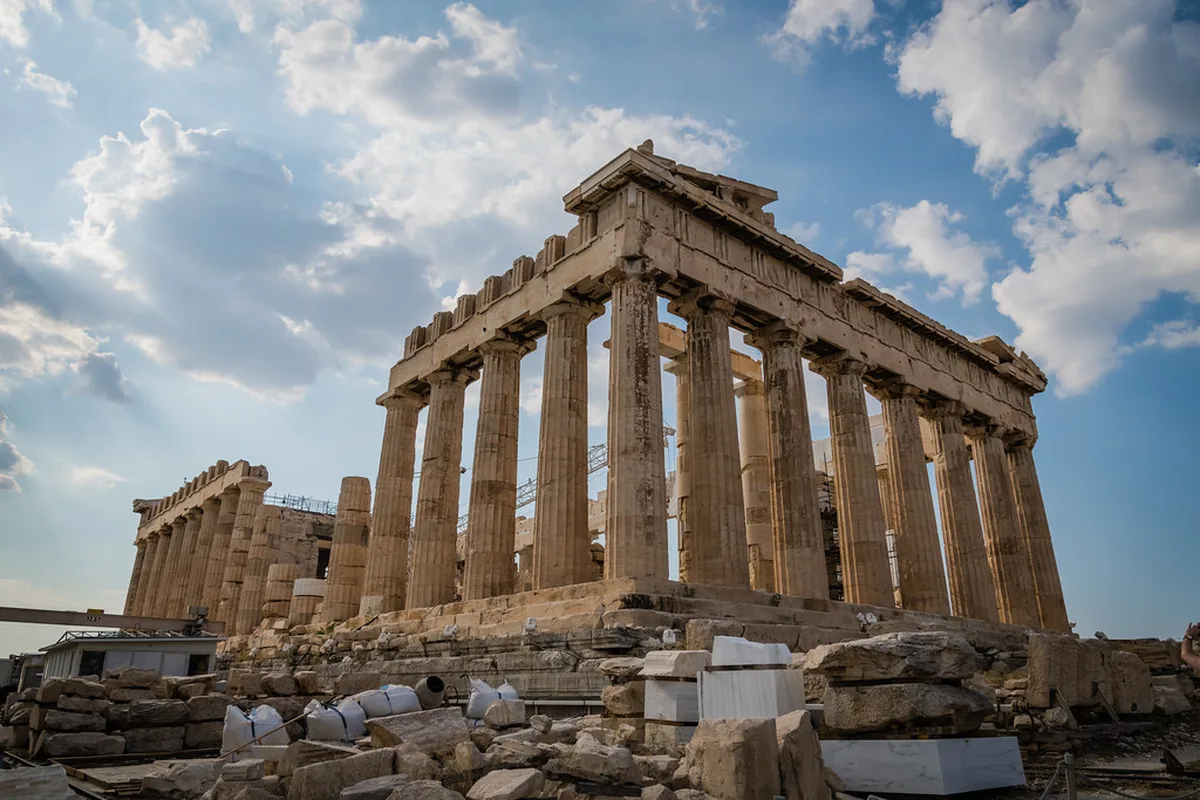
Entry is €20 in summer (April–October) and €10 in winter (November–March). The ticket also covers the Odeon of Herodes Atticus exterior path. Beyond the Parthenon, do not miss the Erechtheion's six caryatid columns — the originals are in the Acropolis Museum, but the stone reproductions on the temple are still striking. The Temple of Athena Nike at the southwest corner is often overlooked and is almost always crowd-free.
A less-publicized photography tip: the sharpest angle of the Parthenon's south colonnade comes not from the main viewing terrace, but from the path leading toward the Erechtheion, looking southwest in the morning light. Guides rarely mention it, and it gives you the full length of the temple without the scaffolding visible in most tourist shots.
Book timed-entry tickets in advance at the official Acropolis website — walk-up availability in peak season is unreliable. Arrive by 07:30 if visiting without a timed slot to beat cruise-ship groups. The difference between an 08:00 and 10:00 arrival is roughly 40 minutes of queuing.
Odeon of Herodes Atticus
The Odeon of Herodes Atticus sits on the southwest slope of the Acropolis and is one of the most architecturally beautiful venues in the world. Built in 161 AD as a memorial to the wife of the wealthy Roman Herodes Atticus, the theater seats 5,000 and retains its original stone seating. The cedar roof is long gone, but the restored stage and towering arched facade remain entirely intact.
Viewing the exterior is free as you walk the pedestrian path circling the Acropolis. The best photograph of the theater is taken from the Dionysiou Areopagitou walkway at dusk, when the floodlights illuminate the arches against the darkening sky. For a performance ticket, the Athens Epidaurus Festival runs from June through August with events priced from €35. Pavarotti and Sting have both performed here; the acoustic quality of the open-air stone bowl is extraordinary.
Acropolis Museum
The Acropolis Museum is the essential companion visit to the hill above. Visit it before the Acropolis itself if possible — the context it provides makes the ruins far more legible. General admission is €15 in summer (€10 in winter) and the museum opens at 09:00 daily. Arrive early or buy a timed ticket online to avoid midday queues. The rooftop cafe is open to non-museum visitors and offers a direct sightline to the Parthenon at no charge.
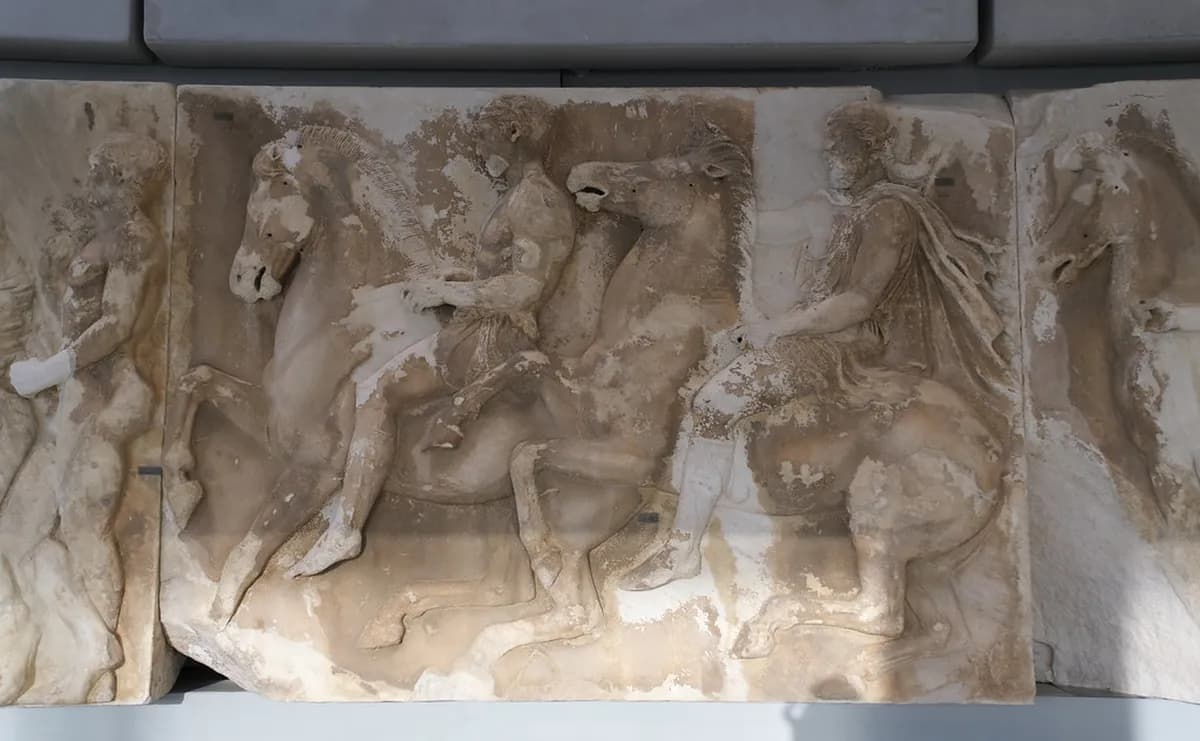
The third-floor Parthenon Gallery is the highlight. The glass walls are precisely aligned with the temple outside, creating a visual axis between the exhibits and the real structure 300 metres away. The original caryatids from the Erechtheion stand here — at 2.28 metres tall, they are more commanding than the reproductions on the hill. The ground-floor excavation reveals an entire ancient Athenian neighborhood preserved beneath the building's foundations, visible through glass floors.
After the museum, a 15-minute walk takes you to the Basil & Elise Goulandris Foundation, which houses van Gogh, Gauguin, and Picasso alongside celebrated Greek modernists. It provides a sharp and worthwhile contrast to the ancient-only focus of the morning.
How to Use the Athens Combined Ticket
The €30 combined ticket covers the Acropolis plus six additional archaeological sites: the Ancient Agora, Roman Agora, Hadrian's Library, Kerameikos, the Temple of Olympian Zeus, and Aristotle's School. It is valid for five consecutive days from first use. If you plan to visit three or more of these sites, the combined ticket saves at least €15 over individual entry fees.
Buy it at Hadrian's Library or Kerameikos rather than the Acropolis main gate. Lines at those secondary sites are almost nonexistent even in July, whereas the Acropolis ticket office can back up for 30 minutes. Once purchased, the digital QR code works at every gate on the circuit. The Acropolis Museum is not included — it is managed separately and requires its own ticket.
The most efficient order for a single day: start at Kerameikos at 08:00 (buy your ticket here), walk east to the Ancient Agora, then Hadrian's Library and Roman Agora in Monastiraki, then climb to the Acropolis by midday before the afternoon heat peaks. Check the more Athens attractions for a full breakdown of which sites are worth the extended stay.
Ancient Agora and Temple of Hephaestus
The Ancient Agora served as the commercial, political, and judicial center of classical Athens. Socrates taught here, Athenian democracy was debated under its colonnades, and merchants traded everything from olive oil to slaves across its open square. The site is vast and rewards slow exploration — most visitors rush through in 30 minutes when an hour is more appropriate. Summer entry is €10 (covered by the combined ticket).
The Temple of Hephaestus, built around 450 BC, is the best-preserved Doric temple in the ancient Greek world. Unlike the Parthenon, it has never collapsed or been heavily reconstructed. Both its roof and most interior walls remain. The Stoa of Attalos, a full-length reconstructed covered market on the eastern edge of the Agora, houses the site museum with pottery and bronze tools recovered from excavations. Entry to the Stoa is included with your Agora ticket.
Roman Agora and Tower of the Winds
The Roman Agora replaced the Ancient Agora as Athens' commercial center under Julius Caesar and Emperor Augustus in the 1st century BC. The site is smaller and less grand than its predecessor, but the Tower of the Winds is worth the visit on its own. This octagonal marble structure, built around 50 BC, is one of the most intact ancient buildings in Athens and possibly the world's first meteorological station. Each of its eight faces is carved with a relief depicting the corresponding wind god.
The tower originally housed a water clock and featured external sundials and a bronze wind vane on its pyramidal roof. Merchants in the port of Piraeus used it to estimate when shipments would arrive. Summer entry is €8 (included in the combined ticket). The best time to photograph the tower is late afternoon, when low light hits the carved reliefs at an angle that makes the figures stand out clearly. The site is a five-minute walk from Monastiraki Square.
Hadrian's Library
Built by Emperor Hadrian in 132 AD, this was once the largest building in ancient Athens — a complex that included a library, reading rooms, lecture halls, and a central courtyard garden. Only the western facade and its row of Corinthian columns survive intact, but the scale of those columns gives an immediate sense of the original building's grandeur. The site is tucked between the Monastiraki flea market and the Roman Agora, making it easy to combine with both.
Entry is €6 in summer (included in the combined ticket). This is one of the three locations where you can purchase the combined ticket with almost no waiting time, making it a logical first stop on the archaeological circuit. The columns photograph well in the morning when the light hits them from the east before the site fills with tour groups.
Kerameikos Ancient Cemetery
Kerameikos is the most underrated archaeological site in Athens. It served as the city's main cemetery for over 1,000 years, from the 12th century BC through the Roman period, and the funerary monuments scattered across the grounds are among the finest in Greece. A slow-moving stream called the Eridanos runs through the site and is home to a small population of freshwater turtles — an unexpected and photogenic detail. The site is rarely crowded even at peak summer hours.
The onsite museum houses extraordinarily delicate Geometric-period pottery recovered from the graves, as well as original marble reliefs that have been moved indoors for preservation. Entry is €8 (included in the combined ticket) and opening hours run from 08:00 to 20:00 in summer. Kerameikos is also one of the two best places to buy the combined ticket without queuing; the other is Hadrian's Library. From here, the walk to the Ancient Agora takes under ten minutes.
Olympieion (Temple of Zeus)
Construction on the Temple of Olympian Zeus began in the 6th century BC but was not completed until Emperor Hadrian finished it in 131 AD — a span of roughly 700 years. It was once the largest temple in Greece, with 104 Corinthian columns each standing 17 metres tall. Only 15 columns remain upright today, but their sheer scale is humbling. One column collapsed in a 1852 storm and still lies where it fell, giving a vivid sense of the original column diameter: 1.7 metres at the base.
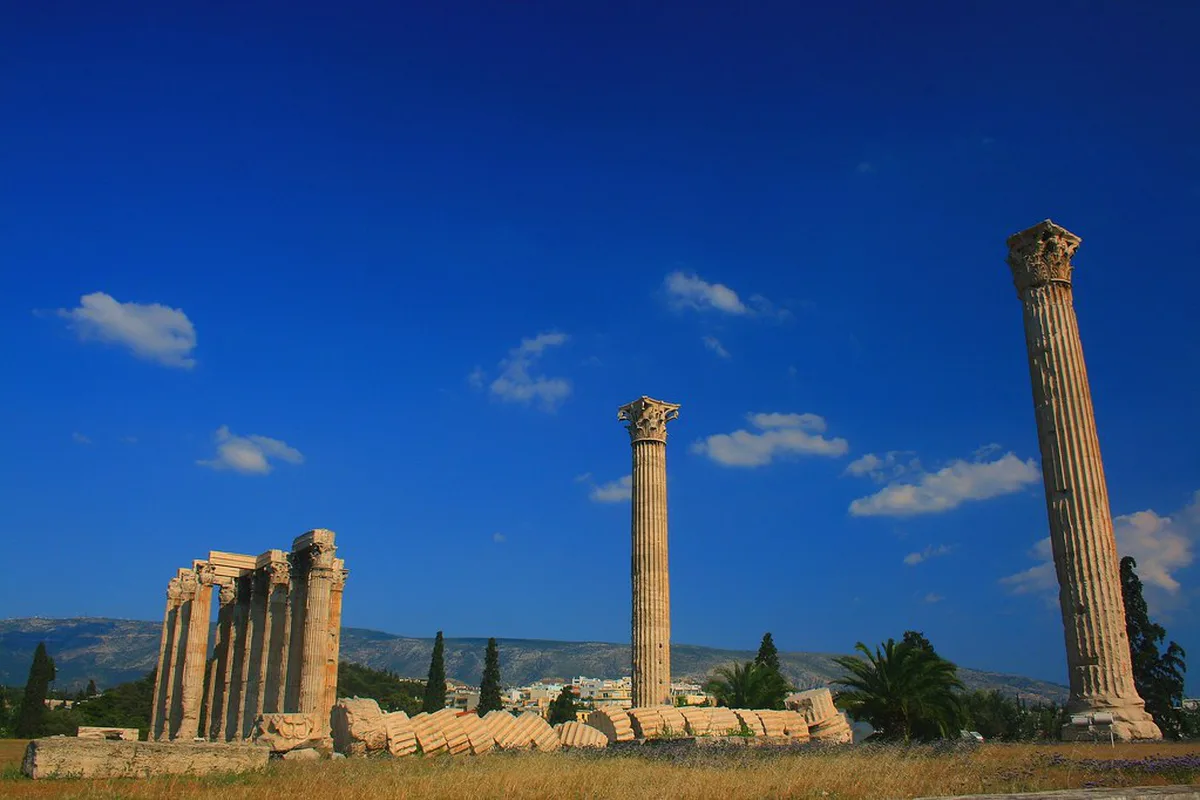
The site is located near the Arch of Hadrian, which you can photograph from the street without a ticket. Summer entry to the temple grounds is €8, included in the combined ticket. The Arch of Hadrian is visible from inside the site and frames the standing columns effectively. Check official restoration schedules before visiting as scaffolding has periodically obscured columns in recent years.
Syntagma Square and the Changing of the Guard
Syntagma Square is the geographic and political center of Athens. The Hellenic Parliament building faces the square from the north, and the Tomb of the Unknown Soldier sits on its steps. Every hour on the hour, two Evzone guards perform the changing of the guard ceremony — a slow, high-stepping ritual in full traditional uniform including white tights, pleated fustanella skirts, and the distinctive tsarouchia shoes with large pom-poms. The movements were designed partly to restore blood circulation after an hour of complete immobility.
The Sunday 11:00 ceremony is the one worth planning around. The full honor guard parades with a military band from Irodou Attikou street around the corner and the ceremony lasts approximately 40 minutes. For the best view, stand on the right side of the Tomb (facing the Parliament) — the procession passes closest to that position. Arrive by 10:40 to secure a spot along the railing. The event is free and requires no booking. Metro Line 3 stops directly at Syntagma station.
National Garden of Athens
The National Garden covers 15.5 hectares of dense greenery in the center of the city, immediately behind the Parliament building. Queen Amalia commissioned it in 1838, filling it with exotic species from around the Mediterranean. It has been open to the public since the early 20th century. Entry is free and the gates open from sunrise to sunset. On a hot summer day, the temperature inside the garden is several degrees cooler than the surrounding streets, making it an essential refuge between sites.
Hidden inside the garden are ponds with ducks and freshwater turtles, a small botanical garden, a ruined Roman mosaic, and several neoclassical statues. The grand Zappeion Hall on the southern boundary, built in the 1880s, connects directly to the garden and was used during both the 1896 and 2004 Athens Olympic Games. The entrance nearest Syntagma Square, framed by tall palm trees, is the most photographed spot in the park. Plaka's restaurants are a five-minute walk from the southern gate.
Panathenaic Stadium
The Panathenaic Stadium is the only stadium in the world built entirely of white Pentelic marble. Originally constructed for the Panathenaic Games in the 4th century BC, it was fully excavated and rebuilt in 1895 for the first modern Olympic Games of 1896. It also served as the marathon finish line for the 2004 Athens Games. The capacity is 50,000 and all of it is marble — even the running track surface has marble edging.
General admission is €10 and includes an audio guide in multiple languages. Climbing to the topmost row takes about five minutes and provides one of the finest views of the Acropolis available in Athens without paying a rooftop bar premium. The stadium is open daily from 08:00 to 19:00 in summer. It sits at the southeastern edge of the National Garden, making a combined visit very straightforward.
Plaka and Anafiotika
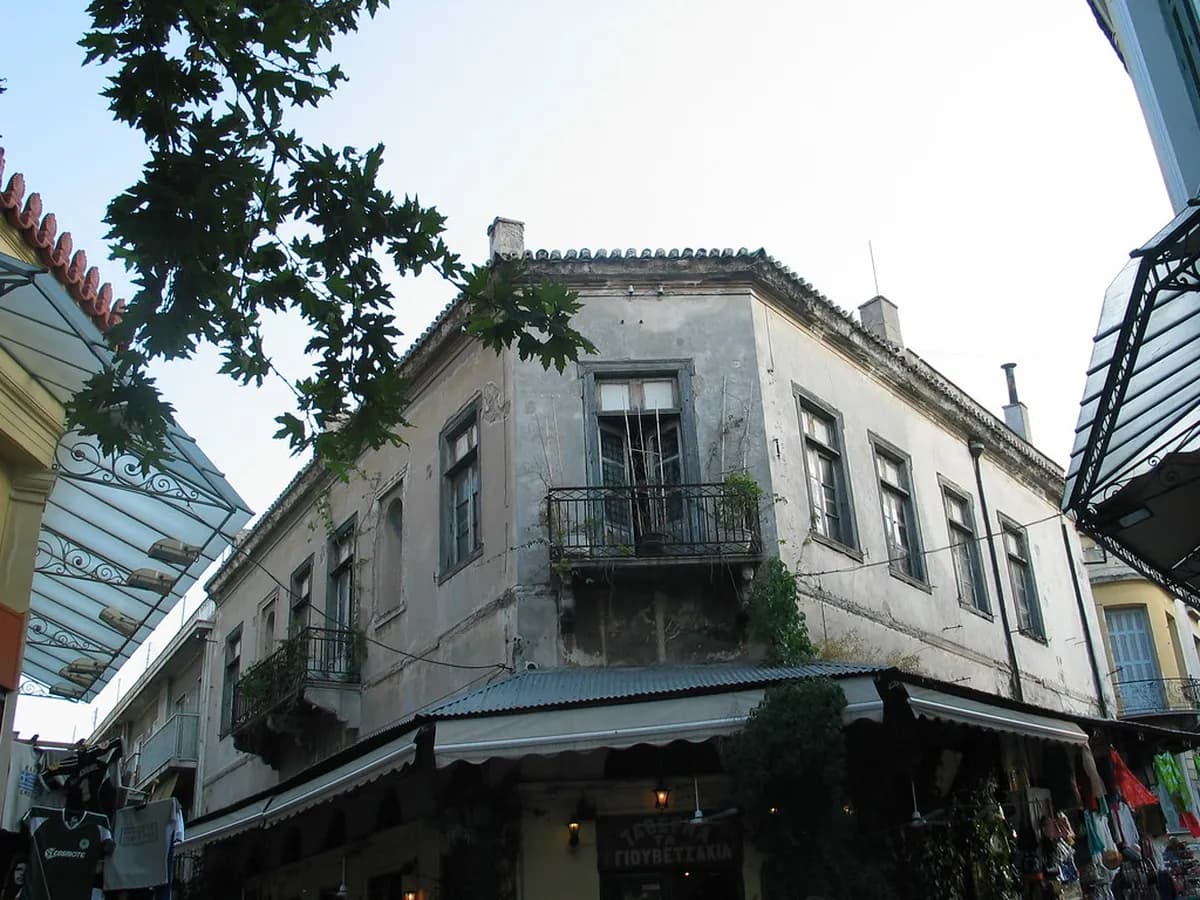
Plaka is Athens' oldest surviving neighborhood, spread across the northern and eastern slopes of the Acropolis hill. Its streets mix neoclassical mansions, Byzantine churches, Ottoman-era mosques, and small tavernas. The area is genuinely beautiful but can feel crowded on summer afternoons when tour groups flood the main pedestrian lanes. The most photogenic streets — the ones with bougainvillea draped over stone walls — are generally one or two blocks off the main tourist axis of Kydathinaion street. Look for the hidden paths of Plaka to find the quieter sections.
Anafiotika is a separate micro-neighborhood built into the rock face just below the Acropolis walls. It was constructed in the 19th century by workers from the Cycladic island of Anafi, who replicated the whitewashed cubic architecture of their home island on the slopes above Plaka. The result is a cluster of about 40 tiny houses that feels startlingly out of place in the middle of a major European capital. Most first-timers miss it entirely because they enter Plaka from the lower streets.
The correct approach is to enter from Theorias street, which runs along the Acropolis fence line at the top of Plaka. From there, follow the small signed path downhill — you will pass directly through Anafiotika before the houses give way to the broader Plaka streets below. This top-down route takes you through the quietest and most photogenic section of both neighborhoods and avoids the souvenir-shop crowds entirely. Early morning (before 09:00) is the best time to photograph the white walls and painted doors before the light becomes harsh.
Lycabettus Hill
At 277 metres, Lycabettus is the highest point in central Athens and the place with the most expansive 360-degree view of the city. On a clear day you can see the Saronic Gulf to the south and Mount Parnitha to the north. The hill sits in the upscale Kolonaki neighborhood and is surrounded by pine forest. The small whitewashed Church of St. George at the summit adds an unexpectedly serene quality to what is otherwise a panoramic lookout point.
The funicular runs from Aristippou street in Kolonaki and costs €10 for a round trip. The journey takes three minutes. The hiking path up takes approximately 25 to 30 minutes at a relaxed pace and is well-maintained with shade trees. Many visitors take the funicular up and walk down via the forested path on the western slope, which reveals a different set of city perspectives. Time your ascent for the blue hour — roughly 20 minutes after sunset — to watch the city lights gradually illuminate across the entire Athens basin while the Acropolis spotlights flick on below you. This is the most dramatic photographic moment the hill offers.
Time your ascent for the blue hour (approximately 20 minutes after sunset) to capture the city lights illuminating gradually across the entire Athens basin while Acropolis spotlights flick on below. Shoot from the western slope descent path for different city perspectives than the main viewing terrace.
Philopappou Hill: the Acropolis View No One Talks About
Philopappou Hill sits directly across from the Acropolis on its southwestern side and is free to visit. Most guides mention it as a footnote. In practice, it gives you the best front-facing, eye-level view of the Parthenon available anywhere in the city — better than Lycabettus, which is too far east, and better than the Acropolis Museum roof, which looks up at an angle. The path starts from Dionysiou Areopagitou street (the main pedestrian boulevard south of the Acropolis) and rises through dense pine forest.
At the summit stands the Filopappos Monument, a Roman structure from the 1st century AD honouring the Roman senator Julius Antiochus Philopappos. The monument frames the Parthenon directly in the background when you stand at its base — a natural photography composition that requires no cropping or repositioning. Late afternoon in spring and autumn (roughly 16:00 to 17:30) produces direct golden light across the full south colonnade of the Parthenon from this angle. On the descent, the 16th-century Church of Agios Dimitrios Loumbardiaris has Byzantine frescoes worth a brief stop. The hill is almost always quieter than the Acropolis side of the ridge.
Late afternoon in spring and autumn (16:00–17:30) produces direct golden light across the full south colonnade of the Parthenon. The Filopappos Monument naturally frames the temple in the background from its base—a natural composition that requires no cropping.
Stavros Niarchos Foundation Cultural Centre
The SNFCC is the most significant piece of modern architecture in Athens and one of the most striking public buildings in Greece. Designed by Renzo Piano and completed in 2016, it sits six kilometers south of the city center on the Faliro waterfront. The complex houses the Greek National Opera, the National Library of Greece, and 21 hectares of public parkland. The signature feature is a cantilevered roof covered entirely in solar panels, angled to shade a public terrace below while generating power for the building. Everything on the grounds — the park, the canal, the lighthouse viewpoint, the Dancing Fountains — is free to access.
The free shuttle bus from Syntagma Square runs regularly and takes about 25 minutes. Tram Line 5 from Syntagma also stops nearby. Visit in the late afternoon to catch the Dancing Fountains show at dusk, then walk the elevated roof garden for a view of the Saronic Gulf. The SNFCC represents Athens as it is now, not just as it was 2,500 years ago — and it is one of the few sites on this list that most ancient-focused Athens guides skip entirely. Book opera tickets well in advance as performances sell out quickly.
Temple of Poseidon at Cape Sounion
Cape Sounion sits 70 kilometers southeast of Athens on a dramatic cliff above the Aegean Sea. The Temple of Poseidon, built around 440 BC from the same Agrilesa marble used on the Acropolis, stands at the cliff's edge with 16 of its original 34 columns remaining. It is widely considered the finest Greek sunset viewpoint in the country, and the combination of the white marble columns against the deep blue sea below is genuinely extraordinary. Entry is €10 and the site is open from 09:30 until sunset.
The drive from central Athens takes 70 to 90 minutes depending on traffic. Organized tours from Athens typically depart between 14:00 and 15:00 to arrive before the sun drops — a late departure is essential as the sunset is the entire point of the visit. Byron carved his name into one of the columns during his 1810 visit; the carving is still faintly visible on the lower drum of a column near the entrance. On the cliff face below the temple, look for the remains of an ancient shipyard — two covered dry-dock bays carved into the rock are still visible from the path and are mentioned by almost no tour guide.
Planning Your Visit: Timing and Logistics
Choosing the right base matters. Stay in the best areas of Athens like Plaka for maximum walkability to the archaeological sites, or Koukaki for a more local feel with slightly lower hotel prices. For a high-design option in Kolonaki, The Modernist Athens is well-positioned for Lycabettus and the upscale shopping streets. Psiri suits travelers who prioritize nightlife and alternative dining over proximity to the ruins.
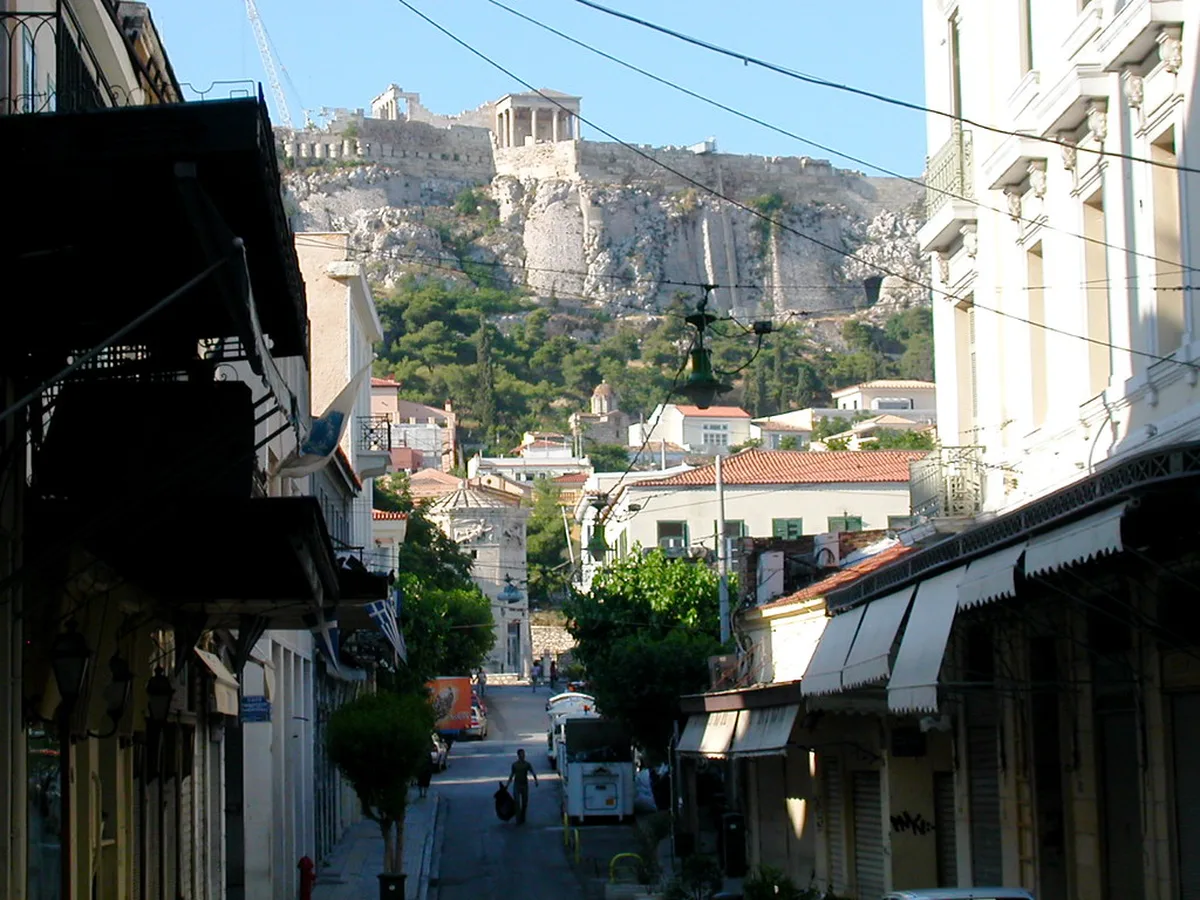
The archaeological circuit — Acropolis, Ancient Agora, Roman Agora, Hadrian's Library, Kerameikos, and Olympieion — is entirely walkable within a 2.5km square. The metro is more useful for reaching outliers: Syntagma (Lines 2 and 3), then a tram or shuttle for the SNFCC. For getting everything into a focused day, a four-hour Athens Highlights Private Tour eliminates orientation time completely. If you want to go deeper into the street-art and alternative districts, the Bohemian Athens: Beyond the Tourist Trails Tour covers Exarchia, Gazi, and Psiri with local context that most solo visitors miss.
Spring (April to June) and early autumn (September to October) are the best times to visit. Summer temperatures regularly exceed 35°C, and midday at the Acropolis in August is genuinely uncomfortable on exposed white marble with no shade. Carry at least 1.5 litres of water regardless of season. The archaeological sites all open by 08:00; arriving at that hour for the Acropolis and the Agora is the single most effective crowd-avoidance strategy available.
Frequently Asked Questions
How many days do you need to visit Athens?
You generally need three full days to see the major archaeological sites and explore the primary neighborhoods. This allows enough time for the Acropolis, the Ancient Agora, and a sunset trip to Cape Sounion. A shorter visit will feel rushed and miss the city's modern cultural highlights.
What is the best time of year to visit Athens?
The best times are spring (April to June) and autumn (September to October) when the weather is mild. Summer temperatures often exceed 35°C, making midday sightseeing difficult. Winter is quieter and cheaper, though some sites have shorter operating hours.
Is the Athens combined ticket worth the price?
Yes, the €30 ticket is worth it if you plan to visit at least three of the included archaeological sites. It saves about €15 compared to buying individual tickets for the top attractions. The five-day validity also provides great flexibility for your itinerary.
Athens is a city that rewards those who take the time to look beyond the obvious landmarks. From the ancient marble of the Parthenon to the modern glass of the SNFCC, the city offers a diverse visual feast. By balancing the famous ruins with hidden neighborhoods like Anafiotika and underrated viewpoints like Philopappou Hill, you will experience the true heart of the Greek capital.
Remember to use the combined ticket strategy to save time and arrive early at the most popular spots. Whether you are here for the history or the modern culture, these beautiful places will leave a lasting impression. Enjoy your journey through one of the world's most historic and visually captivating cities.
Keep exploring with our complete guide to lesser-known corners of Athens for the offbeat side of the city.
Continue exploring
More guides you'll find useful