12 Best Free Things to Do in Athens (2026)
Discover the best free things to do in Athens, from the Changing of the Guard to hidden Plaka alleys. Includes a budget guide and free admission dates for 2026.
On this page
12 Best Free Things to Do in Athens
After five separate visits to the Greek capital over the last decade, I have learned that the city's true soul costs nothing to experience. While many travelers focus on the high ticket prices of the Acropolis, the most vibrant moments often happen in open squares and ancient alleys. This guide highlights the best no-cost experiences for your next Mediterranean adventure in 2026.
A note before we dive in: this guide focuses on Athens, Greece. We include one dedicated section for Athens, Georgia, USA, so readers searching for the American city can find what they need without wading through ancient ruins. Whether you are following a three days in the city or just passing through for a weekend, these spots offer genuine value without a single Euro spent on admission.
Watch the Changing of the Guard at Syntagma Square
The Evzones — Greece's elite presidential guard — perform a precisely choreographed ceremony on the hour, every hour, in front of the Hellenic Parliament. The routine is free to watch, requires no ticket, and takes about five minutes per changeover. Arrive ten minutes early to claim a spot at the iron railing along the northern edge of the Tomb of the Unknown Soldier.
The full Sunday parade is the event to catch if your schedule allows. At 11:00 the guard expands to a full military band and a larger ceremonial march that draws the biggest crowds of the week. Position yourself near the corner of Vasilisis Sofias and Amalias Avenue for the best unobstructed sightline without pressing through the mass near the central steps.
The Evzones' uniform — white kilt, red-tipped shoes with pompoms, and embroidered jacket — represents 400 years of Greek history compressed into one outfit. Most visitors are surprised to learn the guards maintain the position motionless for up to two hours in summer heat. Watching the swap is as much a test of endurance as it is a spectacle.
Hike Lycabettus Hill for Panoramic Views
At 277 metres, Lycabettus is the highest point in the city and delivers a 360-degree sweep that stretches from the Saronic Gulf to the mountains of Attica. The summit is free to reach on foot via the pine-shaded path that begins near Dexameni Square in Kolonaki. The walk takes around 30 to 40 minutes of steady uphill climbing — bring water in summer.
Skip the funicular if budget is the priority. The cable car charges around €7 return for a ride that saves you roughly 25 minutes. The walking path through the trees is cooler in morning hours and gives you time to orient yourself across the city below. At the summit, the small Chapel of Saint George and the open-air theatre provide the best photo positions looking toward the Acropolis.
Timing matters at Lycabettus. Going at dusk means the Acropolis lights up against a darkening sky — one of the most photographed views in Athens. Going at dawn means you have the hill almost entirely to yourself, which is rare for any major viewpoint in a city this popular.
Explore the Historic Plaka and Anafiotika Neighborhoods
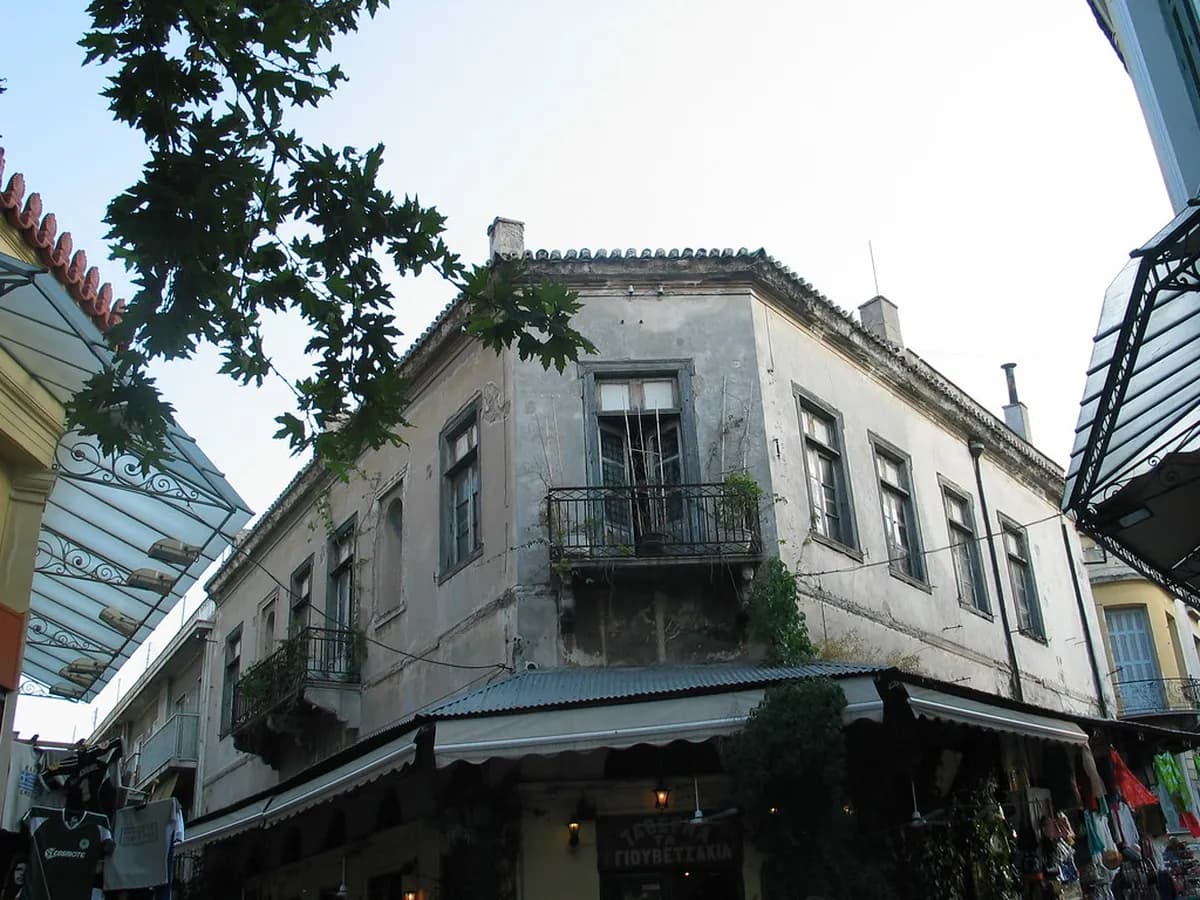
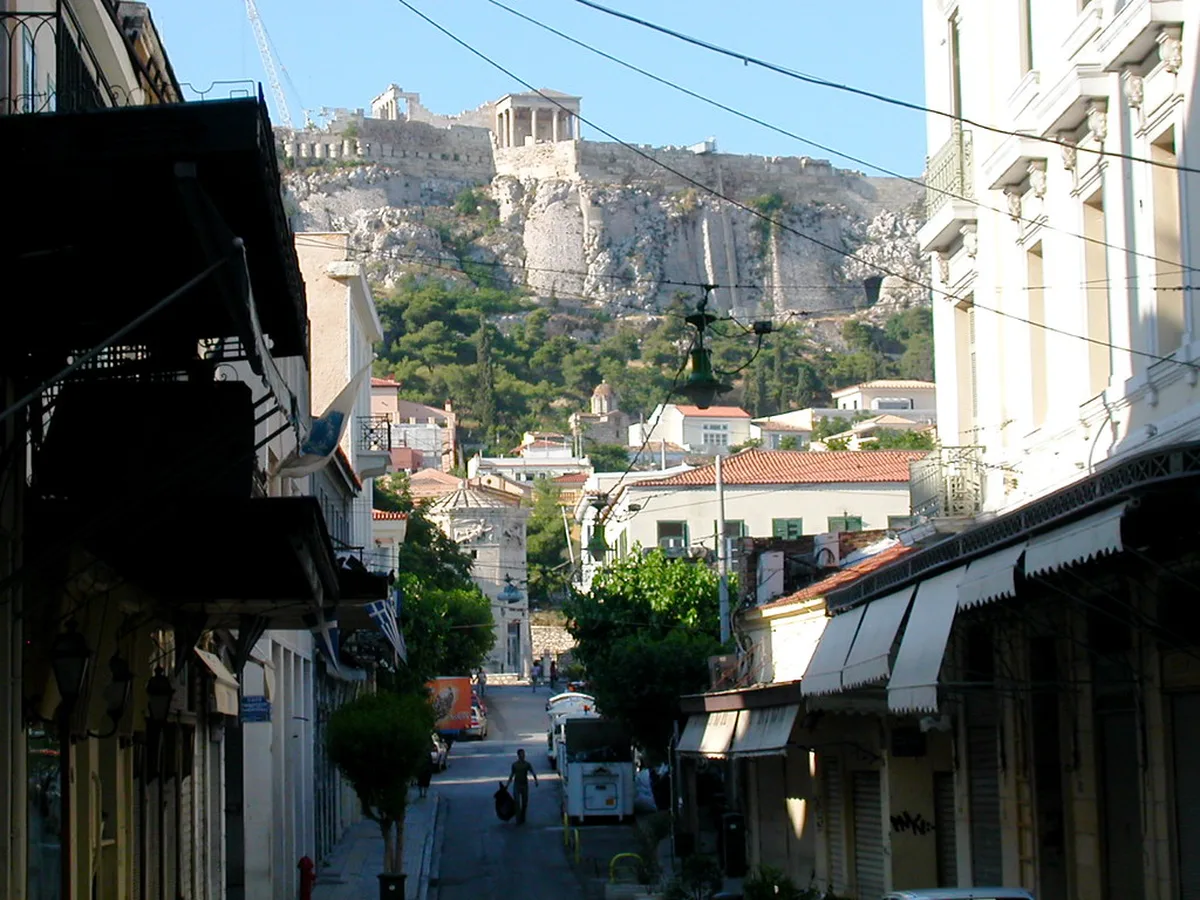
Plaka sits directly beneath the Acropolis and is the oldest continuously inhabited neighborhood in Europe. Its maze of pedestrian lanes, neoclassical houses, and Byzantine churches can absorb several hours of exploration without costing a cent. The area comes alive in the morning before the tourist shops open, when locals walk to kafeneions and cats claim sunny spots on the doorsteps.
Anafiotika clings to the northern slope of the Acropolis rock above Plaka and feels like a transplanted Cycladic village. The white-washed cube houses, built in the 19th century by craftsmen from the island of Anafi, were constructed without permits and are still technically illegal — a piece of trivia that adds to the neighborhood's charm. The Plaka and Anafiotika walking loop is one of the most rewarding free hours you can spend in the city. For more detailed neighborhood context, explore This is Athens official guides to the area.
From the upper lanes of Anafiotika you can see directly onto the Acropolis plateau without paying for a ticket. The view is partial but striking, especially in the early morning when the Parthenon catches the first light. Mnisikleous Street in Plaka, with its wide café-lined steps, is the best spot to rest your feet and watch the neighborhood come to life around you.
The Museum of Greek Folk Musical Instruments is free to visit every day during standard hours of 08:30 to 15:30 (closed Tuesdays), and over 1,200 traditional instruments are displayed across three floors with audio headphones at each exhibit.
Stroll Through the National Gardens
The National Gardens occupy 15 hectares directly behind the Parliament building on Syntagma Square and are open daily from sunrise to sunset at no charge. The gardens were planted in the 1840s under Queen Amalia and contain over 500 species of trees and plants, several duck ponds, a small zoo with rare breeds, and the ruins of a Roman mosaic floor. Entry from the Amalias Avenue gate is the most direct approach from central Syntagma.
The gardens function as the city's primary green lung and are genuinely used by Athenians — joggers, elderly men reading newspapers, families with prams — rather than just tourists. This makes them one of the more authentic free experiences in the center. The hidden sundial near the main entrance is a low-key highlight that most visitors walk past.
In summer the shade inside the gardens provides genuine relief from the heat. Temperatures inside can feel 4 to 6 degrees cooler than on the surrounding marble streets. Bring lunch from the Varvakis market and use the garden as your picnic base before heading to the afternoon's sights.
Visit the Museum of Greek Folk Musical Instruments
This specialist museum on Diogenous Street in Plaka houses over 1,200 traditional instruments across three floors of a restored 19th-century mansion. Admission is free every day during standard hours of 08:30 to 15:30. Closed Tuesdays. The collection spans lyres, lutes, bagpipes, drums, and wind instruments from across the Greek regions and gives genuine context to the music you hear in tavernas and festivals.
Headphones at each display let you hear how each instrument sounds, which lifts the experience well above a standard static collection. The building itself — a Neoclassical mansion with a courtyard garden — is worth seeing independent of the instruments inside. This museum is consistently overlooked in favor of the major archaeological institutions, which means crowds are minimal even in peak season.
For those interested in broader cultural history, the museum ties naturally into a morning in Plaka. A visit of 45 to 60 minutes fits comfortably before the neighborhood becomes busy around midday. The gift shop sells recordings of traditional Greek music if you want a practical souvenir that fits in a carry-on.
Walk the Dionysiou Areopagitou Promenade
This wide pedestrian street follows the base of the Acropolis hill from the Acropolis Museum entrance in the east to the Thissio neighborhood in the west. The two-kilometre walk is flat, paved in marble, and lined with neoclassical mansions, Art Deco facades, and ancient ruins visible over the walls to your left. It is one of the Athens' prettiest places that costs nothing to experience.
Late afternoon is the best time for the promenade. The sun drops behind the Acropolis hill, the stone cools, and street musicians often set up with traditional bouzouki or classical guitar. The stretch between Apostolou Pavlou Street and the Odeon of Herodes Atticus is particularly photogenic, with unobstructed views up to the Parthenon.
The promenade connects directly to Anafiotika and Plaka on one end and Thissio's café terraces on the other, making it the most natural spine for a half-day loop through the historic center. No other European capital offers this kind of free access to a UNESCO World Heritage archaeological zone in a pedestrian urban setting.
Catch the Sunset at Pnyx Hill
Pnyx is the rocky outcrop where the ancient Athenians held the world's first democratic assembly. Citizens voted here on laws and war, standing on the same stone steps that remain accessible today at no cost. The site is a short uphill walk west of the Acropolis and rarely crowded even in high summer, making it a genuine alternative to the packed tourist viewpoints.
The view of the Parthenon from Pnyx is unobstructed and closer than from Lycabettus — you see the full south face of the Acropolis in direct line, particularly striking in the golden hour before sunset. Bring a small picnic. The stone steps provide natural seating for dozens of people, and the atmosphere is calm enough to absorb the scale of what you are looking at.
Unlike the Areopagus — which has become dangerously slippery and overcrowded — Pnyx retains a composed, local feel. Dogs accompany their owners on evening walks, couples share bottles of wine on the ancient bema (speaker's platform), and the noise level stays low enough to actually think. This is the sunset viewpoint that Athenians recommend to friends rather than tourists.
Browse the Monastiraki Flea Market and Varvakis Central Market
The Monastiraki flea market spreads across Avissinia Square and the surrounding streets between Thissio and the metro station. It operates daily but peaks on Sunday mornings when independent sellers spread antiques, vintage clothing, military surplus, and bric-a-brac across the pavement. Entry is free and browsing costs nothing — the market rewards patience over spending.
The Athens Central Market (Varvakios Agora) on Athinas Street is a different experience entirely. The meat and fish halls date to 1886 and the intensity inside — smells, sounds, and vendors shouting prices in Greek — is one of the most visceral urban encounters in Athens. You can purchase a picnic's worth of olives, cheese, and cured meats for under €5 per person and eat them in the National Gardens ten minutes away.
Both markets are best before noon. Watch your pockets in the crowded Monastiraki lanes and avoid engaging with anyone aggressively pushing guided tours or restaurant menus. The markets are genuine commercial spaces used by locals daily — behave as a respectful observer rather than a staged experience consumer and the encounter is far more rewarding.
Discover the Stavros Niarchos Foundation Cultural Center
The SNFCC is the largest private cultural investment in Greek history — a Renzo Piano-designed complex housing the National Library, the Greek National Opera, a 210,000-square-metre park, and a lighthouse with rooftop views over the Saronic Gulf. Everything outside the performance venues is free. A dedicated shuttle bus runs from Syntagma Square to the SNFCC at no charge, making access straightforward from the city center. Learn more about Athens's cultural landscape and history to understand the city's broader context.
The park above the building's green roof is the highlight for most visitors. You can walk the canal beside pétanque courts, use the free outdoor gym, sit in the sound garden, or access the National Library's reading rooms and workstations. In winter, the SNFCC runs a free ice-skating rink beside the canal — advance booking is required but there is no admission fee.
The lighthouse rooftop delivers a view that combines sea, city skyline, and the distant mountains of Attica in a single panorama. This is the most compelling modern free attraction in Athens and one that competitors almost entirely overlook in favor of ancient ruins. The SNFCC is open daily until midnight, making it ideal for a free evening out when the rest of the center feels overrun with tourists.
Tour the Street Art of Psirri and Exarcheia
Athens has one of the densest concentrations of street art in Southern Europe, and two neighborhoods — Psirri and Exarcheia — serve as its main canvas. Psirri is the more accessible starting point: Louka Nika Street and the surrounding blocks feature large-scale commissioned murals alongside older political tags, making the area feel like an outdoor gallery that changes every few months.
Exarcheia, ten minutes north of Omonia Square, is rawer and more politically charged. The neighborhood's reputation for anarchist politics gives its murals a different tone — less decorative, more confrontational. Walking these streets is entirely safe during daylight hours and the art density is remarkable. Protogenous Street in Psirri also has excellent vintage shops if you want to combine browsing with the walking tour.
The street art circuit connects naturally with the evening options of both neighborhoods. Keramikos and Psirri come alive after 22:00 with pocket-friendly bars and café-bars where a beer costs €3 to €4. The free cultural experience flows directly into an affordable evening without needing a rigid plan.
Ride the Athens Metro: A Free Underground Museum
Few travelers realize that the Athens Metro doubles as an archaeological museum. During construction in the 1990s, workers uncovered thousands of artefacts spanning 3,500 years of continuous habitation. Rather than relocate them to storage, the metro authority built permanent display cases directly into the stations. Syntagma station alone holds ceramic vessels, coins, human remains, and everyday objects from ancient Athenian life, all labeled in Greek and English.
The Acropolis station near the Dionysiou Areopagitou promenade and Monastiraki station both have significant displays. Evangelismos station includes a large exhibition of Byzantine-era finds. You do not need to ride between stations to access the platforms and displays — a single valid ticket covering your planned journey is enough to see multiple stations in sequence.
A standard metro ticket costs €1.20 in 2026, which makes a loop between Syntagma, Acropolis, and Monastiraki stations a genuine cultural experience for under €2 total. This is the most underrated budget activity in the city and one that no tour guide or competitor article adequately covers. The metro also offers free transport to Piraeus port, where you can walk the waterfront and watch ferries depart for the islands at no additional cost.
Free Things to Do in Athens, Georgia
Athens, Georgia sits 60 miles east of Atlanta and is best known as the home of the University of Georgia and the R.E.M. birthplace music scene. Its major attractions are heavily free-of-charge, making it one of the more affordable quick-getaway destinations in the American Southeast. You can browse the Athens GA Shop for local maps and visitor information before you arrive.
The State Botanical Garden of Georgia covers 313 acres of trails, themed gardens, and birding areas. Entry is free and the property is open daily. The Georgia Museum of Art on the UGA campus holds over 10,000 works in its permanent collection alongside rotating temporary exhibitions — also free, funded by the state. Sandy Creek Nature Center adds four miles of wildlife trails with an indoor visitor center at no cost.
The Firefly Trail is the main cycling infrastructure in town, connecting city neighborhoods and running through green corridors for riders of all levels. The Athens Music Walk of Fame in the downtown district commemorates the city's outsized contribution to American alternative music. Between the gardens, the art museum, and the music history, a two-day trip to Athens, Georgia can be built almost entirely from free activities.
Join a Free Walking Tour of the City
Several Athens-based operations run tip-based walking tours of the historic center daily. These tours are free to join with payment left entirely to the participant at the end — guides work for tips, which keeps standards high and content engaging. Tours typically last two to three hours and cover Syntagma, Plaka, Monastiraki, and the Acropolis exterior with detailed historical context.
This is Athens offers a curated walk-with-a-local program matching visitors to resident guides based on interest — classicists, food lovers, night owls, and urban explorers each get a different route. Booking online in advance is recommended to limit group sizes to a manageable level. Free tours frequently operate at 10:00 and 17:00 from the Hadrian's Library entrance on Adrianou Street.
First-time visitors get the most from a guided free tour because it creates a mental map of the city before independent exploration. Once you understand how the neighborhoods connect geographically, the rest of the free activities on this list become far easier to navigate. Budget a few Euros for a meaningful tip if the guide delivers — it ensures these tours remain viable for future visitors.
When is the Acropolis Free to Visit?
The standard Acropolis ticket costs €20 in 2026 (a combined multi-site ticket covering seven archaeological sites costs €30). However, several fixed dates each year grant free admission to all state archaeological sites and museums. Mark these in your calendar before booking flights: March 6, March 25, May 18 (International Museums Day), June 5, October 28, and every first Sunday of the month from November through March.
European Heritage Days in the last weekend of September also open many sites at no charge, though the program varies year to year. The Ministry of Culture publishes the confirmed list annually at the start of the year — always verify against the official site before your trip, as the dates above reflect the standard annual pattern rather than a guaranteed 2026 schedule.
Crowds on free admission days are substantially larger than on regular paid days. Arriving at the Acropolis gates by 08:00 is the only reliable way to see the Parthenon without navigating dense tour groups. The savings are real — for a family of four, a free admission day is worth €80 against the standard ticket price. This is a great way to pair the Acropolis with Athens beyond the Acropolis and build a full free day in the historic center.
Mark your calendar for free Acropolis dates: first Sunday of each month from November through March, plus March 6, March 25, May 18 (International Museums Day), June 5, October 28, and European Heritage Days in late September. Always verify the current year's schedule with the Ministry of Culture before your trip.
Is Athens Worth Visiting on a Budget?
Athens consistently ranks as one of the most affordable capitals in Europe for day-to-day costs. A gyro from a street kiosk costs €2.50 to €3.00. A freddo cappuccino — the local iced coffee standard — runs €2.00 to €3.50. A metro ticket covering most crosstown journeys costs €1.20. These figures compare favorably to Paris, Amsterdam, or Rome at every level.

The free cultural density is exceptional by any measure. You can spend three full days in the city covering the Dionysiou Areopagitou promenade, Plaka, Anafiotika, Pnyx Hill, Lycabettus, the SNFCC, the metro archaeological displays, Monastiraki market, and two neighborhood street art circuits — all without paying a single admission fee. Adding the Acropolis on a free admission day means your entire week of primary cultural activity costs zero in entry fees.
Food and transport also reward budget planning. The Athens' best-kept secrets include the Athens Riviera beaches accessible by the A2 bus from Syntagma — a return journey for under €3 that puts you beside the Aegean for an afternoon. Budget travelers can build genuinely memorable itineraries here with a daily spend of €25 to €35 covering food, transport, and a coffee or two.
Frequently Asked Questions
Which free things to do in Athens fit first-time visitors?
First-time visitors should prioritize the Changing of the Guard and a walk through Plaka. These provide an immediate sense of the city's history and culture. Adding a sunset at Pnyx Hill rounds out the perfect first day.
When are the free admission days for the Acropolis?
The Acropolis is free on the first Sunday of the month from November to March. Other dates include March 6, March 25, May 18, and October 28. Always verify with official sources as dates can change.
What are the best free viewpoints in Athens for sunset?
Pnyx Hill and Lycabettus Hill are the top choices for sunset views. Pnyx offers a closer look at the Parthenon with fewer crowds. Lycabettus provides a higher, 360-degree perspective of the entire city and sea.
Athens is a city that rewards those who explore it on foot and with an open mind. From the ancient stones of the Pnyx to the modern glass of the SNFCC, the best experiences often cost nothing. You can build a rich, memorable itinerary by simply following the paths of the locals.
By utilizing the free admission days and focusing on the vibrant neighborhoods, your budget will go much further. We hope this guide helps you discover the magic of the Greek capital without the stress of high costs. Safe travels as you navigate the historic streets and sunny hills of this timeless city.
Continue exploring
More guides you'll find useful