15 Best Free Things to Do in Krakow (2026)
Discover 15 free things to do in Krakow, from museum free-entry days to riverside walks and quiet courtyards — plan your 2026 budget trip today.
On this page
15 Free Things to Do in Krakow Right Now
Locals and repeat visitors keep returning to Krakow's Old Town because so much of it costs nothing at all. This guide to free things to do in Krakow rounds up 15 attractions, walks, and museum free-days that will not touch your wallet. Last updated July 2026, this roundup uses current opening hours and free-entry schedules where they are published.
Krakow's Old Town, known locally as Stare Miasto, is compact enough to cover on foot in a single day. Rynek Główny sits at its center, ringed by Gothic churches, the Cloth Hall, and centuries-old townhouses. Beyond the square, free museum days and green spaces along the Vistula River stretch a tight budget even further.
Expect a mix of iconic sights, quiet neighborhoods, and a couple of spots most guidebooks skip entirely. Every entry below lists real prices, hours, and the nearest tram stop or walking time. A short note on what to skip follows the list, since a few popular Krakow attractions are not worth the queue.
15 Best Free Things to Do in Krakow in 2026
Krakow rewards travelers willing to walk, and the entries below cover the city center and beyond. Some sights charge nothing year-round, while others waive their fee on one specific weekday. Both count as free things to do in Krakow, so each entry flags its schedule.
A guided introduction helps first-time visitors get oriented before striking out alone. The Walkative Free Tours group runs tip-based walking tours of Krakow's Old Town every day. Guides depart near the Adam Mickiewicz statue and work for tips only, so budget roughly 20-40 PLN per person.
The list below mixes iconic squares, quiet viewpoints, indoor museums, and a couple of neighborhoods best explored slowly. Each entry notes the nearest tram stop or walking time from Rynek Główny, plus the hours that matter most. A handful require a specific day of the week, so check the free museum calendar further down before planning.
Prices below reflect standard adult admission wherever a fee exists, since free days only apply on set weekdays. Hours can shift with the season, particularly around winter holidays and major Polish public holidays. A quick check of each museum's official page is worth the extra minute before a visit.
1. Rynek Główny, Krakow's Grand Medieval Square
Locals still call this Renaissance-era plaza the true heart of Stare Miasto, Krakow's Old Town. Laid out in 1257, it remains one of the largest medieval squares still standing in Europe. Street musicians, portrait artists, and flower sellers cluster near the Adam Mickiewicz statue most afternoons.
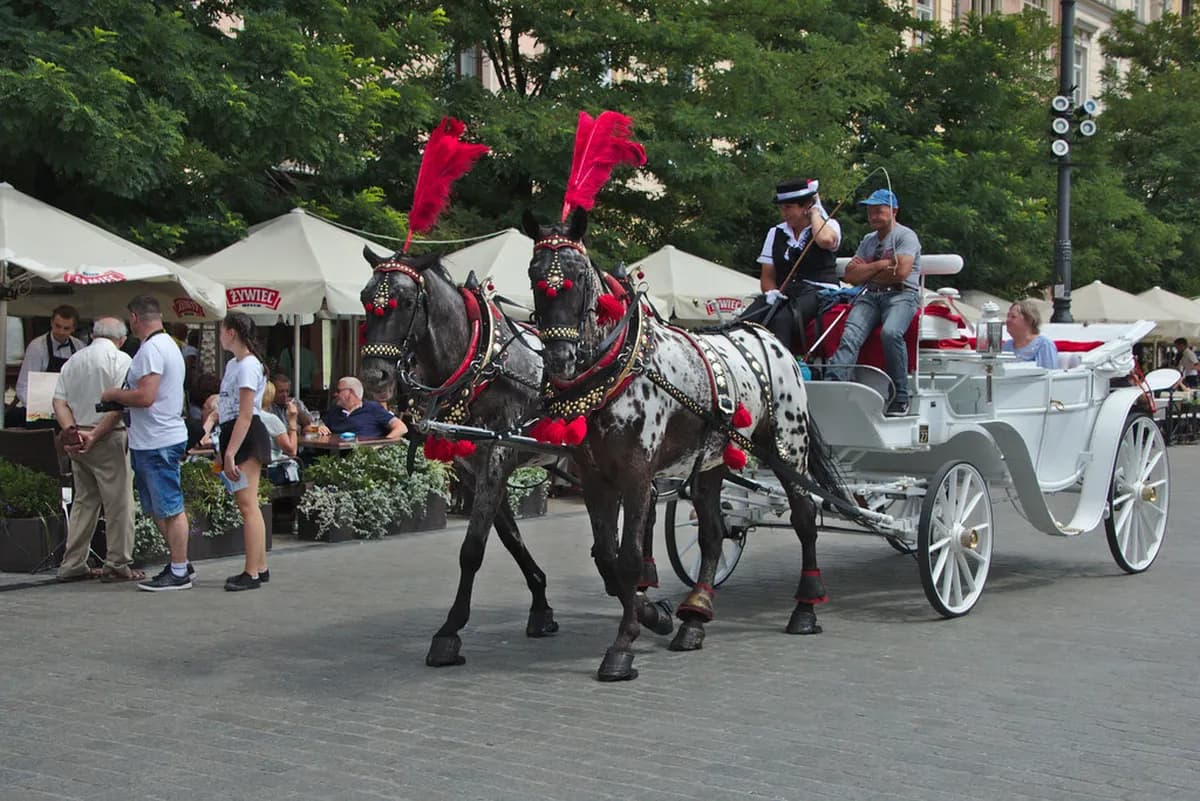
Horse-drawn carriages line the square's edge, and watching them clatter past costs nothing if you skip the ride. The square sits in Stare Miasto, a short walk from Krakow Główny train station, and stays open around the clock. Arrive before 9am to see the cobblestones nearly empty, since tour groups fill the square by mid-morning.
2. Sukiennice, the Cloth Hall's Free Ground-Floor Arcade
Krakow's Renaissance trading hall splits into two very different experiences under one long roof. The ground-floor arcade is free to browse, lined with amber jewelry stalls and wooden toy vendors. Upstairs, the Sukiennice Gallery of 19th-century Polish painting charges a separate entrance fee.
The arcade runs through the square's center and keeps roughly shopping hours, about 9am to 8pm daily. Vendors expect polite haggling on amber pieces, though prices stay fairly fixed compared with nearby souvenir shops. Duck through either end to cut across the square quickly during a sudden downpour.
3. St. Mary's Basilica and the Hourly Bugle Call
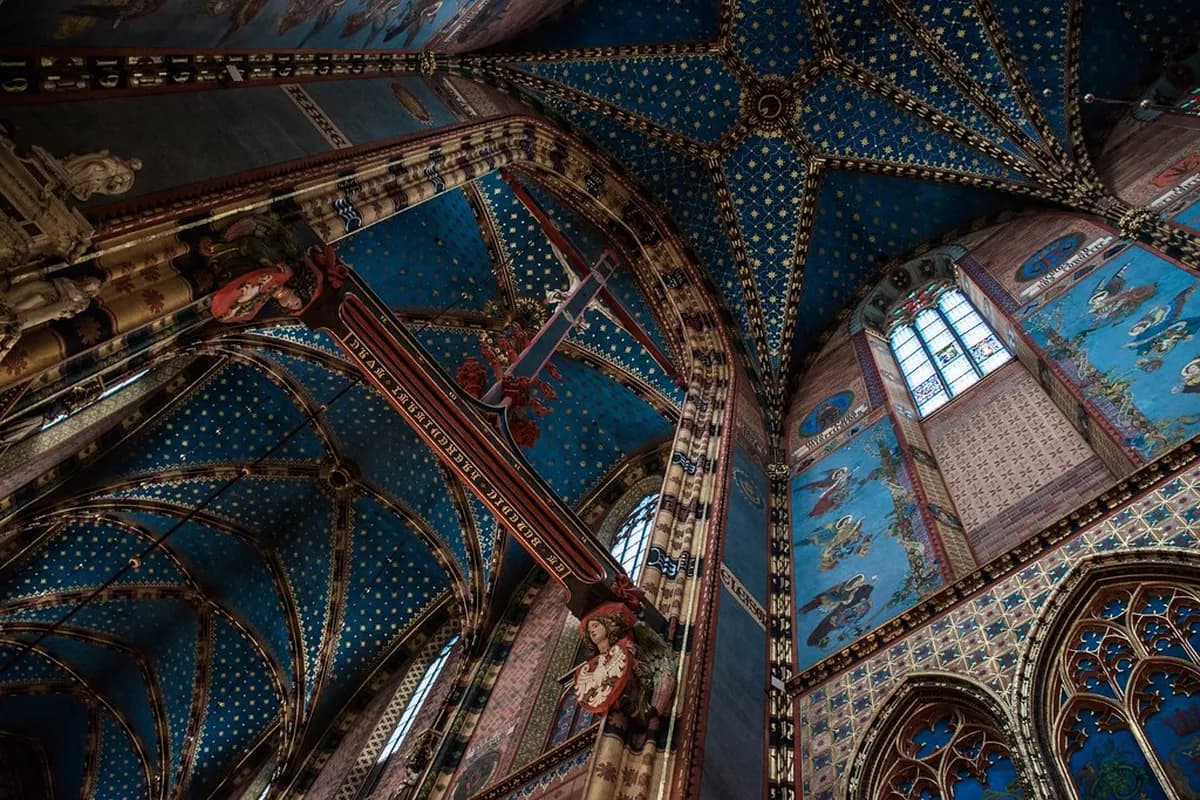
A live trumpeter has sounded a warning call from St. Mary's Basilica's taller tower for centuries. Legend says the melody cuts off abruptly to mark a trumpeter struck by an arrow long ago. Hearing the Hejnał Mariacki costs nothing, and the best listening spot sits directly below the tower.
Stepping inside the basilica usually requires a ticket, though attending Mass stays free for anyone who wants to pray. Photos are not allowed during services, so save the camera for after Mass lets out. Time a visit for the top of the hour, since the trumpeter also waves toward all four directions.
4. Franciscan Basilica's Art Nouveau Stained Glass
This 13th-century church hides one of Krakow's most striking pieces of modern art behind plain stone walls. Painter Stanisław Wyspiański designed the basilica's swirling stained-glass window above the organ loft in the early 1900s. Entry is free every day, though a small donation box sits near the door for upkeep.
The church sits just off Plac Wszystkich Świętych, a five-minute walk from Wawel Hill. Opening hours run roughly 6am to 7:45pm daily, with quieter stretches outside Mass times.
5. Planty Park, the Green Ring Around the Old Town
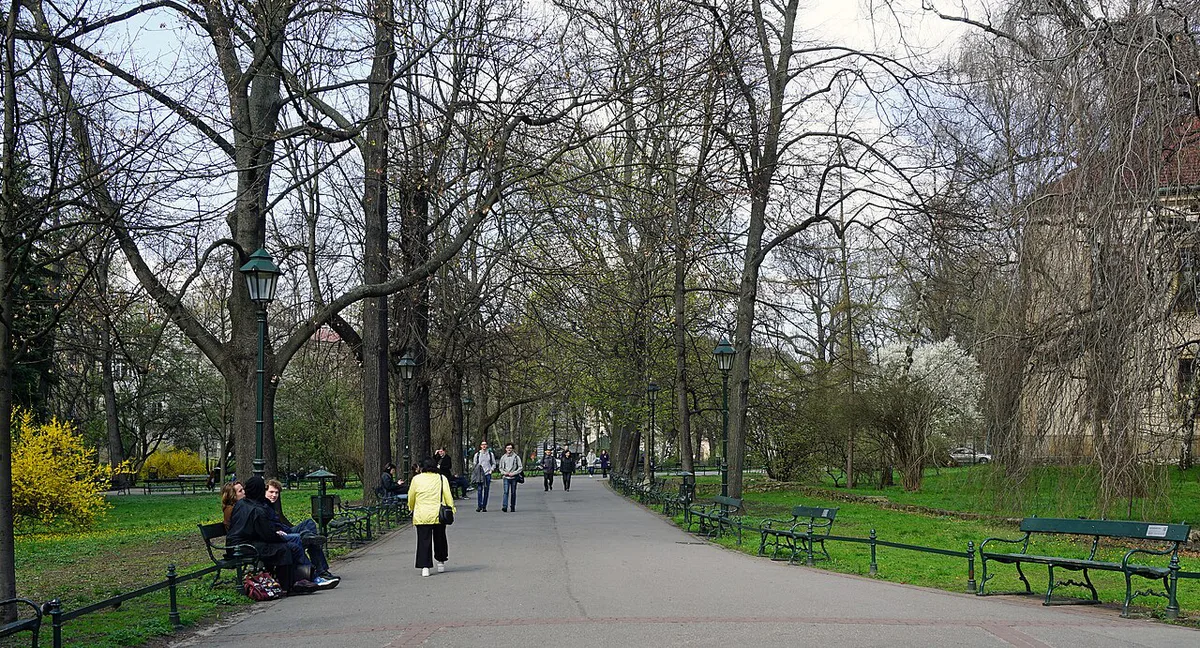
A ring of gardens replaced Krakow's medieval defensive walls after they came down in the early 1800s. Walking the full loop around Stare Miasto takes about an hour at an easy pace in constant shade. Benches, fountains, and small monuments line the path, making it an easy free break between paid sights.
The ring stays open all day and costs nothing to enter at any of its many access points. Joggers and commuting cyclists use it heavily before 8am, so expect a livelier feel at that hour. Following the ring counter-clockwise from the train station puts Wawel Hill roughly three-quarters of the way around.
6. Wawel Hill, Cathedral Grounds and the Dragon Statue
Limestone walls and a fortified gate guard the royal hill where Poland's kings once lived. Walking the outer courtyards, gardens, and defensive walls costs nothing, even though the castle interiors charge separate fees. The fire-breathing Dragon's Den statue at the hill's base draws crowds waiting for it to snort flame.
Wawel Cathedral's main nave stays free for prayer, while the bell tower, royal tombs, and museums require paid tickets. The hill sits a 15-minute walk south of Rynek Główny along Grodzka Street. Grounds open roughly 6am to dusk, and arriving right at opening avoids the tour-bus crowds.
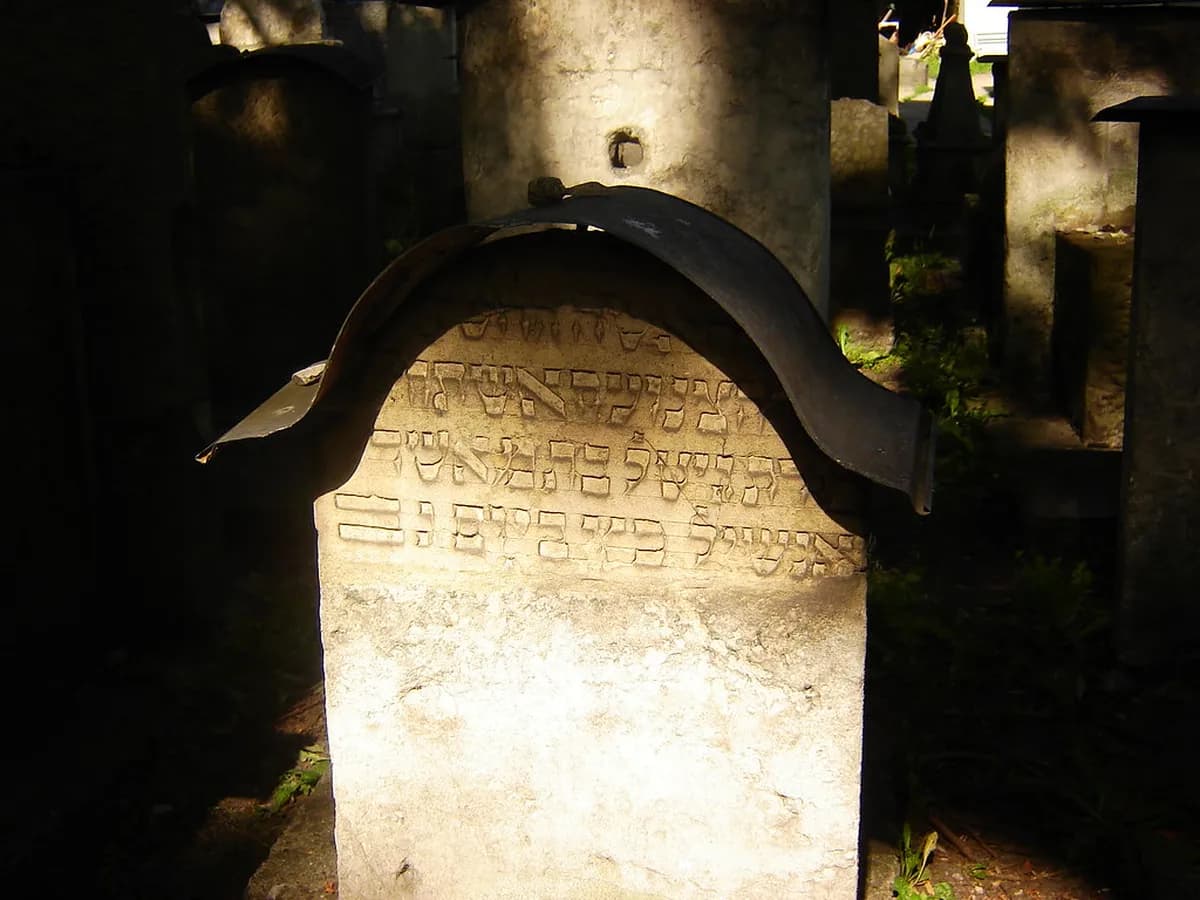
7. Kazimierz, Krakow's Historic Jewish Quarter
Seven synagogues and a warren of courtyards make up this district just south of the Old Town. Wandering its streets costs nothing, and the neighborhood rewards slow walking more than any checklist of sights. Plac Nowy square hosts a small daytime market and turns into a nightlife hub after dark.
Trams 3, 9, and 24 connect Kazimierz to Rynek Główny in about ten minutes. Synagogue interiors charge entry fees, though the streets and squares between them stay free to explore. Weekday mornings are quietest, before the food-tour groups arrive around midday.
8. Bulwary Wiślane, the Vistula River Boulevards
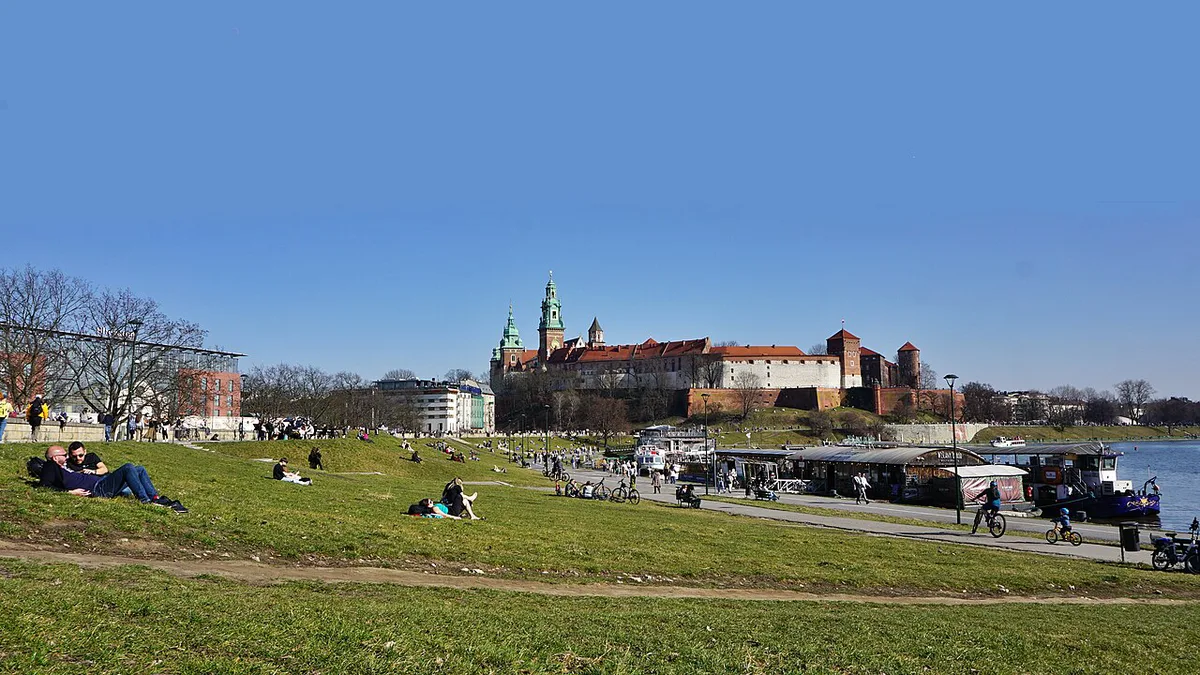
Grassy banks and a paved path trace the Vistula River just below Wawel Hill. Walking or jogging the boulevards costs nothing and offers one of the best free views of the castle. Food trucks and beer gardens appear seasonally along the path, though sitting on the grass stays free.
The path connects easily to Kazimierz on the opposite bank via the Bernatka footbridge. Access stays open 24 hours, with the best light for photos around sunset. Weekends bring picnicking families and buskers, so a weekday evening walk feels noticeably quieter.
9. Oskar Schindler's Factory Museum, Free on Mondays
The former enamelware factory where Oskar Schindler protected Jewish workers now houses a museum on wartime Krakow. Regular admission runs around 35-45 PLN, but the museum waives its fee every Monday. Free Monday tickets are limited and released online at a set time, so reserve the moment they open.
Missing that release window usually means missing the free slot entirely for that week. The museum sits in Podgórze, a 20-minute walk or a short tram ride from the Old Town. Hours run roughly 10am to 8pm most days, though they shift seasonally, so check the official listing first.
10. Rynek Underground Museum, Free on Tuesdays
Beneath the Cloth Hall lies an archaeological route through Krakow's medieval marketplace, unearthed during a renovation. Standard tickets cost around 40 PLN, roughly $10, based on the venue's posted pricing. Entry is free on Tuesdays, though tickets are same-day only, sold from the box office.
Arriving right at the typical 10am opening gives the best odds of grabbing a free slot. The entrance sits directly under Rynek Główny, marked by a sunken glass roof in the square. Interactive displays and multimedia stations mean the visit suits families as well as history buffs.
11. MOCAK Museum of Contemporary Art, Free on Thursdays
Housed in a converted factory building near Schindler's old site, MOCAK shows rotating, often provocative contemporary art. Regular admission costs around 15-25 PLN, waived completely every Thursday. The collection suits visitors who prefer bold modern installations over Krakow's usual medieval and wartime history.
MOCAK sits in Podgórze, a short walk from Oskar Schindler's Factory, making the two easy to pair. Hours run roughly 11am to 6pm and the museum closes Mondays, per its own posted schedule. Galleries stay uncrowded even on free Thursdays, unlike the queues that build at Schindler's Factory.
12. Krakus Mound, an Ancient Viewpoint Over the City
This grass-covered earthen mound predates written Krakow history, according to local archaeological accounts. Climbing to the summit is free and takes about 15 minutes on a dirt switchback path. The view stretches from Wawel Hill's towers to the Tatra foothills on a clear day.
The mound sits in Podgórze, reachable by a 25-minute walk or a short bus ride. It stays open during daylight hours and gets muddy after rain, so wear sturdy shoes. Sunset draws a small local crowd with blankets, though the mound rarely feels crowded otherwise.
13. Ghetto Heroes Square's Empty-Chair Memorial
Dozens of oversized bronze chairs fill this square, marking where Nazi forces gathered Kraków's Jewish residents. The memorial stays outdoors, unticketed, and open around the clock, costing nothing to visit. Each chair represents furniture Jewish families left behind when forced from their homes, per the site's plaques.
The square sits in Podgórze, across the river from Kazimierz via the Bernatka footbridge. Early morning light makes the chairs' long shadows especially striking for photos. Pair a visit with the nearby Pharmacy Under the Eagle museum if a small paid detour fits.
14. Rakowicki Cemetery's Grand Old Tombs
Krakow's largest historic cemetery holds elaborate 19th-century tombstones for professors, artists, and soldiers. Walking its tree-lined avenues is free and open from early morning until dusk most of the year. Many family chapels rival small churches in detail, built by the city's wealthiest 19th-century families.
The cemetery sits northeast of the Old Town, about a 20-minute walk or a short tram ride. All Saints' Day in early November fills the grounds with candles, though regular visits stay quiet year-round. Pick up a free paper map near the main gate to find the most notable graves.
15. Las Wolski, Krakow's Free Forest Hiking Trails
This sprawling forest on the city's western edge offers the closest thing to wilderness inside Krakow's limits. Marked trails wind past a Piłsudski Mound viewpoint and stay free to walk any day of the year. The zoo and a hilltop fortress within the forest charge separate admission, but the trails themselves stay free.
Bus 134 runs from the Old Town to the forest edge in about 25 minutes. Trails go unlit after dark, so plan a hike to finish before sunset, especially in winter. Weekday mornings are the quietest time, since weekends bring Krakow families out for picnics.
Krakow's Free Museum Days by Day of the Week
Krakow's museums stagger their free days across the week, which rewards a little planning. Missing the right day is the single biggest reason travelers pay for something that is free part of the week. A quick day-by-day rundown keeps the schedule straight before booking anything else.
Free museum days stagger across the week. Monday: Oskar Schindler's Factory (limited slots released online). Tuesday: Rynek Underground Museum (same-day tickets, box office only). Thursday: MOCAK (rarely sells out). Stacking all three saves roughly 90 PLN per person.
| Day | Museum | Ticket Details | Regular Price |
|---|---|---|---|
| Monday | Oskar Schindler's Factory Museum | Limited slots released online | 35-45 PLN |
| Tuesday | Rynek Underground Museum | Same-day tickets only, box office | ~40 PLN |
| Thursday | MOCAK Museum of Contemporary Art | Rarely sells out | 15-25 PLN |
Oskar Schindler's Factory Museum in Podgórze drops its fee every Monday, though free slots are capped and go fast online. The Rynek Underground Museum follows on Tuesdays, but its free tickets are same-day only, sold at the box office. MOCAK's Museum of Contemporary Art rounds out the week with free entry every Thursday and rarely sells out.
A few smaller sites add extra free days worth noting. The Old Synagogue in Kazimierz typically waives its fee on Mondays too, so pairing it with Schindler's Factory works well. Auschwitz-Birkenau charges nothing for independent visits any day of the week, though guided tours cost extra.
None of these free days can be booked more than a day or two ahead, and each site enforces its own daily limit. Stacking free entry across Monday, Tuesday, and Thursday can save roughly 90 PLN per person compared with paying full price at all three. Treat the calendar as a bonus layer on top of the truly free sights covered above, not a replacement for them.
Free Krakow Neighborhoods Worth Wandering
Beyond the Old Town's main square, several districts reward a slow walk without costing a złoty. Each has its own character, from Jewish heritage to Communist-era architecture, all within a short tram ride of Rynek Główny. Treat neighborhood wandering as free sightseeing in its own right, not just a way to get between paid sights.
Kazimierz anchors most free walking itineraries, mixing crumbling courtyards with vintage shops and street art. The area's synagogues charge entry fees, but its streets, squares, and riverside edge cost nothing to explore. A closer look at the district's layout and history sits in our Kazimierz neighborhood guide.
Podgórze, across the river, holds Ghetto Heroes Square, Krakus Mound, and Oskar Schindler's Factory within walking distance of each other. Fewer tourists make it here than to Kazimierz, so the streets feel noticeably calmer even in peak summer. The full rundown of what to see there is covered in our Podgórze guide.
Nowa Huta, a planned Communist-era district built from scratch in the 1950s, sits furthest from the center but costs nothing to explore. Wide socialist-realist boulevards and a preserved nuclear bunker museum make it feel like a different city entirely. Details on getting there and what to prioritize sit in our Nowa Huta guide.
Zwierzyniec, home to Las Wolski's forest trails, sits on the quieter western edge near the Norbertine convent. Locals use it for weekend walks more than tourists do, which keeps the paths pleasantly uncrowded. A closer look at the district sits in our Zwierzyniec guide.
Is Krakow Worth Visiting on a Budget?
Krakow ranks among the most affordable major city breaks in Europe, and the free sights above prove the point. A determined traveler could fill three or four days without paying a single entrance fee beyond food and a bed. That combination of history, walkability, and low cost is hard to match elsewhere on the continent.
Compared with Prague or Vienna, Krakow's free attractions carry real weight, from a historic Old Town to a still-active cathedral hill. A day built entirely around Rynek Główny, Planty Park, and Kazimierz costs nothing but comfortable shoes and some stamina. Add one free museum day and the whole itinerary still costs zero złoty in tickets.
The honest trade-off is time, not money. Free museum days come with limited slots and unpredictable queues, so a rigid one-day visit will likely miss at least one. Anyone with three or more days in the city can realistically string together most of this list for free.
Things to Skip in Krakow
Not everything marketed to tourists in Krakow deserves the hype, and a couple of popular stops are better skipped or shortened. Being upfront about these saves both time and money on a budget-focused trip. A few traps also cluster right around the main square, worth knowing before arriving.
Skip restaurants directly on Rynek Główny—they charge roughly double what places a few streets away charge. Avoid unofficial guides near Wawel Hill with unfixed prices. The Polonia Wax Museum consistently underwhelms relative to ticket cost.
Restaurants directly on Rynek Główny routinely charge double what a place two streets back charges for the same pierogi. The view is real, but the markup rarely matches the food quality, so treat a square-side seat as a coffee stop, not dinner. A milk bar a few minutes' walk away delivers a better meal for a fraction of the price.
The Polonia Wax Museum draws steady foot traffic near the square but consistently underwhelms compared with its ticket price. Unofficial guides who approach tourists near Wawel Hill are not affiliated with any official service, and their prices are rarely fixed. Politely decline and stick to marked ticket windows or listed operators like Walkative instead.
How to Plan a Smooth Krakow Budget Trip
A little planning stretches a free-things-focused Krakow trip even further. Timing, food choices, and one honest cost-benefit decision about a city pass make the biggest difference. The sections below cover the practical side that most checklists skip.
Shoulder-season months bring thinner crowds and shorter queues for the free-day museum slots covered earlier. The guide to visiting Krakow without crowds breaks down which months to target and which to avoid. Winter also lowers accommodation costs, though outdoor sights like Las Wolski get muddier and darker earlier.
Milk bars, or bary mleczne, remain Krakow's best budget food find, serving cafeteria-style Polish classics for well under 20 PLN a plate. These state-subsidized canteens date back decades and still undercut every tourist-menu restaurant near the square. A full rundown of where to eat on a budget, milk bars included, sits in our local food guide.
The Krakow City Card bundles public transport with entry to more than 20 museums, but it rarely beats free entry days for a budget visit. It only pays off for travelers who need paid museums on tight, inflexible days when the free schedule will not line up. Anyone building a trip around the free things above should skip the card and pocket the savings instead.
Krakow also works well as a base for bigger day trips, including Auschwitz-Birkenau, the Wieliczka Salt Mine, and the Zakopane thermal springs. Planning the logistics and which trip suits a one-day versus overnight stay is covered in our day trips from Krakow guide. Auschwitz and Birkenau guided tours are the one splurge worth booking well ahead, since independent visits also require separate reservations.
Budget Food: Krakow Milk Bars Between Free Sights
Free sightseeing works best when lunch does not wreck the budget, and Krakow’s milk bars, or bar mleczny, are the most useful stop between walks. These simple Polish cafeterias serve pierogi, soups, potato pancakes, cutlets, salads, and kompot from a counter, usually with menus in Polish and a fast-moving local crowd.
In the Old Town, Bar Mleczny Pod Temidą on Grodzka Street is handy between Rynek Główny and Wawel Hill. Near the university quarter, Żaczek works well before a walk toward Błonia or the National Museum. In Kazimierz, look for Bar Mleczny Krakus for a practical lunch before crossing the Bernatka footbridge to Podgórze. If visiting Nowa Huta, Bar Mleczny Centralny fits naturally with a self-guided walk around Plac Centralny.
Go earlier in the day for the best choice, bus your tray when finished, and expect plain dining rooms rather than restaurant service.
Frequently Asked Questions
What day is Oskar Schindler's Factory free?
Schindler's Factory Museum waives its entrance fee every Monday, though free tickets are strictly limited. They release online at a set time, so reserving the moment they go live matters. Arriving without a reservation on a free Monday usually means missing out entirely.
How much time should you plan for free things to do in Krakow?
Two full days cover the Old Town's free highlights, including Rynek Główny, Planty Park, and Wawel Hill's grounds. Add a third day to fit in a free museum day and Kazimierz. Travelers with less time can still see the top three or four sights on a single half-day walk.
Is Krakow worth visiting on a budget?
Krakow ranks among Europe's more affordable city breaks, with enough free sights to fill several days. A determined traveler can see the Old Town, Kazimierz, and one free museum day without paying a single entrance fee. Food and accommodation also stay inexpensive compared with Western Europe.
What should travelers avoid when planning free things to do in Krakow?
Skip restaurants directly on Rynek Główny, since prices run noticeably higher than a few streets over. Avoid unofficial guides who approach near Wawel Hill offering tours without fixed prices. The Polonia Wax Museum also underwhelms compared with the free sights covered above.
Which free things to do in Krakow suit first-time visitors?
First-time visitors should prioritize Rynek Główny, St. Mary's Basilica's bugle call, and Wawel Hill's free grounds. These three sights sit within a 20-minute walk of each other in the Old Town. Planty Park makes an easy, shaded link between all three stops.
Krakow packs an unusual amount of free sightseeing into a compact, walkable center. Rynek Główny, Planty Park, and Kazimierz alone can fill two full days without a single ticket. Three well-timed museum free days add even more without changing the budget at all.
Pair the list above with one paid splurge, whether that is Wawel's castle interior or a day trip to Auschwitz-Birkenau. The budget still stays firmly in check even with that one addition. Bookmark the free museum calendar before travel, since those weekly windows are the easiest ones to miss.
Continue exploring
More guides you'll find useful