El Raval, Barcelona: Art Museum, Medieval Stones & Skater Plaza
Barcelona's most multicultural quarter: a world-class art museum beside 10th-century stones, halal butchers next to specialty coffee, and skaters outside MACBA.
On this page
El Raval Barcelona
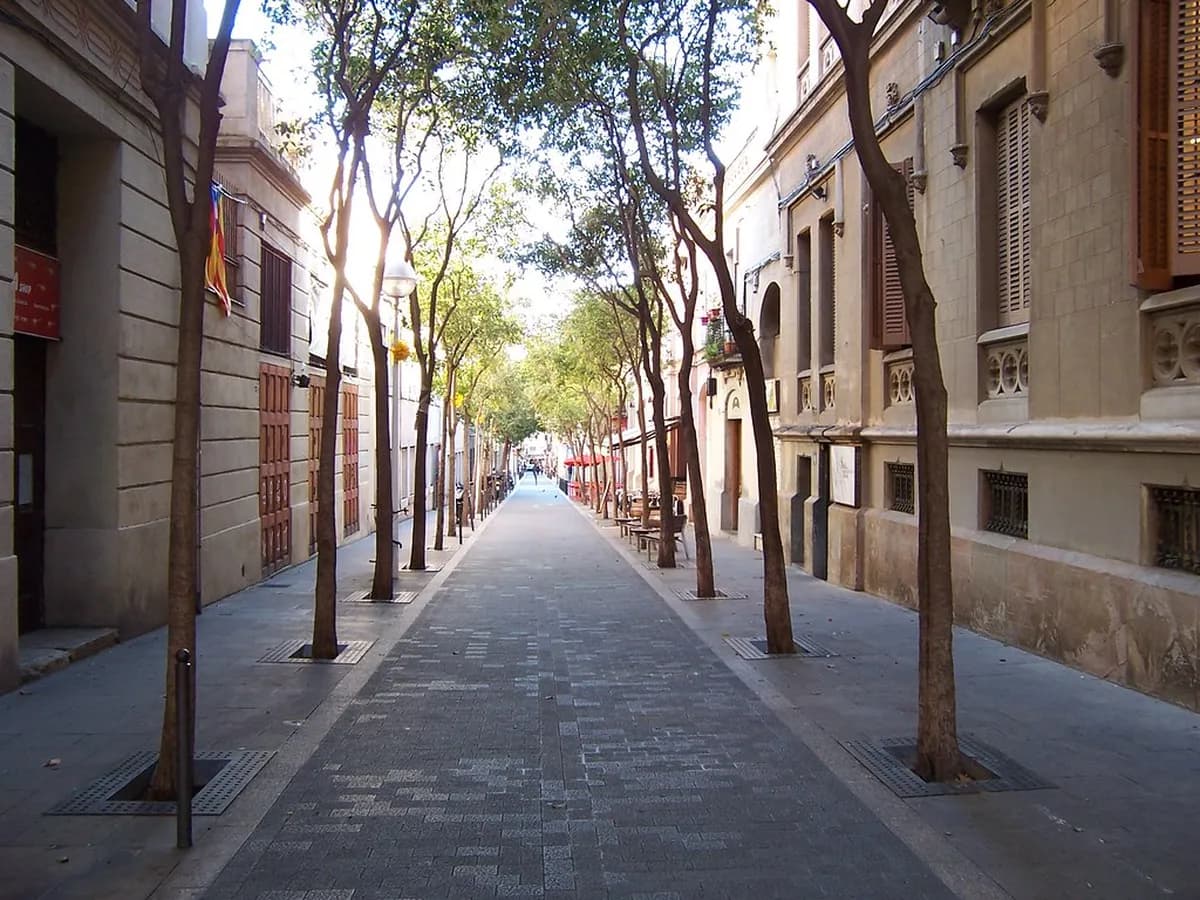
El Raval is the densest and most multicultural quarter in Barcelona's Ciutat Vella, sitting west of La Rambla between the old city walls and the port. It packs more contradiction per square metre than almost any neighbourhood in Spain: a world-class contemporary art museum next to 10th-century Romanesque stones, halal butchers and specialty coffee bars on the same block, skaters grinding the plaza outside MACBA while elderly residents cross to the pharmacy.
It is also one of the neighbourhoods most visibly shaped by Barcelona's housing crisis and tourism pressure. Short-term rental licences, rising rents, and a wave of hotel openings since the early 2000s have displaced working-class families who lived here for generations. Visiting with that context in mind makes the experience more honest and more meaningful. This guide covers the landmarks, the food, the nightlife, and the tensions — all of them.
What El Raval Actually Is
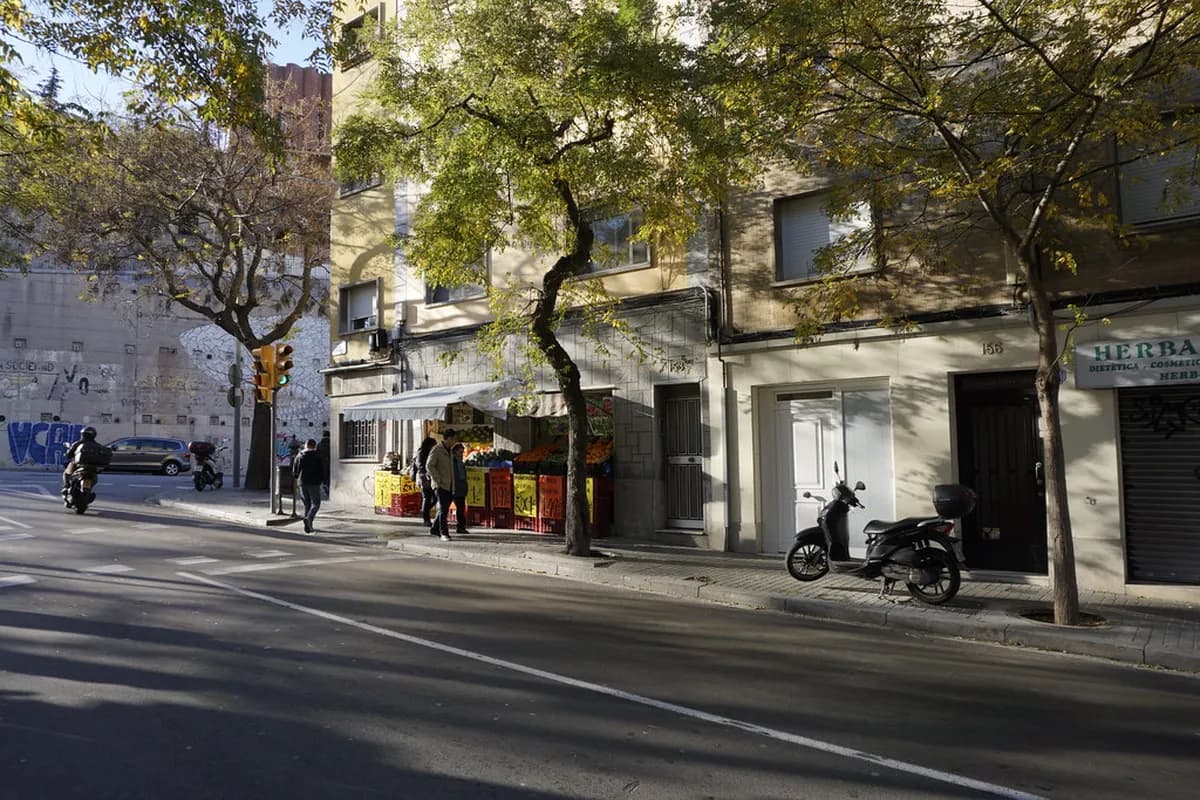
Raval began as agricultural land outside Barcelona's Roman walls. Through the medieval period it filled with convents, hospitals, and mills. By the 19th century, industrialisation turned it into a factory district packed with workers from across Spain and, later, from North Africa, South Asia, and Latin America. That immigration history is visible today: Carrer de l'Hospital has Pakistani restaurants, Bangladeshi grocers, and a Filipino community centre within 200 metres of each other.
The neighbourhood earned a grim reputation in the 20th century as a red-light zone known locally as the Barrio Chino. From the 1990s onward, the city undertook a large-scale urban renewal programme — demolishing blocks to open the Rambla del Raval boulevard, building the MACBA, converting the old Casa de la Caritat into the CCCB. These projects changed the fabric of the area and attracted new residents and institutions, but critics argue they also accelerated gentrification and squeezed out the communities the renewal was supposed to serve.
In 2026, Raval remains one of Barcelona's displacement hotspots. The city capped new tourist apartment licences in 2024, partly in response to protests that drew tens of thousands onto the streets. As a visitor, the most tangible thing you can do is stay in a hotel rather than a short-term rental, eat at locally owned spots rather than chain restaurants, and avoid loud late-night behaviour on residential streets.
Key Landmarks in El Raval
Palau Güell on Carrer Nou de la Rambla is the logical starting point. Antoni Gaudí built it in the late 1880s as a private residence for industrialist Eusebi Güell, and it remains one of his most underrated works — far less crowded than the Sagrada Família or Park Güell. The rooftop chimneys and the main hall's parabolic dome alone justify the ~€12 entry. Book online; walk-up queues can reach 45 minutes by mid-morning.
Palau Güell is one of the least-crowded Gaudí sites in Barcelona at around €12 entry — visit Sant Pau del Camp before 10:00 or after 17:00 for near-solitude in its 12th-century Romanesque cloister for just €5.
Sant Pau del Camp, tucked into the southern end of the neighbourhood off Carrer de Sant Pau, is the oldest church in Barcelona. The Romanesque cloister dates to the 12th century and offers one of the quietest courtyards in Ciutat Vella — easy to miss because it is hemmed in on all sides by residential buildings. Entry costs €5 and takes about 30 minutes. Visit before 10:00 or after 17:00 for near-solitude.
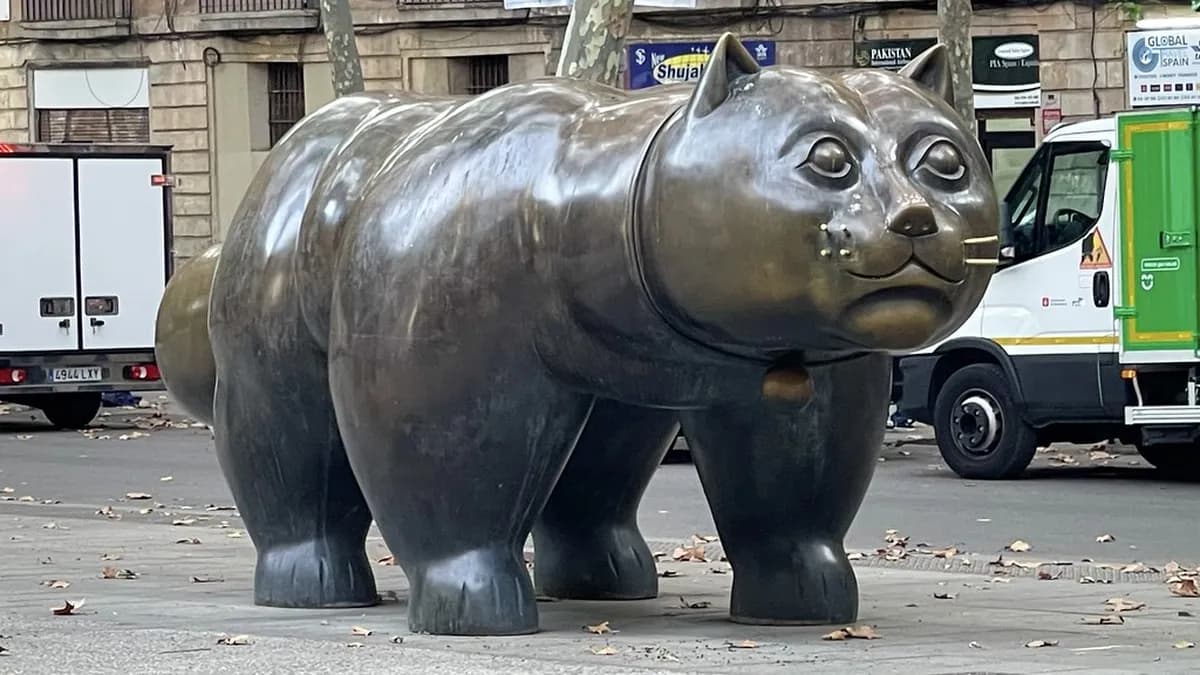
The Rambla del Raval is the wide pedestrian boulevard created when the city demolished an entire block in the 1990s as part of urban renewal. Fernando Botero's large bronze cat sits mid-boulevard and is a neighbourhood meeting point. The Rambla functions as an open-air living room: locals set chairs outside on warm evenings, children kick footballs, and food carts appear on weekends. It feels lived-in in a way that La Rambla, a few streets east, no longer does.
For a very different experience, check out the 27 Unique Things to Do in Barcelona: Hidden Gems & Local Secrets that extend beyond the standard tourist circuit and into the everyday life of the barrio.
MACBA, Filmoteca, and the Cultural Institutions
The Barcelona Museum of Contemporary Art (MACBA) opened in 1995 in Richard Meier's white geometric building on Plaça dels Àngels. The permanent collection covers art from the 1950s onward, with strong holdings in Catalan conceptual art and international movements from Fluxus to institutional critique. Temporary exhibitions typically address political or social themes and attract serious critical attention. Standard entry is €12; free on the last Monday of each month and on certain public holidays — check the MACBA website before paying.
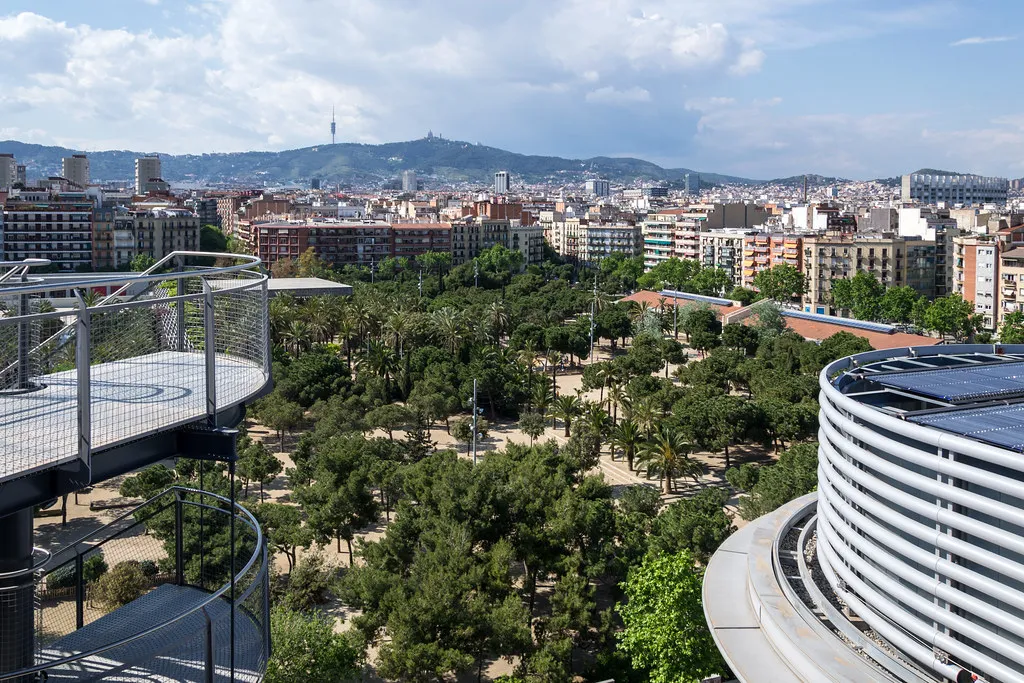
The CCCB (Centre de Cultura Contemporània de Barcelona) shares the same plaza, housed in the converted 18th-century Casa de la Caritat. It runs exhibitions, film cycles, debates, and one of Europe's stronger programmes around urban culture and digital society. Entry varies by event but many evening talks are free or under €8. The courtyard's glass wall reflecting the Eixample roofscape is itself worth the walk in.
Filmoteca de Catalunya sits on Plaça de Salvador Seguí, a few minutes' walk south. This is Spain's national film archive for Catalonia, with a two-screen cinema showing repertory programmes — retrospectives, restored classics, documentary cycles — at €4 per screening. It is one of the best cinema deals in the city and draws a local, non-tourist audience. Screenings are in original language with Catalan or Spanish subtitles. Check the monthly Filmoteca programme for exact times and current exhibitions.
| Institution | Entry Cost | Hours | Free Entry Option |
|---|---|---|---|
| MACBA | €12 | Tue–Fri 11:00–19:30, Sat 10:00–21:00 | Last Mon of month |
| CCCB | €6–8 (events vary) | Tue–Sun 11:00–20:00 | Some evening talks free |
| Filmoteca de Catalunya | €4 | Screenings at 17:00, 19:00, 21:00 | Selected events |
| Palau Güell | ~€12 | Tue–Sun 10:00–20:00 | No |
| Sant Pau del Camp | €5 | Mon–Sat 10:00–18:00 | No |
These institutions make El Raval one of the best 15 Best Places to Visit in Barcelona for Free or very low cost, especially if you plan around free-entry days and low-priced evening events.
La Boqueria's Western Edge and Where to Eat
La Boqueria market has its main entrance on La Rambla, but its western side opens directly into El Raval. Most tourists crowd the La Rambla entrance; the Carrer de la Boqueria and side-street access points are far less congested. The market itself is heavily tourist-facing these days — stall prices on the main aisles are inflated and many vendors now sell cut fruit and ready snacks rather than raw ingredients. Check the official Boqueria site for current opening hours before visiting. For actual grocery shopping, local residents use Mercat de Sant Antoni, five minutes west, which completed a major restoration in 2018 and has a busy organic and artisan market on Sundays around the outside of the building.
Good eating in Raval leans on the neighbourhood's immigrant food culture. Carrer de l'Hospital and the streets south of it have Bangladeshi, Pakistani, and Middle Eastern restaurants where a full meal costs €8–12. Bar Marsella on Carrer de Sant Pau has served absinthe since 1820 and is worth a stop purely for the atmosphere — the bottles are dusty, the mirrors foxed with age, and the room feels unchanged since the mid-20th century. It opens at 22:00 and fills up by midnight.
For daytime coffee and food, the blocks around Carrer del Carme and Carrer dels Tallers have a cluster of independent cafes that serve the university and local crowd — prices are around €2–3 for coffee, €5–7 for a sandwich, compared to the €5–6 coffees closer to La Rambla. The 12 Best Local Restaurants in Barcelona Travel Guide guide covers more of these spots across the city.
Carrer de Joaquin Costa and Nightlife
Carrer de Joaquin Costa is Raval's main nightlife artery. It runs from Plaça de la Universitat down toward the centre of the neighbourhood and is lined with bars, small clubs, and a few theatres. It starts filling up around 21:00 for pre-dinner drinks and stays active until 02:00–03:00 on weekends. The crowd is predominantly local and student-age, with a mix of nationalities that reflects the neighbourhood itself. This is not a tourist bar strip — it is where Barcelona residents actually drink.
Live music venues are scattered through Raval's side streets. You will find basement bars hosting jazz, electronic acts, and experimental music most nights of the week. The Teatro Romea on Carrer de l'Hospital programmes theatre and spoken-word events in Catalan and Spanish. Bar Kentucky and Bar Marsella are the most storied drinking institutions, but dozens of smaller neighbourhood bars serve the same function at lower profile and lower prices.
One practical note on late nights: Raval streets are noisier than most Barcelona neighbourhoods at night, and some streets in the southern section see drug dealing. The area closest to Carrer de Sant Pau and the lower Rambla del Raval can feel uncomfortable very late at night, especially alone. The blocks around MACBA and Carrer del Carme, at the northern end, are considerably calmer. Most visitors find the northern section perfectly manageable at any hour.
The southern section of El Raval below Carrer de Sant Pau warrants extra awareness after midnight — stick to the northern blocks around MACBA and Carrer del Carme for a significantly calmer late-night experience.
Safety: Perceptions Versus Reality
Raval consistently ranks among Barcelona's highest-crime areas by reported incidents, which is partly a function of its density and the volume of people passing through. The most common issue for visitors is pickpocketing — particularly on La Rambla, at markets, and on the Metro. Keep your phone in a front pocket, carry bags on your front, and do not put valuables in a backpack on your back. That advice applies across Ciutat Vella, not just Raval.
The neighbourhood's reputation as dangerous is significantly overblown in most travel forums. Daytime and early evening Raval — especially the northern section around MACBA and Carrer del Carme — is busy, well-lit, and full of families, students, and tourists. The streets around Filmoteca and Sant Pau del Camp are quiet residential blocks. The southern section, below Carrer de Sant Pau toward the port, warrants more care after midnight.
It is also worth being direct about the narcopisos problem: apartments used as drug-dealing points have been a long-standing issue in Raval and a significant source of stress for residents. This is a consequence of housing precarity and a lack of social services, not a reason to avoid the neighbourhood as a visitor. The city has increased policing in specific blocks, but the structural issues remain unresolved. Acknowledging this is part of understanding Raval honestly.
Overtourism and Gentrification: The Honest Context
El Raval is one of three Barcelona neighbourhoods — alongside Barceloneta and the Gothic Quarter — most severely affected by tourist-driven displacement. Between 2015 and 2024, rental prices in Raval rose faster than the city average, while the number of short-term tourist apartments in Ciutat Vella grew sharply before the 2024 licence freeze. Long-term residents who paid low rent in old, poorly maintained buildings found themselves forced out as landlords converted properties to tourist use or sold to investors.
The tension surfaced publicly in summer 2024, when Barcelona residents staged the city's largest anti-tourism protest in recent memory, with demonstrators carrying signs directed specifically at tourists and short-term rental platforms. The protests were not anti-visitor in spirit — they were aimed at policy and at an economic model that prioritises visitor revenue over resident housing. Most people in Raval are perfectly welcoming to respectful visitors.
What this means practically: choosing a hotel over an Airbnb keeps money in a more regulated part of the economy and avoids adding to short-term rental pressure. Spending at locally owned restaurants, markets, and shops rather than tourist-facing chains directs money to residents. Keeping noise down in residential streets at night is basic courtesy. None of this requires guilt — it just requires being a thoughtful visitor rather than an extractive one.
Street Art and Outdoor Spaces
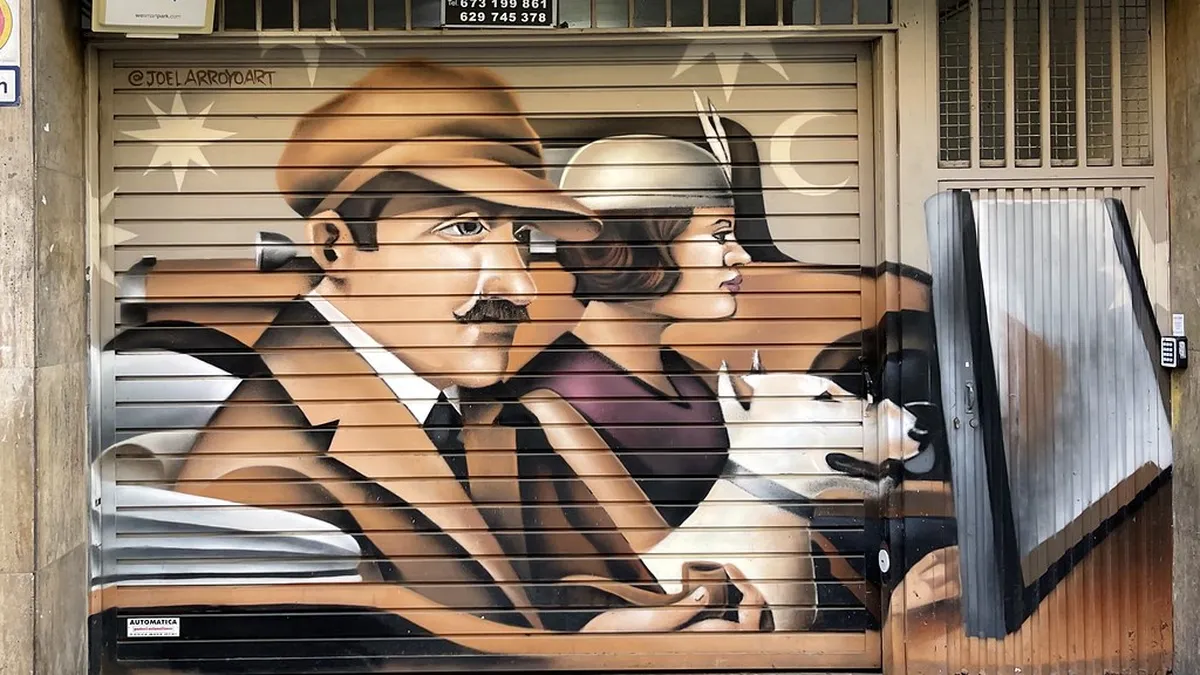
The Keith Haring mural near MACBA — painted in 1989 as part of a campaign against AIDS — is the neighbourhood's most famous piece of public art. Its red figures on white stucco have been carefully preserved and remain as sharp as the day they were finished. From there, the neighbourhood functions as an open gallery: shutters on Carrer de la Riera Baixa, walls on Carrer dels Tallers, and staircase passages throughout the southern section carry murals ranging from detailed portraiture to political stencils.
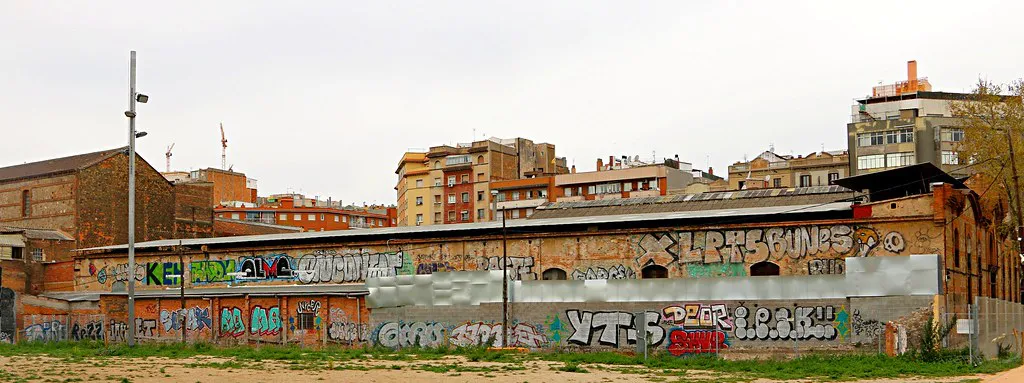
Plaça dels Àngels, in front of MACBA, is the social heart of the northern neighbourhood. Skaters have used the smooth marble pavement since the museum opened, and the city has largely accepted this rather than installing the anti-skating deterrents common elsewhere in Europe. On sunny weekend mornings the plaza is packed with families, cyclists, and people watching the skaters. It is one of the more genuinely inclusive public spaces in Barcelona.
The Jardins de Rubió i Lluch, hidden inside the former Hospital de la Santa Creu complex on Carrer de l'Hospital, is the quietest outdoor spot in the neighbourhood. The courtyard is surrounded by Gothic and Renaissance-era buildings that now house the Library of Catalonia. Orange trees, stone benches, and almost no tourists make this one of the better places to sit quietly for twenty minutes. Entry is free and the library is open weekdays.
Finding these calmer pockets connects well with knowing the 11 Key Insights on the Best Time to Visit Barcelona — early mornings and early evenings in Raval's courtyards are significantly more peaceful than midday.
Vintage Shopping and Independent Retail
Carrer de la Riera Baixa, between Carrer del Carme and Carrer de l'Hospital, is the centre of Barcelona's second-hand clothing scene. The street has roughly a dozen vintage and second-hand shops selling everything from 1970s denim to recent-season surplus. On Saturdays the shops put racks and crates onto the pavement, making it a de facto outdoor market from around 11:00 to 15:00. Prices are genuinely low compared to the vintage boutiques in Gràcia or the Born — €5–15 for most items.
Record shops are scattered through the neighbourhood's side streets. For vinyl, the highest concentration is on Carrer dels Tallers and the surrounding blocks — this street and the ones off it have more independent music shops per metre than most European cities can claim in an entire district. Genres run from flamenco and Catalan nova canço to techno, jazz, and 1970s rock.
Independent bookshops along Carrer dels Tallers and Carrer del Carme sell a mix of new and second-hand titles in Catalan, Spanish, English, and French. La Central del Raval, inside the former chapel of the Casa de la Misericòrdia on Carrer d'Elisabets, is the standout: a well-curated bookshop in a spectacular vaulted space, open daily. These shops represent what the neighbourhood's commercial fabric was before the tourism economy reshaped it, and they are still very much alive.
Practical Information for Visiting in 2026
El Raval is on the L3 Metro line (green) with stops at Liceu and Drassanes, and the L1 (red) stops at Universitat for the northern section. It is walkable from the Born, the Gothic Quarter, and Barceloneta in under 15 minutes. Paid parking inside Ciutat Vella is limited and expensive — arriving by public transport or on foot from elsewhere in the city is standard.
Most MACBA temporary exhibitions run Tuesday–Friday 11:00–19:30, Saturday 10:00–21:00, Sunday and holidays 10:00–15:00. Palau Güell runs tours on the hour; last entry is 30 minutes before closing. Filmoteca screenings typically start at 17:00, 19:00, and 21:00 — check the monthly programme for exact times. Sant Pau del Camp is closed on Mondays.
For safety, the straightforward rules apply anywhere in Ciutat Vella: do not carry a backpack on your back, keep your phone in a front pocket, and be aware in crowded markets. If you are navigating the neighbourhood late at night, the northern section around MACBA is calmer. The southern section below Carrer de Sant Pau requires more awareness after midnight. Most day and early evening visits in any part of Raval are straightforward.
If you are planning a longer stay in the city, the 12 Best Hidden Gems in Barcelona guide covers similar off-the-beaten-track spots in other quarters that complement a Raval visit well.
Frequently Asked Questions
Is It Safe to Live in Raval?
Raval is generally safe for residents and visitors who stay aware of their surroundings. Like any busy urban center, petty crime like pickpocketing can occur in crowded areas. For more detailed safety insights and community experiences, you can check this Whatsapp resource for local updates.
Are you a student looking for a flat in Barcelona?
El Raval is a popular choice for students due to its central location and vibrant atmosphere. The proximity to several university campuses and affordable dining options makes it very convenient. However, students should consider the trade-offs of urban noise and busy streets when choosing a specific apartment building.
How much time should you plan for el raval barcelona?
You should plan at least one full day to see the major museums and landmarks. If you want to explore the vintage shops and hidden cafes, two days would be better. This allows you to soak in the atmosphere without rushing through the narrow, interesting streets.
Which el raval barcelona options fit first-time visitors?
First-time visitors should prioritize Palau Güell and the MACBA museum for a mix of history and modern art. Walking the Rambla del Raval to see the Botero Cat is also a classic experience. These sites provide a great introduction to the neighborhood's unique and diverse personality.
El Raval rewards visitors who come with curiosity and without illusions. It is not a pristine heritage quarter or a sanitised tourist zone — it is a dense, multicultural, sometimes difficult, and genuinely interesting neighbourhood that tells you more about how Barcelona actually works than most of the places on the standard itinerary.
The landmarks are real: MACBA, Filmoteca, Palau Güell, Sant Pau del Camp, Bar Marsella, the Keith Haring mural. The tensions are real too. Holding both at once produces a more honest and ultimately more rewarding experience of the city.
Continue exploring
More guides you'll find useful