12 Best Local Restaurants in Barcelona Travel Guide (2026)
Discover the 12 best local restaurants in Barcelona for 2026. Plan your trip with expert tips on Catalan cuisine, price ranges, and neighborhood gems.
On this page
12 Best Local Restaurants in Barcelona (2026)
Barcelona's restaurant scene rewards people who ignore Las Ramblas. The locals eat later, spend less, and return to the same four or five places week after week. This guide names those places — with addresses, signature dishes, and honest price ranges — so you can walk in knowing exactly what to order. Every spot below has been cross-checked against what Barcelona-based food writers and chefs were recommending in 2026.
One framing note before you start: Barcelona is not a tapas city in the traditional Andalusian sense. Catalan cuisine runs on different logic — longer lunches, seasonal vegetables, and rice dishes that owe more to the sea than to Castilian tradition. The distinction matters when you're choosing where to eat. A place billing itself as "tapas" in the Gothic Quarter tourist corridor is almost always aimed at visitors; the places below are not.
Catalan vs. Tapas: What Locals Actually Eat
The shorthand "tapas city" flattens a cuisine that is genuinely distinct. Catalan cooking leans on pa amb tomàquet (bread rubbed with ripe tomato and olive oil), escudella (a chickpea and meat stew in winter), fideuà (noodle paella), and suquet de peix (fisherman's stew). These dishes do not appear on the tourist-circuit menus. You find them in the restaurants below.
The clearest expression of local eating culture is the menú del día — a three-course set lunch served Monday to Friday between 13:00 and 16:00. It typically costs €13–€18 and includes bread, wine or water, a starter, a main, and dessert. Three reliable spots for a genuine menú del día: Can Culleretes in the Gothic Quarter (Carrer Quintana 5, open since 1786, around €16), Suculent on Rambla del Raval 45 (chef Tonet's seasonal Catalan cooking, €18–€22), and Alkostat on Ronda Sant Antoni 41 (Alkimia's casual sibling, €20–€25). At all three, arrive before 13:15 on weekdays to avoid a queue.
Catalan eating also has a clear hierarchy by meal. Lunch is the serious event — two hours, multiple courses, unhurried. Dinner is lighter and later, rarely starting before 21:00. If you sit down at 19:30 expecting a full kitchen, most authentic restaurants will politely tell you to come back in an hour.
Named Restaurants by Neighborhood
The restaurants below are grouped by area so you can plan a day around one district rather than crisscrossing the city.
- Can Paixano (La Xampanyeria) — Barceloneta. Carrer de la Reina Cristina 7. Standing-room cava bar open since 1969. Order the house rosé cava and a grilled meat sandwich (entrepà). Budget €8–€18 per person. Open Mon–Sat 09:00–22:30. No bookings — arrive before 11:00 or after 18:00 to avoid the worst of the crush.
- La Cova Fumada — Barceloneta. Carrer del Baluard 56. The birthplace of the bomba (a fried potato croquette filled with meat, served with two sauces). No sign on the door, no reservations, cash only. Open Mon–Fri 09:00–15:15, Sat until 13:00. Lunch around €15–€25 per person.
- Casa Maians — Barceloneta. Carrer Sant Carles 28. One of the few genuinely local restaurants in the neighbourhood. Short menu, daily specials on a mirror. The black rice with red prawns is the dish to order. Around €25–€35 per person for lunch.
- Quimet & Quimet — Poble-sec. Carrer del Poeta Cabanyes 25. Tiny standing bar famous for montaditos (open-faced bites) topped with premium canned seafood. Try salmon with truffle honey. Mon–Fri 12:00–16:00 and 19:00–22:30. Budget €20–€35 per person.
- El Xampanyet — El Born. Carrer de Montcada 22. Historic tiled bar that has stayed authentically local despite heavy tourist foot traffic nearby. Order the house cava and the anchovies. Tue–Sat 12:00–15:30 and 19:00–23:00. Dinner for two with wine around €40–€65.
- Cal Pep — El Born. Plaça de les Olles 8. No printed menu — the waiter recites what came in that morning. Seafood tapas of exceptional quality. Tue–Sat 13:00–15:30 and 19:30–23:30. Budget €60–€100 per person.
- Can Culleretes — Gothic Quarter. Carrer Quintana 5. Barcelona's oldest restaurant (1786). Dense, generous Catalan cooking: escudella, roast goose with pears, salt cod. Set menus €30–€55. Wed–Sun 13:30–16:00 and 20:00–22:30.
- Suculent — El Raval. Rambla del Raval 45. Chef Tonet's modern Catalan kitchen using market produce. Excellent menú del día on weekdays. Around €40–€65 for dinner. Open daily from 13:00.
- Alkostat — Sant Antoni. Ronda Sant Antoni 41. The more casual side of the Alkimia kitchen. Try the Caesar croquettes and the rostit (roast) lasagna. Weekday menú €20–€25. Dinner €45–€70.
- Dos Pebrots — El Raval. Carrer Doctor Dou 19. Mediterranean-first menu that changes with the season. The signature two-pepper appetizer is mandatory. Dinner around €50–€80 per person.
- Gresca — Eixample. Carrer Provença 230. Chef Rafa Peña's benchmark for refined Catalan cooking without the tasting-menu formality. Order the cod gilda and check the natural wine list. Dinner €65–€90 per person.
- Bar Cañete — near Las Ramblas. Carrer de la Unió 17. Upscale tapas at a long marble counter with an open kitchen. Reliable late-night option, open daily 13:00–00:00. Budget €50–€90 per person for dinner with wine.
Vermut Culture: The Sunday Morning Ritual
The vermut hour is one of the clearest markers of local life in Barcelona. On Sundays between 12:00 and 14:30, entire neighborhoods migrate to their corner bodega or bar for a glass of house vermouth served with olives, chips, and sometimes a small plate of anchovies or boquerones. This is social infrastructure, not a prelude to drinking. It has nothing to do with cocktail culture.
Bodega Gol on Carrer del Parlament 10 (Sant Antoni) is a genuine neighborhood vermuteria that has barely changed in decades. The house vermouth comes from the barrel. The atmosphere on Sunday morning is exactly what the ritual is supposed to feel like — unhurried, loud, and local. For a fuller tour of the tradition and pairing ideas, the vermut and calcotada Barcelona food guide covers the seasonal angle in detail.
The Gràcia neighborhood has a dense cluster of bodegas worth exploring on foot. Bodega Sepúlveda (Carrer de Sepúlveda 173), Morro Fi (Carrer del Consell de Cent 171), and Can Recasens (Carrer del Parlament 10) all serve wine by the glass from the cask and keep the kind of hours — noon until late — that suit a slow Sunday. None of them takes reservations. None of them needs to.
The vermut ritual runs Sundays 12:00–14:30 in neighbourhood bodegas — Bodega Gol on Carrer del Parlament 10 pours house vermouth from the barrel. This is not a tourist experience; it is how Barcelonans spend Sunday mornings.
Where Locals Shop and Eat: The Market Question in 2026
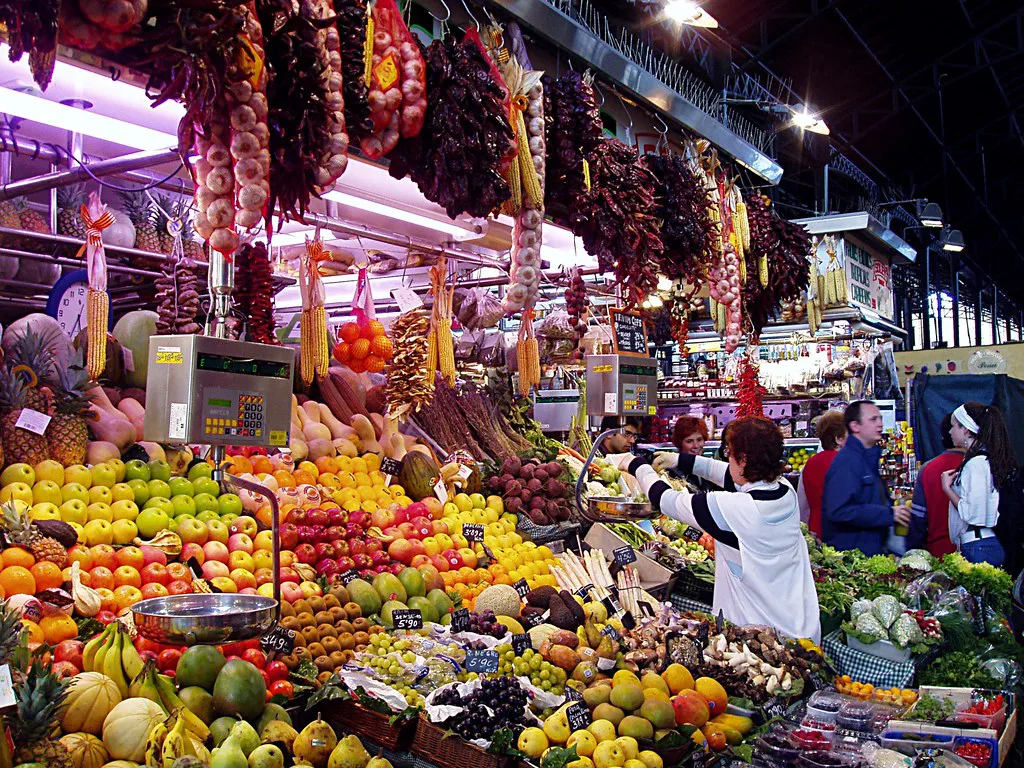
La Boqueria is still there. But since 2017, Barcelona City Council has been restricting new market stalls from selling to eat-and-go tourists, and in 2024 the council explicitly redirected visitor pressure to other markets and tightened vendor licences. The result: La Boqueria now functions primarily as a walk-through attraction for tourists, while working Barcelonins do their shopping — and their market eating — elsewhere.
The three markets locals actually use in 2026: Mercat de Santa Caterina (Avinguda de Francesc Cambó 16, El Born) has a stunning Gaudí-influenced mosaic roof and genuinely busy stalls used by neighborhood cooks. The bar at the back does an excellent menú del día for €13. Mercat de l'Abaceria (Travessera de Gràcia 186, Gràcia) is a covered market that doubles as a weekend food hall and antiques browsing spot — the pintxos bars inside are worth the trip alone. The Mercat de Sant Antoni (Carrer del Comte d'Urgell 1, Sant Antoni) runs a Sunday morning book and food stall market on its perimeter from 09:00 to 14:00 that draws a genuinely local crowd; the Sant Antoni neighborhood guide covers the surrounding restaurant scene in more depth.
If you do visit La Boqueria, the best strategy is to arrive at 08:30 on a weekday before the tour groups. The fresh produce stalls and the fishmongers in the interior sections are still run by families who have been there for generations. Avoid any counter with a laminated photo menu facing the main entrance — those are priced for tourists at roughly three times the value.
Gràcia Bodegas and the Neighborhood Dining Circuit
Gràcia is the district that most closely resembles the Barcelona that existed before mass tourism. It has its own village feel, its own pace, and a density of independently owned restaurants and wine bars that few other neighborhoods can match. The key streets for eating and drinking are Carrer de Verdi, Carrer de Torrent de l'Olla, and the squares around Plaça del Sol and Plaça de la Vila de Gràcia.
For dinner, La Pepita (Carrer de Còrsega 343) does Asturian-influenced pintxos and croquettes that draw a local queue on weekend evenings — the pote asturiano croquette is the one to order. La Pepita does not take bookings for groups under six, so arrive at 20:30 when it opens. Further into the neighborhood, El Glop (Carrer de Sant Lluís 24) has been serving Catalan grills and botifarra sausage since 1977 at prices that make it one of the best-value proper dinners in the city — budget around €22–€30 per person for a full meal with house wine.
The bodegas in Gràcia are a different category from bars. A bodega in the Catalan sense is a wine shop that also pours by the glass at the counter, often from unlabelled carafes of the house wine. They are not designed for lingering — the point is to have a glass while picking up a bottle for dinner. But several have grown into genuine neighborhood anchors. Bodega Manolo (Carrer de Torrent de l'Olla 101) has been doing this for decades and charges around €2–€3 a glass for honest Catalan reds.
How to Eat in Barcelona Without Getting It Wrong
Spanish meal times are not a myth. Kitchen service for lunch runs 13:00–16:00; most serious restaurants close the kitchen entirely between 16:30 and 20:30. Arriving at 18:00 hungry will leave you eating at a tourist trap or waiting. Plan your day around a large lunch (the menú del día window) and a lighter dinner starting at 21:00 or 21:30.
Reservations matter for about half the places on this list. Cal Pep, Gresca, Bar Cañete, and Dos Pebrots fill up on Thursday through Saturday nights — book at least three days ahead via their websites or by phone. Can Paixano, La Cova Fumada, Quimet & Quimet, and the bodegas in Gràcia do not take bookings; the system at these places is to arrive early or wait at the bar with a drink.
Tipping is genuinely optional. Locals round up to the nearest euro or leave a few coins for good service. A 5–10% tip is received as generous, not expected. Check your bill for IVA (10% VAT) — it is included in menu prices by law. If a restaurant adds a cubierto (bread and cover charge) of €1–€2, that is standard in sit-down places and not an error on the bill.
One practical note on language: menus in the restaurants above are typically in Catalan first, Spanish second, and sometimes English. If your waiter switches to English immediately, that is fine — but attempting gràcies (thank you in Catalan) when you leave is noticed and appreciated.
Kitchen service for lunch runs strictly 13:00–16:00 and closes entirely until 20:30. Arriving at 18:00 hungry will leave you at a tourist trap. Plan for a proper menú del día at 13:00 and dinner no earlier than 21:00.
Budget Guide: What Each Meal Tier Actually Costs
Street and market level: €5–€12 per person. A bocadillo from a neighborhood bar, a montadito at Quimet & Quimet, a glass of wine and anchovies at a bodega. This is how locals eat casually on weekdays.
Menú del día: €13–€25 per person including wine or water. The single best value-for-money eating format in Spain. Available at most sit-down restaurants on weekdays only. The version at Suculent and Alkostat skews toward the higher end of this range but is meaningfully better than the average.
A la carte dinner at a proper neighborhood restaurant: €30–€55 per person with house wine. This covers most of the places on the named list above — El Glop, Bar del Pla, Casa Maians. You are eating what locals eat at a price that feels reasonable by any European capital standard.
Chef-driven and upscale dining: €65–€100+ per person. Gresca, Dos Pebrots, Cal Pep. These are restaurants of real ambition that happen not to be in tourist guidebooks yet. They are worth the price.
| Dining Format | Cost per Person | Hours | Booking Needed |
|---|---|---|---|
| Menú del día (set lunch) | €13–25 incl. wine | Mon–Fri 13:00–16:00 | Usually not |
| Neighbourhood bodega / vermut | €8–18 | Sun 12:00–14:30 | No |
| A la carte neighbourhood dinner | €30–55 | From 21:00 | Sometimes |
| Upscale / chef-driven dinner | €65–100+ | From 21:00 | 3+ days ahead |
Frequently Asked Questions
Do I need to tip at restaurants in Barcelona?
Tipping is not required in Barcelona, as service is included in the price. Locals usually leave a few small coins or round up the bill for good service. A 5% tip is considered generous.
What time do locals eat dinner in Barcelona?
Locals typically eat dinner between 9:00 pm and 11:00 pm. Many authentic restaurants do not even open their doors until 8:00 pm. Arriving earlier usually means dining with other tourists.
Is tap water safe to drink in Barcelona restaurants?
Yes, tap water is perfectly safe to drink in Barcelona. However, it has a strong mineral taste that many find unpleasant. Most diners prefer to order bottled still or sparkling water.
Eating well in Barcelona in 2026 comes down to one thing: knowing where the tourists stop and where the locals begin. That line runs through the menú del día, the Sunday vermut, and the neighborhood bodegas of Gràcia and Sant Antoni. Use the addresses in this guide as your starting point and let the city's actual rhythms — late lunches, slow Sundays, a glass of house wine poured from a barrel — do the rest.
Pair this with our broader hidden gems in Barcelona guide for the full off-the-beaten-path overview.
Continue exploring
More guides you'll find useful