Testaccio Market, Rome: 10 Things to Know Before You Go
Locals call it 'the stomach of Rome.' Our Testaccio Market guide covers must-eat stalls, market history, and 10 tips locals actually use before you go.
On this page
Testaccio Market Guide: 10 Things to Know Before You Go
Rome is a city of layers where food and history blend together in every neighborhood. The Testaccio Market stands as a prime example of this delicious cultural intersection — a working-class institution that has outlasted empires, slaughterhouses, and tourist trends alike.
Locals call the market the stomach of Rome. Walk through on any weekday morning and you will see why: nonne loading bags with romanesco broccoli, chefs debating the merit of today's pecorino, and a line snaking out from the best sandwich stall in the city. This guide gives you the box numbers, the dish names, and the logistics to navigate it all with confidence.
The History Behind the Market: From Slaughterhouse Roots to Local Legend
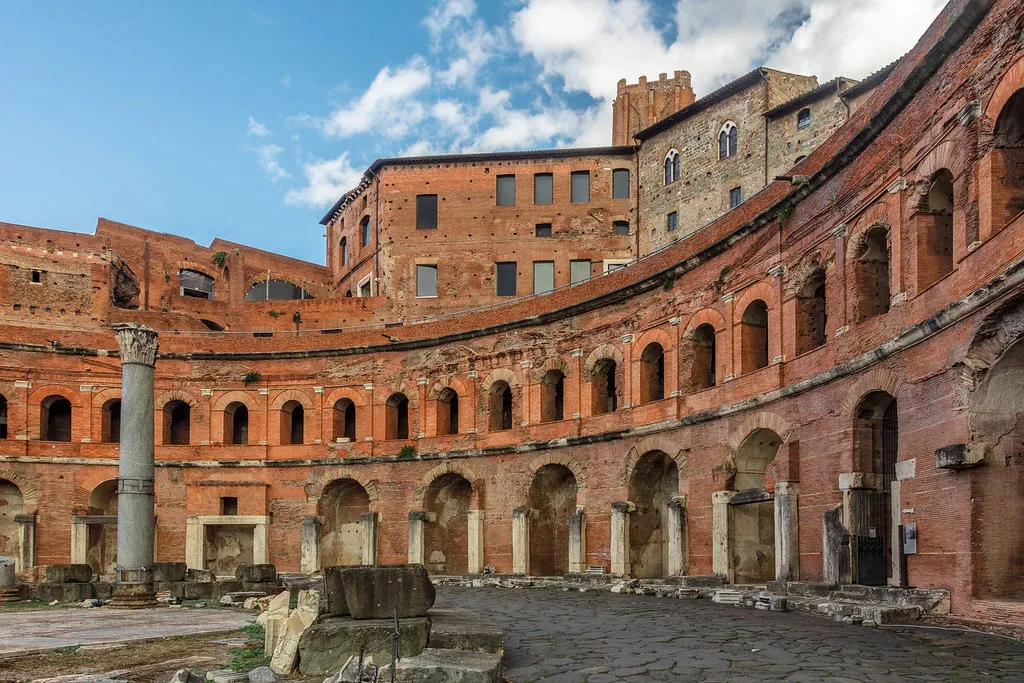
The Testaccio district has been tied to Rome's food supply since the height of the empire. The nearby Monte Testaccio — an artificial hill rising 35 metres above street level — is built entirely from millions of broken olive oil amphorae, the remnants of goods unloaded at the ancient river port below. What looks like a grass-covered hill is actually solid ancient pottery, stacked over several centuries by workers who had no other way to dispose of the vessels.
The neighborhood's industrial character deepened in the 19th century when the Mattatoio, at the time the largest slaughterhouse in Europe, opened on the southern edge of the district. Workers — known as scortichini — were paid partly in offal, the unwanted "fifth quarter" of the animal: tripe, liver, heart, oxtail, and kidney. Out of necessity, Roman housewives turned these cuts into dishes so good they defined the local cuisine. Trippa alla Romana, coda alla vaccinara, and rigatoni con la pajata are all direct descendants of that era. This quinto quarto culinary tradition remains central to Roman food identity today.
The market grew up alongside the Mattatoio to supply the butchers, porters, and families who depended on it. For decades it occupied Piazza Testaccio, a lively square a short walk from the current site. That original open-air market was dim, chaotic, and deeply beloved. Exploring this district still offers a chance to encounter 15 Unusual Things to Do in Rome: Hidden Gems and Secret Spots that most visitors miss entirely.
The New Testaccio Market: Modernity Meets Tradition
The current facility, officially the Nuovo Mercato di Testaccio, opened in 2012. The move from Piazza Testaccio to Via Lorenzo Ghiberti was controversial — longtime vendors and residents were sceptical of the sleek glass-and-steel structure replacing their beloved chaotic square. Some of that scepticism was warranted: the initial opening was accompanied by an American budget steakhouse and a mediocre sushi restaurant in the same complex, which did not calm nerves. Both have since gone.
What remained was what mattered. Most of the vendors moved with the market, bringing decades of customer relationships and unchanged recipes into the new space. The modern building now floods the interior with natural light and provides a clean, organized grid of stalls — a significant upgrade in comfort without sacrificing the character that made the old market famous.
One detail almost no visitor notices: portions of the floor are made of glass, revealing a large Roman warehouse complex discovered during construction. According to Rome's official tourism guide, this archaeological area dates to the 1st century AD and sits directly beneath the produce stalls. You are, quite literally, buying tomatoes over the foundations of an ancient storage facility. The market also incorporates solar panels and natural ventilation — a rare concession to sustainability in a city that prefers its infrastructure ancient.
What to Expect: Market Layout and Atmosphere
The market sits on Via Lorenzo Ghiberti in the southern part of the Testaccio neighborhood. From the Piramide Metro stop (Line B), walk down Via Marmorata toward the river for about 700 metres, then turn right onto Via Galvani. The large white market structure appears on your left within a few minutes. The walk takes roughly ten minutes and passes several local cafes worth noting for later.
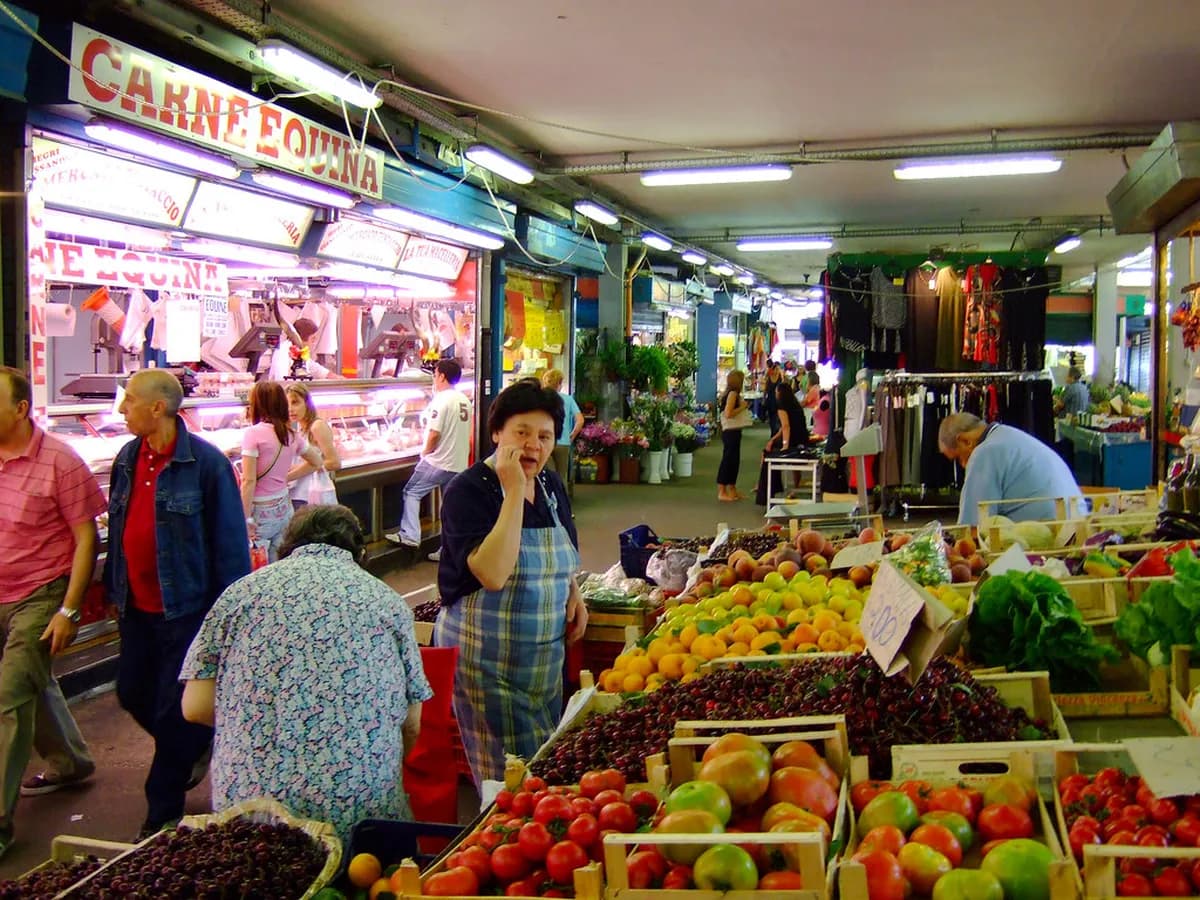
Inside, stalls are arranged on a numbered grid — every vendor has a "Box" number displayed above their stall. This is not decorative: the numbers are how locals give directions and how online guides identify specific vendors. Keep the box numbers in this guide handy and navigation becomes straightforward. Fishmongers cluster toward one side. Butchers, cheese sellers, and produce vendors occupy the center and back. Ready-to-eat food stalls are interspersed throughout, with the longest queues marking the best options.
A free central seating area near the coffee bar sits in the heart of the market. This is where groups tend to converge after splitting up to order from different stalls — grab a coffee, claim a table, and use it as your base. The atmosphere is lively but far calmer than Campo de' Fiori, which draws large tourist crowds. Here you will hear vendors discussing football results and neighbours catching up over morning espresso, not haggling over souvenir prices.
Must-Visit Stalls and What to Order
Mordi e Vai at Box 15 is the first stop for most people who know the market. Run by Sergio Esposito, a former butcher, the stall fills crusty rolls with slow-cooked Roman classics. Order the panino con l'allesso (simmered beef dipped in its own cooking juices) or the polpette di bollito (fried shredded beef croquettes). Locals also swear by the trippa alla Romana sandwich and a lesser-known vegetarian option: artichoke with shaved pecorino. Expect to pay around EUR 5–7 per panino and expect a queue between 12:00 and 13:30.
Da Vania e Artenio at Box 90 is the market's beloved bakery stall. Artenio sells pizzette rosse — small, crispy circles of dough dressed with tomato sauce — by the piece for around EUR 1. His ciambelline al vino (crunchy wine cookies) are sold by the bag and make excellent gifts. They travel well and cost far less than anything sold in central Rome's souvenir shops.
Casa Manco at Box 22 reimagines pizza al taglio with long-fermented dough and seasonal toppings sourced from other vendors in the same market. The crust is airy and slightly charred at the edges. You pay by weight, so point at what you want and the vendor cuts it with scissors. Toppings rotate, but zucchini blossoms, seasonal mushrooms, and 'nduja appear regularly.
Trapizzino brings a modern Roman street food invention to the market: triangular pizza pockets filled with stewed classics like oxtail (coda alla vaccinara) or chicken cacciatore. It is portable, deeply flavourful, and a good bridge between the old slaughterhouse-era cuisine and the new generation of Roman street food. Silvia's produce stall at Box 68 is worth a stop if you are planning to cook — she is the only vendor in the market affiliated with the Campagna Amica network, meaning every item comes from her family's own farm in the Lazio region. The difference in flavour, particularly for tomatoes and artichokes, is noticeable.
Stall Directory: Box Numbers at a Glance
Every stall in the Nuovo Mercato di Testaccio has a numbered box. Use this directory to navigate without wandering in circles. Queues at the food stalls move faster when you already know what you want before you arrive.
- Box 15 — Mordi e Vai: traditional Roman meat sandwiches; panino con l'allesso and polpette di bollito are the must-orders; EUR 5–7
- Box 22 — Casa Manco: gourmet pizza al taglio with long-fermented dough and seasonal toppings; sold by weight
- Box 40 — Cesare's Shoes: Made-in-Italy footwear if you need a break from eating
- Box 43 — Chicchi e Lettere: specialty coffee beans, good for picking up whole-bean gifts
- Box 68 — Silvia's Produce: Campagna Amica farm-direct fruit and vegetables, 100% local and seasonal
- Box 70 — Sartor: organic meat and eggs from a trusted family butcher
- Box 82 — Fior di Zucca: seasonal produce with a focus on zucchini and their flowers
- Box 90 — Da Vania e Artenio: pizzette rosse, ciambelline al vino, sourdough; EUR 1–3 per item
The Trapizzino stall location shifts occasionally — look for the queue. Spiros Bistrot offers Mediterranean dishes like Greek moussaka for visitors wanting a sit-down plate rather than street food. The market also has a hairdresser, a cobbler, and several clothing stalls — a reminder that this is a functioning neighbourhood market, not a curated food hall.
| Box | Vendor | Specialty | Price Range |
|---|---|---|---|
| Box 15 | Mordi e Vai | Roman meat sandwiches (panino con l'allesso, polpette di bollito) | €5–€7 |
| Box 22 | Casa Manco | Gourmet pizza al taglio, long-fermented dough | By weight |
| Box 68 | Silvia's Produce | Campagna Amica farm-direct fruit and vegetables | Market price |
| Box 90 | Da Vania e Artenio | Pizzette rosse, ciambelline al vino, sourdough | €1–€3 |
| Box 70 | Sartor | Organic meat and eggs, family butcher | Market price |
| Box 43 | Chicchi e Lettere | Specialty coffee beans | Market price |
Pizza, Pasta, and Other Essential Roman Carb-y Things
Start any morning visit with pizzette rosse from Box 90. These small tomato-topped dough circles are a Roman children's snack eaten mid-morning, and buying one from Artenio gives you a reason to linger at what is genuinely one of the friendliest stalls in the market. The ciambelline al vino alongside them are made with white wine and sugar, crunchy throughout, and designed for dipping in dessert wine or espresso.
Pizza al taglio at Casa Manco (Box 22) deserves a separate visit from the sandwich stalls. The dough ferments for up to 72 hours, producing a structure light enough to support heavy toppings without becoming soggy. Order by pointing and gesturing a size — the vendor will cut with scissors and weigh it. Don't be embarrassed to ask for a small piece first as a taste test; it is entirely normal.
Several stalls sell fresh pasta for cooking at home — handmade ravioli and fettuccine cut to order. If you want to eat pasta on-site rather than buy to cook, a handful of ready-to-eat vendors near the centre of the market offer small plates of carbonara or cacio e pepe made with pasta sourced from the same market. Quality is excellent and prices are a fraction of the trattorias a ten-minute walk away.
Insider Tips for Visiting Like a Local
The market opens at 07:00 Monday through Saturday and begins winding down from 14:00 onward. The sweet spot for ready-to-eat food is 11:30 to 13:00, when all stalls are running at full capacity and the lunch crowd has not yet peaked. Arriving at 07:30 on a weekday gives you the calmest, most relaxed experience — vendors have time to chat, samples are more freely offered, and the produce stalls are fully stocked.
The market is open Monday through Saturday 07:00–14:30. The best time for ready-to-eat food stalls is 11:30 to 13:00 — arrive before 12:30 to beat the lunch queue at Mordi e Vai (Box 15).
Start at the coffee bar near the central seating area. Stand at the counter, order a EUR 1.20 espresso, and take five minutes to observe the grid before you begin eating. This is what locals do. It also stops you from ordering from the first stall you see and missing everything else.
Most food stalls now accept card payments, but small produce vendors often prefer cash. Carrying EUR 20–30 in small bills avoids any awkwardness and speeds up transactions at busy stalls. A few useful Italian phrases go a long way here: Vorrei (I would like), Posso assaggiare? (Can I taste?), and Mi consiglia? (What do you recommend?) will open doors that pointing alone will not.
Do not attempt to visit on a Sunday — the market is closed. It is also closed on major public holidays. For more context on the Testaccio neighborhood beyond the market, the broader area has Roman ruins, the Mattatoio arts complex, and Monte Testaccio itself worth combining into a half-day visit.
The market is closed on Sundays and all major Italian public holidays including Easter Sunday and Monday, Ferragosto (August), and national feast days. Always verify on the official website before planning a holiday visit.
Booking a Food Tour of Testaccio Market
Structured food tours of the Testaccio Market make sense for first-time visitors who want to meet vendors directly and move past the obvious stalls to the ones that locals actually use. Operators like Eating Italy (based in Testaccio) and several tours listed on GetYourGuide pair the market with a walk through the broader neighborhood — the Mattatoio, Monte Testaccio, and a selection of family-run shops. Tours typically run 09:00 to 13:00 and cost EUR 75–90 per person.
The advantage of a guided visit is access: good guides introduce you to vendors by name, which means you skip the queue at Mordi e Vai and get the off-menu samples at Artenio's stall. The disadvantage is the fixed itinerary — if you prefer to linger at a stall or return for seconds, it is harder to do on a group tour. Solo visits and guided tours serve different goals: the former gives freedom, the latter gives depth on a first encounter.
If you plan to return to the market on a subsequent day after a tour, you will find the experience very different. Vendors recognize repeat visitors and the interactions shift from transactional to genuinely conversational. Two visits — one guided, one solo — is the most efficient way to get the most out of the market in a short trip.
Is Testaccio Market Worth Visiting? Final Thoughts
If you want a medieval aesthetic with flower stalls, Renaissance statues, and a tourist-to-local ratio of roughly ten to one, Campo de' Fiori is the market for you. If you want to eat well, pay fair prices, and see how Roman families actually shop in 2026, the Testaccio Market is the clear choice. It is not a spectacle designed for visitors — which is precisely why it is worth visiting.
The market is ideal for anyone who enjoys discovering 13 Best Free Things to Do in Rome: Budget Travel Guide while exploring residential neighborhoods. Entry costs nothing. You spend money only on what you eat. A generous grazing session across three or four stalls — coffee, a panino at Mordi e Vai, pizza at Casa Manco, cookies from Artenio — runs EUR 15–20 per person. There is no cheaper or more satisfying lunch in the city.
One honest caveat: the building is modern and functional, not picturesque. The Instagram shot is the food, not the architecture. Visitors who require beautiful ruins as a backdrop for their meal should combine the market with a walk up to Monte Testaccio afterward, where the ancient amphorae hill provides more than enough visual drama.
EATING WELL IN ROME: Neighborhood Context
Testaccio has been called the "stomach of Rome" for over a century, and the title holds. The neighborhood sits just south of Aventino, one of Rome's seven hills, and about a 20-minute walk from the Colosseum. It lacks the medieval alleyways of the centro storico but has more than 2,000 years of food history and a fierce sense of local identity that the centro has largely lost to tourism.

The culinary identity of the area runs directly through the fifth-quarter tradition. What began as working-class necessity — using every part of the animal because there was no alternative — became the foundation for some of Italy's most technically demanding dishes. Coda alla vaccinara (oxtail braised with cocoa and pine nuts) and rigatoni con la pajata (pasta with veal intestine sauce) are both Testaccio originals. The market keeps both alive through the butchers who supply the neighborhood's restaurants every morning.
Understanding this context helps you appreciate why the market feels different from a food hall or a tourist market. The vendors are not selling a performance of Roman food culture. They are the actual supply chain. The pecorino on display at Box 68 will appear on restaurant menus within the same day. This is Testaccio operating exactly as it has for generations — efficient, proud, and indifferent to trends.
Holiday Planning: Visiting on Easter Sunday and Monday
Italian holiday schedules catch many visitors off-guard, and the Testaccio Market is no exception. The market is closed on Easter Sunday — vendors spend the day with family for the traditional long lunch. Easter Monday (Pasquetta) is equally problematic: it is a national holiday and a day when Romans traditionally leave the city for countryside picnics, so most stalls remain closed even though some surrounding restaurants may open.
In 2026, Easter falls on April 5, making April 4 (Saturday) the last opportunity to visit before the long weekend closure. If your trip overlaps with Easter, plan your market visit for the Thursday or Friday before. The Tuesday after Easter tends to be busy as vendors restock and locals return to their routines — arrive by 08:30 to avoid the post-holiday crush.
The same logic applies to other Italian public holidays: 1 January, 6 January (Epiphany), 25 April (Liberation Day), 1 May (Labour Day), 2 June (Republic Day), 15 August (Ferragosto), 1 November, 8 December, and 25–26 December. Ferragosto in August is particularly disruptive — many Rome businesses close for one to two weeks, and the market schedule can be reduced. Always verify on the Official Mercato Testaccio website before a holiday visit.
Testaccio vs. Campo de' Fiori vs. Mercato Centrale: Which Market to Visit
Rome has three markets that appear on most tourist itineraries and they serve very different purposes. Campo de' Fiori is open every morning in Piazza Campo de' Fiori in the historic center. It looks beautiful, has a long history, and sells flowers, spices, and produce — but the prices reflect its location and a vendor base that has tilted heavily toward tourists over the past decade. It is worth a quick visit for the atmosphere, not for serious food shopping.
Mercato Centrale, next to Roma Termini station, opened in 2016 as a curated food hall with named chefs, fixed stalls, and extended hours running into the evening. It is architecturally impressive and the food is genuinely good. But it is designed as a dining destination, not a neighborhood institution. Prices are restaurant-level and the interaction with vendors is transactional rather than personal.
Testaccio Market is the choice for people who want to eat what Romans actually eat, at the prices Romans actually pay, in the company of people who live and work in the neighborhood. It closes by 14:30, so you cannot use it as a dinner option — but for a morning or lunchtime visit, nothing in the city compares. The 12 Best Restaurants in Trastevere Travel Guide source much of their produce here each morning, which tells you everything you need to know about quality.
Frequently Asked Questions
Is Testaccio Market worth visiting?
Yes, it is absolutely worth visiting for anyone seeking an authentic Roman food experience. Unlike tourist-heavy markets, it offers high-quality local ingredients and legendary street food at fair prices. It is a highlight for many travelers visiting Italy who want to see the real Rome.
What are the best stalls at Testaccio Market?
Mordi e Vai at Box 15 is famous for its traditional simmered beef sandwiches. Da Vania e Artenio at Box 90 offers incredible baked goods like sourdough bread and pizzette rosse. For gourmet pizza by the slice, Casa Manco at Box 22 is a must-visit for creative toppings.
When is Testaccio Market open?
The market is typically open Monday through Saturday from 7:00 AM until 2:30 PM. It is closed on Sundays and major public holidays like Easter Sunday and Monday. The best time to visit for lunch is between 11:30 AM and 1:00 PM when all food stalls are active.
How do I get to Testaccio Market from the Colosseum?
You can take the Metro Line B from the Colosseo stop to Piramide, which is only two stops away. From Piramide, it is a pleasant ten-minute walk down Via Marmorata and Via Galvani to the market entrance. Alternatively, several local buses connect the historic center directly to the Testaccio neighborhood.
The Testaccio Market is more than just a place to buy groceries; it is a living monument to Roman culture. From its ancient amphorae roots to its modern glass stalls, it tells the story of a resilient and food-loving community.
By following this guide, you can navigate the grid of stalls with confidence and find the best flavors the city has to offer. Remember to look for the box numbers and arrive early to enjoy the freshest selections.
Your visit will support local families and provide you with a culinary memory that lasts a lifetime. Enjoy every bite as you explore the incredible heart of the Testaccio district.
Continue exploring
More guides you'll find useful