15 Unusual Things to Do in Rome: Hidden Gems and Secret Spots (2026)
Discover 15 unusual things to do in Rome, from the Aventine Keyhole to underground basilicas. Plan your off-the-beaten-path trip with local tips and booking advice.
On this page
15 Unusual Things to Do in Rome
Rome hosts around 35 million tourists a year, yet most of them crowd into the same half-dozen landmarks. Step even fifteen minutes off the beaten path and the city changes completely. This guide covers fifteen unusual things to do in Rome in 2026, from a keyhole that frames St. Peter's Dome to an underground Mithraic temple that predates Christianity. All opening hours and prices have been verified for the current season.
Finding 18 Hidden Gems in Rome: The Ultimate Guide rewards the traveler who is willing to start early, walk a little further, and occasionally pay a small extra fee to descend underground. These fifteen picks range from completely free to a few hundred euros for luxury experiences. Each one offers something the Colosseum queue simply cannot: room to breathe and think.
Our Top Picks: Unique Things to Do in Rome
If your time in Rome is limited, prioritize these four. The Aventine Keyhole costs nothing and takes five minutes but stays with you for years. The Basilica di San Clemente is the single best underground experience in the city, stacking twelve centuries of architecture in one building. For outdoor Roman history without the Colosseum crowds, the Appian Way on a Sunday morning is unbeatable. And for the best contemporary art-meets-ruins contrast, the Baths of Caracalla with a VR headset is genuinely unlike anything else in Europe.
Everything else on this list sits a tier below in raw impact but makes an excellent supporting act. The suggestions below are organized roughly by neighborhood so you can group nearby attractions into a single half-day route.
Peer Through the Aventine Keyhole
On the quiet Aventine Hill, an unremarkable wooden door in the Piazza dei Cavalieri di Malta contains a small brass keyhole. Peer through it and you see one of the most perfectly composed views in all of Europe: St. Peter's Dome framed by a tunnel of manicured hedges, aligned by the Knights of Malta with geometric precision. The effect is so exact that it looks like a painting rather than a garden.
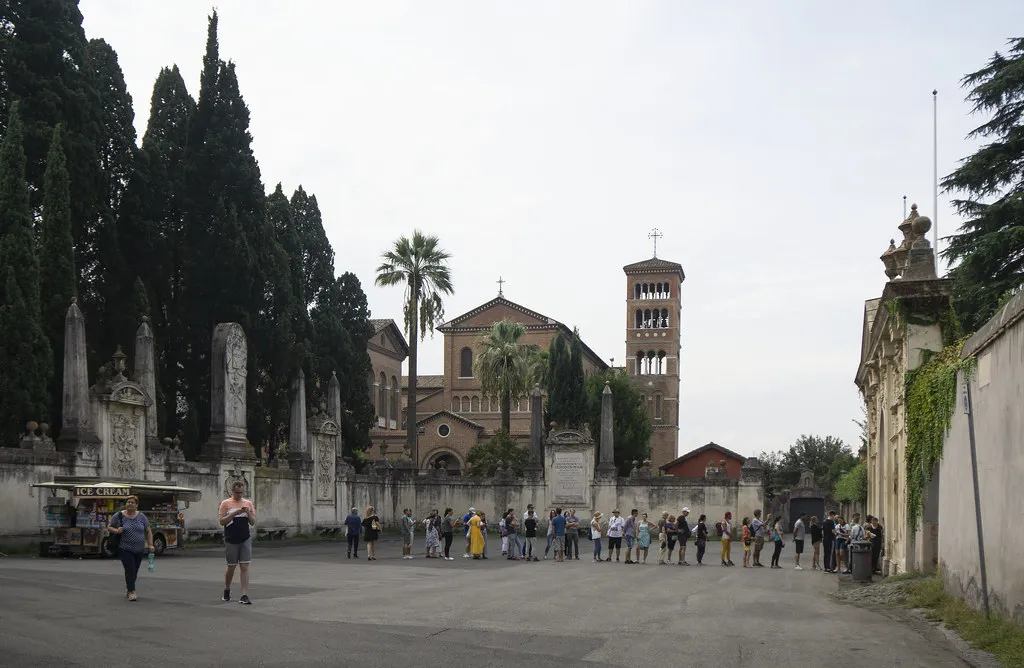
Access is always free, and the site technically never closes. In practice, the best time to visit is before 08:00, when the line is short or nonexistent. By 10:00 on a summer weekend the queue can stretch past thirty people, with each person taking their photograph. Arrive early enough and you will stand there in near-silence, which is the correct way to appreciate it. After the keyhole, walk two minutes to the Orange Gardens for a panoramic view of the rooftops before the day heats up.
Explore the Underground Layers of Basilica di San Clemente
The Basilica di San Clemente near the Colosseum is Rome's most impressive archaeological sandwich. You enter a functioning twelfth-century church decorated with a stunning Byzantine apse mosaic. A staircase leads down to a fourth-century basilica that was built over the ruins of the earlier one when it was damaged in the 1084 Norman sack of Rome. A second staircase descends further into a first-century Roman apartment block that housed a Mithraic temple, its altar stone and relief of Mithras still intact.
The upper church is free to enter. Access to the archaeological excavations costs around €10 per adult in 2026 and is managed by the Irish Dominican friars who have cared for the site since 1677. The site opens at 10:00 and closes at 12:30, then reopens at 15:00 until 18:00; it is closed on Sunday mornings. Wear shoes with grip because the lower levels are perpetually damp and the basalt floors are uneven. Book online rather than queuing on the day, particularly in April and May when school groups fill the morning slots.
The trade-off here is straightforward: the free upper church is beautiful on its own terms. But the €10 underground tour is one of the best ten euros you can spend in Rome. Seeing a Mithraic altar in situ beneath a Christian basilica built over a pagan apartment block is a compression of Western history that no museum can replicate.
Walk the Ancient Appian Way
The Via Appia Antica opened in 312 BCE as the main military and trade road linking Rome to the Adriatic coast. Large sections of the original basalt paving survive and are still walkable today within the Appia Antica Regional Park. The road is flanked by umbrella pines, ancient tombs, and occasional stretches of aqueduct arch. It is one of the few places in Rome where the ancient landscape feels genuinely intact rather than reconstructed.
Walking is free. Bicycle rentals from outfitters near the park entrance cost roughly €5 per hour, which is the most efficient way to cover the best sections. Sunday is the optimal day because the road is closed to private vehicles, turning it into a pedestrian and cycling corridor. Arrive by 09:00 on a Sunday morning and you will have the first two kilometers largely to yourself. Take Bus 118 from Circo Massimo (Metro Line B) if you prefer not to cycle from the center. Carry water — there are few facilities once you pass the Domine Quo Vadis church at the park's entrance.
Sunday is the best day to walk the Appian Way — private vehicles are banned, turning the ancient road into a pedestrian and cycling corridor. Arrive before 09:00 for the most peaceful stretch and the widest selection of cicchetti at nearby bars when you return to the centre.
Visit the Bone Chapel at the Capuchin Crypt
Beneath the Church of Santa Maria della Concezione on Via Veneto lie six small chapels decorated with the skeletal remains of nearly four thousand Capuchin friars. The bones — femurs, pelvises, vertebrae, and skulls — are arranged into elaborate chandeliers, archways, and wall patterns. The effect is macabre but deeply intentional: an extended meditation on mortality that the friars understood as devotional rather than morbid. A sign at the entrance reads: "What you are now, we once were; what we are now, you shall be."
 Capuchin Crypt in Rome" loading="lazy" width="1200" height="800" />
Tickets cost around €10 in 2026 and include access to a small but well-curated museum about the Capuchin order's history and global humanitarian work. The crypt opens daily from 10:00 to 19:00. Photography is strictly forbidden inside the bone chapels, which is worth knowing before you go — the experience is better without a screen between you and it anyway. Via Veneto is easily reached on foot from the Barberini Metro A station, a ten-minute walk uphill.
Experience the Baths of Caracalla with a VR Headset
Most visitors walk through the enormous third-century shell of the Baths of Caracalla and struggle to imagine what they originally looked like. The standard visit is still impressive — these baths could serve 1,600 people simultaneously and covered 11 hectares — but the ruins are stripped and it takes effort to visualize the original colored marble, mosaics, and towering vaulted ceilings. The VR headset option changes this completely.
Available on selected tickets since 2022 and expanded in 2025, the augmented reality experience overlays a full reconstruction of the baths onto the existing ruins as you walk through them. You see the great hall filled with steam, the original mosaic floors glowing beneath your feet, and the gymnasium as it functioned under the emperor Caracalla. No other site in Rome currently offers this level of immersive reconstruction. Entry without VR costs around €8; the VR-enhanced ticket is approximately €15. The baths are open Tuesday through Sunday from 09:00. This is the least crowded of Rome's major archaeological sites and offers significantly more space per visitor than the Colosseum complex.
Admire the Art Nouveau Beauty of Galleria Sciarra
Galleria Sciarra is tucked into a courtyard just a few steps from the Trevi Fountain, yet almost no tourist knows it exists. The enclosed courtyard is decorated with elaborate Art Nouveau frescoes from the 1880s celebrating female virtue — allegories of Prudence, Strength, and Loyalty rendered in warm ochres and terracottas against a glass-roofed arcade. The building now houses offices, and the courtyard is a public thoroughfare during business hours.
Entry is free. The courtyard is typically accessible Monday through Friday from around 09:00 to 19:00. Look straight up at the iron-and-glass ceiling for the best photograph, then study the frescoes on each level of the surrounding balconies. It takes about fifteen minutes and costs nothing, making it the ideal pause between the Trevi Fountain and the Pantheon. The contrast with the Baroque excess of the surrounding neighborhood is striking — this corner of Rome feels almost Viennese.
Discover the Whimsical Coppedè District
Built between 1913 and 1927 by architect Gino Coppedè, this small residential neighborhood in the Trieste district mixes Baroque, Medieval, Mannerist, and Art Nouveau styling into something that resembles a fairy-tale set. The entrance is marked by a large arch hung with an elaborate cast-iron chandelier. Inside, the streets are lined with buildings featuring sculpted frogs, grotesque masks, and decorative ironwork that no two buildings share exactly.
The centerpiece is the Fountain of the Frogs in Piazza Mincio, a circular basin surrounded by bronze frogs that replaced an older fountain in 1924. Walking through the district is free and takes about thirty minutes at a comfortable pace. Reach it via Tram 3 to Piazza Buenos Aires or a twenty-minute walk north from Villa Borghese. The neighborhood is residential and quiet, best visited on a weekday morning when the streets are still unhurried. It appears frequently in Italian film and television productions precisely because it looks like nowhere else in Rome.
Watch the Sunset from the Orange Gardens
The Parco Savello — universally known as the Giardino degli Aranci or Orange Gardens — sits on the Aventine Hill directly beside the Basilica of Santa Sabina. Rows of bitter orange trees perfume the air from spring through early summer. The garden ends at a low wall with a terrace offering one of Rome's cleanest panoramic views: the dome of St. Peter's rising above the rooftops of Trastevere and the Tiber bend below.
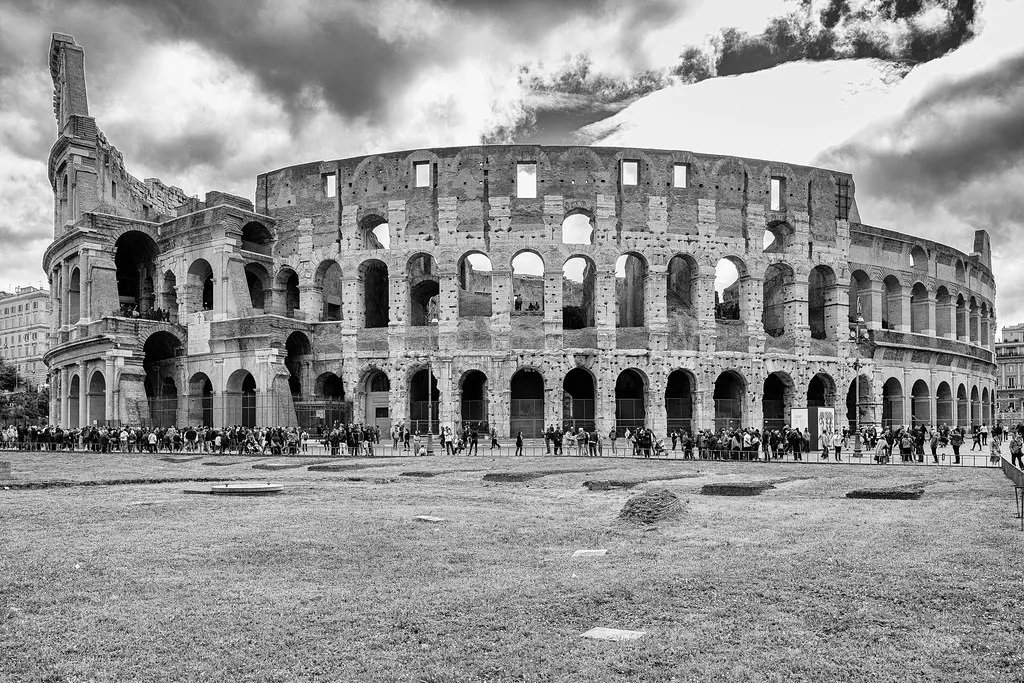
Entry to The Orange Gardens is free and the park is open daily until sunset. It sits a five-minute walk from the Aventine Keyhole, making the two natural companions on a single morning. Arrive thirty minutes before sunset for the best light. On summer evenings local musicians often play near the entrance. The garden has benches but they fill quickly on warm evenings; arriving with a drink from a nearby bar and claiming a spot on the low wall is the local approach.
Tour the Opulent Palazzo Doria Pamphilj
The Palazzo Doria Pamphilj on Via del Corso is one of the largest private palaces in Rome and still owned by the Pamphilj family, who have lived here continuously since the seventeenth century. The picture gallery holds one of the finest private art collections in Italy, including Velázquez's portrait of Pope Innocent X and works by Raphael, Titian, Caravaggio, and Bruegel. The Gallery of Mirrors is the room that stops most visitors cold — a long corridor of Baroque excess that rivals Versailles in visual intensity.
Tickets cost around €17 in 2026 and include an audio guide narrated by Jonathan Doria Pamphilj, the current family heir. His commentary is personal and often surprising, touching on family disputes and the stories behind specific acquisitions in a way that no third-party guide can match. The palace is open daily from 09:00 to 19:00. Visit the small internal chapel on the way out — it is a hidden Rococo masterpiece that most visitors miss by heading straight for the exit. Booking ahead is recommended in high season.
Step Back in Time at Teatro Marcello
Teatro Marcello predates the Colosseum by roughly a century, having been completed around 13 BCE under Emperor Augustus. It once held 11,000 spectators across its semicircular tiers and served as the model for the larger arena built by the Flavians sixty years later. What makes it unique today is what happened after the fall of Rome: the medieval Savelli family converted the upper levels into a fortress, which was later transformed into aristocratic apartments still occupied today.
The exterior is freely visible at any hour and is best explored in the early morning when the Jewish Ghetto neighborhood is quiet. The interior ruins are occasionally accessible during summer concerts or special guided tours — check the city's cultural calendar in June and July when the courtyard becomes an outdoor concert venue. The nearby Portico d'Ottavia, the remains of a second-century BCE portico, extends from the same complex and frames a picturesque view of the surrounding neighborhood. Both can be absorbed in forty-five minutes without paying anything.
Experience the Illusionistic Camere di Sant'Ignazio
In a modest building beside the Church of Sant'Ignazio di Loyola near the Pantheon, a short corridor of rooms contains some of the most extraordinary trompe l'oeil frescoes in Rome. These were the private quarters of Saint Ignatius of Loyola, founder of the Jesuits, and the walls are painted to create the illusion of three-dimensional spaces — arcades, balconies, and vaulted halls that are entirely flat. Walking through the corridor shifts your perspective as the painted vanishing points recalibrate against your movement.
Entry requires a small donation, typically €2–3. The rooms open on select weekday afternoons, usually 16:00 to 18:00, but hours vary by season — verify on the church website before making a dedicated trip. This is one of the easiest hidden gems to combine with other Historic Centre visits: the Pantheon is a seven-minute walk, and the church of Sant'Ignazio itself has a famous trompe l'oeil painted dome by Andrea Pozzo that is worth a separate look. The whole area can be covered in a single pedestrian loop.
Attend an Authentic Roman Dinner Party
Several Rome-based hosts open their private homes for curated dinner experiences that go far beyond restaurant dining. The format varies by host: some offer a fixed multi-course menu rooted in Roman cucina povera, others teach pasta-making before sitting down to eat. What they share is a domestic setting — a real apartment, a real kitchen, and a host who can talk about their neighborhood with the specificity that no restaurant can offer.
Prices typically range from €60 to €90 per person, including wine and aperitivo. Most sessions begin at 19:00 and run for three hours. Booking several days in advance is essential because group sizes are kept small, usually six to twelve guests. The Trastevere neighborhood has the highest concentration of these hosts, though Prati and Pigneto also have active options. The experience suits travelers who find restaurant meals in tourist areas increasingly sterile — this is the version of Rome that doesn't appear in any guidebook map.
Book a Private Breakfast at the Vatican
The Vatican Museums' early-access breakfast tour allows a small group of visitors to enter the museums at 07:15, a full two hours before the doors open to the general public. The route covers the main galleries and ends in the Sistine Chapel, where you stand in near-silence beneath Michelangelo's ceiling instead of shoulder-to-shoulder with a thousand other visitors. The buffet breakfast is served in the Pinecone Courtyard in high season or in the museum cafeteria during cooler months.
Tickets cost over €100 per person in 2026 and sell out weeks in advance during spring and autumn. Book directly on the official Vatican Museums website — third-party resellers charge a significant premium. The booking process can trigger bank security alerts on foreign credit cards; have a backup payment method ready. For many travelers this becomes the highlight of their Rome trip not because of the breakfast itself but because of what it buys: the Sistine Chapel in quiet. That experience is otherwise unavailable to visitors without special access.
Witness the Nightly Champagne Sabering at the St. Regis
Every evening in the grand lobby of the historic St. Regis hotel in Rome, a sommelier performs the traditional sabrage ritual — opening a bottle of champagne with a single blade stroke along the seam of the bottle. The ritual is a house tradition across all St. Regis properties globally, dating to a Napoleonic-era custom. In Rome the setting is the Carrara marble and gilded stucco of a nineteenth-century palazzo, which makes the spectacle genuinely theatrical.
The event is free to watch and takes place around 19:00 most evenings. You do not need to be a hotel guest, but smart-casual dress is the appropriate baseline for the surroundings. The St. Regis sits near Piazza della Repubblica on Via Vittorio Emanuele Orlando, a short walk from the Termini area. Check the hotel's daily schedule before visiting as private events occasionally shift the timing. If you stay for a drink afterward, prices are what you would expect from a five-star lobby bar — budget €18–25 per cocktail — but observing the ritual itself costs nothing beyond the short walk to get there.
Enjoy Opera at St. Paul's Within the Walls
St. Paul's Within the Walls on Via Nazionale is Rome's first Anglican church and one of its most architecturally distinctive interiors. The apse is decorated with Pre-Raphaelite mosaics designed by Edward Burne-Jones, commissioned in the 1870s and rich with deep blues and golds that glow under candlelight. The acoustics are excellent — the stone walls and vaulted ceiling create a natural reverb that benefits vocal performance considerably.
Evening opera concerts here typically feature arias from Verdi, Puccini, and Rossini performed by a small ensemble in an intimate setting of two hundred seats. Tickets range from €30 to €50 depending on seat category. Concerts usually begin at 20:30 on selected evenings; check the church website for the current schedule. The church is a five-minute walk from the Repubblica Metro A stop. This is one of the most accessible luxury cultural experiences in Rome — the price is a fraction of what a comparable evening at the Teatro dell'Opera would cost, and the intimacy of a small church setting is arguably a better listen than a full opera house for solo arias.
Neighborhood-Specific Hidden Gems Worth Adding
The Historic Centre contains a disproportionate number of free hidden sites that most visitors walk past. The McDonald's near the Spanish Steps in Piazza Mignanelli has preserved ancient Roman mosaics visible in its lower level — a genuinely strange juxtaposition that is worth a detour. The Museo Pietro Canonica in Villa Borghese is free to enter and houses the marble sculptures of a largely forgotten Italian master in his former home and studio. Neither site appears on standard itineraries.
In the Ostiense district, Centrale Montemartini displays classical marble statues against a backdrop of massive diesel engines and turbines in a former municipal power station. Entry costs around €10 and the museum is open Tuesday through Sunday until 19:00. Take Metro B to Garbatella for a ten-minute walk. In Testaccio, the Non-Catholic Cemetery contains the graves of Keats, Shelley, and Gramsci in one of Rome's quietest green spaces. Entry is free with a small suggested donation. Both Ostiense and Testaccio have excellent local food markets — Testaccio Market Guide: 10 Things to Know Before You Go is one of Rome's best — making either district a natural half-day base for exploring.
Can I Really Get Off the Beaten Track in Rome?
The honest answer is yes, but it requires timing rather than discovery. The sites themselves are not secret — nearly everything on this list appears somewhere online. What determines your experience is when you arrive. The same keyhole that has a forty-minute queue at 11:00 is completely empty at 07:45. The same Appian Way that is choked with cyclists on a Saturday afternoon is meditative on a Sunday morning before 09:00.
The Sunday 07:00 walk strategy is the single most effective tactic for crowd avoidance in Rome. At that hour the streets around the Roman Forum are occupied only by the municipal cleaning crews and the occasional local walking a dog. You can photograph the Forum from the Capitoline terrace without another tourist in frame, and walk through the Jewish Ghetto hearing only your own footsteps. The trade-off is an early alarm on a holiday morning. Most travelers who try it once say they would do it on every Rome visit afterward.
Visiting Rome at Night: The Ultimate Guide to the Eternal City is the second effective strategy. The day-trippers who arrive by coach are gone by 18:00, and many of the illuminated ruins take on a quality that daylight cannot replicate. Several of the smaller museums on this list are also quietest in their final hour before closing. Combining one major site visit with two hidden gems per day is a more manageable rhythm than attempting to compress everything into back-to-back hours of peak activity.
Practical Booking Advice for Secret Spots
Several experiences on this list require advance booking and will not be available as walk-ins in 2026. The Vatican breakfast sells out weeks ahead during spring and autumn — book the moment your travel dates are confirmed. Roman dinner party hosts work with small groups and typically fill their calendars two to five days out. San Clemente's archaeological excavations can be reserved online via the Dominican friars' official page for a small fee above the gate price, which is worth paying to guarantee morning access before school groups arrive.
The Vatican early-access breakfast sells out weeks in advance during spring and autumn. Book through the official Vatican Museums website as soon as your dates are confirmed — third-party resellers charge a significant premium and your bank may flag the foreign transaction.
| Experience | Approx. Cost (2026) | Booking Required | Closed On |
|---|---|---|---|
| Aventine Keyhole | Free | No | Never |
| Basilica di San Clemente (underground) | €10 | Recommended | Sunday mornings |
| Baths of Caracalla (VR) | €15 | No (timed entry) | Monday |
| Capuchin Crypt | €10 | No | Open daily |
| Palazzo Doria Pamphilj | €17 | Recommended in high season | Open daily |
| Vatican breakfast tour | €100+ | Essential (weeks ahead) | Sunday |
| Opera at St. Paul's Within the Walls | €30–€50 | Yes | Varies |
For the paid sites, the Go City Rome Pass covers several and adds skip-the-line access, which is valuable if you plan to visit three or more paid attractions in a single day. Public transport handles most of the logistics: Metro Line A connects the Historic Centre to the Vatican corridor; Metro Line B reaches Ostiense, Garbatella, and the Colosseum area; trams serve Trastevere and the Trieste district efficiently. Always check official websites for current hours before setting out — many of the smaller church-run sites still observe a mid-afternoon riposo closure from 12:30 to 15:00. Carry €20 in cash for donation boxes, bicycle rentals, and smaller sites that do not accept cards.
Walking remains the best tool for finding the 13 Best Free Things to Do in Rome: Budget Travel Guide that appear on no map. The street between any two destinations in the Historic Centre is rarely a dead stretch — courtyards, fountains, and architectural details accumulate at every corner. Budget generous transit time between planned stops and treat the detours as part of the plan.
Frequently Asked Questions
Is Rome worth visiting if I have already seen the Colosseum?
Yes, Rome offers endless layers of history that go far beyond the major landmarks. You can explore modern art in industrial settings or find quiet medieval cloisters in the heart of the city. These alternative sites provide a much more intimate connection to Roman life.
How much time should I plan for Rome's hidden gems?
Most unusual attractions require between one and two hours to fully appreciate. If you are visiting outlying areas like the Appian Way, plan for a half-day excursion. Mixing one major site with two hidden gems per day creates a balanced and less stressful itinerary.
Which unusual things to do in Rome fit first-time visitors?
The Aventine Keyhole and the Orange Gardens are perfect for first-timers as they are near the center. Galleria Sciarra is also a quick and stunning detour from the Trevi Fountain. These spots offer a unique twist without requiring extensive travel across the city.
Unusual Days in Other Capitals
Rome has enough obligatory sights that the unusual ones need defending on the itinerary. Prague's unusual side and Budapest's stranger corners both reward the same instinct. In Rome itself, Centrale Montemartini shows classical marbles among the diesel engines of a decommissioned power station.
Rome is a city that rewards the patient and the curious traveler who is willing to look deeper. By stepping away from the main tourist hubs, you discover the true soul of the Eternal City. Whether you are staring through a keyhole or dining in a local home, these experiences create lasting memories.
I encourage you to use this list as a starting point for your own Roman discovery. For more inspiration on planning your trip, check out our Italy travel guide for further tips. The beauty of Rome is that there is always something new to find beneath its ancient surface.
Continue exploring
More guides you'll find useful