Villa Borghese Gardens Rome Travel Guide
Plan villa borghese gardens rome with top picks, neighborhood context, timing tips, and practical booking advice for a smoother trip.
On this page
Villa Borghese Gardens Rome
Exploring the villa borghese gardens rome provides a refreshing break from the city's stone-heavy architecture. This sprawling landscape serves as the third-largest public park in the Italian capital, covering 80 hectares across the Pincian Hill. Travelers often visit to enjoy the mix of manicured lawns and wild wooded areas. It remains one of the most beautiful places in Rome for a casual stroll.
The park was originally created for the wealthy Borghese family in the early 17th century, under the direction of Cardinal Scipione Borghese. Today, it welcomes millions of locals and tourists looking for art, nature, and a break from the crowds. You will find world-class museums tucked between ancient-looking temples and quiet ponds. Planning your route ahead of time ensures you see every highlight without backtracking across the park's nine entrances.
Must-See Villa Attractions
The Terrazza del Pincio offers a legendary panoramic view over Piazza del Popolo and Rome's skyline, including the dome of St. Peter's Basilica. It is best visited on a weekday morning when the light is soft and the crowds are thin. Sunset draws the largest gatherings, making it difficult to get a clear sightline from the railing. If you are pressed for time, the Terrazza alone is worth 20 minutes at the top of the Pincian Hill ramp from Piazza del Popolo.
Walking toward the center, you will encounter the famous hydro-chronometer, also called the Water Clock. It was built in 1867 by Dominican friar Giovan Battista Embriaco and exhibited at the Paris Universal Exhibition before being installed here in 1873. The clock uses water flow through a Gioacchino Ersoch fountain to keep precise time and still runs 24 hours a day. It is one of only a handful of operational water clocks in Europe, and most visitors walk straight past it.
Piazza di Siena acts as a massive oval equestrian arena designed by Giuseppe Valadier in the early 1800s. It hosted events during the 1960 Rome Olympics. When competitions are not running, the grassy center is a good sunbathing spot away from the main tourist paths. The Temple of Aesculapius sits on a small island within the park's artificial lake, built in 1786 and dedicated to the Greek god of healing. You can admire it from the shore or row out to it by renting a boat from the eastern bank.
Museums, Art, and Culture in Villa
The Galleria Borghese remains a top attraction for art enthusiasts worldwide. It houses masterpieces by Bernini, Caravaggio, and Raphael in a stunning historic villa. Entry is capped at 360 people and requires a timed reservation that often sells out weeks in advance. Book as early as possible — Monday is the one day the gallery is closed. The rest of the week it opens 09:00–19:00, with extended hours on Wednesday (to 22:00) and Thursday (to 21:00).
The Museo Carlo Bilotti occupies the park's former Orangery and is entirely free to enter. Its permanent collection spans works by Giorgio de Chirico, Andy Warhol, and Larry Rivers, with rotating temporary exhibitions. It is one of the least-visited art spaces in the park and rarely has a queue. Budget travelers who cannot secure Borghese Gallery tickets often find this the better-value stop.
Culture lovers can also visit the Globe Theatre, a faithful replica of Shakespeare's famous London stage. Evening performances during summer provide a theatrical experience under the stars, with occasional English-language shows. Nearby, the National Etruscan Museum at Villa Giulia offers a deep dive into pre-Roman civilizations through intricate artifacts. Each museum requires separate tickets, so check combined pass options if you plan to visit multiple venues in one day.
Parks, Gardens, and Outdoor Spots in Villa
The Fountain of the Seahorses — Fontana dei Cavalli Marini — stands as one of the park's most striking decorative pieces. Four seahorses emerge from the basin with their tails intertwined, surrounded by water jets. The fountain was created in the early 20th century and sits at a major path junction, making it a useful landmark for orienting yourself. Nature fans might also enjoy exploring the botanical gardens Rome offers nearby for more variety in plant species.
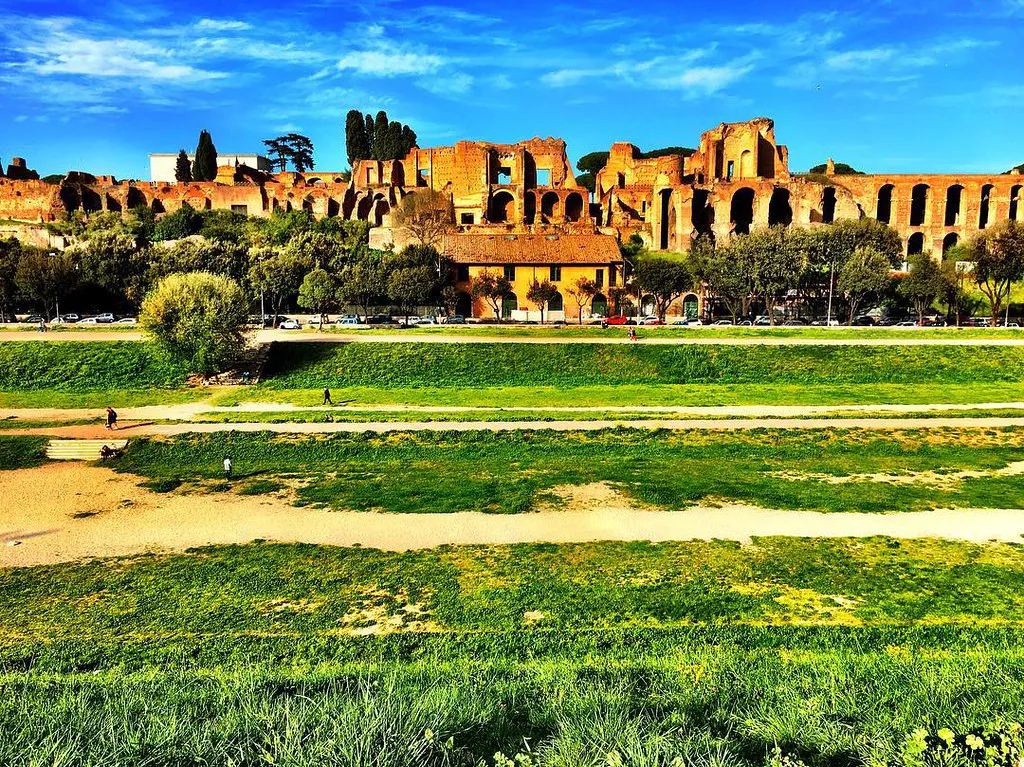
The Temple of Diana is a neoclassical monopteral temple built by Antonio Asprucci in 1789, tucked into the Viale della Casina di Raffaello section of the park. It is named for the marble statue of Diana of Gabi that was once kept there. This is one of the quieter corners of the park, ideal for those seeking a meditative atmosphere away from the main tourist circuit. The path leading there is lined with stone benches and old-growth trees.
The northern edges of the park transition from formal gardens to wilder meadows perfect for outdoor exercise. You will often see locals jogging or practicing yoga on the soft grass. Diverse tree species provide ample shade during the hot Italian summer months. This variety makes the villa borghese gardens rome feel like multiple parks compressed into one.
Family-Friendly and Budget-Friendly Options in Villa
Families with children should prioritize a visit to the Bioparco di Roma zoo, which houses over 200 species and focuses on conservation. It is open 09:30–17:00 (last admission 16:00), and a thorough visit takes two to three hours. The zoo sits on the northern side of the park with its own entrance off Via Aldrovandi. Allow roughly half a day if you plan to combine it with other park attractions.
The Casina di Raffaello is a dedicated play and learning centre for children aged 3–10, located inside the park near the lake. Kids can attend workshops, browse the children's library, and take part in supervised creative activities. Admission is low and the sessions are timed, so check the schedule in advance. It is a practical option when traveling with young children who need a structured break from sightseeing.
The park is one of the best places to visit in Rome for free. While museums charge fees, the vast majority of the gardens are open to everyone. You can bring a picnic and spend an entire afternoon without spending a cent, with free drinking water available from public fountains throughout the park. Rent a four-person quadricycle near the main entrances for a fun and budget-conscious way to cover the hilly terrain as a group.
How to Plan a Smooth Villa Attractions Day
The park opens at sunrise and closes at dusk every day of the week, with no entry fee for the grounds. Specific attractions keep their own hours — confirm the Borghese Gallery, zoo, and Museo Carlo Bilotti schedules before you go. The best times to visit are early weekday mornings in spring (April to June) and autumn (September to November), when the weather is mild and crowds are manageable. Peak summer weekends see the highest density of visitors, particularly around the Pincio Terrace at sunset.
Consider starting your day at the Pincio Terrace for the best morning light, then walking toward the gallery if you have a mid-morning reservation. This route allows you to see the main sights in a logical sequence without doubling back. A well-planned hidden Rome 3-day itinerary often includes a full morning here. Wear comfortable shoes — paths are mostly gravel and there are noticeable inclines near the Pincian Hill section.
Bike rentals are available at kiosks including Ascol Bike and Bici Pincio, located near the main entrances. Electric bikes are particularly helpful for the steeper sections near the Pincio. Classic bikes, tandems, and e-bikes are all available, and some services offer guided e-bike tours of the gardens. Inspect the bike carefully before accepting it, as rental equipment quality varies across providers.
The Galleria Borghese caps entry at 360 people and sells out weeks in advance. Book your timed slot as early as possible — Monday is the only day the gallery closes. Wednesday and Thursday offer extended evening hours (to 22:00 and 21:00 respectively), which can be easier to secure.
| Attraction | Entry Fee | Hours | Closed On |
|---|---|---|---|
| Park grounds | Free | Sunrise–dusk | Open daily |
| Galleria Borghese | Ticketed (timed) | 09:00–19:00 (Wed to 22:00, Thu to 21:00) | Monday |
| Museo Carlo Bilotti | Free | Check current schedule | Varies |
| Bioparco di Roma (zoo) | Ticketed | 09:30–17:00 (last entry 16:00) | Open daily |
| Globe Theatre | Ticketed (performances) | Evening performances in summer | Off-season |
Borghese Gardens Map
The park has nine entrances, each connecting to a different Roman neighborhood. Porta Pinciana on Via Veneto is the closest to the Borghese Gallery and is one of the most popular starting points. The Flaminio entrance near Piazza del Popolo leads up the Pincian Hill ramp and is convenient for Metro Line A users at the Flaminio stop. The Viale dell'Uccelliera entrance on the eastern side brings you directly to the lake area and Globe Theatre.
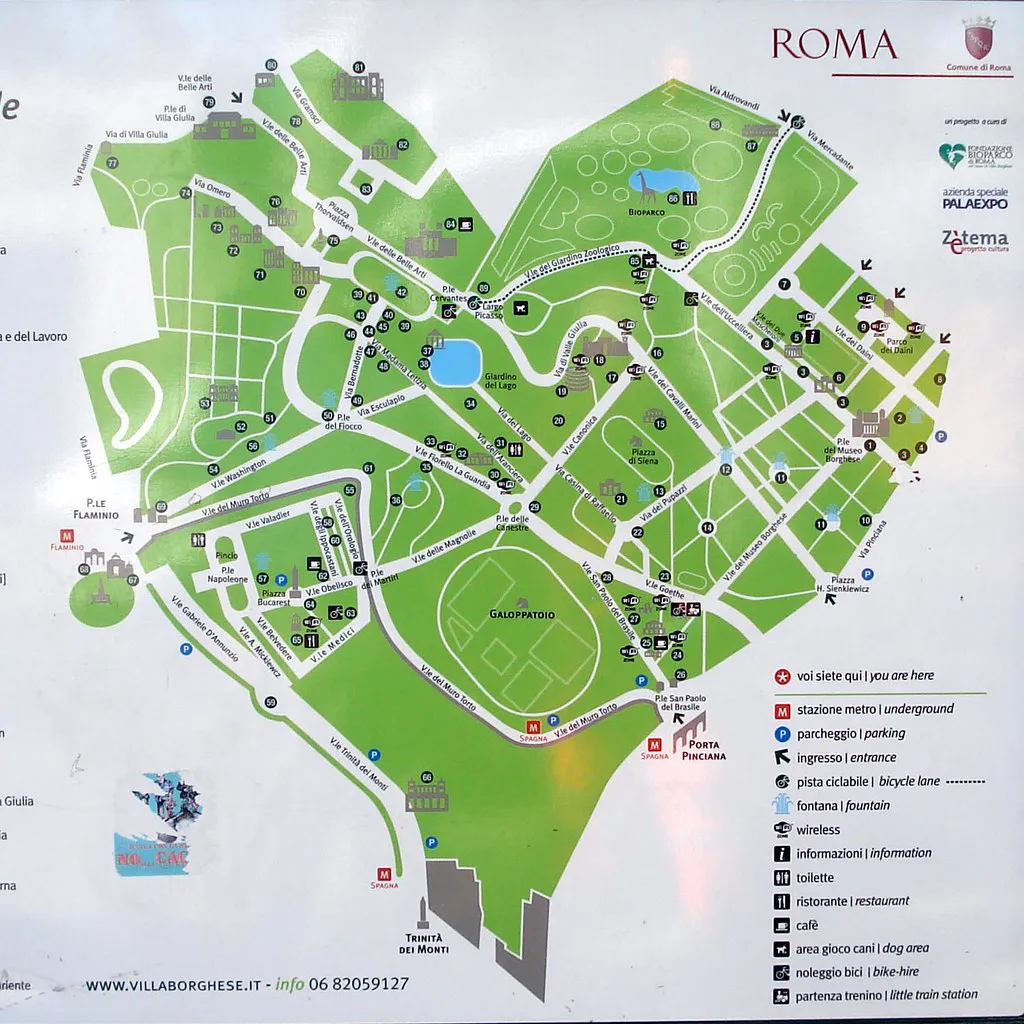
The central lake (Laghetto di Villa Borghese) acts as the single most reliable landmark for orienting yourself in the park. Broad avenues such as Viale delle Magnolie connect the eastern and western sections. Large map boards are posted at major path intersections. Download a digital map or photograph one of these boards when you first enter, as some smaller paths between sections can be disorienting without a reference point.
How to Get to Villa Borghese
Metro Line A to Flaminio or Spagna provides the most direct public transport access. From Flaminio, walk up the Pincian Hill ramp or enter through Piazza del Popolo. From Spagna, take the elevator inside the metro station and cross to the Porta Pinciana entrance in about 10 minutes. There is no metro stop immediately adjacent to the park, so a short walk is always required.
By bus, route 910 from Termini station is the most direct option — get off at the fifth stop, Pinciana/Museo Borghese. From the city center, buses 490, 495, 89, 160, and 61 stop at Fiorello/La Guardia and San Paolo del Brasile, both within walking distance of the park perimeter. For direct access to the Borghese Gallery specifically, buses 53, 63, 83, 92, and 360 stop at Via Pinciana/Borghese Gallery.
Walking from the Colosseum takes roughly 35–40 minutes through the historic center. From Piazza del Popolo the walk up the Pincian Hill is scenic but steep, taking around 15 minutes. Taxis and rideshares drop off easily at any entrance. If you are staying near Via Veneto, the Porta Pinciana entrance is a two-minute walk from most hotels on that street. After exploring the park, consider an evening in nearby Trastevere for authentic Roman dining and cobblestone charm.
Arco Romano – Arco di Settimio Severo
The Arco Romano inside the park is an 1827 architectural replica created by Luigi Canina, inspired by the Arch of Titus in the Roman Forum rather than — despite the name — the Arch of Septimius Severus in the Forum. It features a statue of Emperor Septimius Severus on its summit and serves as a decorative gateway connecting different areas of the park. You can find it along the Viale dell'Asfodelo walking path.
Photographers appreciate the way the stone arch frames the surrounding greenery, and the area around it is usually far quieter than the Pincio Terrace or the lake. It showcases the Borghese family's obsession with recreating classical antiquity within a landscaped garden. While not truly ancient, it provides an excellent backdrop for travel photos without the crowds that gather at the park's better-known landmarks.
Boat Rental on the Lake
Renting a wooden rowboat on the Laghetto di Villa Borghese is a classic activity and a romantic choice for couples visiting the gardens. The rental office is on the eastern bank near the lakeside cafe. Each rental typically covers 20 minutes — enough time to circle the island and get a close view of the Temple of Aesculapius from the water. Operating hours vary by season, so check the sign at the dock for same-day updates.
Prices are very reasonable, usually a few euros per person. The lake is home to ducks and turtles that often approach the boats. This is also one of the activity highlights listed in the Bioparco's family visit recommendations, making the lake area a logical stop if you are coming from the zoo. Arrive early in the afternoon for the shortest wait at the rental kiosk.
Boat rental operating hours vary by season and can change without notice — check the sign at the dock when you arrive. The rental kiosk sometimes closes early on weekdays outside peak season, so arriving by early afternoon is the safest approach.
Monument to King Umberto I
The massive bronze monument dedicated to King Umberto I stands near the lake in a wide plaza with ample bench seating. It was designed by sculptor Davide Calandra, completed by Edoardo Rubino, and unveiled in 1926 — commemorating Italy's second king, who was assassinated in 1900. The equestrian figure is surrounded by allegorical representations of Italy and other virtues. The surrounding trees offer a cool shaded spot to rest after a long walk through the park.
The monument provides a grand focal point for visitors walking between the zoo and the gallery. Local history enthusiasts will appreciate the inscriptions on the marble pedestal detailing the king's reign. The plaza is generally quieter than the main tourist routes, making it a useful rest stop and a good place to regroup before deciding on your next section of the park.
Tempio di Antonino e Faustina
The Tempio di Antonino e Faustina is a decorative fake ruin, designed in the English garden style of the late 19th century to incorporate authentic fragments from ancient structures. Despite its name suggesting a connection to Roman Emperor Antoninus Pius and his wife Annia Faustina, it is an ornamental structure entirely distinct from the real Temple of Antoninus and Faustina in the Roman Forum. The tall columns and weathered appearance feel convincingly ancient from a distance.
This spot is ideal for those seeking a tranquil and meditative environment. The nearby paths are lined with statues and smaller decorative stone benches, and the surrounding garden is popular for picnics. It reveals the romantic landscape vision that shaped the park's overall design during the Borghese family's period of expansion. Exploring this section rounds out a visit to Italy's most art-dense public park.
After your walk, you might enjoy visiting one of the nearby rooftop bars Rome has to offer. The Terrazza Borghese offers a sophisticated view overlooking the park's greenery. Ending your day with a view of the gardens from above is highly recommended for first-time visitors. Reservations for rooftop venues near the park are usually necessary during the peak season from May through September.
Frequently Asked Questions
Is Villa Borghese free?
Yes, entering the villa borghese gardens rome is completely free for all visitors. You only need to pay for specific attractions like the zoo or art museums. The public walking paths, ponds, and picnic areas are open to the public daily without any charge.
How far is Villa Borghese from the Spanish steps?
The park is very close to the Spanish Steps, taking only about 10 minutes to walk. You can take the elevator inside the Metro station to reach the Pincio entrance quickly. This makes it easy to combine both famous sites into one morning of sightseeing.
Where is the entrance to Villa Borghese?
There are several main entrances, including Porta Pinciana, Piazzale Flaminio, and the ramp from the Spanish Steps. Each entry point leads to a different section of the park. Most visitors prefer the Flaminio entrance for easy access to the Pincio Terrace views.
How to get to Villa Borghese?
The easiest way to reach the park is by taking Metro Line A to Flaminio or Spagna. Multiple bus lines also stop near the Porta Pinciana and the National Gallery of Modern Art. For a unique experience, consider walking up from the Piazza del Popolo. Hidden gems in Rome are often found along these walking routes.
Other City Parks That Earn a Morning
Villa Borghese is the formal version of escaping a city without leaving it, and the gallery inside it requires booking well ahead. Ljubljana's Tivoli Park runs into actual woodland instead. Munich's free outdoor options do the same with the Isar. If the Borghese is booked out, Galleria Doria Pamphilj is the family gallery that never is.
The villa borghese gardens rome remains an essential stop for anyone visiting the Eternal City. It offers a unique blend of world-class art, fascinating history, and peaceful natural beauty. Whether you are rowing on the lake or touring the gallery, the park never fails to impress. Take your time to wander the paths and discover the many surprises hidden within.
For the broader picture, see our complete 18 Hidden Gems in Rome: The Ultimate Guide guide, or compare with the iconic most beautiful places in Rome.
Continue exploring
More guides you'll find useful