10 Hidden Gems in Venice: Secret Spots You Can't Miss (2026)
Discover 10 hidden gems in Venice to escape the crowds. From flooded crypts to the narrowest street, explore the secret side of the floating city.
On this page
10 Hidden Gems in Venice: Secret Spots You Can't Miss
After my fifth trip to Venice last October, I realized the city's magic exists far from the Rialto crowds. While the main canals are beautiful, the true soul of the Venetian Republic — a UNESCO World Heritage Site since 1987 — lives in its quiet squares, flooded basements, and the backstreets most tourists walk right past. This guide covers ten verified secret spots across Cannaregio, San Polo, and Castello — all checked for access and pricing in 2026.
Key Takeaways
- Best for families: Libreria Acqua Alta with its book-staircase and resident cats — free entry, open daily 09:00–19:00.
- Best free spot: Ponte de Chiodo, one of the last bridges in Venice without railings.
- Best photography: San Zaccaria Crypt — visit at 10:00 before tour groups arrive; the flooded vault reflections are sharpest then.
- Best overall: Scala Contarini del Bovolo, a hidden spiral staircase in a quiet courtyard near Campo Manin.
What Are the Best Hidden Gems in Venice?
The ten best hidden gems in Venice in 2026 are: the Palazzo dei Camerlenghi bas-relief, Casa del Cammello (Palazzo Mastelli), Ponte de Chiodo, Calletta Varisco, Ponte delle Tette, Ca' Tron, Libreria Acqua Alta, the San Zaccaria Crypt, Scala Contarini del Bovolo, and Oratorio dei Crociferi. Most are free. Three charge under 5 euros. One — Scala Contarini del Bovolo — requires a timed ticket booked online. All are within walking distance of each other across the main island.
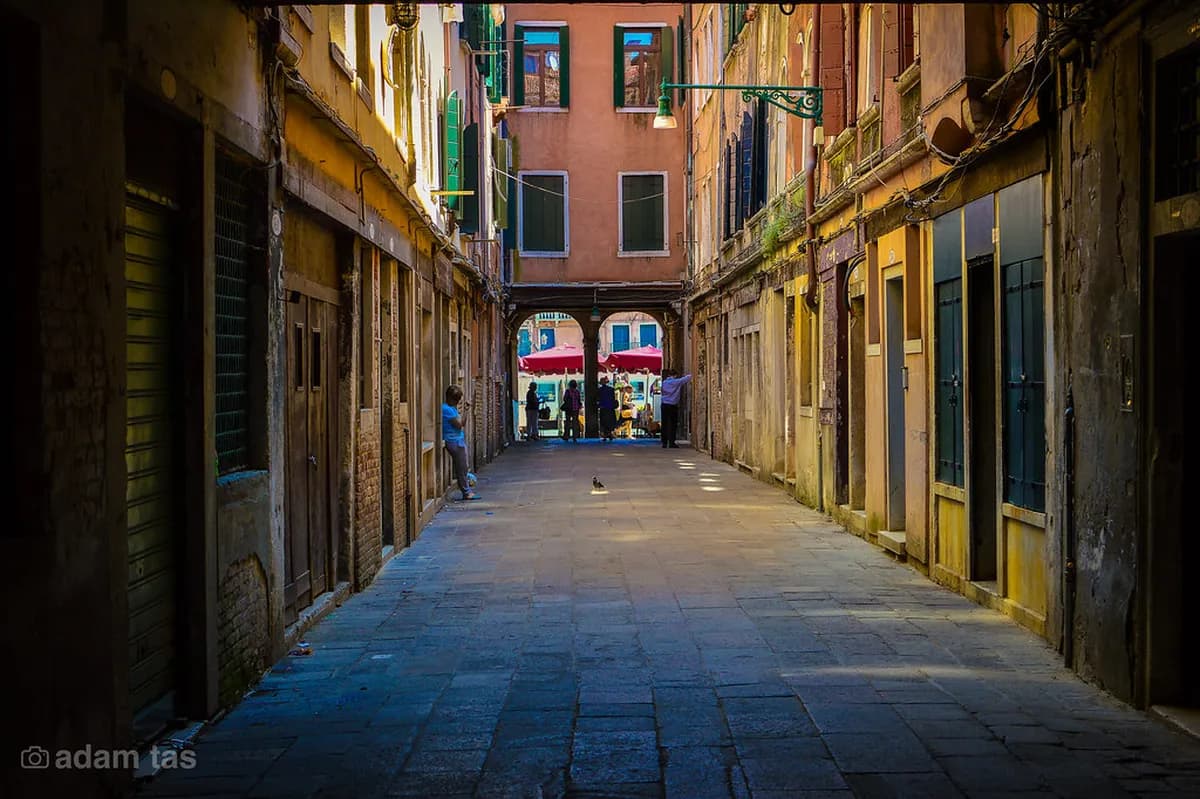
Visiting these spots instead of queuing for San Marco or the Doge's Palace gives you the same depth of history at a fraction of the cost. The average tourist spends 6–8 hours in Venice and sees fewer than four landmarks. With this list you can see ten in a single day if you start before 09:00 and stay off the main thoroughfares. Follow a locals' off-the-beaten-path Venice guide to connect the dots between districts.
Palazzo dei Camerlenghi: The Bas-Relief of the Lady
This ancient palace sits directly beside the Rialto Bridge on the San Polo side. Most visitors photograph the bridge and move on without looking at the building to their right. Cross the bridge with the T Fondaco dei Tedeschi at your back, turn right, and look up at the pilasters along the facade. There, carved in stone, is one of Venice's most comical legends.
The legend holds that a local woman grew tired of waiting for the Rialto's notoriously slow construction to finish. She declared in Venetian dialect that her private parts would burst into flames before the bridge was ever done. When the bridge was finally completed — after decades of delays — someone had the last laugh by immortalizing her in a stone bas-relief on the palace wall. Entry to view the exterior is free and possible at any hour.
This spot is five steps from the busiest intersection in Venice, yet almost nobody knows it exists. Look for it at the upper register of the building's corner pilasters. A pair of binoculars helps if the light is flat.
Casa del Cammello: The House of the Camel
Casa del Cammello — formally Palazzo Mastelli — sits in the Cannaregio neighborhood near Campo dei Mori, a square named after the region of Morea in modern Greece. The facade features a high-relief stone carving of a camel and a turbaned figure that stops locals mid-stride, yet most tourists pass without noticing. Find it by walking from the Fondamenta della Misericordia toward the canal; the building faces the water on Rio della Madonna dell'Orto.
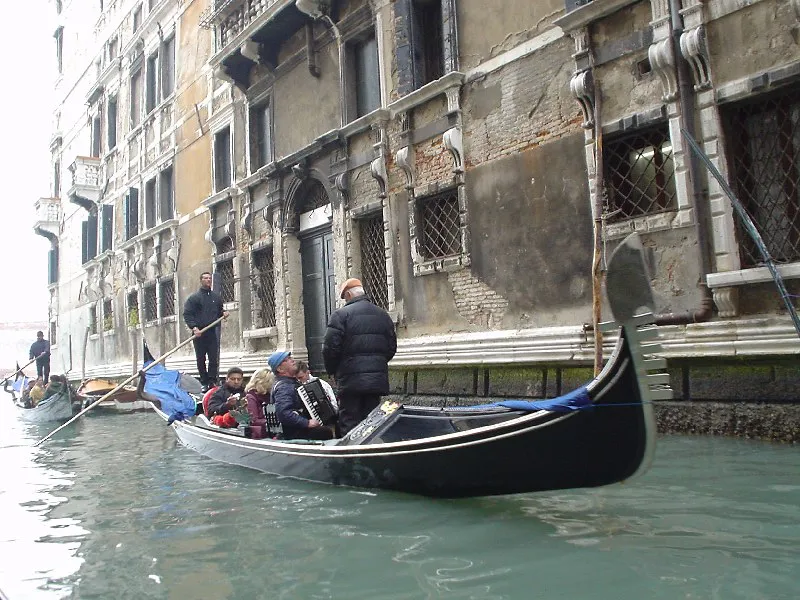
The dominant legend says three merchant brothers — Santi, Afani, and Rioba Mastelli — built the palazzo in the 15th century to trade silk and spices. According to local lore, their greed was so extreme that they were cursed and turned to stone. Round the corner to the main entrance on Campo dei Mori and you will see three stone figures built into the building's outer wall — the petrified brothers themselves, still standing guard after 600 years.
Look at the base of the building along the canal side. There is a small stone drinking fountain at knee height — the only gondolier's water stop of its kind remaining in Venice. The fountain's low position allowed gondoliers to grab a drink as they steered past without stepping off the boat. It no longer runs, but it is one of the most precise pieces of working-class Venetian history you will find on any canal wall.
Ponte de Chiodo: The Bridge Without Railings
Every bridge in Venice has protective side walls or railings — except two. Ponte de Chiodo in Cannaregio is the more accessible of the pair. The second is the Ponte del Diavolo on the lagoon island of Torcello, said to have been left open so that drunks would fall off it on the way home. Ponte de Chiodo is easier to photograph since it spans a quiet residential canal framed by flower boxes.
The bridge is free to cross and open around the clock. The stone can be slick after rain, so watch your footing in winter. Find it by walking from the Fondamenta di San Felice toward the Palazzo Mastelli — it is about 200 metres east along the canal. The best light for photography falls between 07:30 and 09:00 when the morning sun hits the pale stone at a low angle.
Calletta Varisco: Venice's Narrowest Alleyway
At its tightest point, Calletta Varisco measures 53 centimetres across. It is one of the narrowest public streets in the world and sits tucked inside a residential block in Cannaregio, near Campo San Canciano. Without a map you will likely miss it entirely — it does not appear on most tourist leaflets and GPS apps frequently fail in the tall-walled alleys nearby.
To find it, walk from Campo San Canciano toward Rio dei SS. Apostoli and look for the sign on the corner wall. A printed paper map of the Cannaregio district is more reliable than a phone signal here. The alley is free to walk through at any time. Slide through sideways at the narrowest section to fully appreciate how the medieval city packed thousands of people into streets designed for one.
This is one of the spots worth visiting early. By mid-morning a small queue forms as groups stop to photograph each other squeezing through. Before 09:00 you will have it to yourself.
Ponte delle Tette: The Historic Bridge of Tits
Ponte delle Tette — Bridge of Tits — sits in the heart of San Polo near the Rialto Market. In the 15th century this area was Venice's legal red-light district. At peak periods the city recorded roughly 20,000 sex workers out of a population of around 150,000. Venetian law prohibited solicitation on the streets, so women were required to stand topless in the windows above the bridge to attract clients. The bridge's name, used officially on maps to this day, is a direct reference to that arrangement.
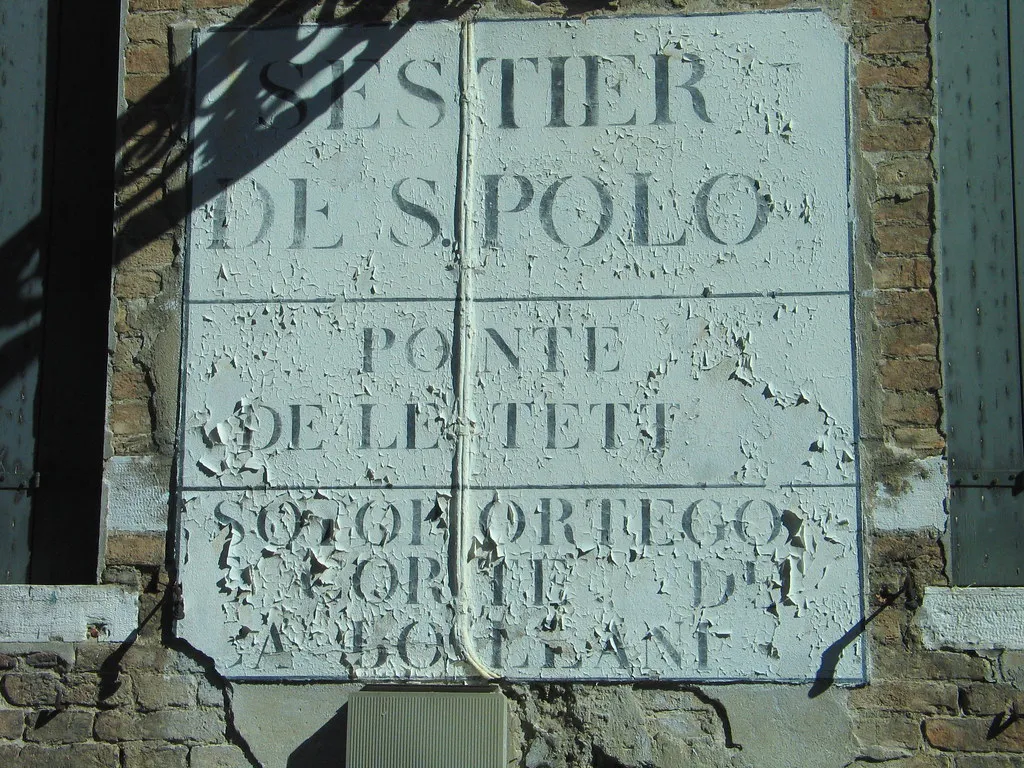
Venice actively enforced this system in part to discourage male homosexuality, which the authorities of the Venetian Republic viewed as a drain on the birth rate. Both facts are documented in the city's official records from the period. Today the calle around the bridge is a quiet residential lane. Walk across for free at any hour — the bridge itself is unremarkable, but the historical context makes it one of the more memorable stops on any Venice walk.
Finding it requires patience. Head toward the Rialto Market from Campo San Polo, then follow the narrow lanes toward Rio delle Carampane. Ask a local for "Ponte delle Tette" rather than searching by GPS; most residents know it by name and will point you in the right direction.
Ca' Tron: The University Palace on the Grand Canal
Ca' Tron is a 16th-century Gothic-Byzantine palace on the Grand Canal that now belongs to the IUAV University of Architecture. Most tourists scan the canal from a vaporetto and assume these private palaces are off-limits. They are not. During university term — September through June — the main entrance is usually open on weekdays from approximately 09:00 to 18:00. Walk in, cross the courtyard, and climb the interior stairs for a canal view you will not get from any public terrace.
The interior is sparse and functional — this is a working academic building, not a museum. Keep noise low and avoid interrupting anyone studying. The garden at the rear is the main draw: it offers a rare patch of green in a city with almost no public parks. There is no admission charge during open hours, though the university reserves the right to close for events or exams without notice.
If the door is locked, do not be disappointed — even the exterior view from the canal-side fondamenta is worth the detour. The facade shows classic Venetian Gothic tracery that has survived mostly intact for five centuries.
Libreria Acqua Alta: The Floating Bookstore
Libreria Acqua Alta in Castello calls itself "the most beautiful bookshop in the world." The claim is subjective, but the setup is genuinely unusual. Books, maps, and postcards fill gondolas, bathtubs, and every surface flat enough to hold a stack — the owner's flood-protection strategy for a shop that sits at canal level. A full-size gondola serves as the main display case in the centre of the room. The back fire exit opens directly onto a small canal.

Entry is free. Hours are approximately 09:00–19:00 daily. The real draw for most visitors is the staircase in the rear courtyard, built entirely from old encyclopedias and unsaleable books. Climb it for a rooftop view over the surrounding canal. Libreria Acqua Alta is well documented, but despite its fame it receives a fraction of the traffic that flows through the San Marco area.
Visit before 10:00 or after 17:00 on weekdays. Midday sees the heaviest foot traffic and makes the small interior genuinely difficult to browse. The owner Luigi is talkative and multilingual — if the shop is quiet, a conversation with him is worth more than the staircase photo.
San Zaccaria Crypt: The Flooded Underground
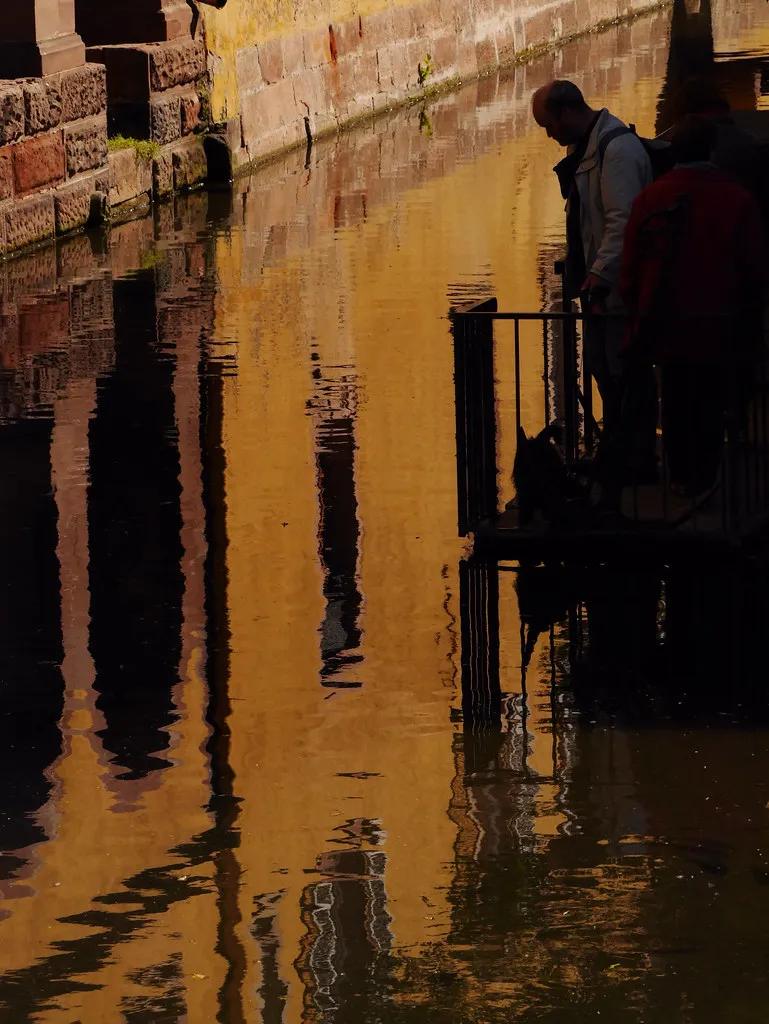
Beneath the Church of San Zaccaria in Castello lies a permanently flooded crypt. The water is not damage — it is the lagoon itself, which has risen to meet the medieval floor over centuries. Columns disappear into still green water. Vaulted arches reflect perfectly in the surface. The effect is unlike anything else in the city and photography here — a tripod is permitted — consistently produces striking results.
Admission costs around 3 euros and is collected at the church entrance. The crypt is accessible during church opening hours, typically 10:00–12:00 and 16:00–18:00 Monday to Saturday, and afternoons only on Sunday. Arrive at 10:00 when doors open — tour groups rarely reach this part of Castello before 11:00, giving you a 45-minute window of near-total quiet. High tide makes the reflections more dramatic; check the tide forecast for Venice the day before your visit.
The San Zaccaria flooded crypt costs around €3 and opens at 10:00 — tour groups rarely arrive before 11:00, giving you a quiet 45-minute window. High tide makes the reflections most dramatic; check the Venice tide forecast at comune.venezia.it the day before visiting.
The church itself contains several significant works, including a Giovanni Bellini altarpiece. The crypt is the draw, but allow 20 minutes for the main nave on your way out.
Scala Contarini del Bovolo: The Hidden Spiral Staircase
Scala Contarini del Bovolo is one of the most photogenic structures in Venice and one of the least visited. It hides in a tiny private courtyard near Campo Manin — not visible from any main street. The external spiral staircase climbs five Gothic-Renaissance loggia stories and was built in the late 15th century for the Contarini family. "Bovolo" means snail shell in the Venetian dialect, which perfectly describes its form.
Tickets in 2026 cost around 8–10 euros for adults. Book online in advance at the official site to secure a timed entry — weekend slots sell out by Thursday. The staircase itself is climbable, and the top landing gives a rooftop panorama across the surrounding sestiere. Opening hours are typically 10:00–18:00 daily. To find the courtyard entrance, look for signs on the calle walls near Campo Manin; the alley leading to it is unmarked on most printed maps.
This spot rewards good light. Midday sun fills the courtyard and eliminates shadows; late afternoon creates the arcaded shadow patterns that make the staircase photographs immediately recognizable. If you are combining it with Libreria Acqua Alta, the walk between the two takes about 15 minutes through quiet Castello streets.
Oratorio dei Crociferi: A Secret Renaissance Treasure
Oratorio dei Crociferi is a small former hospice chapel in Cannaregio, within easy walking distance of the Fondamenta Nuove vaporetto stop. Its interior holds a cycle of large canvases by Palma il Giovane, painted between 1583 and 1591, depicting the history of the Crociferi order. Most visitors to Venice who are interested in Renaissance painting go to the Accademia or the Chorus Pass churches like the Frari. Almost none come here, which means you frequently have this extraordinary room to yourself.
Entry is typically under 5 euros. Opening hours are limited — Fridays and Saturdays only, roughly 10:00–13:00, though hours vary seasonally and the oratory sometimes opens for special events. Check current hours before visiting. The interior is deliberately dim, which heightens the atmospheric effect of the gold-heavy paintings and preserves the works from UV damage.
Combine a visit here with the hidden churches in Venice guide to build a full day of under-visited sacred art. The oratory is less than 10 minutes on foot from the Gesuiti church, another low-traffic Renaissance gem in Cannaregio.
How to Plan Your Hidden Gems Itinerary
All ten spots can be covered in one long day if you start in Cannaregio (Oratorio dei Crociferi, Calletta Varisco, Ponte de Chiodo, Casa del Cammello) before 11:00, then cross to San Polo (Palazzo dei Camerlenghi, Ponte delle Tette) for lunch, and finish with Castello (Libreria Acqua Alta, San Zaccaria Crypt) and San Marco (Ca' Tron, Scala Contarini del Bovolo) in the afternoon. Walk everything — water taxis between these spots waste time.
Use a map of Venice canals and neighborhoods rather than GPS, which frequently loses signal in the narrowest calli. Venetian house numbers run by sestiere, not by street name, so pinpointing an address like Calletta Varisco is easier with a district map than a coordinates search. Ask shopkeepers for directions in the Cannaregio backstreets — most are happy to help if you greet them in Italian ("Scusi, sa dov'è…?").
Choosing where to sleep matters for this itinerary. Staying in Cannaregio or Castello puts you within minutes of the majority of these spots. Read the best neighborhoods to stay in Venice guide and the Dorsoduro hotel options before booking. For food breaks, the bacari guide will keep you fed on local cicchetti for 1–3 euros per piece rather than tourist-menu prices.
Avoid the shoulder hours of 11:00–15:00 at the free outdoor spots like Ponte delle Tette and Ponte de Chiodo. They are at their most photogenic — and least crowded — before 09:00 and after 17:00. For the paid indoor sites, book the first available time slot of the day.
Scala Contarini del Bovolo tickets (€8–10 in 2026) sell out by Thursday for weekend slots — book online in advance at the official site. Ca' Tron university palace may close without notice for exams or events, so check ahead before making it the anchor of your day.
| Hidden Gem | Sestiere | Cost | Best Time to Visit |
|---|---|---|---|
| Palazzo dei Camerlenghi bas-relief | San Polo | Free | Any hour |
| Casa del Cammello (Palazzo Mastelli) | Cannaregio | Free | Morning |
| Ponte de Chiodo | Cannaregio | Free | 07:30–09:00 for photos |
| Calletta Varisco (53 cm alley) | Cannaregio | Free | Before 09:00 |
| Libreria Acqua Alta | Castello | Free | Before 10:00 or after 17:00 |
| San Zaccaria Crypt | Castello | ~€3 | 10:00 on opening |
| Scala Contarini del Bovolo | San Marco | €8–10 | Midday or late afternoon |
| Oratorio dei Crociferi | Cannaregio | <€5 | Fri–Sat 10:00–13:00 only |
What to Skip: Overrated Venetian Attractions
Gondola rides from the San Marco basin are the most expensive and least scenic option in the city. The water there is frequently choppy due to motorized vaporetti and water taxis. For the same fixed rate (80 euros for 30 minutes in 2026), hire a gondola from the quieter stazioni in San Polo or Cannaregio where the back canals are calm and the scenery is more intimate.
Avoid any restaurant displaying large laminated photos of food outside the door. These tourist menus charge two to three times the local price for dishes that are usually frozen, not fresh. The best cicchetti in Venice are found in the small bacari of San Polo and Cannaregio — two or three small plates at the bar cost less than a single tourist-menu starter.
Be wary of "free" boat trips to Murano glass factories advertised by touts near San Marco. These trips involve high-pressure sales tactics once you reach the factory. Take vaporetto Line 4.1 or 4.2 from Fondamente Nove (1.50 euros with a ACTV pass) and explore Murano independently. If the Venetian lagoon islands are on your list, the public boat is always the better option.
Explore hidden gems in other cities
Frequently Asked Questions
Where is the narrowest street in Venice?
The narrowest street in Venice is called Calletta Varisco, located in the Cannaregio district. It measures only 53 centimeters wide. You can find it near the Campo San Canciano square by following the narrowest path toward the canal.
Can you visit the flooded crypt in Venice?
Yes, the flooded crypt is located beneath the Church of San Zaccaria in the Castello district. It is open to the public for a small fee of about 3 euros. The water level varies depending on the tide and the season.
What is the story behind the Bridge of Tits?
The Ponte delle Tette was named during the 15th century when the surrounding area was a legal red-light district. Prostitutes were required to stand on the bridge with their breasts exposed to discourage homosexuality. Today, it is a quiet historical landmark.
Finding the hidden gems in Venice is the best way to ensure your trip is memorable and authentic. While the major landmarks are worth seeing, these ten secret spots provide the historical context that makes the city unique. Start in Cannaregio before 09:00, work your way through San Polo at lunch, and finish in Castello and the San Marco sestiere before sunset. The city rewards anyone willing to look twice.
Explore More Venice Guides
Venice rewards those who wander beyond the main canals — from Cannaregio backstreets and cicchetti bars to lagoon islands and secret churches. Use these guides to build your own off-the-beaten-path itinerary.
Neighborhoods & Where to Stay
- Venice attractions hub: tickets, hours & maps
- Cannaregio Neighborhood Guide
- Best Neighborhoods to Stay in Venice
- Best Cannaregio Hotels
- Best Dorsoduro Hotels
Food & Cicchetti
Islands & Lagoon
Off-the-Beaten-Path & Free Venice
- Venice Off the Beaten Path (Locals' Guide)
- Non-Touristy Things to Do in Venice
- Free Things to Do in Venice
- Venice Free Walking Tour
- Hidden Churches in Venice
- Things to Do in Venice for Young Adults
- Map of Venice Canals & Neighborhoods
More European Hidden Gems
Continue exploring
More guides you'll find useful