10 Best Ways to Explore Venice Off the Beaten Path (2026)
Escape the crowds with our guide to 10 off the beaten path spots in Venice. Discover hidden sestieri, quiet lagoon islands, and local tips for an authentic trip.
On this page
10 Best Ways to Explore Venice Off the Beaten Path
After five visits to the Floating City, I have learned that the best moments happen far from the Rialto Bridge. My most recent trip in early 2026 reminded me that silence still exists in this crowded lagoon. Walking through the eastern edge of Castello at dusk, I found streets where only the sound of water echoed. This guide focuses on those quiet corners that remain untouched by the heavy waves of day-trippers.
Finding an authentic experience requires a willingness to get lost in the labyrinth of narrow stone alleys. Venice continues to implement new visitor regulations, making it essential to plan your non-touristy things to do in Venice carefully. We aim to show you the residential side of the city where laundry hangs high above quiet canals and neighbors actually know each other's names.
Cannaregio: Exploring the Jewish Ghetto and Northern Alleys
Cannaregio sestiere is where most Venetians who still live on the main island actually reside. The streets north of the Lista di Spagna thin out quickly once you leave the station's gravitational pull. Within two minutes of turning left off the main drag, you are walking past front doors with doorbells, potted herbs on window sills, and absolutely no tour groups. The northern fondamenta along the canal toward Fondamente Nove is the city's quietest morning walk.
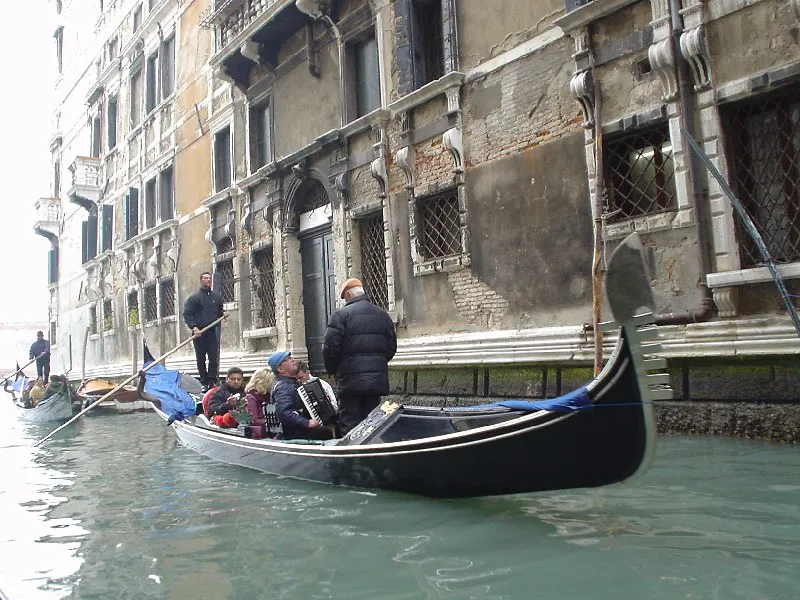
In Campo dei Mori you will find the four stone statues known as the Moors — three brothers and a servant, silk traders from the Peloponnese according to local legend. The corner figure, Rioba, has a distinctive metal nose added by Venetians as a long-running civic joke. Right next to the Moors building stands Tintoretto's pink Gothic house, where the painter was born in 1518 and spent his entire life. A plaque on the facade urges passers-by not to walk past without pausing, and it is worth heeding that advice.
Calle Varisco, near Campo Widmann, is the narrowest alley in the city at just 53 centimetres across at its tightest point. It has little intrinsic charm beyond the sheer improbability of its dimensions, but the blocks surrounding it are genuinely quiet and residential. The Ghetto Nuovo square a short walk away is one of the most historically loaded spaces in Europe, and most visitors only spend twenty minutes there. Slow down and look at the bronze Holocaust memorial reliefs on the wall of the synagogue — they deserve more attention than they typically receive.
For a deeper look at this district, the Cannaregio Venice neighborhood guide maps out where locals shop, drink, and avoid the crowds entirely.
Castello: Venice's Most Authentic Residential District
Castello sestiere stretches east from San Marco and gradually becomes more genuinely local the further you walk. The area around Via Garibaldi — a rare street wide enough to have outdoor market stalls — feels like an entirely different city from the sestiere a kilometre to the west. Children kick footballs in the campo, elderly men sit on the same bench they have occupied for decades, and the bakeries close at noon because the owner wants to go home. This is the Venice that locals mean when they say the city still has a soul.
San Francesco della Vigna is one of the finest churches in the city and consistently undervisited. The Palladian facade gives way to a cool, quiet interior, and beyond it lie two cloisters where Franciscan friars maintain a working vineyard — a living remnant of the gift left by a Venetian nobleman eight hundred years ago. The vineyard is only occasionally open to the public; follow the church's social media for dates. Even without it, the cloisters are worth the walk from the Arsenale vaporetto stop.
San Pietro di Castello sits on its own small island at the far eastern tip of the district. It was Venice's cathedral for centuries before the title passed to San Marco, a fact most visitors never learn because hardly anyone comes here. The grassy campo in front of it is one of the only genuinely green public spaces on the main island. Cross the long wooden bridge in the early morning and you will likely have the entire square to yourself.
In the Sotoportego dei Preti, look for a red brick heart embedded in the wall. Local legend says touching it grants luck in love within a year. It is the kind of detail you only find by wandering without a fixed agenda — which is precisely the point of coming to Castello.
San Francesco della Vigna monastery maintains a working vineyard in its cloisters — a living remnant of a nobleman's 800-year-old gift. Follow the church's social media for the occasional public access dates to the vineyard.
Dorsoduro: Art, Squeros, and Quiet Canals
Dorsoduro attracts a student crowd from Ca' Foscari and the Accademia, which keeps prices honest and the atmosphere unstuffy. The neighbourhood around Campo Santa Margherita is as close to a normal Italian neighbourhood square as Venice gets. Aperitivo starts at 18:00 and the bar owners know their regulars by order, not just by name. It is the one area where you can sit outside with a spritz and genuinely feel like you have stumbled into local life rather than a simulation of it.
The Squero di San Trovaso is a gondola repair workshop that has operated on the same site for centuries. Viewing it from across the narrow canal is free and produces photographs that almost no other spot in the city can match — low wooden sheds reflected in still green water, with gondola hulls in various states of repair propped against the walls. Most work happens Monday to Friday during daylight hours. Stop at Gelateria Nico nearby for a gianduiotto, a chocolate and hazelnut parfait served with whipped cream that the shop has been making since the 1930s.
The Church of San Pantalon near Campo Santa Margherita houses the largest painting on canvas in the world: a 443-square-metre depiction of the martyrdom of Saint Pantalon covering the entire ceiling. Entry is free and the church is rarely crowded. Ponte dei Pugni — the Bridge of Fists — is a short walk away, a bridge where rival Venetian factions once held bare-knuckle fights on a surface without railings. The four Istrian stone footprints marking where contestants stood are still visible at the corners.
Santa Croce: Hidden Churches and Local Squares
Santa Croce is the smallest sestiere and among the least visited, wedged between the train station and the Grand Canal bend near the bus terminal. Most tourists pass through it on the way somewhere else without pausing. That is their loss. Campo San Giacomo dell'Orio is one of the finest neighbourhood squares in the city — wide, shaded by trees, and animated by locals rather than tour groups. The surrounding cafes charge reasonable prices and the church in the centre dates to the ninth century.
Tessitura Luigi Bevilacqua operates a working weaving atelier ten minutes from the station. The antique looms it houses have produced silk and velvet for royal residences and the White House. Visits to the weaving plant require a reservation but are unlike anything else in the city. The shop itself is open without booking, and the small rear terrace offers an unusual angle on the Grand Canal.
Palazzo Mocenigo is a museum that almost no one visits, which is puzzling given its contents. The main floor preserves twenty rooms of tapestries, furniture, and Murano chandeliers from a family that lived here until 1945. Several rooms are dedicated to the history of perfume, with a collection that traces Venice's role as a centre of the fragrance trade. The palace is housed inside the former Fondaco dei Turchi, the commercial headquarters of Turkish merchants in the Republic. A small hidden garden sits between the two buildings.
San Polo: Finding Solitude Near the Rialto
San Polo contains the Rialto Market, which means it is never truly quiet during the day. But the neighbourhood around the market is a different matter entirely when you arrive at 07:00 instead of 10:00. Barge deliveries arrive directly by canal, restaurant owners select fish before the stalls open to the public, and the only sound is the slap of water and the slide of crates across cobblestones. The market runs Tuesday to Saturday and entry is free. One coffee at the nearest bar counter costs around €1.20 and comes without the surcharge that accompanies every drink taken at a table in San Marco.
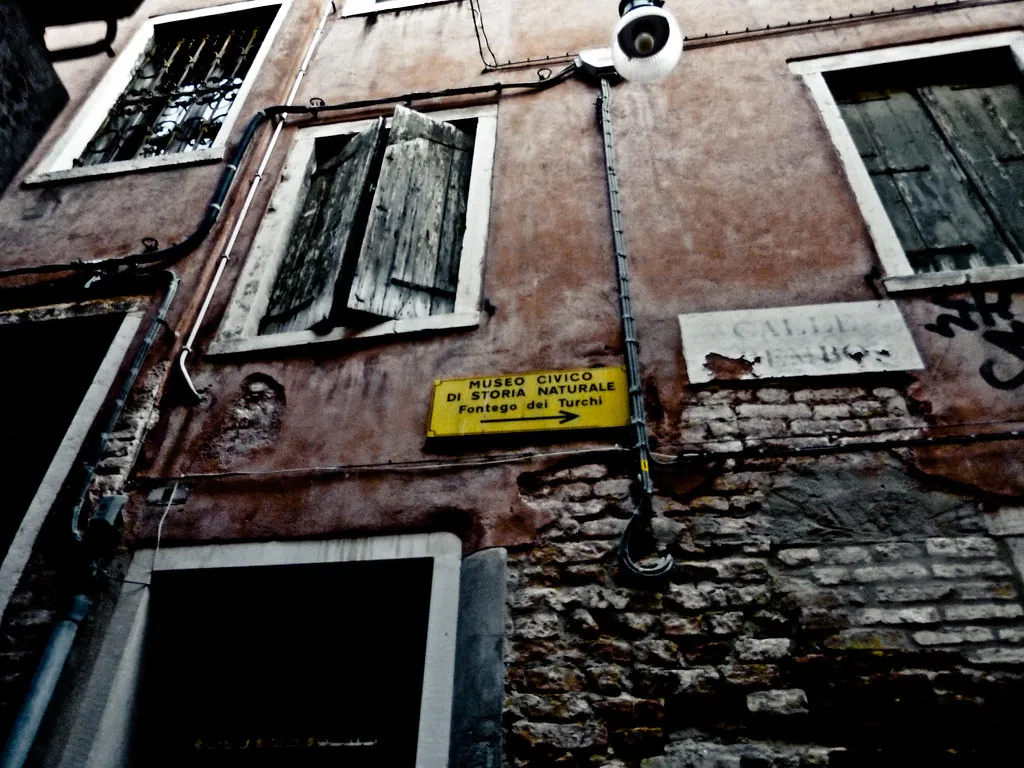
Ponte delle Tette — literally the Bridge of Breasts — sits in the red-light district the Republic licensed in the fifteenth century. Women displayed themselves at the windows above this bridge to attract clients; the bridge's name has stuck for five centuries. The surrounding alleys are among the quietest in San Polo and the area around Rio Terà de le Carampane gives a clear sense of how the city's street names preserve social history that no museum display can replicate.
The Palazzetto Bru Zane is a research centre for French Romantic music housed in a late-seventeenth century casino with a small garden. Free guided tours run every Thursday at 14:30 in Italian, 15:00 in French, and 15:30 in English. Book by email to contact@bru-zane.com; tours are suspended in August. It is a genuinely unusual hour to spend in a genuinely unusual building, and it is almost always empty.
Giudecca: The Best Skyline Views and Local Vibe
Giudecca island is a ten-minute vaporetto ride from Zattere and a world apart from the main island. The southern quay of Giudecca faces open water and the Lido, while the northern side looks directly across to the Dorsoduro skyline in a way no postcard from San Marco can replicate. Locals have lived and worked here through the tourist boom largely undisturbed because there is nothing on Giudecca that appears in any top-ten list. That is, of course, precisely what makes it worth visiting.
The Casa dei Tre Oci — the House of Three Eyes — is a photography exhibition space built at the start of the twentieth century as the Venetian home of the painter Mario De Maria. The three large Gothic windows on the middle floor that give the house its name look directly at the skyline. Exhibitions change regularly and entry costs around €12. The Fortuny fabric factory, founded by Mariano Fortuny in the 1920s, is also on the island and visits to the showroom and its secret garden can be arranged by appointment.
Walk the entire length of the northern quay, which takes about forty minutes at a slow pace. The industrial infrastructure visible from the water — warehouses, workshops, a former salt depot — tells the story of the city's working economy that its tourist economy now obscures. For the return journey, take line 2 from the western end of Giudecca toward San Zaccaria rather than backtracking, as this route passes through the Giudecca Canal and gives the best water-level view of the Redentore church facade.
Murano: Finding the Quiet Side of the Glass Island
Murano has a reputation problem it does not entirely deserve. Yes, the free boat tours are a trap — they exist to deposit you in a showroom where the sales pressure is intense. Take the public vaporetto line 4.1 or 4.2 from Fondamente Nove instead; the return ticket costs around €9.50 with a standard ACTV pass. Once on the island, walk away from the vaporetto landing immediately. Within three minutes you are on canals that see almost no tourist foot traffic and the glass shops become independent studios rather than production lines.
The Basilica di Santa Maria e San Donato is worth the trip on its own. The apse exterior, which faces a quiet canal, is among the most beautiful pieces of Romanesque architecture in the Veneto. Inside, the mosaic floor dates to 1140 — the same era as the mosaics in San Marco — and has survived intact. Entry is free. Hanging behind the altar are what the church claims are the bones of the dragon slain by Saint Donatus, displayed in an X shape. Whether you believe the provenance or not, it is one of the more memorable things in any Venetian church.
The quieter streets of Murano away from the main Fondamenta dei Vetrai canal are genuinely residential. Follow the smaller canals west of the central canal and you will find laundry, vegetable gardens in interior courtyards, and children on bicycles — none of which are possible on the car-free main island. Murano is one of the few places in the lagoon where cycling is feasible.
Burano and Torcello: The Far Reaches of the Lagoon
Burano is famous for its coloured houses, which means it is no longer a secret. But the crowds concentrate on the main calle and the central canal; the island's western streets are genuinely quiet even in July. Take the vaporetto line 12 from Fondamente Nove — the journey takes about 45 minutes and passes through the northern lagoon, which gives a strong sense of the flat, marshy geography that surrounds Venice on all sides. Arriving early matters here as much as anywhere else: before 10:00 the island belongs to the lace makers and fishermen who live there.
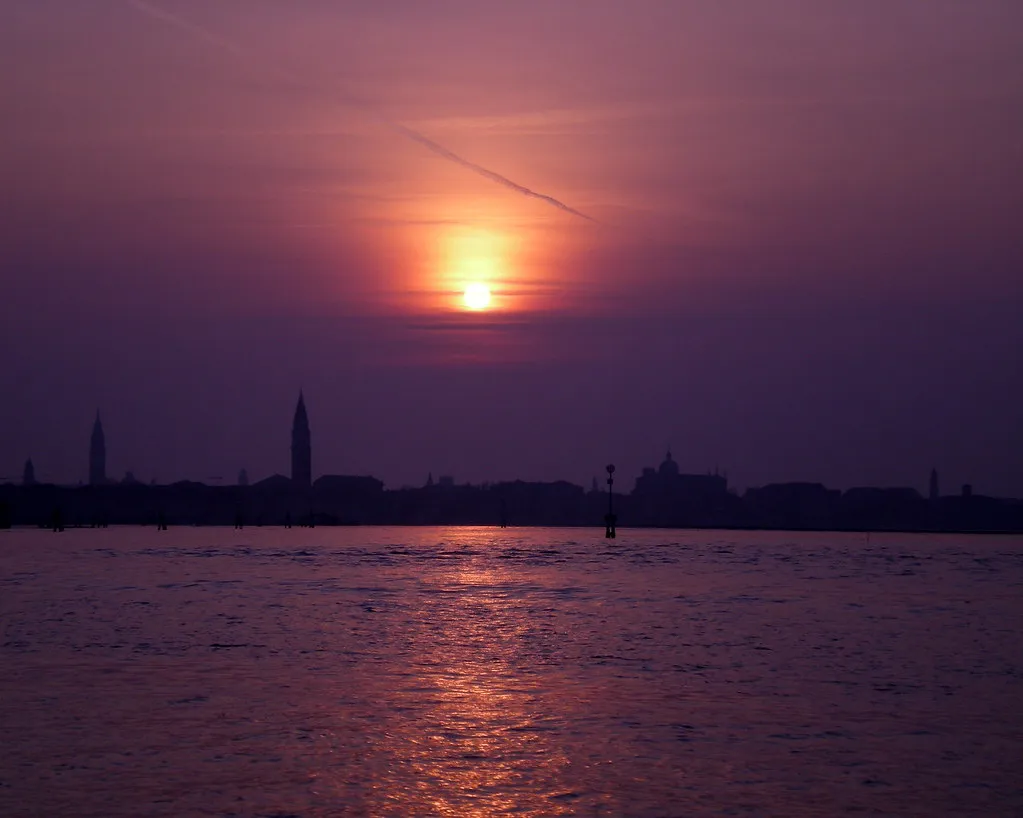
Torcello is what Burano would be if it declined for another millennium. At its peak this island held 20,000 inhabitants; today it has fewer than fifteen permanent residents. The Cathedral of Santa Maria Assunta costs €6 to enter and contains Byzantine mosaics of the Last Judgement that predate those in San Marco by a century. Climb the bell tower for €4 and the view north toward the mainland on a clear day includes the Dolomites. The marshes visible from the top are what the original settlers of the lagoon saw when they fled the Hunnic invasions in the fifth century, a story preserved in the UNESCO Venice and its Lagoon listing.
Venice introduced a €5 day-tripper entry fee on peak days (busy Saturdays and Sundays, April–July, plus selected public holidays). Check the fee calendar before booking travel — overnight guests, workers, residents, and children under 14 are exempt.
A combined visit to Burano and Torcello in a single day works well: take the first ferry to Torcello at around 09:00, spend two hours there, then catch the short ferry to Burano for lunch and an afternoon walk before the day-trippers arrive from the other direction. The Torcello Venice oldest island guide covers ferry timings and what to see in detail.
What the 2026 Day-Tripper Fee Means for Crowd Avoidance
Venice introduced a €5 entry fee for day-trippers on peak days starting in 2024, and the scheme has continued into 2026 with an expanded calendar of fee days. The fee applies on busy Saturdays and Sundays between April and July, as well as selected public holidays. It is payable online via the official access fee portal or at kiosks near the train station and Piazzale Roma. Overnight guests, workers, residents, students, and children under 14 are all exempt. The fee is not a ticket to anything specific — it is simply a charge for being in the historic centre without a hotel reservation on a peak day.
In practical terms this changes the crowd calculus for off-the-beaten-path visitors. The fee selectively discourages the day-tripper bus groups that previously saturated the main route from the station to San Marco by 10:00. On fee days, the Rialto area and the Lista di Spagna are marginally quieter than they were two years ago. On non-fee days — weekdays, off-season weekends — there is no charge and no gate. Checking the fee calendar before you book travel is the single most effective crowd-avoidance step available in 2026 and it costs nothing to do.
The fee has had no measurable effect on the residential districts because day-trippers rarely reached them anyway. Cannaregio north of the Ghetto, the streets around Sant'Elena, and the outer island ferries remain as accessible and uncrowded as they were before the scheme began. The lesson is the same as it has always been: the crowd problem in Venice is highly localised, and the solution is simply to walk fifteen minutes in any direction away from the postcard landmarks.
Practical Tips: Timing and Transport for Hidden Gems
Timing is your most powerful tool when trying to find an off-the-beaten-path experience. The hours before 09:00 and after 20:00 are magical in the residential districts. Day-trippers usually arrive by train in the late morning and leave before dinner. Staying overnight allows you to see the city in its most natural and peaceful state, and it exempts you from the day-tripper fee on peak days.
| District / Island | Highlight | Vaporetto Line | Crowd Level |
|---|---|---|---|
| Cannaregio | Jewish Ghetto, Calle Varisco | 1, 3 | Low (north of Lista di Spagna) |
| Castello | San Francesco della Vigna, Via Garibaldi | 1 (Sant'Elena, Giardini) | Very low (east of Arsenale) |
| Dorsoduro | Squero San Trovaso, Campo S. Margherita | 1, 2 | Low–Medium |
| Giudecca | Northern quay views, Redentore church | 2, 4.1 | Low |
| Murano | Basilica di Santa Maria e San Donato | 4.1, 4.2 | Medium (away from main canal) |
| Burano / Torcello | Coloured houses; Byzantine cathedral | 12 + Line 9 | Low before 10:00 |
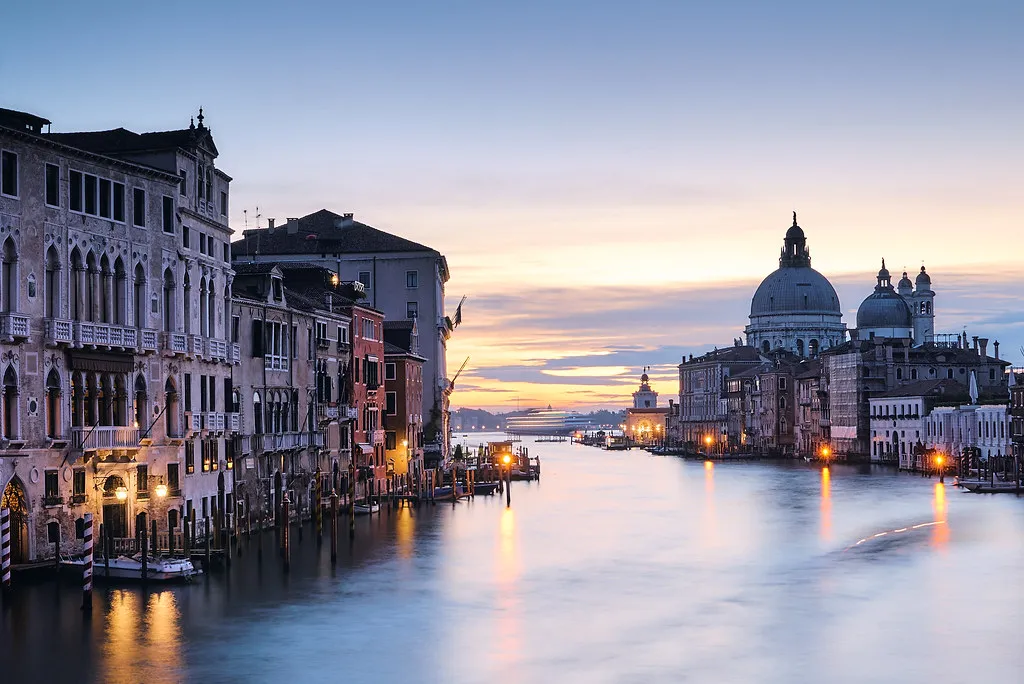
Vaporetto lines 5.1 and 5.2 circumnavigate the main islands in opposite directions, stopping at residential areas like Sant'Elena, the Arsenale, the hospital, and Fondamente Nove. This perimeter route is significantly less crowded than Line 1 on the Grand Canal and gives a completely different perspective of the city's edges. A 75-minute ACTV ticket costs €9.50 in 2026; a 48-hour pass at €35 makes sense if you plan to use the ferries for island day trips as well. For the outer islands — Murano, Burano, Torcello — budget extra time because connections can be infrequent, particularly in winter. Official timetables are at actv.avmspa.it and they do change seasonally.
Always carry a physical map or download an offline version before you head out. GPS signals can be notoriously unreliable in the narrow alleys between tall stone buildings. Getting lost is part of the experience, but knowing how to find the nearest vaporetto stop is genuinely useful when you need to be somewhere. The map of Venice canals and neighborhoods is a practical reference for understanding how the sestieri connect before you arrive.
Creating a Themed Itinerary: The "Hidden Venice" Project
Travelers who go somewhere with a specific purpose tend to make more discoveries than those who follow a general sightseeing checklist. Give yourself a project for Venice and you will navigate the city with a completely different quality of attention. The project also gives you a reason to explore blocks you would otherwise skip because there is nothing on the guidebook list.
Useful projects include: hunting all the winged lions embedded in building facades across the six sestieri (there are hundreds, each with subtle differences); finding all the votive shrines mounted at street corners, which range from elaborate baroque niches to hand-painted tiles; photographing the city's boat vegetable markets, which you can find moored in Rio San Barnaba in Dorsoduro and in Castello; or collecting the names of the city's streets, which preserve centuries of social history in their references to prostitutes, oar-makers, pilgrims, and foreign merchants.
A single project organises your time without dictating it. It keeps you out of the main tourist corridors because the main corridors rarely contain what you are looking for. And it gives you a reason to talk to locals — the woman tending the shrine, the man repairing the gondola, the shopkeeper whose family has owned the same narrow premises for four generations. These conversations are the authentic Venice experience that no amount of advance booking can manufacture. For more ideas on how to structure a day, the hidden gems in Venice guide covers additional spots by neighbourhood.
What to Skip: Overhyped Spots That Have Lost Their Quiet
Not every place marketed as a hidden gem offers a quiet or authentic experience in 2026. Libreria Acqua Alta became famous as a social media destination years ago and now operates with a queue system on busy days. The book staircase is as charming as advertised, but the shop is frequently too crowded for browsing. If you go, arrive at opening time — the bookstore opens around 09:00 — or accept that it functions as a photo stop rather than a browsing experience.
The glass factories on Murano that offer free boat tours from near the Rialto Bridge are the other obvious trap. These tours exist to deposit you in a showroom where the sales environment can be intense. The glass is often excellent and the demonstrations are impressive, but go on your own terms via the public vaporetto rather than on someone else's schedule. You will see more of the island and spend less on glass you did not plan to buy.
Harry's Bar has been offering overpriced Bellinis since 1931 and the experience has not improved with age or price. A Bellini costs around €25 there; the same drink at a working-class bacaro in Venice costs €3–4 and comes with a cicchetto on the side. The historic atmosphere at Harry's is real but thin — a twenty-minute visit satisfies the curiosity without requiring a second mortgage. Spend the budget difference on a ferry to Torcello instead.
Venice is a city of two faces: one for the crowds and one for those who seek the quiet. By venturing into the residential sestieri and the far reaches of the lagoon, you discover the true soul of the Republic. Whether you are exploring Torcello or the narrowest street in Cannaregio, the rewards are worth the walk. Take your time, respect the locals, and let the city reveal its secrets at its own pace.
We hope this guide helps you plan a trip that feels personal and unique. Venice remains one of the world's most beautiful destinations when seen through an authentic lens. For more inspiration on where to go next, explore our full guide to Italy.
Frequently Asked Questions
What is the most authentic neighborhood in Venice?
Castello is widely considered the most authentic district because it remains largely residential. You will find local markets, laundry hanging across alleys, and fewer souvenir shops than in San Marco.
How do I avoid crowds in Venice?
Avoid the main route between the train station and St. Mark's Square during the day. Explore the outer edges of the city like Sant'Elena or Giudecca between 10 am and 5 pm.
Is Giudecca worth visiting for a day trip?
Yes, Giudecca is worth visiting for its stunning views of the main island and its relaxed vibe. It offers a great selection of local restaurants and quiet waterfront walks away from the bustle.
Continue exploring
More guides you'll find useful