12 Best Free Things to Do in Venice (2025)
Discover the best free things to do in Venice, from the Basilica di San Marco to hidden gems like Casino Venier and the Orsoni Colour Library. Plan your 2025 trip!
On this page
12 Best Free Things to Do in Venice
Venice can feel expensive from the moment you step off the train — but the city's most extraordinary experiences rarely cost a thing. After multiple visits spread across a decade, I can confirm that its golden mosaics, baroque skylines, hidden courtyards, and waterfront promenades are almost entirely free to enjoy. This guide was refreshed in 2026 to reflect current opening times, the city's day-tripper entry fee system, and free admission details.
One practical note before you start: in 2026 Venice charges a €5 day-tripper access fee on peak days (typically spring and summer weekends and public holidays, from roughly April through July). The fee applies only to visitors who arrive for the day and do not hold an overnight accommodation booking in the historic centre. If you are staying in Venice — even in Cannaregio hotels outside the most touristy zone — you are exempt and get a QR code from your host. This fee has no bearing on the free sites in this guide, but knowing it in advance prevents an unpleasant surprise at Piazzale Roma or Santa Lucia station.
With that sorted, here are the twelve best free things to do in Venice — covering iconic basilicas, forgotten palaces, lagoon islands, and one of the most visually spectacular craft workshops in Europe. By focusing on these, you can fill three full days without spending a single euro on admission. Save your budget for a glass of Prosecco at a bacaro wine bar instead.
Basilica di San Marco
The Basilica di San Marco is the centrepiece of Venice and, improbably, free to enter. More than 8,000 square metres of glittering gold and coloured mosaics cover the ceilings, domes, and arches — a visual assault that takes several minutes to absorb. The basilica is the ultimate symbol of Venice's trading empire and one of the finest examples of Byzantine architecture in the Western world, recognised within the UNESCO World Heritage listing for Venice and its Lagoon.
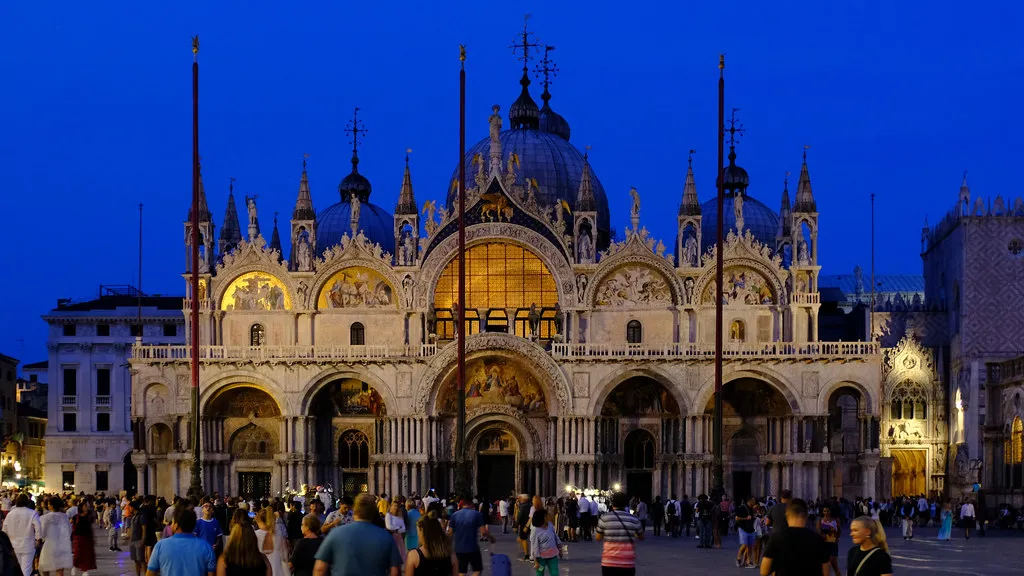
Entry to the main nave is free for worshippers and visitors alike, as confirmed on the official Basilica San Marco site. Optional paid sections include the museum upstairs (€7), the Treasury (€3), and the luminous Pala d'Oro altarpiece (€5) — each worth considering but not required for the core experience. The basilica is open Monday through Saturday from 09:45 to 17:00, and on Sundays from 14:00 to 17:00. Arrive at 09:30 and join the queue before it opens; by 10:30 the line stretches the full length of the piazza.
Dress code is strictly enforced: shoulders and knees must be covered, and bags larger than a small backpack must be deposited at the free storage facility near the Porta dei Fiori entrance on the north side. On rainy mornings when crowds thin slightly, the mosaics seem to glow even brighter — they were designed to catch candlelight, not floodlights.
Dress code at the Basilica di San Marco is strictly enforced — shoulders and knees must be covered or you will be turned away. Bags larger than a small backpack must be deposited free of charge at the Porta dei Fiori storage before entry.
Isola di San Giorgio Maggiore
Directly across the water from St Mark's Square, the island of San Giorgio Maggiore offers one of the best free experiences in Venice. The church, designed by Andrea Palladio and completed in the 1590s, is free to enter and houses two monumental late-career paintings by Tintoretto: L'Ultima Cena and Il Cader della Manna. The interior is noticeably quieter than anything in San Marco, and the light through the white stone is extraordinary in the late morning.
The bell tower costs €6 and is worth every cent — the view from the top looks directly across at the Doge's Palace and the full panorama of the lagoon, without the 45-minute queues of the Campanile. The church is open daily from 09:30 to 12:30 and 14:30 to 18:30. Take vaporetto Line 2 from San Zaccaria; the crossing takes under three minutes.
The monastery gardens behind the church belong to the Cini Foundation, which organises periodic free exhibitions in the Le Stanze del Vetro glass art space. During the Venice Biennale years, the island hosts additional free installations near the vaporetto dock. Check the Cini Foundation website before your visit to see what is currently open to the public.
Santa Maria della Salute
The Salute is one of the most recognisable silhouettes in all of Italy — an enormous octagonal baroque basilica that sits where the Grand Canal meets the Bacino di San Marco. It was commissioned in 1630 as a votive offering after a devastating plague killed a third of the city's population, and completed by Baldassare Longhena in 1681. The Salute is one of the few major Venetian basilicas not bundled into the Chorus Pass church circuit, which is why entry remains free year-round. Entry to the main floor is free.
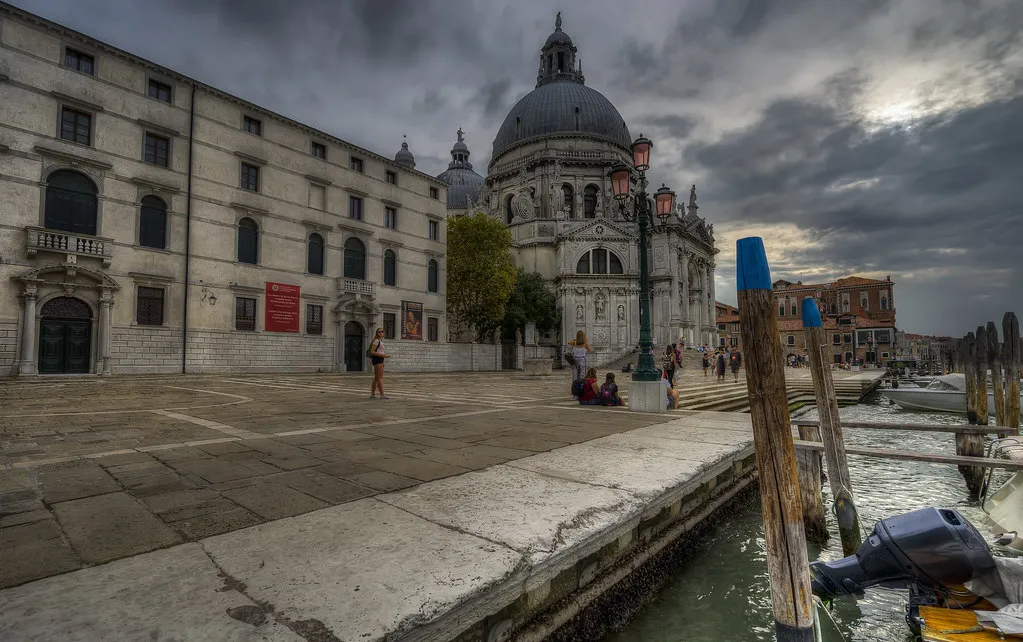
Inside, look up at the intricate marble floor patterns radiating from the centre of the nave, and take time to find the Tintoretto and Titian paintings in the sacristy (a small fee applies for the sacristy separately, but the main church is free). The church is open daily from 09:00 to 12:00 and 15:00 to 17:30. The nearest vaporetto stop is Salute on Line 1.
Visit in the late afternoon when the low sun hits the white Istrian stone facade from across the canal — this is when the building earns its reputation as the most photographed structure in Venice after the Rialto. The Zattere promenade is a ten-minute walk from here, making it a natural pairing for a free afternoon circuit through Dorsoduro.
Scala Contarini del Bovolo
The Scala Contarini del Bovolo — bovolo means snail in Venetian dialect — is a late-Gothic spiral staircase tacked onto the outside of a 14th-century palace in a tiny, hidden courtyard. It is one of the most photographed architectural details in Venice and costs nothing to view from the courtyard. Climbing the stairs requires a paid ticket (€7), but the exterior view from ground level is the main draw regardless.
Finding it is genuinely difficult, and most visitors walk straight past the courtyard without noticing. From Campo San Bartolomeo at the foot of the Rialto Bridge, follow the yellow Accademia signs until you reach Campo Manin. At the far end of the campo, a small panel — easy to miss — points down a narrow alley toward Corte dei Risi. Zigzag right and left through the passage and the courtyard opens suddenly in front of you. The whole detour from Campo Manin takes about three minutes once you know where to turn.
The palace was built for the Contarini family, and the staircase was added in 1499 in an ornate Venetian-Gothic style with layered loggias and arched colonnades spiralling upward, as documented in the Palazzo Contarini overview. Go on a weekday morning when the courtyard is quiet enough to hear the pigeons and appreciate the architecture without jostling for space.
The Jewish Ghetto (Cannaregio)
The Venetian Jewish Ghetto, established in 1516, is the oldest in the world — the word "ghetto" itself derives from the Venetian word geto, meaning foundry, referencing the metal works that once occupied this island before the Jewish community was confined here by a 1516 Senate decree. Walking through the Ghetto Nuovo and Ghetto Vecchio is free and provides a quietly powerful immersion in Venetian social history.
The most striking architectural feature is the building height. Because the community was restricted to a small island and the population grew, residents built upward — some tenements reached seven or eight storeys at a time when the rest of Venice rarely exceeded three. Look for the bronze memorial plaques near the main campo that list the names of Venetian Jews deported to Nazi concentration camps. The museum (€8) and synagogue tours are paid, but the outdoor spaces are entirely free and absorbing on their own.
The ghetto is a ten-minute walk from Santa Lucia station along the Strada Nuova route. Turn left immediately after crossing Ponte delle Guglie, pass through the archway marked Sotoportego del Ghetto Vecchio, and you enter the Ghetto Vecchio. It is one of the quietest, most reflective corners of Venice and a natural complement to a visit to the nearby Cannaregio neighborhood.
Rialto Bridge and the Pescherie
The Rialto Bridge is the oldest of the four crossings over the Grand Canal and was, for centuries, the only one. Standing on its central arch gives a classic viewpoint over gondolas and vaporettos navigating the busiest stretch of water in the city. It costs nothing to walk across at any hour, and the view never gets old.
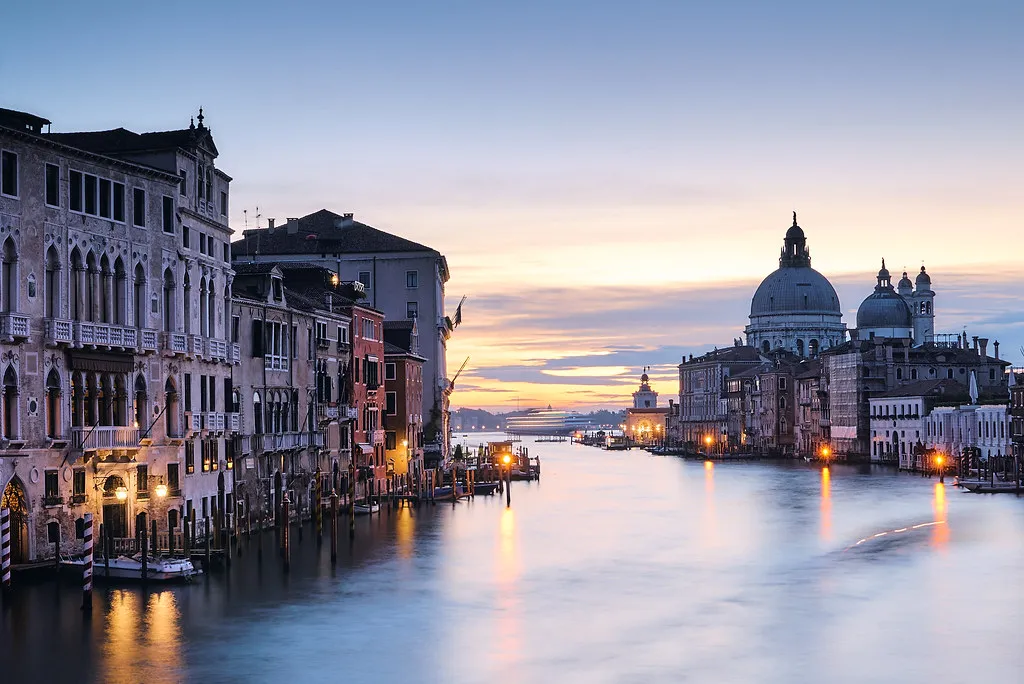
The real draw for early risers is the Pescherie — the fish market that operates on the western bank of the canal just north of the bridge. Tuesday through Saturday from 07:30 to 12:00, fishing boats moor directly alongside the market stalls and sell lagoon-caught fish, clams, and crabs directly to restaurant buyers and locals. The atmosphere is loud, chaotic, and completely authentic: this is where Venice feeds itself. The adjacent Erberia vegetable market runs alongside it.
The Pescherie fish market runs Tuesday through Saturday, 07:30–12:00. Arrive before 08:30 for the full atmosphere when fishing boats are still moored alongside. The Rialto Bridge is equally magical after 20:00 when day-trippers have gone and the lantern reflections fill the canal.
Come back to the bridge after 20:00 when the day-trip crowds have gone and the Grand Canal is lit by lanterns reflecting on the water. The perspective from the bridge at night is wholly different from the daytime version — less iconic postcard, more genuinely beautiful.
Lista di Spagna and Strada Nuova
The long pedestrian route from Santa Lucia station through Lista di Spagna and into Strada Nuova is the city's main commercial artery and a legitimate free activity in its own right. The street is named Lista di Spagna because it once bordered the Spanish Embassy — the Republic of Venice marked embassy zones with a border of Istrian stone called a lista, granting diplomatic immunity within. The building that housed the embassy is now a hotel.
The walk covers roughly one kilometre and takes thirty minutes at an easy pace or easily an hour if you browse. You pass Campo San Geremia with its church housing the relics of Santa Lucia, then Palazzo Labia (now the RAI television headquarters), and eventually into the broader Strada Nuova toward Campo Santi Apostoli and the Rialto. There are bakeries, pasticcerie, and osterie the entire length of the route.
This is also the fastest way to reach the Jewish Ghetto: turn left immediately after crossing Ponte delle Guglie and follow the signs. The street gets busy by 11:00, but first thing in the morning it offers an uncrowded look at local Venetian daily life — residents shopping, schoolchildren heading out, delivery boats unloading at the canal edges.
La Passeggiata alle Zattere
The Zattere is a south-facing promenade along the Giudecca Canal in the Dorsoduro district, stretching roughly one kilometre from the Stazione Marittima to Punta della Dogana. It is where Venetians walk on Sunday afternoons, not tourists — which already makes it one of the better free experiences in the city. The canal here is wide enough to give a genuine sense of the lagoon's scale, and large cargo ships and ferries pass close enough to feel the wash.
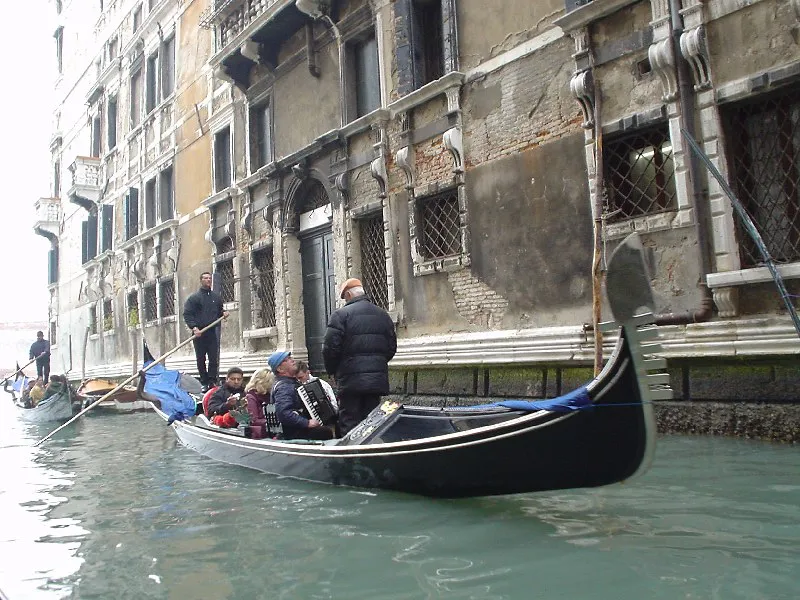
The walk is sunny almost all day due to its southward orientation, making it the warmest promenade in the city on clear winter days. In summer, it fills with locals enjoying the breeze. Stop at Nico, a long-standing gelateria near the Zattere vaporetto stop, for their gianduiotto — a frozen slab of chocolate-hazelnut ice cream plunged into freshly whipped cream — for around €3.
The Zattere connects naturally to the Salute at its eastern end and to the Accademia Bridge slightly further along. A free afternoon circuit — Accademia Bridge, Salute, Zattere, back via the Squero di San Trovaso (a rare surviving gondola boatyard visible from the fondamenta) — covers one of the most beautiful neighbourhoods in the city without any admission charges.
San Michele Cemetery Island
San Michele is Venice's cemetery island — a walled garden of cypress trees, marble monuments, and quiet paths ten minutes by vaporetto from the main city. It serves as the resting place for Igor Stravinsky, Ezra Pound, Joseph Brodsky, and Sergei Diaghilev, alongside thousands of ordinary Venetians. Entry is free. The island is genuinely serene and sees a fraction of the visitors who continue on to Murano at the next stop.
Take vaporetto Line 4.1 or 4.2 from Fondamente Nove — the crossing takes about five minutes. The cemetery is open daily from 07:30 to 18:00 (to 16:00 in winter). The church of San Michele in Isola, built in 1469 by Mauro Codussi and clad in white Istrian marble, is one of the earliest Renaissance churches in Venice and worth five minutes of attention before entering the cemetery grounds proper.
This is an active cemetery where Venetians visit family graves, often on Sunday mornings. Dress respectfully, keep your voice low, and do not photograph people at gravesites. The Protestant and Orthodox sections are toward the far end of the island and are where the famous foreign graves are concentrated. A visit here pairs naturally with the onward trip to the Venetian lagoon islands if you continue to Murano or Burano afterward.
Orsoni Colour Library
The Orsoni furnace in Cannaregio is the last working glass factory in Venice permitted to use open fire — a rare exemption in a city that relocated its glassmaking to Murano centuries ago specifically because of fire risk. The furnace produces smalto, the opaque glass mosaic tiles used in some of the world's most famous buildings: the Sagrada Família in Barcelona, the Sacré-Coeur in Paris, and the Basilica di San Marco itself.
The Colour Library — a room containing thousands of glass samples in subtly different shades arranged in an enormous visual grid — is one of the most striking spaces in Venice that almost no visitor ever sees. Entry requires a phone call or email in advance to confirm a free guided visit window (+39 041 2440002, orsoni.com). The furnace is at 1045 Corte dei Vedei, Cannaregio, near the Guglie vaporetto stop. Tours are free but slots fill quickly.
The visit typically lasts about forty-five minutes and includes a walkthrough of the workshop where craftspeople are often actively producing tiles. The combination of the molten glass, the smell of the furnace, and then the quiet visual complexity of the Colour Library makes this one of the most memorable free experiences in the city — and the one that almost no competing guide bothers to include logistics for.
Casino Venier
In the 18th century, Venice had more than one hundred casini — intimate private salons where the aristocracy gambled, flirted, and conducted the city's social life away from prying eyes. Giacomo Casanova was a regular at several of them. Casino Venier, dating to 1750, is one of the few that survives and can still be visited. It now operates as the premises of L'Alliance Française, the French Cultural Centre.
The entrance is through an unremarkable door at 4939 Ponte dei Bareteri in the San Marco district, with no grand sign to announce it. Walk up the ancient staircase and through the heavy door and the interior is startling: original marble floors, gilded stucco, frescoes, Murano glass mirrors, and peepholes built into the walls so that gamblers could check who was arriving before committing to be seen. The main salon is occasionally used for art exhibitions and cultural events, all free.
Opening hours are Monday through Friday, 09:00 to 13:00 and 15:00 to 18:00. The nearest vaporetto stop is Rialto. It is polite to acknowledge the staff at the entrance and state that you would like a brief look at the historic interior — they are welcoming but the space is a functioning cultural institution, not a museum.
I Gesuiti (Church of the Jesuits)
The Gesuiti — officially the Chiesa di Santa Maria Assunta — is in northern Cannaregio, far enough from San Marco that most day-trippers never reach it. Commissioned by the Jesuit Order in 1715, it is free to enter and contains one of the most disorienting visual effects in Baroque architecture: the entire interior is draped in what appears to be green and white damask fabric, cascading from the pulpit, pooling on the floor, sweeping across the walls. Touch a pillar and you realise the fabric is carved from solid inlaid green marble (verde antico) and white Carrara marble. The optical illusion is genuinely startling even when you know it is coming.
The main church contains paintings by Titian, including his Martyrdom of Saint Lawrence, and works by Tintoretto, who lived nearby in the same neighbourhood. The sacristy houses twenty paintings by Jacopo Palma il Giovane. Opening hours are daily 10:00 to 12:00 and 16:00 to 18:00. The nearest vaporetto stop is Fondamente Nove on lines 4.1, 4.2, or 5.1.
The Gesuiti sits on the edge of Cannaregio near the lagoon-facing waterfront — an area with almost no tourist infrastructure and a very local character. After the church, walk five minutes east along the fondamenta toward the Orto vaporetto stop and look for the Campo dei Mori, where three distinctive stone statues of Moorish traders stand at the corner of Tintoretto's former home. The exterior of the house and the statues are free to view.
| Free Site | Sestiere | Hours | Notes |
|---|---|---|---|
| Basilica di San Marco | San Marco | Mon–Sat 09:45–17:00; Sun 14:00–17:00 | Paid sections: museum €7, treasury €3 |
| Santa Maria della Salute | Dorsoduro | Daily 09:00–12:00 & 15:00–17:30 | Sacristy costs extra |
| I Gesuiti | Cannaregio | Daily 10:00–12:00 & 16:00–18:00 | Free marble interior |
| San Michele Cemetery | Lagoon island | Daily 07:30–18:00 (16:00 winter) | 5 min by Line 4.1/4.2 |
| Orsoni Colour Library | Cannaregio | By appointment | Free; book by phone/email |
| Jewish Ghetto (exterior) | Cannaregio | Open 24h | Museum €8, synagogue tours extra |
| Scala Contarini del Bovolo | San Marco | Daily 10:00–18:00 | Courtyard free; stairs €7 |
The 2026 Day-Tripper Fee: What Budget Travelers Need to Know
Venice introduced a day-access fee — €5 per person — that applies on designated peak days throughout 2026, primarily spring and early summer weekends and national holidays. No competitor guide in this SERP adequately explains the exemptions, which matter significantly for budget travelers. If you hold a valid hotel booking anywhere in the historic centre (including the islands), you receive an exemption QR code from your accommodation. Students enrolled in Venice institutions, residents, and commuters are also exempt.
The fee is checked at the main entry points: Piazzale Roma (bus terminal), Santa Lucia train station, and the Tronchetto car park. It does not affect your movement once inside the city. Day-tripper peak days in 2026 are published monthly on the official Venice access fee portal. If you are visiting on a non-peak day — which includes most weekdays and many weekends outside spring — no fee applies at all.
For a true free day in Venice, combine a non-peak weekday arrival, the walking routes in this guide, and the free Venice free walking tour that departs from Campo San Geremia each morning. Add the traghetto crossing (€2) at one of the six Grand Canal ferry points — these large gondolas carry standing passengers across the canal at spots without bridges and give a genuine on-the-water experience without the €90 gondola price tag.
Frequently Asked Questions
Is the Basilica di San Marco really free to enter?
Yes, entry to the main part of the Basilica is free for worshippers and tourists. However, you must pay small fees to see the museum, the treasury, or the golden altarpiece. Be sure to dress modestly with shoulders and knees covered to gain entry.
What is the best free view of the Venice skyline?
The best free view is from the rooftop terrace of the Fondaco dei Tedeschi near the Rialto Bridge. While entry is free, you must book a time slot online in advance. Alternatively, the waterfront at the Zattere offers stunning views of the Giudecca Canal for free.
Are there any free museums in Venice?
While most major museums have entry fees, many churches like Santa Maria della Salute and I Gesuiti act as free art galleries. Additionally, the Orsoni Colour Library and various cultural centers like Casino Venier offer free glimpses into Venetian history and craftsmanship.
Venice remains a testament to human creativity and resilience, and much of its beauty is available to everyone. By focusing on these twelve free things to do, you can experience the city's grandeur without the financial stress. Whether you are admiring the mosaics of San Marco or wandering the quiet streets of the Ghetto, the memories will be priceless. For more inspiration on planning your trip, explore our guide to traveling in Italy.
Pack your most comfortable walking shoes and prepare to be enchanted by the labyrinth of the lagoon. The best version of Venice is the one you discover on your own terms, one bridge at a time.
Use our hidden gems in Venice hub to plan the rest of your off-the-beaten-path trip.
Continue exploring
More guides you'll find useful