Rome at Night: The Ultimate Guide to the Eternal City (2026)
Discover the best things to do in Rome at night, from illuminated landmarks and night tours to hidden gems and authentic dining. Plan your 2026 trip now.
On this page
12 Magical Things to Do in Rome at Night
After five visits to the Eternal City, I have realized that Rome only truly breathes once the sun sets. The daytime heat fades, the aggressive crowds thin out, and the yellow streetlights cast a cinematic glow over ancient stone. Walking these streets at midnight feels like stepping onto a film set where history is still very much alive.
This guide covers the best things to do in Rome at night in 2026, from illuminated ancient monuments and after-hours museum access to midnight walks, authentic food districts, and practical logistics. Whether you want a silent walk past the Pantheon or a lively dinner in Testaccio, Rome delivers after dark in ways the daytime simply cannot.
Must-See Rome Attractions at Night: Ancient Rome Without the Chaos
The city's most famous landmarks are genuinely better at night. The daytime crowds at the Colosseum, Trevi Fountain, and Pantheon can make these places feel like airports. After dark, the same stones become yours — quiet, golden, and properly majestic.

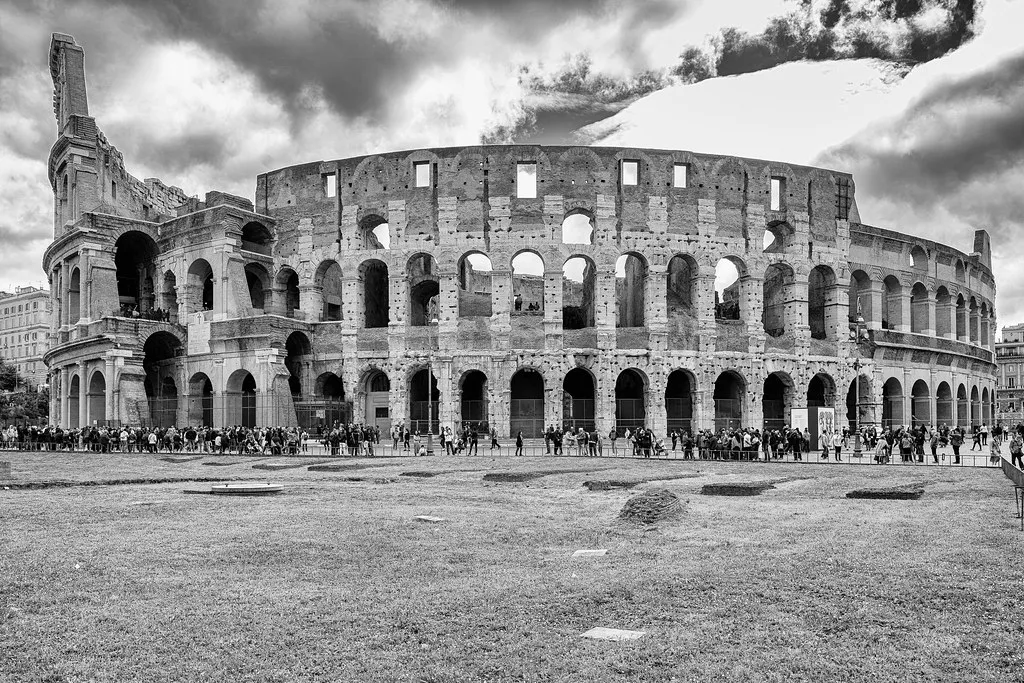
The Colosseum lit under floodlights is one of the most arresting sights in Europe. The endless rows of arches glow amber against the dark sky, and the open piazza in front fills with photographers rather than tour-group flags. You can admire the exterior for free from the street, or book a Rome Colosseum At Night Tour: Booking Guide & What to Expect for access to the arena floor and underground levels. Night tours typically run April through December on select evenings, starting around 20:00, and cost between €75 and €110. Book at least three weeks ahead — they sell out.
The Trevi Fountain is best visited between 23:00 and 02:00 when the tourist shops close and the sound of water fills the quiet square. At this hour it is free with no booking — a completely different experience from the afternoon crowds.
The Trevi Fountain is at its best between 23:00 and 02:00. The tourist shops close, the light turns a deep amber, and the sound of water fills the narrow square without the overlay of selfie-stick vendors. Visiting at this hour costs nothing and requires no booking. The Pantheon exterior is equally striking — the massive granite columns are floodlit until late, and the Piazza della Rotonda fills with locals eating gelato on the fountain steps. The interior closes at 19:00, but the temple's true scale is best felt from outside at night anyway.
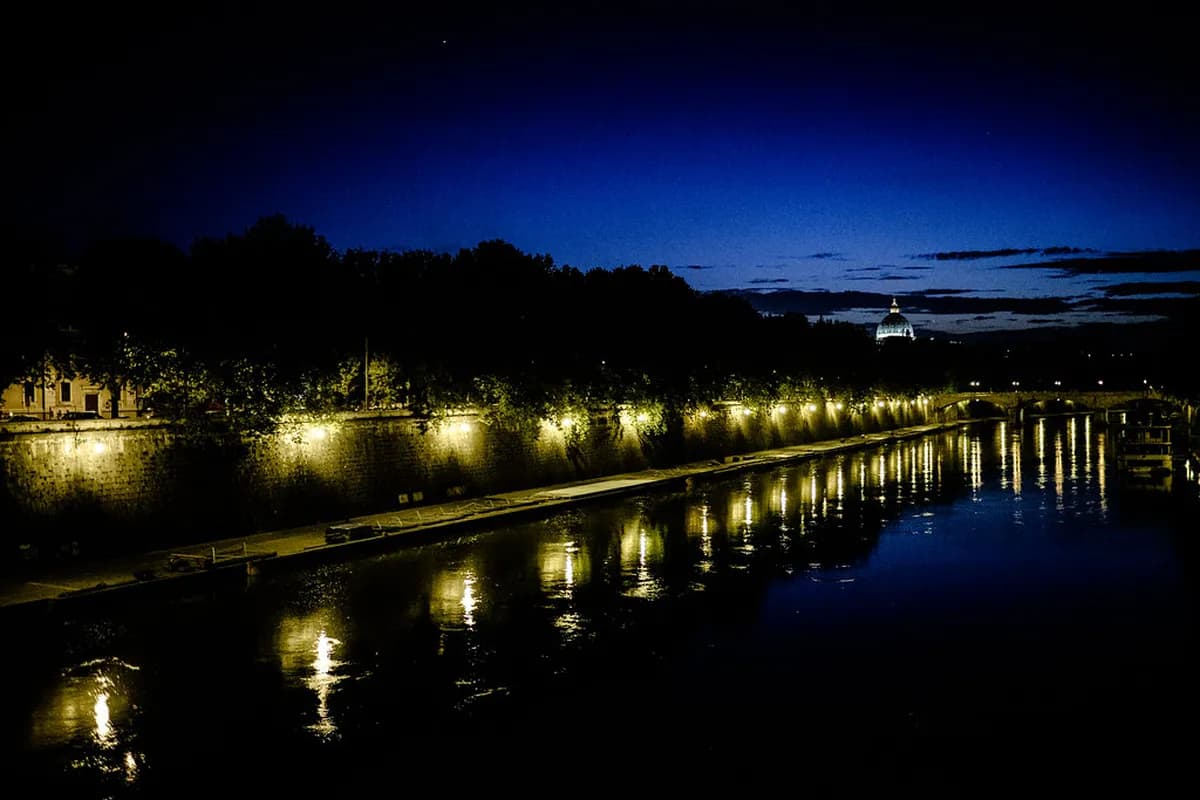
Castel Sant'Angelo earns a dedicated evening visit. The fortress sits on the Tiber with a clear sightline to St. Peter's illuminated dome, and the Ponte Sant'Angelo — lined with Bernini's marble angels — makes for exceptional night photography. During summer months the castle hosts 'Notti d'Estate' events with extended hours and live performances. Standard entry is €15 to €20; check the official site for evening programme dates.
The Vatican After Hours: Museums and Sistine Chapel at Night
The Vatican Museums run evening access on select Friday and Saturday nights from April to October. During these sessions, the Sistine Chapel and the gallery corridors feel closer to a private viewing than a transit hub. The usual crowd noise drops to a murmur, and you can actually stop and look at things. Tickets cost €30 to €50 and entry slots begin at 19:00, closing at 22:00 or later.
St. Peter's Square stays open and freely accessible all night. After the basilica closes and the day visitors disperse, the square takes on an almost surreal calm. Bernini's twin colonnades frame the floodlit facade of the world's largest church, and the two Renaissance fountains splash in empty air. If you arrive around 22:00 on a weekday, you may have the entire square to yourself for several minutes — an extraordinary thing in one of Rome's busiest spots.
Dress code applies even for evening museum visits: covered shoulders and knees. On warm summer evenings, carry a light scarf to comply rather than being turned away at the gate. The Ottaviano metro stop (line A) delivers you directly to the Vatican; last trains run at 23:30 on weekdays and 01:30 on Fridays and Saturdays.
The Midnight Walk: Pantheon, Trevi, and the Spanish Steps
Rome's most walkable night itinerary is a roughly 2.5-kilometre loop through the historic centre that connects three of the city's great monuments. Start at Piazza della Rotonda (the Pantheon) around 22:00, walk east through the narrow Via delle Coppelle, and reach the Trevi Fountain by 22:30 when the late crowd is beginning to thin. From Trevi, walk north up Via Condotti to reach the Spanish Steps by 23:15.
Each stop has a distinct character. The Pantheon square is sociable and loud until midnight — cafes stay open, and musicians sometimes play near the fountain. The route between Pantheon and Trevi passes through some of Rome's darkest and most cinematic alleys: uneven basalt paving, shuttered palaces, and the occasional lit-up courtyard glimpsed through an open gate. The Trevi Fountain itself hits its photographic peak during the 'Blue Hour,' roughly 20 to 40 minutes after sunset, when the remaining sky balances against the warm artificial light for the ideal long-exposure shot.
The Spanish Steps after midnight are often completely empty. Pietro Bernini's boat fountain trickles quietly at the base, and the twin-towered church of Santa Trinità dei Monti anchors the top of the staircase against the sky. Sit at the top for the view down Via Condotti toward the lit shopfronts — one of the most genuinely cinematic vistas in the city. The whole loop takes about 90 minutes at a relaxed pace and costs nothing.
Parks, Gardens, and Elevated Viewpoints After Dark
The Janiculum Hill (Gianicolo) offers the broadest panorama of Rome at night. The terrace above Trastevere takes in dozens of illuminated domes stretching from the Vittoriano to the distant hills. It is free, open all hours, and far less visited in the evening than the more central viewpoints. Bus 115 runs to the top; alternatively, the uphill walk from Trastevere takes about 20 minutes and passes through quiet residential streets.
The Aventine Hill provides a completely different mood. The Orange Garden (Giardino degli Aranci) faces west toward St. Peter's and is perfumed by its namesake trees. The adjoining piazza holds the famous Aventine Keyhole — a tiny brass keyhole in the Knights of Malta priory gate through which the illuminated dome of St. Peter's appears perfectly framed at the end of a dark tunnel of cypress hedges. At night, with no queue and the dome brilliantly lit, the effect is even more striking than during the day. The site is free and accessible at all hours; the Circo Massimo metro stop (line B) is a 15-minute walk away.
During summer months, Trastevere and Villa Borghese host the 'Cinema in Piazza' series: giant screens in historic squares showing classic films after dark. Many screenings are free on a first-come basis and begin around 21:00. Look for listings at open-air cinemas for the current year's schedule. The Forum of Augustus also hosts seasonal light shows that use projection mapping to reconstruct ancient buildings against the surviving ruins — these run summer evenings and require a separate advance ticket.
Family-Friendly and Budget-Friendly Night Options
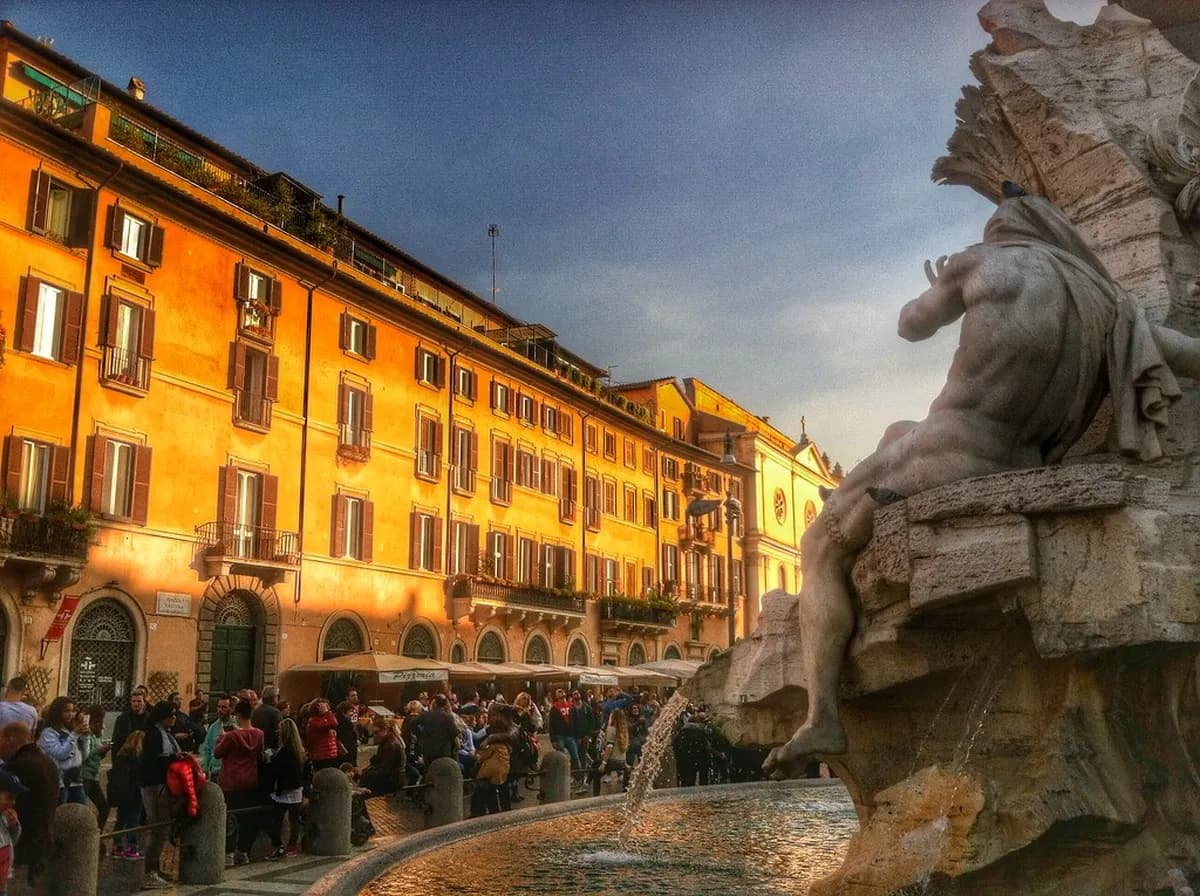
Rome's most compelling night experiences cost very little. The Trevi Fountain, Pantheon exterior, Piazza Navona, and the Aventine Keyhole are all free and suitable for any age. Piazza Navona is one of the best 13 Best Free Things to Do in Rome: Budget Travel Guide — Bernini's three fountains are lit beautifully, street performers and live musicians entertain until midnight, and the surrounding bars and gelato shops cater to families and adults alike.
Ghost and mystery walking tours are excellent for older children and teens. These tours run for about 90 minutes through the alleys around Campo de' Fiori and the Tiber bridges, uncovering the darker legends embedded in the city's history. Group tours typically cost €25 to €35 per adult, with reduced prices for children. Most depart at 20:00 or 21:00 from Piazza Farnese — wear comfortable shoes, as the cobblestones are uneven in very dim lighting.
Gelato after dinner is a Roman institution, not a tourist affectation. Gelaterie stay open until midnight or later across the centre. Skip the brightly lit shops directly adjacent to major monuments and walk one or two streets off-centre for better quality at lower prices. Budget roughly €2.50 to €4 per cone. The Nasoni — Rome's small cast-iron street fountains — provide free cold drinking water at any hour; there are hundreds throughout the city and the Pro-Loco app maps the nearest one if you are far from the main squares.
Eating Like Romans Do at Night: Testaccio vs. Trastevere
Trastevere is Rome's most famous evening dining district and for good reason — the medieval streets are beautiful and the restaurant density is high. But it is also the most tourist-saturated neighbourhood in the city, and prices have climbed accordingly. A full dinner in a mid-range Trastevere trattoria will run €35 to €55 per person in 2026. Avoid the main Piazza di Santa Maria in Trastevere for food; the side streets to the south and east are markedly better value and more local in character.
Every Roman restaurant table incurs a coperto (cover charge) of €2–4 per person — it is not optional and not a scam. Standing at the bar for a coffee or quick drink never carries this charge.

Testaccio is where Romans who know better actually eat at night. Built around the city's former slaughterhouse (now a contemporary art museum), this working-class neighbourhood south of the Aventine Hill has the highest concentration of genuine Roman cooking in the city — offal dishes, cacio e pepe that pre-dates the tourist boom, and wine lists without a markup for ambiance. Dinner here runs €20 to €35 per person. The neighbourhood is quiet after 23:00 and easy to navigate. Take metro line B to Piramide and walk five minutes into the residential grid.
Wherever you eat, dinner does not begin before 20:00 by Roman standards. Most kitchens open at 19:30 and remain at half-capacity until 21:00. Before that, participate in aperitivo: order a Campari Spritz or Aperol at a standing bar between 18:00 and 20:00 and you will typically receive a small plate of olives, cured meats, and cheese at no extra charge. Campo de' Fiori is the most animated aperitivo spot in the centre, transitioning seamlessly from afternoon market into evening bar scene as the produce stalls fold up and chairs spill out onto the cobbles.
A note on the 'coperto': sitting at a table in any Roman restaurant incurs a cover charge, usually €2 to €4 per person. It is not optional and not a scam — it is simply part of the bill. Standing at the bar for a coffee or a quick drink never carries this charge.
Hidden Gems and Quiet Corners: Where Romans Hide at Night
When the main thoroughfares feel too busy, locals retreat to the 18 Hidden Gems in Rome: The Ultimate Guide that offer peace. The Aventine Hill is a prime example, providing a residential silence that feels miles away from the Colosseum. Walking through the Orange Garden at night offers a scented, quiet path with a stunning view of the Vatican.
The Coppedè district, located slightly north of the historical centre near Piazza Buenos Aires, is worth the detour for architecture enthusiasts. Designed by Gino Coppedè in the 1920s, the quarter blends Art Nouveau, Baroque, and Medieval flourishes into a neighbourhood that looks faintly surreal under streetlights. The central Frog Fountain is a masterpiece of eccentric detail that almost no tourist visits after dark. At night the nearby offices empty out and the district becomes a quiet open-air museum you can wander through at will.
Navigating these quieter areas requires planning. Trams and buses run less frequently after 23:00, so many locals rely on taxi apps like FreeNow or Uber, both of which operate legally in Rome. Walking is often the best option if you are staying in the centre — distances between major sites are shorter than most maps suggest, and Rome's historic core is remarkably safe at night for pedestrians who stick to well-lit streets.
Vibrant Local Culture at Night: Romans Being Romans
The concept of the 'piazza' is central to Italian life, serving as the city's collective living room after dark. Observing the local social rituals is just as rewarding as seeing the monuments themselves. As When in Rome, do as the Romans do applies above all to the evening stroll — slow, purposeful, dressed up slightly even for a simple gelato run.
Campo de' Fiori provides the most vivid example of this cultural transition from day to night. The morning vegetable market stalls collapse by early afternoon, and by evening chairs and tables surround the statue of Giordano Bruno. Bars serve cocktails and house wine to a mix of students and travellers; expect to pay €8 to €12 per drink. The energy runs high from 22:00 until 02:00 on most nights. Note that the square is noisier and younger in character than the more refined Piazza Navona nearby — both are worth an hour each at different points in the evening.
Jazz clubs are an underrated corner of Roman nightlife. Alexanderplatz in Prati has operated for decades and hosts live performances from local and international musicians. The audience skews local and the quality is consistently high. Tickets typically run €10 to €20 depending on the act. Rome's nightlife is not centred on clubs in the way that Berlin or Barcelona's is; the city's real evening culture is outdoor, piazza-based, and conversation-driven.
Book Your Rome Night Experience
Several of Rome's best night experiences require advance booking. The Colosseum night tour and Vatican evening access both sell out weeks ahead in high season (May through September). Ghost tours, cooking classes, and Vespa night tours can usually be secured a few days out. For spontaneous plans, free options — Trevi, Pantheon exterior, Piazza Navona, Janiculum Hill — need no booking at all.
| Night Experience | Cost | Best Time | Book Ahead |
|---|---|---|---|
| Colosseum night tour | €75–110 | From 20:00 (Apr–Dec) | 3+ weeks |
| Vatican Museums evening access | €30–50 | 19:00–22:00 (select Fri/Sat) | Weeks ahead |
| Ghost / mystery walking tour | €25–35 | Depart 20:00–21:00 | Few days out |
| Trevi Fountain | Free | 23:00–02:00 | None |
| Aventine Keyhole | Free | After dark (lit dome) | None |
| Janiculum Hill panorama | Free | After 21:00 | None |
When choosing a tour operator, look for small-group sizes (under 15 people) and guides who are licensed in Rome. Larger operators sometimes pack 30 or more visitors into a single night tour, which undermines the quiet atmosphere that makes the evening experience worthwhile. For the Colosseum specifically, the underground levels are only accessible on night tours — not the standard daytime ticket — which makes the premium worth paying.
For a broader Rome trip overview including where to stay near these night-time hubs, see our 12 Beautiful Places in Rome to Visit guide and the full Trastevere neighbourhood guide.
Practical Tips: Making Night Rome Work for You
Photography timing matters. The 'Blue Hour' falls roughly 20 to 40 minutes after sunset — around 21:00 to 21:30 in summer — when the sky retains a deep indigo that balances against the warm amber of Rome's streetlights. The Spanish Steps, Castel Sant'Angelo bridge, and Ponte Garibaldi (looking back toward Ponte Sisto and the dome of St. Peter's) all reward arriving at this precise window. After 22:00 the sky is fully dark, which produces different but equally striking compositions for long-exposure work.
The Metro runs until 23:30 on weekdays and 01:30 on Fridays and Saturdays. After those hours, night buses marked with an 'N' prefix cover the main routes. Taxis from official white-car stands are metered and safe; FreeNow and Uber also operate and can be booked via app without negotiating a fare. Walking is realistic for most of the historic centre — the distance from the Pantheon to the Colosseum, for instance, is under 30 minutes on foot.
Dress practically for summer evenings: temperatures after 22:00 remain warm (20°C to 25°C in July and August), but bring a light layer for late-night Tiber-side walks where the air is cooler. Comfortable flat shoes are non-negotiable on Rome's basalt cobblestones, which are beautiful but genuinely treacherous in heels. The Nasoni street fountains throughout the city provide free cold drinking water around the clock — useful for staying hydrated without buying bottled water at inflated tourist-area prices.
Frequently Asked Questions
Is Rome safe to walk around at night?
Rome is generally very safe for walking at night, especially in the historic center and popular neighborhoods like Trastevere. Travelers should remain aware of their surroundings and keep an eye on personal belongings in crowded areas. Stick to well-lit main streets when walking between major landmarks.
How do I get around Rome after the Metro closes?
The Metro usually closes at 11:30 PM on weekdays and 1:30 AM on Fridays and Saturdays. After these hours, an extensive network of night buses marked with an 'N' takes over. Alternatively, you can use official taxi stands or the FreeNow app to book a ride safely.
Do I need to book night tours in advance?
Yes, booking in advance is highly recommended for popular evening experiences like the Colosseum or Vatican night tours. These events have limited capacity and often sell out weeks ahead of time. Free sites like the Trevi Fountain or Piazza Navona do not require any booking.
After Dark, and the Quiet Hours Elsewhere
Rome empties in a way few cities do once the day-trippers leave, which makes the late walk the best one. Munich's secret spots reward the same off-hours instinct. Before dinner, Palazzo Spada is worth twenty minutes for Borromini's forced-perspective colonnade alone.
Rome at night is a different city entirely, one that rewards those who stay out past the usual tourist hours. The combination of illuminated history and vibrant modern life creates an atmosphere that is impossible to replicate. By following these tips, you can experience the Eternal City with the depth and intimacy it deserves.
Whether you are peering through a secret keyhole or sharing a pizza in a loud piazza, the memories will last a lifetime. For more inspiration on planning your trip, explore our full Italy guide for the best seasonal advice. Enjoy the magic of the Roman night and the timeless beauty of the streets under the stars.
Continue exploring
More guides you'll find useful