12 Best Underground Rome Sites to Explore (2026)
Explore the hidden layers of the Eternal City. Our guide to underground Rome covers the Colosseum Hypogeum, San Clemente, catacombs, and high-tech Roman villas.
On this page
12 Best Underground Rome Sites to Explore (2026)
After my seventh visit to the Eternal City, I realized that the most fascinating parts of Rome aren't always at eye level. The city functions like a vertical lasagna, where centuries of floods, fires, and rebuilding have stacked modern streets directly on top of ancient ruins. Exploring these depths reveals a world of gladiator tunnels, pagan temples, and early Christian burial grounds that remain hidden from the casual stroller.
This guide covers the most evocative subterranean sites, from high-tech immersive villas to the raw, dusty silence of the catacombs, updated for 2026 to reflect current booking rules and pricing. Whether you are chasing 15 Unusual Things to Do in Rome: Hidden Gems and Secret Spots or serious historical depth, these sites offer a perspective that no street-level tour can match. Prepare to descend beneath the cobblestones to witness the incredible layers of civilization that define this ancient capital.
The Layer Cake History of Underground Rome
Walking through modern Rome means you are often standing nine metres above the ground level of the first century. The Tiber River flooded frequently in antiquity, depositing layers of silt that buried older structures and forced residents to build upward. Fires and the constant reuse of building materials further contributed to this vertical growth over three millennia, compressing different eras of the city into a single physical column.
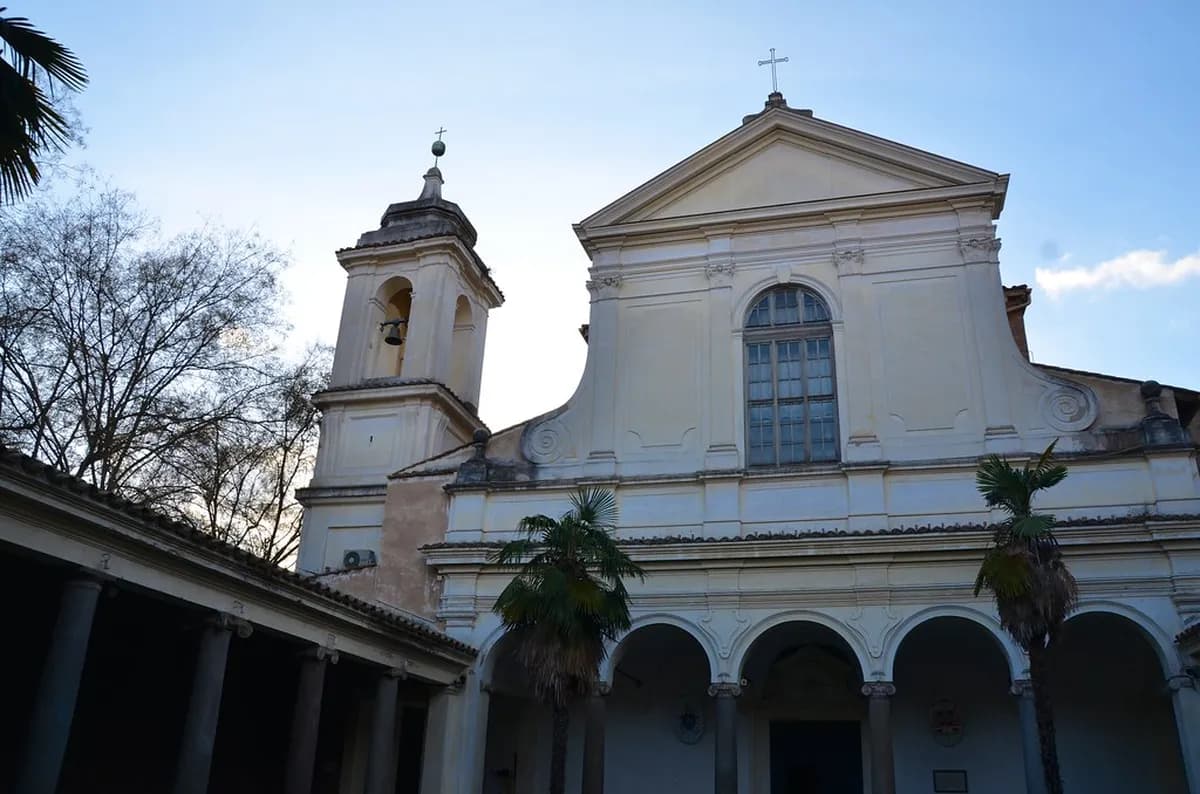
Archaeologists describe this phenomenon as "layers of civilization," where every basement renovation might uncover a masterpiece. You can see this most dramatically at the Basilica of San Clemente, where a 12th-century church sits directly above a 4th-century basilica, which in turn rests on a 1st-century Roman house and Mithraeum. The difference in ground level between the lowest layer and the modern street is nearly 18 metres.
Many of the deeper sites are managed by specialist groups like Sotterranei di Roma, whose members use GPS and 3D scanners to map tunnels that professional archaeologists have never entered. Understanding the full arc from the Roman Empire to the early Christian era is impossible without seeing these subterranean transitions in person. The damp, cool air of the underground provides a physical connection to the past that sun-drenched ruins above ground simply cannot replicate.
Must-See: The Colosseum Hypogeum and Basilica of San Clemente
These two sites are the best starting point for any underground Rome itinerary because they are centrally located, well-managed, and deliver the most dramatic sense of vertical history in the city.
The Colosseum Hypogeum is an ancient labyrinth of passageways, cells, and waiting rooms beneath the arena floor. At its peak, chambers held thousands of warriors preparing for combat above, while cages housed wild animals whose skulls and bones archaeologists have since identified as tigers, bears, and giraffes. Before recent access expansions, only about 30 percent of the Colosseum was open to visitors; now the full underground can be toured. Expect to pay €24–€32 for a full-access ticket. The site opens daily at 09:00 and closes one hour before sunset. Booking a Rome Colosseum At Night Tour: Booking Guide & What to Expect is the most effective way to experience the hypogeum without the daytime crush — evening access also allows photography with far better light conditions than at midday.
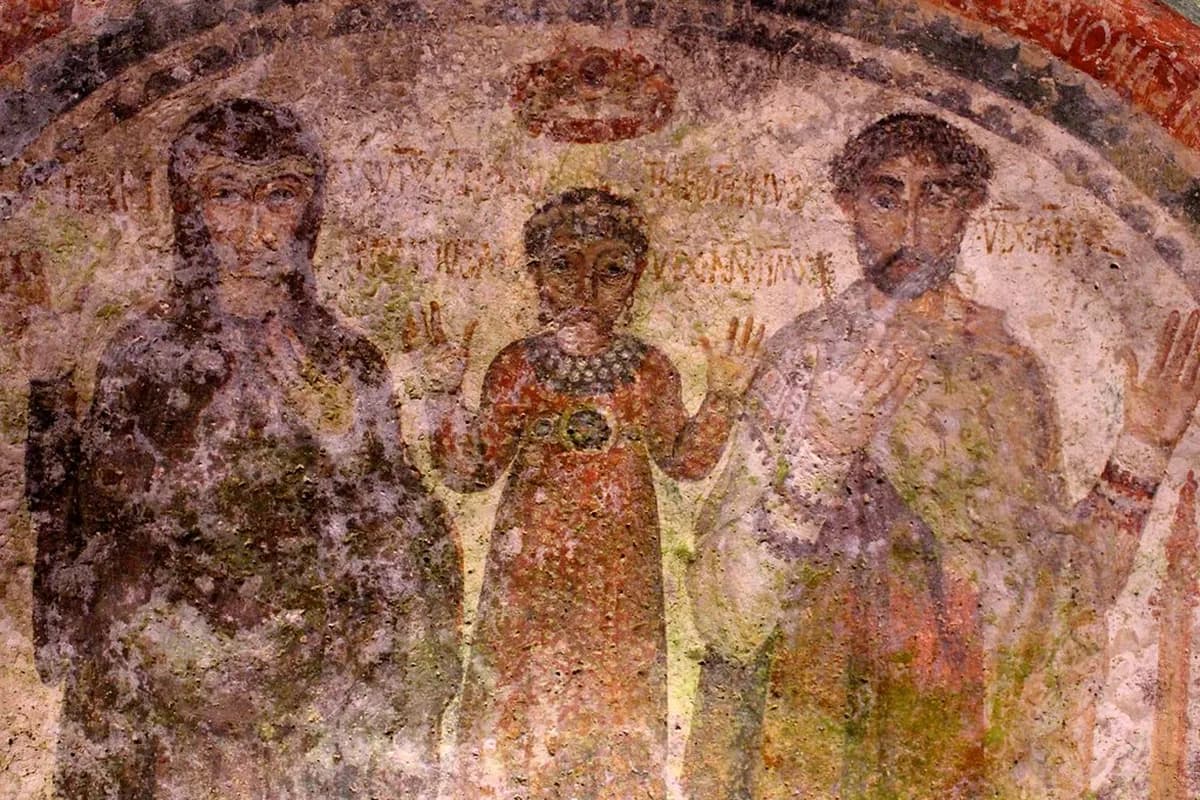
The Basilica of San Clemente is the ultimate example of Rome's layer-cake structure. The 12th-century church at street level was built over a 4th-century basilica, itself constructed over a 1st-century Roman house that contains one of the city's most intact Mithraea. Entry to the archaeological levels costs €10, with hours typically running 10:00–12:30 and 15:00–17:30. At the lowest level you can hear a lost Roman aqueduct still running underground — a detail that makes the site genuinely unforgettable. Note that the lower levels involve steep stone steps with no handrail on one side, so take care if you have limited mobility.
High-Tech History: Domus Romane di Palazzo Valentini
Not every underground Rome experience involves scrambling through narrow passages by torchlight. At the Domus Romane di Palazzo Valentini, the archaeological remains of two opulent Imperial-era villas sit beneath a 16th-century palazzo near Trajan's Column. The site uses high-definition light projections and glass floor panels to reconstruct the mosaics, marble columns, and heated bathing pools as they appeared in the second century AD. The effect is genuinely stunning, particularly for visitors who struggle to visualize what dusty foundations actually looked like when they were inhabited.

Tickets cost around €12 per person. The site is open daily from 09:00 to 19:00, with the important exception of Tuesdays when it closes. Timed entry slots fill quickly on weekends and during spring peak season, so book at least a week in advance via the official site. The multimedia show runs on a fixed schedule — arrive ten minutes early or you will wait for the next session.
This site pairs well with a visit to the Crypta Balbi, the overlooked National Roman Museum annex a ten-minute walk away on Via delle Botteghe Oscure. The Crypta Balbi descends 12 metres from the modern street into the ruins of the Theater of Balbus from 13 BC and offers perhaps the clearest cross-section of Rome's urban archaeology from antiquity through the Middle Ages — without the crowds you will find at Palazzo Valentini.
The City of the Dead: Catacombs and the Capuchin Crypt
Rome has 63 known catacombs, and only four are open to the public. First-century Christians could not bury their dead in pagan cemeteries, so they excavated these tunnels in volcanic tuff on Christian-owned land outside the city walls. The network is staggering: the Domitilla Catacombs alone stretch over 15 kilometres of underground passages across four levels, and they are the only catacombs that still house bones in situ.
The Catacombs of San Callisto are the largest and most historically significant, serving as the official burial site of the early Church and containing the crypts of several popes. Tours cost €10 per adult and run from 09:00 to 12:00 and 14:00 to 17:00, except Wednesdays. The Catacombs of San Sebastiano are notable for their pagan basement featuring Medusa frescoes — a striking reminder that early Christian and Roman belief systems coexisted in the same physical spaces. Both sit along the Via Appia Antica, so you can combine them in a single half-day on the ancient road.
The Capuchin Crypt beneath Santa Maria della Concezione near the Barberini metro stop is a different kind of underground experience entirely. The remains of nearly 4,000 friars are arranged in artistic and deeply unsettling displays covering walls and ceilings floor to ceiling. This was not intended as morbid spectacle; for Capuchin monks, the arrangement was a meditation on mortality. General admission is €10, and the museum is open daily from 10:00 to 19:00. Photography is strictly prohibited — staff enforce this at the entrance, not as an afterthought inside.
Underground Rome stays at a constant 15°C year-round regardless of the season above. Bring a light layer even in August — the shift from Rome's summer heat to the damp vaults can feel jarring. Religious sites such as the catacombs and San Clemente also require covered shoulders and knees.
Hidden Water: Ancient Aqueducts and Vicus Caprarius
Between 312 BC and AD 226, Rome's engineers built 11 extraordinary aqueducts, the vast bulk of whose routes ran underground, engineered at a precise decline to use gravity to move water across tens of kilometres. When the Goths besieged Rome in AD 537 they cut ten of these channels, and the tunnels have been dry ever since — though Sotterranei di Roma members continue to map them with GPS and 3D scanners in sections that have seen no human presence for 1,500 years.
For travelers who want the aqueduct experience without an expedition permit, Vicus Caprarius — the City of Water — delivers it centrally. Hidden beneath a cinema near the Trevi Fountain, this site reveals the ancient Aqua Virgo aqueduct, built in 19 BC, with water still running through the original pipes. Entry costs just €4 per person, and the site is open Tuesday through Sunday from 11:00 to 17:00. Because Vicus Caprarius sits directly beneath the Trevi Fountain, the surrounding streets operate on a managed one-way pedestrian flow system introduced in 2026 — allow extra time to navigate the crowd-controlled access points above before your visit.
The water connection between the underground site and the famous fountain above is genuinely useful for explaining to children why the Trevi Fountain works at all. A brief stop here before climbing to the fountain itself reframes the whole experience. Those interested in the full aqueduct network should also visit the Park of the Aqueducts (Parco degli Acquedotti) in the city's southeast, where six aqueducts converge above ground in a single dramatic view — one of the most underrated photographic spots in Rome.
Why So Many Mithraea: The Underground Cult That Rivals Early Christianity
Rome has more than 100 known Mithraea — underground sanctuaries dedicated to the Persian mystery cult of Mithras — and most have never been excavated. No other city in the Roman Empire comes close to this density. Understanding why they are underground, and why they are so numerous, is key to understanding what Roman religious life actually looked like before Christianity became the official faith in the 4th century.
The cult of Mithras arrived in Rome from Persia in the 1st century AD and spread almost exclusively through the military and merchant classes. Initiates met in small, cellar-like rooms called Mithraea, deliberately built to resemble caves as a symbolic reference to the cosmic movements of the planets. Membership was hierarchical and secretive, with seven ranks of initiation. Women were excluded entirely. Because Roman apartments and warehouses had extensive basements and substructures, Mithraea were tucked into whatever underground space was available — beneath private homes, below military barracks, under public baths.
Christian authorities suppressed the cult decisively in the late 4th century. Many Mithraea were physically sealed, filled with rubble, or built over with churches — which is exactly why so many have survived intact underground while the Christian churches above have been altered beyond recognition. The most accessible for visitors are the Mithraeum of the Circus Maximus, with its remarkably intact altar showing Mithras slaying a bull (visit by appointment or seasonal guided tour, around €5), and the Mithraeum at the lowest level of San Clemente. The Palazzo Barberini and Santo Stefano Rotondo also have Mithraea that open on rotation via Rome's Special Superintendence of Archaeology — check schedules at least two weeks in advance as access is limited to small groups.
Speleo-Archaeology: Rome's Wildest Subterranean Sites
Beyond the managed tourist sites, a network of self-taught speleo-archaeologists has mapped corners of underground Rome that professional institutions lack the budget or appetite to explore. Sotterranei di Roma, founded in 2000 and now with over 2,000 members, organizes weekend walks and mountain bike rides through 22 miles of tunnels beneath Caffarella Park near the ancient Appian Way. The tunnels were originally quarried for tuff — the volcanic rock used as an ingredient for Roman concrete — and were later connected to early Christian catacombs above.
The Aqua Anio Vetus aqueduct, built beginning in 272 BC and dry since AD 537, is perhaps the most dramatic of these off-map experiences. Reaching it requires hiking through tall grass in the Roman Campagna with hard hats and headlamps, locating the access shaft (marked by Augustus-era stone pillars called cippi), and descending a portable ladder 8 metres into a smooth stone corridor sealed from the surface for fifteen centuries. The experience is guided exclusively by Sotterranei di Roma members and is not bookable online — contact the association directly via their website to join a scheduled expedition.
A more accessible wild site is the hidden lakes beneath the Temple of Claudius on the Caelian Hill, organized by Roma Sotterranea. Rainwater filtered through 10 metres of volcanic stone fills two small caverns with biologically pure, eerily clear water only a few hundred metres from the Colosseum. Entry requires a minimum group fee of approximately €40 arranged by phone — the site does not appear on any standard booking platform. These experiences suit travelers who have already seen the mainstream underground sites and are hunting for a genuine sense of discovery in one of the world's most heavily visited cities.
Budget-Friendly and Family-Friendly Underground Options
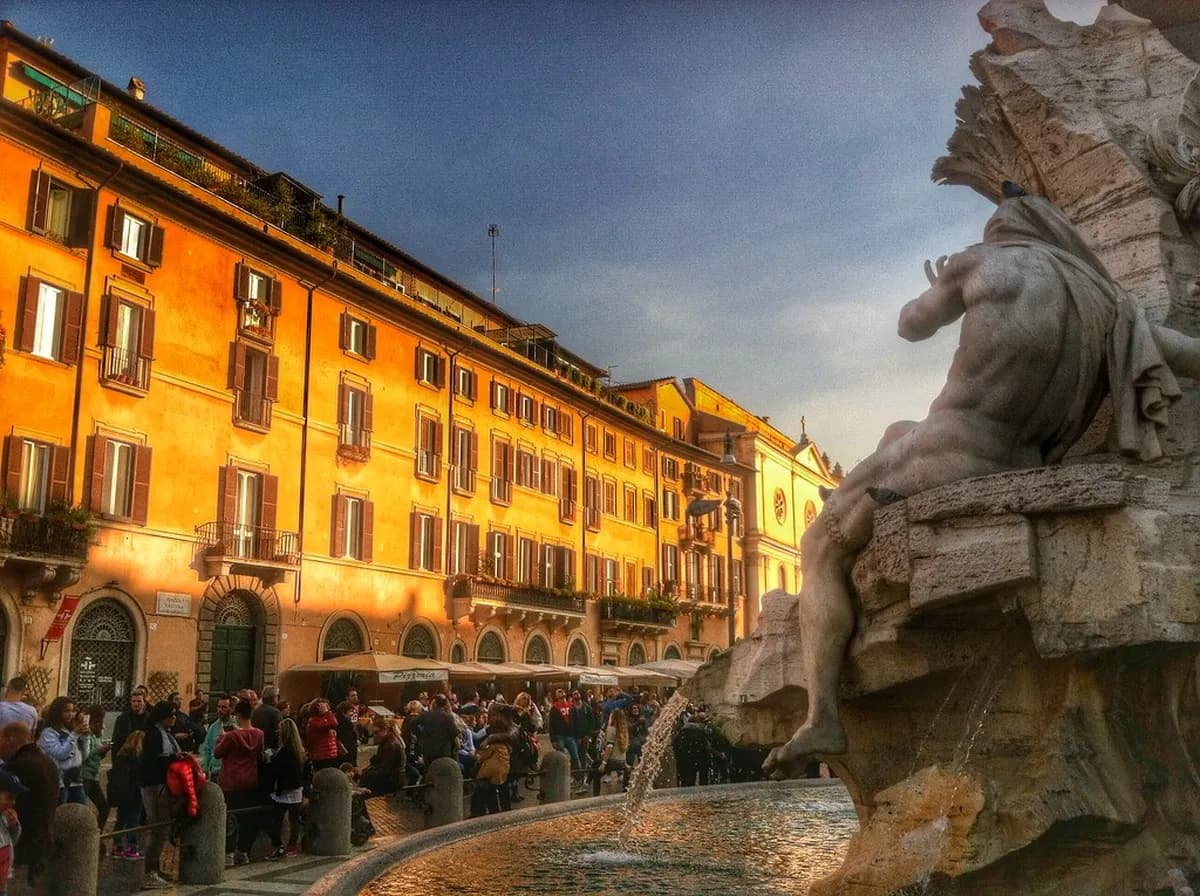
Several underground sites charge very little or nothing at all and still deliver a meaningful experience. Vicus Caprarius at €4 is the best value in the city centre. The Baths of Diocletian ruins are visible through glass panels in the basement of the Anantara Palazzo Naiadi hotel at no charge — a genuinely surprising free stop that requires nothing more than walking into a hotel lobby. The Stadium of Domitian beneath Piazza Navona costs €9 and is one of the most accessible underground sites for visitors with limited mobility, offering wide passages and a lift.
For families, the Stadium of Domitian and Palazzo Valentini are the strongest choices. The stadium is spacious and easy to navigate for children, while Palazzo Valentini's light projections turn Roman history into a visual show that holds attention across ages. Vicus Caprarius works well too — children enjoy seeing where the Trevi Fountain's water originates and can spot ancient coins in the pools below. The catacombs can be challenging for very young children or those prone to claustrophobia: passages are narrow, and the required quiet and respect is difficult for toddlers. If you are traveling with a stroller, most underground sites are inaccessible — plan on a baby carrier for the day. For more options that won't strain a budget, see the list of 13 Best Free Things to Do in Rome: Budget Travel Guide.
How to Plan a Smooth Underground Rome Day
Many underground sites have midday closures, so timing matters. A practical sequence: catacombs along the Via Appia Antica in the morning (first slot, 09:00, to avoid crowds and summer humidity), lunch in Testaccio, then an afternoon at Palazzo Valentini or San Clemente. Check the specific closing day for each site before planning — they rarely align across the different archaeological zones, and a Tuesday itinerary looks very different from a Wednesday one.
Temperature underground stays a constant 15°C regardless of summer heat above. Bring a light layer even in August — the shift from 35°C street heat to the damp vaults can be jarring, and religious sites like the catacombs or San Clemente require covered shoulders and knees. A large cotton scarf in your daypack covers dress codes without overheating between sites.
Booking in advance is non-negotiable for the Colosseum Hypogeum and the Domus Aurea. Both sell out weeks ahead, particularly on weekends in spring and autumn. The Domus Aurea is currently open only on Saturdays and Sundays while active excavations continue; guided tours cost approximately €15 and include a virtual reality headset experience showing Nero's original gilded interior. If you arrive in Rome without bookings, Case Romane del Celio (€8, open 10:00–18:00 except Tuesdays and Wednesdays) usually has walk-in availability and rewards the effort with intact frescoes spanning several centuries. If your schedule includes the Colosseum, consider adding a Rome Colosseum At Night Tour: Booking Guide & What to Expect for the hypogeum and arena floor together — after-hours access removes the daytime crowds entirely.
The Colosseum Hypogeum and the Domus Aurea sell out weeks in advance, especially on spring and autumn weekends. Book as soon as your dates are confirmed — arriving without a reservation means no entry. The Domus Aurea is also only open Saturdays and Sundays while active excavations continue.
| Site | Entry Fee | Hours | Closed On |
|---|---|---|---|
| Colosseum Hypogeum | €24–€32 | 09:00–1hr before sunset | Open daily |
| Basilica of San Clemente | €10 | 10:00–12:30, 15:00–17:30 | Sunday mornings |
| Domus Romane di Palazzo Valentini | €12 | 09:00–19:00 | Tuesday |
| Catacombs of San Callisto | €10 | 09:00–12:00, 14:00–17:00 | Wednesday |
| Capuchin Crypt | €10 | 10:00–19:00 | Open daily |
| Vicus Caprarius | €4 | 11:00–17:00 | Monday |
| Domus Aurea (VR tour) | €15 | Weekends only | Mon–Fri |
Frequently Asked Questions
Are the Roman catacombs claustrophobic?
Some visitors find the narrow corridors and low ceilings of the catacombs slightly confining. However, most main tour paths are wide enough for two people to pass comfortably. If you have severe claustrophobia, consider the Stadium of Domitian instead.
Which underground Rome options fit first-time visitors?
The Basilica of San Clemente and the Colosseum Hypogeum are the best choices for a first trip. They provide the most dramatic examples of Rome's vertical history. Both sites are centrally located and easy to integrate into a standard itinerary.
What is the dress code for underground sites?
Sites located beneath churches, like the catacombs or San Clemente, require modest dress covering shoulders and knees. This rule is strictly enforced by staff at the entrance. Bringing a light jacket is also recommended for the cool 15°C temperatures.
Other Cities With a Second Level
Rome is the definitive underground city, but the instinct to build over rather than clear away is not unique to it. Brussels's Coudenberg is a demolished palace walked through as basements. Copenhagen's Cisternerne put art into a Victorian reservoir. The clearest single demonstration here is Basilica di San Clemente, which descends through three centuries-deep layers to a Mithraic temple.
Descending into underground Rome is the only way to truly understand the sheer scale and complexity of the Eternal City. From the engineering marvels of the Roman aqueducts to the quiet devotion found in the catacombs, these sites offer a profound connection to the past. By following this guide, you can navigate the depths with confidence and discover the secrets that lie beneath the modern pavement.
If you are planning a longer stay, consider following a hidden Rome 3-day itinerary to see even more of these gems. Rome's history is not just a timeline, but a physical stack of stories waiting for you to explore them one level at a time.
Continue exploring
More guides you'll find useful