12 Beautiful Places in Rome to Visit (2026)
Discover the most beautiful places in Rome with our local guide. Includes timing tips, costs, and hidden gems for a perfect 2026 trip.
On this page
12 Most Beautiful Places in Rome
Walking through the Eternal City feels like moving through a living museum where every corner reveals a new masterpiece. Rome is the second most visited city in Europe, right after Paris, and yet the places that stop you in your tracks are rarely the ones jostling with tour groups. This guide is built around the visually striking, the photo-worthy, and the quietly breathtaking — from rooftop terraces at golden hour to medieval bridges reflected in the Tiber at dusk.
We refreshed this guide in May 2026 to reflect current entry rules, updated ticket prices, and new access changes at the Trevi Fountain. Several of the spots below require advance booking; we have noted where that applies. Whether you are arriving for four days or a single weekend, this list will help you prioritize what is genuinely worth your time versus what is overrated on arrival.
Must-See Beautiful Attractions in Rome
The Colosseum and Palatine Hill package is the single best way to start your Rome itinerary. The standard combined ticket costs around €18 and covers both sites. Booking at least 30 days in advance is not optional — underground and arena-floor tickets sell out within hours of release. The view from Palatine Hill looking down over the Forum is at its most dramatic in the late afternoon when the light turns the stone warm gold.
The Trevi Fountain now requires a €2 ticket to access the coin-throwing area during ticketed hours (from 09:00 daily). Visiting at 07:30 gives you the best light and no queue — the fountain is free to view from the square at any hour.
The Pantheon is arguably the finest piece of engineering in the ancient world. The oculus at the top of the 43-metre concrete dome still functions as a skylight and a rain drain. Entry is €5 for tourists, open daily 09:00–19:00 (last entry 18:30). The first Sunday of each month is free entry — arrive by 08:30 to beat the queue. On a rainy day, watching water fall through the opening and disappear into the floor drainage is one of those genuinely surprising moments Rome hands you for free.
The Trevi Fountain now operates a ticketing system from the lower steps. From February 2026, a €2 ticket is required to access the coin-throwing area during ticketed hours, which begin at 09:00 daily. Visit at 07:30 for the best light and no queue. The fountain is free to view from the square level at any hour. Tossing a coin over your left shoulder with your right hand is still the tradition — and the money goes to Rome's food bank.
The Best Panoramic Viewpoints in Rome
The Pincio Terrace at the southwest edge of Villa Borghese is the most rewarding free viewpoint in the city. It overlooks Piazza del Popolo with St Peter's Basilica rising behind it — a view that is particularly spectacular at sunset when the dome catches the last light. Reach it on foot through the park from Piazzale Flaminio, or cut through from the Spanish Steps. Street performers and food vendors gather here most evenings.
| Viewpoint / Site | Entry cost | Best time | Key view |
|---|---|---|---|
| Pincio Terrace | Free | Sunset | Piazza del Popolo + St Peter's dome |
| Altare della Patria rooftop | €7 lift | Any time | 360° panorama of central Rome |
| Castel Sant'Angelo rooftop | €15 | Night | Ponte Sant'Angelo + Tiber reflection |
| Aventine Keyhole | Free | Before 14:00 | Perfectly framed St Peter's dome |
| Isola Tiberina (Ponte Garibaldi) | Free | 19:00–20:00 | Medieval bridges at dusk |
The Altare della Patria rooftop terrace gives you a full 360-degree panorama from the center of the city. The lift to the panoramic deck costs €7 and runs daily. From up here you can see the Colosseum to the east, the domes of the Pantheon and Sant'Agnese to the north, and the Vatican to the west. It is one of the few viewpoints where you get the complete city in a single frame, which makes it essential for anyone with a camera.
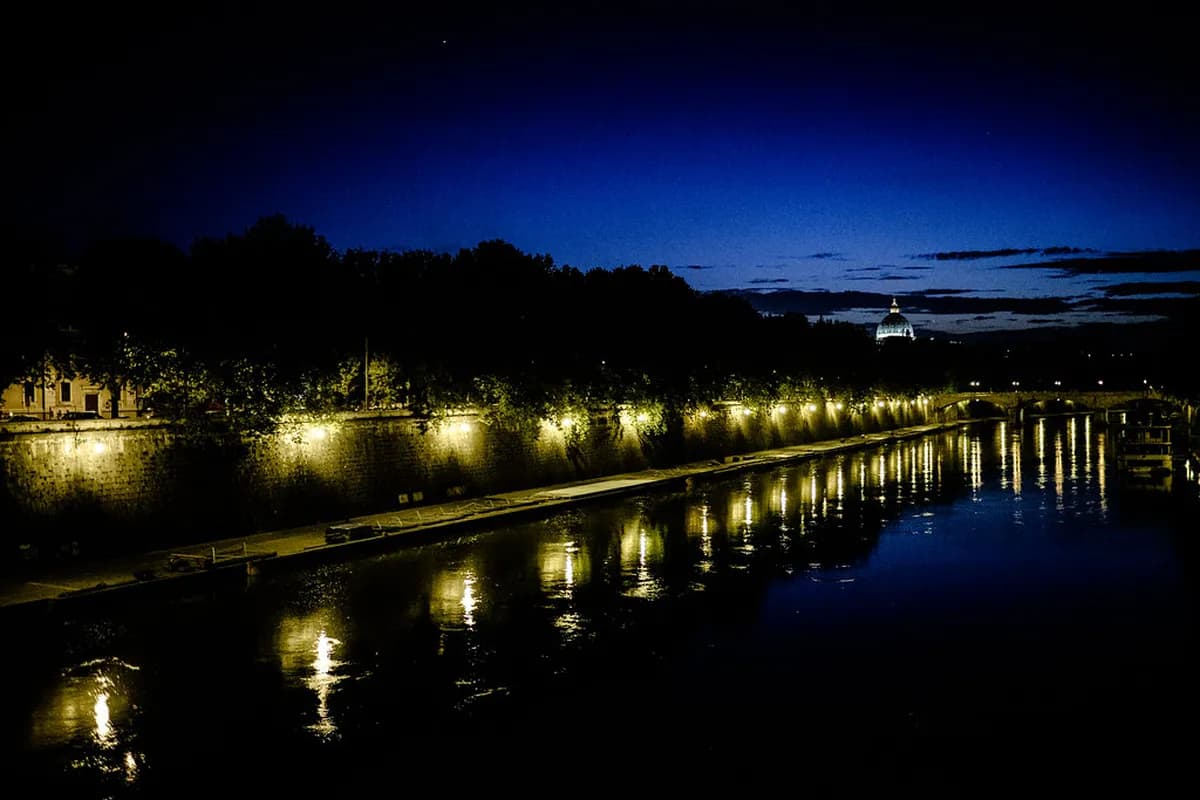
Castel Sant'Angelo charges €15 entry, which covers the museum and the rooftop deck. The view across Ponte Sant'Angelo and its ten angel statues is the classic Rome photograph. At night, the castle is lit and the reflection in the Tiber turns it into one of the most recognizable images in European travel photography. From Ponte Vittorio Emanuele II just south, the nighttime view of the castle reflected in the water is even more dramatic.
The Aventine Keyhole at the Priory of the Knights of Malta costs nothing and rewards every visitor. Through a small door-sized keyhole, a perfectly framed view of St Peter's dome — centered at the end of a corridor of topiary — appears. The line moves quickly most of the day, though it grows longer after 14:00. The Orange Garden at Aventine Hill sits a short walk away and offers a more open view across Trastevere toward the Vatican.
The Borghese Gallery inside Villa Borghese requires booking weeks in advance — tickets sell out quickly and you cannot walk in without a reservation. Do not arrive without one, even outside peak summer months.
Parks, Gardens, and Outdoor Spots in Beautiful Rome
Villa Borghese Gardens, Rome's closest equivalent to Central Park, covers nearly 200 acres of lawns, woodland paths, and formal gardens. Access to the park is free at all times. Rowing a small boat on the lake costs around €4 per person for 20 minutes. The Borghese Gallery inside the park holds Bernini's best sculptures and Caravaggio's most violent canvases — tickets must be booked weeks in advance and sell out quickly. Do not arrive without a reservation expecting to walk in.
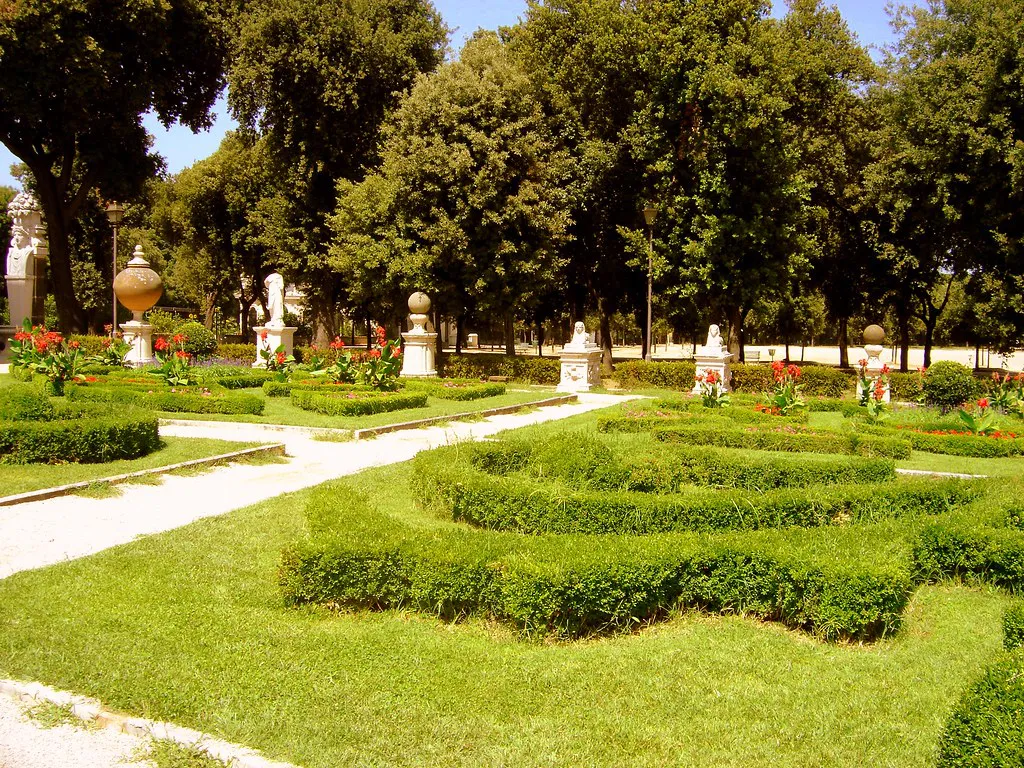
The Orange Garden on the Aventine is a lesser-known gem that the main itineraries often skip. The terrace there gives a direct line of sight across the Tiber to the dome of St Peter, and the scent of citrus trees in spring makes it one of the most sensory spots in the entire city. It is free, rarely crowded before 10:00, and at its most beautiful in April and May when the trees are in flower. Benches face the view — this is a good place to slow down after a busy morning at the Colosseum.
The Botanical Gardens in Rome sit on the slopes of the Janiculum Hill in Trastevere. Entry is around €4, open 09:00–18:00. The Japanese garden section features small waterfalls and stone lanterns and is particularly peaceful in early morning. The garden is a research facility for Sapienza University, so the plant collections are unusually well maintained. Climb to the upper terraces for an unexpected view over the terracotta rooftops of Trastevere below.
Museums, Art, and Culture in Beautiful Rome
Palazzo Doria Pamphili is Rome's most underrated gallery and one of its most beautiful interiors. The collection spans 400 years and includes works by Velázquez, Caravaggio, and Titian, all displayed in the gilded rooms for which they were commissioned. Tickets are approximately €16. The audio guide is narrated by a member of the Pamphili family, which gives the visit a personal texture that larger museums cannot match. Unlike the Vatican, you can often wander entire halls alone.
Centrale Montemartini is one of the strangest and most compelling museums in Europe. Ancient Roman statues — gods, emperors, athletes — are displayed against the backdrop of massive diesel engines and turbines in a converted early 20th-century power plant. Tickets cost around €10, open Tuesday through Sunday 09:00–19:00. The contrast between white marble and industrial machinery is visually arresting in a way that no traditional museum can replicate. It is rarely crowded, which makes it ideal for those who want to look at art at their own pace. This is the kind of unusual thing to do in Rome that stays with you longer than a second lap of the Vatican Museums.
The market at Campo de' Fiori runs daily from 07:00 to 14:00 and is a riot of color and scent. Campo de' Fiori is widely considered the best market in Rome for flowers, produce, and dried spices. After the market closes, the square transforms into one of the liveliest aperitivo zones in the city. It is free to browse at any time. The neighborhood surrounding it — particularly Via del Governo Vecchio — is lined with ivy-covered buildings, vintage boutiques, and wine bars that represent the city at its most authentically beautiful.
Isola Tiberina and the Tiber at Dusk — What Every Competitor Misses
The Tiber Island is one of the most photogenic spots in Rome and almost none of the major travel guides cover it properly. The island sits in the middle of the river and is connected to both banks by two ancient bridges — Ponte Fabricio on the east side, built in 62 BC and Rome's oldest standing bridge, and Ponte Cestio on the Trastevere side. Both bridges are pedestrian-friendly and free to walk at any hour.
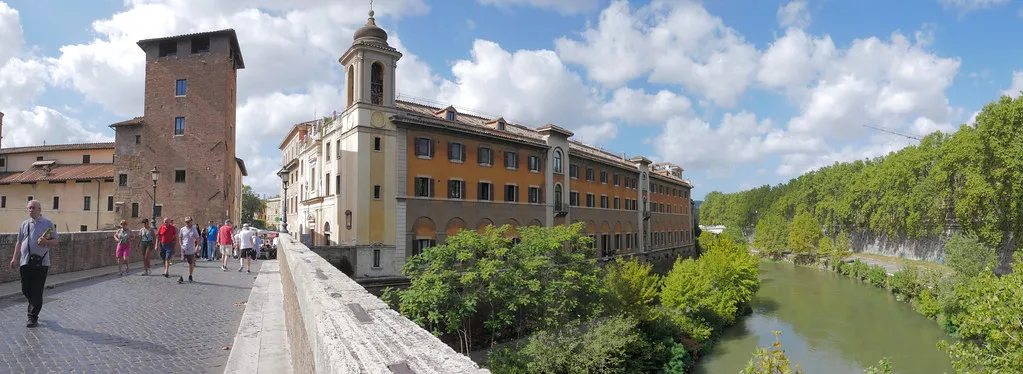
At dusk, the light hits the travertine stone of the bridges and the island's medieval tower from the west, turning everything amber. The view from Ponte Garibaldi looking south toward the island frames the bridges, the hospital building (which from certain angles resembles the prow of a stone ship), and the dome of San Bartolomeo rising above the trees. This is one of the best photography spots in the city and it is almost never crowded — even in peak summer.
The Trastevere embankment directly opposite the island is equally beautiful at this hour. Walk down to the lower riverside path on the Trastevere bank and you get the island reflected in the water with the Janiculum Hill behind it. The walk from here along the river south toward Porta Portese takes about 15 minutes and passes through a stretch of Rome that feels entirely removed from the tourist circuit. No entry fee. No booking required. Best light: 19:00–20:00 in summer, 17:30–18:30 in winter.
Family-Friendly and Budget-Friendly Options in Rome
Rome is genuinely manageable on a tight budget if you prioritize correctly. The Trevi Fountain, Spanish Steps, Piazza Navona, and Campo de' Fiori are all free to enter. Every Sunday the first entry period at the Pantheon is free. Villa Borghese park has free playgrounds, puppet theaters, and a small lake — families with children can easily spend three to four hours here without spending more than a few euros on boat rental.
For families who want indoor time without the intensity of the Vatican, Centrale Montemartini is excellent. The industrial setting captures children's attention in a way that traditional marble halls often do not. The Janiculum Hill terrace is another strong family option — free entry, wide open space, a daily cannon fired at noon (a Roman tradition since 1847), and a long staircase worth climbing. Pony rides and a carousel operate near the terrace on weekends.
The nasoni fountains scattered throughout the city provide free cold drinking water all day — carry a refillable bottle and you can walk for hours without buying water. Most churches offer free entry and extraordinary art: the Basilica of Santa Maria in Trastevere has golden mosaics that glow even on a grey day, and San Luigi dei Francesi contains three Caravaggio paintings that you can see at no charge. These are not consolation prizes — they are among the best things in Rome.
How to Plan a Smooth Beautiful Attractions Day
Start every morning before 09:00. Most tourists begin their day late, which means you can visit two or three major sites before the first tour groups arrive. Hit the Colosseum or the Pantheon first thing, then retreat to quieter gardens or a museum in the afternoon when the heat and crowds are at their worst. Check out this guide from Italy magazine on the best things to do in Rome at night for evening planning.
Walk whenever possible. The sanpietrini cobblestones are uneven and hard on your feet, so wear shoes with real support. Comfortable footwear is not optional in Rome — the distances between sites are manageable on foot but the terrain punishes anything with a thin sole or a heel. Bus routes are useful for reaching Janiculum Hill or the Botanical Gardens when you want to save your legs for the afternoon.
Plan your days by neighborhood to avoid crisscrossing the city. Day one: Colosseum, Palatine Hill, Centrale Montemartini (all in the southeast). Day two: Pantheon, Campo de' Fiori, Palazzo Doria Pamphili, Piazza Navona (Centro Storico). Day three: Trastevere, Isola Tiberina, Botanical Gardens, Janiculum Hill, Orange Garden (Trastevere–Aventine arc). This structure keeps travel time short and leaves room for the unplanned discoveries — the hidden courtyard, the excellent gelato, the tiny church with the surprising fresco — that define the best Rome trips.
Where to Stay in Rome for the Best Views
Trastevere is the neighborhood that most closely matches the romantic image of Rome. It is full of medieval streets, ivy-covered walls, and small trattorias. Staying here puts the Botanical Gardens, the Orange Garden, and Isola Tiberina within walking distance. Budget one extra 10 minutes of travel to reach the Centro Storico, but for those who want to experience the most beautiful places in Trastevere, it is worth it. For honest, locally-grounded advice on neighborhoods, Natalie from An American in Rome shares the real trade-offs of each area on her blog.
The Centro Storico (Campo de' Fiori, Pantheon, Navona zone) places you within 10 minutes on foot of almost every landmark in the historical center. Hotels here are more expensive but the location removes any dependency on public transport. Prati, near the Vatican, is calmer and more residential — good for a second or longer visit when you want a slower pace. Many hotels here have rooftop bars in Rome with views of the St Peter's dome at sunset.
The Monti district sits immediately east of the Forum and Colosseum, which makes early-morning access to the ruins very straightforward. It is a lively, young neighborhood with independent boutiques and good restaurants. For budget travelers it is one of the best-positioned areas in the city. Whatever neighborhood you choose, confirm that your accommodation is within 400 metres of a bus stop or metro station — the city's traffic makes taxis unreliable during peak hours.
Frequently Asked Questions
What is the best time of year to see beautiful places in Rome?
Late spring and early autumn are the most beautiful times to visit Rome. The weather is mild for walking, and the gardens are in full bloom or displaying vibrant fall colors. You will also avoid the extreme heat and humidity of the peak summer months.
Are most of the beautiful places in Rome free to visit?
Many of Rome's most stunning sights, like the Trevi Fountain and the Spanish Steps, are entirely free. Public parks and many historical churches also offer free entry to visitors. However, major ruins and museums typically require a paid ticket ranging from $5 to $20.
How many days do I need to see all these beautiful spots?
You should plan for at least four days to see the main highlights without rushing. This allows you to group attractions by neighborhood and include time for relaxed meals. A shorter trip is possible but will require more selective planning of your must-see list.
Beautiful Rooms Most Visitors Never Enter
Two of the most striking interiors in Rome sit behind doors that look like nothing from the street. Palazzo Colonna opens its Great Hall for a few hours a week and is still owned by the family that built it. the Capuchin Crypt arranges the bones of some 3,700 friars into chandeliers and arches beneath a church on Via Veneto.
Rome rewards those who look closely at its weathered walls and grand piazzas. From the industrial surrealism of Centrale Montemartini to the amber-lit bridges of Isola Tiberina at dusk, the visual variety this city offers is genuinely inexhaustible. The spots on this list balance the famous with the genuinely overlooked — the aim is not to shortchange the Pantheon but to ensure you don't miss Ponte Fabricio either.
The most beautiful places in Rome are often found between the landmarks, in the side streets and river paths that most visitors walk past without looking down. Keep your camera ready, but put it down long enough to simply be in a city that has been considered beautiful for over two thousand years. For more inspiration beyond the obvious, this list of 10 Places in Rome You've Never Heard Of is worth your time before you arrive.
Continue exploring
More guides you'll find useful