Bunkers Del Carmel Barcelona: Free 360-Degree City Views
Free 360-degree Barcelona skyline views from a 1937 wartime bunker, 262m up in El Carmel — the city's most talked-about viewpoint, away from the tourist crowds.
On this page
Bunkers Del Carmel Barcelona
Bunkers del Carmel offers the most stunning 360-degree views of the Barcelona skyline from Turó de la Rovira, a hill rising 262 metres above the city in the El Carmel neighbourhood. What began as a wartime anti-aircraft battery in 1937 is now Barcelona's most talked-about free viewpoint — and one of its most complicated ones too.
The site sits within one of Barcelona's most authentic working-class districts, far from the tourist belt of Las Ramblas. It is widely considered one of the best 12 Secret Viewpoints in Barcelona, though calling it a secret in 2026 requires some honest caveats. The crowds at sunset are real, the community concerns are real, and the history beneath your feet is more layered than any Instagram caption suggests.
The Bunkers del Carmel: A Brief Introduction
The Bunkers del Carmel are former anti-aircraft fortifications crowning Turó de la Rovira, the highest of the three hills known as the Tres Turons. They are not underground bunkers in the military sense — the name refers to the battery emplacements, the concrete platforms, and the ruined ancillary buildings spread across the hilltop. Today the site functions as an open-air heritage space managed by MUHBA, the Museum of History of Barcelona.
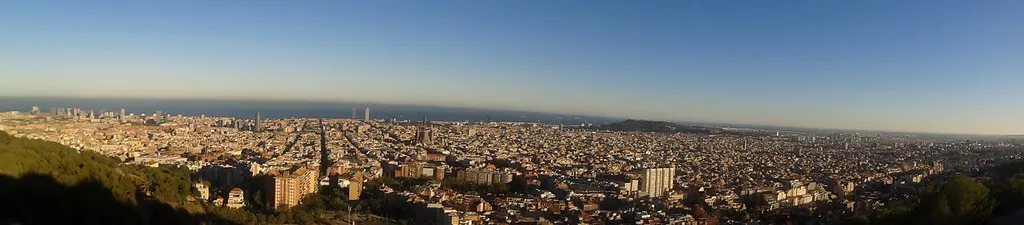
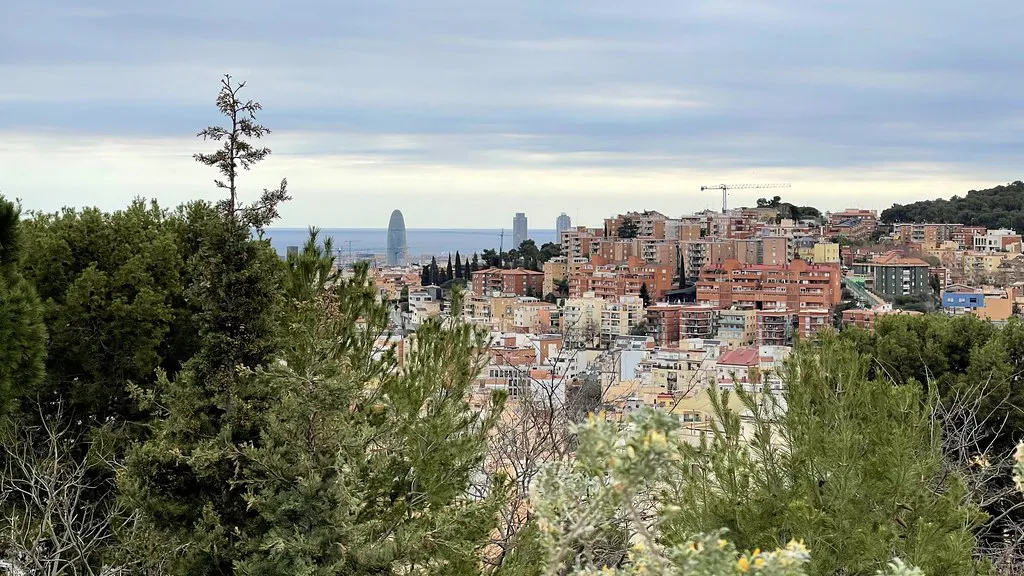
Standing at 262 metres above sea level, the hill gives an unobstructed 360-degree panorama: the Sagrada Família to the south-west, the grid of the Eixample, Port Olímpic on the waterfront, and on clear days the distant Serra de Collserola behind the city. It is one of the most 27 Unique Things to Do in Barcelona: Hidden Gems & Local Secrets because it layers genuine history over a free-of-charge viewpoint experience.
The site connects to the Gracia neighbourhood a short walk below. Many visitors combine the bunkers with a stroll through Gracia's streets before or after the climb, making for a half-day loop that avoids the main tourist belt entirely.
The History Behind Barcelona's Bunkers
The battery was constructed in 1937 during the Spanish Civil War and came into operational use on 3 March 1938. Its position gave Republican forces a commanding field of fire over the entire city. The installation was equipped with four Vickers anti-aircraft guns capable of reaching targets between 4,000 and 13,000 metres altitude — enough to challenge the Italian Legionary Air Force and the German Condor Legion, both of which were providing air support to Franco's Nationalist forces.
Barcelona holds the grim distinction of being the first major city in history to be bombed massively and systematically from the air. The city endured approximately 200 bombing raids during the war. Estimates put the death toll at around 2,750 people, with some 7,000 injured. The Turó de la Rovira battery, alongside similar installations on Montjuïc and in the Poblenou neighbourhood, formed the city's aerial defence shield against those attacks.
After the Nationalists took Barcelona in January 1939 and Franco's forces prevailed, the guns were dismantled and disabled. The strategic hilltop was abandoned by the military. What happened next says as much about Barcelona's postwar social history as it does about the war itself.
Turó de la Rovira: The Hill and Its People
Through the 1940s and into the following decades, families — mostly internal migrants arriving from Andalucía and other southern regions — built a shanty town across the old battery grounds. They named it Els Canons (The Cannons) in a wry nod to its military past. At its peak the settlement held around 110 makeshift homes and approximately 600 inhabitants, living without running water or reliable electricity.
The residents were not passive. The Associació de Veïns del Carmel, the neighbourhood association, campaigned for years to secure basic services: trash collection, drinking water, a school for adults. They won those fights incrementally. What they could not prevent was the demolition that came when Barcelona was awarded the 1992 Olympic Games. The city cleared the shanty town in 1990 and the families were relocated. The cleared site was later excavated by archaeologists and the anti-aircraft platforms were restored. You can find official information at the MUHBA Turó de la Rovira page, which details the archaeological work and the conservation of the platforms.
The hill is now officially a MUHBA heritage site. Interpretive panels around the perimeter explain the military functions of each structure: the four gun emplacements on the northern arc, the ammunition depot, the officers' and troops' pavilions. The foundations of the old shanty dwellings are still visible in places, mixed in with the military ruins — a palimpsest of two different kinds of displacement.
The Overtourism Question Every Visitor Should Know
The Bunkers del Carmel tipped from local secret to global Instagram fixture sometime around 2015 and has not looked back. On a summer weekend evening in 2026, you can expect several hundred people on the hilltop by the time the sun approaches the horizon. The noise, the litter, and the late-night gatherings that follow sunset have generated ongoing complaints from the residents of El Carmel — a neighbourhood that already carries the memory of having its hilltop community forcibly cleared once before.
The irony is not lost on long-time locals. The families of Els Canons were moved out to make way for the Olympics and tourism infrastructure. Now tourism has followed them down the hill. The Associació de Veïns del Carmel has repeatedly raised concerns with the city about noise at night, rubbish left on the paths, and groups using the surrounding streets as overflow party space after the bunkers fill up. Barcelona's broader anti-tourism protests of 2024 — the water-pistol demonstrations, the banner campaigns in the Barceloneta — have a quieter echo up here in El Carmel.
None of this means you should skip the visit. It means you should time it thoughtfully, carry your rubbish out, and treat the surrounding streets as a residential neighbourhood, not an extension of the viewing platform. The bunkers are one of the best free places to visit in Barcelona, but their zero entry cost does not make them zero-impact.
How to Get to the Bunkers del Carmel
The bunkers sit in the Horta-Guinardó district, and reaching them always involves some uphill walking. None of the options are hard, but each requires a realistic estimate of your fitness and the time of day you are travelling.
- Bus 86 from Plaça Catalunya — the most direct option from the city centre. Ride it to the Carmel stop on Carrer de l'Harmonia, then walk uphill for roughly 10–12 minutes on the marked path to the summit. This is the cleanest route for most visitors.
- Bus 119 from Av. Pere IV — a small neighbourhood bus that climbs considerably higher up the hill than the 86 or 24, depositing you much closer to the entrance. Frequency is lower (check TMB app before relying on it), but if it runs to schedule it significantly cuts the walking time.
- Bus 24 — connects from Passeig de Gràcia and also serves Park Güell, making it convenient if you are combining both sites. Get off at Carmel and walk up the same 10-minute path as the 86.
- Metro to Alfons X (L4, yellow line) — from the station exit it is a steep 25–30 minute climb with most of the stairs clearly signed. Good for the descent; harder going up in summer heat.
- Metro to El Carmel (L5, blue line) — similar walking time to Alfons X, slightly different approach through the neighbourhood streets.
Wear closed shoes with grip. The final stretch of path uses compacted gravel and loose stone, and in winter can be slippery. A standard TMB single-journey ticket (€2.55 in 2026) covers any of the bus or metro options. There is no admission fee for the hilltop itself — the MUHBA open-air site is free of charge and accessible during daylight hours.
Best Time to Visit and What to Bring
Sunset is the obvious draw and the most crowded window. In summer, Barcelona's sunset falls between 21:00 and 21:30, which means the hilltop starts filling from 19:30 onwards. Arriving 60–90 minutes before sunset gives you the best perches and the full light progression. Arriving at exactly sunset means standing at the back.
The quietest alternative is sunrise. The 360-degree orientation means the eastern light hits the city beautifully from 06:30 in midsummer, and on a weekday morning you may have the platforms largely to yourself. Mid-morning on a weekday (09:00–11:00) is the second-quietest window and has the advantage of cooler temperatures. Avoid weekend evenings between June and September unless you are comfortable with dense crowds and noise.
Pack these before you leave:
- Water — there is no tap at the top and the climb is dehydrating. Bring at least half a litre per person.
- Snacks or a picnic — a small vendor sometimes operates near the entrance selling cold drinks for around €2 per beer, but they are not always present and charge accordingly for the convenience.
- A torch or phone light — if you stay for sunset, you walk down in full dark. The park paths are unlit and the gravel is uneven.
- A jacket — the ridge is exposed and evening temperatures drop quickly, even in July.
- Sunscreen and a hat for any daytime visit, as there is almost no shade on the platforms.
Leave with everything you brought in. Rubbish is one of the primary complaints from El Carmel residents, and there are limited bins on the hilltop itself.
Arrive 60–90 minutes before sunset to secure a good spot on the platform — the hilltop fills from 19:30 in summer. For total quiet, come at sunrise (from 06:30 in midsummer) or mid-morning on a weekday between 09:00 and 11:00.
Nearby Alternatives: The Tres Turons and Mirador del Carmel
Turó de la Rovira is the most famous of the Tres Turons — the three hills that form the ridge running through the Horta-Guinardó and Carmel neighbourhoods. The other two summits, Turó de la Creueta del Coll and Turó de Carmel, are almost entirely unknown to tourists. Turó de Carmel in particular (sometimes called the Búnker del Tres Turons in local references) sits just to the west of the main bunkers site and shares a similar elevation. You will rarely encounter another visitor there.
Mirador del Carmel is a small paved lookout point lower on the hill, accessible by the 119 bus. It lacks the drama and the historical ruins of the main bunkers viewpoint, but on a crowded evening it offers a quieter alternative with a reasonable north-east view over the city. Think of it as the fallback if the main summit is more crowded than you are willing to deal with.
For those interested in combining the bunkers with a civil war walking tour, the route from Turó de la Rovira south to the Fossar de la Pedrera in Montjuïc — where Republican soldiers and prisoners are buried — forms a coherent half-day history circuit. Park Güell is a ten-minute walk north-west and shares the Bus 24 route, making a combined bunkers-plus-Gaudí day feasible if you start early.
What to See at the Bunkers
The primary draw is the panorama. From the main platform you can identify the Sagrada Família, the Torre Agbar (Torre Glòries), the Palau Nacional on Montjuïc, the Gothic Quarter's cathedral tower, the W Hotel sail at the port, and the curve of the Barcelona coastline. On clear winter days the view extends as far as the Balearic horizon. The orientation is ideal for sunset because the sun sets roughly over the Collserola hills to the west, giving warm light across the entire city face.
Beyond the view, the concrete gun platforms themselves are worth a close look. The four circular emplacement rings on the northern arc are the best-preserved element of the original battery. The MUHBA interpretive panels, written in Catalan, Spanish, and English, explain the firing range and the coordination between the Turó de la Rovira battery and the parallel installations at Montjuïc and Poblenou. If you read nothing else, read the panel that maps the 1938 bombing raid trajectories over the city — it reframes the hilltop view in a way that stays with you.
The informal social life of the hilltop is also worth experiencing rather than just tolerating. Locals bring coolers and guitars. Couples share blankets. On summer evenings the atmosphere has something of an outdoor cinema about it, with the city as the screen. The trick is to arrive early enough that the crowd is still manageable and the light is still changing.
Family and Budget Considerations
The bunkers are completely free to enter. Your only costs are transport (a single TMB journey is €2.55 in 2026) and whatever you bring to eat and drink. That makes this one of the genuinely best free things to do in Barcelona in terms of value-per-experience.
Families with young children should note that the summit edge is unfenced in several places and drops are steep. The main viewing platform is open and safe, but young children need supervision near the perimeter. The path up from the bus stop is not pushchair-accessible — use a baby carrier for infants. Morning visits work better for families: cooler, less crowded, and the children are not walking back down in the dark.
For budget travellers, a picnic on the hilltop with supermarket provisions from the city centre is a classic Barcelona move. The Mercadona on Carrer de Provença or any Caprabo near your accommodation will stock everything you need. The informal drinks vendor at the top charges a reasonable premium for the altitude, but you are not obligated to use them.
The summit edge is unfenced in several places with steep drops — young children need constant supervision near the perimeter. The final approach path is not pushchair-accessible; use a baby carrier for infants and wear closed grip shoes as gravel can be slippery.
Practical Details at a Glance
The hilltop is accessible every day during daylight hours. There is no formal closing time for the hill itself, but the fenced archaeological zone around the main platforms has seasonal access hours managed by MUHBA — check the MUHBA website before visiting in winter or during public holidays. There is no admission fee. No booking required.
- Address: Turó de la Rovira, El Carmel, Barcelona (search "Bunkers del Carmel" in Google Maps)
- Transport: Bus 86 from Plaça Catalunya; Bus 119 from Av. Pere IV; Bus 24 from Passeig de Gràcia; Metro Alfons X (L4) or El Carmel (L5)
- Entry: Free
- Best time: Sunrise (quietest) or 60–90 minutes before sunset (best light, arrive early for a spot)
- Time needed: 1.5–2 hours for the visit itself; add 30–45 minutes each way for transport
- Accessibility: Not suitable for wheelchairs or pushchairs on the final approach path
- Official info: MUHBA Turó de la Rovira heritage page (link above)
One practical note for 2026 visitors: the 11 Key Insights on the Best Time to Visit Barcelona generally applies here too. April, May, and October hit a sweet spot: temperatures are manageable for the climb, the city light is warm, and the hilltop is noticeably less packed than in July and August.
| Route | Starting Point | Walk from Stop | Frequency |
|---|---|---|---|
| Bus 86 | Plaça Catalunya | 10–12 min uphill | Frequent |
| Bus 119 | Av. Pere IV | ~5 min (climbs higher) | Lower frequency |
| Bus 24 | Passeig de Gràcia | 10 min (same as Bus 86) | Frequent |
| Metro Alfons X (L4) | Central connections | 25–30 min steep climb | Frequent |
| Metro El Carmel (L5) | Central connections | ~25 min neighbourhood walk | Frequent |
Frequently Asked Questions
Where are these famous bunkers in Barcelona?
The bunkers are located at the top of Turó de la Rovira in the El Carmel neighbourhood. You can reach them by taking the V19 or 24 bus from the city center. This area is known for being one of the best 12 Best Hidden Gems in Barcelona despite its growing popularity.
How much time should you plan for bunkers del carmel barcelona?
Most visitors spend about 1.5 to 2 hours at the site. This allows enough time to hike up, explore the ruins, and take photos of the skyline. If you plan to have a picnic or watch the full sunset, you should budget at least 3 hours for the experience.
What should travelers avoid when planning bunkers del carmel barcelona?
Avoid visiting during the middle of a hot summer day as there is very little shade at the top. You should also skip bringing heavy strollers because the path is steep and uneven. Do not arrive too late in the evening, as the fenced historical area now has a strict closing time.
Is bunkers del carmel barcelona worth including on a short itinerary?
Yes, it is definitely worth it for the unmatched 360-degree views of the city. Even on a short trip, the bunkers provide a unique historical perspective that you won't find at more commercial attractions. It is a quick and free way to see all the major landmarks at once.
Bunkers del Carmel remains one of the most rewarding spots to visit in all of Barcelona. It combines the specific weight of Spanish Civil War history — 200 bombing raids, 2,750 deaths, four anti-aircraft guns pointed at the sky — with the most impressive 360-degree city views in the region. The shanty town that followed the war, and the community that resisted erasure for fifty years, adds another layer that the view alone cannot give you.
Come with that context, time your visit well, take your rubbish home, and respect the streets of El Carmel on your way back to the metro. The bunkers are worth it. The neighbourhood deserves it.
For the wider city context, see our complete hidden gems in Barcelona guide.
Continue exploring
More guides you'll find useful