10 Essential Tips for Visiting Barcelona in Winter
Discover the magic of winter in Barcelona. From Christmas markets and seasonal Catalan treats to crowd-free Gaudi sites, here is your complete local guide.
On this page
10 Essential Tips for Visiting Barcelona in Winter
Barcelona in winter is not a compromise — it is an entirely different city. The streets empty out, the Barcelonans reclaim their neighborhoods, and the Mediterranean light turns sharp and gold. Temperatures sit between 12°C and 15°C during the day, rarely dipping below 7°C at night, making it comfortable to walk for hours without the summer sweat. If finding the 11 Key Insights on the Best Time to Visit Barcelona is your priority, December through February wins by a wide margin.
This guide covers the practical and the poetic: what the weather actually feels like, which festivals are worth rearranging your dates for, where to eat calçots with locals in January, and why the Bunkers del Carmel hits differently on a clear winter morning. Everything below is specific to the cold season — no generic Barcelona advice.
Barcelona Winter Weather: What to Actually Expect
Barcelona sits on the Mediterranean coast at roughly the same latitude as Rome, which means winter is mild rather than cold. Daytime highs in December and January average 12–15°C. Overnight lows hover around 7–9°C — cold enough for a proper coat but never below freezing in the city center. Snow is essentially unheard of at sea level. Rain comes in short, sharp showers rather than the all-day drizzle of northern Europe: most winter days are sunny, with around 5–6 hours of direct sun even in January.
Humidity is moderate but the Tramuntana wind, which blows down from the Pyrenees, can make an otherwise pleasant 12°C feel sharper along exposed seafront stretches. Dress in layers rather than one heavy coat. A mid-weight jacket, a merino layer, and a compact umbrella covers most days. Crucially, the air quality in winter is noticeably better than summer — no heat haze, no Saharan dust, and the skyline looks cleaner from every viewpoint in the city.
Daylight runs from roughly 08:00 to 17:30 in December, extending to nearly 19:00 by late February. The low winter sun angle creates long, dramatic shadows in the Gothic Quarter's narrow streets — excellent for photography and atmospheric for walking.
Crowds, Prices, and the Overtourism Argument
In 2024, anti-tourism protests broke out across Barcelona's most visited neighborhoods. Residents in the Gothic Quarter, Barceloneta, and Gràcia held demonstrations calling for limits on visitor numbers. The city had received over 15 million tourists that year — nearly ten times its population. The pressure on housing, restaurants, and public space was visible and real. Coming in winter is not just cheaper: it is the responsible choice, the period when the city actually has capacity for you.
Between mid-January and late February, Sagrada Família waiting times drop from 45–60 minutes (summer walk-up) to under 10 minutes. Accommodation prices in the Eixample fall by 25–35% versus August rates. Economy flights from London and Paris are consistently below €80 return. Critically, you still need to pre-book timed-entry tickets for Sagrada Família and Park Güell — "fewer crowds" does not mean "no tickets required." Book both at least a week ahead even in January.
Winter accommodation in the Eixample runs 25–35% below August peak rates, and economy flights from London or Paris regularly fall below €80 return. Pre-book Sagrada Família and Park Güell at least a week ahead even in January.
The neighborhoods that benefit most from winter quiet are the ones locals actually use: Sant Antoni, El Born, and Gràcia. These do not empty out — they simply lose the tourist layer on top, leaving the city that Barcelonans inhabit. That is the version of Barcelona worth visiting.
The Winter Festivals: Three Kings, Santa Eulàlia, and What Competitors Skip
The Cavalcada de Reis on the evening of January 5 is the most important children's event in the Catalan calendar. Three floats representing the Magi arrive by boat at Port Vell around 18:00, then process through the city center toward Passeig de Gràcia. The route is lined with families, candy rains down from the floats, and the crowd is almost entirely local. It is genuinely spectacular and costs nothing to watch. Position yourself near the waterfront by 17:30 to see the boat arrival — most visitors only catch the middle of the procession further up the route.
Less known outside Catalonia is the Festes de Santa Eulàlia, held in mid-February (in 2026, the central weekend falls around February 12–15). Santa Eulàlia is Barcelona's co-patron saint, a teenage martyr whose story is inseparable from the old city. The festival runs free outdoor events across the Gothic Quarter and Born: gegants (giant papier-mâché figures) parading through the streets, castellers (human towers) in Plaça Sant Jaume, sardana dances, and fire runs called correfocs on Saturday night. The tourist infrastructure does not really know this festival exists — the crowds are 90% Barcelonan, and every event is free.
For the Christmas period, the Mercat de Santa Llúcia is the essential market. It runs from late November through December 23 in the square directly in front of Barcelona Cathedral, and it dates to 1786. Stalls sell nativity scene figures, the quirky caganer figurine, and the Caga Tió — a hollow log that children beat with sticks on Christmas Eve to produce sweets. Visit on a weekday evening when the cathedral facade is lit and the market is quietest. It is a functioning local market, not a tourist attraction dressed up as one.
Calçots, Churros, and What to Eat This Season
Calçot season runs from late December through March, and it is the food event that defines Catalan winter. Calçots are a variety of young spring onion — sweeter and milder than a standard leek — grilled over open flames until the outer layer chars black. You peel back the burnt skin with your bare hands and dip the white interior into romesco sauce (ground almonds, tomato, garlic, dried pepper). A proper calçotada is a communal meal that takes two or three hours and involves paper bibs, a lot of red wine, and grilled lamb or butifarra sausage to follow. Restaurants across the city serve calçotada menus from January onward; vermut and calçotada go together naturally as a long Sunday lunch in any neighborhood with outdoor terraces.
For the cold-weather café ritual, seek out a granja rather than a generic café. Granges are traditional Catalan milk bars, and the classic order is a suís — thick drinking chocolate with a blob of whipped cream on top, served with melindros (sponge fingers for dipping) or churros. Granja Dulcinea on Carrer Petritxol in the Gothic Quarter has been serving this since 1941. The hot chocolate is so thick it barely pours. It is the single best antidote to a damp winter afternoon.
Markets also shift in winter. Look for wild mushrooms (rovellons, especially), artichokes from El Prat, roasted chestnuts and sweet potatoes from street vendors near La Rambla and Plaça Catalunya, and the full range of Christmas sweets: turrón (nougat), polvorones, neules (rolled wafers), and the tortell de Reis ring cake eaten on January 6. La Boqueria is the famous option but any neighborhood mercat — Sant Antoni, Santa Caterina, Abaceria in Gràcia — shows better seasonal produce without the tourist markup.
Calçot season runs late December through March — order a calçotada set menu at any restaurant serving it and expect paper bibs, romesco sauce, and grilled butifarra to follow. Granja Dulcinea on Carrer Petritxol has served thick drinking chocolate with melindros since 1941.
Two Winter Highlights That Are Better in January
The Sant Antoni Sunday market on Carrer del Comte d'Urgell runs every Sunday morning and is one of the best markets in the city year-round — but in winter it is an hour well spent in a way that summer simply cannot match. The stalls selling second-hand books, magazines, and vinyl records line the perimeter of the Mercat de Sant Antoni building, and in January the surrounding streets fill with locals doing the same slow Sunday morning they always do: coffee, browsing, no agenda. The neighborhood around Sant Antoni and Eixample Esquerra is one of the most livable in Barcelona, and on a clear winter morning the low sun cuts down the wide boulevards at an angle that makes the whole thing look like a film set. Arrive by 10:30 and stay for a vermouth at one of the bars on Carrer del Parlament.
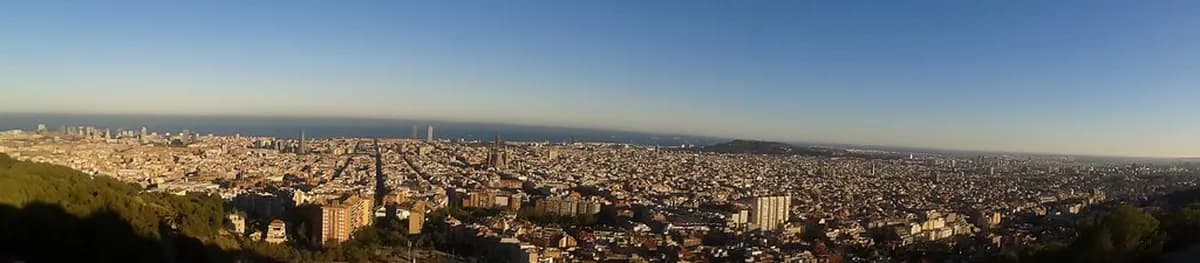
The Bunkers del Carmel — the anti-aircraft battery ruins on Turó de la Rovira above the Carmel neighborhood — offer a 360-degree panorama that is genuinely better in winter than any other season. The reasons are practical: summer haze obscures the horizon, summer evenings bring crowds of 200 or more people sitting on the ruined walls, and summer heat makes the uphill walk unpleasant. On a clear January or February morning, the air is sharp enough to see the Pyrenees behind the city and the Montserrat massif to the west. Arrive before 09:00 and you may have the site almost to yourself. 12 Secret Viewpoints in Barcelona rarely appear in guidebooks, and the Bunkers in winter morning light is the best of them.
Museums, Gaudi Sites, and Indoor Culture
Winter is the correct time to do the indoor Barcelona circuit. The Sagrada Família's stained glass is designed around the winter sun angle — the western nave fills with warm amber and red light in the afternoon, while the eastern nave catches cool blue morning light. The effect is more deliberate and more beautiful in December and January than at any other time. Book the Tower access add-on for the Nativity Tower: climbing it in January takes about 15 minutes with no queue, versus 45-minute queues in July.
The Picasso Museum on Carrer Montcada in El Born is worth the visit, but the Fundació Joan Miró on Montjuïc is the better winter choice. The building — designed by Josep Lluís Sert — has a rooftop terrace that faces south over the city and the sea. In winter the terrace is almost empty, the light is horizontal and warm in the afternoon, and the view of the Mediterranean is clear enough to see ships on the horizon. The interior galleries are less crowded than the Picasso Museum's narrow medieval rooms. Admission is around €15 (2026 prices; check the Fundació website for the latest). From Montjuïc on a clear day you can also see the snow line on the Pyrenees to the northwest — a view you will not get in summer haze.
MUHBA (Museu d'Història de Barcelona) in Plaça del Rei is free on the first Sunday of each month and is worth a full visit regardless. The underground Roman ruins beneath the Gothic Quarter — you walk along original 2nd-century AD streets — feel particularly atmospheric when the surface city is cold and quiet above you. The contrast between the excavated Roman Barcino and the medieval and modern city layered on top of it is easier to grasp in the slow, unhurried pace of a winter visit. Combine with a walk through the Cathedral cloister to see the 13 geese that symbolize Saint Eulàlia, kept there year-round.
What to Pack and How to Get Around
Pack for a 12–15°C daytime range with evenings dropping to 7–9°C. The practical list: a mid-weight waterproof jacket, a wool or merino mid-layer, one warm sweater, comfortable walking shoes with ankle support for cobblestones, and a compact umbrella or packable rain shell. Sunglasses are not optional — the winter sun is low and very bright, and you will spend most of the day walking toward it. Skip the heavy parka: locals do not wear them and you will overheat on the metro.
Transport is straightforward. The T-Casual 10-trip metro/bus card (€11.35 in 2026) covers all central journeys. Single metro tickets are €2.55. The Aerobús from Terminals 1 and 2 at El Prat costs €6.75 one way. For the Pyrenees ski day trip, the Skibus departs from Estació del Nord around 08:00 (check current schedules at TMB.cat); La Molina and Masella are the two main resorts accessible this way, both under 2 hours from the city. If you plan multiple museum visits, the Articket Barcelona (€38 for six major museums including Fundació Miró, MACBA, and MNAC) saves money on stays of three days or more.
One practical note almost no guide mentions: many smaller restaurants in residential neighborhoods close for a week or two in mid-January after the Christmas rush. This is normal and affects mostly sit-down restaurants in El Born, Gràcia, and the Gothic Quarter. Tourist-facing restaurants on La Rambla and near Barceloneta stay open. Check Google Maps before making a long walk to a specific restaurant in January. The Barcelona Turisme website also lists closures and the full festival calendar for the current season.
The Sagrada Família and Park Güell in Winter
Pre-booking is still required for both sites, even in January — the "no queues in winter" claim is an overstatement. Walk-up entry is possible in deep January (mid-month weekdays) but inconsistent. Book timed-entry slots at least a week in advance on the official Sagrada Família site; add Tower access at the same time as this sells out before General Admission. Budget 90 minutes minimum for the interior. Morning slots from 09:00–11:00 put the best light through the eastern nave; afternoon slots from 15:00–17:00 show the western nave amber light.
Park Güell divides into the free outer park and the ticketed Monumental Zone. The free sections — the viaducts, the wooded paths, the views toward the sea — are accessible all day and are excellent in winter without any booking. The ticketed Monumental Zone (the main terrace with the mosaic bench and the salamander steps) requires advance booking: €10 in 2026. Arrive at the park from the Carmel neighborhood side via the steps from Carrer Olot rather than the tourist bus approach from below — you reach the terrace from behind, avoiding the main crowd flow even in summer. In winter this route is often empty.
From the upper sections of Park Güell on a clear winter morning, you can see the full spread of the city below: the Eixample grid, the Gothic Quarter cluster, the port, and on very clear days the Balearic Islands. This is the view that the 12 Best Hidden Gems in Barcelona guides consistently rank above the Bunkers for clarity — though the Bunkers win for 360-degree reach. In winter you can stand at both in a single day without battling heat or crowds.
| Winter Festival / Event | Dates | Location | Cost |
|---|---|---|---|
| Mercat de Santa Llúcia | Late Nov – 23 Dec | Barcelona Cathedral square | Free |
| Cavalcada de Reis | 5 January (evening) | Port Vell → Passeig de Gràcia | Free |
| Festes de Santa Eulàlia | Mid-February (~12–15 Feb) | Gothic Quarter & Born | Free |
| Carnival (Barceloneta) | 2 weeks, February | Raval & Barceloneta | Free |
Frequently Asked Questions
Is winter in Barcelona too cold for sightseeing?
Barcelona remains mild in winter with temperatures around 15°C / 59°F. You will need a coat for the evenings, but the days are usually sunny. It is perfect for walking without the summer heat.
When are the winter sales in Barcelona?
The official winter sales usually begin on January 7th every year. They last through February and offer discounts up to seventy percent. This is the best time for bargain hunters to visit.
Are attractions open during the winter months?
Most major landmarks like the Sagrada Família remain open throughout the winter. Some beach-related businesses and outdoor pools will close for the season. Always check official websites for specific holiday hours.
Visiting Barcelona in winter offers a peaceful and authentic look at Catalan culture. The combination of low prices and fewer crowds makes it a smart travel choice. You can enjoy world-class art and delicious seasonal food without the usual stress. Plan your winter escape now to experience the city at its most magical.
Continue exploring
More guides you'll find useful