10 Best Ways to Experience Vermut in Barcelona (2026)
Master the ritual of vermut in Barcelona. Discover the best historic bodegas, modern vermuterias, and essential food pairings for the perfect Sunday.
On this page
10 Best Ways to Experience Vermut in Barcelona
After living in the Gràcia neighborhood for three years, I learned that Sundays belong to the vermut. The ritual of "fer el vermut" is more than just grabbing a drink before lunch — it is a social cornerstone that brings families and friends together across sun-drenched terraces and dusty marble bars. Exploring these spots remains one of the most 27 Unique Things to Do in Barcelona: Hidden Gems & Local Secrets for any traveler willing to step off La Rambla.
This guide was last refreshed in May 2026 to ensure all pricing and hours are accurate. It also covers calçotada — Barcelona's other great pre-lunch ritual, running January through March — because the two traditions are inseparable in the Catalan food calendar. Together they give you the clearest window into how the city actually eats when tourists aren't watching.
The Cultural Significance of the Sunday Vermut Ritual
The history of vermouth in Catalonia traces back to the 19th century in the city of Reus, where local producers infused white wine with wormwood and botanicals. What started as a medicinal tonic quickly became a social drink anchored to the midday hours. Today, "fer el vermut" — literally "to do the vermut" in Catalan — refers to the entire experience of sipping, snacking, and staying put until the afternoon dissolves into lunch.

Locals use this time to bridge the gap between a late breakfast and a heavy Catalan lunch. On weekend mornings you will see groups gathering at marble-topped bars from around 12:00, ordering a round before anyone has thought about eating properly. The atmosphere is intentionally unhurried: no time limits, no brunch reservation, no prix-fixe menu. It is a moment to slow down and let the Mediterranean rhythm carry you.
In 2024 and 2025, vermut culture gained a second wind as Barcelona's overtourism debate intensified. A younger generation of Catalans — millennial and Gen-Z regulars — began deliberately choosing the neighborhood bodega over tourist-facing restaurants as a form of cultural assertion. Old-man bars that once seemed doomed are now packed on Sunday afternoons with thirty-year-olds who treat them as anti-tourist sanctuaries. This revival echoes Spain's cherished vermouth hour tradition — not nostalgia for its own sake, but a vote for a slower, cheaper, more local version of city life.
How to Drink Vermut Like a Local
When you order vermut in Barcelona you will almost always receive "vermut negre" — red vermouth — served over ice with a slice of orange and a large green olive. Despite the color, it is made from white wine grapes and tinted with caramelized sugar. The flavor is sweet, herbal, and slightly bitter, hovering around 15% ABV. Some bars garnish with a strip of llaminadura, a caramelized orange peel pressed flat, which adds a deeper citrus bitterness that commercial brands rarely match.
The "sifó" — a pressurized glass siphon of carbonated water — sits on the counter for communal use. Locals add a short splash to open up the aromatics and pace their drinking through a long afternoon. The siphon jets are powerful: press the lever gently or you will drench the table. If you want a sharper kick, some bars will add a splash of gin on request.
Order "vermut de la casa" from the barrel whenever possible — house blends are bittersweet and complex in ways that commercial brands cannot match. Budget around €10–15 per person for drinks and snacks at a traditional bodega.
On the question of house versus bottled: order "vermut de la casa" whenever possible. Barrel-aged house blends lean bittersweet and complex in ways that big brands like Martini Red Label simply do not. If the bar stocks artisanal bottled options — Padró & Co. Reserva Especial (aged 18 months in oak sherry barrels), Casa Mariol, or Morro Fi — those are worth trying as a contrast. But at a genuine neighbourhood bodega, the anonymous barrel behind the bar is the point.
Essential Food Pairings: Conservas, Gildas, and the Matrimoni
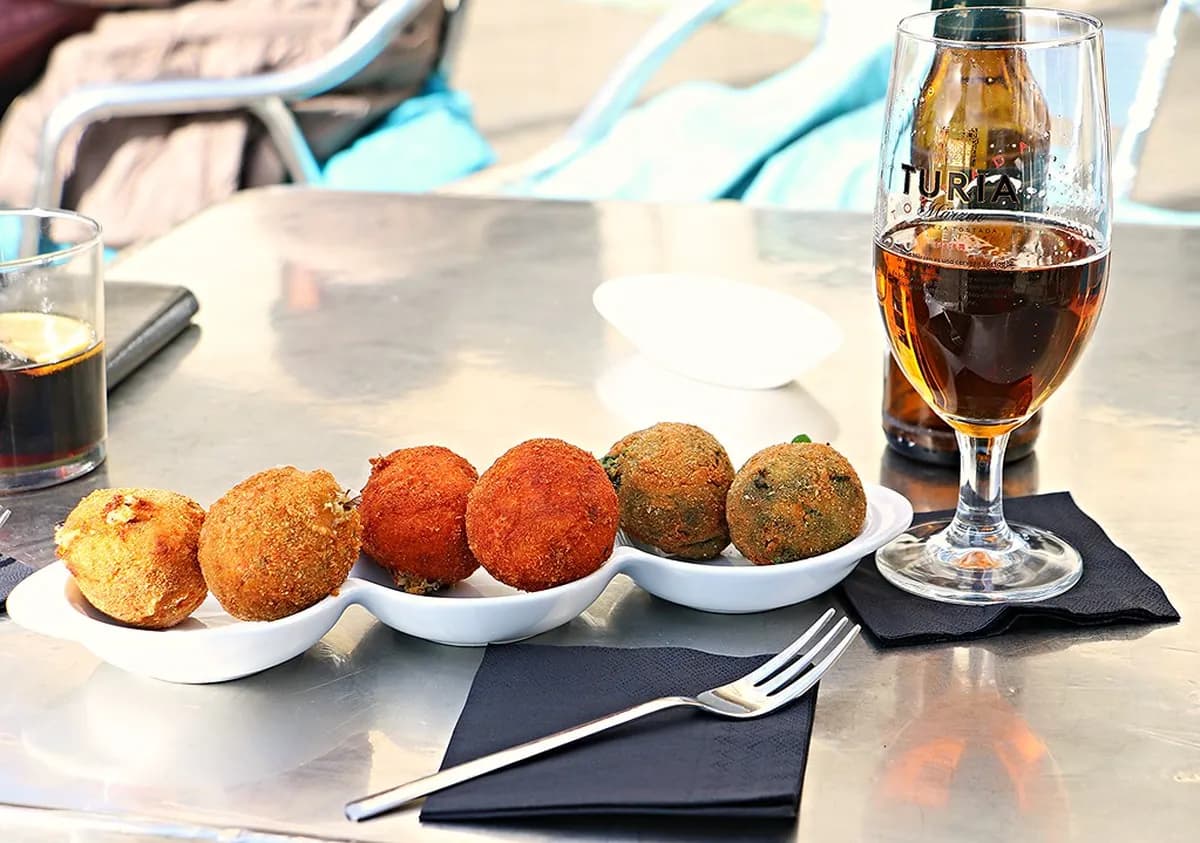
Vermouth is never consumed alone. The classic companions are "conservas" — high-quality tinned seafood — and the salty, acidic snacks that cut through the drink's sweetness. A proper vermut spread might include cockles (escopinyes), razor clams (navalles), mussels in escabetx, and sardines in tomato sauce. Drizzle everything with Salsa Espinaler, a paprika-vinegar sauce so synonymous with vermut culture that its bottles sometimes read "Salut i vermut!" You can find more food inspiration in our guide to the 12 Best Local Restaurants in Barcelona Travel Guide.
The "gilda" is the most iconic single bite: a skewer of anchovy, pickled guindilla pepper, and green olive. The acid cuts the sugar of the vermouth perfectly. Equally essential is the "matrimoni" — a plate of both salt-cured and vinegar-cured anchovies served together — a pairing Catalan bars have offered for generations and competitors rarely name specifically. Potato chips doused in salsa aperitiu round out the table.
Modern vermuterias have expanded the offering. Some now serve pa amb tomàquet (bread rubbed with tomato and olive oil) as a base for charcuterie, while others offer mushroom paella for groups wanting a full meal inside the ritual's social framework. For non-fish eaters, hard cheese, ibérico ham, and cured llonganissa salami are standard alternatives at most bodegas.
Top Historic Bodegas: Bar Electricitat and Vermuteria del Tano
Bar Electricitat (Carrer de Sant Carles 15, Barceloneta) is the reference point for the whole tradition. Founded in 1908, it is still very much a locals' bar despite every travel publication eventually discovering it. The house system is old-school: the waiter places an unlabeled bottle of house vermouth on your table and measures what is missing when the bill arrives. Expect to pay around €3–4 per glass. Go on a weekday at 13:00 if you want to hear yourself think; Sunday afternoons pack the sidewalk. The wooden refrigerators along the back wall are original — one of the few remaining markers of a truly 19th-century vermuteria.
Vermuteria del Tano (Carrer de Joan Blanques 17, Gràcia) has no such international reputation but many locals consider it the better glass. The walls are layered with football memorabilia — FC Barcelona sharing space with Espanyol, Leicester City, and AC Milan — and the conservas selection is exceptional. A gilda here costs around €2.50. Tano pours without ice as a statement of purism; if you want the sifó treatment, ask. The bar fills up quickly after 13:00 on weekends, and the crowd is genuinely mixed in age, which is the mark of a place that has not been colonised by any single demographic.
Both bars sit within the wider Gràcia neighborhood, which has the highest density of genuine bodegas of any district in the city. A short walk connects them to a half-dozen more without any strategic planning required.
| Bar | Neighborhood | Glass Price | Notable Feature | Closing Day |
|---|---|---|---|---|
| Bar Electricitat | Barceloneta | €3–4 | Founded 1908; waiter measures from unlabeled bottle | Open daily |
| Vermuteria del Tano | Gràcia | €2.50 (gilda) | Pours without ice as statement of purism | Check locally |
| Morro Fi | Multiple | €4 | Artisanal bottled vermut; house-made spiced chips | Varies by location |
| El Maravillas | Sant Antoni | €5 | Outdoor tables on pedestrianised street; fills by 13:00 | Open daily |
| Quimet & Quimet | Poble Sec | €4 | Standing-room institution; exceptional conservas selection | Closed Sundays |
Modern Classics and Hidden Gems: Morro Fi, El Maravillas, and Quimet & Quimet
Morro Fi started as a food blog before opening a small chain of minimalist vermuterias across the city. Their branded bottled vermouth has become a benchmark for the artisanal wave, and their house-made spiced potato chips are specifically engineered to match their blend. A glass costs around €4. Opening hours are typically 12:00–16:00 and 18:00–23:00 — check current times as they vary by location.
El Maravillas (Carrer del Parlament, Sant Antoni) captures the energy of the neighborhood's revival. It sits on one of the city's most fashionable pedestrianised streets, with outdoor tables that fill by 13:00 on Saturdays. The vermut negre de la casa costs around €5 and comes with a proper garnish. This is a good starting point for a crawl through the Sant Antoni neighborhood before the market closes on Sunday afternoon.
Quimet & Quimet (Carrer del Poeta Cabanyes 25, Poble Sec) is a standing-room-only institution famous for its montaditos — small open-faced sandwiches — and its conservas selection. Open 12:00–16:00 and 19:00–22:30, closed Sundays. Arrive exactly when they open; the queue builds within fifteen minutes. The house vermouth is smooth and the tinned seafood quality is among the highest in the city at the price point (€4–12 per plate).
Calçotada: The Seasonal Feast That Opens With Vermut
From January through March, Barcelona's food calendar pivots to the calçotada. A calçot is a long spring onion — more robust than a scallion, less sharp than a leek — charred over an open flame until the outer skin blackens and the interior softens to silk. The tradition originated in Valls (Tarragona) in the 19th century but now belongs to the whole of Catalonia. In 2026, most restaurants that take Catalan cuisine seriously will run a calçotada menu through the end of March.
The eating technique is non-negotiable. You peel away the charred outer layer, dip the white interior into romesco sauce — a thick paste of roasted red peppers, almonds, hazelnuts, garlic, and olive oil — then tilt your head back and lower the calçot into your mouth from above. Bibs are provided and expected. The sauce ends up everywhere regardless. After the calçots come grilled meats (lamb chops, botifarra sausage, pork ribs), then local cheeses, then crema catalana, then a glass of cava or moscatell. The whole progression takes three hours minimum.
The link to vermut is practical and traditional: a calçotada lunch typically opens with a round of vermut served over ice with the first snacks, bridging the wait while the calçots char on the grill outside. The connection is strongest at restaurants that do the full outdoor charcoal setup. In Barcelona, reliable spots for the full 2026 calçotada experience include La Pepita (Carrer de Còrsega 343, Gràcia), which runs the full progression from January and pairs it with an excellent house vermut to start. Can Ravell (Carrer d'Aragó 313, Eixample) offers a refined indoor version with high-quality romesco. For a more rustic, outdoor-fire experience closer to the Valls original, the options cluster in the Collserola foothills and the Llobregat delta — a 30-minute drive or train ride from the city centre.
Planning Your Vermut Crawl: Neighborhoods and Practical Tips
The three best neighborhoods for vermuteo are Gràcia, Sant Antoni, and Poble Sec. Gràcia gives you the village-in-the-city feel: narrow streets, hidden squares, and a density of bodegas unmatched elsewhere. Sant Antoni is more modern, centered around the iron-clad Mercat de Sant Antoni and attracting a younger, design-conscious crowd. Poble Sec sits on the slope of Montjuïc and tends to be quieter and more local-feeling than either of the above.
Skip the generic cafes on Las Ramblas entirely. They serve mass-produced brands at double the price without the proper garnish, the sifó, or the correct social atmosphere. Walk ten minutes in any direction into the side streets and you will find a proper bodega charging €2.50–4 per glass. The difference in quality and experience is significant.
Timing matters. Most locals arrive between 12:30 and 14:00, so arriving at noon is the right move if you want a table. If a bar is packed, standing at the bar or on the pavement is normal and accepted — do not wait for a table to free up. Bring cash; many neighbourhood bodegas still do not take cards. Budget roughly €10–15 per person for a full round of drinks and snacks at a traditional bodega, €20–25 at a modern vermuteria with a fuller food menu.
Many neighbourhood bodegas do not accept cards — always bring cash. Quimet & Quimet is closed on Sundays and the queue builds within fifteen minutes of opening at noon.
Frequently Asked Questions
What is the best time to go for vermut in Barcelona?
The peak time for the ritual is between 12:00pm and 2:00pm on weekends. Arriving early ensures you get a table before the local lunch rush begins.
What do you eat with vermut in Barcelona?
Traditional pairings include salty snacks like olives, potato chips with spicy sauce, and tinned seafood. The spicy 'gilda' skewer is the most iconic accompaniment.
Is vermut the same as martini?
While Martini is a famous brand of vermouth, the 'vermut' in Barcelona usually refers to local red varieties. These are often artisanal and served as a standalone drink.
Embracing the vermut ritual — and, in winter, a calçotada — is the fastest way to understand the soul of Barcelona. Both traditions reward those who slow down, eat with their hands, and let the afternoon unfold without a schedule. From the century-old tiles of Bar Electricitat in Barceloneta to the charcoal smoke of a January calçotada lunch in Gràcia, these are the experiences La Rambla was never going to show you. For more inspiration on exploring the region, check out our guide to traveling in Spain.
Remember to order the house vermut from the barrel, bring cash, and arrive before 13:00 if you want to sit. Whether you are here in the height of summer or in the grey cold of February, one of these two traditions will be in season. Find the right bodega, ask for the sifó, and let the ritual do the rest.
Pair this with our broader hidden gems in Barcelona guide for the full off-the-beaten-path overview.
Continue exploring
More guides you'll find useful