12 Best Off the Beaten Path Spots in Barcelona (2026)
Discover 12 authentic hidden gems in Barcelona. From the Horta Labyrinth to secret garden bars, escape the crowds with this local-led guide.
On this page
12 Best Off the Beaten Path Spots in Barcelona
In the summer of 2024, Barcelona residents took to the streets with water pistols, soaking tourists on Las Ramblas to protest a city they felt was being taken from them. Over 32 million visitors descend on a metropolitan area of 5 million people every year. That tension is not background noise — it is the reason this itinerary is structured the way it is.
This is not a list. Our 12 Best Hidden Gems in Barcelona guide already covers the full roster of overlooked spots. What this route does instead is sequence those same places into a three-day neighborhood-anchored itinerary so that you move like a resident, not a tourist doing laps around the Eixample. Each day groups spots by metro zone to cut out backtracking and keep you in one corner of the city long enough to actually feel it.
All prices and access rules have been verified for 2026. Carry a T-Casual (10-trip metro card, around €12.15) loaded before you leave the airport. The route below covers the south coast creative district on Day 1, the inland hill neighborhoods on Day 2, and the quieter northern reaches on Day 3.
Why This Route Matters in 2026
The 2024 protests forced the city government to fast-track a series of measures: stricter short-stay rental licensing in the Gothic Quarter and Barceloneta, new pedestrian capacity limits on sections of Las Ramblas, and an active campaign encouraging visitors to redistribute spending to peripheral neighborhoods. Going off the beaten path is no longer just about personal experience — it is a practical response to policy shifts that are actively reshaping which parts of the city welcome visitors.
Neighborhoods like Poblenou, Sant Antoni, and El Carmel have absorbed the creative energy that once concentrated in El Born and the Gothic Quarter. Rents are still lower, locals still outnumber tourists at most cafés, and the infrastructure is genuinely good. You can reach all three on the L4 Yellow Line or by a single bus transfer from Passeig de Gràcia.
The itinerary below keeps you away from the four postcodes that account for roughly 80 percent of visitor footfall. That is not a sacrifice. Those four postcodes contain some of the most commodified streetscapes in southern Europe. The rest of the city is quieter, cheaper, and more interesting.
Day 1: Poblenou and Sant Antoni — The Creative Coast
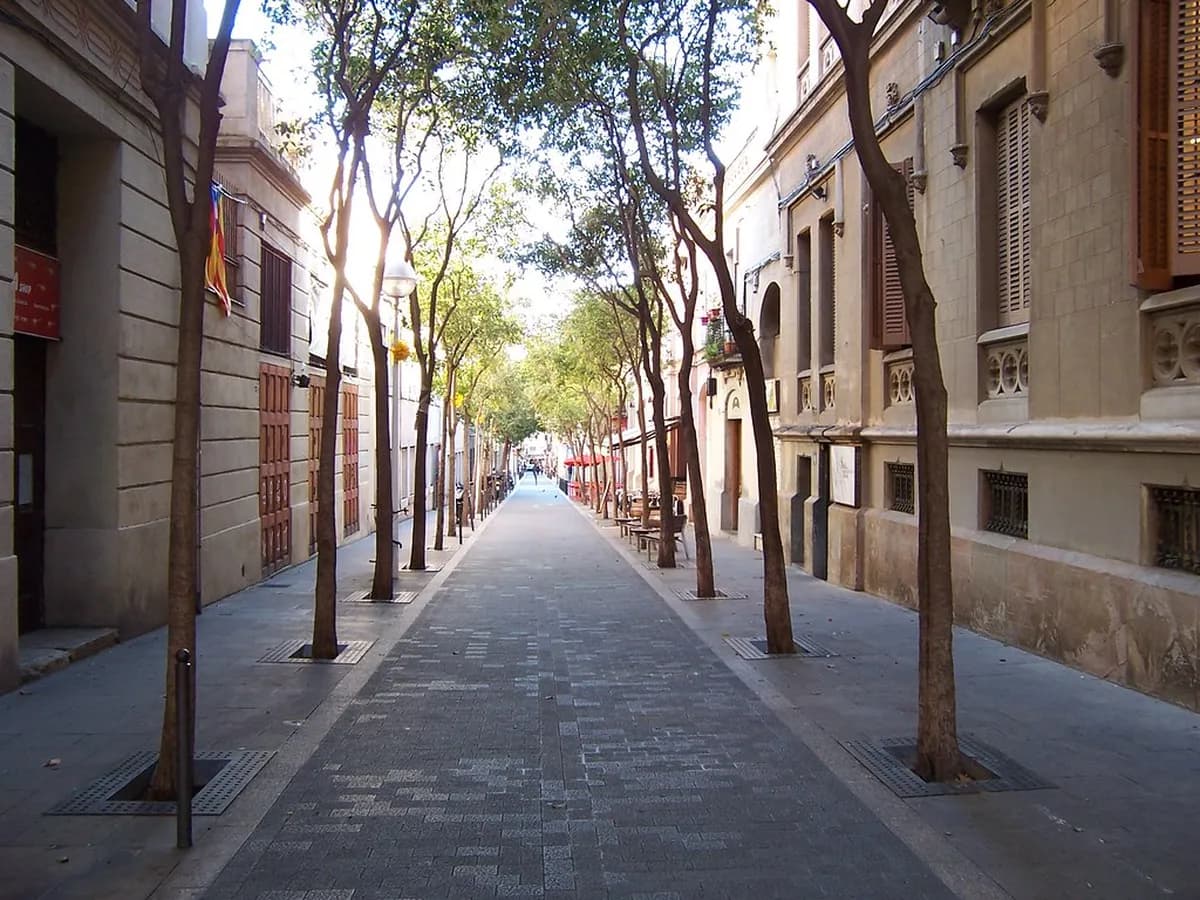
Start the morning in Poblenou, the former industrial district on the northeast coast that reinvented itself after the 2004 Universal Forum of Cultures. The Rambla del Poblenou is the neighborhood's main artery — a tree-lined boulevard about 1.2 km long that feels like the local answer to Las Ramblas, except the people sitting at the café tables are actually residents. Grab breakfast at any of the ground-floor bakeries around Carrer del Taulat before heading south toward the beach.
By late morning, cut inland on the L4 to Jaume I and walk through the Barri Gòtic to reach Mercat de Santa Caterina (Avinguda de Francesc Cambó, 16). The market opens at 07:30 and closes around 15:30 most weekdays, with extended hours until 20:30 on Thursdays and Fridays. The mosaic roof designed by Enric Miralles is genuinely striking. More importantly, the prices here are measurably lower than La Boqueria — a portion of jamón ibérico costs roughly €3–4 compared to €7–9 at the tourist market eight minutes away. Locals actually shop here. You will not be fighting tour groups for elbow room. A few minutes deeper into the Barri Gòtic, beside the cathedral, the Museu Frederic Marès is one of the quarter's most overlooked stops — a sculptor's eccentric collection set in a medieval royal palace, with free entry on the first Sunday of the month and every Sunday from 15:00.
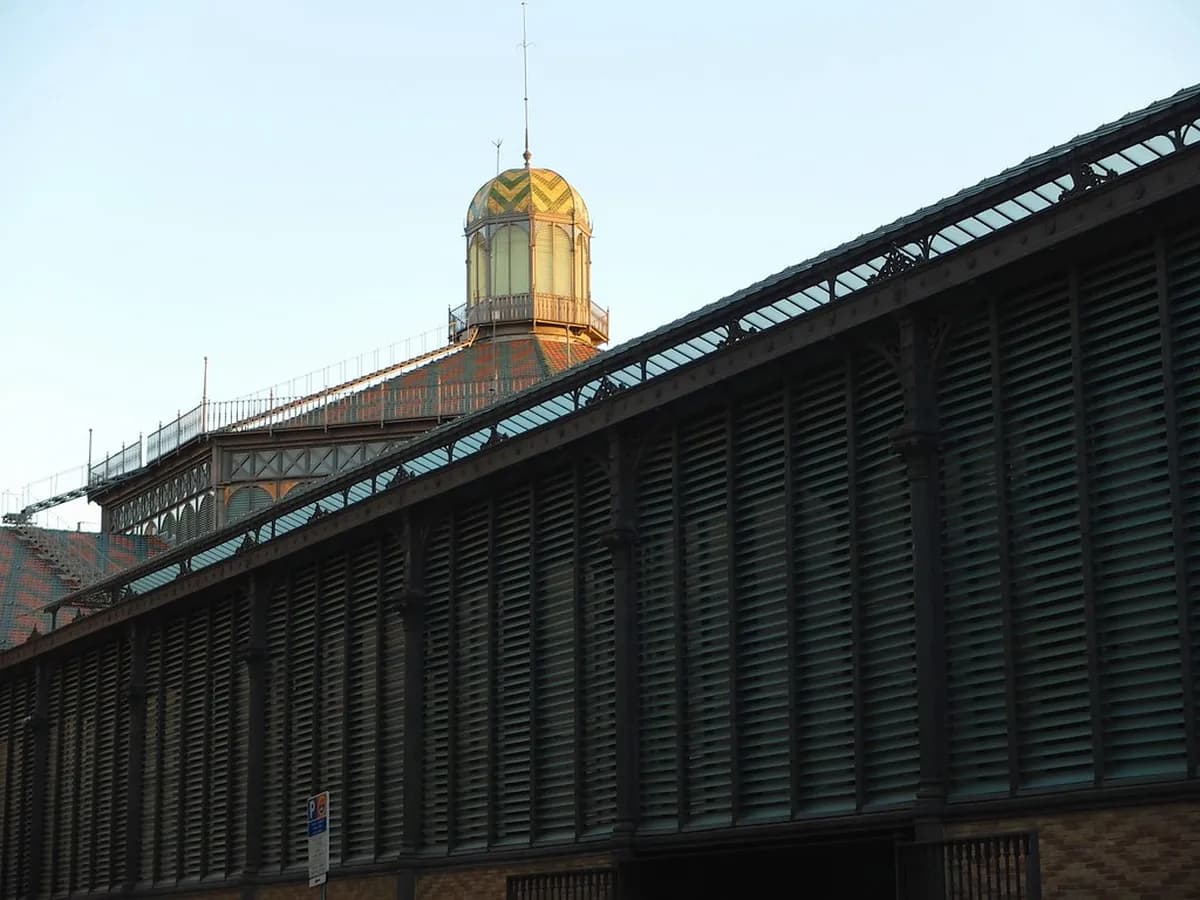
Spend the afternoon in Sant Antoni, accessible on the L2 to Sant Antoni station. The neighborhood anchors around the Mercat de Sant Antoni (Carrer del Comte d'Urgell, 1), a cast-iron Victorian market that completed a decade-long renovation in 2015. On Sunday mornings it hosts a secondhand book and vinyl market that draws a genuinely local crowd. The streets immediately surrounding the market — Carrer del Parlament, Carrer de Tamarit — are lined with natural wine bars and small-plate restaurants operating at local prices. Dinner here is a natural end to Day 1. Budget around €20–30 per person for food and drinks.
Walk the Sant Antoni neighborhood in the early evening when residents come out for the passeig, the slow pre-dinner promenade that has no tourist equivalent.
Mercat de Santa Caterina opens at 07:30 and a portion of jamón ibérico costs roughly €3–4 here, compared to €7–9 at La Boqueria eight minutes away. Dinner in the Sant Antoni streets runs about €20–30 per person.
Day 2: Gràcia and the Carmel Bunkers — The Hill Neighborhoods
Begin Day 2 at Plaça de la Virreina in Gràcia, a residential square dominated by the Sant Joan church. Order a coffee for under €3 at one of the terrace bars and watch the morning routine: neighbors buying bread, retired men reading newspapers, schoolchildren crossing the square with backpacks nearly as large as they are. The Gràcia neighborhood operates on its own social calendar, and the plazas are the living room. Plaça del Sol and Plaça de la Vila de Gràcia are both within a five-minute walk and have their own distinct characters.
From Gràcia, spend mid-morning at Casa Vicens (Carrer de les Carolines, 20), Gaudí's first major commission, completed in 1885. The neo-Mudéjar house predates his mature style and shows the architectural vocabulary he was borrowing from before he developed his own. Tickets cost around €20 and the complex stays open from 10:00 to 20:00. Visit counts a fraction of those at Casa Batlló — you can actually stand still, look up, and read the tile work without being pushed.
After lunch in Gràcia, take the D40 or 92 bus up to Bunkers del Carmel (Turó de la Rovira, El Carmel). The former anti-aircraft battery from the Civil War era provides a complete 360-degree panorama of the city — the full coastline, Montjuïc, the Sagrada Família spires, Tibidabo. The site was fenced in recent years and now operates specific visiting windows: currently until approximately 17:30 in winter and 19:30 in summer. Arrive at least 90 minutes before closing to guarantee entry. The Bunkers del Carmel sunset view is what every competitor page recommends. The morning visit is the differentiator: fewer people, better light for the city skyline, and no crowd competition for the best vantage spots.
Finish the day with a slow walk back down through El Carmel and Horta. The steep streets are lined with flat-roofed houses and corner tiendas that have not been touched by renovation money. It is the Barcelona that does not appear on any tourist map, and it is free to walk through.
Day 3: Horta, Pedralbes, and Montjuïc — The Quiet North and the Hill
Take the L3 Green Line to Mundet station for Parc de Laberint d'Horta, the oldest surviving garden in Barcelona. The cypress hedge maze dates to the 1790s when the Desvalls family commissioned a Neoclassical landscape garden on their estate. Entry is €3.30 per adult, but the park is famously free every Wednesday and Sunday — plan accordingly. The park opens at 10:00. Arrive within the first 30 minutes for the best version of the labyrinth: mist still sitting in the hedgerows, no school groups yet, the sound of running water from the central fountain carrying clearly across the garden.
From Horta, take the L3 back toward the center and transfer to the H6 or V3 bus to reach Monestir de Pedralbes (Baixada del Monestir, 9) in the northwestern residential district of Les Corts. Founded by Queen Elisenda de Montcada in 1326, the monastery's three-story Gothic cloister is one of the largest and best-preserved in the world. Standard tickets run around €5, and the site is open Tuesday through Sunday from 10:00 to 17:00 (until 19:00 in summer). Visitor numbers rarely exceed a few dozen at any one time. The contrast with the Sagrada Família queue — which in 2026 can still run to 45 minutes even with pre-booking — is stark.
Spend the late afternoon on Montjuïc, but avoid the castle and the cable car terminals where tour groups concentrate. Walk instead through the rose gardens above Passeig de Santa Madrona toward the Teatre Grec amphitheatre. Built for the 1929 International Exposition, the open-air theater is set into the hillside and surrounded by pine trees and terraced gardens. The surrounding grounds are free to enter daily from 10:00 until sunset (except during scheduled performances). Take a book, find a stone bench, and stay until the light turns orange. Round the afternoon off with a descent to the Jardins de Mossèn Costa i Llobrera on the south slope of Montjuïc — a specialized cactus and succulent garden with free entry that faces the industrial port and is almost never crowded even on summer weekends.
Parc de Laberint d'Horta is free every Wednesday and Sunday, but the park opens at 10:00 — arrive within the first 30 minutes to beat school groups and experience the labyrinth mist and fountain sounds without crowds.
Two Spots Worth Building a Morning Around
Hospital de Sant Pau Recinte Modernista (Carrer de Sant Antoni Maria Claret, 167) sits nine minutes on foot from the Sagrada Família and receives a fraction of its visitors despite being a UNESCO World Heritage Site and, by most architectural measures, the more audacious building. Lluís Domènech i Montaner designed the complex between 1901 and 1930 as a working hospital organized around pavilions connected by underground tunnels, each pavilion decorated with mosaics, stained glass, and sculpted stone. Self-guided tickets cost around €16 and the complex opens daily from 10:00 to 18:30. Visit Hospital de Sant Pau on the same day you visit Sagrada Família — the combination takes about half a day and the tonal contrast between the two buildings is itself instructive.
Plaça Sant Felip Neri in the Gothic Quarter requires a different kind of attention. This small fountain square still carries the shrapnel scars from a 1938 Civil War bombing that killed 42 people, most of them children sheltering from an air raid. The marks are visible at eye level on the right-hand wall as you enter from Carrer de Sant Sever. The square is used daily by children from the adjoining school, and an informal local rule asks visitors to keep voices low. Arrive before 09:00 to experience the space before any guided walking tours reach it — the quiet is total and the history is immediate in a way that no museum can replicate.
CosmoCaixa (Carrer d'Isaac Newton, 26), at the foot of Tibidabo, works best as a rainy-day anchor or a half-day addition on Day 3 if the weather turns. General admission is approximately €6, and the museum opens daily from 10:00 to 20:00. The flooded Amazon rainforest recreation inside — around 1,000 live animal and plant species in a glass enclosure — is genuinely unlike anything else in the city and holds children's attention far longer than Gaudí facades.
Getting Between These Neighborhoods
The T-Casual card (€12.15 for 10 trips in Zone 1) covers all metro, bus, and tram journeys within the city and is transferable between people in the same group. Buy it at any metro station before you leave the airport, not from street vendors. The metro runs from 05:00 to midnight Sunday through Thursday and stays open all night on Fridays and Saturdays.

For the hill sections of this itinerary — El Carmel, Horta, Pedralbes — buses are often faster than the metro because the L3 and L4 lines do not penetrate the northern districts. The D40 bus from Passeig de Gràcia reaches El Carmel in about 20 minutes and runs every 12 minutes during the day. The H6 horizontal bus connects the university district to Pedralbes without requiring a city-center transfer.
Walking the Poblenou neighborhood and its surrounding streets is more useful than the metro for that section — the Rambla del Poblenou and the streets between the waterfront and Carrer de la Marina are best seen at a stroll. The beach at Nova Icària, two minutes south of the Rambla del Poblenou, is noticeably less crowded than Barceloneta even in August, because most visitors do not walk this far northeast.
Ride-sharing and taxis are worth considering for late-night returns from El Carmel or Horta, where the bus frequency drops significantly after 22:00. A ride back to the Eixample from the Bunkers del Carmel typically costs €8–12 via Cabify or FreeNow.
Where to Base Yourself for This Route
Staying in Poblenou puts you within walking distance of Day 1 and 10 minutes by metro from Gràcia. Hotels here run €70–120 per night for a three-star equivalent — significantly less than comparable properties in the Gothic Quarter or Eixample. The neighborhood feels genuinely local: bakeries, hardware shops, and dive bars that predate the design-district rebranding all still operate within a block of the seafront hotels.
Gràcia is the other obvious base. It is quieter, further from the beach, and sits directly below the Carmel Bunkers on the metro map. The independent hotel stock here tends toward mid-century apartment conversions rather than corporate chains. Budget €80–140 per night and look for properties near Fontana or Diagonal metro stations, which give the best access to the Day 2 and Day 3 zones.
Avoid basing yourself in the Gothic Quarter or Barceloneta for this specific itinerary. Both are convenient for standard tourist circuits but generate unnecessary transit time for the spots covered here and add exposure to the overcrowding problem the itinerary is designed to sidestep.
| Neighborhood base | Nightly cost (3-star) | Metro access | Beach access |
|---|---|---|---|
| Poblenou | €70–120 | L4 (10 min to Gràcia) | Walking distance |
| Gràcia | €80–140 | Fontana / Diagonal | 30+ min |
| Gothic Quarter | Higher | Central | 15 min |
| Barceloneta | Higher | L4 | Immediate |
Frequently Asked Questions
What are the best Barcelona hidden gems worth visiting?
The Horta Labyrinth Park and the Hospital de Sant Pau are top-tier gems. They offer world-class architecture and nature without the crushing crowds of more central landmarks. Both are easily accessible via the metro system.
Is the Bunkers del Carmel still open to the public?
Yes, but access is restricted by new fencing and specific operating hours. It currently closes at 5:30pm in winter and 7:30pm in summer. Check the local council website for the most recent schedule updates.
How do I get to the Horta Labyrinth Park?
Take the L3 Green Line metro to the Mundet station. From there, it is a well-signposted 10-minute walk uphill to the park entrance. Consider visiting on Wednesday or Sunday for free admission.
A three-day off-the-beaten-path route through Barcelona does not require sacrifice. Poblenou, Gràcia, El Carmel, Horta, and Pedralbes collectively offer better architecture, lower prices, and more honest human interaction than anything along the standard tourist corridor. The 2024 protests made clear that the city needs visitors to make different choices. This itinerary is one practical way to do that without giving anything up.
For deeper context on individual spots across the city, the 12 Best Hidden Gems in Barcelona guide covers the full list with individual entry logistics. For planning the rest of your time in the country, our Spain travel guides cover the broader region.
Continue exploring
More guides you'll find useful