Sant Pau Hospital Barcelona: The Ultimate Visitor Guide
Sant Pau Recinte Modernista in Barcelona — tickets, the history of Domènech i Montaner's masterpiece, and tips for exploring the pavilions.
On this page
Sant Pau Hospital Barcelona (Recinte Modernista)
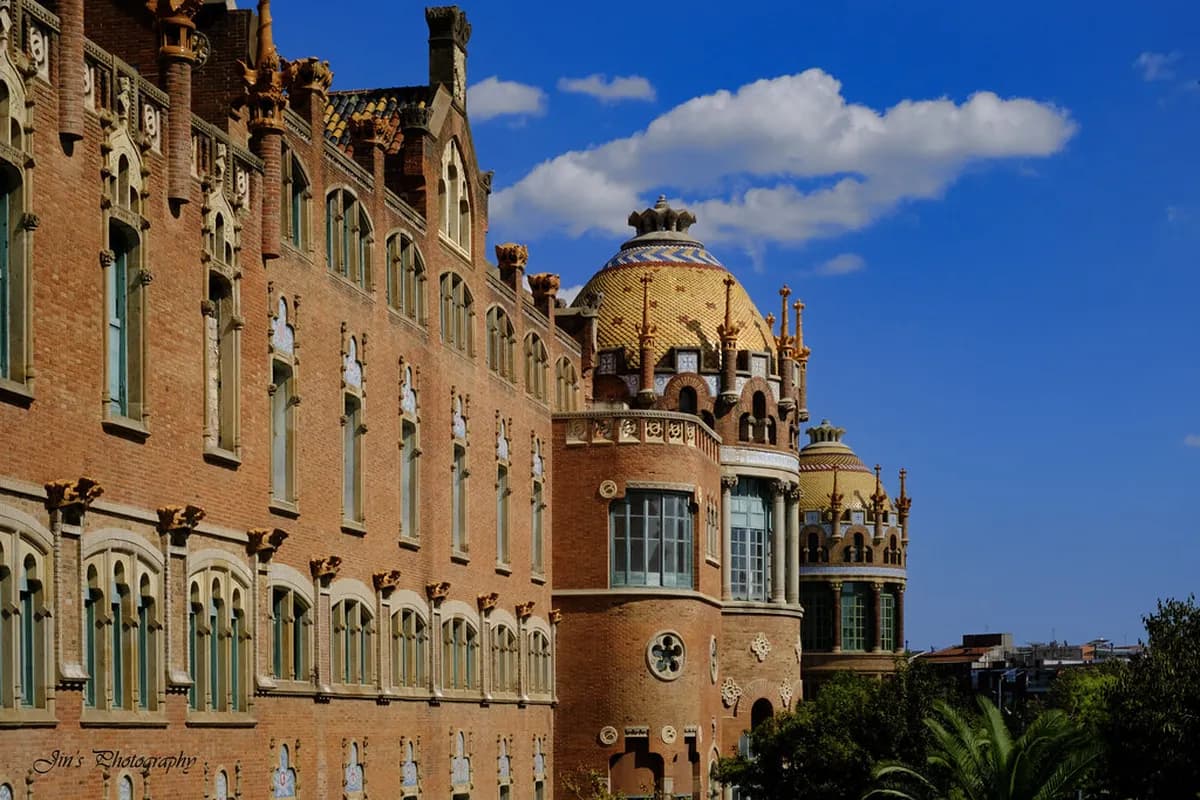
Barcelona is famous for its striking architecture, but one site consistently surprises visitors with its sheer scale and calm. The Sant Pau Recinte Modernista is Europe's largest Art Nouveau complex, a UNESCO World Heritage site, and one of the most beautiful buildings on the continent — yet on most mornings you can walk its gardens almost alone.
Designed by Lluís Domènech i Montaner and built between 1901 and 1930, this former hospital was conceived on the radical idea that beauty itself heals. Color, natural light, and garden air were not decorative extras — they were the medicine.
In 2026, with Sagrada Família queues stretching 90 minutes and Park Güell timed-entry slots selling out weeks ahead, Sant Pau has become the most compelling answer to a question Barcelona visitors increasingly ask: where can I see world-class Modernisme without the crush? This guide covers everything you need to visit confidently.
Why Sant Pau Is Barcelona's Best-Kept Modernist Secret
The Recinte Modernista sits at the top of Avinguda de Gaudí, roughly 500 metres north of Sagrada Família. Most tourists who come by metro to visit Gaudí's basilica never walk those extra five minutes. That gap in foot traffic is why Sant Pau retains the atmosphere of a place genuinely discovered rather than managed.
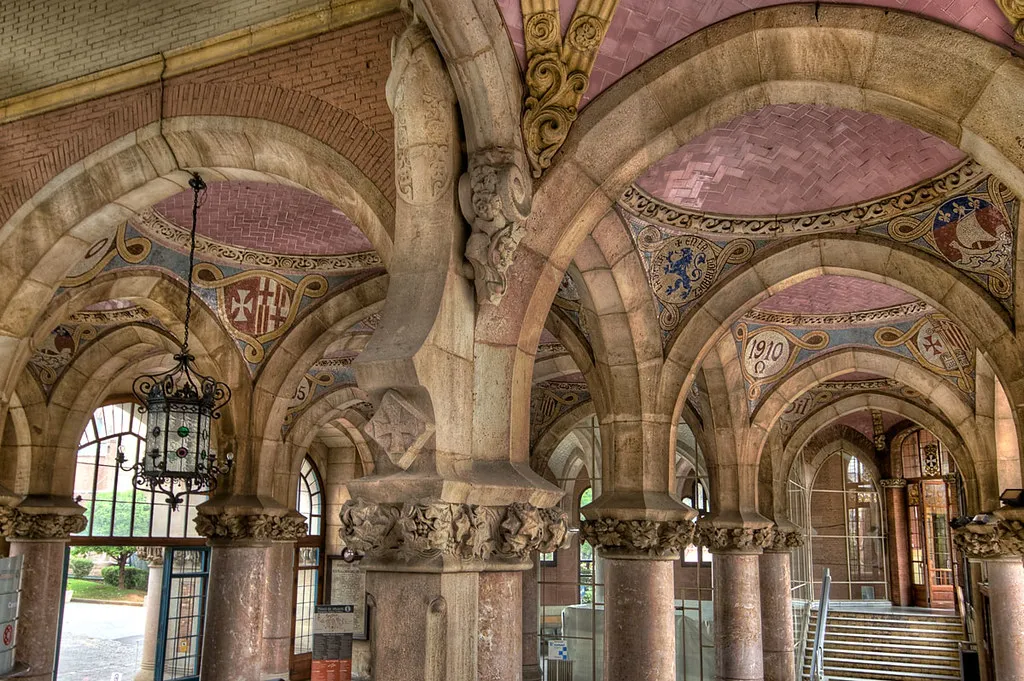
The complex covers an entire city block — its footprint is actually larger than Sagrada Família's. It comprises 12 Modernista pavilions arranged in a garden grid, connected by an underground tunnel system, each one decorated with ceramic mosaics, stained glass, and stone carvings. The Administration Pavilion alone would headline any other European city's architectural tourism offer.
For anyone exploring 12 Best Hidden Gems in Barcelona, this is the one site that consistently outperforms expectations. Photographers in particular find it revelatory: the pavilion domes photograph cleanly at almost any hour, without the crowds that make composing a clean shot at Gaudí sites nearly impossible.
History: From Medieval Welfare to Modernist Icon
The story begins in 1401, when the Hospital de la Santa Creu was founded in El Raval to consolidate six smaller hospitals under one roof. That Gothic building served Barcelona for five centuries and is still standing today — Antoni Gaudí died there in 1926 after being struck by a tram. It now houses the National Library of Catalonia.
By the late 19th century, rapid industrialization had made the El Raval facility both too small and too unhygienic for a modern city. A Catalan banker named Pau Gil left a large legacy in his will for a replacement hospital, on the single condition that it bear his name. His bequest, confirmed in 1896, allowed the city to commission Domènech i Montaner to design from scratch.
Construction began on 15 January 1902. Domènech envisaged 48 pavilions across a park-hospital campus; by his death in 1923, the project was still ongoing, and his son Pere Domènech i Roura completed the work. The new hospital was formally handed to King Alfonso XIII on 16 January 1930. It functioned as a working hospital for nearly 80 more years, until 2009, when a modern facility opened directly behind the Modernista complex. The historic buildings have been open to visitors ever since.
UNESCO recognized the complex as a World Heritage Site in 1997, citing its "architectural uniqueness and artistic beauty." It shares that designation with the Palau de la Música Catalana — the only other building Domènech i Montaner built to comparable scale and ambition.
The Architectural Vision: Domènech i Montaner vs. Gaudí
Both men dominated Catalan Modernisme, but their methods were entirely different. Gaudí worked from organic, nature-derived forms — hyperboloids, paraboloids, structures that grow like bones and branches. Domènech i Montaner practised what historians call Rationalist Modernisme: a discipline rooted in structural logic, using industrial steel frames to achieve large vaulted spaces, then covering every surface in symbolic decoration.
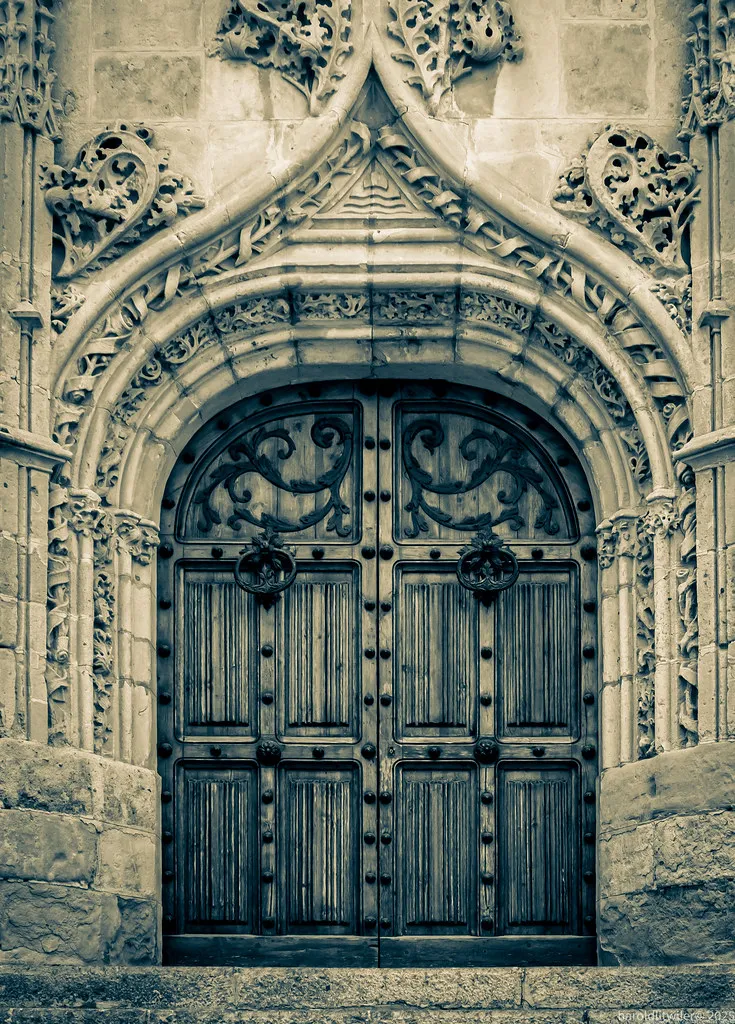
At Sant Pau, that decoration was never arbitrary. The ceramic tiles that line the pavilion interiors were chosen partly for hygiene — smooth glazed surfaces are easy to disinfect — and partly to lift patients' spirits. The stained glass floods wards with tinted light that shifts colour through the day. The building materials — red brick for facades, natural stone for decorative elements, iron for structural spans — were chosen to last centuries without degrading. The UNESCO listing emphasizes these structural and artistic contributions as masterpieces of early 20th-century Art Nouveau.
Domènech i Montaner was, by many accounts, the more technically sophisticated architect of the two. He is widely regarded as the father of Catalan Modernisme. Gaudí was his student. Understanding this reverses the tourist hierarchy: visitors who seek out Barcelona modernism beyond Gaudí will find in Domènech a figure of comparable genius and considerably less commercial noise.
Eusebi Arnau and the Decorative Programme
The sculptures, mosaic friezes, and stone reliefs that cover the pavilions are not anonymous craft. Most of them were made by Eusebi Arnau (1863–1934), a Catalan sculptor who was Domènech i Montaner's primary decorative collaborator across multiple major commissions. Arnau also carved the sculptural programme at the Palau de la Música Catalana and contributed to Casa Lleó Morera on the Manzana de la Discordia.
At Sant Pau, Arnau's work is most visible on the Administration Pavilion facade, where allegorical figures represent charity, knowledge, and healing. The dragon at the entrance to the Sant Salvador Pavilion — a recurring symbol in Catalan iconography — is also attributed to his workshop. Knowing this name gives you a thread to follow as you move through the complex: look for the organic floral ornament, the female figures, and the animal motifs that signal his hand.
No competitor guide to Sant Pau names Arnau explicitly, despite the fact that his contribution to the visual character of the building is as significant as Domènech i Montaner's structural contribution. Architecture enthusiasts who recognize his name will feel the article — and the site — reward their knowledge. For a broader context of Sant Pau's place in Barcelona's architectural landscape, the Ruta del Modernisme provides a comprehensive itinerary linking all major Catalan Art Nouveau buildings.
Exploring the Pavilions and Underground Tunnels
The recommended route begins at the Sant Salvador Pavilion, now home to a permanent exhibition tracing the hospital's history from its 1401 founding to its 2009 closure. A symbolic dragon at the entrance pays tribute to Domènech i Montaner's broader body of work. Budget 20–25 minutes here before heading out into the garden.
The underground tunnel network is the single most surprising element of the complex for most visitors. Over one kilometre of passageways runs beneath the garden, connecting all the pavilions. These tunnels were designed so that patients could be transferred between wards — and food, laundry, and medical supplies could move — without exposure to the weather or cross-contamination risk. Walking them today is one of the quieter, more atmospheric parts of the visit.
The Sant Rafael Pavilion has been restored to its early-20th-century appearance, with original ward furniture and equipment in place. It gives the clearest picture of what a patient's daily environment looked like. One pavilion has deliberately been left unrestored, so visitors can see the raw fabric of the building before conservation — a useful contrast. The Administration Pavilion, reached at the end of the suggested circuit, is the grandest interior: marble columns, mosaic-covered ceilings, and an entrance hall designed to look like a church nave, symbolising the hospital's Christian charitable mission.
The gardens between pavilions were planted with horse chestnut, linden, and orange trees along the central promenade, with medicinal plants — laurel, lavender, rosemary — lining the beds. This was intentional: the garden was part of the therapeutic environment, not just landscaping.
A Living Campus, Not Just a Museum
Since closing as a hospital in 2009, the complex has been repurposed as what its foundation calls a "knowledge campus." The tenants are not souvenir shops. The European Forest Institute, the Global University Network for Innovation, the Casa Àsia cultural institute, and the United Nations University Institute on Globalization, Culture and Mobility all have offices inside the pavilions. Walking through the grounds on a weekday, you pass working professionals alongside tourists — an unusually grounded atmosphere for a heritage site.
The pavilions also host events. During Barcelona Fashion Week, runway shows take place inside the historic wards — models walking where patients once slept. The juxtaposition is striking, and it illustrates something that purely museified sites lack: the buildings are warm and in use, not preserved behind glass. Temporary exhibitions rotate through the unrestored pavilion throughout the year.
This current-use dimension is something every competitor page either skips or mentions in passing. It matters practically: it means the site has opening-hours energy even outside peak season, and it gives a strong reason to visit more than once on a longer Barcelona trip.
Visitor Guide: Tickets, Hours, and How to Get There
In 2026, general admission is €17 for adults aged 25–64. Youth tickets (ages 12–24) and seniors (65+) cost €12.60. Children under 12 enter free. Holders of the Barcelona Card or Bus Turístic receive a 20% discount. Admission is free on 23 April (Sant Jordi Day), Museum Night, and 24 September (La Mercè). Check the official website for the current guided-tour schedule and to book in advance — walk-in availability is generally good on weekdays but tighter on weekend mornings.
Sant Pau admission is free on 23 April (Sant Jordi Day) and 24 September (La Mercè) — if your visit falls near these dates, you can experience one of Europe's finest Modernista complexes without paying the €17 standard ticket.
Opening hours run from 09:30 to 18:30 daily between April and October, and 09:30 to 17:00 from November to March. Last entry is 30 minutes before closing. Arriving at 09:30 on a weekday is reliably the quietest window — the pavilion gardens are largely empty for the first hour, and the stained glass is at its best in morning light before direct sun hits the west-facing facades.
The address is Carrer de Sant Antoni Maria Claret, 167, in the Eixample district. By metro, take Line 5 (Blue) to Sant Pau–Dos de Maig, or Line 4 (Yellow) to Guinardó–Hospital de Sant Pau. Both stops are a two-minute walk. From Sagrada Família, walk 10–12 minutes north along Avinguda de Gaudí — the route is flat, pedestrianised, and gives you the first long sightline to the Administration Pavilion dome as you approach.
The complex is fully accessible for visitors with limited mobility. Ramps and elevators connect all main levels, and the tunnel system at ground level avoids most staircases. Staff can direct wheelchair users to the most accessible circuit. Plan 90 minutes for a self-guided visit; 2 to 2.5 hours if you take a guided tour or spend time in the permanent exhibition.
Sant Pau vs. Sagrada Família: Making the Choice
The two buildings are 500 metres apart and take about 10 minutes to walk between. You can visit both in a single day. A practical sequence: book Sagrada Família for first entry at 09:00, spend 90 minutes inside, then walk north along Avinguda de Gaudí to reach Sant Pau by 11:00 — before the midday visitor peak at both sites.
Sagrada Família tickets with a tower sell out days or weeks ahead in summer — book Sagrada Família first, then plan Sant Pau for immediately after (walk 10 minutes north along Avinguda de Gaudí), rather than the reverse.
The comparison matters beyond logistics. Sagrada Família is still under construction and will be until at least 2026–2028; parts of the interior are scaffolded and some sections are not accessible. Sant Pau is fully restored and entirely open. The ticket for Sagrada Família with a tower costs €36–€47 depending on the tour type. Sant Pau costs €17. The crowd density at Sagrada Família on a summer Saturday is extreme by any measure; at Sant Pau on the same day, the pavilion gardens are walkable without contact.
For travelers interested in 27 Unique Things to Do in Barcelona: Hidden Gems & Local Secrets, Sant Pau consistently delivers a richer architectural experience per visitor per square metre than any other Modernista site in the city. It is not a consolation prize for missing Gaudí. It is a first-choice destination that happens to be undervisited.
| Feature | Sant Pau Recinte Modernista | Sagrada Família |
|---|---|---|
| Adult ticket (2026) | €17 | €26–47 (with tower) |
| Crowd level | Low | Extreme |
| Construction complete? | Yes (fully restored) | No (scaffolded areas until 2026–28) |
| UNESCO World Heritage | Yes (1997) | Yes (1984) |
| Self-guided route | Yes | Mostly scripted circuit |
| Recommended visit time | 90–150 min | 90–120 min |
| Distance between sites | 500 m / ~10 min walk | |
Photography and Timing Tips
The Administration Pavilion facade faces roughly east and photographs best in the first two hours after opening, when the morning light hits the brick and stone carvings at a low angle. The domed roofs on the smaller pavilions catch light differently through the day — midday produces the most saturated colours on the ceramic tiles, while late afternoon creates long shadows across the garden paths.
The stained glass in the Sant Rafael ward interior is at its most dramatic around 11:00–13:00 when the sun reaches the south-facing windows. If you visit in winter (November to March), the lower sun angle produces stronger interior light for the same windows by 10:30. A wide-angle lens or a phone in portrait mode captures the full height of the vaulted ward ceilings without distortion. The tunnels are dark; a phone torch or camera night mode is useful for detail shots underground.
The best unobstructed view of the full complex — showing three or four pavilion domes simultaneously — is from the corner of Carrer de Sant Antoni Maria Claret and Carrer de Sant Quintí, outside the main entrance gate. This is the shot most photographers miss because they move inside immediately on arrival.
Frequently Asked Questions
Is Sant Pau Hospital worth visiting?
Yes, it is highly recommended for architecture lovers and those seeking a quieter experience. It offers world-class Art Nouveau design for a lower price than many Gaudí sites. You can find more details in our guide to 27 Unique Things to Do in Barcelona: Hidden Gems & Local Secrets.
How long does it take to visit Sant Pau Recinte Modernista?
Most visitors spend between 1.5 and 2 hours exploring the pavilions, tunnels, and gardens. This allows enough time to read the historical displays and take plenty of photos. You may want extra time if you join a guided tour.
Can you visit Sant Pau Hospital and Sagrada Familia on the same day?
Absolutely, as they are connected by a short ten-minute walk along a pleasant pedestrian avenue. Many travelers visit the Sagrada Família in the morning and Sant Pau in the afternoon. This pairing makes for a perfect Modernist-themed day.
What is the difference between the old and new Sant Pau hospital?
The old hospital is the historic Modernist site now used as a museum and cultural center. The new hospital is a modern medical facility located just behind the historic complex. Make sure to head to the Recinte Modernista for the tourist entrance.
The Sant Pau Recinte Modernista is a testament to the vision of Lluís Domènech i Montaner and the spirit of Barcelona. It remains a place where beauty and history meet to tell a story of healing and artistic excellence.
Whether you are an architecture enthusiast or a casual traveler, this site offers a memorable experience that stands out from the typical tourist path. Plan your visit today to see why this 'city within a city' is a must-see landmark in 2026.
Continue exploring
More guides you'll find useful