8 Essential Stops for Art Nouveau Barcelona: A Modernisme Itinerary
Explore the best of Art Nouveau Barcelona with our self-guided itinerary. Discover Gaudí's masterpieces, the Block of Discord, and hidden Modernista gems.
On this page
8 Essential Stops for Art Nouveau Barcelona
Barcelona's Art Nouveau is called Modernisme here, and it is not the same thing as the style you'd find in Paris or Vienna. It grew out of a specific moment of Catalan political ambition, industrial wealth, and cultural revival — and it produced more UNESCO World Heritage buildings than any other city on earth. Nine of Barcelona's UNESCO-listed structures belong to the Modernisme movement, all built within roughly thirty years between the late 1880s and the 1910s.
Most visitors come for Gaudí. That makes sense: his buildings are extraordinary. But Gaudí was one of three architects who defined the movement, and the other two — Lluís Domènech i Montaner and Josep Puig i Cadafalch — left behind buildings that are equally ambitious and far less crowded. This guide covers the essential stops across the full movement, from the Block of Discord on Passeig de Gràcia to the Hospital de Sant Pau and the industrial masterpiece at CaixaForum. It also explains how to visit them efficiently, including which sites can still be entered without booking weeks in advance.
If you want to escape the Sagrada Família axis in 2026, the non-Gaudí buildings are your structural answer. They sit in the same neighborhoods, they are equally beautiful, and on a typical morning the queues are a fraction of the length. This guide points you toward both worlds. Start with the full picture, then choose your own depth. Look for the 12 Best Hidden Gems in Barcelona that the crowds walk past entirely.
The Roots of Catalan Modernisme
Modernisme emerged directly from the Renaixença — the 19th-century revival of Catalan language, traditions, and national identity. While the rest of Spain struggled economically after losing Cuba, Puerto Rico, and the Philippines in 1898, Catalonia was industrialising rapidly. A new class of wealthy factory owners and merchants wanted architecture that expressed both their money and their Catalan pride. They funded it aggressively, and they gave architects unusual creative freedom to experiment.
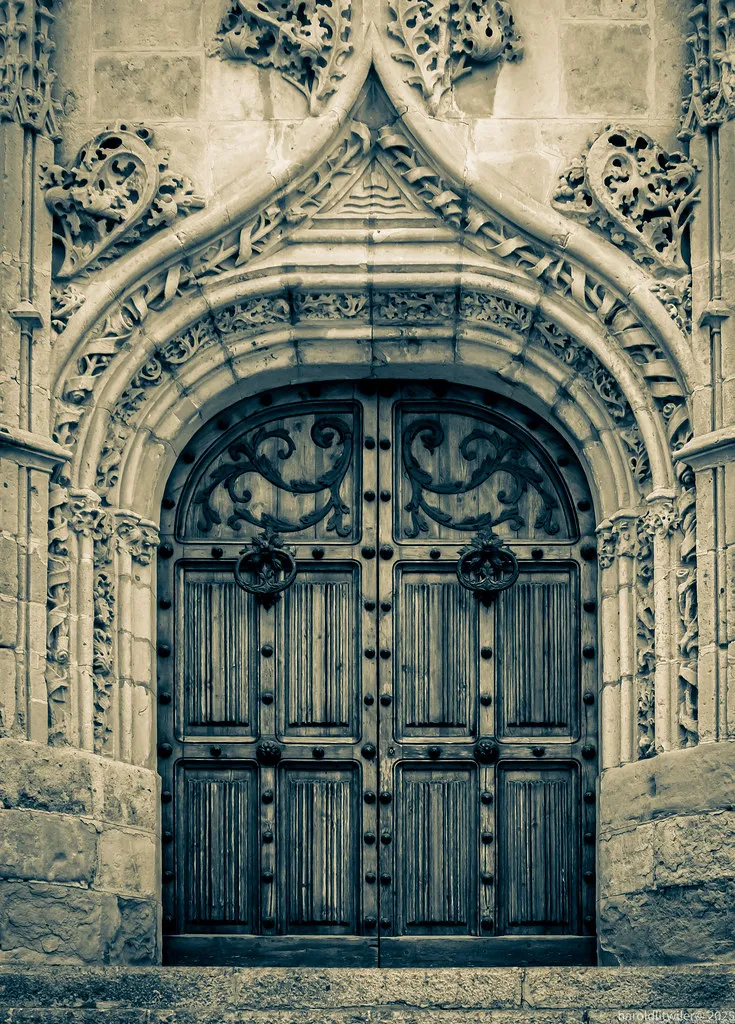
The Eixample district provided the physical canvas. Designed by Ildefons Cerdà in the 1860s as a rational grid expansion north of the old city, the Eixample was largely undeveloped when Modernisme arrived. Architects could design entire buildings from scratch on uniform plots, without the constraints of medieval street plans. The result is the highest concentration of Art Nouveau architecture anywhere in the world — over 2,000 buildings with Modernista elements within a single grid.
The movement began officially in 1888, when Domènech i Montaner designed the café-restaurant for Barcelona's Universal Exhibition. His buildings, and those of his peers, carried a deliberate political message: Catalonia had its own culture, its own aesthetic language, and its own claim to European modernity. The buildings were not just beautiful objects. They were arguments.
The Three Architects: Gaudí, Domènech i Montaner, and Puig i Cadafalch
Antoni Gaudí (1852–1926) is the architect the world knows, and his work justifies the fame. His buildings — Casa Batlló, Casa Milà, Sagrada Família, Parc Güell, Casa Vicens — are unlike anything else produced in the movement. He worked from nature's geometry: parabolic arches, hyperboloid vaults, branching columns modeled on trees. His techniques for calculating structural loads were so unconventional that engineers are still documenting them. He spent the last fourteen years of his life working exclusively on the Sagrada Família.
Lluís Domènech i Montaner (1849–1923) is the architect historians most often call the true founder of Modernisme. His 1878 essay "In Search of a National Architecture" set out the movement's intellectual framework before a single major building was complete. He drew heavily on Moorish and medieval Catalan precedents, combined them with industrial materials like exposed brick and iron, and covered surfaces in mosaic and ceramic decoration. His two greatest buildings — the Palau de la Música Catalana and the Hospital de Sant Pau — are both UNESCO World Heritage sites.
Josep Puig i Cadafalch (1867–1956) blended Gothic forms with the neo-medieval aesthetic of northern Europe, producing buildings that read differently from either Gaudí or Domènech. His Casa Amatller, Casa de les Punxes, and the industrial CaixaForum building each show a different register of the same sensibility: precise decorative programs, heraldic stonework, and strong silhouettes. Puig was also a serious politician and archaeologist, and he survived into the Noucentisme era by adapting his style toward cleaner lines. His buildings are arguably the most accessible entry point for visitors unfamiliar with Modernisme.
The non-Gaudí Modernisme circuit (Hospital de Sant Pau €16, Palau de la Música guided tour €22, Casa Amatller €19, CaixaForum free) covers equally significant architecture for under €60 — with substantially shorter queues than the Gaudí sites.
The Block of Discord on Passeig de Gràcia
The stretch of Passeig de Gràcia between Carrer d'Aragó and Carrer del Consell de Cent is called the Manzana de la Discordia — the Block of Discord. Within a single block, three rival architects each renovated an existing mansion for wealthy clients at roughly the same time. The proximity was not accidental: competing patrons wanted their building to outshine the neighbours, and the architects obliged. The result is the most concentrated display of Modernisme rivalry anywhere in the city.
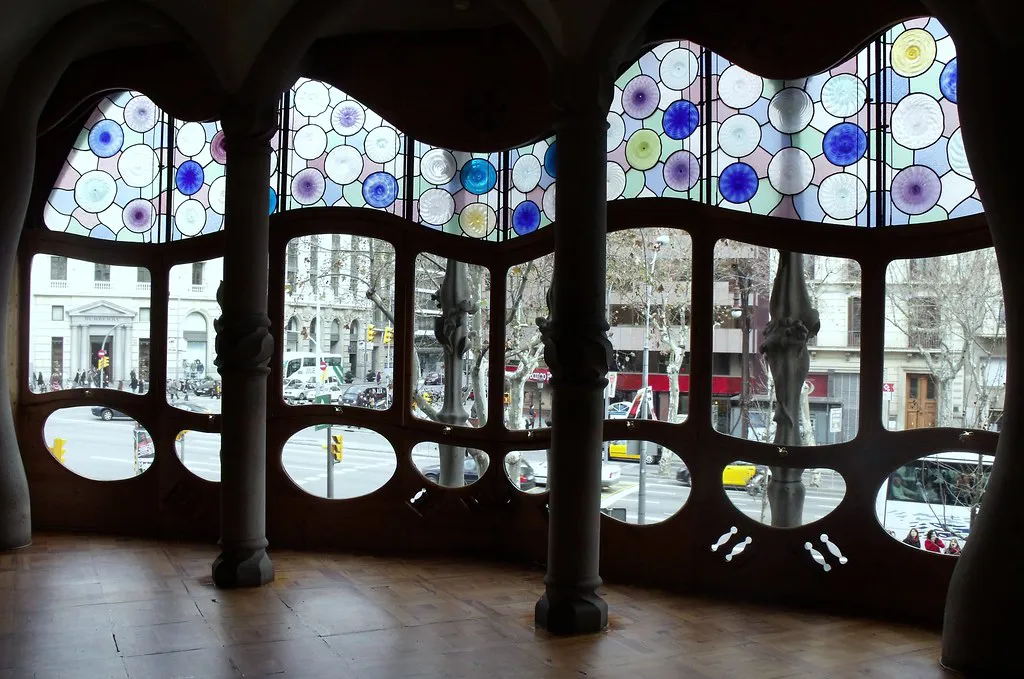
Casa Lleó Morera (Pg. de Gràcia 35) is Domènech's entry. Built 1902–05, the wraparound facade is dense with floral sculpture and stained glass. The interior is not regularly open to tourists, but the ground floor and facade are freely visible. A luxury leather goods shop now occupies the corner, which partially obscures the original entrance. Casa Amatller (Pg. de Gràcia 41) was Puig's commission from the chocolate manufacturer Antoni Amatller in 1898–1900. The stepped gable references Flemish and Catalan Gothic simultaneously. The ground floor operates as a chocolate café and Amatller brand shop, and guided interior tours run daily for around €19. It is the most accessible of the three buildings from a queue perspective.
Casa Batlló (Pg. de Gràcia 43) is Gaudí's 1904 transformation of an earlier structure. The facade represents the legend of Sant Jordi: the dragon roof, the cross tower as the knight's lance, the bone-like columns as the victims. The immersive interior tour costs €35–€49 in 2026 and should be booked at least 7–10 days in advance for summer visits. On the same block, look down at the pavement: the red flower tiles embedded in the hexagonal paving slabs mark the official Ruta del Modernisme route. Wherever you see them, a significant building is nearby.
Gaudí's Big Three: Sagrada Família, La Pedrera, and Casa Batlló
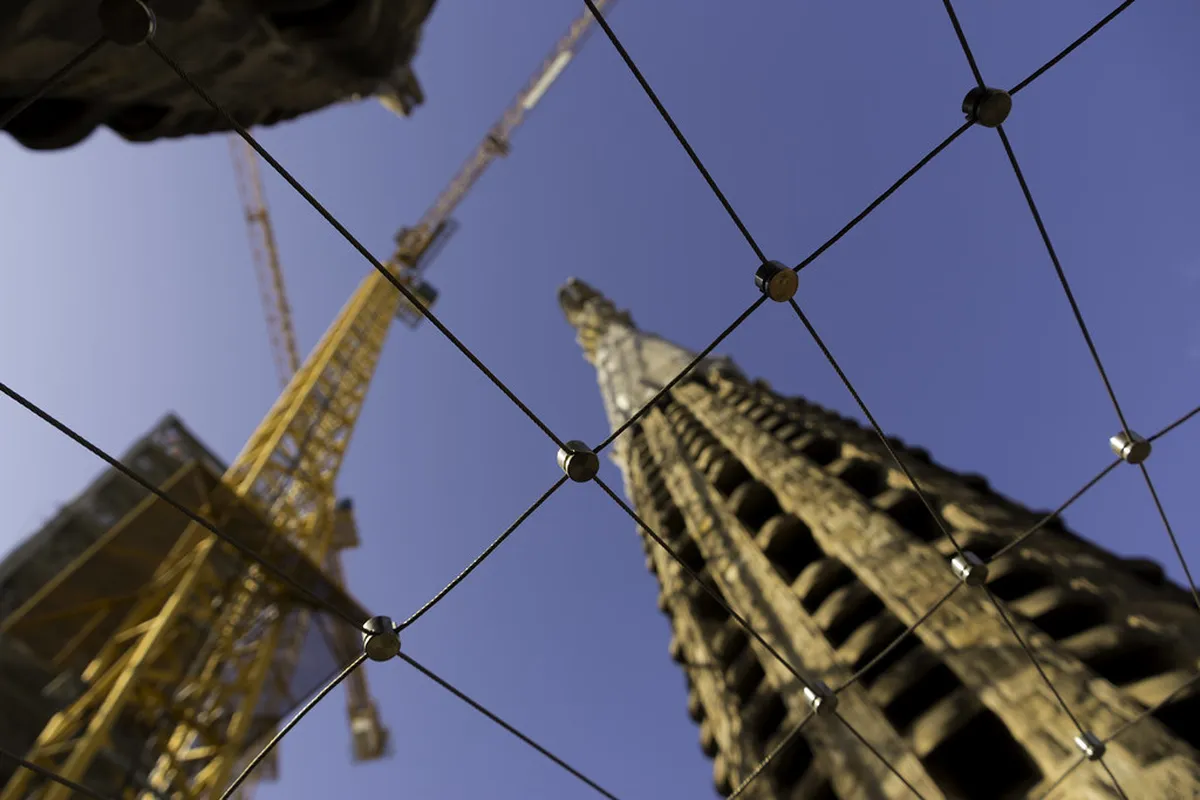
The Sagrada Família (C/ de Mallorca 401) remains under construction after 140 years and is still the most visited site in Spain. Gaudí took over the project in 1883 and redesigned it entirely. The three facades tell different stories — the Nativity facade (the only one Gaudí saw completed) is covered in naturalistic sculpture representing life and creation; the Passion facade is angular and austere; the Glory facade, completed in the 2010s, synthesizes both. Book tickets at least 14–30 days ahead for summer. Entry starts at €26, with tower access adding €9–€12. Mornings before 10:00 move fastest. The best time to visit for shorter queues is November through February.
Casa Milà — universally known as La Pedrera (Pg. de Gràcia 92) — was Gaudí's last civilian commission, built 1905–10. The stone facade hangs off a steel frame like a curtain, its wavy surface giving the building the appearance of carved rock. The rooftop is the key visit: warrior-like ventilation chimneys covered in broken glass mosaic stand against the Barcelona skyline in one of the movement's most memorable images. Book 3–7 days ahead; tickets run €25–€28 for the standard visit including the rooftop. Casa Batlló (covered above) completes the Gaudí triumvirate that visitors typically prioritize. If time is short, La Pedrera's rooftop and Sant Pau offer the best value for visual impact per euro spent.
Domènech i Montaner's UNESCO Masterpieces
The Palau de la Música Catalana (C/ Palau de la Música 4–6, El Born) is possibly the most joyful building in Barcelona. Designed by Domènech and completed in 1908 for the Orfeó Català choral society, the concert hall is encased in stained glass on three sides. During afternoon performances, the skylight in the ceiling floods the auditorium with changing light. Guided tours run daily for around €22 and last 55 minutes. The Palau is in the El Born neighborhood, making it easy to pair with an afternoon in the Gothic Quarter. It requires advance booking but queues are shorter than the major Gaudí houses.
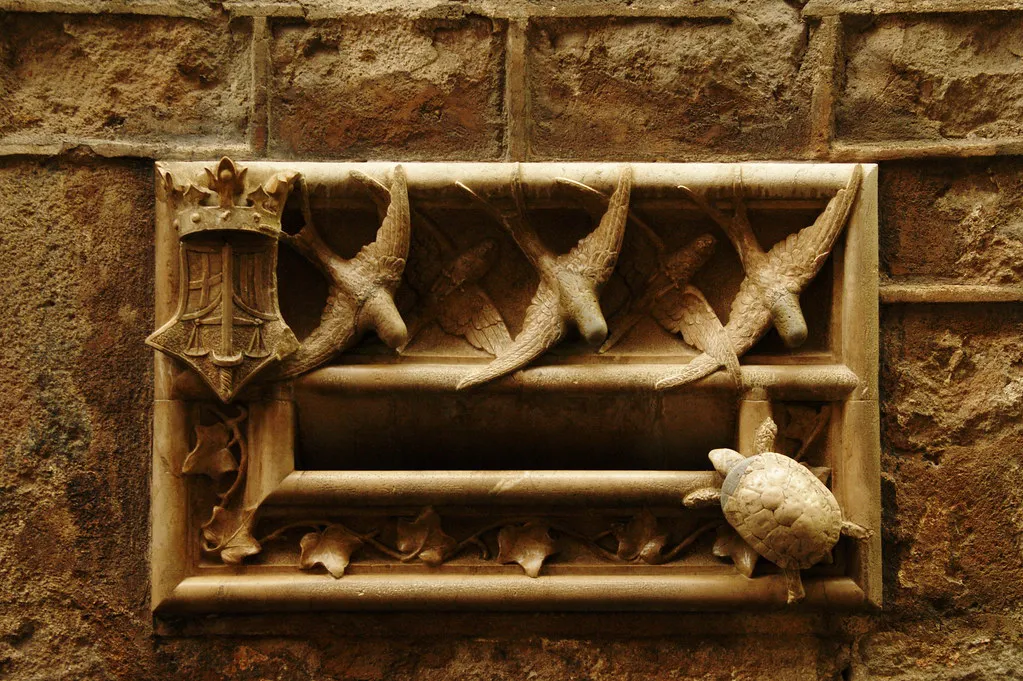
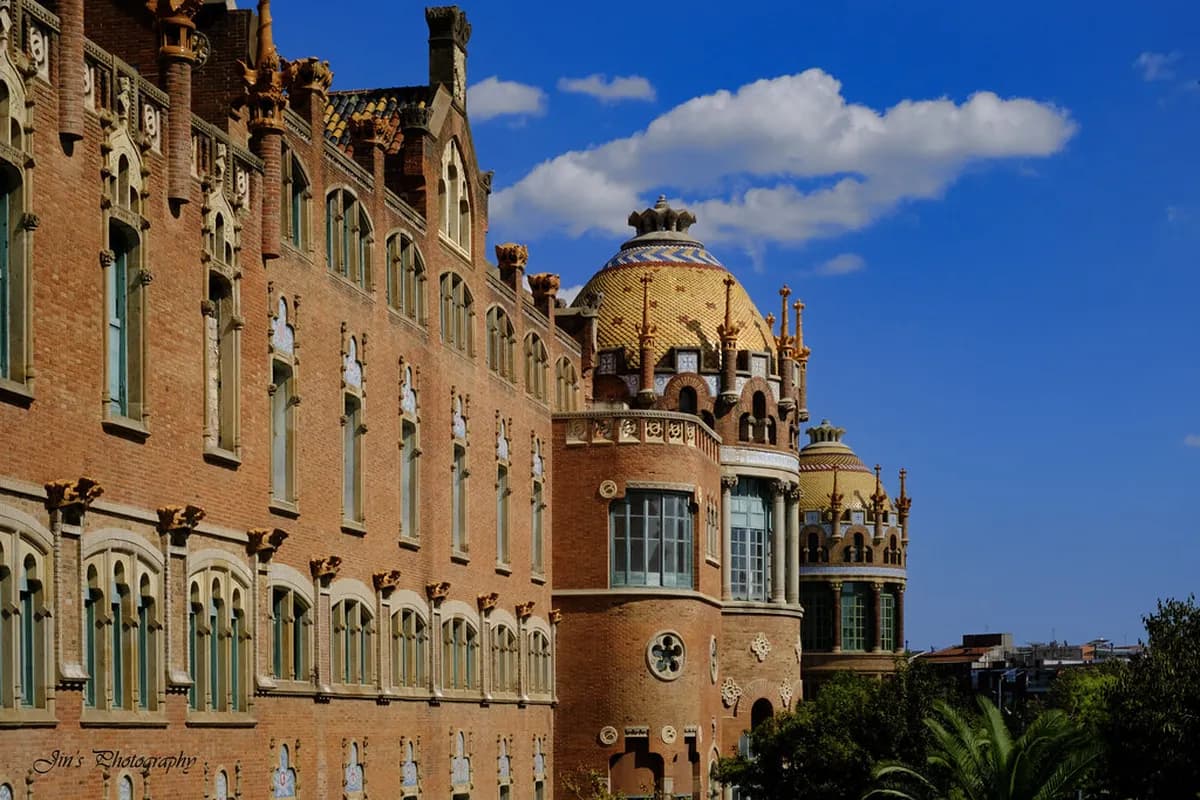
The Hospital de Sant Pau (Recinte Modernista, Sant Antoni Maria Claret 167) is Domènech's other UNESCO site and arguably his masterpiece. Commissioned in 1901 and completed in stages through 1930, the complex was designed as a garden hospital — 48 pavilions connected by underground tunnels, set in parkland at 45 degrees to the Eixample grid. The idea was that beautiful surroundings would accelerate recovery. The hospital operated until 2009 and is now fully open to visitors. Entry is around €16, the crowds are light compared to Gaudí sites, and the interior decoration — ceramic panels, mosaics, stained glass — is comprehensive and well-labeled. It sits at the northern end of Avinguda de Gaudí, a 10-minute walk from the Sagrada Família: pairing the two in a single morning is the most efficient itinerary structure.
What Each Block of Discord Building Actually Lets You See
This is the practical detail most guides skip. The three Block of Discord buildings have very different visitor-access levels, and the difference matters for planning. Casa Batlló offers the deepest interior experience but at the highest cost and with the longest queues. The current "Magic Nights" evening experience runs €45+. Casa Amatller's interior tours are far more modest — you see the entrance hall, the Amatller private apartment, and the rooftop — but they capture the social world of the bourgeois patron in a way the Gaudí houses don't. Tours run in English at 10:00 and 13:00, capacity is small, and same-day booking is often still possible outside July and August.
Casa Lleó Morera is the least accessible: the facade and ground floor are visible, but the upper floors are private. This is worth knowing before you budget entry fees. If you are working with a tight budget, spending €19 on Casa Amatller plus the free facade of Casa Lleó Morera gives you a complete Block of Discord read at a fraction of the Casa Batlló price. The Ruta del Modernisme pass (available from the Ruta offices at Hospital de Sant Pau and other centers) covers discounted entry to 115 monuments for €18, including a guidebook. It is aimed at multi-day visitors but pays for itself quickly if you plan to enter four or more buildings.
| Building | Architect | Entry Cost (2026) | Interior Access | Advance Booking |
|---|---|---|---|---|
| Casa Batlló | Gaudí | €35–49 | Full immersive tour | 7–10 days ahead |
| Casa Amatller | Puig i Cadafalch | €19 | Guided interior tour | 1–3 days ahead |
| Casa Lleó Morera | Domènech i Montaner | Free (facade only) | Ground floor visible | No booking |
| Hospital de Sant Pau | Domènech i Montaner | €16 | Full garden complex | 1–3 days ahead |
| Palau de la Música | Domènech i Montaner | €22 (guided tour) | Full auditorium tour | 5 days ahead |
| CaixaForum | Puig i Cadafalch | Free (Modernisme section) | Factory floors | No booking |
Hidden Gems: CaixaForum, Castell dels Tres Dragons, and Casa de les Punxes
CaixaForum (Av. Francesc Ferrer i Guàrdia 6–8, Montjüic) is a converted textile factory designed by Puig i Cadafalch and completed in 1913. It won the City Council's award for best industrial building in 1911 and demonstrates how Modernisme applied to functional structures rather than bourgeois mansions. The roofscape is surreal: crenellated towers and decorative brickwork crown what is essentially a factory floor. It now operates as a major contemporary art museum with a permanent Modernisme display on the factory floors. Entry to the Modernisme section alone is free; the full museum costs €6. The Montjüic location makes it a natural pairing with the MNAC museum for a longer cultural day.
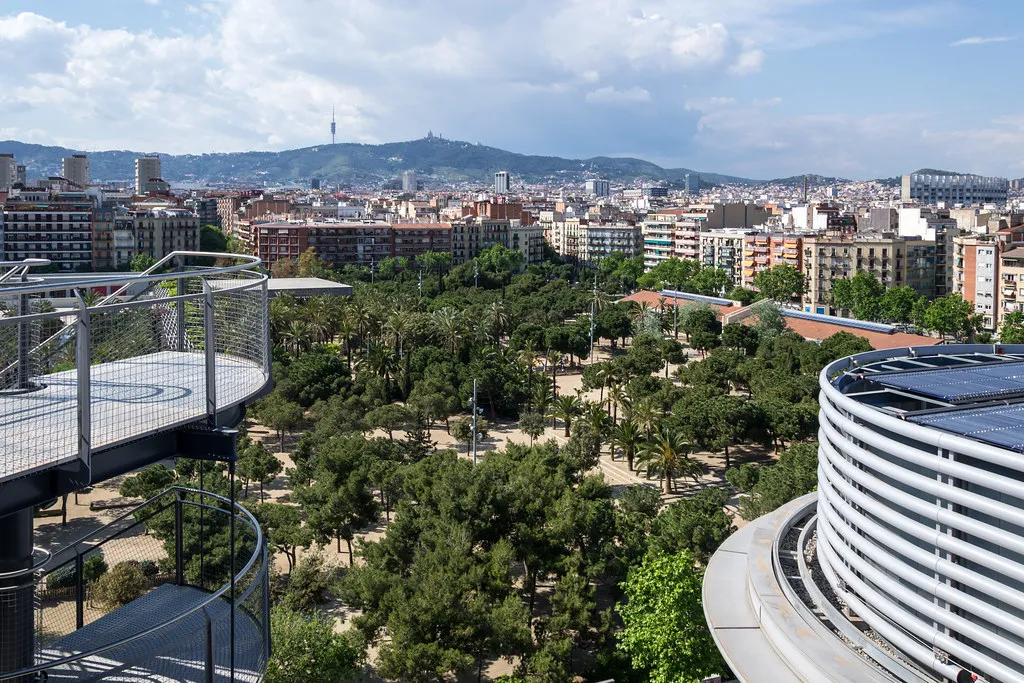
The Castell dels Tres Dragons in the Parc de la Ciutadella (Pg. de Picasso at Pg. de Pujades) was Domènech's first significant building, designed for the Universal Exhibition café-restaurant in 1888. It kicked off the Modernisme movement. The building is currently closed for restoration but the exterior is fully visible. Casa de les Punxes (Av. Diagonal 420) is Puig's 1905 fantasy of medieval spires and lacy stonework — a building that reads like a Catalan castle relocated to the middle of a city grid. The interior runs ticketed visits; check the website for current hours. Both are part of the Ruta del Modernisme official route and are quiet enough to visit without any advance booking.
A Self-Guided Modernisme Walking Route
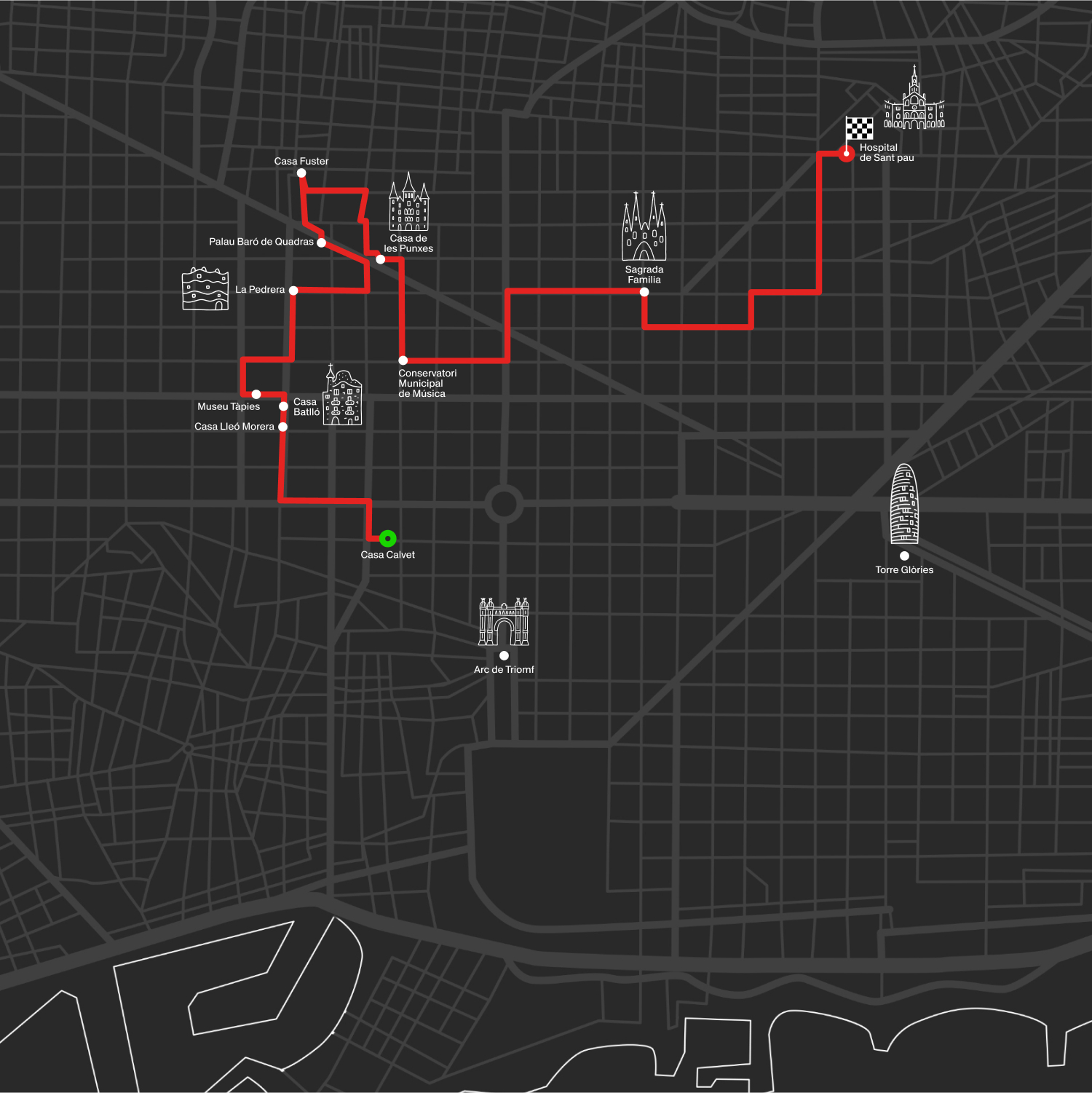
The most efficient single-day structure starts at the Block of Discord on Passeig de Gràcia (arrive by 09:00 to photograph the facades before the tour groups). Walk north along Passeig de Gràcia to La Pedrera at number 92. Cross to the Sagrada Família on Avinguda de Gaudí (Metro L5, or 25 minutes on foot). Walk the Avinguda de Gaudí directly to Hospital de Sant Pau — this diagonal boulevard was designed specifically to connect the two buildings. Sant Pau is your lunch stop neighborhood; the streets around the Recinte have good local cafes. Take Metro L5 back toward the city in the afternoon, or continue to Palau de la Música Catalana in El Born if you have a guided tour booked.
For a two-day version: add Casa de les Punxes on Avinguda Diagonal and the Gràcia neighborhood — where Casa Vicens, Gaudí's first major house, sits with comparatively short queues. Casa Vicens (C/ de les Carolines 20–26) opened to the public in 2017 and runs timed entry tickets for €16. It is the most under-visited of Gaudí's Barcelona buildings and shows a different side of his development: Moorish influence, ceramic tile, the vocabulary of a young architect still finding his forms. Pair it with the Gràcia neighborhood for an afternoon that combines architecture with local Barcelona life away from the tourist center.
The pavement markers make navigation easy. The official Ruta del Modernisme embeds small red flower tiles in the sidewalk in front of every major site on the route. Look down at intersections on Passeig de Gràcia and the surrounding streets: the flowers appear just before important facades. They are a quiet wayfinding system that works entirely without signage. Check the official circuit map before you leave your accommodation to plan the sequence.
Essential Planning Tips for 2026
Booking windows in peak season (June–September) are longer than most guides suggest. Sagrada Família: book 14–30 days ahead. Casa Batlló: 7–10 days. La Pedrera: 5–7 days. Palau de la Música: 5 days for guided tours, same-day for concerts if seats remain. Hospital de Sant Pau and Casa Amatller can typically be booked 1–3 days ahead. Outside peak season, same-day tickets are usually available for everything except Sagrada Família. Most venues use timed entry now, so the queue visible outside does not indicate the actual wait — check whether you have a slot before joining it.
Budget planning: a full Gaudí circuit (Sagrada Família full access €35–38, La Pedrera rooftop €28, Casa Batlló immersive €40+) runs €100+ per person before transport. A non-Gaudí circuit (Sant Pau €16, Palau de la Música guided tour €22, Casa Amatller €19, CaixaForum free) covers equally significant architecture for under €60 and with substantially shorter queues. Both approaches are valid; the choice depends on your priorities. Mixing two Gaudí sites with two Domènech sites is the most common structure for visitors with three or four days. Use the free options to fill gaps between paid entries: the exteriors of Casa Lleó Morera, Castell dels Tres Dragons, and Palau Güell's surrounding streets cost nothing.
Sagrada Família requires 14–30 days advance booking in peak season (June–September); summer walk-up entry is essentially impossible. Tower access sells out before General Admission — add it at the same time you book the main ticket.
Frequently Asked Questions
Is 3 days enough for Art Nouveau Barcelona?
Three days is perfect for seeing the major highlights. You can visit the top four houses and the Sagrada Família. This pace allows for relaxed meals between stops.
What is the best way to get around the Modernisme route?
Walking is the best way to see the Eixample district. Use the metro for longer distances to Sagrada Família or CaixaForum. The city is very pedestrian-friendly.
Are the interiors of the houses worth the entry price?
Yes, the interiors often feature incredible woodwork and stained glass. Casa Batlló and Palau de la Música are particularly stunning inside. Expect to pay €20-€35 per site.
Barcelona's Modernisme is dense enough that even a single day of focused walking reveals something new. The Gaudí buildings reward patience and advance planning. The Domènech and Puig buildings reward visitors who simply show up. Both architects produced work that stands on its own terms — not as context for Gaudí, but as the full range of what the movement achieved. The city preserved all of it, and in 2026 most of it is still fully accessible.
Continue exploring
More guides you'll find useful