Sant Antoni Barcelona: 10 Essential Things to Know
Discover Sant Antoni, Barcelona's trendiest local neighborhood. Our guide covers the Mercat de Sant Antoni, best tapas bars, and essential travel tips.
On this page
Sant Antoni Barcelona: 10 Essential Things to Know
Sant Antoni sits at the western edge of the Eixample district, and in 2026 it remains the neighborhood Barcelonins choose when they want a meal without a tourist menu in sight.
When Barcelona's overtourism debate reached its peak in the mid-2020s, locals pointed to Sant Antoni as proof that a central neighborhood could stay authentic: independent bars, a functioning food market, and streets where residents still outnumber visitors.
This guide covers what the neighborhood actually offers — the market, the Sunday ritual, the food and vermouth culture, and the practical logistics — without filler.
If you want a full picture of the city's local pockets, also read our guide to 12 Best Off the Beaten Path Spots in Barcelona.
What Sant Antoni Is and Where It Sits
Sant Antoni occupies the southwestern corner of the Eixample Esquerra — the left half of Ildefons Cerdà's famous grid, bounded roughly by Ronda de Sant Antoni to the north, Carrer del Consell de Cent to the south, Carrer de Muntaner to the west, and the start of El Raval to the east.
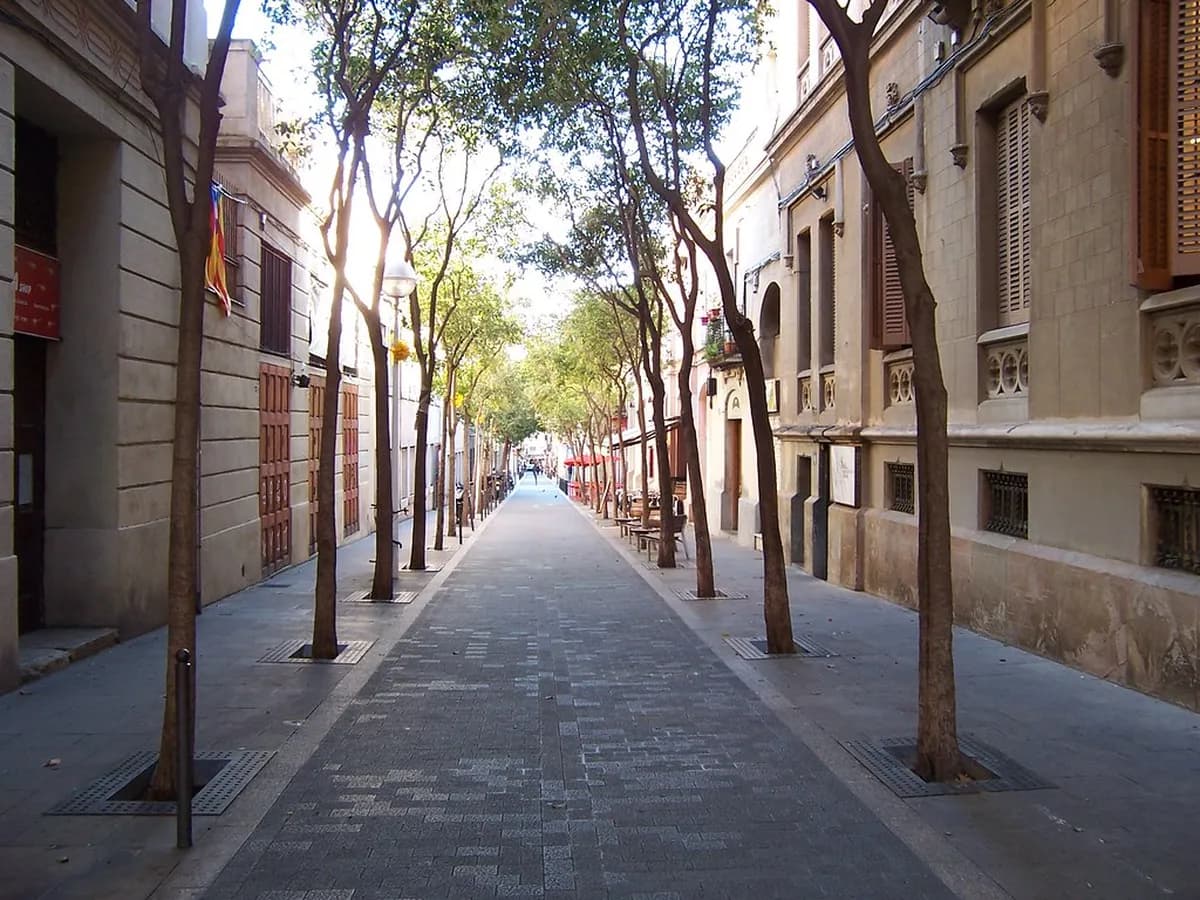
The Cerdà grid was designed with chamfered corners on every block, creating small octagonal intersections with natural terrace space. That geometric accident is why Sant Antoni has a higher density of outdoor bar tables per square kilometre than almost any other central neighbourhood in Barcelona — every corner offers a viable pavement terrace without blocking pedestrian flow.
Metro access is straightforward: Sant Antoni station (L2, purple line) puts you on Ronda de Sant Antoni in under a minute. The neighbourhood is also walkable from the Gothic Quarter in about 15 minutes via Carrer del Parlament heading west, or from Plaça de Catalunya in 20 minutes on foot.
Mercat de Sant Antoni: The Neighbourhood Heart
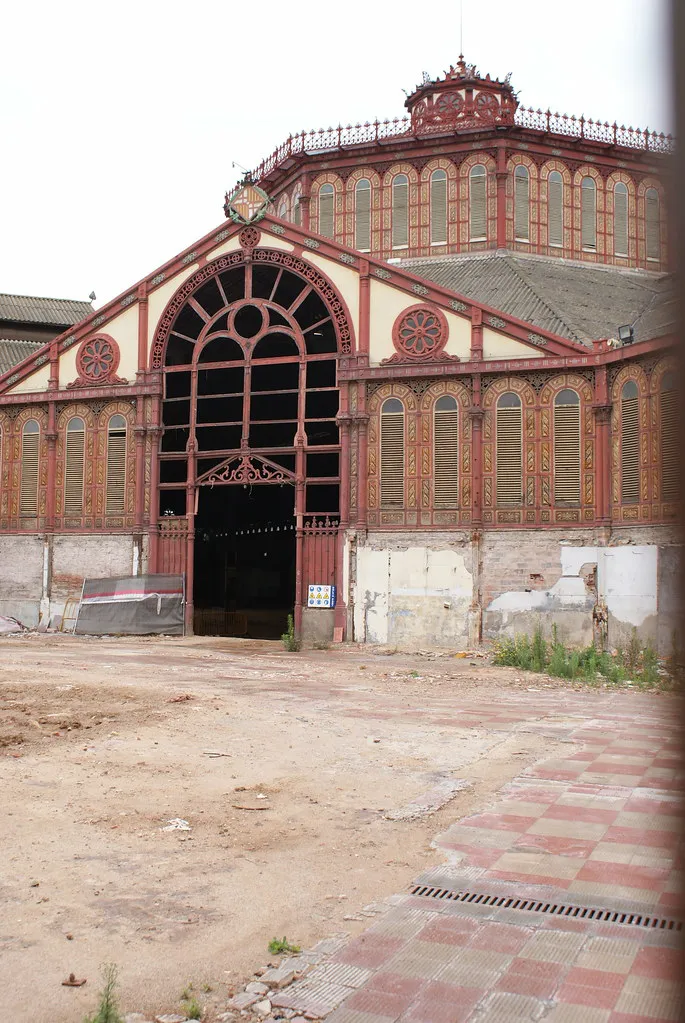
The Mercat de Sant Antoni was designed by Antoni Rovira i Trias in 1882 and is one of the finest examples of nineteenth-century iron market architecture in Barcelona. A major renovation completed in 2015 restored the original steel-and-glass structure while modernising the vendor stalls inside. The Barcelona coat of arms — crowned by a bat, the city's heraldic symbol — sits above the main entrance alongside a plaque marking 1882.
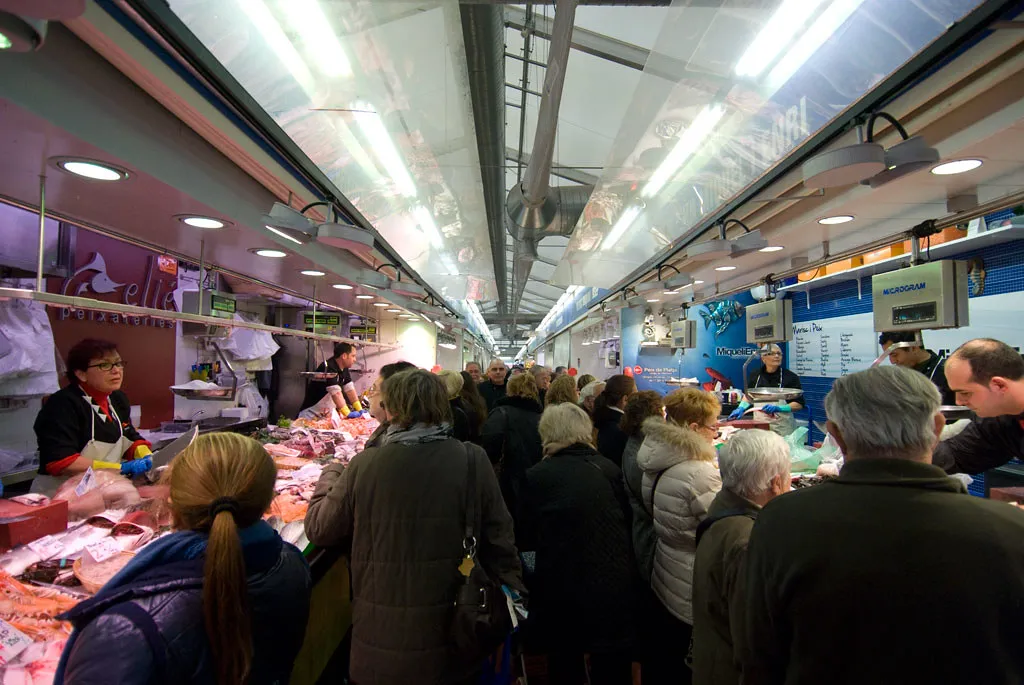
Monday to Saturday, the interior holds around 80 food stalls: gleaming fish counters, excellent charcuterie, seasonal vegetables, and a handful of bars serving breakfast and lunch to market workers and neighbourhood regulars. The surrounding perimeter gallery runs a clothing and general goods market on weekday mornings. Hours are broadly 08:00 to 20:00 Monday to Friday, with shorter Saturday hours; the interior food market is closed on Sundays.
Sunday is when the market's most famous transformation happens. From around 08:30, the perimeter gallery fills entirely with second-hand books, comics, stamps, vinyl, and paper ephemera. Locals call this the Mercat dels Encants del Llibre — the book and collectors' flea market — and it draws a very different crowd to the weekday shoppers: readers, collectors, and curious visitors hunting literary relics. Plan at least 90 minutes if you intend to browse properly. When vendors close up around 14:00, they slide their stock into wooden drawers built into the gallery walls — a detail that makes the Sunday ritual feel genuinely rooted in the building's own architecture.
The Sunday book market runs 08:30–14:00 at the Mercat perimeter — the interior food stalls are closed on Sundays. Arrive before 10:00 to browse before the bulk of visitors arrive from the centre.
Eating in Sant Antoni: Carrer de Parlament and Beyond
Carrer de Parlament is the neighbourhood's main dining artery. The street runs east–west through the heart of Sant Antoni and is lined with independent restaurants and wine bars that fill up by 14:00 on weekdays. It is not a tourist-trap drag: reservations are common, menus change with the season, and many places seat fewer than 30 covers.
Among the most talked-about spots in 2026 is Maleducat on Carrer de Manso 54, where a young kitchen team produces creative dishes built on local and seasonal produce. Bar Bodega Chiqui on Carrer de Vilamarí 29 is a deliberately strange pleasure: a family-run bodega from 1959 that serves vermouth and tinned fish alongside a full sushi menu from Grado Sushi, whose head chef trained under Hideki Matsuisha at Shunka and later worked at Nobu. The contrast — barrel wine from a pump, high-grade sushi nigiri — is quintessentially Sant Antoni: old-neighbourhood form with a genuinely unexpected inside. Benzina on Passatge de Pere Calders 6 occupies a converted garage with a Brooklyn-Moroccan interior and strong Italian cooking.
For a broader survey of where to eat across the city, our 12 Best Local Restaurants in Barcelona Travel Guide guide covers neighbourhoods beyond Sant Antoni. Budget travellers who want something simple and reliable will find good value at The Fish & Chips Shop, which suits a quick lunch before an afternoon walk.
Vermut Culture: Fer el Vermut in Sant Antoni
The Sunday ritual of fer el vermut — "doing the vermouth" — is one of the most specific and pleasurable things you can experience in Barcelona, and Sant Antoni is its best setting in the city. The convention runs roughly from 12:00 to 14:30: a glass of house vermouth, a small plate of olives or anchovies, conversation with whoever you arrived with, and the understanding that lunch comes afterwards.
Carrer de Parlament and the surrounding streets are best for this. Els Sortidors del Parlament is a classic venue — a wide, open-fronted bar that spills onto the street and has been doing Sunday vermut for decades. Bar Calders nearby offers a slightly younger crowd and good natural wines alongside the vermouth. The key is to sit outside: the chamfered Eixample corners give most Sant Antoni bars a pavement footprint that no narrow Gothic Quarter alley could match.
Note that Sunday is also market morning, which means the area between the Mercat and Carrer de Parlament fills up between 10:00 and 14:00. Arriving at the book market at 09:00, browsing until 11:30, then walking to a vermut bar on Parlament for noon is the local sequence — and it is genuinely one of the best half-days available in Barcelona without spending money on a single attraction.
Neighbourhood Vibe: Local vs. Touristy in 2026
Sant Antoni sits in an interesting position in 2026. It has been "discovered" — food media coverage since 2018 has made streets like Carrer de Parlament well-known to visiting food tourists — but it has not tipped into the monoculture of Las Ramblas or the Gothic Quarter. Residents still shop at the Mercat on weekday mornings. Neighbourhood associations are active. Small non-restaurant businesses — laundries, hardware shops, a couple of shoe repairers — still hold ground on the side streets.
The comparison to Poble Sec, just south of Montjuïc, is useful. Poble Sec has a similar bar density and food reputation, but it lacks a defining civic anchor like the Mercat. El Raval to the east is more mixed in character and has a higher tourist footprint near La Boqueria. Sant Antoni's tipping point — the question of whether gentrification will hollow it out — has not been resolved, but as of 2026 it remains more balanced than most central Barcelona neighbourhoods.
For travellers who want more context on this balance, our 27 Unique Things to Do in Barcelona: Hidden Gems & Local Secrets guide places Sant Antoni alongside other neighbourhoods worth understanding before you plan your days.
Fábrica Moritz: History or Dinner — a Decision Guide
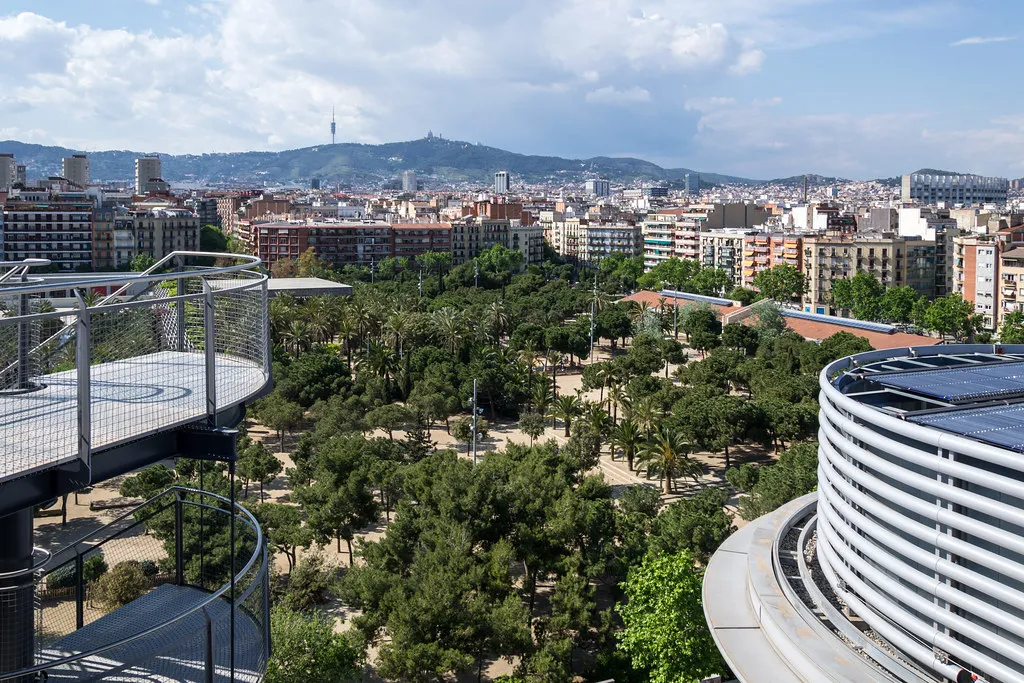
The Fábrica Moritz on Ronda de Sant Antoni is the most prominent landmark in the neighbourhood: a restored 19th-century brewery converted into a multi-floor restaurant, bar, and brewery space. Unpasteurised Moritz beer brewed on-site is the draw for beer enthusiasts, and the food covers a wide range from pintxos to full Catalan meals.
Whether to visit depends on what you want from Sant Antoni. If you are primarily here for the neighbourhood's independent restaurant scene, Fábrica Moritz functions more as a landmark than a destination — it is large, busy with tourists, and priced above the surrounding bars. If you are travelling with children, or want an accessible, reliable meal in a single space with interesting architecture, it is excellent for that purpose. First-time visitors to Barcelona often enjoy it as an introduction to the Catalan brewing tradition.
The best use of the building for most independent travellers: walk through the brewing floors for the visual experience, have a single unpasteurised draught at the bar, then move on to Carrer de Parlament for dinner at a smaller independent spot.
How to Plan a Sant Antoni Sunday
Sunday is the best single day to experience Sant Antoni, but it requires a little timing. The book market at the Mercat perimeter runs from approximately 08:30 to 14:00. The interior food stalls are closed on Sundays, but the outer gallery is entirely given over to book and collectibles vendors. Arriving before 10:00 means you have the market before the bulk of visitors arrive from the centre.
After the market, walk south on Carrer de Manso or east on Carrer de Tamarit to reach the Parlament restaurant cluster for vermut by 12:00. The streets around Comte d'Urgell and Tamarit are also worth a short detour: this quieter grid section has several third-wave coffee shops and independent bakeries with no queue on Sunday mornings.
Lunch follows naturally: most restaurants on and around Parlament open from 13:30 and take walk-ins until 14:30. After lunch, the neighbourhood quiets considerably — many Barcelonins nap, shops close until 17:00, and the streets return to residents rather than visitors. If you are combining Sant Antoni with a visit to the 11 Key Insights on the Best Time to Visit Barcelona, a Sunday morning in Sant Antoni followed by an afternoon elsewhere in the city is a consistently good pattern.
Staying in Sant Antoni: Transport and Location Value
Sant Antoni is one of the most strategically located neighbourhoods for a Barcelona stay. Metro L2 (purple line) from Sant Antoni station reaches Passeig de Gràcia in two stops and connects to Sagrada Família via the L5 interchange at Diagonal. The L3 line at Paral·lel, a 12-minute walk south, adds a second axis including Barceloneta beach and the port.
Accommodation in Sant Antoni runs slightly cheaper than the Gothic Quarter or Eixample Dreta (right Eixample) for comparable quality, while the walkability and food access are equal or better. Furnished apartment rentals are common here and suit longer stays well — the Mercat handles daily food shopping efficiently.
For transport passes: the T-Casual (10-trip card, approximately €12.15 in 2026) is cost-effective for stays up to five days with moderate metro use. The Hola Barcelona Travel Card (48h, 72h, 96h, or 120h unlimited) makes sense if you plan to ride more than four metro journeys per day — roughly from 96h upwards does the arithmetic favour the unlimited card for a Sant Antoni-based stay. The neighbourhood's walkability means many visitors find they use the metro less than expected, making T-Casual the better default for a four or five-night trip.
Sant Antoni's L2 metro reaches Passeig de Gràcia in two stops and connects to Sagrada Família via the L5 interchange at Diagonal. The neighbourhood's high walkability means a T-Casual 10-trip card (€12.15) is usually the better choice over an unlimited day pass for a 4–5 night stay.
Sant Antoni vs. Poble Sec vs. Poblenou: A Neighbourhood Comparison
These three neighbourhoods come up repeatedly when visitors ask where to base themselves outside the Gothic Quarter. They are genuinely different in character.
Sant Antoni has the strongest food and market scene of the three, the best Eixample transport connections, and the most walkable access to the historic centre. It has no beach access and limited green space. Poble Sec, immediately south, has Montjuïc as its backyard — a major plus for families and anyone interested in the Fundació Joan Miró or the castle. Its food scene on Carrer de Blai (pintxos bars, budget dining) is excellent for value but lower in ambition than Parlament. Poblenou, further east along the coast, has beach access, more space, and a creative-industry resident base that gives it a distinct atmosphere. It suits longer stays and digital nomads. Its restaurant scene is good but more dispersed, and the metro connection to the centre is longer.
For a deeper look at the coastal option, our Poblenou neighbourhood guide covers the eating, walking, and staying logistics in detail. For architecture enthusiasts committed to the Modernisme trail, the detour to the Sant Pau Hospital Barcelona: The Ultimate Visitor Guide remains one of the most rewarding in the city — about 20 minutes by metro from Sant Antoni station.
| Neighbourhood | Food scene | Green space | Beach access | Transport hub |
|---|---|---|---|---|
| Sant Antoni | Best (Carrer Parlament) | Limited | No | L2 direct |
| Poble Sec | Good value (Carrer Blai) | Montjuïc | No | L3 Paral·lel |
| Poblenou | Good, dispersed | Coastal parks | Yes (Bogatell) | L4 |
Family-Friendly and Budget Options in Sant Antoni
Families travelling with children will find Sant Antoni less fraught than the tourist-dense centre. The streets are calmer, the market is a genuinely engaging place for older children, and the Sunday vermut culture means outdoor seating is abundant from noon onwards without the pressure to move on quickly.
Budget travellers benefit from the Mercat food stalls for self-catering — buying cheese, bread, and fruit here costs a fraction of what any tourist-area café charges. The Sunday book market is free to browse. Carrer de Blai in adjacent Poble Sec, walkable in 10 minutes south, offers the city's best pintxos at €1.50–€2.50 per piece and is a low-cost way to eat well without planning. For a sit-down affordable meal, the Fish & Chips Shop on the neighbourhood's southern fringe is consistently reliable and child-friendly.
The local food culture in Sant Antoni also pairs well with the traditional Catalan eating calendar. For more context on what to order and when, our guide to 10 Best Ways to Experience Vermut in Barcelona explains both traditions with enough detail to order confidently at any neighbourhood bar.
Frequently Asked Questions
Where Is Sant Antoni Barcelona and What's It Known For?
Sant Antoni is located in the Eixample district of Barcelona. It is famous for its historic market, trendy dining scene on Carrer de Parlament, and traditional vermouth culture. This area offers a more authentic local experience compared to the busy tourist centers nearby.
Should You Stay in Sant Antoni Barcelona?
Yes, staying in Sant Antoni is ideal for travelers who want a central location with a local feel. The neighborhood is well-connected by the L2 metro line. You will find many excellent 12 Best Local Restaurants in Barcelona Travel Guide right at your doorstep.
How much time should you plan for the Sant Antoni market?
Plan to spend at least one to two hours exploring the market. This allows time to see the food stalls, admire the architecture, and browse the Sunday book market. You can also enjoy a quick coffee or tapa at one of the internal bars.
What should travelers avoid when planning a visit to Sant Antoni?
Avoid visiting during the mid-afternoon siesta if you want to shop at smaller local boutiques. Many traditional shops close between 2:00 PM and 5:00 PM daily. Also, remember that the main food market is closed on Sundays, though the book market is open.
Sant Antoni remains one of the most charming and authentic neighborhoods to explore in the city of Barcelona.
From the historic market to the trendy bars, there is something for every type of traveler to enjoy.
Make sure to try the local 10 Best Ways to Experience Vermut in Barcelona traditions while you are in the area.
Plan your visit today to discover why this neighborhood is a favorite among both locals and savvy visitors.
See our hidden gems in Barcelona guide for the broader off-tourist overview.
Continue exploring
More guides you'll find useful