Testaccio Rome Travel Guide: The Best Things to Do
Plan your testaccio rome trip with top picks, neighborhood context, timing tips, and practical booking advice for a smoother and more authentic Italian vacation.
On this page
Testaccio Rome: The Ultimate Neighborhood Guide
Testaccio is Rome's most authentically working-class neighborhood and the undisputed heart of the city's food culture. Tucked between the Aventine Hill and the Tiber River, south of the historic center, it rewards visitors who stray from the standard tourist circuit with ancient monuments, world-class street food, and a pace of life that still belongs to the Romans who live here.
The neighborhood's character was shaped by centuries of hard labor. From the 2nd century BC it served as a river port where goods arrived from across the Mediterranean. After Italian unification in 1861, a large slaughterhouse opened and defined the area's identity for generations. Both legacies survive today — the port ruins are visible along the Tiber embankment, and the offal-based "fifth quarter" cooking pioneered by slaughterhouse workers still appears on every serious restaurant menu in the district.
This guide covers the main landmarks, the food scene by meal type, the street art circuit, and practical logistics for a half-day or full-day visit in 2026.
Where Is Testaccio?
Testaccio occupies the southeast corner of Rome's historic center, bordered by the rioni of Ripa along the Tiber to the west and San Saba to the east. The industrial district of Ostiense sits immediately to the south. Across the river lies Trastevere — a neighborhood with a similar reputation for local character, though increasingly tourist-heavy compared to Testaccio.
The neighborhood is compact and easy to walk end to end in under twenty minutes. Its main arteries are Via Marmorata running north to south and Via Galvani cutting east to west past the market and Monte Testaccio. Most sights cluster within a ten-minute walk of the Piramide metro station.
Testaccio sits at an interesting crossover point: close enough to the Aventine Hill and Circo Massimo for a combined visit, and close enough to 10 Essential Tips and Sights for Trastevere Rome for an easy evening extension across the Sublicio Bridge.
Getting to Testaccio
The fastest route is Metro Line B to Piramide station. The station exits directly onto Via Raffaele Persichetti, putting you within sight of the Pyramid of Cestius and about a five-minute walk from the market. Line B connects Piramide to Termini (three stops, roughly eight minutes) and to the EUR district in the opposite direction.
Tram 3 runs between Trastevere station and the city center via Testaccio, stopping on Via Marmorata. Several bus lines including the 23 and the 280 also stop along Via Marmorata and Via Ostiense. These surface routes give you more of the city on the way and are useful if you are coming from the Colosseum area or the Vatican.
Walking from 10 Essential Tips and Sights for Trastevere Rome takes about twenty minutes across the Sublicio Bridge, with good views of the Tiber along the way. From the Colosseum it is a twenty-five to thirty-minute walk southwest through the Circus Maximus valley — a pleasant route that adds the chariot racing ground to your morning.
| Origin | Route | Journey Time |
|---|---|---|
| Termini Station | Metro Line B to Piramide (3 stops) | ~8 min |
| Colosseum (Colosseo Metro) | Metro Line B to Piramide (2 stops) | ~5 min |
| Trastevere | Walk via Sublicio Bridge | ~20 min |
| Colosseum | Walk via Circus Maximus valley | 25–30 min |
| Fiumicino Airport | Train to Roma Ostiense, then walk/bus | ~40 min |
Must-See Testaccio Attractions
The Pyramid of Cestius is the neighborhood's defining landmark — a genuine ancient Egyptian-style pyramid made of Carrara marble, built in 12 BC as the tomb of magistrate Caius Cestius. When the Emperor Aurelian extended Rome's defensive walls in the 3rd century, he incorporated the pyramid directly into the fortifications rather than demolish it, which is why it appears wedged between the Aurelian Walls today. Interior tours run on the third and fourth Saturdays and Sundays of each month at 10:00 and 12:00; admission costs around 5.50 euros and must be booked in advance by calling 0639967702.
Pyramid of Cestius interior tours run only on the third and fourth Saturday and Sunday of each month at 10:00 and 12:00 — admission is around €5.50 and booking in advance by phone (0639967702) is required.
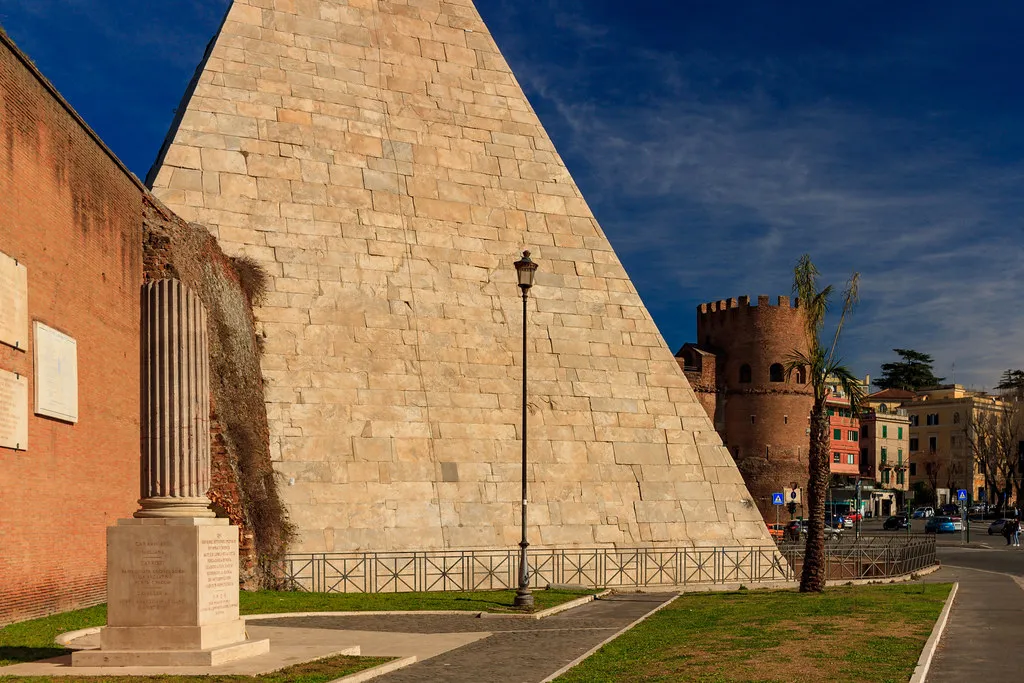
Directly behind the pyramid is the Non-Catholic Cemetery, formally the Cimitero Acattolico. Cypress trees, pomegranate trees, and flowering shrubs surround the graves of John Keats, Percy Bysshe Shelley, and the son of Goethe, among hundreds of other notable foreigners who died in Rome. It is one of the most 12 Beautiful Places in Rome to Visit and admission is free, though a donation of around two euros is customary. The Rome War Cemetery, containing 426 Commonwealth graves from the Second World War, is a short walk further and is maintained with striking precision.
Monte Testaccio, at Via Galvani, is a forty-five meter hill made entirely of broken Roman amphorae — estimated at 53 million vessels — discarded over centuries of olive oil imports arriving at the Tiber port. The scale is extraordinary and best appreciated by walking around the base on Via di Monte Testaccio, where pottery shards are still visible through the grass. Guided summit tours require advance arrangement through Rome's municipal archaeology office; the hill itself is not freely climbable.
Testaccio Street Art Circuit
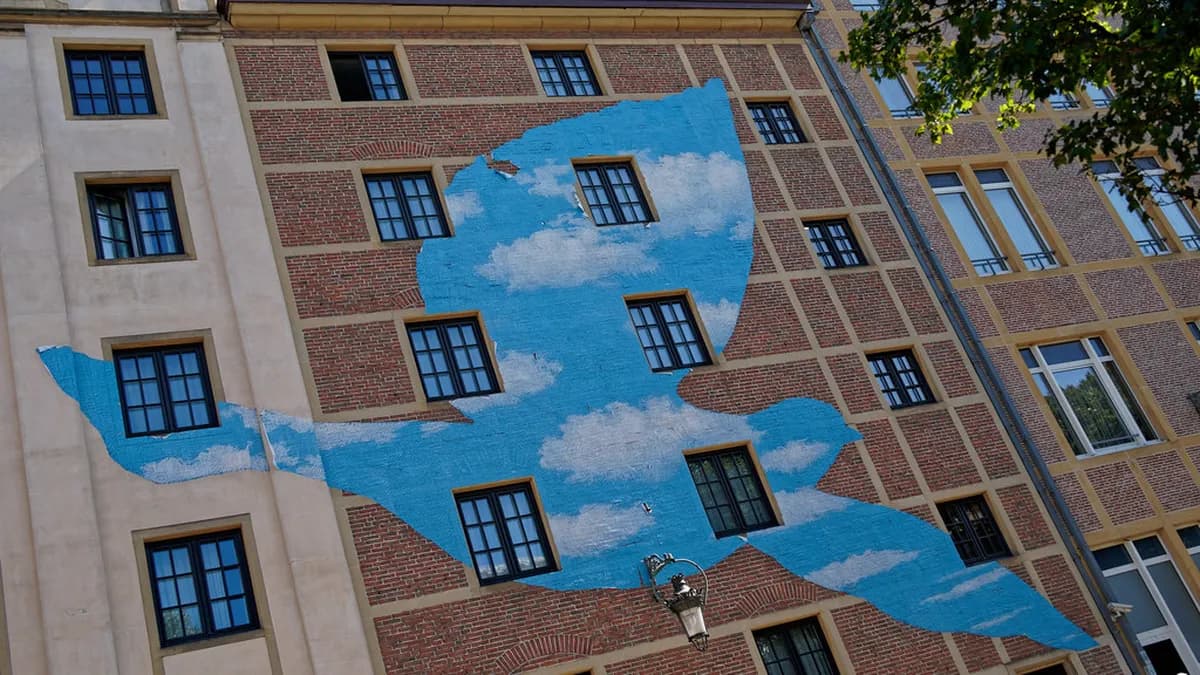
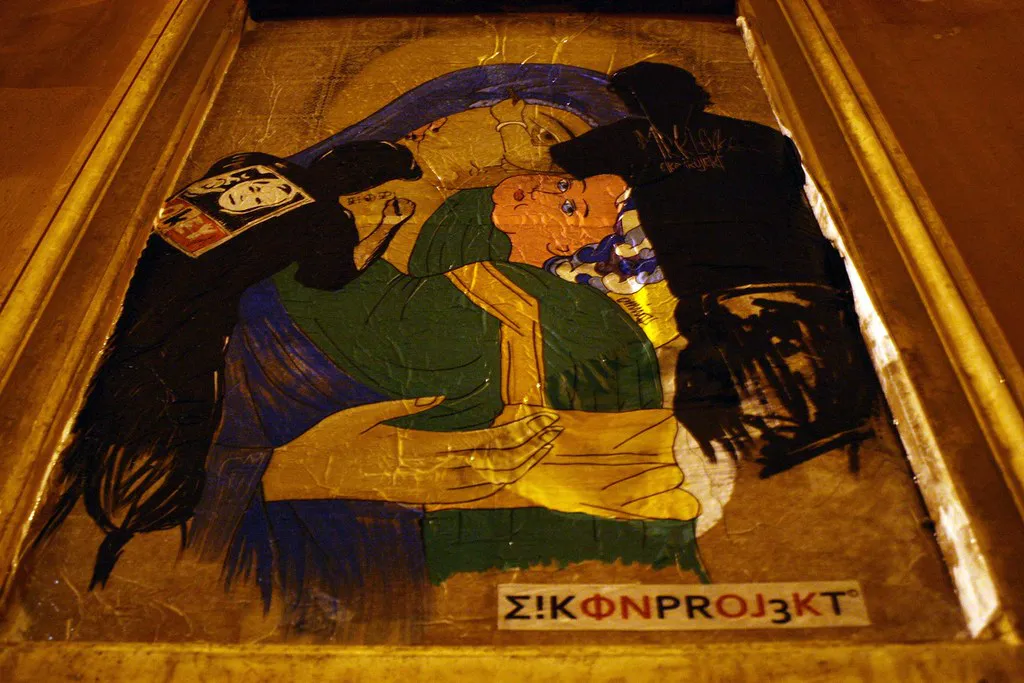
Most visitors skip this entirely, but Testaccio contains some of the most significant outdoor murals in Rome, all within easy walking distance of each other. On the exterior walls of the Testaccio Market closest to Via Galvani, look for "Kindness" by Alice Pasquini — a detailed, large-scale work by one of Italy's best-known urban artists. It is one of several murals that emerged from the broader street art initiatives that transformed the district during the 2000s.
A few minutes south on Via Porto Fluviale, a building facade by the artist Blu depicts the faces of immigrants using the structure's windows as eyes. Across the road on the corner of Via Gasometro stands "Antismog," which uses photocatalytic paint that absorbs CO2 — according to its creators, the equivalent of removing 70 cars from the road. The largest mural in the neighborhood is Roa's enormous She-Wolf, the ancient symbol of Rome, painted onto a 20th-century palazzo near the market. None of these require tickets, detours, or booking — build thirty to forty-five minutes into your walk and bring a fully charged phone.
The street art circuit pairs naturally with a lap around Monte Testaccio and the market visit. If you are planning a half-day in Testaccio, running the art loop between the market and the pyramid keeps your route logical and avoids backtracking.
Museums and Culture in Testaccio
Centrale Montemartini, on Via Ostiense just south of the neighborhood, is one of Rome's most visually unusual museums. A former electrical power station, it houses classical marble statues from the Capitoline Museums collection displayed against the original industrial machinery. The contrast between white ancient sculpture and dark iron turbines is genuinely striking. It is open Tuesday through Sunday and costs around 7.50 euros, or is covered by the Capitoline Museums combined ticket.
The Mattatoio — the former slaughterhouse complex — now functions as a cultural campus hosting MACRO Testaccio (contemporary art), the Faculty of Architecture of Roma Tre University, and a music school. Rotating exhibitions fill the enormous original halls throughout the year. Checking the MACRO schedule before your visit is worthwhile if contemporary or experimental art interests you; entry to exhibitions varies between free and around ten euros depending on the show.
The 12 Best Underground Rome Sites to Explore experience is also within reach from this neighborhood. Several tour operators run underground access beneath the Aventine and the Circus Maximus area, adding a subterranean dimension to what is already a historically layered district.
Where to Eat in Testaccio
Testaccio's food identity is built on "cucina del quinto quarto" — fifth quarter cooking, meaning the offal, tripe, and organ cuts left over after the slaughterhouse sold its prime cuts. Dishes like rigatoni con la pajata (pasta with veal intestines), coda alla vaccinara (oxtail stew), and trippa alla romana are not tourist novelties here. They are the native cuisine, and the restaurants serving them have been doing so for generations. If you want to understand Roman cooking rather than just eat Italian food, this is the neighborhood.
For breakfast, Linari at Via Nicola Zabaglia 9 is widely considered among the best in the district. Arrive before 09:00 on weekends to avoid the queue, pay at the counter first, and try the pizzette or the maritozzo (a whipped-cream-filled bun). Tram Depot at Via Marmorata 13 is the best option for specialty coffee.
Lunch is best handled at the Testaccio Market Guide: 10 Things to Know Before You Go on Piazza Testaccio 39. The Mercato di Testaccio operates Monday through Saturday from 07:00 to approximately 14:30. Casa Manco (Box 22) makes pizza with a 100-hour-risen dough. Mordi e Vai (Box 15) does traditional meat sandwiches including boiled veal and braised oxtail. Food Box (Box 66) covers the fried street food: supplì, artichokes, croquettes. Budget around 8–15 euros for a full lunch eating across two or three stalls.
For a sit-down dinner, Angelina a Testaccio at Via Giovanni Battista Bodoni 62 serves seasonal Roman recipes in a relaxed setting. Booking is recommended and they may take a holding fee. Remo at Piazza di Santa Maria Liberatrice 44 is the neighborhood's quintessential Roman pizzeria — wafer-thin pizza, walk-ins only, deliberately brusque service. For the best view of Monte Testaccio while eating, Flavio al Velavevodetto has dining rooms with windows that look directly onto the pottery-shard hill; the cacio e pepe here is excellent.
Aperitivo runs from around 18:00 to 20:00. Piazza Testaccio has several bars where locals gather with a Spritz or Negroni before dinner. The square's central fountain, which pays tribute to Monte Testaccio, makes a good landmark for meeting up before deciding which bar to settle into.
Family-Friendly and Budget Options
Testaccio is one of the easier Rome neighborhoods for families. The market building is air-conditioned, stroller-accessible, and calm compared to the historic center crowds. There is a gated playground near the market area suitable for younger children, and the piazza provides space to take a break between sights without being in anyone's way.
Finding 13 Best Free Things to Do in Rome: Budget Travel Guide is straightforward here. The street art circuit costs nothing. Walking the base of Monte Testaccio is free. The Non-Catholic Cemetery is free with a small suggested donation. Wandering the residential streets off Via Galvani to find courtyards and building details adds no cost and minimal effort.
The market is the best budget food option in any Rome neighborhood. Ten to fifteen euros per person covers a generous lunch across multiple stalls, which is less than half what a sit-down tourist lunch costs in the Colosseum or Navona area. Buying fresh produce or local cheese to take back to your accommodation is even cheaper.
How to Plan a Testaccio Day
The optimal sequence for a half-day visit starts at the Piramide metro exit at 09:00. Walk through the Non-Catholic Cemetery first while it is quiet, then cross to the Pyramid of Cestius for photographs. Continue along Via Galvani to the market for a mid-morning coffee and a browse, then commit to a proper market lunch by 12:30 before the stalls start winding down. Finish with the street art circuit — She-Wolf, Blu's mural on Via Porto Fluviale, and the Antismog piece — before the afternoon heat peaks.
A full day adds Centrale Montemartini in the morning before the market, a post-lunch walk around Monte Testaccio, and returns for aperitivo in Piazza Testaccio around 18:30 before dinner. Most museums in the district are closed on Mondays, and the market is closed on Sundays, so Tuesday through Saturday is the ideal window for a comprehensive visit.
Booking a guided food tour can help if you want context for the fifth quarter cooking tradition and curated access to specific stalls. These tours typically run 09:00–12:00, fill quickly on weekends, and cost 50–80 euros per person. Reserve at least a week in advance in high season (April through June and September through October).
Most museums in Testaccio are closed on Mondays and the market is closed on Sundays — plan your visit for Tuesday through Saturday to access all highlights in a single trip.
Frequently Asked Questions
Where is Testaccio located in relation to the city center?
Testaccio is located just south of the historic center along the banks of the Tiber River. It sits between the Aventine Hill and the Trastevere neighborhood. You can reach it in about ten minutes by metro from the Colosseum or Termini station.
Which testaccio rome options fit first-time visitors best?
First-time visitors should prioritize the Testaccio Market for food and the Pyramid of Cestius for history. These sites offer a great introduction to the neighborhood's unique character. You might also enjoy a guided food tour to sample local specialties safely.
How much time should you plan for testaccio rome?
You should plan for at least a half-day to see the main highlights and enjoy a local lunch. A full day allows for a more relaxed pace and visits to the museums or cemeteries. Most travelers find that 4-6 hours is sufficient for a first visit.
What should travelers avoid when planning testaccio rome?
Avoid visiting on Mondays when many of the museums and the main market are closed to the public. You should also be careful about arriving too late in the afternoon for the market stalls. Always check the specific opening hours for the Pyramid of Cestius beforehand.
Testaccio Rome offers an incredible opportunity to experience the authentic heart of the city's culinary and cultural life. From ancient pyramids to modern art spaces, this neighborhood provides a diverse range of activities for every type of traveler.
By following this guide, you can navigate the district with confidence and find the best spots for dining and exploration. Make sure to take your time and soak in the local atmosphere that makes this area so special.
Whether you are a history buff or a food lover, Testaccio will surely leave you with lasting memories of your Roman holiday. We hope you enjoy discovering the unique charms of this historic and vibrant neighborhood.
See our hidden gems in Rome guide for the wider list of offbeat neighborhoods and lesser-known places across the city.
Continue exploring
More guides you'll find useful