12 Best Things to Do in Venice for Young Adults (2026)
Discover the best things to do in Venice for young adults, from student-district nightlife in Dorsoduro to rowing lessons and budget-friendly cicchetti tours.
On this page
12 Essential Things to Do in Venice for Young Adults
Venice rewards young travelers who know where to look. The day-tripper crowds retreat by early evening, and what remains is a city with one of Italy's most active student scenes, a bacaro bar culture that runs late into the night, and enough hands-on workshops to fill a week without setting foot in a single souvenir shop. This guide cuts through the tourist noise and focuses on the experiences that resonate with travelers in their 20s and 30s in 2026.
The floating city hosts Ca' Foscari University and the IUAV architecture school, which means tens of thousands of students keep the local bar and restaurant scene genuinely affordable. Drink prices in the student quarters are two to three times cheaper than anything near St. Mark's Square. You can also find a surprising number of free things to do in Venice if you prioritize the right neighborhoods.
Everything below is grounded in the 2026 season. We cover active experiences over passive sightseeing, the social districts most young adults gravitate toward, and a few angles that most Venice guides skip entirely.
Why Venice Appeals to Young Adults
Venice is car-free, which means it functions as a walkable playground at any hour of the day or night. Every alley turns a corner into something new — a canal, a quiet campo, a neighborhood bar with tables spilling onto cobblestones. For travelers who want spontaneous discovery over scripted itineraries, that quality is genuinely rare in a European city of this stature.
The city is also one of the most photogenic places on the planet, and that matters for a generation that documents its travels on Instagram and TikTok. Viral spots like the Libreria Acqua Alta bookstore, the rainbow houses of Burano, and the spiral staircase of the Scala Contarini del Bovolo all land on feeds for a reason. The practical intelligence is knowing when to arrive to avoid the scrum of tour groups.
Beyond aesthetics, Venice offers a cultural depth that rewards curiosity. The Peggy Guggenheim Collection sits on the Grand Canal. The Venice Biennale — the world's oldest and most prestigious contemporary art fair — takes over the city in odd-numbered years. For young adults with an interest in art, design, or architecture, there is no equivalent city in Europe for the density of accessible world-class work.
Explore the Student Vibes of Dorsoduro
Dorsoduro is the neighborhood that most young adults eventually claim as their Venice. It is home to Ca' Foscari University, which generates a constant undergraduate population throughout the academic year and a lively summer crowd beyond it. The streets around the university and Campo Santa Margherita fill with people in their 20s from mid-afternoon onward every day of the week.
The district has a dual identity. By day it offers the Peggy Guggenheim Collection (student tickets from €11 for under-26s, open daily except Tuesdays 10:00–18:00), the Gallerie dell'Accademia, and the quieter church of Santa Maria della Salute at the tip of the promontory. By evening the energy shifts entirely to bars, aperitivo spreads, and the kind of outdoor socializing that doesn't exist in the same way anywhere else in Italy.
For accommodation, Dorsoduro has the highest concentration of affordable guesthouses and hostels relative to the tourist density of other sestieri. Check our breakdown of the best neighborhoods to stay in Venice for specific property picks and price ranges by area.
Nightlife at Campo Santa Margherita
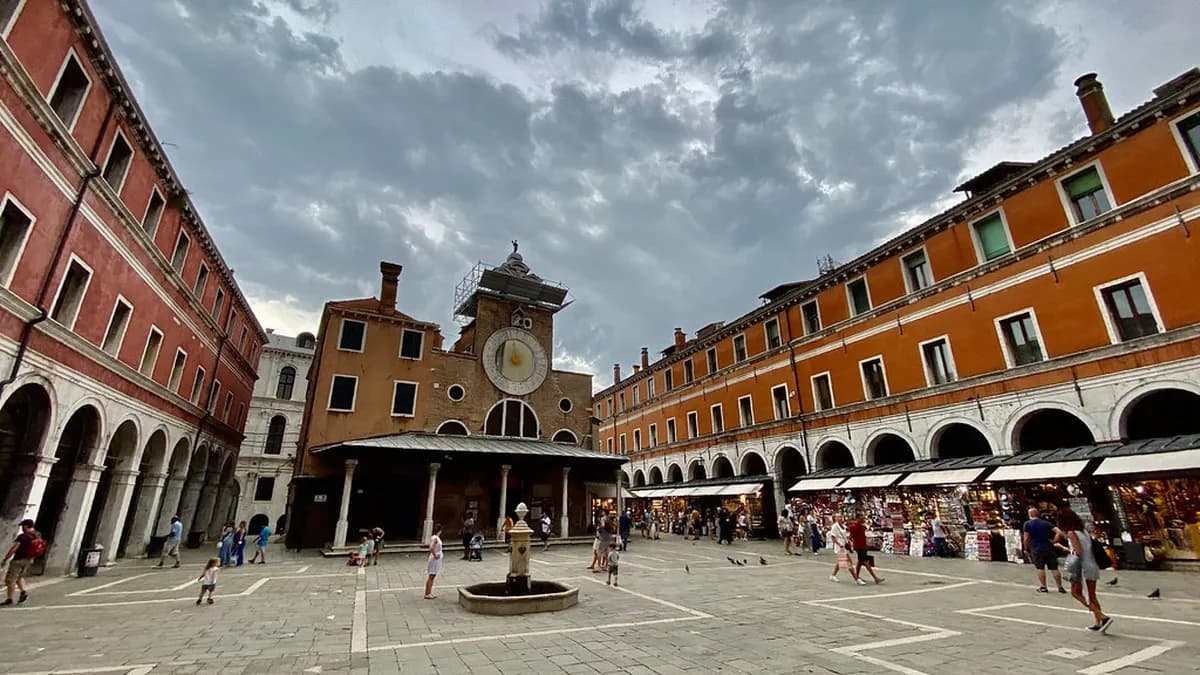
Campo Santa Margherita is the social center of Venice for anyone under 35. The square is large by Venetian standards — wide enough for benches, food stalls, and a produce market that packs away by late afternoon to make room for evening crowds. By 19:00 the perimeter bars are full, and the square itself becomes an open-air gathering point where locals and travelers mix freely.
Spritz prices start at €2.50 to €3.50 here in 2026, compared to €12 or more at Caffè Florian in Piazza San Marco. Il Caffè (known locally as Caffè Rosso for its red sign) and Imagina Café are the two anchors of the square's evening scene. Both stay open until around 01:00, which is late by Venetian standards. Neither charges a cover.
The scene works well for solo travelers and small groups alike. The student population means it never feels like a tourist trap despite being widely known. If you want to extend the evening, the narrow streets radiating from the campo toward the Zattere waterfront have several late-opening bars and a couple of small clubs that host DJ nights on weekends.
Spritz prices at Campo Santa Margherita start at €2.50–€3.50 in 2026 — compared to €12 or more at Caffè Florian in Piazza San Marco. Il Caffè (Caffè Rosso) and Imagina Café are the two main anchors and neither charges a cover.
Eat and Drink Your Way Through Venice
Cicchetti are the Venetian answer to tapas — small bites served on bread or skewers, eaten standing at the bar of a bacaro wine bar. A single piece costs €1.50 to €3.00, which means you can graze through an entire evening for under €20 including wine. The classic order is a ombra (a small pour of house wine) paired with baccalà mantecato (creamed salt cod on crostini), sarde in saor (sweet-and-sour sardines), or a tramezzino sandwich.
The best bacari cluster in Cannaregio around the Strada Nova and in San Polo behind the Rialto market. Our full bacari guide covers eleven specific bars worth prioritizing, with opening hours and the dishes each does best. For a guided introduction, the Venice at Sunset: Cicchetti & Wine Tour takes small groups through five or six bacari in two hours — a social format that works particularly well when you arrive alone or as a couple.
The Rialto Market is the logical morning bookend to the evening bacaro circuit. The fish market runs Tuesday through Saturday from 07:30 and the produce stalls are active from 07:00. Watching barges deliver crates of clams and cuttlefish to vendors who have held the same stalls for generations is one of those experiences that no museum can replicate. Entry is free. Bring cash for a coffee at a nearby stand and budget about forty minutes. Our dedicated guide to the best cicchetti in Venice covers exactly what to order and where.
Learn to Row Like a Venetian Gondolier
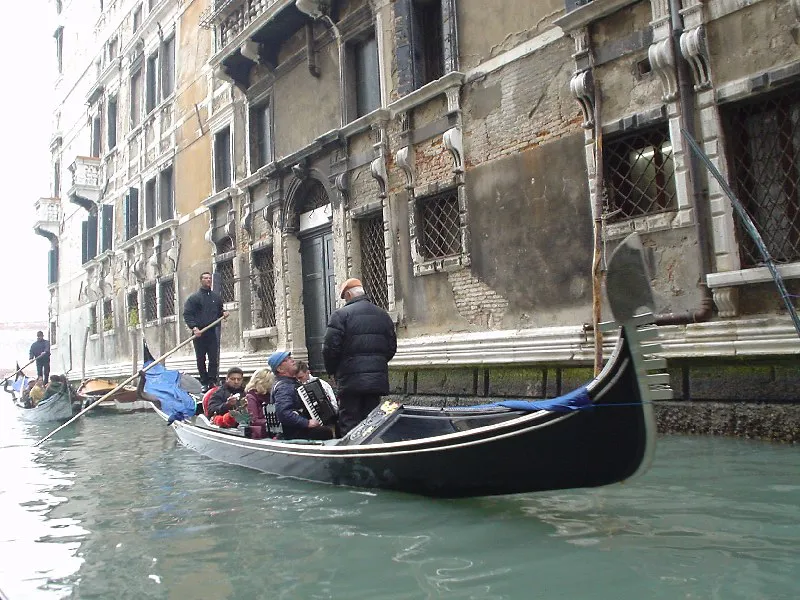
The standard gondola ride — €80 to €100 for thirty minutes of passive floating — is the most overpriced tourist ritual in Venice. It is also the wrong choice if you actually want to connect with what makes gondolas culturally significant. Row Venice, a non-profit cooperative run by Venetian women, teaches voga alla veneta: the traditional standing-oar rowing style that gondoliers use. A private 90-minute lesson for two costs approximately €120 and takes place on quiet Cannaregio canals well away from the vaporetto traffic.
The experience demands concentration — balancing on a flat-bottomed sandolo while learning to steer a single oar is genuinely difficult — which is precisely why it lands differently than a passive tour. You finish with a real physical skill, some bruised palms, and a far more specific understanding of why Venice was built the way it was. Booking through rowvenice.org is essential; sessions fill several weeks ahead in summer.
For a budget version of the water experience, the traghetto public gondola ferry crosses the Grand Canal at several points for €2 per crossing. It is a standing crossing shared with locals heading to market, and it uses the same boats and the same rowing style as a private gondola ride. Most young travelers do not know this exists.
Instagram Spots: TikTok vs. Reality
The Libreria Acqua Alta bookstore in Castello is the most viral location in Venice. Books stacked in bathtubs and gondolas, a staircase of old encyclopedias leading to a canal view — the photos are genuine. So is the queue. By 10:30 on any day from April through October, the line extends down the calle. The fix is simple: arrive at 09:00 when doors open, spend twenty minutes photographing the interior before the crowds build, and leave before the bottleneck forms. Entry is free; buying a postcard is appreciated.
The Scala Contarini del Bovolo is a spiral Gothic staircase hidden in a courtyard near the Rialto. It appears on fewer feeds than the bookstore, which means the crowds are thinner and the architecture is objectively more impressive. Tickets cost €7 to €10 depending on age; the site opens at 10:00 and closes at 18:00. The staircase was undergoing partial restoration in 2025 but the courtyard and lower levels remained accessible — confirm the current access level before visiting.
Burano is the island with the rainbow-painted houses and the most consistent natural light for photography in the late afternoon, when the low sun hits the facades from the west. The vaporetto from Fondamente Nove takes about 45 minutes and is covered by the standard multi-day pass. Plan for at least three hours on the island. The fish restaurant Da Romano on Via Galuppi has been operating since 1906 and serves a risotto di go (lagoon goby fish) that does not appear on any tourist menu in central Venice.
Workshops: Glass, Masks, and Hands-On Making
Glass blowing on Murano is the most accessible craft experience the lagoon offers. Wave Murano Glass is the most low-key of the island's factories — young artists from across Europe come to apprentice under Venetian masters, and they run regularly scheduled demonstrations as well as private sessions where you can attempt a basic form yourself. A standard demonstration costs around €10 and lasts twenty minutes. Private sessions with hands-on participation are available by appointment. Avoid any hotel or dock tout offering a "free" boat to Murano — the pressure selling at the other end is aggressive.
Mask-making workshops in San Polo run two-hour sessions where you paint a traditional paper-mâché mask. Basic sessions cost €50 to €70 and most studios run morning and afternoon slots Monday through Saturday. The connection to Carnival history makes this more than a craft activity — Venice's masked ball tradition dates to the 13th century and the masks were originally used to erase social hierarchy in public spaces, allowing nobles and laborers to interact as equals. That context makes the workshop land differently.
For something genuinely unusual, Relight Venice in Dorsoduro runs candle-making workshops led by Michela Bortolozzi. The candles sit on recycled wood bases sourced from a nearby fórcola (gondola oarlock) workshop, which means your finished object contains two layers of Venetian craft history. Sessions are small — four to six people — and the atmosphere is relaxed in a way that the larger mask studios are not. Book directly through the shop.
The Lido and the Lagoon Islands
Venice's Lido is a barrier island a fifteen-minute vaporetto ride from San Marco (Line 1 or 5.1). It has a real beach — sand, sun loungers, the Adriatic — which is the one thing the main island entirely lacks. From June through September, the public beach at the northern end of the Gran Viale is free; the lido-style private beach clubs (stabilimenti) charge around €15 to €30 for a sun bed and umbrella for the day. The water is calm and the crowds are primarily local and Italian, not international tour groups.
The Lido also hosts the Venice Film Festival each September — the oldest film festival in the world. The 2026 edition runs in early September, and industry screenings aside, there are free public screenings on the beach at night and a genuine buzz around the Palazzo del Cinema that does not require a press pass to experience.
Torcello, the oldest inhabited island in the lagoon, is a 45-minute ride from Fondamente Nove via Burano. It has a Byzantine cathedral (Santa Maria Assunta) with mosaics older than anything in St. Mark's Basilica, a single canal, and almost no tourists by midday when the day-trippers have moved on. Our full article on Torcello as Venice's oldest island covers the history and the best time to visit in detail.
Watch Venezia FC Play at the Stadio Penzo
Venezia FC plays at the Stadio Pierluigi Penzo on Sant'Elena island, making it one of the only professional football grounds in the world reachable by boat. The stadium holds around 11,500 spectators, the atmosphere is intense by Italian lower-division standards, and the crowd is almost entirely Venetian — no tour groups, no selfie sticks, no souvenir gondolas. A match at the Penzo is the fastest way to spend an evening with locals who have nothing to do with the tourist economy.
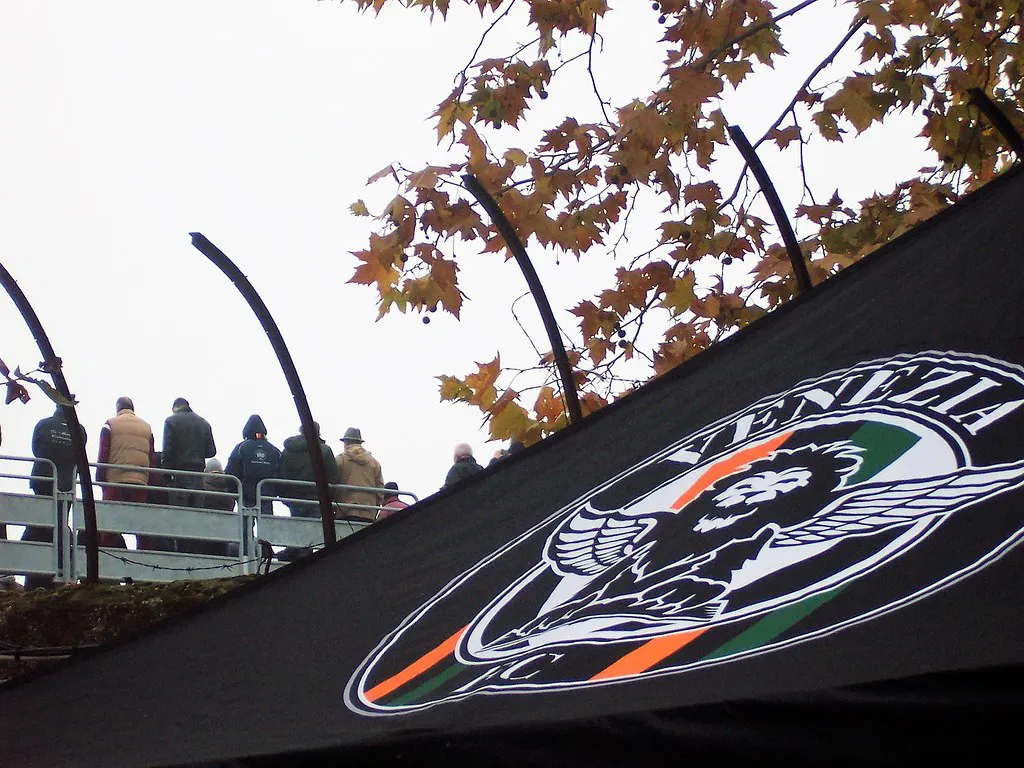
Tickets typically cost €15 to €35 for standard terraces depending on the opponent. The 2026 Serie A season runs from August through May, with weekend fixtures most common. Check the club's official site or Ticketone for the fixture calendar; popular matches sell out two to three weeks in advance. The walk from the Giardini vaporetto stop to the stadium takes about twelve minutes through the quiet Sant'Elena neighborhood, which itself feels like a separate village from the rest of Venice.
After the match, the bars around Campo Santa Margherita and along the Zattere fill with a postgame crowd that mixes students, local fans, and visiting supporters. It is one of the few evenings in Venice where the social energy extends well past midnight without any organized bar-crawl infrastructure.
Master Venice Budgeting and Transport Tips
The Rolling Venice Card is the single most useful piece of planning intelligence for any traveler aged 6 to 29. It costs €6 and unlocks discounted rates on multi-day vaporetto passes — the 72-hour pass drops from €45 to €22 for cardholders, a saving that more than covers the card cost on its own. It also provides reduced entry at Musei Civici museums (which includes the Doge's Palace and Correr Museum), selected temporary exhibitions, and some private attractions. Purchase it at any Venezia Unica ticket point at the train station, Piazzale Roma, or the airport dock.
| Experience | Cost (2026) | Location |
|---|---|---|
| Traghetto Grand Canal crossing | €2 per person | Multiple points |
| Spritz at Campo Santa Margherita | €2.50–€3.50 | Dorsoduro |
| Cicchetti (per piece) | €1.50–€3.00 | Cannaregio / San Polo |
| Rolling Venice Card | €6 (ages 6–29) | Station / Piazzale Roma |
| 72-hour vaporetto pass (with card) | €22 (vs €45 standard) | ACTV booths |
| Row Venice lesson (2 people, 90 min) | ~€120 | Cannaregio canals |
| Venezia FC match ticket | €15–€35 | Sant'Elena island |
For transport, the choice between vaporetto and walking depends on direction. East-west movement along the Grand Canal is faster by vaporetto (Line 1 is slower and scenic; Line 2 skips stops). North-south movement across the sestieri is almost always faster on foot — the canal routes add significant distance. Download an offline map before arriving; Google Maps works well in Venice but eats data quickly. The free walking tour operated by local guides departs daily from Campo San Geremia in Cannaregio; our Venice free walking tour guide has the current schedule and meeting point.
Avoid hotel or dock touts offering "free" boat trips to Murano — the showroom sales pressure at the destination is intense. Take the public vaporetto Line 4.1 or 4.2 from Fondamente Nove instead (covered by your ACTV pass) and explore the island on your own terms.
Water taxis are beautiful and genuinely fast but cost €70 to €120 per trip from the airport — a figure that makes sense split four ways but is hard to justify for solo travelers or couples. The Alilaguna airport boat (Line Blue to San Marco, Line Orange to Rialto) costs €15 per person and takes 75 to 80 minutes. It is the correct default choice for budget-conscious arrivals.
Choosing the Best Neighborhood to Stay In
Dorsoduro is the default recommendation for young adults. The student population keeps bar prices and overall costs lower than comparable neighborhoods; the Zattere waterfront offers one of the best sunset views in the city; and the walk to Campo Santa Margherita from most guesthouses is under ten minutes. The neighborhood's relative distance from the train station (25 minutes on foot) is its only practical disadvantage.
Cannaregio suits travelers who want a more residential feel without sacrificing central access. The northern section along the Fondamenta della Misericordia has a strip of canalside bars and restaurants that locals use daily — an atmosphere close to what Campo Santa Margherita offers in Dorsoduro, but quieter and less frequented by international travelers. The train station is at the western end of the neighborhood, making late-night arrivals and early departures straightforward.
San Polo works well if you want to wake up at the Rialto Market and have Murano on your list for the morning. The neighborhood is compact and central, though accommodation prices run higher and the daytime tourist traffic is dense. Our detailed comparison of guesthouses, hostels, and apartment rentals appears in the Cannaregio neighborhood guide for that specific district.
Frequently Asked Questions
Is the Rolling Venice card worth it for young adults?
Yes, the Rolling Venice card is highly recommended for travelers aged 6 to 29. It provides significant discounts on multi-day transport passes and many major museums. You will likely save the initial cost of the card within your first day of sightseeing.
What is the best area for nightlife in Venice?
Campo Santa Margherita in the Dorsoduro district is the heart of Venetian nightlife for young people. It is surrounded by student-friendly bars that offer affordable drinks and a lively social atmosphere. Most other parts of Venice become very quiet after 9pm.
How do you avoid crowds in Venice as a young traveler?
The best way to avoid crowds is to explore the city early in the morning or late at night. Focus your time in residential neighborhoods like Cannaregio or the island of Giudecca. These areas offer a much more relaxed pace compared to the congested Rialto and San Marco corridors.
Venice is not a city that gives itself up to passive tourists. Young adults who engage with it — taking a rowing lesson, grazing through bacari, watching a football match on Sant'Elena island — leave with a fundamentally different experience than those who tick off the standard highlights and move on. The student districts are real, the food culture is outstanding, and the off-season energy is unlike anything else in Italy.
Grab your Rolling Venice Card, book your Row Venice slot two weeks ahead, and set your alarm for the Rialto Market at 07:30. The rest will sort itself out in the alleys.
Pair this with our broader hidden gems in Venice guide for the full off-the-beaten-path overview.
Continue exploring
More guides you'll find useful