Budapest Neighborhoods Travel Guide
Plan budapest neighborhoods with top picks, neighborhood context, timing tips, and practical booking advice for a smoother trip.
On this page
Budapest Neighborhoods
Budapest is a city of two halves divided by the Danube River. Buda rises steeply on the western bank — hilly, quiet, and dominated by medieval castles and residential streets. Pest spreads flat on the eastern bank — dense, lively, and packed with grand boulevards, ruin bars, and coffee houses. Which side you base yourself on shapes your entire experience.
The city is divided into 23 districts numbered with Roman numerals from I to XXIII. Districts I through XI sit on the Buda side; Districts V through XXIII cover Pest (with some overlap in the central numbering). The low numbers cluster close to the river and the tourist core. When you see a hotel advertised in "District VII" you already know it sits in the heart of inner Pest, close to the Jewish Quarter.
This guide covers every major neighborhood with honest assessments of who each area suits in 2026 — first-timers, families, nightlife seekers, budget travelers, and anyone wanting a genuinely local stay. For official tourism information, check Visit Hungary's Budapest guide.
Buda vs Pest: The First Decision Every Visitor Faces
Most travelers underestimate how different the two banks feel. Buda is quieter, greener, and older. Streets wind uphill through the Castle District and then flatten into calm residential areas like Víziváros. Hotels here tend to be smaller boutiques and the streets go quiet by 22:00. If you want panoramic views and undisturbed sleep, Buda delivers both.
Pest is where Budapest's energy lives. Andrássy Avenue, the ruin bars of District VII, the Grand Market Hall, the coffee houses of District V — all of it sits on the flat Pest side. Public transport is denser here, and virtually every restaurant, bar, and cultural venue worth visiting is within a 20-minute walk or a single metro stop. First-time visitors who want to maximise sightseeing should stay in Pest.
The Chain Bridge, Elizabeth Bridge, and Liberty Bridge all connect the two banks and take under 10 minutes to cross on foot. Staying on one side does not lock you out of the other. But it does determine the pace and atmosphere of your evenings, which matters more than most people expect when booking.
How Budapest's District Numbers Actually Work
Budapest uses a Roman numeral district system that confuses first-timers but is simple once you know the logic. The 23 districts spiral outward from the city center in a rough clockwise pattern. Districts I, II, III, XI, and XII are Buda-side. Districts IV through X and XIII through XXIII cover Pest and the outer ring. For a comprehensive overview of all districts, see the Wikipedia entry on Budapest's districts.
The inner Pest districts — V, VI, VII, VIII, and XIII — are the ones that appear most often in travel guides. They sit within walking distance of each other and account for the majority of hotels, restaurants, and nightlife. District V is the formal city center; District VII is the nightlife hub; District VI is the cultural and shopping spine along Andrássy Avenue.
Knowing the district number instantly tells you a property's rough position. A flat in District II means quiet Buda hills. A hostel in District VIII means up-and-coming inner Pest. This system saves you from reading long address descriptions — just check the Roman numeral when comparing accommodation options.
District numbers follow a pattern: odd-numbered districts on the Buda side (I, III, XI) tend to be quieter and hillier, while even-numbered districts on the Pest side (V, VI, VII, VIII) are denser and more vibrant. This simple rule helps you predict a neighborhood's atmosphere before even checking it on a map.
Castle District (District I): The Historic Buda Core
District I sits on Castle Hill and contains the most concentrated cluster of medieval monuments in the city. Buda Castle, Fisherman's Bastion, Matthias Church, and the Royal Palace all lie within a short walk of each other. The cobblestone streets and pastel facades give this area a fairy-tale quality that photographs well but also genuinely feels different from the rest of the city.
Accommodation here is limited and expensive. The area is compact and extremely touristed during the day, but it quiets down significantly after dinner — most visitors come up as a day trip, then return to Pest at night. Staying here suits travelers who prioritize views and historic ambience over nightlife access and restaurant variety.
Castle Hill is car-restricted and reached by a funicular from Clark Ádám tér (one-way fare 1,400 HUF in 2026), or by foot via the Castle Steps or several sloped paths. The area has only a handful of restaurants and they skew toward tourist pricing. Eat in Víziváros at the base of the hill for better value.
Belváros (District V): The City Center
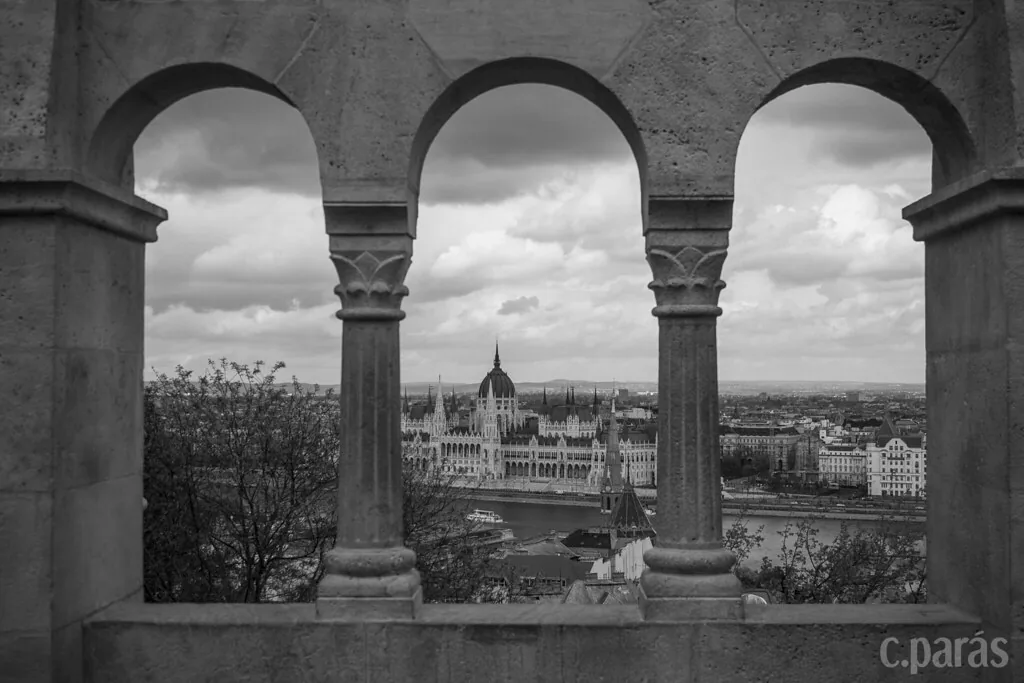
District V is the official inner city and the default choice for first-time visitors. The Hungarian Parliament, the Chain Bridge, St. Stephen's Basilica, Váci Street, and the Central Market Hall all sit here or on its immediate border. Nothing requires a metro ride — you can cover the main landmarks on foot in a single day.
Hotels in District V are the most expensive in Budapest, with mid-range doubles averaging 35,000–55,000 HUF per night in peak season (June–August 2026). The area is heavily touristed and feels polished rather than local. Restaurants on Váci Street and around the Basilica cater primarily to visitors and price accordingly — budget an extra 20–30% compared to eating one district further out.
The metro infrastructure here is excellent. Line 3 (blue) and Line 1 (yellow, the city's oldest underground railway) both run through District V. Tram 2 along the Danube riverfront is one of the most scenic public transport routes in Central Europe and is included on a standard day ticket (350 HUF per journey, or use the Budapest Card for unlimited rides).
| District | Name | Character | Best for |
|---|---|---|---|
| I | Castle District | Historic, medieval, views, quiet evenings | History lovers, photographers |
| V | Belváros | Central, touristed, landmark-dense | First-time visitors, sightseeing |
| VI | Terézváros | Upscale, cultural, Andrássy Avenue | Culture, sophisticated dining |
| VII | Erzsébetváros | Vibrant, nightlife, ruin bars, Jewish history | Nightlife, young travelers, budget |
| IX | Ferencváros | Emerging, cultural institutions, local dining | Families, longer stays |
| XIII | Újlipótváros | Local, residential, Margaret Island access | Families, Margaret Island |
| III | Óbuda | Quiet, Roman ruins, riverside, authentic | Local experience, history |
Jewish Quarter / Erzsébetváros (District VII): Nightlife and Culture
District VII is the most talked-about neighborhood in Budapest for good reason. It contains the Dohány Street Synagogue — the largest synagogue in Europe — as well as the ruin bars that put Budapest on the global nightlife map. Szimpla Kert on Kazinczy Street opened in 2002 in a derelict factory and the concept spread across the entire district. Today there are dozens of ruin bars, craft beer pubs, and late-night restaurants packed into a few walkable blocks.
The Jewish Quarter guide goes deeper on the history and best-value eating spots in this area. For accommodation, District VII suits nightlife fans and budget travelers — prices run 15–30% lower than District V and hostels are plentiful. The tradeoff is noise: streets around Kazinczy and Király can be loud until 03:00 on weekends. Request a room facing a courtyard if light sleep is a concern.
The neighborhood also contains some of the city's best street art, concentrated on Gozsdu Udvar and the streets east of Király. Most murals were commissioned by local bar owners rather than the city, giving them an organic, non-curated feel that contrasts sharply with purpose-built art districts elsewhere in Europe.
Terézváros (District VI): Andrássy Avenue and the Opera House
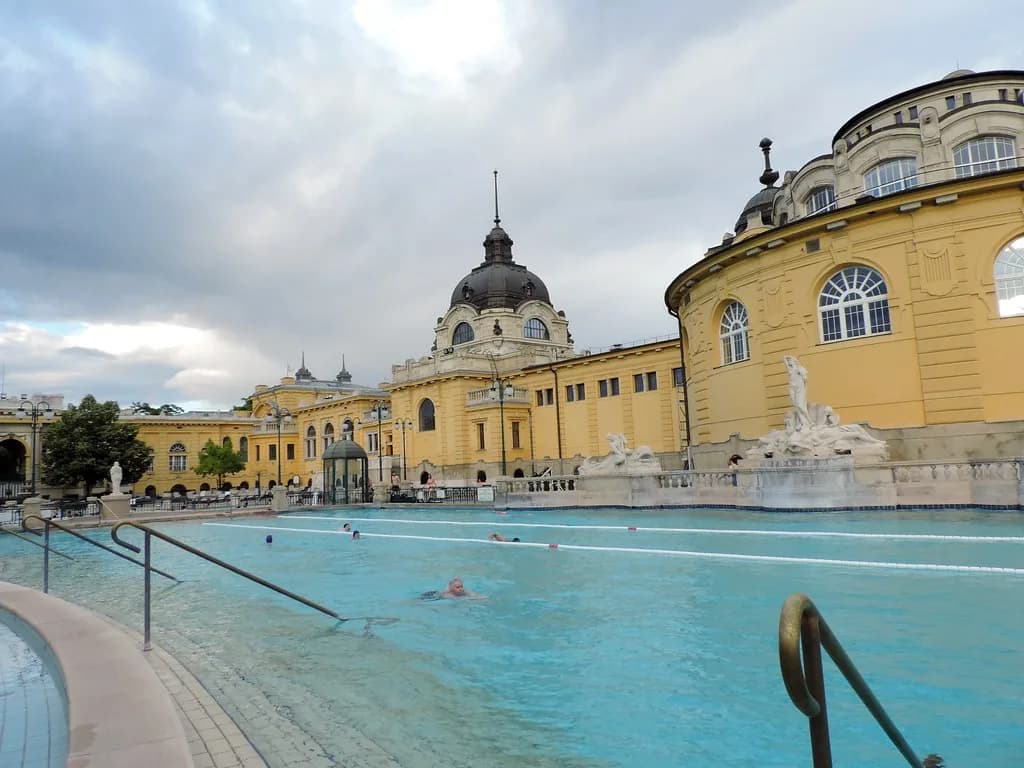
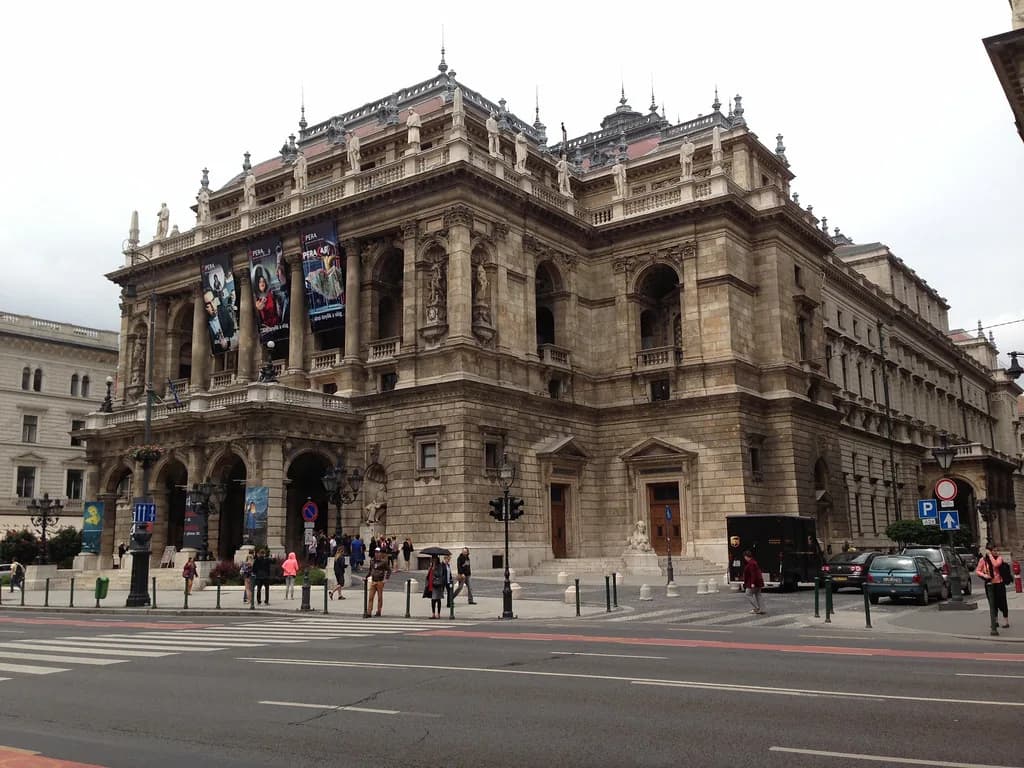
District VI runs along Andrássy Avenue, a UNESCO World Heritage boulevard of Neo-Renaissance palaces that stretches from the city center to Heroes' Square. The Hungarian State Opera House anchors the lower end of the avenue. The upper half opens into Városliget (City Park), home to Széchenyi Thermal Bath and Vajdahunyad Castle.
This district has a sophisticated, less-chaotic feel compared to District VII. Restaurants here skew upscale, and the café culture on side streets like Liszt Ferenc tér is excellent for slow afternoons. Hotels in District VI tend toward four-star boutique properties and are priced accordingly — expect 30,000–50,000 HUF per night for a mid-range double.
Line 1 (yellow metro) runs directly under Andrássy Avenue, connecting District VI to District V and to Hero's Square in under five minutes. This is the metro line that predates the Paris Metro and is a heritage attraction in itself. The ornate wooden carriages still run on weekday off-peak hours.
Ferencváros (District IX): Budapest's Fastest-Changing Neighborhood
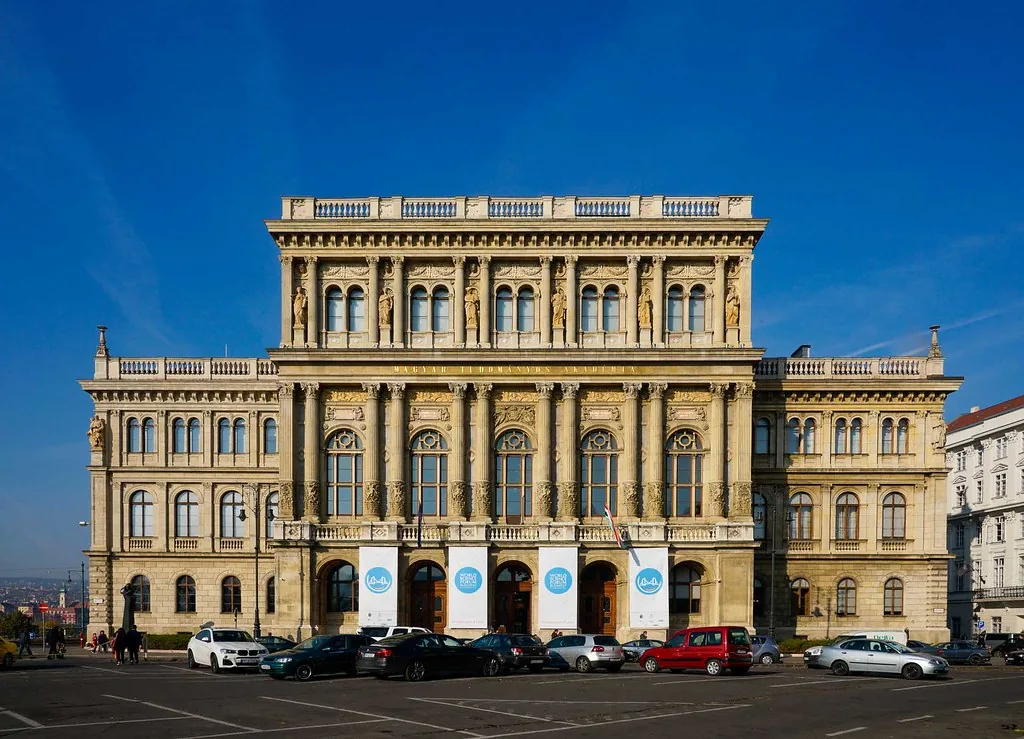
District IX has transformed more dramatically than any other part of Budapest over the past decade. The southern end of the district now contains the Bálna Budapest cultural center on the riverbank, the National Theatre, and the Ludwig Museum of Contemporary Art. The Raday Street restaurant corridor runs north through the neighborhood and offers some of the most honest-priced dining in inner Pest.
Accommodation in District IX is noticeably cheaper than Districts V through VII while still being well-connected. Line 3 (blue metro) cuts through the district and brings you to District V in two stops. The area is increasingly popular with young professionals and digital nomads who want a central location without tourist-zone pricing.
The Grand Market Hall sits on the border of Districts V and IX at the Pest end of Liberty Bridge. This is the best food market in Budapest for paprika, foie gras, sausages, and Tokaji wine at local prices — significantly cheaper than the souvenir shops on Váci Street two blocks away. Budget 90–120 minutes to explore the two floors properly. The hidden gems guide for Budapest covers several under-visited spots in this southern Pest corridor.
Újlipótváros (District XIII): The Local Choice
District XIII sits just north of the Parliament building and has a distinctly local character that the inner tourist districts lack. The neighborhood around Pozsonyi út and Újpesti rakpart is filled with independent bakeries, wine bars, and Saturday farmers markets. Rents here are lower than in Districts V and VI, which means the restaurants serve Budapestians rather than tourists — and price accordingly.
The Újlipótváros neighborhood guide covers the best streets and cafés in detail. For visitors, the key advantage is Margaret Island: a 15-minute walk or one tram stop north brings you to the car-free island park on the Danube. This makes District XIII an excellent base for families and anyone who wants morning runs or cycling without leaving the city center radius.
Accommodation options here are mostly apartments and smaller guesthouses rather than large hotels. Pricing sits roughly 25–35% below District V rates for comparable quality. The M3 metro and trams 4 and 6 (the city's busiest tram lines) connect District XIII to the rest of Pest in under 10 minutes.
Óbuda (District III): Roman Ruins and Riverside Calm
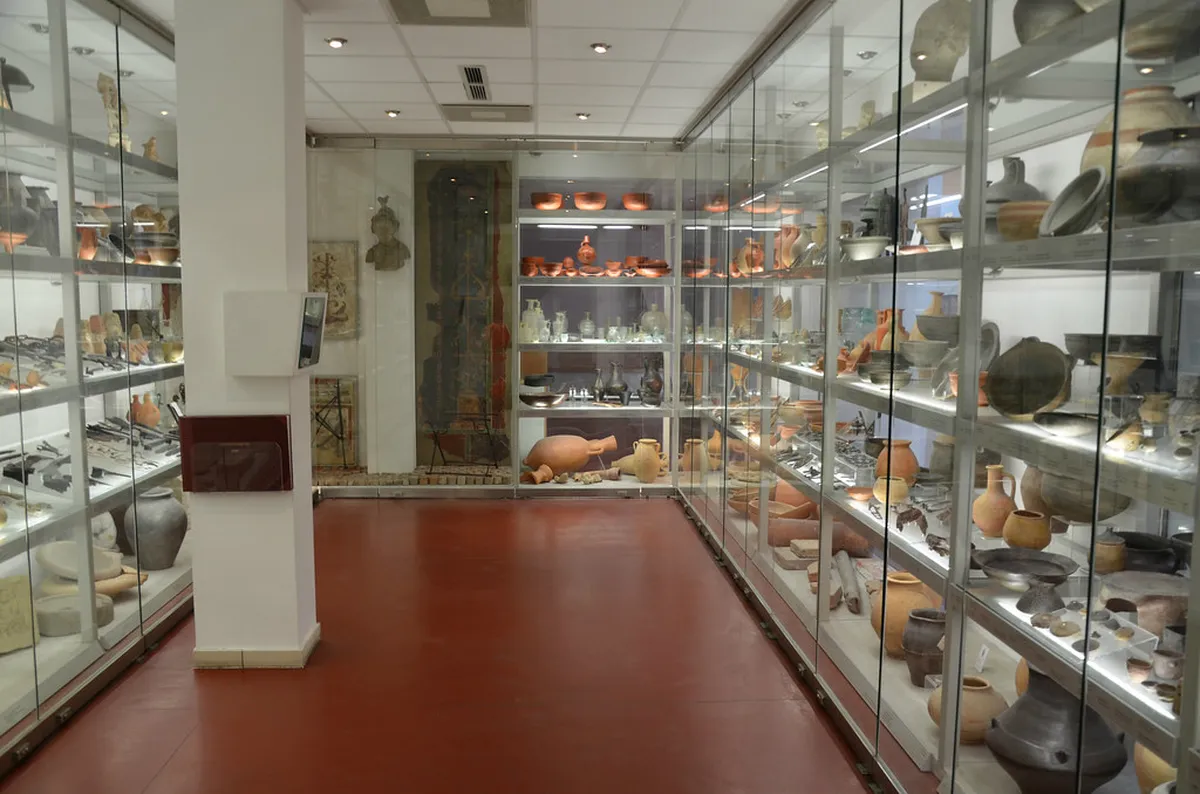
Óbuda is the oldest of the three historical towns that merged to form Budapest in 1873 (the others being Buda and Pest). The district sits north of Castle Hill on the Buda side and contains the ruins of Aquincum, a Roman legionary town that was once the capital of the province of Pannonia Inferior. The open-air archaeological site and attached museum are among the least-visited Roman ruins in Central Europe relative to their significance.
The Óbuda neighborhood guide details the Roman sites, the weekend craft markets on Fő tér, and the local restaurant scene along Lajos utca. For visitors, Óbuda suits those who want a quiet Buda-side base with river access and almost no tourist crowds. The HÉV suburban railway connects Óbuda to Batthyány tér (District I) in 10 minutes and to Margit híd (for tram 4/6) in 15 minutes.
Accommodation here is sparse — mostly short-term rental apartments rather than hotels. This is a deliberate tradeoff: you trade convenience for the experience of living like a local Budapestar for a few days. The weekend flea market in the area around Fő tér is one of the most authentic in the city and draws almost no tour groups.
Palace District (District VIII): The Emerging Option
District VIII is divided between two very different atmospheres. The western part bordering District VII contains Corvin Quarter, a modern development with a multiplex cinema, chain restaurants, and new apartment blocks. The eastern part — known as the Palace District — is a grid of 19th-century Neo-Eclectic mansions undergoing steady renovation into boutique hotels and design studios.
The Hungarian National Museum sits on the District V/VIII border and is free to enter for EU citizens. The neighborhood around Mikszáth Kálmán tér has become a hub for independent coffee shops and bookstores that attract a student and creative crowd. Prices here are genuinely lower than in Districts V and VI — a sit-down lunch runs 2,000–3,500 HUF versus 4,000–6,000 HUF near the Basilica.
District VIII is not yet a mainstream tourist destination and some blocks remain unrenovated. But the trajectory is clear: it is following the path that District VII took in the early 2010s. Travelers who stayed in District VII five years ago are now opting for District VIII to get ahead of the tourist-pricing curve. Lines 3 (metro) and 4 (metro) both serve the district.
If you're splitting your trip between Buda and Pest, stay in District V or VII first (landmark-dense and nightlife access), then move to District XIII or IX for a slower final few days. This sequence lets you sightsee efficiently early on, then transition into a local pace as you get city-fatigued.
Which Budapest Neighborhood Suits Your Travel Style
First-time visitors with limited time get the best return from Districts V or VI. The sightseeing density is highest, public transport is redundant (multiple lines serve every block), and walking between landmarks is realistic. Accept the tourist pricing as the cost of convenience on a short trip.
Nightlife travelers belong in District VII. No other neighborhood comes close for the density and variety of bars, and the ruin bar format — multiple rooms, courtyard gardens, mismatched furniture — is genuinely unique to Budapest. Book accommodation with a courtyard-facing room or use earplugs on weekend nights.
Families and longer-stay visitors do well in Districts XIII or IX. Both offer good metro/tram connections, realistic food pricing, and a genuine local atmosphere. District XIII gives easy access to Margaret Island; District IX puts you near the Grand Market Hall and the southern riverbank. Budget travelers should also look at District VIII, where hostel beds and private apartments are consistently 30–40% cheaper than inner Pest tourist zones.
Practical Tips for Getting Around Between Neighborhoods
Budapest's public transport covers most neighborhoods thoroughly. The BKK network includes three metro lines, a HÉV suburban rail, trams, trolleybuses, and buses. A single journey ticket costs 350 HUF in 2026. A 24-hour unlimited pass costs 2,500 HUF; a 72-hour pass costs 5,500 HUF. The Budapest Card (from 11,990 HUF for 24 hours) adds museum discounts and free entry to several thermal baths on top of unlimited transit.
Trams 4 and 6 run 24 hours around the Nagykörút (Great Boulevard), connecting Districts VI, VII, VIII, IX, and XIII in a single loop. This is the most useful line for moving between neighborhoods at night. Metro Line 3 (blue) is the north-south spine of Pest; Metro Line 2 (red) crosses from Pest to Buda under the Danube, stopping at Batthyány tér on the Buda side.
Following a Budapest 3-day itinerary and grouping activities by district minimizes travel time significantly. Trying to bounce between Castle Hill in the morning and Városliget in the afternoon and a ruin bar at night is feasible but tiring. A better approach is to anchor each day in one area — Buda one day, inner Pest the next, outer Pest the third.
Frequently Asked Questions
Which budapest neighborhoods options fit first-time visitors?
First-time visitors should prioritize District V (Belváros) for its central location and proximity to major landmarks. This area allows you to walk to the Parliament and the Chain Bridge easily. It is also very well-connected to public transport for exploring further areas like Óbuda.
How much time should you plan for budapest neighborhoods?
You should plan at least three to four days to explore the main districts of Budapest properly. This timeframe allows you to spend one day in the Castle District and another in the vibrant Jewish Quarter. Shorter stays are possible but may feel rushed given the city's size.
What should travelers avoid when planning budapest neighborhoods?
Avoid staying too far from the city center if you only have a few days to visit. While outer districts are cheaper, the commute can eat into your sightseeing time. Also, be cautious of booking accommodation directly above busy ruin bars in District VII if you value quiet sleep.
Budapest is a diverse city that offers something for every type of traveler. By understanding the different budapest neighborhoods, you can tailor your trip to your specific interests. Whether you prefer the history of Buda or the energy of Pest, you will find a perfect base.
Take the time to explore beyond the main tourist attractions to find hidden local gems. The city's efficient transport makes it easy to hop between grand avenues and quiet residential streets. Planning your stay in the right district ensures a much smoother and more enjoyable experience.
Start booking your 2026 adventure today to secure the best rates and locations. Budapest continues to grow as one of the most exciting destinations in Europe. Enjoy your journey through this beautiful capital and its many unique neighborhoods.
Continue exploring
More guides you'll find useful